
Moretti 128: Dany Brawand and the Last Independent Coupé from Via Monginevro
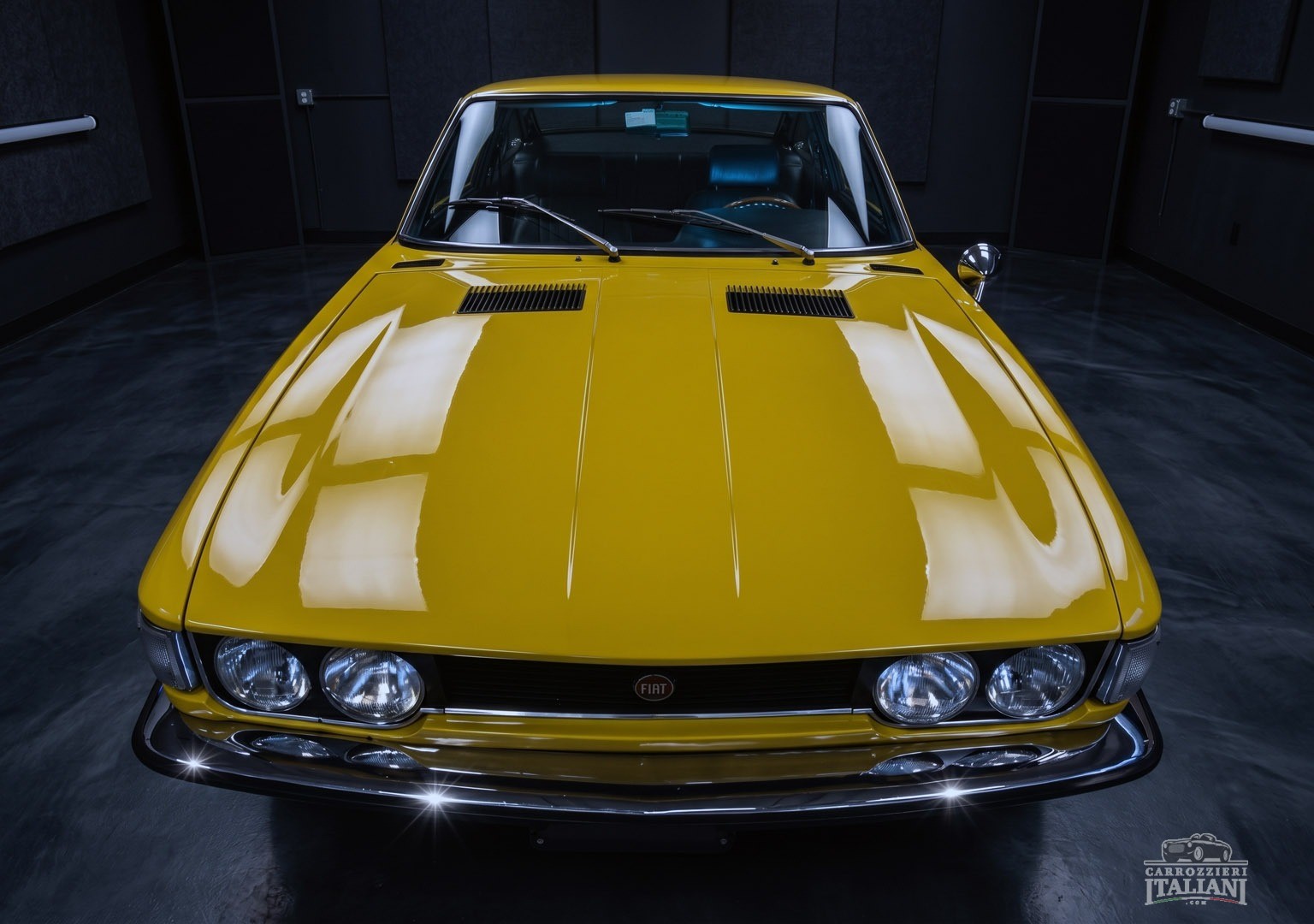
When Fiat introduced the 128 in 1969, the important news lay beneath a very conventional three-box body. Dante Giacosa’s new family car placed its engine transversely ahead of the front wheels, a compact arrangement that would become a template for generations of small cars. For an independent Turin manufacturer such as Moretti, however, the 128 offered something else: a modern mechanical package around which an entirely different automobile could be drawn.
Moretti had spent the post-war years moving steadily closer to Fiat. Giovanni Moretti’s company had once built complete cars with its own engines, but by the 1960s its future depended on transforming reliable mass-produced mechanical components into low-volume automobiles with a distinct identity. Via Monginevro could no longer compete with Fiat in scale. It could still compete in imagination.
The 128 arrived at a decisive moment. Moretti’s compact sporting cars of the middle 1960s had given designer Dany Brawand an unusually free hand. The Swiss-born stylist had learned under Giovanni Michelotti before joining Moretti, eventually becoming responsible for development and design. His 850 Sportiva had already demonstrated how effectively humble Fiat mechanicals could be hidden beneath proportions that suggested a far more exotic machine. The 128 allowed him to try the same trick with front-wheel drive.
The result was not one car but a small family: a fixed-roof Coupé, a removable-roof Roadster or Targa, a luxury Berlina conversion and, one year later, the extraordinary 128 Drag show car. Together they capture Moretti at the point where the traditional fuoriserie business was being squeezed by industrial reality but had not yet surrendered its ambition.
Via Monginevro
Moretti’s Turin factory was neither a tiny artisan workshop nor a mass-production plant. The distinction matters. The company could build cars in meaningful numbers, yet much of the work remained semi-industrial and adaptable enough to accommodate short series, special trim and export requirements.
Contemporary production figures underline the scale. Even as late as 1973, more than three thousand Moretti passenger cars left Via Monginevro. Most were no longer mechanically independent Morettis; Fiat supplied the foundations. The value added in Turin lay in bodywork, interiors, equipment and the ability to occupy niches too small for a giant manufacturer.
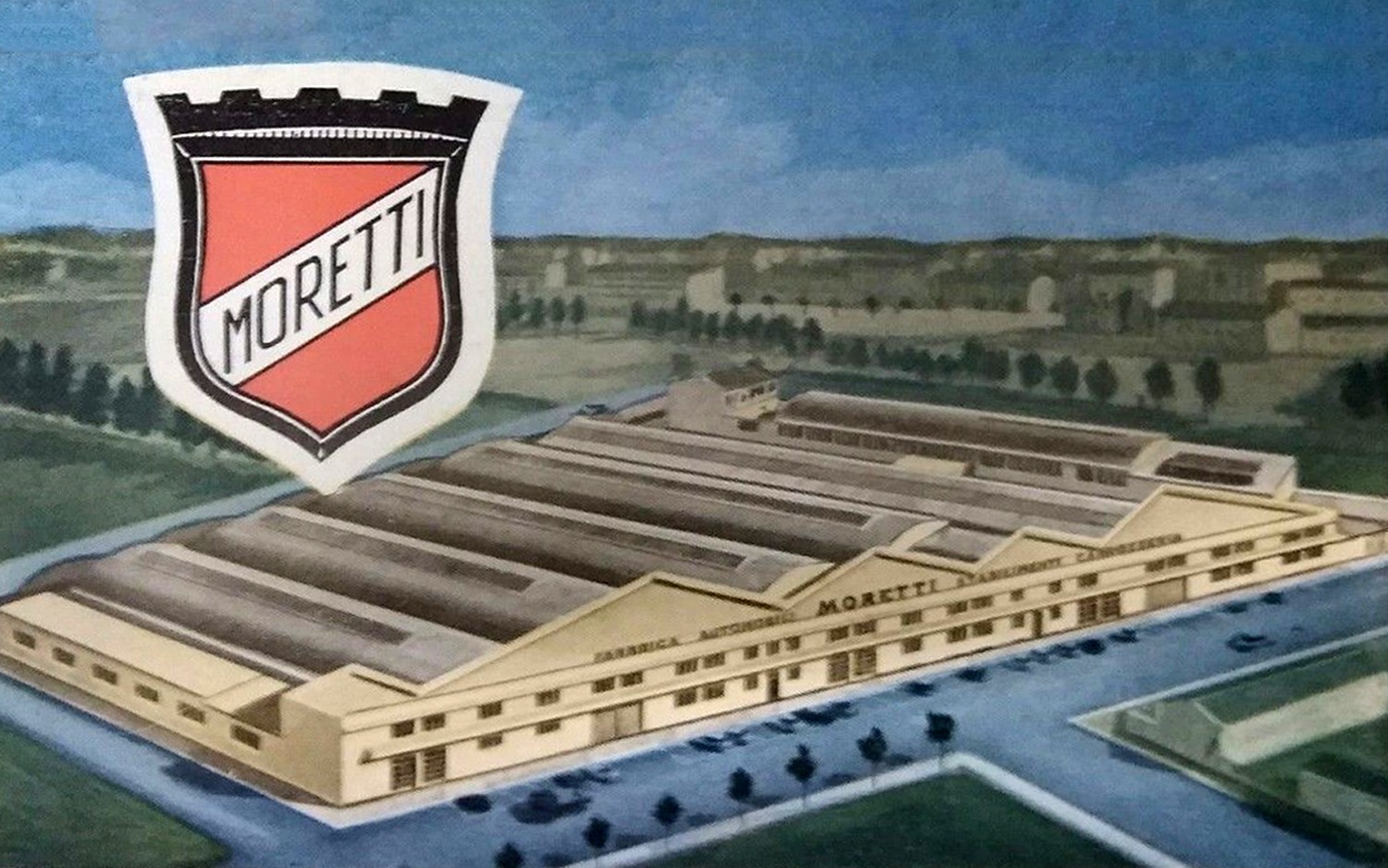
This was the environment in which Brawand worked. He was not merely sketching a show car for an outside coachbuilder to realise. At Moretti, design had to coexist with a factory, suppliers, homologation and a sales network. A successful shape needed doors that could be built repeatedly, glazing that could be sourced, interiors that customers could use and enough Fiat content underneath to keep the finished automobile serviceable.
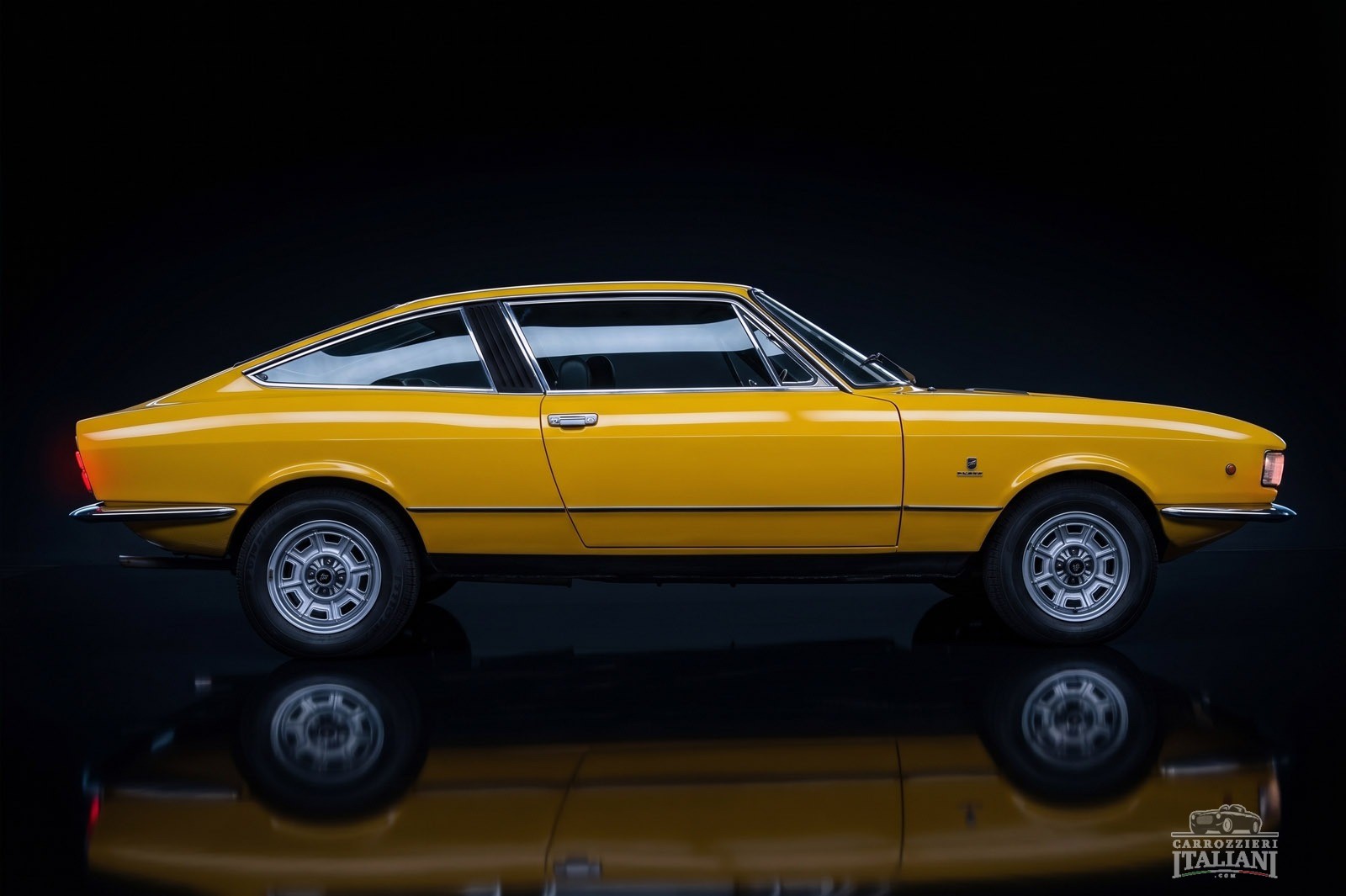
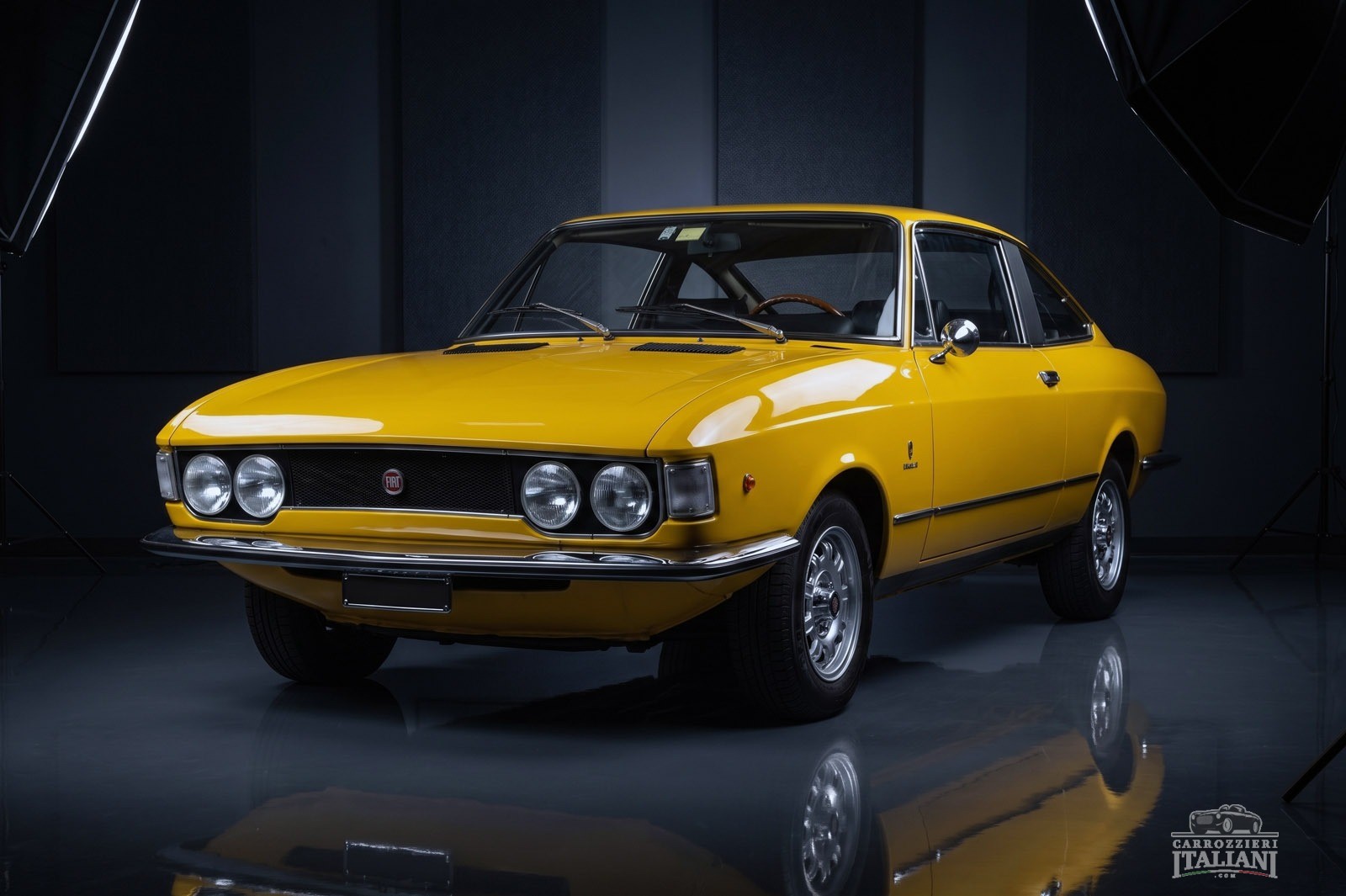
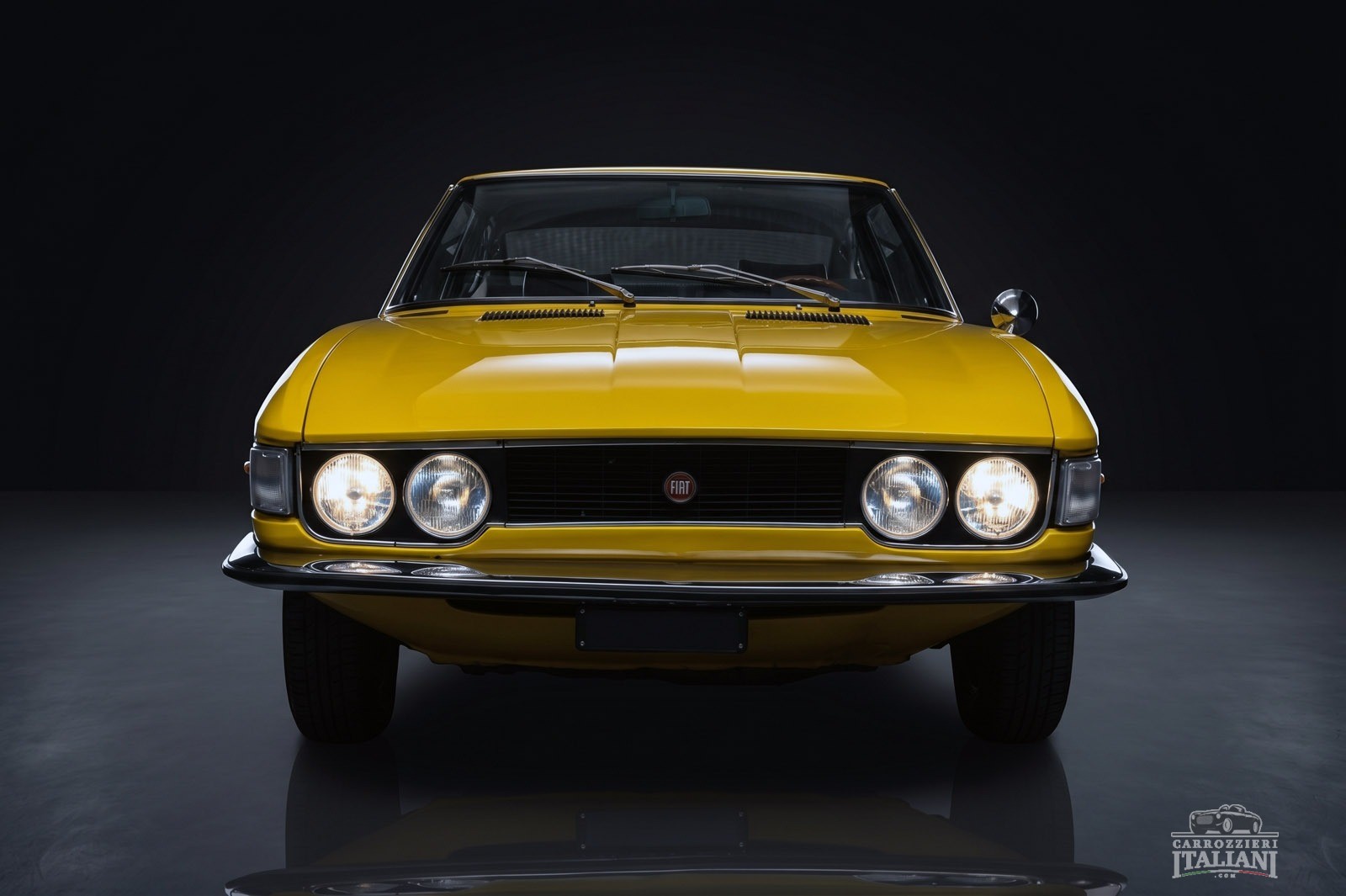
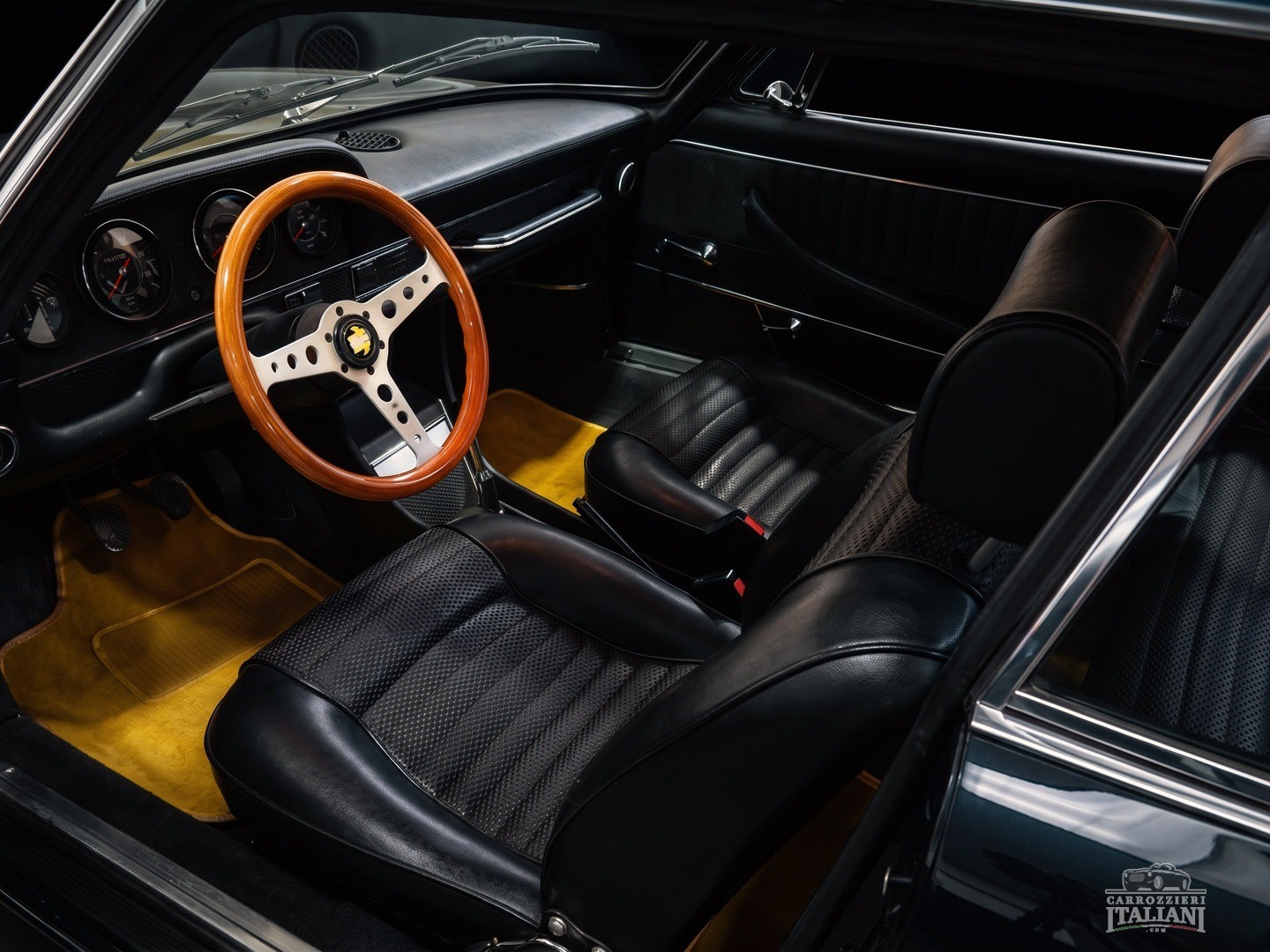
The 128 Coupé is especially revealing because it looks more expensive than the engineering beneath it. The long, low nose, rectilinear flanks and fast rear roofline create the visual expectation of a larger engine and rear-wheel drive. In reality the compact transverse four-cylinder and front-wheel-drive package freed space for passengers and luggage. Brawand turned that packaging advantage into a small gran turismo rather than disguising it as another saloon.
Turin, 1969
The Coupé and open version appeared almost immediately after Fiat’s new model. The Roadster was presented at the Turin Motor Show in 1969 with a rigid roof divided into two removable sections. Calling it a roadster understates the idea: structurally and visually it was closer to what would soon be universally understood as a Targa.
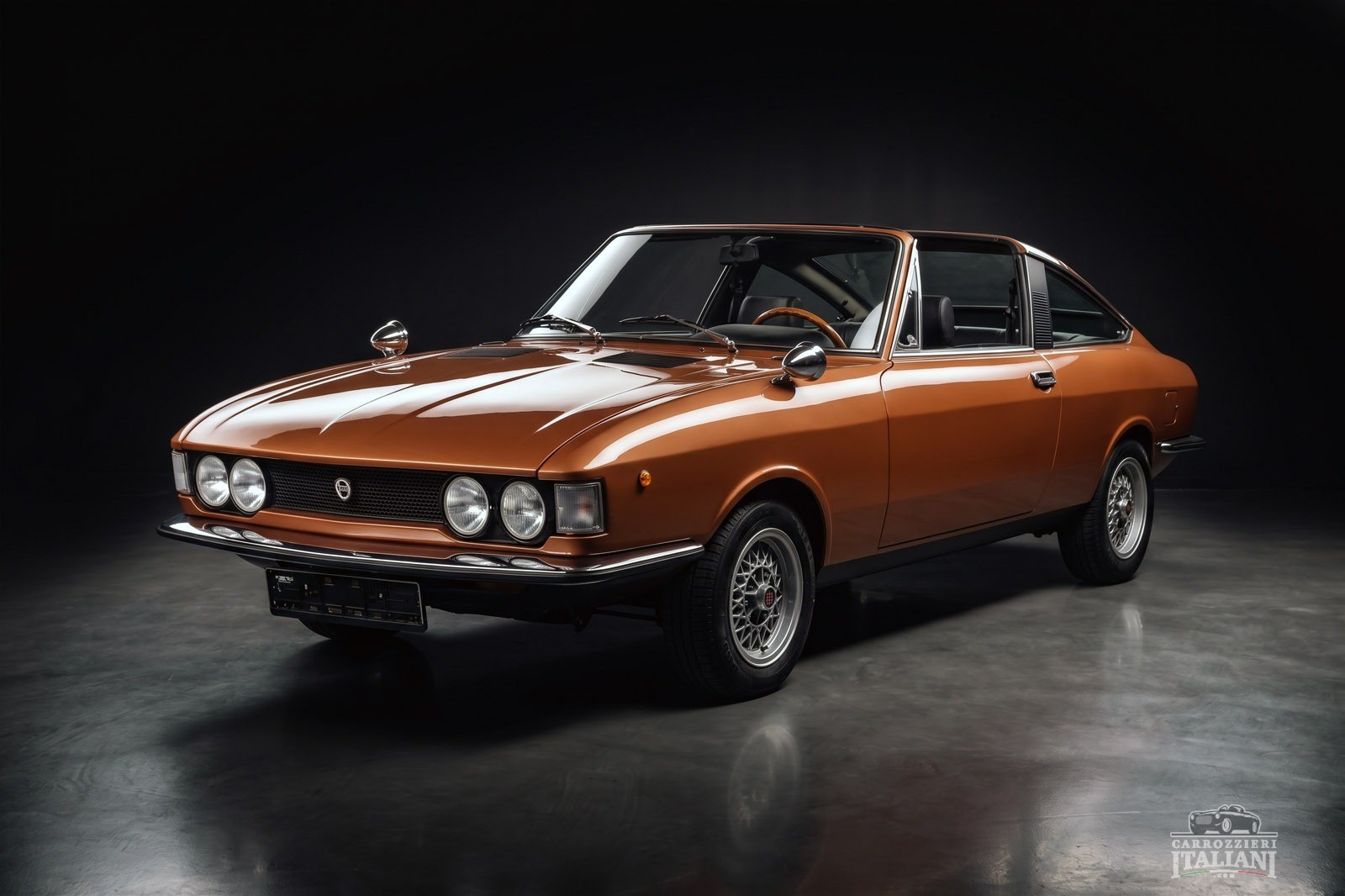
The fixed-roof Coupé shared the same basic language. Both retained the 1,116 cc Fiat four-cylinder in their first form, giving roughly 55 PS. Performance was respectable rather than dramatic, but the low body and relatively light construction made the Moretti feel like a much more serious sporting proposition than the specification sheet suggested.
That contrast was part of its character and part of its commercial difficulty. Moretti was selling design, rarity and finish rather than horsepower. A contemporary price around 1.5 million lire placed the car far above ordinary small Fiats. The interior could be specified with equipment such as a sports steering wheel, leather trim and electric windows, details that reinforced the sense that the customer was ordering a miniature coachbuilt GT.
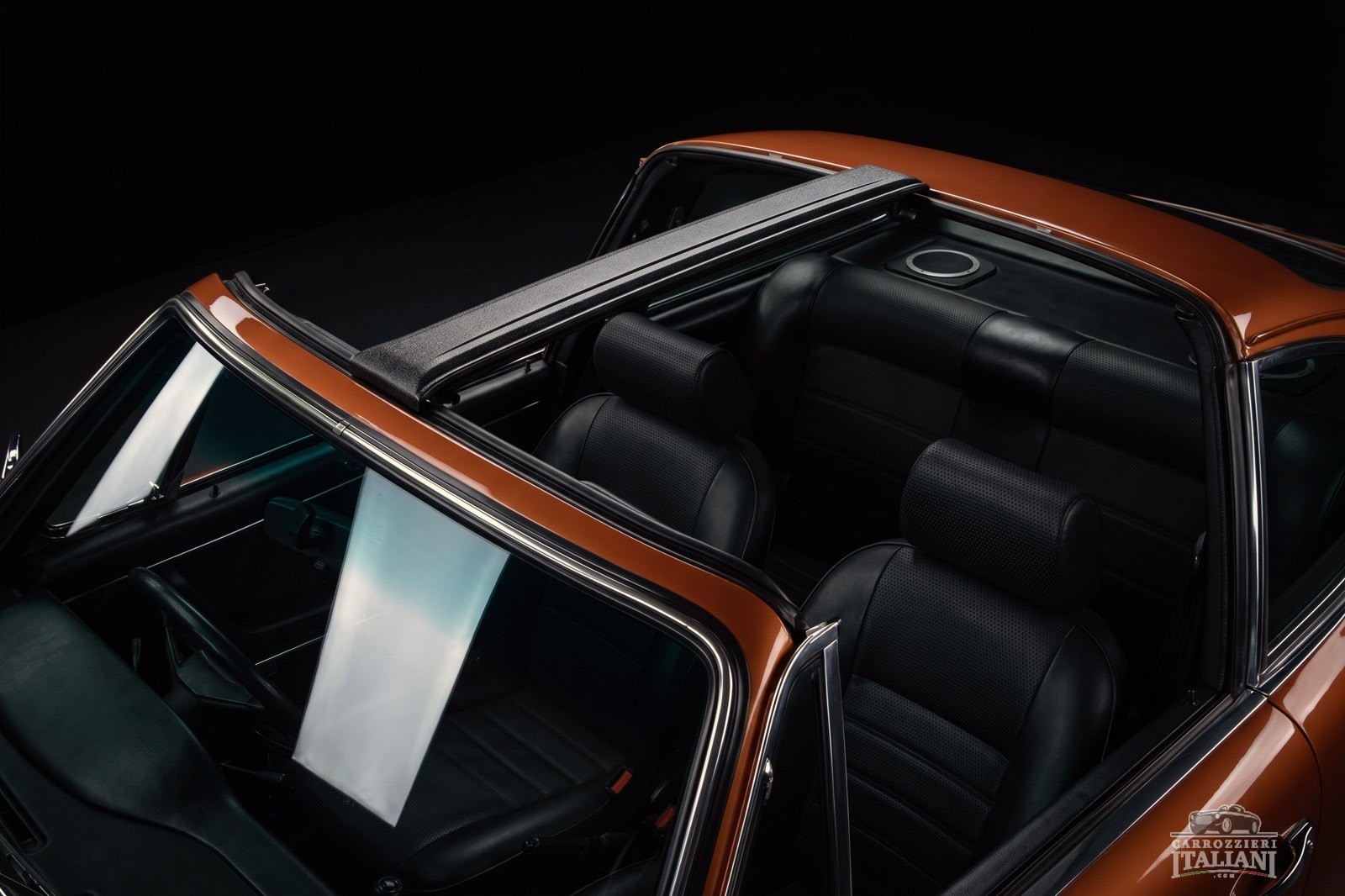
The open car was particularly clever. Removing two roof panels preserved a substantial central structure while offering open-air motoring without requiring Moretti to engineer a completely unsupported body. The luggage compartment remained useful and the cabin could accommodate four people comfortably enough for the period. It was an unusually practical interpretation of the Italian special-bodied car.
Brawand'S Line
Dany Brawand‘s career helps explain why the 128 looks the way it does. Born in Vevey in 1934, he entered Ghia-Aigle in Switzerland as a young man and encountered Michelotti’s design work there. He later followed Michelotti to Turin, becoming part of the small team around one of the most prolific designers of the era.
By the middle of the 1960s Brawand had moved to Moretti. The relationship with Michelotti had ended badly after Brawand began dealing directly with Moretti on designs, but the education remained visible: clean glasshouses, disciplined ornament and the ability to give modest mechanical packages convincing proportions. At Moretti he developed that language in his own direction.
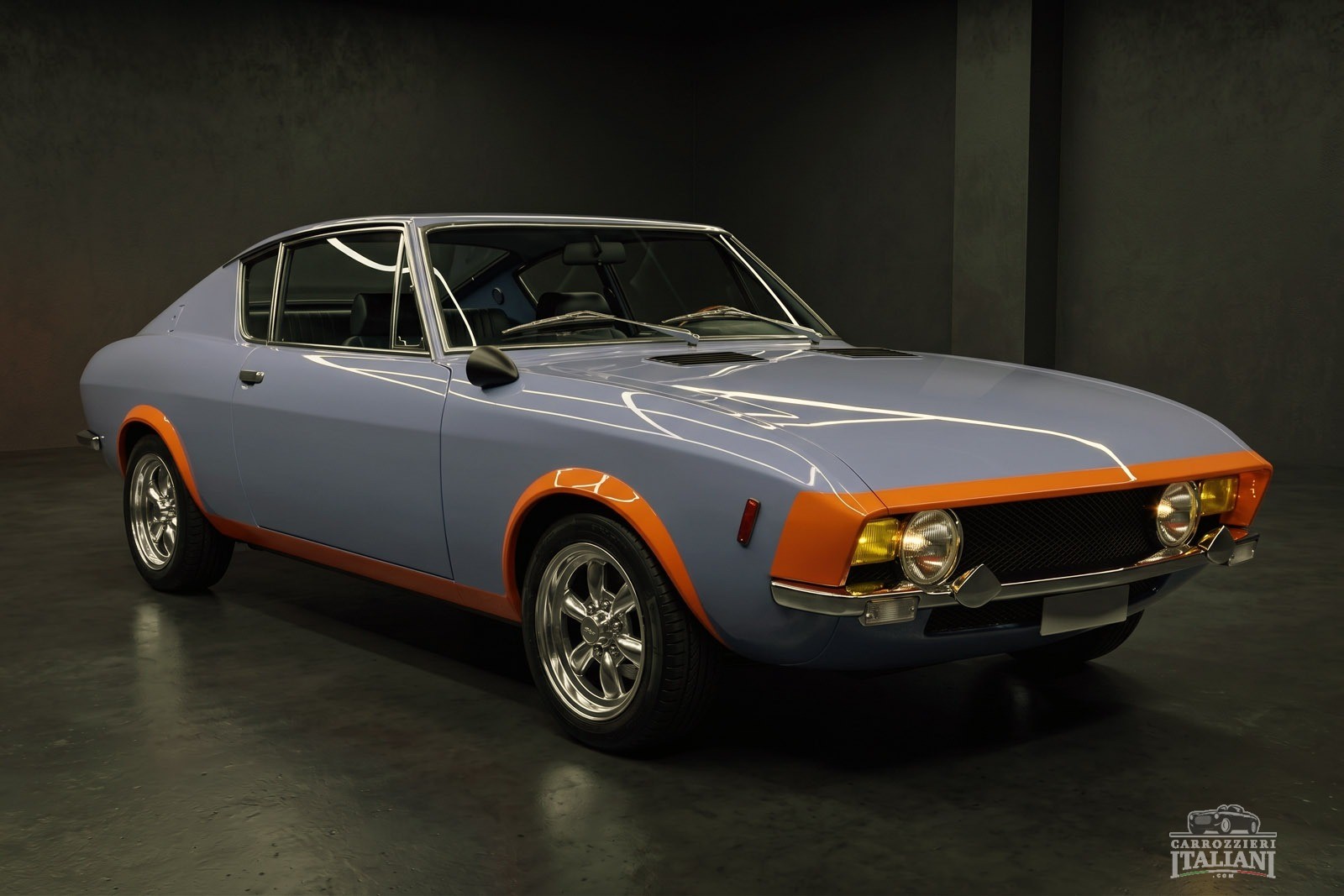
The 128 is more rectilinear than the earlier 850 Sportiva. Its surfaces anticipate the harder geometry of the 1970s without becoming a pure wedge. The nose is low and broad; the glasshouse sits lightly above the body; the rear quarter has enough visual mass to make the front-wheel-drive proportions read as a conventional sporting coupé. It is a design built around deception, but an elegant one.
At the same time, it was not a styling exercise detached from manufacture. The Coupé was a genuine catalogue automobile, and surviving chassis demonstrate production beyond the motor-show examples. That distinction becomes important when the 128 Drag appears in 1970.
The Drag
At the 1970 Turin Motor Show, Moretti placed a much more radical 128 on its stand. The 128 Drag was a two-seat design study with a wedge profile, concealed headlamps and an abbreviated tail. Where the production Coupé balanced modernity with practicality, the Drag abandoned compromise.
The timing could hardly have been more dramatic. Turin in 1970 was filled with experimental shapes: Pininfarina‘s Modulo, Bertone‘s Stratos Zero, Italdesign‘s Porsche Tapiro and a wave of city cars, wedges and safety studies. Moretti, a company whose commercial survival depended on selling Fiat-based derivatives, joined that conversation with a concept of its own.
The Drag should not be confused with the production 128 Coupé. It was a one-off show car and no reliable chassis identity has yet emerged. Its mechanical specification is also less secure than its appearance; the sensible assumption is a Fiat 128 basis, but unsupported details about engine output or final configuration should not be allowed to harden into fact.
What the Drag proves is that Brawand’s role at Moretti extended beyond dressing production Fiats. The same design office responsible for sellable short-series cars could produce a pure exhibition object. For a small manufacturer, the show car was publicity, experiment and statement of intent at once.
A Car You Could Buy
The production Coupé’s history is anchored by surviving cars. A 1972 example, VIN 128A0800557, appeared at Dorotheum in 2016. The auction house explicitly attributed the rectilinear body to Brawand and described the car with its 1,116 cc engine, four-speed gearbox and Italian papers. It sold for €8,050.
The modest auction result is almost beside the point. The VIN is valuable because it connects the Moretti body to a traceable Fiat-derived identity rather than leaving the model at brochure level. It also shows the sort of life these cars led: ordinary enough to accumulate kilometres, rare enough that restoration details and repainting become part of the surviving record.
Another car, first admitted in June 1974 and later preserved in the Palmen collection, carries VIN 128A1405498. Its long period of static storage and later auction appearance illustrate a different survival path. Neither car should be treated as representative of every 128 Moretti, but together they begin to replace vague production mythology with individual histories.
The Roadster has its own chassis evidence. VIN 128A1632340, a 1974 Targa, surfaced in a Catawiki sale in October 2024 and sold for €10,000. Another 128 GS Targa, VIN 128A1627703, appeared twice in 2024 without selling. These market appearances are recent, but their greater historical value lies in preserving exact identities for a model whose total production remains poorly documented.
Homologated, Not Imaginary
Swiss type-approval records add an unusually solid piece of evidence. Typenschein 025609 identifies the FIAT-MORETTI 128 A COUPE with the 1,116 cc engine, front-wheel drive and five seats. A separate approval, 025610, covers the FIAT MORETTI 128 A ROADSTER as an open body type.
The importance of those documents goes beyond technical data. They confirm that Coupé and Roadster were independently homologated products, not merely two descriptions of the same show car. They also reveal the export ambitions behind the programme. Moretti needed its special bodies to exist not only on a Turin stand but within the bureaucratic systems of foreign markets.
That export dimension helps explain why survivors appear in Austria, Switzerland, the Netherlands and elsewhere. A small Turin manufacturer could not rely solely on Italian buyers willing to pay a substantial premium over a standard Fiat. Foreign distributors were essential to the economics of short-series coachbuilding.
The Second Series
By 1974 the first 128 Moretti was beginning to look delicate beside the increasingly plastic-clad cars of the decade. Moretti responded with a second series. The mechanical change was significant: the 1,290 cc Fiat engine replaced the original 1.1-litre unit, bringing output to around 60 PS. Visually, larger black synthetic bumpers and aprons modernised the body.
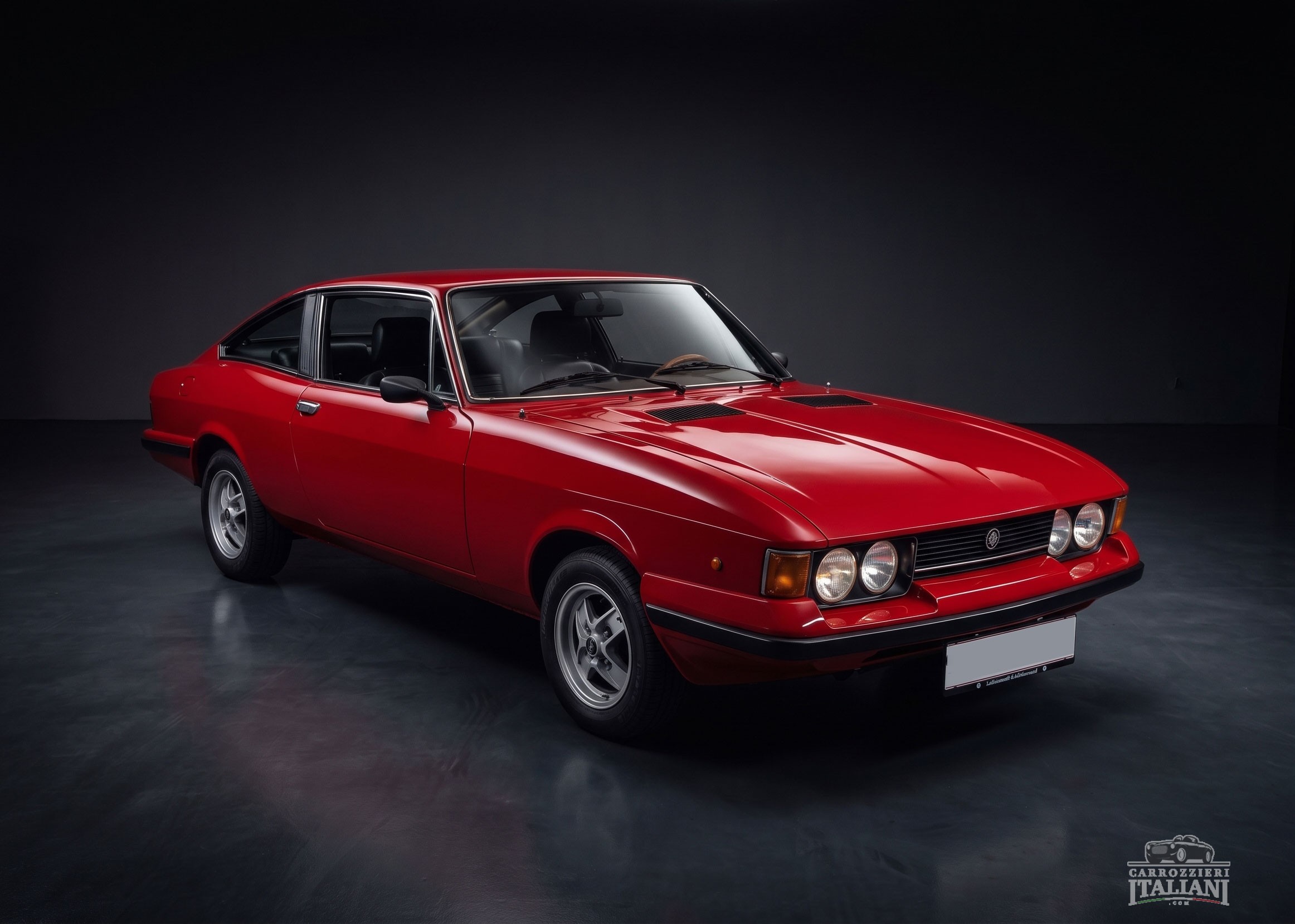
A 1976 Coupé, VIN 187.1040, documents this late form particularly well. It was bought on 14 July 1976 by a Fiat dealer in Linz for his wife. Originally silver, it was repainted red very early, including the normally black bumpers, then passed in October to another family in which it remained for decades. Dorotheum sold it in Salzburg in 2016 for €6,900. Its Austrian type certificate and recorded history make it one of the clearest surviving anchors for the second series.
The car also marks the end of something larger. Dorotheum’s historical account describes the 128 as Moretti’s last independent sports model and places the end of this type of coupé production in 1976. The company would continue, but increasingly through transformations of existing Fiat bodies rather than complete special-bodied gran turismos.
The Other 128
There was also a Moretti 128 Lusso, and it belongs to a different category. Rather than receiving Brawand’s separate Coupé body, the standard Fiat saloon was upgraded through trim, grille treatment and equipment. Period brochure indexing confirms a Berlina Lusso programme in 1969.
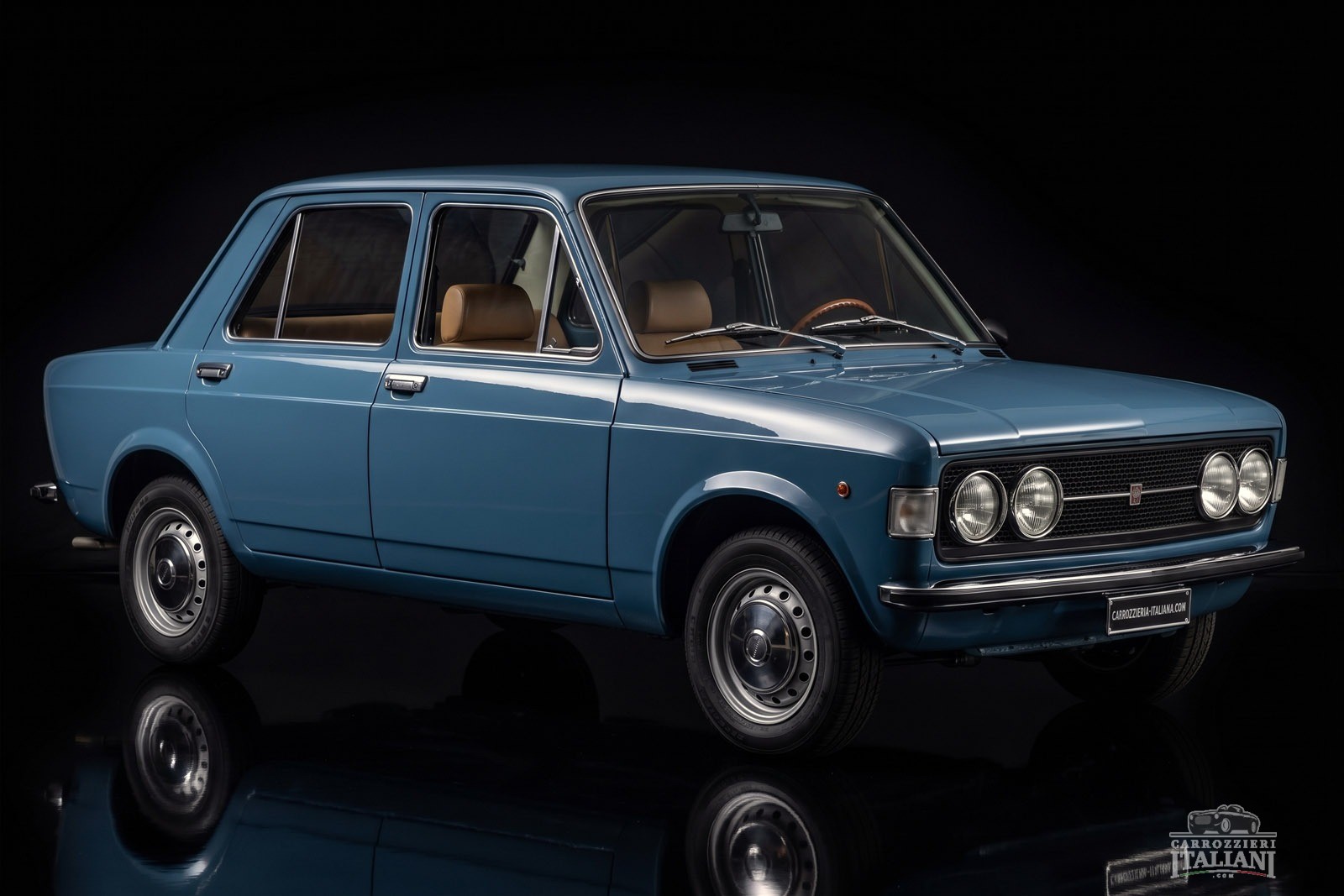
Keeping the Lusso apart from the Coupé and Roadster is important because it shows the breadth of Moretti’s business. One customer could buy an extensively rebodied car whose identity was unmistakably Moretti; another could choose a more luxurious interpretation of Fiat’s own saloon. Both strategies used the same mechanical relationship with Fiat, but the amount of coachbuilding involved was entirely different.
The distinction would become increasingly important during the 1970s and 1980s as independent body manufacture became harder to justify economically. Moretti’s later success with leisure vehicles and luxury conversions was not an abrupt retreat. The 128 programme already contained both business models side by side.
Numbers And Myths
Production figures for the 128 family are often repeated with more confidence than the evidence deserves. The Roadster is commonly said to have been built in fewer than one hundred examples, and one secondary account attributes a figure below eighty to Giovanni Moretti. The Coupé was certainly more numerous and appears to have enjoyed stronger export demand.
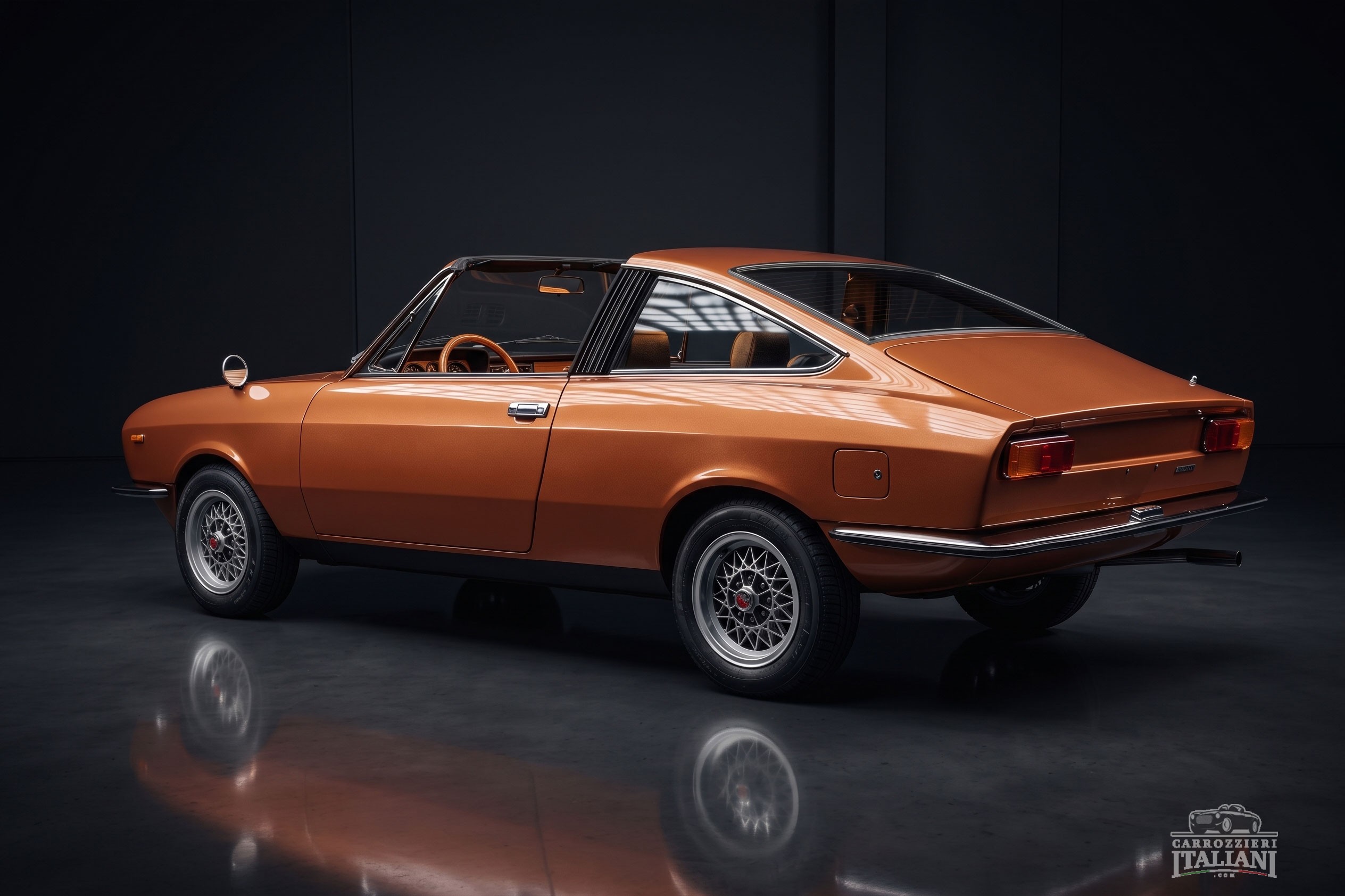
Those statements are useful, but they are not a substitute for a factory ledger. Until production books or a complete chassis sequence emerge, an exact total should remain open. What can be demonstrated is that the cars were not isolated prototypes. Homologation records, period catalogues, surviving VINs and export-market cars establish a genuine short-series programme extending from the 1,116 cc first series to the 1,290 cc second series.
The uncertainty is itself typical of small Italian manufacturers. Records were not always preserved, bodies and donor identities could be recorded differently from country to country, and later enthusiasts often tried to impose neat production totals on businesses that operated with considerable flexibility.
The Last Small Gt
The Moretti 128 is easy to overlook because it lacks the mechanical exoticism that usually drives collector mythology. Its engine is pure Fiat, its performance modest and its market values remain far below those of contemporary Italian supercars. Yet those facts are precisely what make it historically interesting.
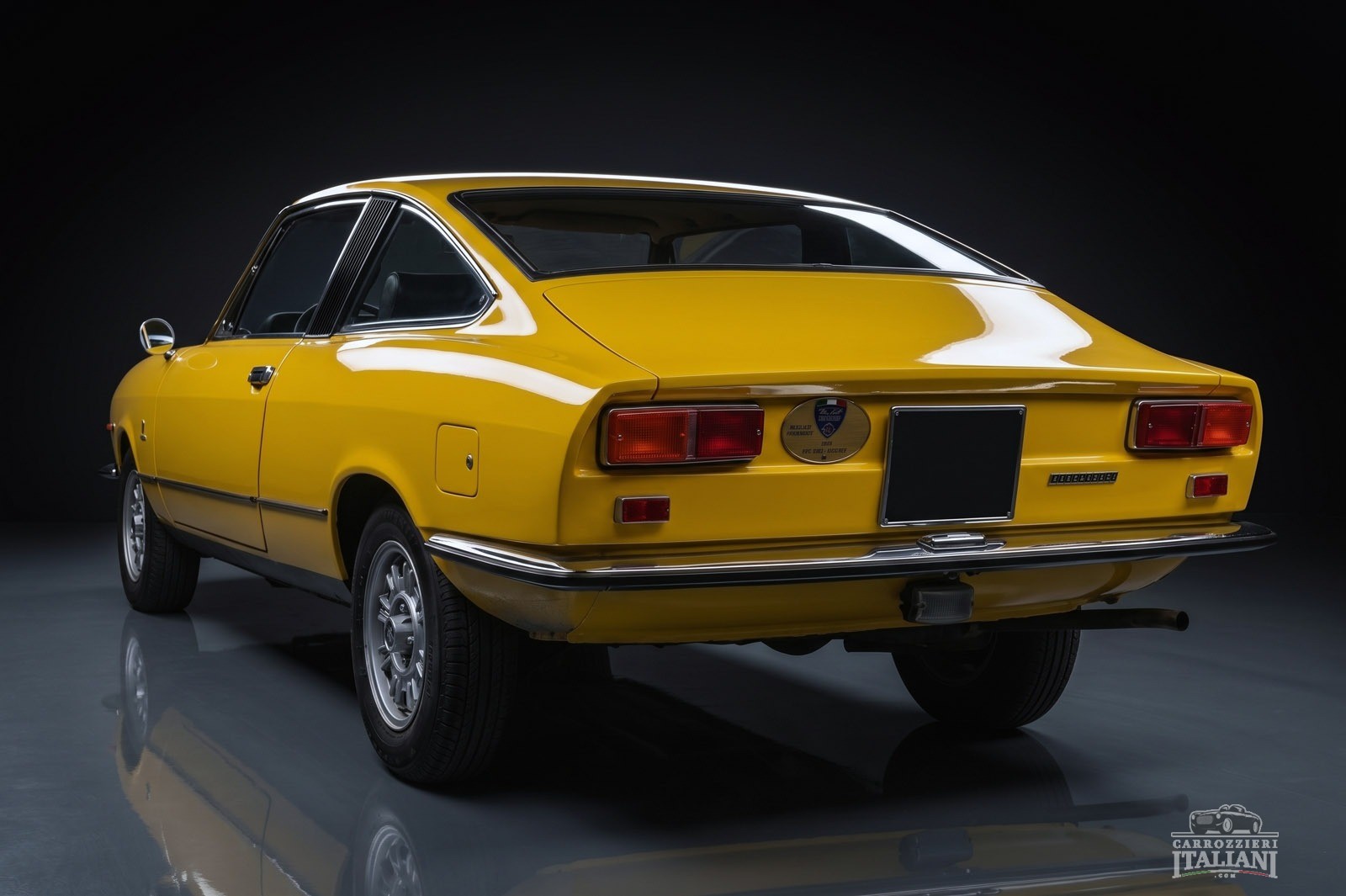
The car belongs to a disappearing category: the affordable coachbuilt gran turismo. It asked a customer to pay a substantial premium not for more cylinders or racing pedigree, but for a different body, a more intimate production process and the pleasure of owning something that the neighbour probably would never see twice.
Brawand’s design gave the 128 enough presence to make that proposition credible. The Roadster added ingenuity through its two-piece removable roof. The Drag showed that Moretti could still participate in Turin’s avant-garde design culture. The second series kept the shape alive into the middle of the decade, just as economics were pushing the company toward a different future.
In that sense the 128 was not merely another Fiat derivative. It was the last complete expression of a tradition Giovanni Moretti had spent decades adapting: take accessible mechanicals, surround them with a body of your own, and sell the finished automobile on character rather than scale.
When production ended in 1976, Moretti did not disappear. But the era in which a customer could walk into a dealer and buy a wholly different Turin-built coupé on the mechanical bones of an ordinary Fiat was drawing to a close. The 128 Coupé and Targa stand at that threshold — practical, slightly extravagant, unmistakably of their time and far more important to the story of Italian coachbuilding than their modest engine would suggest.
A 128 Family Beyond the Coupé
The 128 programme also spilled into other Moretti projects, which helps explain why surviving names can be confusing. The Berlina Lusso used Fiat’s standard saloon as its starting point and concentrated on finish and equipment rather than a completely new shell. At the opposite extreme stood the Drag, which had virtually no need to satisfy a family-car brief. Between them sat the Coupé and Targa: sufficiently practical to sell as real automobiles, sufficiently transformed to justify Moretti’s name on the nose.
Brawand also carried ideas across Fiat platforms. Around 1970 a later Moretti 125 Coupé was created in response to a Belgian request for something with the visual character of the successful 128 but greater performance. Brawand later recalled that panels associated with the 128 Coupé were adapted to the larger Fiat 125 frame, with only a handful built. It was not a 128 derivative in the mechanical sense, but it demonstrates the commercial value Moretti attached to the design. A body language developed for Fiat’s new front-drive saloon could be repurposed for a more powerful rear-drive chassis.
That flexibility was characteristic of the Turin carrozzerie at their best. Design was not locked to one platform or one model year. A successful proportion, panel or construction solution could migrate through the workshop and answer a new request. The 128 therefore belongs to a wider Brawand period at Moretti, alongside the 850 Sportiva, 124 and 125 coupés, the 127 derivatives and the later 132. Seen together, they form less a collection of isolated Fiat specials than a coherent attempt to give a small manufacturer its own visual identity while the mechanical content increasingly came from a single industrial partner.

ABOUT THE AUTHOR
Andreas Scheidl
Italian classic car enthusiast with German roots. Renowned as a respected figure in the classic car community, he serves as a jury member at various international concours d'elegance, including the Classic Gala Schwetzingen and Mantova. As a content creator, Andreas passionately shares his profound knowledge and appreciation for vintage automobiles. His heart beats for cars designed by Giovanni Michelotti, showcasing his discerning taste and dedication to preserving the timeless elegance of automotive history.
More stories by Andreas Scheidl ↗CONTINUE READING
Posts You Might Like

A Central Driving Position, a Rear-Mounted V8. Was This Really a Lancia?
In 1948, visitors to the Turin Motor Show could see an unusual Lancia on the stand of Carrozzeria Ghia. It was a large two-door coupé with a two-litre V8 mounted behind the…
Read story
Fioravanti F100: The Ferrari He Was Allowed to Imagine
Enzo Ferrari’s centenary, Leonardo Fioravanti’s independent studio and a supercar that explored air brakes, steel wheels and a new way of driving—without ever wearing the Cavallino.
Read story
Michelotti Shellette: When the Fiat 850 Became a Yacht
The yacht designer, the Turin stylist and the tiny coachbuilt car that crossed between the quay, the royal holiday house and the auction room. Some automobiles were conceived for the open road,…
Read story
Maserati A6 1500: A New Road for the Trident
When the doors of the Geneva Motor Show opened in March 1947, Maserati was a name that required little introduction to anyone who followed motor racing. What it did not yet possess…
Read story
THE CONVERSATION
Comments 0
Share a memory, a period photograph or a documented detail about this story.