
THE VEHICLE AT A GLANCE
Model dossier
- Production period
- 1986
- Body style
- Hatchback
- Type
- Design-proposal
- Production
- 1
THE PEOPLE BEHIND THE CAR
Coachbuilding, design & conversions
PRICE & SALES RECORD
Vehicle value
- Original price
- Not documented
- Latest recorded sale
- Not documented
01 / THE STORY
History & context
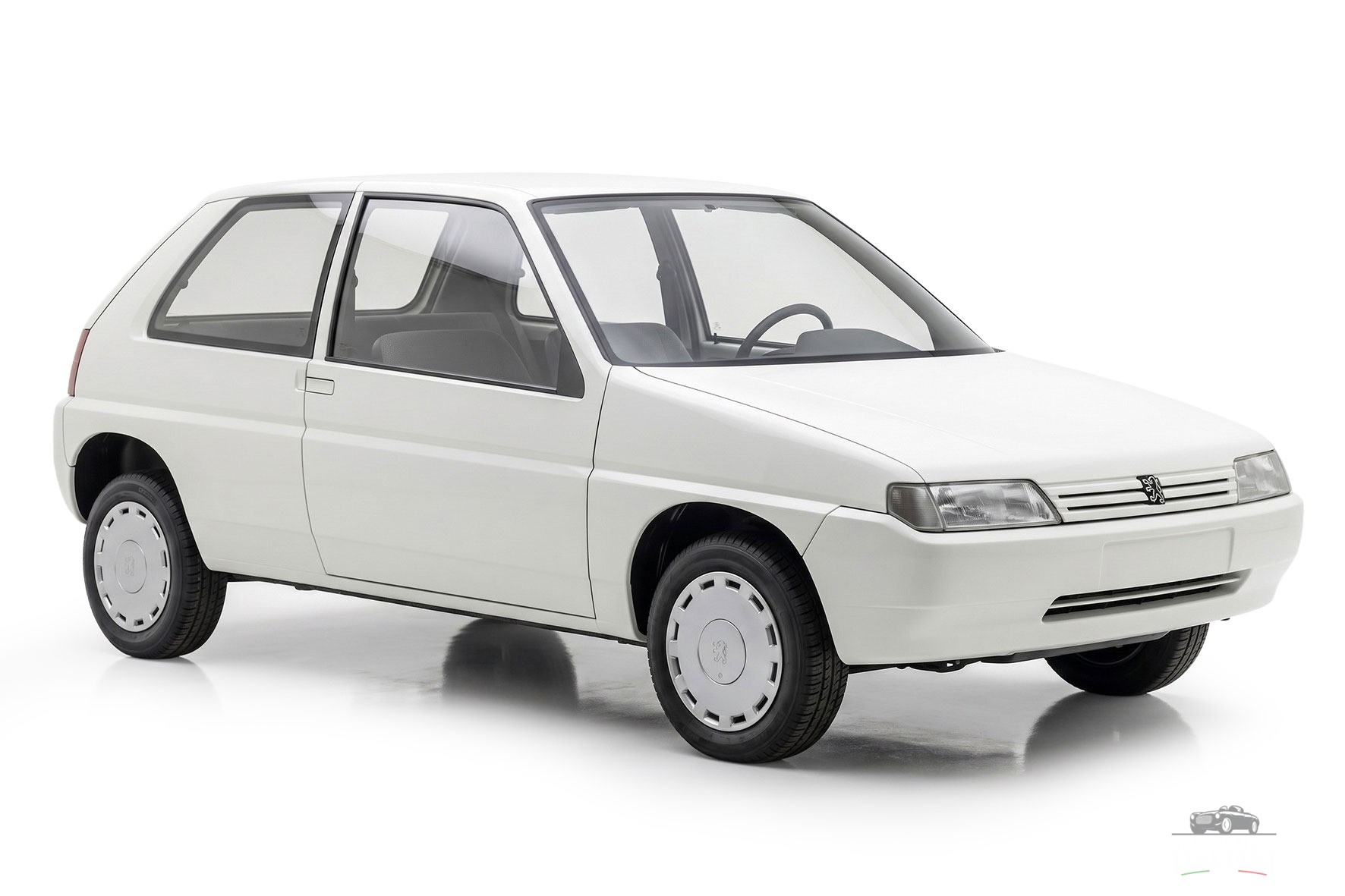
As Peugeot prepared to succeed the 205 in the mid-1980s, the company faced a strategic and stylistic challenge. The 205 had become a cornerstone of the brand’s identity and commercial success, and any direct replacement risked diluting its strong market position, especially as Renault had just renewed the Renault 5 in 1984. Rather than pursuing a single successor, Peugeot chose to divide the original “105” concept into two distinct models: the smaller 106 and the larger 306, intended to complement rather than directly replace the 205. Within this context, the S10 program was initiated in early 1986 to define the future compact Peugeot. As was customary, Peugeot involved Pininfarina alongside its internal design teams. The Italian studio competed against the in-house exterior proposals led by Gérard Welter and interior concepts overseen by Paul Bracq. At Pininfarina, an internal design competition was organized, from which the sketches by Giuseppe Randazzo emerged as the preferred proposal. Randazzo’s work aimed to reinterpret Peugeot’s design language with greater formal clarity and a more international character, while maintaining continuity with the brand’s established proportions. A full-scale epowood model based on Randazzo’s design was completed in Turin and presented at Peugeot’s La Garenne design center a few months later. The Pininfarina proposal reflected a balanced approach, combining clean surfaces, controlled volumes, and restrained detailing. It sought to modernize the compact hatchback form without resorting to stylistic rupture, a quality that had also characterized Pininfarina’s earlier, ultimately unsuccessful, proposal for the 205. Despite progressing through multiple evaluation stages, the Pininfarina design was ultimately not selected. After two rounds of assessment, Peugeot formally chose its internal proposal on October 3, 1986. Under the direction of project manager Philippe Couvreur, the final exterior design by Laurent Rossi and interior by Paul Bracq were frozen in September 1987, with running prototypes appearing in April 1988.
IN THE ARCHIVE
Coachbuilders & design studios
02 / TECHNICAL IDENTITY
Specifications & construction
Production & construction
- Production
- 1
- Production type
- Design-proposal
- Production notes
- External sources support Pininfarina's participation in the 1986 Peugeot 106/S10 design competition and the selection of Peugeot's internal proposal. Giuseppe Randazzo remains candidate because individual authorship is not independently established by these sources.
Engine & performance
- Specification notes
- Peugeot 106 Pininfarina design proposal: the canonical record represents a styling/design-proposal stage rather than a uniquely specified running vehicle. The current source dossier does not establish a project-specific powertrain or technical package; production-model specifications are deliberately not inherited.
Design & manufacture
- Design Studio · Documented
- Pininfarina
- Manufacturer · Documented
- Peugeot
- Designer · Candidate
- Giuseppe Randazzo
06 / EVENTS & AWARDS
Events & awards
No events or documented awards are currently recorded for this vehicle.
07 / THE VEHICLE IN DETAIL
Photo gallery 6 photographs
08 / FROM THE ARCHIVE
Archive
References held in the vehicle dossier. Their inclusion does not establish that every historical claim has been independently verified.
| Reference | Source type |
|---|---|
| Caradisiac — Peugeot 106 XSI history www.caradisiac.com | Reputable automotive history |
| Club Peugeot 106 Rallye — development history www.106rallye.it | Specialist model club history |
THE CONVERSATION
Comments 0
Share a memory, a period photograph or a documented detail about this car.