
THE VEHICLE AT A GLANCE
Model dossier
- Production period
- 1986
- Body style
- Hatchback
- Engine
- Inline-4
- Type
- Prototype
- Production
- 1
THE PEOPLE BEHIND THE CAR
Coachbuilding, design & conversions

PRICE & SALES RECORD
Vehicle value
- Original price
- Not documented
- Latest recorded sale
- Not documented
01 / THE STORY
History & context
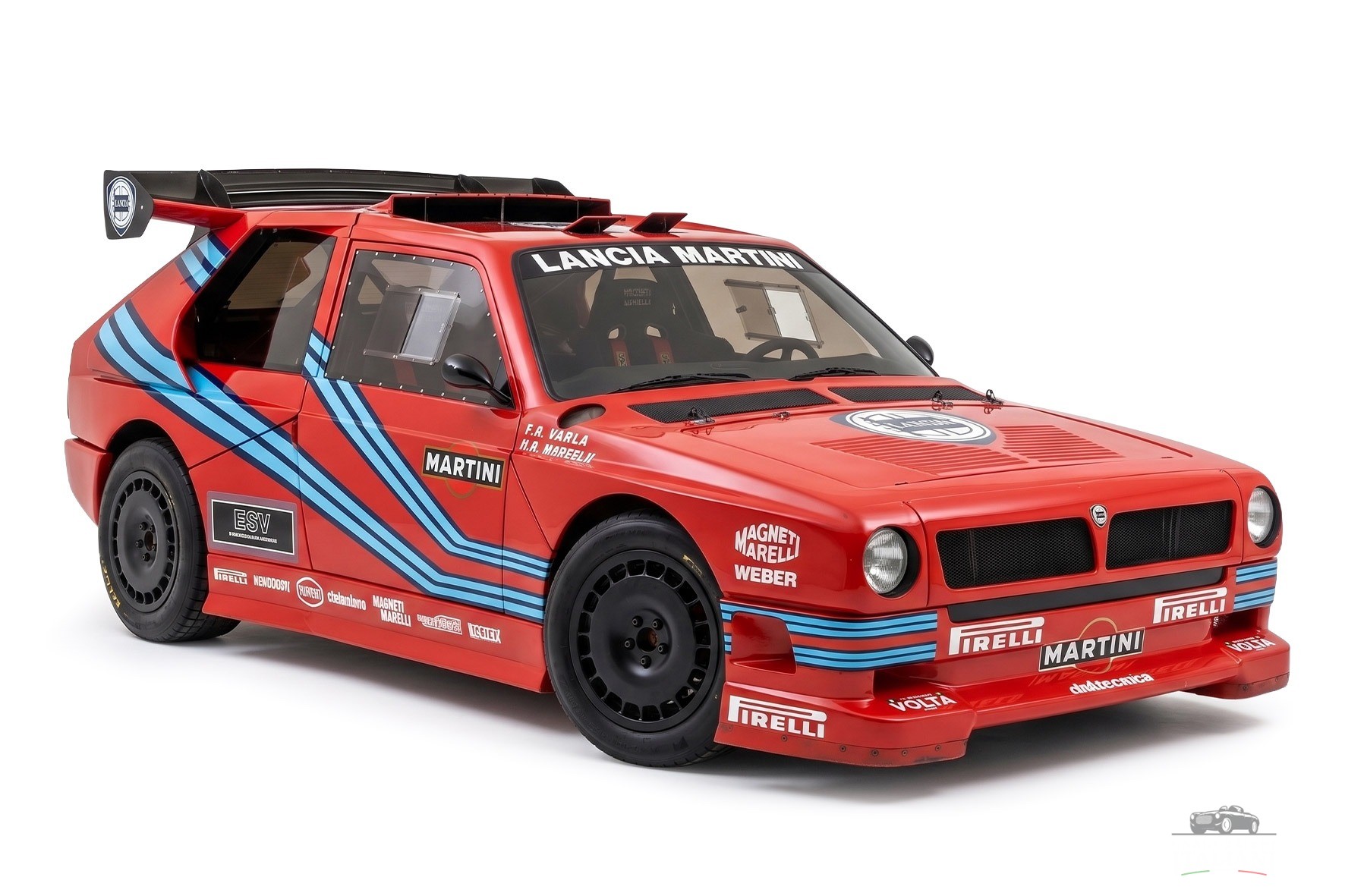
The Lancia ECV (an acronym for Experimental Composite Vehicle) is a prototype built by Lancia and designed by Synthesis Design in 1986 to participate in the world rally championship in the new Group S, which was to be inaugurated the following year as a replacement for Group B. In the mid-1980s, the use of innovative composite tub frames, which are characterized by greater lightness and torsional stiffness than a corresponding trellis or monocoque version made of metal material, became widespread in motorsports. In Group B rallies, the Ford RS200 is the first car equipped with this solution, while the Lancia Delta S4 still has a square trellis chassis attached to composite material panels. Abarth, which was in charge of the Lancia team’s component research and development, sensed the performance benefits that a composite monocoque chassis would bring, and then decided to make a model suitable for mounting the mechanicals and bodywork of the Delta S4. The prototype once assembled was renamed ECV “Experimental Composite Vehicle,” referring to the chassis made of newly developed Kevlar and carbon fiber composites. The car mounted a 1759 cm³ 4-cylinder with a bore x stroke of 88.5 x 71.5 mm; it used an innovative distribution system called the triflux, in which the valves were placed in an “X” shape in order to feed exhaust gases to the two KKK type K-26 turbochargers. The first worked up to 5,000 rpm, when it was also joined by the second turbine; pressure reached 2.3 bar, which dropped to 1.8 in gear changes, with the car mounting a 5-speed front-mounted gearbox. Two intercoolers were used for cooling. Total power was 600 bhp at 8000 rpm in the off-road configuration and could touch 800 bhp for asphalt racing. Top speed was 230 km/h. Due to the extensive use of Kevlar and carbon fiber, honeycomb and/or polyurethane foam structures that were also used for elements such as the driveshaft and rims, among others, the total weight of the car was only 930 kg. Disc brakes were self-ventilating at the front and drilled at the rear. The prototype was abandoned for good when in 1986, after a series of fatal accidents culminating in the death of Henri Toivonen and his co-driver Sergio Cresto at the Tour de Corse in a Lancia Delta S4, of which the ECV was to be the heir, the FIA decided to abolish Group B and the planned Group S in favor of the less dangerous Group A and Group N cars. The car’s performance would, however, be diminished by the decision, already made before Toivonen’s death, to limit Group S cars to only 300 hp, thus nullifying the benefits of the new engine.
IN THE ARCHIVE
Coachbuilders & design studios
02 / TECHNICAL IDENTITY
Specifications & construction
Production & construction
- Production
- 1
- Production type
- Prototype
Engine & performance
- Engine configuration
- Inline-4
Dimensions & accommodation
- Length
- 4,005 mm
- Width
- 1,880 mm
- Height
- 1,500 mm
Design & manufacture
- Designer · Candidate
- Carlo Gaino
- Design Studio · Documented
- Synthesis Design
- Manufacturer · Documented
- Lancia
06 / EVENTS & AWARDS
Events & awards
No events or documented awards are currently recorded for this vehicle.
07 / THE VEHICLE IN DETAIL
Photo gallery 1 photographs
08 / FROM THE ARCHIVE
Archive
References held in the vehicle dossier. Their inclusion does not establish that every historical claim has been independently verified.
| Reference | Source type |
|---|---|
| Stellantis Heritage — Lancia ECV2 www.stellantisheritage.com | Manufacturer heritage |
| Ultimatecarpage — 1986 Lancia ECV Group S Prototype www.ultimatecarpage.com | Specialist vehicle history |
THE CONVERSATION
Comments 0
Share a memory, a period photograph or a documented detail about this car.