
THE VEHICLE AT A GLANCE
Model dossier
- Production period
- 1991–1996
- Body style
- Roadster
- Engine
- Inline-3
- Type
- Mass
- Production
- 33600
THE PEOPLE BEHIND THE CAR
Coachbuilding, design & conversions

PRICE & SALES RECORD
Vehicle value
- Original price
- Not documented
- Latest recorded sale
- Not documented
01 / THE STORY
History & context
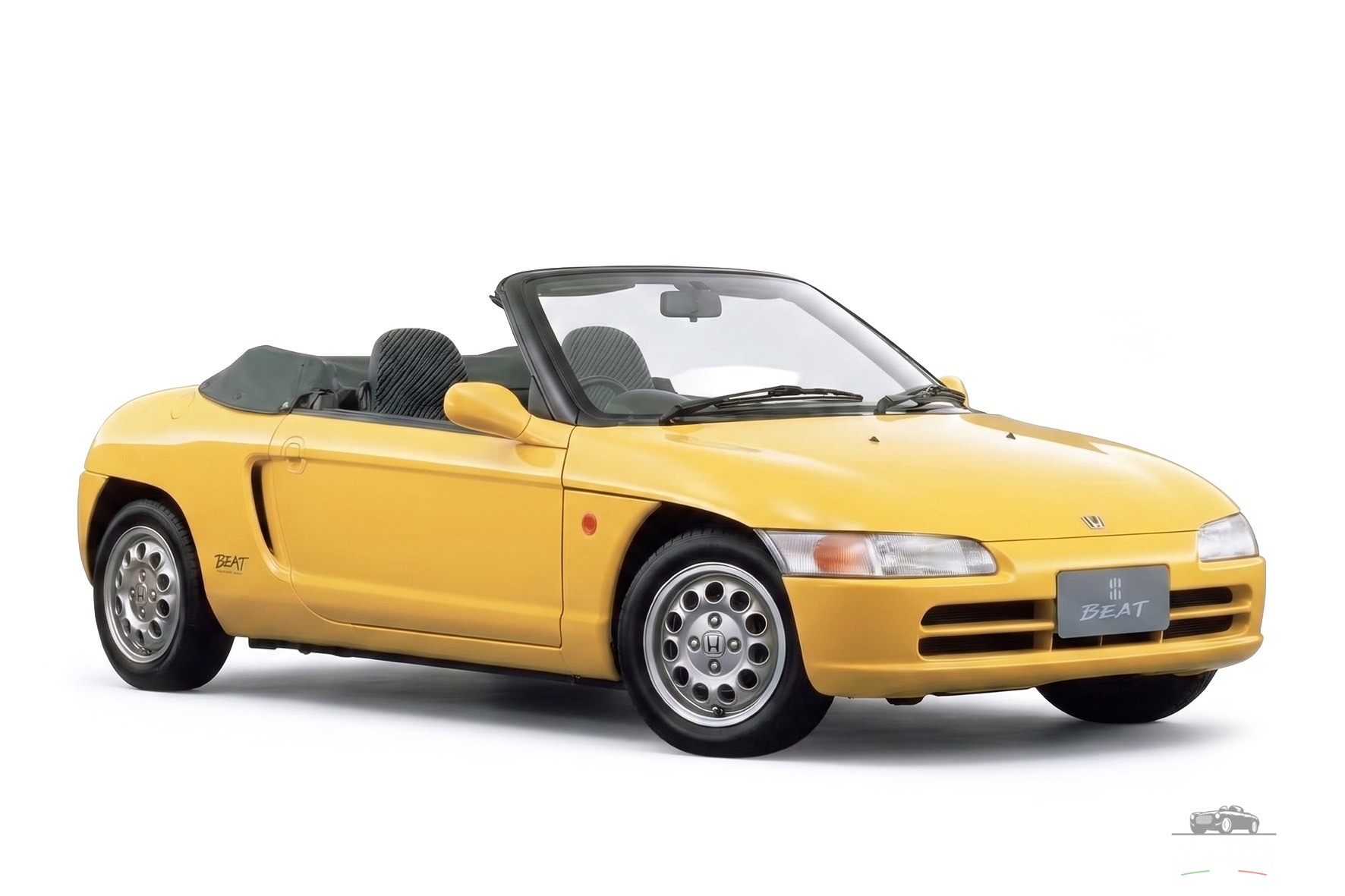
The Honda Beat is a rear-wheel-drive, mid-engined two-seat roadster kei car that was produced from May 1991 to February 1996. A unique and beloved vehicle, the Beat was the final car approved by Soichiro Honda before his passing in 1991. It was designed as part of Honda’s strategy to produce vehicles in Japan’s tax-efficient kei car class, which was created to offer smaller, affordable cars that maximized efficiency. Around 33,600 units of the Honda Beat were produced during its short production run, with nearly two-thirds of the total production occurring in the first year. After this initial surge, both production and sales of the Beat dropped sharply, making it a relatively rare car. Despite its limited production, the Beat has gained a lasting legacy among car enthusiasts for its playful nature, unique design, and contribution to the kei car category. The design of the Honda Beat was originally created by the renowned Italian design house Pininfarina, known for designing some of the world’s most beautiful cars. Pininfarina later sold the design plans to Honda, and the project was further refined by Pavel Husek. The Beat’s small, compact size and lightweight structure, weighing just 760 kg, made it one of the lightest cars of its time, giving it exceptional agility and handling on the road. These characteristics, along with its fun-to-drive nature, made the Beat a standout in the world of kei cars. In terms of features, the Honda Beat was ahead of its time. It was the first microcar to feature disc brakes on all four wheels, a significant improvement in safety and performance. The car also lacked a roll bar and had a manually operated roof, which, while basic by modern standards, added to its charm. The Beat may have had a short production life, but it remains an icon in Japan’s automotive history and continues to be celebrated by enthusiasts today.
IN THE ARCHIVE
Coachbuilders & design studios
02 / TECHNICAL IDENTITY
Specifications & construction
Production & construction
- Production
- 33600
- Production type
- Mass
- Production from
- 1991
- Production to
- 1996
- Production notes
- Migrate the Honda Beat as a Honda production model. Honda's contemporary 1991 press material explicitly presents an exterior design team and does not credit Pininfarina. Keep Pavel Hušek/Pininfarina only as a secondary candidate attribution; do not represent Pininfarina as coachbuilder.
Engine & performance
- Engine configuration
- Inline-3
Dimensions & accommodation
- Length
- 3,295 mm
- Width
- 1,395 mm
- Height
- 1,174 mm
Design & manufacture
- Design Studio · Documented
- Pininfarina
- Manufacturer · Documented
- Honda
- Designer · Candidate
- Pavel Husek
06 / EVENTS & AWARDS
Events & awards
No events or documented awards are currently recorded for this vehicle.
07 / THE VEHICLE IN DETAIL
Photo gallery 11 photographs
Show 5 more photographs Show fewer photographs
08 / FROM THE ARCHIVE
Archive
References held in the vehicle dossier. Their inclusion does not establish that every historical claim has been independently verified.
| Reference | Source type |
|---|---|
| Honda Product Archive — Beat global.honda | Manufacturer official product archive |
THE CONVERSATION
Comments 0
Share a memory, a period photograph or a documented detail about this car.