
THE VEHICLE AT A GLANCE
Model dossier
- Production period
- 1962
- Body style
- MPV
- Type
- Concept
- Production
- 1
THE PEOPLE BEHIND THE CAR
Coachbuilding, design & conversions

PRICE & SALES RECORD
Vehicle value
- Original price
- Not documented
- Latest recorded sale
- Not documented
01 / THE STORY
History & context
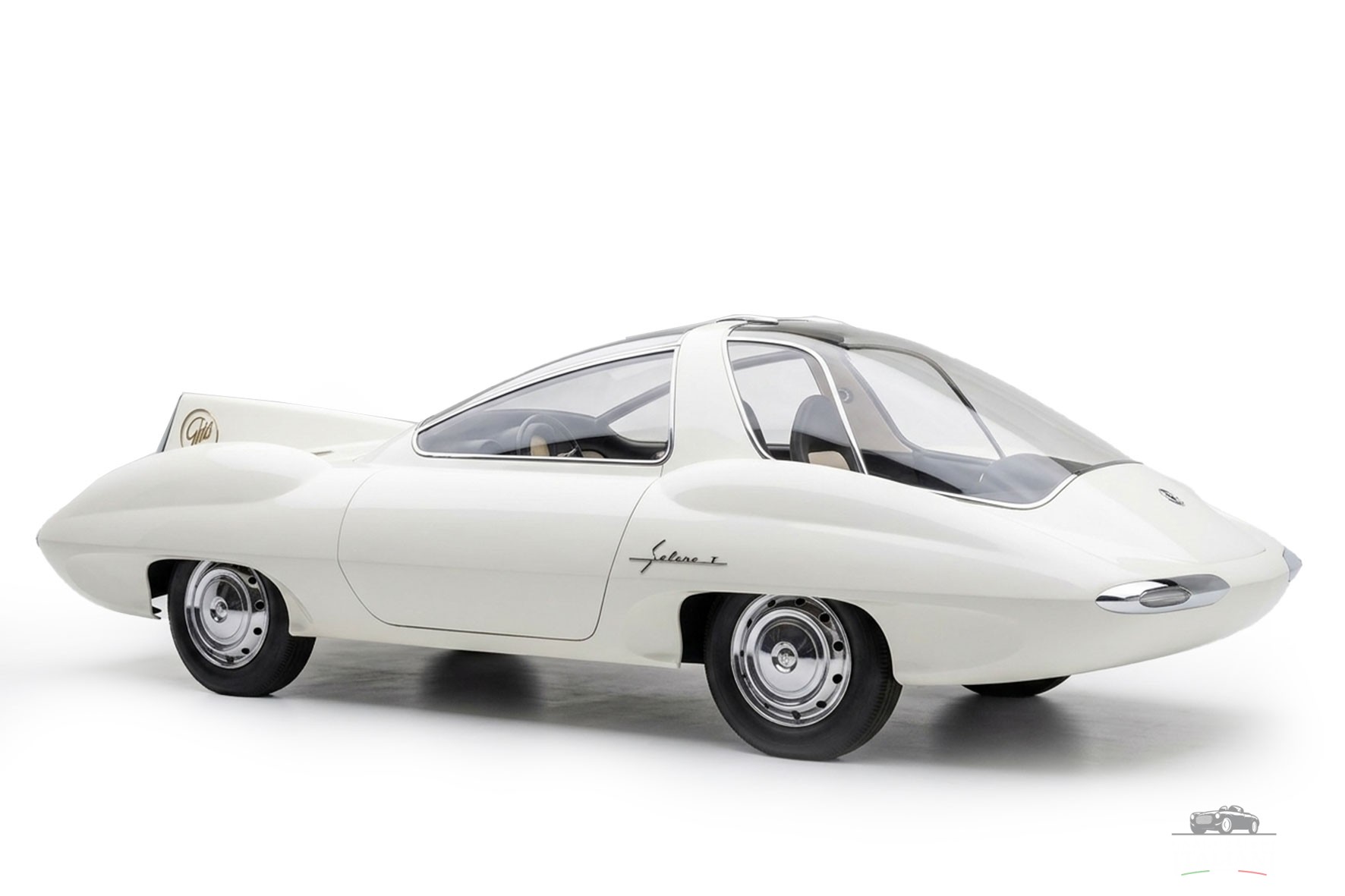
The Ghia Selene II, unveiled at the 1962 Turin Auto Salon, was a stunning example of forward-thinking automotive design. Built by Carrozzeria Ghia and designed by the talented Tom Tjaarda, the Selene II followed in the conceptual footsteps of its predecessor, the Selene I, while introducing new design elements and configurations that made it even more futuristic. The Selene II embraced a distinctive layout, swapping the six-passenger arrangement of the Selene I for a five-person configuration. The most striking feature was its central driving position, flanked by two rear-facing seats and two forward-facing seats in the back. This setup aimed to create a unique and luxurious cabin environment, with a focus on comfort and social interaction among passengers. Like the Selene I, the Selene II retained the cab-forward design, which maximized interior space and gave the car its unconventional, almost spaceship-like proportions. Stylistically, the Selene II was heavily influenced by the 1950s trend of incorporating fighter jet aesthetics into car design. Sleek lines, dramatic curves, and an overall aerodynamic profile made the Selene II look like it belonged in a science fiction film rather than on the roads of the 1960s. Its cutting-edge appearance attracted considerable attention at the time and demonstrated Ghia’s ability to push design boundaries. Although the Selene II was never intended for production, it garnered significant publicity and reflected Ghia’s experimental approach to automotive styling. This concept also prefigured the increasing collaboration between Ghia and Ford, which culminated in Ford acquiring Carrozzeria Ghia in the 1970s. The Selene II became a symbol of Ghia’s innovative spirit during this era of creativity. After years in the small Ghia museum in Turin, the Selene II was eventually sold off in 2002 for approximately $88,000, a reflection of its historical significance and enduring appeal as a design masterpiece. Today, it remains a testament to Tom Tjaarda’s visionary talent and Ghia’s legacy of bold and imaginative concepts.
IN THE ARCHIVE
Coachbuilders & design studios
02 / TECHNICAL IDENTITY
Specifications & construction
Production & construction
- Production
- 1
- Production type
- Concept
- Production notes
- Exact CI and multiple independent references identify the final Ghia Selene II as a 1962 Tom Tjaarda design. Correct year 1960 -> 1962 and replace erroneous PER-VIRGIL-EXNER (Sr.) key with PER-TOM-TJAARDA / documented. A historical Virgil Exner Jr. caption is retained as phase/miscaption conflict, not as canonical authorship. NO_AUTO_INHERIT.
Design & manufacture
- Coachbuilder / Manufacturer / Body Builder · Documented
- Ghia
- Designer · Documented
- Tom Tjaarda
06 / EVENTS & AWARDS
Events & awards
No events or documented awards are currently recorded for this vehicle.
07 / THE VEHICLE IN DETAIL
Photo gallery 6 photographs
08 / FROM THE ARCHIVE
Archive
References held in the vehicle dossier. Their inclusion does not establish that every historical claim has been independently verified.
| Reference | Source type |
|---|---|
| Carrozzieri Italiani — Ghia Selene II www.carrozzieri-italiani.com | Exact vehicle editorial |
| Story Cars — 1962 Ghia Selene II www.story-cars.com | Independent automotive history |
| Ghia Selene model history en.wikipedia.org | Independent model history |
| Imperial Club — conversation with Virgil Exner Jr. www.web.imperialclub.info | Historical interview caption conflict |

THE CONVERSATION
Comments 0
Share a memory, a period photograph or a documented detail about this car.