
THE VEHICLE AT A GLANCE
Model dossier
- Production period
- 2011
- Body style
- Berlina
- Engine
- 2.8-litre DOHC turbo V6
- Type
- Concept
- Displacement
- 2,800 cc
- Power
- 300 hp
- Top speed
- 250 km/h
- Seats
- 5
THE PEOPLE BEHIND THE CAR
Coachbuilding, design & conversions

PRICE & SALES RECORD
Vehicle value
- Original price
- Not documented
- Latest recorded sale
- Not documented
01 / THE STORY
History & context
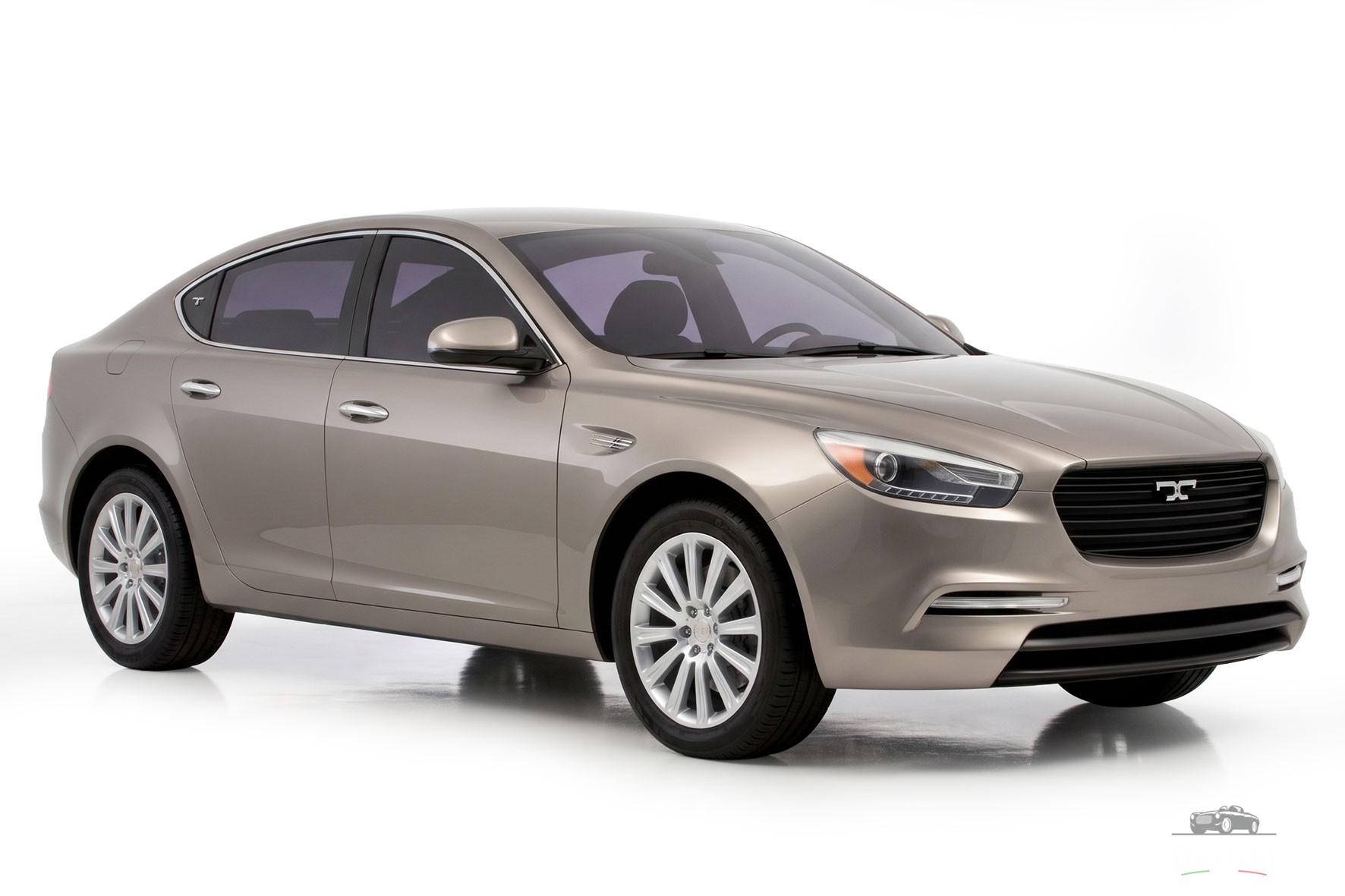
The De Tomaso Deauville Pininfarina concept car. Build on the Cadillac SRX base, the De Tomaso Deauville Pininfarina was characterized by a line that differed from the most popular sedans on the market of that time, taking up volumetric solutions similar to those of the BMW 5 GT Series, but focusing more on sportiness and luxury. The style of the car was entrusted to Pininfarina, as agreed in 2009 after Gian Mario Rossignolo had taken over the Grugliasco production plant through the De Tomaso brand. More than 5 meters long, the design recalls more a SUV than a sedan, making it look very massive and solid with a very high beltline. De Tomaso Deauville is a luxury car prototype built by Pininfarina and unveiled by the Italian car manufacturer De Tomaso in March 2011. Deauville’ refers to the planned production car closely derived from the De Tomaso SLC (Sport Luxury Crossover) prototype exhibited at the 2011 Geneva motor show. This was a running prototype of a crossover-type car destined to anticipate the philosophy of the new De Tomaso brand after long years of unproductivity. The production car derived from it was to be the forerunner of the Modenese brand’s future production and ‘saviour’ of the former Pininfarina plant in Grugliasco (TO). The SLC brought into its design several concepts linked to the world of car design, not only conceptual or aesthetic but also engineering. The prototype intended for production was to take advantage of a production technology called Univis, patented by IAI (Innovation in Auto Industry), the holding company that owns the De Tomaso brand. This is a solution that involves the assembly of the chassis using extruded aluminium profiles of standardised dimensions joined together by laser-trimmed and welded cross joints. This solution, according to De Tomaso, should have significantly reduced the cost and time of production and development of the platform and its maintenance or post-production work applicable to it. The patent dates back to 1984 and was developed by Giuliano Malvino for the mechanics of the Rayton Fissore Magnum and later transferred to IAI. The running prototype, however, was made by re-cropping the mechanical base of the American-made Cadillac SRX crossover including the six-hub wheels and reusing the same dashboard and steering wheel. A General Motors spokesman stated that De Tomaso bought the Cadillac through the Italian sales network and there was no agreement to supply the components. Despite the premise, this solution created a lot of scepticism around it from critics and specialists in the sector, who considered the statements too optimistic and not very credible; only the putting into production of the car could in itself prove to the sceptics its true validity. In addition to technology, the car encompasses several concepts of modularity and image; the acronym SLC (Sport Luxury Crossover) identifies a car with unconventional shapes aimed at enhancing comfort, roominess and luxury. After its initial presentation, the acronym was changed to SLS or Sport Luxury Sedan to emphasise the car’s desire to meet the requirements of a large luxury saloon. In addition, the car was designed for semi-craftsmanship and thus completely customisable by the customer. The image of the car is therefore, according to the designers, imposing but harmonious, luxurious but outside the classic canons of luxury saloons. Shortly before its presentation at Geneva, the prototype was definitively named Deauville, recalling the historic De Tomaso Deauville of 1971. The Deauville was characterised by a line that departed from the most popular saloons on the market, taking up volumetric solutions similar to those of the BMW 5 Series, but concentrating more on a sporty and even more luxurious image. The styling of the car was entrusted to Pininfarina, as per an agreement made in 2009 after Gian Mario Rossignolo had taken over the Grugliasco production plant through De Tomaso. The upper line of the car body, more than 5 metres long, which joins the two extremes, front and rear, is streamlined although the body rests on a raised body, which makes the vehicle lose its sportiness but gives it robustness and solidity. Consequently, the front of the car is also massive and incorporates a very large radiator grille with the new logo designed by Peter Arnell in the centre. The very high-tailed rear, like the entire beltline of the side, ends without a real third volume, since the boot volume is almost totally connected to the roof, which ends with a very tapered line, as on the 4-door coupes.
IN THE ARCHIVE
Coachbuilders & design studios
02 / TECHNICAL IDENTITY
Specifications & construction
Production & construction
- Production type
- Concept
Engine & performance
- Engine configuration
- 2.8-litre DOHC turbo V6
- Displacement
- 2,800 cc
- Power (hp)
- 300 hp
- Torque
- 400 Nm
- Transmission
- 6-speed automatic
- Drive
- All-wheel drive
- Top speed
- 250 km/h
- Specification notes
- Contemporary Geneva 2011 specification: De Tomaso Deauville/SLC, styled by Pininfarina, used a 2.8-litre DOHC turbo V6 rated at 300 hp and 400 Nm, 6-speed automatic and AWD; 5080 x 1950 x 1630 mm, wheelbase 2950 mm, about 1850 kg, five seats and 250 km/h.
Dimensions & accommodation
- Wheelbase
- 2,950 mm
- Length
- 5,080 mm
- Width
- 1,950 mm
- Height
- 1,630 mm
- Weight
- 1,850 kg
- Seats
- 5
Design & manufacture
- Manufacturer · Documented
- De Tomaso
- Coachbuilder / Body Builder · Documented
- Pininfarina
06 / EVENTS & AWARDS
Events & awards
Geneva General · legacy_preserved
- Date
- 2011
- Chassis
- General
Preserved CI 1.0 relation. Evidence field: _yoast_wpseo_primary_events. No award inferred.
07 / THE VEHICLE IN DETAIL
Photo gallery 9 photographs
Show 3 more photographs Show fewer photographs
08 / FROM THE ARCHIVE
Archive
References held in the vehicle dossier. Their inclusion does not establish that every historical claim has been independently verified.
| Reference | Source type |
|---|---|
| Quattroruote — De Tomaso Deauville, un rientro in grande stile www.quattroruote.it | Contemporary major automotive press |
| Quattroruote — De Tomaso, una crossover di lusso per Ginevra www.quattroruote.it | Contemporary major automotive press |
| Caradisiac — De Tomaso Deauville Genève 2011 www.caradisiac.com | Independent automotive press |
THE CONVERSATION
Comments 0
Share a memory, a period photograph or a documented detail about this car.