
THE VEHICLE AT A GLANCE
Model dossier
- Production period
- 1965
- Body style
- Spider
- Engine
- Inline-4
- Type
- Mass
- Displacement
- 958 cc
- Power
- 65 CV
- Top speed
- 145 km/h
THE PEOPLE BEHIND THE CAR
Coachbuilding, design & conversions
PRICE & SALES RECORD
Vehicle value
- Original price
- Not documented
- Latest recorded sale
- Not documented
01 / THE STORY
History & context
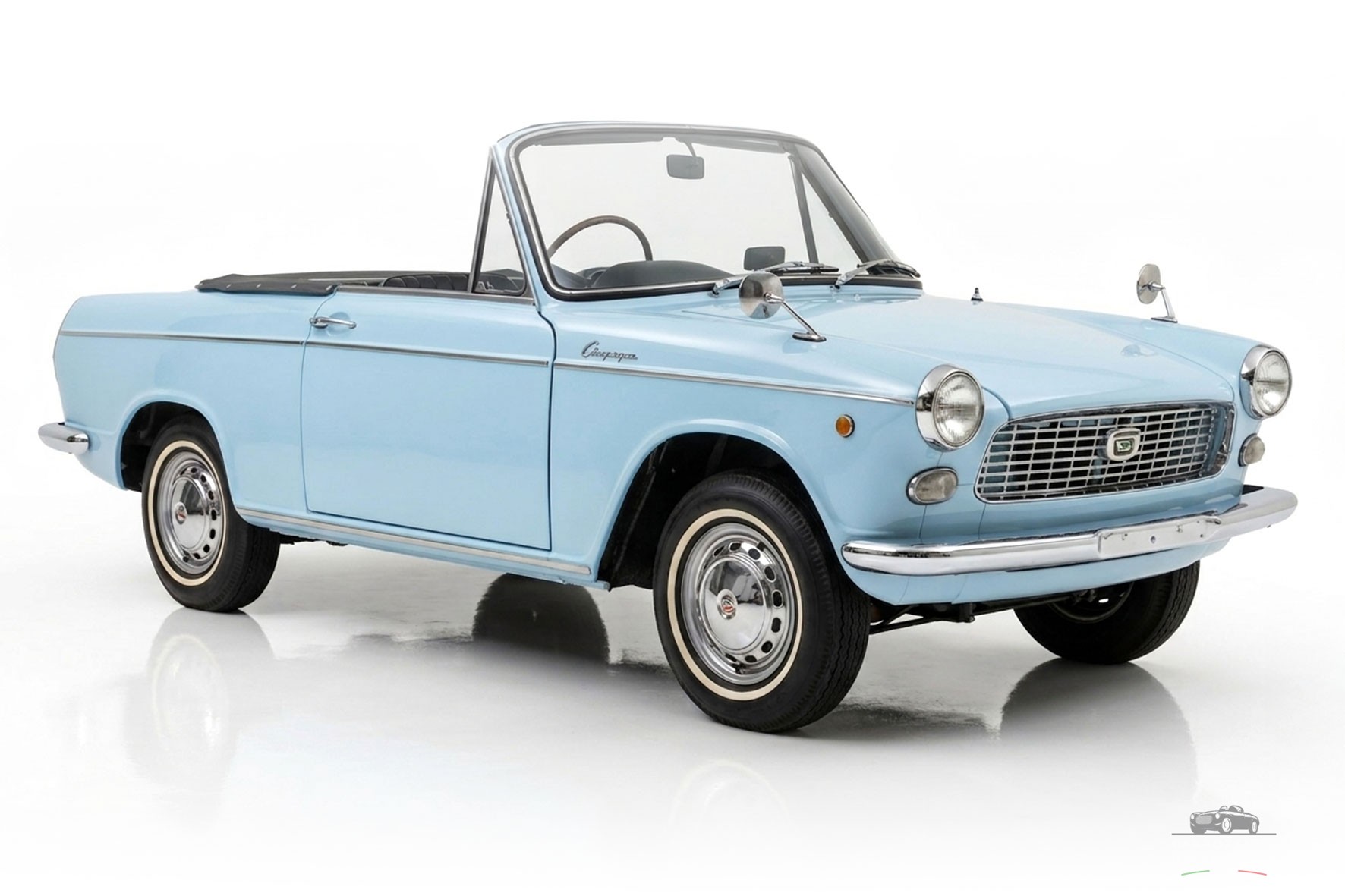
The Daihatsu Compagno Spider, designed by the renowned Italian coachbuilder Vignale, was unveiled in April 1965, marking a significant step in the brand’s evolution. The car introduced the larger and more powerful 1000 cc engine, which was a noticeable upgrade from the earlier models. Initially, Daihatsu kept the engine displacement below one liter to ensure the car would be in the lowest road tax bracket, making it more accessible to Japanese buyers. However, the Compagno Spider received a twin-carburetor unit that produced 65 PS (48 kW), offering a performance boost that made it a more exciting option on the road. Just one month after the Spider’s release, the larger engine was also fitted into the Compagno Berlina, a four-door sedan version, which was only available with the more powerful 1000 cc engine. The four-door model featured a 60 mm (2.4 in) longer wheelbase compared to the Spider, offering more interior space. The 1000 Berlina retained the same 65 PS engine as the Spider, but it was now paired with a more comfortable and refined body style suited for family use. In October 1965, Daihatsu expanded the Compagno line further with the introduction of the F31P Compagno Truck, a small pickup capable of carrying up to 500 kg (1,100 lb). This addition reflected the growing popularity of small utility vehicles in Japan. Meanwhile, the 800 cc engine was gradually relegated to the lesser variants as the 1000 cc models gained popularity. Later in November 1965, the Compagno 1000 GT was introduced. This model was essentially a two-door Berlina equipped with the more powerful Spider engine, bringing a sportier edge to the lineup. The Compagno series also introduced a two-speed automatic transmission in April 1967, enhancing the car’s convenience for urban driving. Between 1963 and 1970, Daihatsu produced 120,000 Compagnos. The model’s journey began with the Compagno Light Van in April 1963, followed by the more luxurious Compagno Wagon, Daihatsu’s first passenger car. The Berlina, launched later that year, featured an Italianate dashboard, designed by Vignale, complete with a stylish three-spoke Nardi steering wheel.
IN THE ARCHIVE
Coachbuilders & design studios
02 / TECHNICAL IDENTITY
Specifications & construction
Production & construction
- Production type
- Mass
Engine & performance
- Engine configuration
- Inline-4
- Displacement
- 958 cc
- Power (CV)
- 65 CV
- Engine speed
- 6,500 rpm
- Torque
- 77 Nm
- Transmission
- 4-speed manual
- Drive
- Rear-wheel drive
- Top speed
- 145 km/h
- Specification notes
- 1965 F40K production Spider baseline: inline-four 958 cc, 65 PS SAE at 6500 rpm, 77 Nm, 4-speed manual, RWD, wheelbase 2220 mm, 3795 × 1445 mm, curb weight 790 kg, declared top speed 145 km/h. Height is not stored because available period-derived references require direct catalogue confirmation.
Dimensions & accommodation
- Wheelbase
- 2,220 mm
- Length
- 3,795 mm
- Width
- 1,445 mm
- Weight
- 790 kg
Design & manufacture
- Coachbuilder / Body Builder · Documented
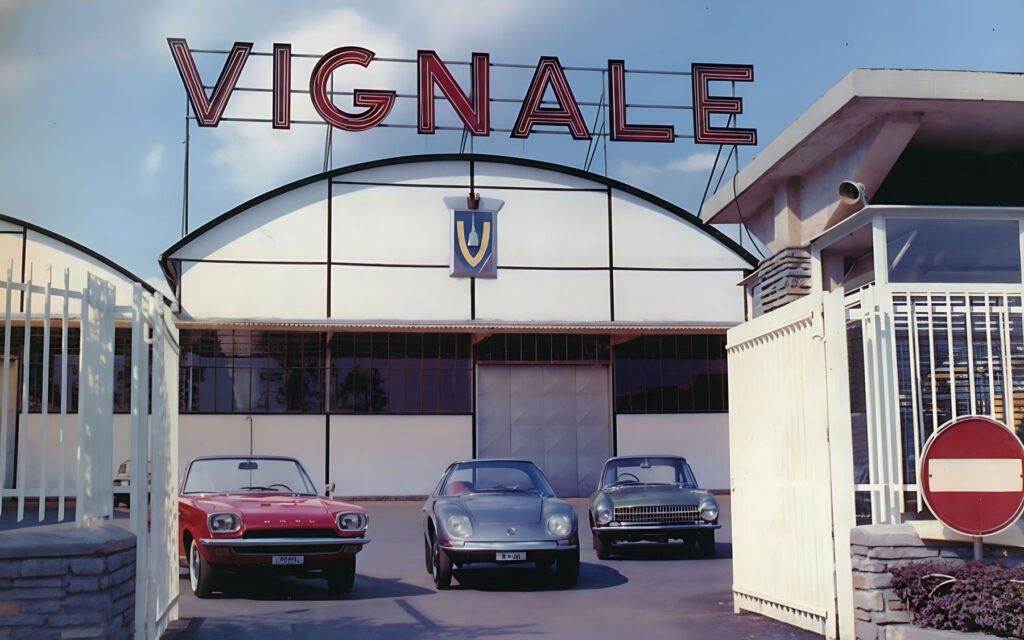
- Vignale
- Manufacturer · Documented
- Daihatsu
06 / EVENTS & AWARDS
Events & awards
No events or documented awards are currently recorded for this vehicle.
07 / THE VEHICLE IN DETAIL
Photo gallery
No publishable photographs are currently catalogued for this vehicle.
08 / FROM THE ARCHIVE
Archive
References held in the vehicle dossier. Their inclusion does not establish that every historical claim has been independently verified.
| Reference | Source type |
|---|---|
| Vignale history scan — Japanese collaboration / Daihatsu Compagno automotivemasterpieces.com | Historical magazine/book scan |
| Toyota Automobile Museum Library — 1965 Daihatsu Compagno Spider catalogue crd.ndl.go.jp | Museum library catalogue record |
| 1965 Daihatsu Compagno Spider F40K specifications www.automobile-catalog.com | Specialist period catalogue reference |
THE CONVERSATION
Comments 0
Share a memory, a period photograph or a documented detail about this car.