
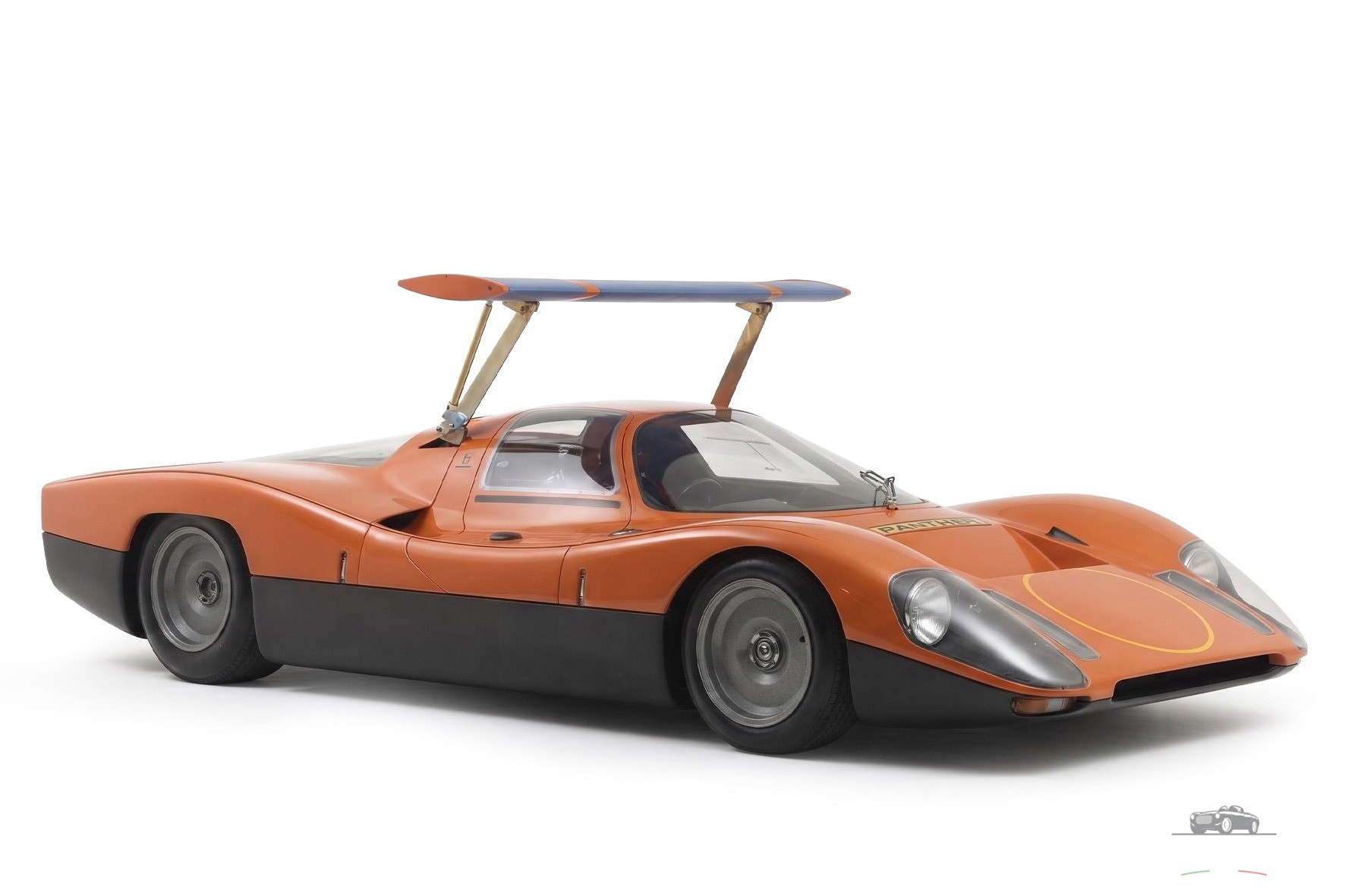
THE VEHICLE AT A GLANCE
Model dossier
- Production period
- 1968
- Body style
- Coupé
- Type
- Prototype
THE PEOPLE BEHIND THE CAR
Coachbuilding, design & conversions

PRICE & SALES RECORD
Vehicle value
- Original price
- Not documented
- Latest recorded sale
- Not documented
01 / THE STORY
History & context
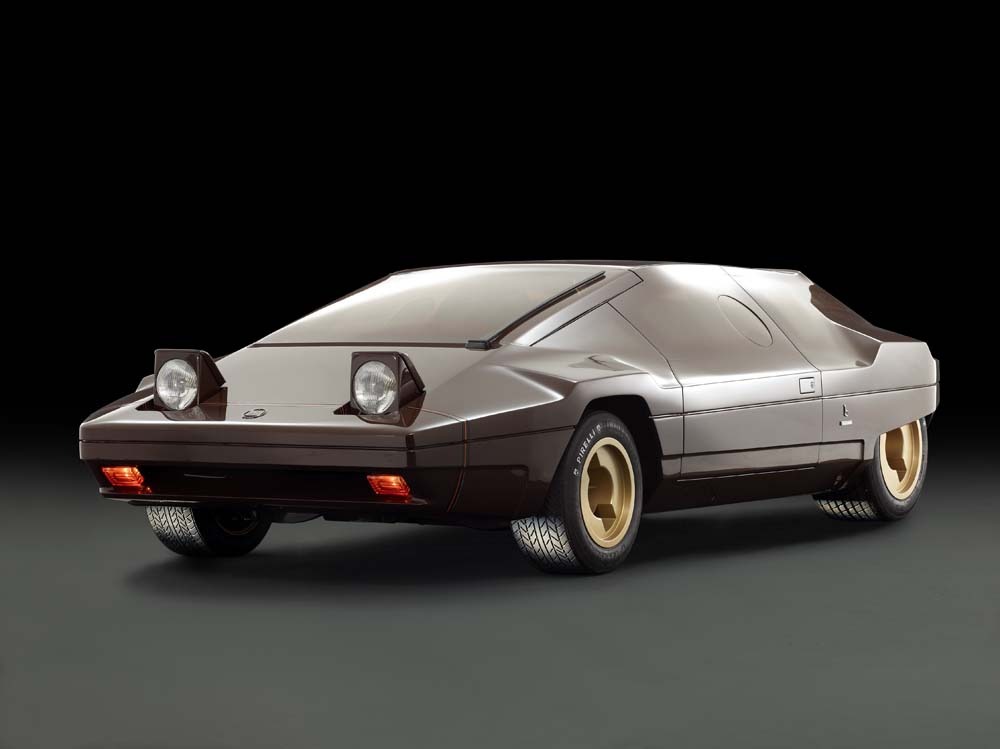
The Bertone Panther was commissioned by Italian entrepreneur Alfredo Belponer and his racing team, Scuderia Brescia Corse, founded in 1964. The team had competed in the World Sports Car Championship with cars like the Ford GT40, Dino, and Porsche 906 until 1967. For the 1968 season, a new project was initiated in response to the three-liter displacement limit for Group 6 prototypes, similar to Formula 1 regulations. The northern Italian racing community decided to develop their own vehicle and tasked Carrozzeria Bertone with its creation in 1967. The envisioned engine options included a 3-liter Formula 1 V12 from BRM or Maserati, with a gas turbine also considered. The engineering project was led by Giorgio Valentini, with support from racing driver Umberto Maglioli. After 1570 hours of work and based on 500 drawings, they produced a closed two-seater with a state-of-the-art monocoque chassis. The aluminium panels were bonded using an innovative method that required freezing the bonding agent and conducting the process in a vacuum chamber, foreshadowing the carbon fiber chassis techniques of the 1980s. The car featured a hydraulically controlled spoiler above the cockpit and advanced solutions like sophisticated suspension geometry and a 24-volt electrical system. Bertone collaborated with specialized companies Fibroresina and Viberti to develop the plastic bodywork. However, the high costs of development meant the Panther presented at the 1968 Geneva Motor Show lacked an engine. Scuderia Brescia Corse intended to compete in a full European season with the Panther and planned to build six units, but financial constraints halted the project. The car, designed by Gandini, remained a one-off and stayed with Maglioli, who had heavily invested in it. Maglioli eventually sold the car to Swiss designer Franco Sbarro, who aimed to produce a small series for the road. Sbarro modified the chassis, designed a roadworthy interior, removed the wing, renamed the car “Tiger,” and installed a 6.3-liter V8 engine from Mercedes-Benz. The car was showcased at the 1973 Geneva Motor Show, with plans to produce 15 units and three orders already placed. A brochure offered additional engine options, including V8s from Ford, Chevrolet, and Chrysler. However, production stalled because Sbarro did not receive the bodywork moulds, leaving the project incomplete.
IN THE ARCHIVE
Related people
IN THE ARCHIVE
Coachbuilders & design studios
02 / TECHNICAL IDENTITY
Specifications & construction
Production & construction
- Production type
- Prototype
Engine & performance
- Specification notes
- AISA documentation of the Scuderia Brescia Corse Panther establishes that the sole Geneva 1968 display prototype was presented without an engine. A BRM V12 and Hewland transmission were planned but never installed; no realised powertrain is therefore materialized.
Design & manufacture
- Coachbuilder / Manufacturer / Body Builder · Documented
- Bertone
- Designer · Candidate
- Marcello Gandini
06 / EVENTS & AWARDS
Events & awards
Geneva General · legacy_preserved
- Date
- 1968
- Chassis
- General
Preserved CI 1.0 relation. Evidence field: _yoast_wpseo_primary_events. No award inferred.
07 / THE VEHICLE IN DETAIL
Photo gallery 2 photographs
08 / FROM THE ARCHIVE
Archive
References held in the vehicle dossier. Their inclusion does not establish that every historical claim has been independently verified.
| Reference | Source type |
|---|---|
| Scuderia Brescia Corse — Il progetto Panther www.scuderiabresciacorse.it | Organization history |
| AISA — Scuderia Brescia Corse www.aisastoryauto.it | Historical monograph |
THE CONVERSATION
Comments 0
Share a memory, a period photograph or a documented detail about this car.