
THE VEHICLE AT A GLANCE
Model dossier
- Manufacturer
- Alfa Romeo
- Base model
- 750 Competizione
- Coachbuilder
- Boano
- Production period
- 1955
- Body style
- Barchetta
- Engine
- Inline-4 DOHC, twin-spark
- Type
- Limited
- Displacement
- 1,488 cc
- Power
- 145 CV
- Top speed
- 220 km/h
- Seats
- 2
THE PEOPLE BEHIND THE CAR
Coachbuilding, design & conversions

PRICE & SALES RECORD
Vehicle value
- Original price
- Not documented
- Latest recorded sale
- Not documented
01 / THE STORY
History & context
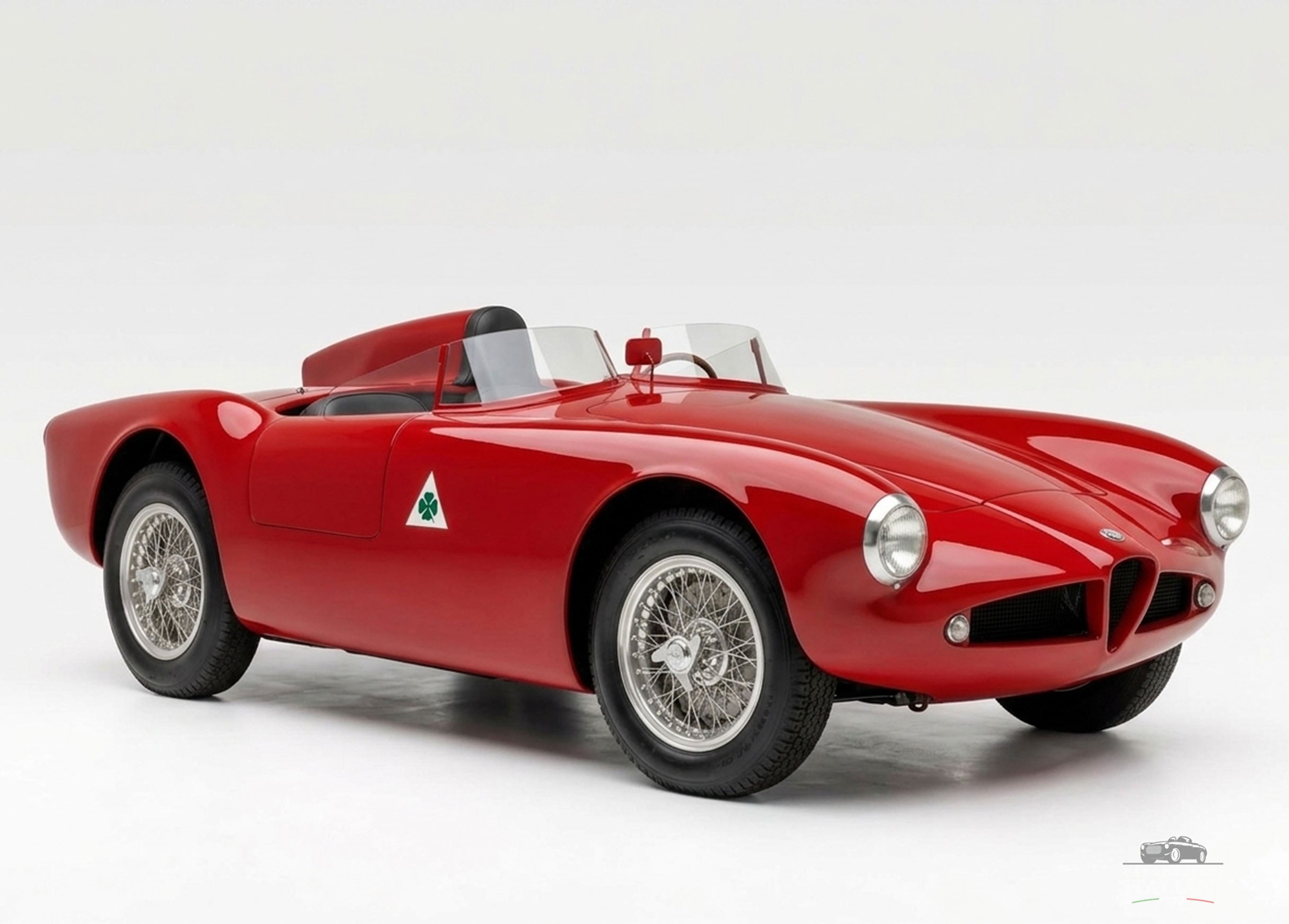
The Alfa Romeo 750 Competizione Boano is a fascinating chapter in the storied history of Alfa Romeo, epitomizing the brand’s enduring racing heritage during the transformative 1950s. After securing victories in the first two Formula 1 Drivers’ Championships, Alfa Romeo withdrew from the premier racing series but continued to infuse their production cars with a racing spirit. While the Alfa Romeo 1900 and Giulietta models became known as family cars capable of winning races in the touring category, the company was quietly developing prototypes for the sport category. Among these prototypes was the Alfa Romeo 750 Competizione. This model followed the innovative and futuristic 1900 C52, known as the Disco Volante, or “Flying Saucer,” due to its unique ogival cross-section body. Unlike the Disco Volante, the 750 Competizione was unconventional in its own right but tailored to the era’s sporting demands. The “750” designation in the 750 Competizione does not refer to engine displacement but was an internal code associated with the Giulietta. This prototype was a collaborative effort with Abarth, which handled the engine tuning and chassis construction. The trusted coachbuilder Boano was then tasked with developing the car’s original bodywork, distinct from the prevailing Alfa Romeo designs of the period. Boano’s work resulted in a unique and striking vehicle, aligning with the experimental and performance-focused ethos of the project. The engine, chassis, and bodywork of the 750 Competizione were all designed to push the boundaries of what Alfa Romeo had achieved up to that point, ensuring that the brand’s racing DNA remained vibrant and influential despite their official withdrawal from Formula 1. The 750 Competizione represents a blend of innovative engineering and bold design, showcasing the collaborative spirit between Alfa Romeo, Abarth, and Boano. Although it did not become a mainstream production model, its development and the principles behind it influenced Alfa Romeo’s continued success in both the racing and production car arenas. This prototype stands as a testament to Alfa Romeo’s commitment to performance, innovation, and their illustrious racing heritage.
IN THE ARCHIVE
Coachbuilders & design studios
02 / TECHNICAL IDENTITY
Specifications & construction
Production & construction
- Production type
- Limited
- Chassis construction
- Pressed-steel load-bearing chassis/body structure
Engine & performance
- Engine configuration
- Inline-4 DOHC, twin-spark
- Displacement
- 1,488 cc
- Power (CV)
- 145 CV
- Transmission
- 5-speed manual
- Drive
- Rear-wheel drive
- Top speed
- 220 km/h
- Specification notes
- Stellantis Heritage documents a 1,488 cc Giulietta-derived twin-cam with twin ignition, 145 CV at over 8,000 rpm, five-speed gearbox, front independent suspension, rigid rear axle and a maximum speed exceeding 220 km/h.
Dimensions & accommodation
- Seats
- 2
Individual vehicle
- Documented chassis
2 chassis
- 1369.002
- 1369.003
Design & manufacture
- Manufacturer · Documented
- Alfa Romeo
- Coachbuilder / Body Builder · Documented
- Boano
06 / EVENTS & AWARDS
Events & awards
No events or documented awards are currently recorded for this vehicle.
07 / THE VEHICLE IN DETAIL
Photo gallery 5 photographs
08 / FROM THE ARCHIVE
Archive
References held in the vehicle dossier. Their inclusion does not establish that every historical claim has been independently verified.
| Reference | Source type |
|---|---|
| Stellantis Heritage — Alfa Romeo 750 Competizione www.stellantisheritage.com | Manufacturer heritage article |
THE CONVERSATION
Comments 0
Share a memory, a period photograph or a documented detail about this car.