
THE VEHICLE AT A GLANCE
Model dossier
- Production period
- 1968
- Body style
- Berlina
- Engine
- Inline-4
- Type
- Mass
- Displacement
- 1,779 cc
- Power
- 118 CV
THE PEOPLE BEHIND THE CAR
Coachbuilding, design & conversions


PRICE & SALES RECORD
Vehicle value
- Original price
- Not documented
- Latest recorded sale
- Not documented
01 / THE STORY
History & context
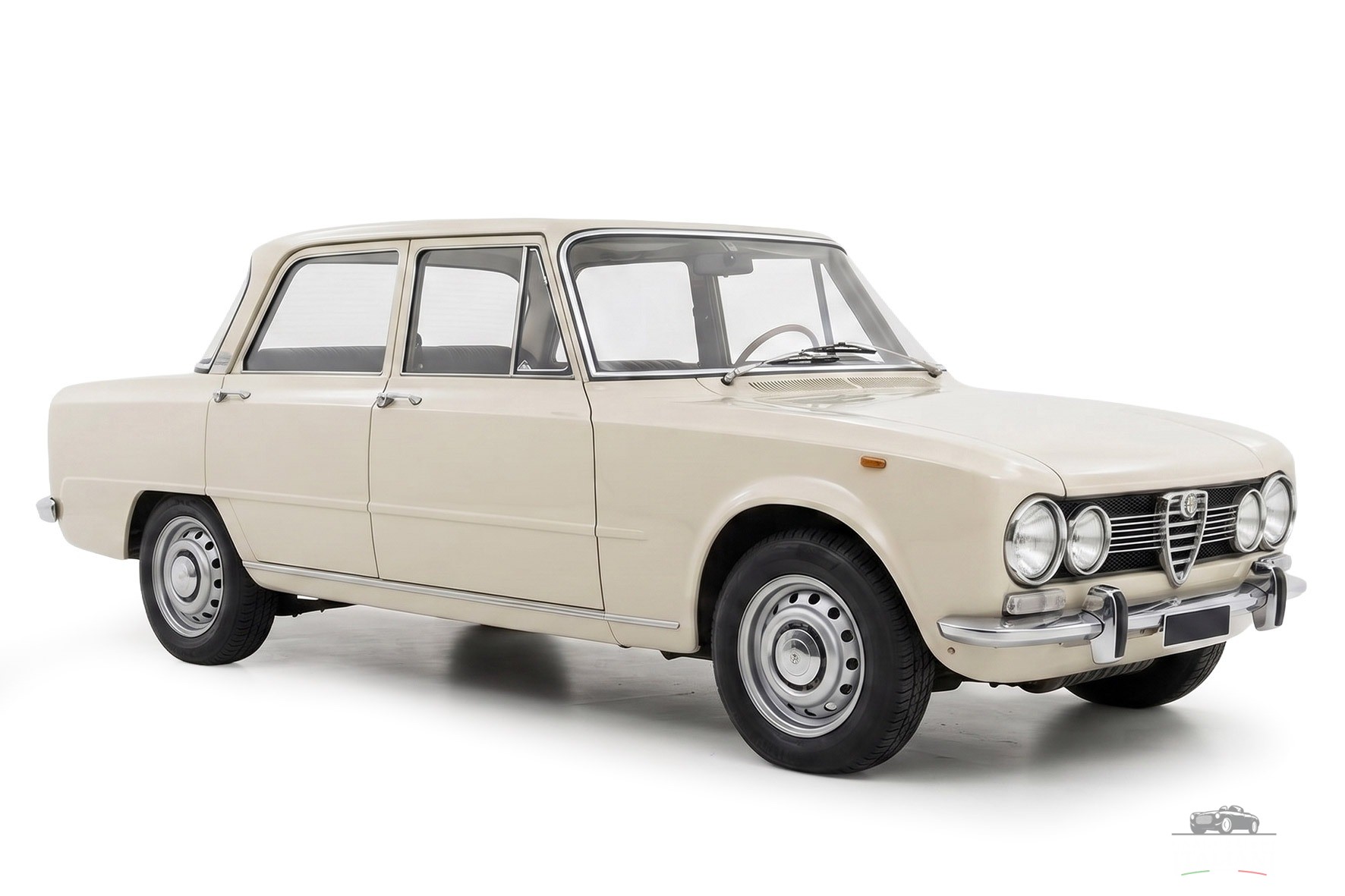
In January 1968, Alfa Romeo introduced the 1750 Berlina, a mid-sized saloon that marked an important evolution in the brand’s lineup. The 1750 was derived from the earlier Giulia T.I., with a few key differences that made it stand out in both performance and design. One of the most notable upgrades was the engine—a 1779 cc four-cylinder twin-cam engine that produced 118 horsepower at 5,500 rpm, offering improved power and performance compared to the Giulia. The wheelbase of the 1750 was also stretched from 2510 mm to 2570 mm, contributing to a more comfortable ride and greater interior space. The bodywork of the 1750 Berlina was developed by the renowned Italian coachbuilder Bertone, known for its stylish and innovative automotive designs. However, despite Bertone’s involvement, the overall aesthetic of the 1750 was shaped by a more traditional styling approach. By the late 1960s, Alfa Romeo’s design language was beginning to feel somewhat dated compared to more modern, experimental designs that were emerging elsewhere in Europe. The 1750 Berlina’s design, with its more angular lines and conventional proportions, reflected this shift in the automotive world, and while the car was visually conservative, it was still a well-executed design for its time. Despite its somewhat conservative styling, the 1750 Berlina was a commercial success. Between its launch in 1968 and the end of production in 1977, a total of 197,722 units of the various versions were built, demonstrating that the car resonated well with buyers. Its blend of solid performance, reliability, and reasonable price made it a popular choice for a wide range of customers. The 1750 Berlina’s combination of the upgraded twin-cam engine, increased interior space, and understated yet functional design allowed it to compete well in a competitive market, securing its place as one of Alfa Romeo’s successful models during the 1960s and 1970s. Though the 1750 Berlina’s design may not have been groundbreaking, it remains an important part of Alfa Romeo’s legacy, representing the brand’s commitment to blending performance with everyday usability. Its success in the market helped to solidify Alfa Romeo’s reputation for producing well-engineered, attractive cars with solid performance and a distinctive Italian character.
IN THE ARCHIVE
Related people
IN THE ARCHIVE
Coachbuilders & design studios
02 / TECHNICAL IDENTITY
Specifications & construction
Production & construction
- Production type
- Mass
Engine & performance
- Engine configuration
- Inline-4
- Displacement
- 1,779 cc
- Power (CV)
- 118 CV
- Engine speed
- 5,500 rpm
- Specification notes
- Confidence detail moved from confidence: very_high official. Official Alfa Romeo historical technical data materialized: inline-four twin-cam, 1779 cc, 118 CV at 5500 rpm, wheelbase 2570 mm, length 4390 mm, weight 1060 kg; top speed is stated only as over 180 km/h, so no exact max_speed value is stored.
Dimensions & accommodation
- Wheelbase
- 2,570 mm
- Length
- 4,390 mm
- Weight
- 1,060 kg
Design & manufacture
- Design Studio · Documented
- Bertone
- Manufacturer · Documented
- Alfa Romeo
- Designer · Documented
- Marcello Gandini
06 / EVENTS & AWARDS
Events & awards
No events or documented awards are currently recorded for this vehicle.
07 / THE VEHICLE IN DETAIL
Photo gallery 3 photographs
08 / FROM THE ARCHIVE
Archive
References held in the vehicle dossier. Their inclusion does not establish that every historical claim has been independently verified.
| Reference | Source type |
|---|---|
| Alfa Romeo — Scheda tecnica 1750 Berlina (1968) www.media.stellantis.com | Manufacturer historical technical reference |
THE CONVERSATION
Comments 0
Share a memory, a period photograph or a documented detail about this car.