
THE VEHICLE AT A GLANCE
Model dossier
- Production period
- 1958
- Body style
- Coupé
- Engine
- Inline-4 DOHC
- Type
- Limited
- Displacement
- 958 cc
- Power
- 88 CV
THE PEOPLE BEHIND THE CAR
Coachbuilding, design & conversions

PRICE & SALES RECORD
Vehicle value
- Original price
- Not documented
- Latest recorded sale
- Not documented
01 / THE STORY
History & context
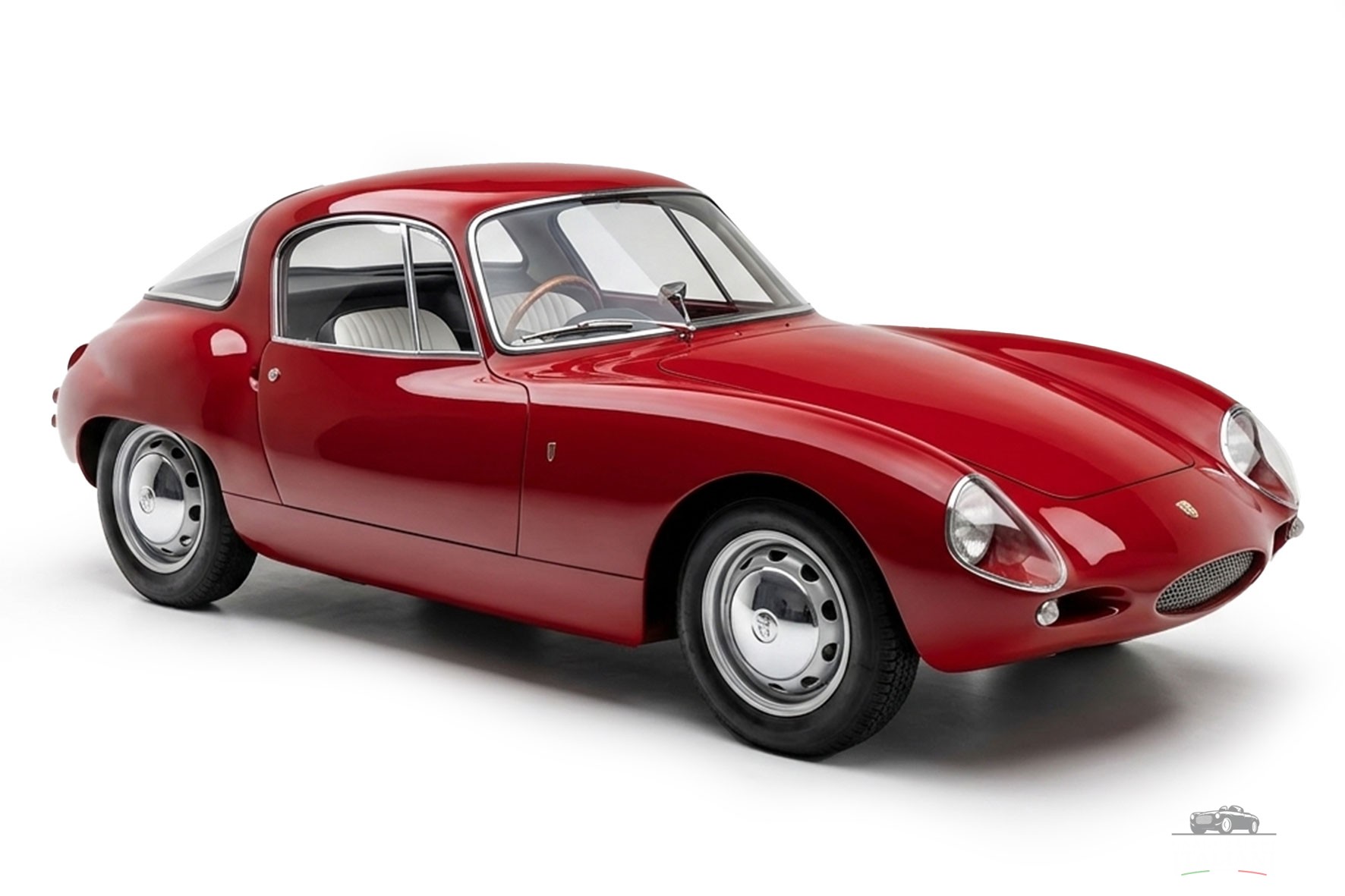
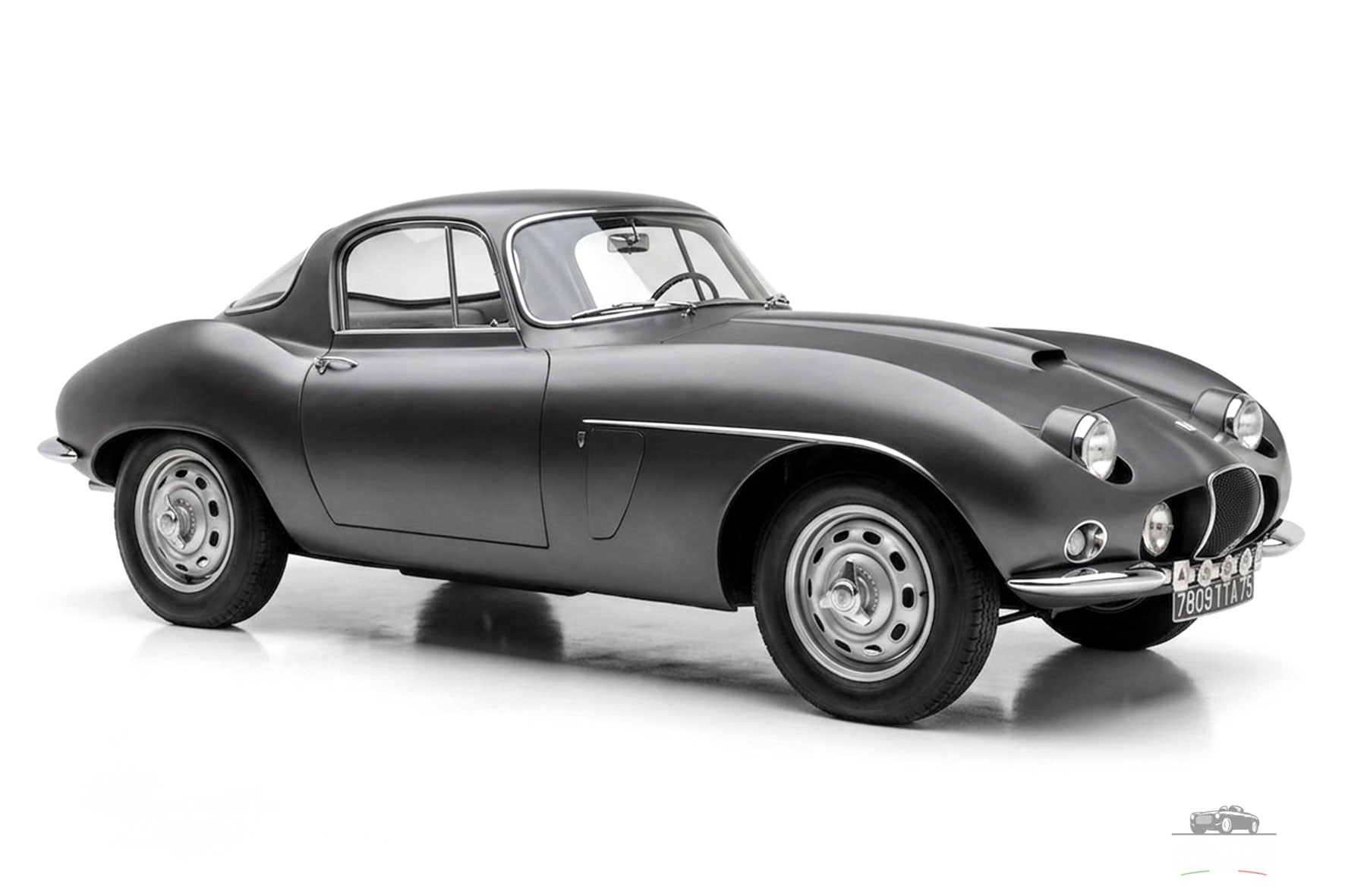
The Alfa Romeo Abarth 1000, built by Bertone and designed by Franco Scaglione in 1958, was a remarkable collaboration between two iconic names in automotive history. This rare and innovative sports car was created with a focus on lightweight engineering and high performance, making it a formidable competitor in racing categories limited to sub-one-liter engines. The car was powered by a 1.0-liter inline-four engine developed by Alfa Romeo, featuring double overhead camshafts and delivering 88 PS (65 kW; 87 hp). This engine was a short-stroke variant of the 1.3-liter engine from the Alfa Romeo Giulietta, with a reduced stroke of 58.0 mm (2.28 in) while retaining the same bore of 74.0 mm (2.91 in). The modification allowed the engine to comply with racing regulations for its class, enabling it to deliver excellent performance despite its modest displacement. A key feature of the Alfa Romeo Abarth 1000 was its advanced tubular chassis, which reportedly weighed just 50 kg (110 lb). This, combined with the car’s total kerb weight of only 640 kg (1,411 lb), allowed the lightweight structure to offset the engine’s modest power, resulting in an agile and responsive driving experience. The car was equipped with a fully synchronized five-speed “System Porsche” transmission, a sophisticated choice for the time, offering smooth and precise gear changes. Despite its promising design and innovative engineering, the project faced significant setbacks. Only three examples of the Alfa Romeo Abarth 1000 were built, and during testing at the AVUS circuit in Germany, at least two of them were involved in crashes. These incidents raised doubts about the car’s stability and safety in high-speed conditions. Consequently, the project was abandoned, leaving this exceptional prototype as a brief but captivating chapter in automotive history. The Alfa Romeo Abarth 1000 remains a symbol of daring engineering and collaboration, admired today for its bold design, lightweight construction, and unique place in the lineage of Alfa Romeo and Abarth.
IN THE ARCHIVE
Coachbuilders & design studios
02 / TECHNICAL IDENTITY
Specifications & construction
Production & construction
- Production type
- Limited
- Chassis construction
- Tubular spaceframe
Engine & performance
- Engine configuration
- Inline-4 DOHC
- Displacement
- 958 cc
- Power (CV)
- 88 CV
- Engine speed
- 8,000 rpm
- Transmission
- 5-speed manual
- Drive
- Rear-wheel drive
- Specification notes
- 1958 Alfa Romeo Abarth 1000 prototype baseline: Stellantis Heritage documents DOHC inline-four 958 cc, 88 CV at 8000 rpm and 640 kg; technical references give 5-speed manual, RWD, wheelbase 2160 mm and 3690 × 1550 × 1200 mm. Official heritage describes the project as remaining a unique prototype, so production classification should be reviewed separately from the technical data.
Dimensions & accommodation
- Wheelbase
- 2,160 mm
- Length
- 3,690 mm
- Width
- 1,550 mm
- Height
- 1,200 mm
- Weight
- 640 kg
Design & manufacture
- Coachbuilder / Body Builder · Documented
- Bertone
- Manufacturer · Documented
- Alfa Romeo
- Designer · Candidate
- Franco Scaglione
06 / EVENTS & AWARDS
Events & awards
No events or documented awards are currently recorded for this vehicle.
07 / THE VEHICLE IN DETAIL
Photo gallery 2 photographs
08 / FROM THE ARCHIVE
Archive
References held in the vehicle dossier. Their inclusion does not establish that every historical claim has been independently verified.
| Reference | Source type |
|---|---|
| Stellantis Heritage — Alfa Romeo Abarth 1000 www.stellantisheritage.com | Manufacturer heritage |
| 1958 Alfa Romeo Derivazione Abarth 1000 Bertone www.automobile-catalog.com | Specialist period model reference |
THE CONVERSATION
Comments 0
Share a memory, a period photograph or a documented detail about this car.