
THE VEHICLE AT A GLANCE
Model dossier
- Production period
- 1955
- Body style
- Spider
- Engine
- Inline-4
- Type
- One-off
- Production
- 1
- Displacement
- 633 cc
- Top speed
- 140 km/h
- Seats
- 2
THE PEOPLE BEHIND THE CAR
Coachbuilding, design & conversions

PRICE & SALES RECORD
Vehicle value
- Original price
- Not documented
- Latest recorded sale
- Not documented
01 / THE STORY
History & context
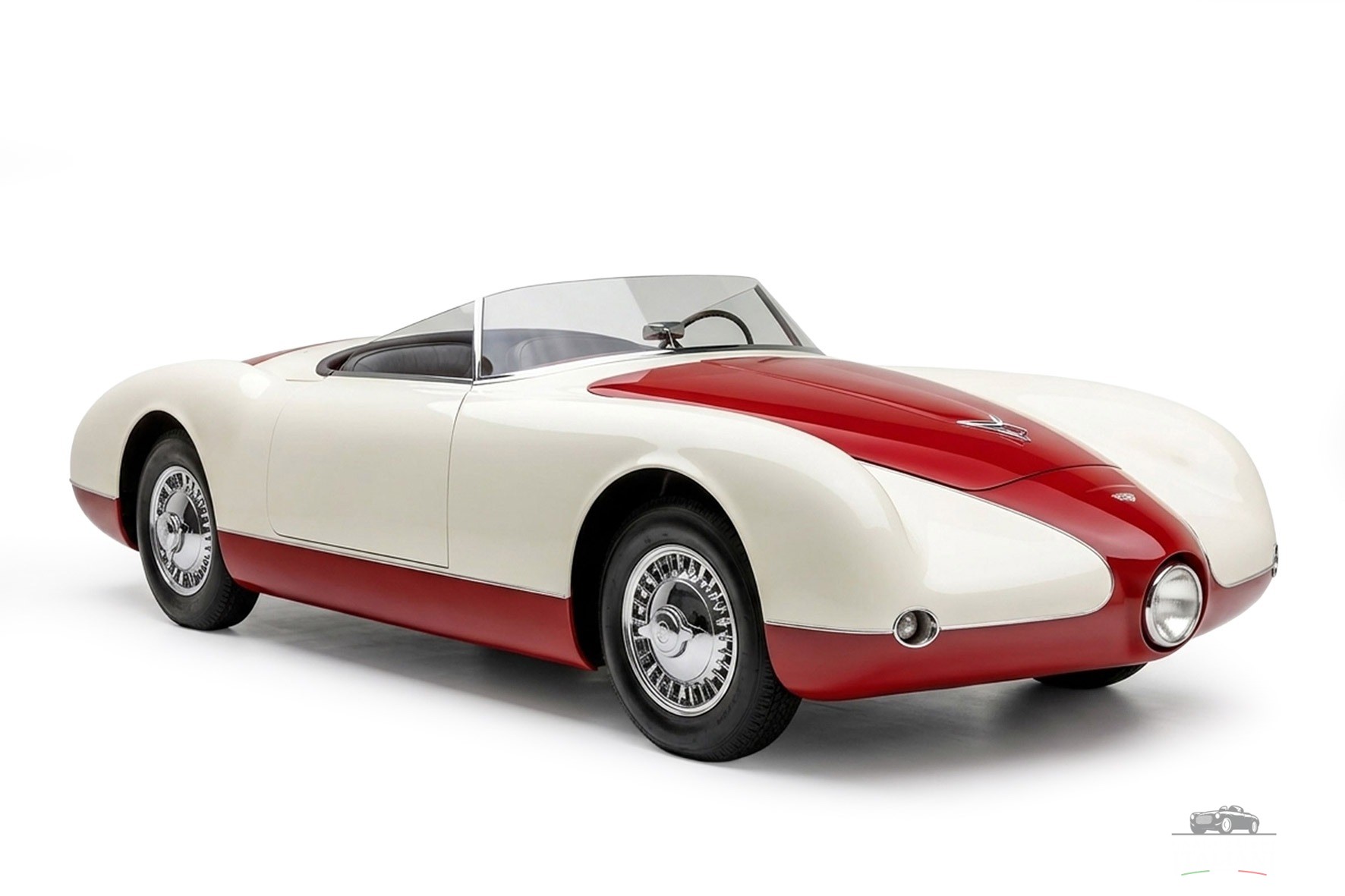
The Abarth 210 A Spider Boano represents a singular chapter in mid-20th-century automotive design and engineering, born from the collaboration between Carlo Abarth and the distinguished coachbuilder Boano. Conceived in 1955, the vehicle is an early example of postwar Italian ingenuity in performance motoring, combining the technical ambitions of Abarth with the stylistic refinement of Boano’s carrozzeria. Constructed on a modified Fiat 600 chassis, the Spider adopted the rear-engine layout characteristic of many Abarth creations, with power delivered through a 633 cc inline-four engine. Despite its modest displacement, the engine produced approximately 32 horsepower, sufficient to propel the lightweight car to a top speed of around 140 kilometers per hour. The bodywork, executed by Boano, is distinguished by its lithe, low-slung profile, marked by understated tailfins, a low-cut wraparound windscreen, and a unique front treatment featuring a centrally positioned headlight. The proportions emphasize compactness and aerodynamic intent, while the restrained decorative elements reflect a transitional moment in coachbuilding, poised between prewar elegance and the emergent idioms of modernist design. The use of aluminum in its construction contributed to a curb weight of roughly 410 kilograms, enhancing its agility and responsiveness, qualities highly prized in both road and competition settings. Though few examples were produced, the 210 A Spider Boano endures as a representative artifact of a period when small-scale manufacturers could achieve remarkable results through strategic partnerships and an uncompromising commitment to innovation. Its significance lies not in widespread influence or racing pedigree, but in its embodiment of a precise moment in automotive history when craftsmanship, engineering ambition, and aesthetic clarity converged. Today, the model is held in high regard among collectors and historians, valued not only for its rarity but for its role in the broader narrative of Abarth’s development and the legacy of postwar Italian coachbuilding. Its preservation serves as a testament to the enduring appeal of hand-built performance vehicles from an era when form and function were pursued with equal fervor.
IN THE ARCHIVE
Coachbuilders & design studios
02 / TECHNICAL IDENTITY
Specifications & construction
Production & construction
- Production
- 1
- Production type
- One-off
Engine & performance
- Engine configuration
- Inline-4
- Displacement
- 633 cc
- Power (hp)
- 32 hp
- Power (CV)
- 32.4 CV
- Power (kW)
- 23.9 kW
- Engine speed
- 5,500 rpm
- Transmission
- 4-speed manual
- Top speed
- 140 km/h
Dimensions & accommodation
- Weight
- 410 kg
- Seats
- 2
Design & manufacture
- Manufacturer · Documented
- Abarth
- Coachbuilder / Body Builder · Documented
- Boano
06 / EVENTS & AWARDS
Events & awards
No events or documented awards are currently recorded for this vehicle.
07 / THE VEHICLE IN DETAIL
Photo gallery 2 photographs
08 / FROM THE ARCHIVE
Archive
References held in the vehicle dossier. Their inclusion does not establish that every historical claim has been independently verified.
| Reference | Source type |
|---|---|
| AISA – Abarth: l'uomo e le sue auto it.readkong.com | Historical association publication |
| Virtuagarage – 1955 Abarth 210 A Spider Boano www.virtuagarage.com | Secondary technical database |

THE CONVERSATION
Comments 0
Share a memory, a period photograph or a documented detail about this car.