
Lancia Aurelia B24 Spider: When Pininfarina Sculpted a Venus
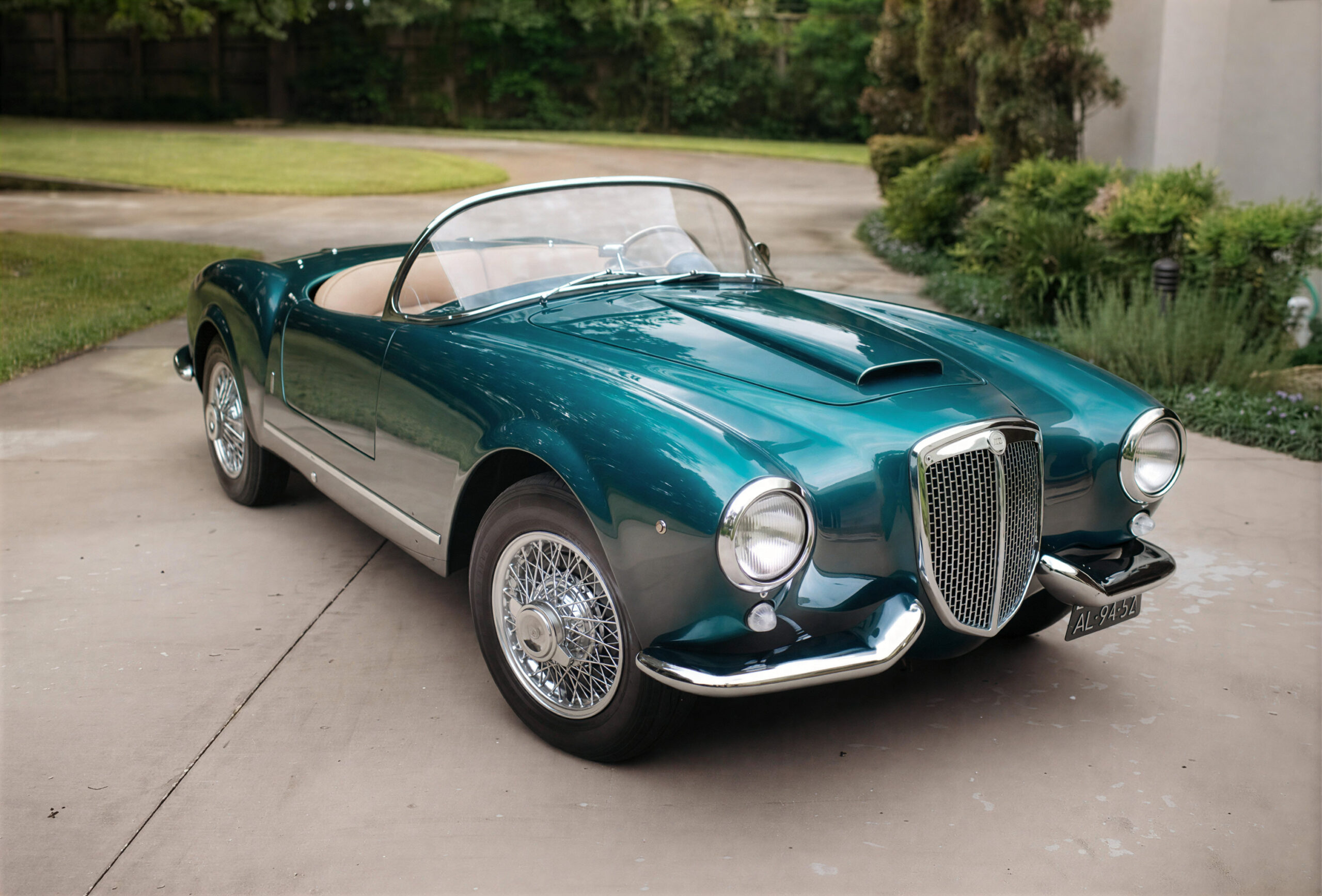
In the tumultuous aftermath of World War II, Italy’s battered cities and rationed economies could not stifle the nation’s fervor for beauty and innovation. Turin’s factories, once churning war machinery, rebounded to craft dreams on wheels. Against this backdrop, Lancia’s ambitious engineering and Pininfarina’s unfettered artistry combined to birth the Aurelia – a name destined to be whispered in reverence by connoisseurs. Launched in 1950 as a postwar flagship, the Aurelia introduced a host of technical marvels – Italy’s first production V6 engine, a rear-mounted transaxle, and four-wheel independent suspension – all wrapped in a luxurious coachbuilt package. But it was the ultimate open-top grand tourer, the Aurelia B24 Spider, that would come to epitomize the golden age of Italian coachbuilding. This lyrical story unfolds amid the rebuild of postwar Italy, when carrozzeri like Pininfarina transformed metal into molten art, and racing pedigree danced with style on every winding road.
Post-War Italy’s Design Renaissance
In the 1950s Italy, a design renaissance unfurled. The nation’s economic “miracle” spurred an explosion of creativity mirroring the country’s triumphs in fashion, furniture, and film. Coachbuilders, many tiny family ateliers in Turin and Milan, sparked an “out of series” movement (fuoriserie) of one-off cars, each as exotic as a bespoke couture gown.
🔗 Read more: The Golden Age of Italian Fuoriserie: Coachbuilt Dreams of the 1950s
War‑ravaged but undaunted, Italians pursued beauty with the zeal of an aria: a Fiat could be reborn under an aluminum cloak, and each new curve or chrome flourish celebrated the nation’s flair. “Pininfarina was known for delicate, timeless elegance – the automotive equivalent of tailor‑made Italian suits”, as one writer noted of the era’s top carrozzeria. It was a time when even a humble chassis could become rolling art, and driving a unique custom-bodied coupe through a piazza was to become an instant celeb.
Gianni Lancia: The Noble Engineer
Carrying the Lancia torch into this era was Gianni Lancia, son of founder Vincenzo Lancia. Only 24 in 1947, Gianni inherited a company creaking out of war. As Petrolicious’ Jacopo Villa observes, Gianni “convinced the family company to invest in R&D for racing cars in the early 1950s”, forging Lancia’s first works team. It was Gianni’s bold creed to merge sporting vigour with elegance. Under his aegis Lancia became a technology leader – fielding top drivers and engineers – while keeping one eye on the parlor and one on the podium. He steered Lancia through lean post-war years, revamping production lines and honoring coachbuilt heritage.
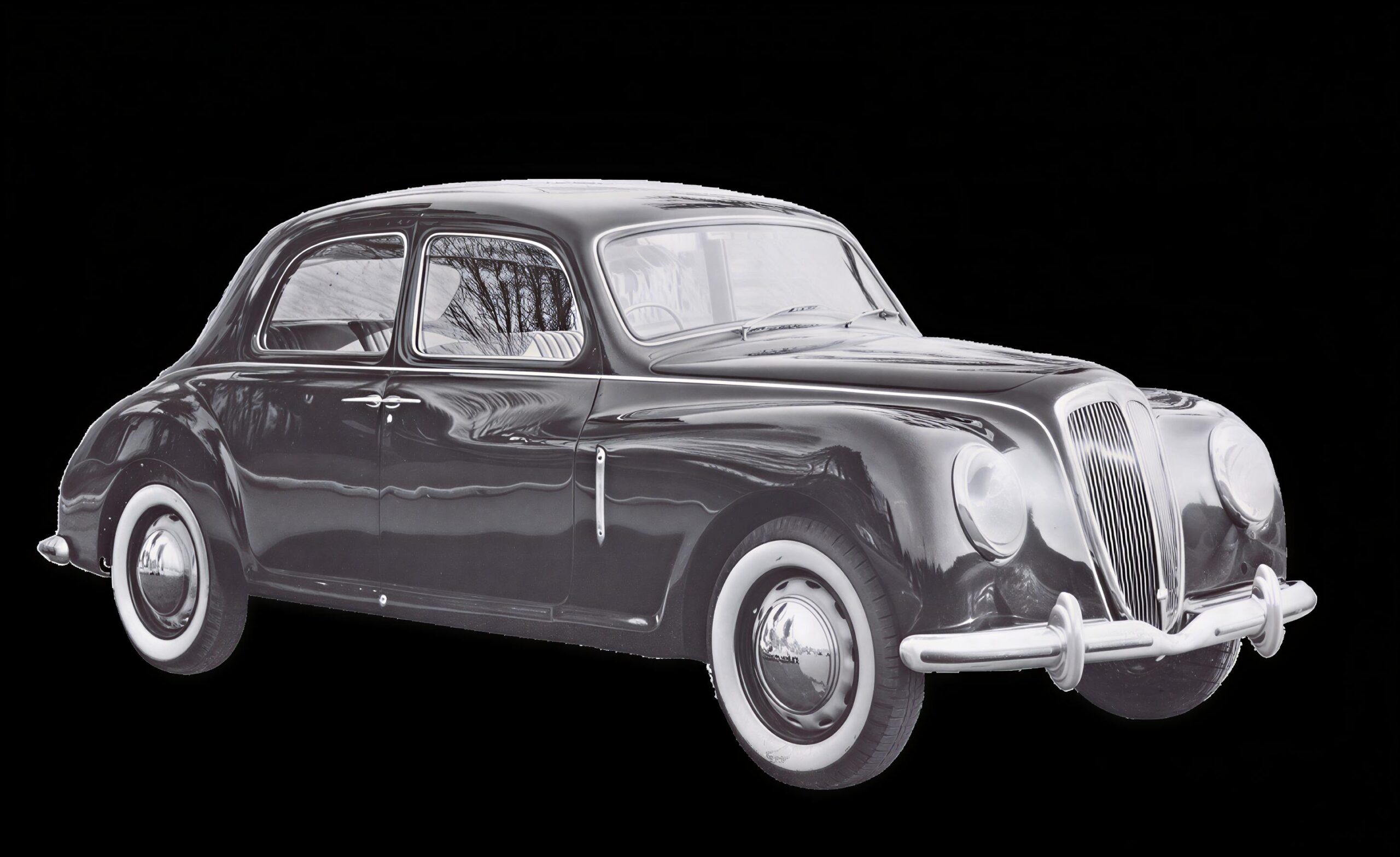
In 1948 Lancia’s “hidden office” in Padua (where engineers had fled during wartime) yielded a revolutionary plan: the Aurelia B10, a compact sedan with its 1.75‑liter V6 and transaxle. This became the blueprint for all that followed. As one veteran recalled, the Aurelia was “a powerful, superb‑handling dream” – so potent that within days of its 1950 debut the Lancia team was winning races like the Giro di Sicilia and class wins in the Mille Miglia. Gianni’s leadership proved the old family name could survive on both racetracks and showrooms. Yet by the mid-1950s Lancia’s coffers had thinned under the strain of innovation, and Gianni sold controlling interest to industrialist Carlo Pesenti. Nonetheless, the DNA of those racing ambitions lived on in every Aurelia, from the B10 sedan to the legendary B24 Spider.
Pininfarina’s Vision: Battista and Martinengo
If Gianni Lancia provided the mandate, the form of the Aurelia B24 Spider emerged from a concentrated effort within Carrozzeria Pininfarina under two central figures. Battista “Pinin” Farina, the company’s founder, had long been regarded as a master of proportion. Born in 1893 and trained in his brother’s Farina coachworks, he established his own firm in 1930 and, by the late 1940s, had become one of the defining voices of postwar automotive design. His Cisitalia 202 of 1947, later shown at the Museum of Modern Art, affirmed his conviction that a car’s first obligation is beauty—achieved through clarity, balance, and restraint. This philosophy set the aesthetic framework for the B24. Working at Pininfarina during this period was Franco Martinengo, a Turin-born designer who joined in the early 1950s and soon advanced to lead the Centro Stile. Trained at Stabilimenti Farina, Martinengo possessed a natural sense for curvature and surface tension. While Pininfarina defined the direction, Martinengo and the studio team handled the day-to-day drafting, and period recollections frequently credit him with shaping the Spider’s flowing, muscular form. His belief that a car should invite touch as much as admiration is consistent with the B24’s tactile surfacing and controlled volume.
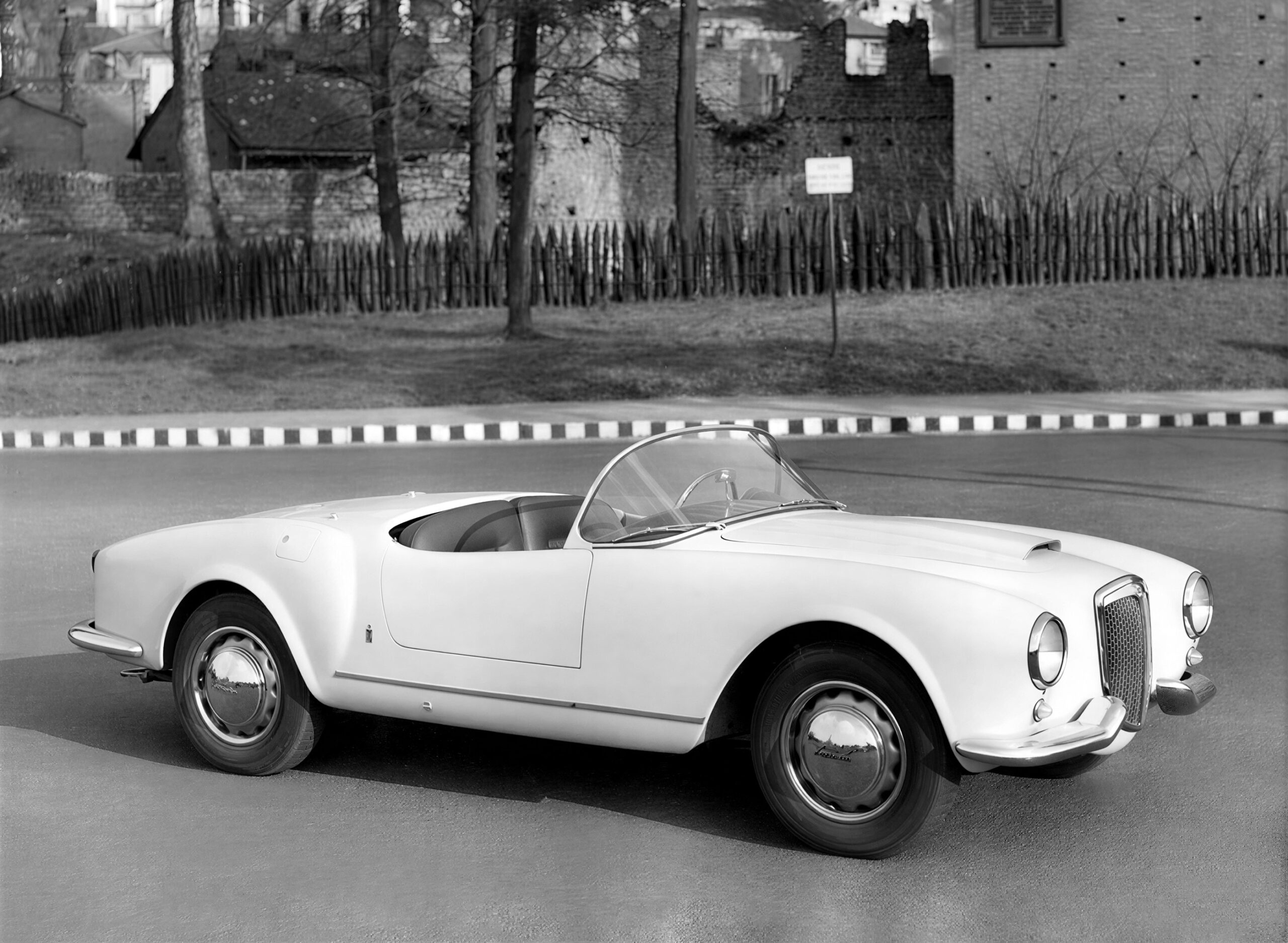
Behind these two names was a broader group of contributors who helped define the Aurelia Spider’s final character: Francesco Salomone, Adriano Rabbone, Aldo Brovarone, Luigi Chicco, and Giacomo Borgogno all played roles in the development process. Their collective work gave structure to Gianni Lancia’s brief for an elite, cosmopolitan sports car influenced by contemporary American trends. Pininfarina had recent experience in this direction, having built the Nash-Healey Spider in 1952, and that familiarity with transatlantic design cues informed the new project. The first pre-series prototype appeared on the streets of Turin in late 1954. Built on modified B20 mechanicals with a lowered hood line, it introduced many of the features that would define the production B24: a panoramic windshield set in a chrome-plated brass frame, a refined interpretation of the Lancia grille, and substantial bumpers composed of four separate guards. The cockpit, centered within a wheelbase shortened by 20 centimetres compared with the B20, sat between an extended hood and a full, carefully sculpted rear. Pininfarina later kept a personal example fitted with a blue hardtop—evidence of how strongly he regarded the model. Within Pininfarina’s workshop, aluminum body panels were shaped and finished by hand, with attention to details such as the canted wooden steering wheel and the precise rake of the windshield. The result was not only a collaboration between celebrated designers but a synthesis of the entire studio’s craft, translating Lancia’s engineering into a form that remains one of the most coherent expressions of Italian postwar design.
The Aurelia Platform: Innovation Underneath
Beneath that seductive coachwork lay Lancia’s cutting-edge mechanicals. Under Gianni’s direction, Lancia drew on wartime research by engineer Francesco De Virgilio, who had perfected the world’s first production 60° V6 in 1948. The early Aurelia B10 sedan (Turin 1950) was already a technological tour de force: an all-aluminum 1.75‑liter V6 mounted at the front, feeding a four-speed gearbox bolted to the rear differential (a transaxle), on a unitary steel monocoque. Coil springs and double wishbones made independent suspension on all four corners possible, while drum brakes tucked inboard reduced unsprung weight. True to Lancia’s engineering DNA, the car rode in silence and comfort – “the Aurelia presents the qualities of comfort, luxury and ride flexibility” – but its true genius was in the chassis balance. Even a modest 56 horsepower in 1950 could hustle the well-balanced sedan to 150 km/h, thanks to the weight bias and low unsprung mass.
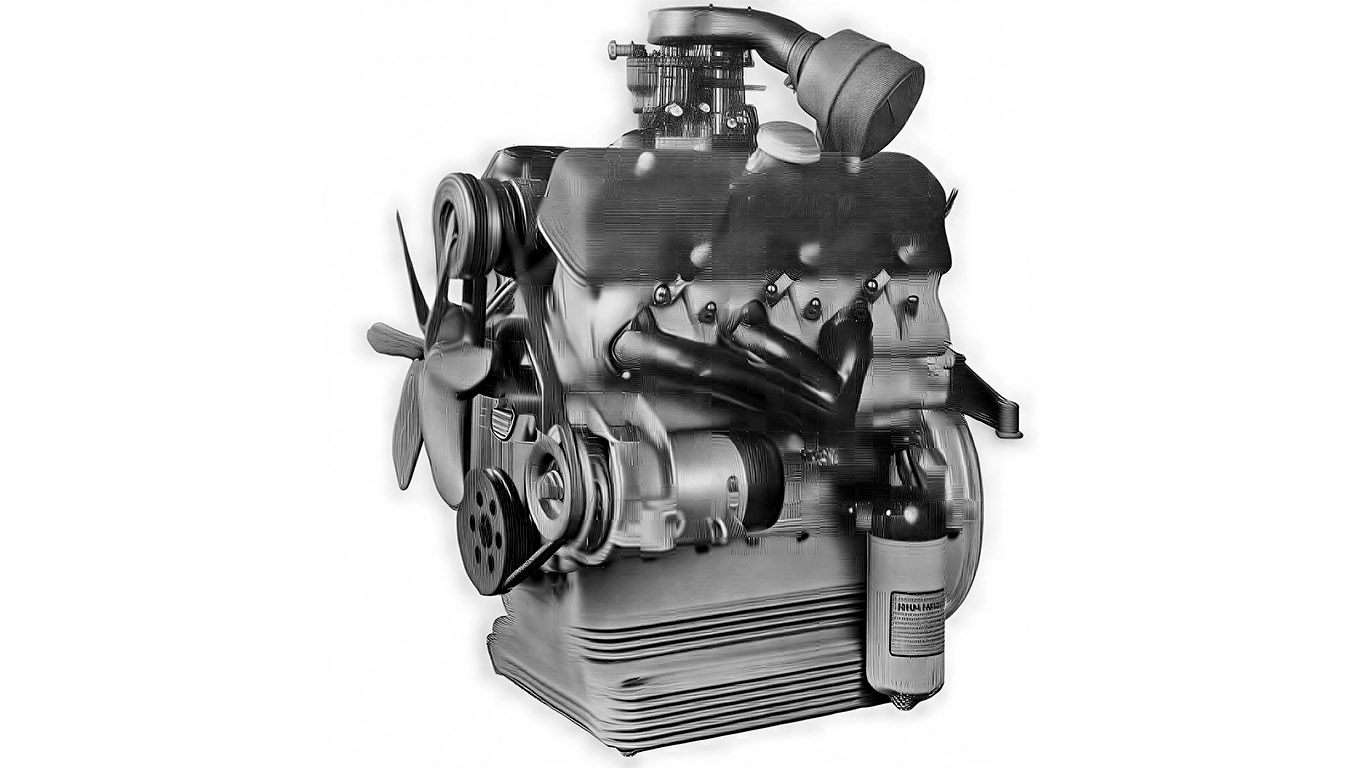
As the Aurelia evolved, so did the engine. By 1951 the V6 had grown to 2.0 liters (in the new B20 Gran Turismo coupe) and by 1954 to 2.45 liters. Even that first 2.0L engine proved potent in racing: at Mille Miglia 1951 it took Lancia to a surprise second place overall (driven by Giovanni Bracco in a B20) and a class win at Le Mans. Lancia engineers refined the V6 relentlessly; by 1955, when Pininfarina was ready to drape body over it, the production V6 could deliver 110 bhp at 2451 cc. Paired with the clutch-transaxle gearbox, this gave the B24 Spider brisk performance: its 1050 kg body could hit around 185 km/h in stock tune. Inboard rear brakes and a low-mounted worm‑and-sector steering box kept handling lithe and precise, well suited to the sinuous Italian roads. In short, the B24 was “pure Lancia” under the skin: engineering honed for balance and precision, ready to deliver a spirited, well-sorted drive.
Designing the Spider: From GT to Roadster
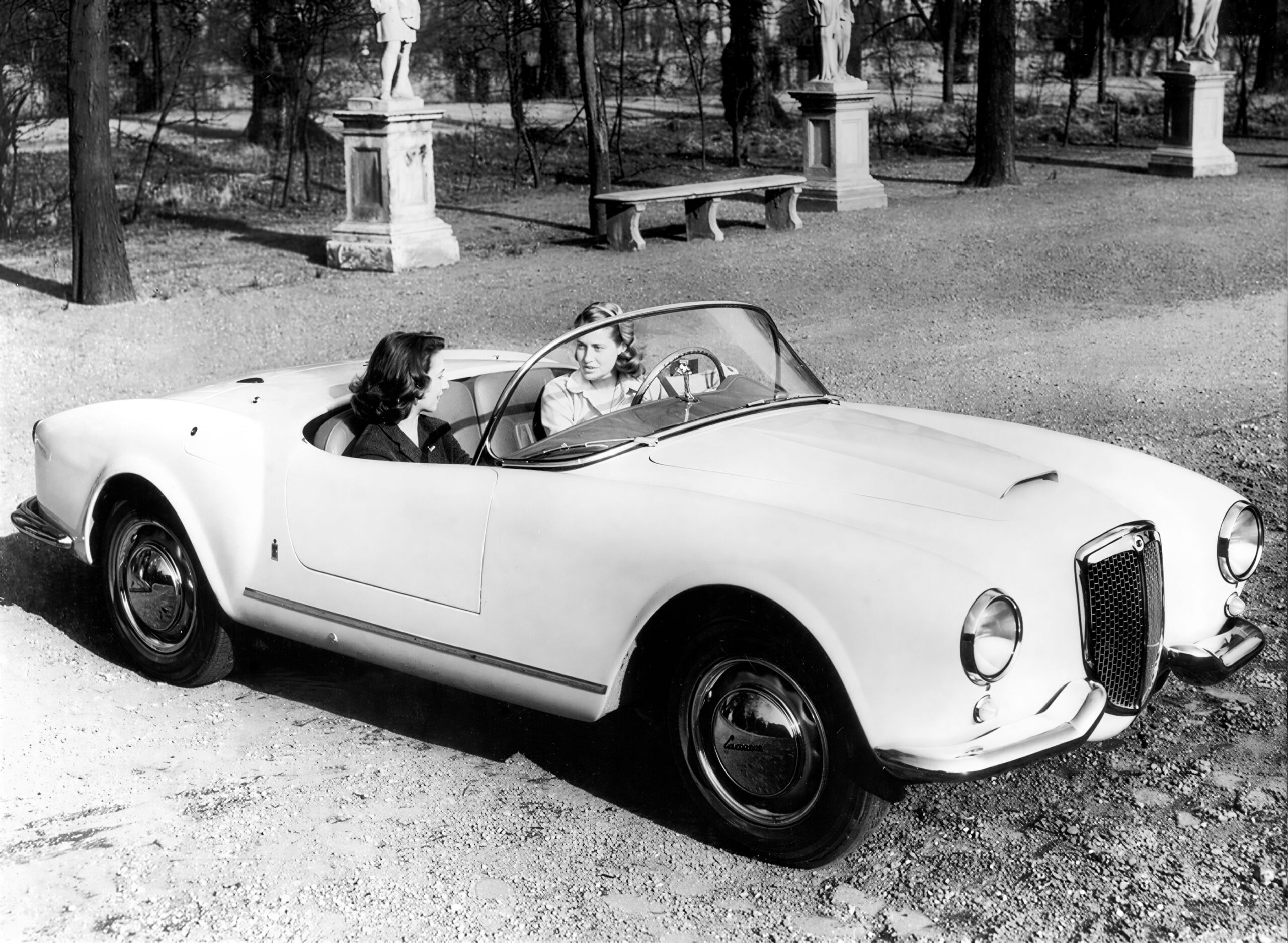
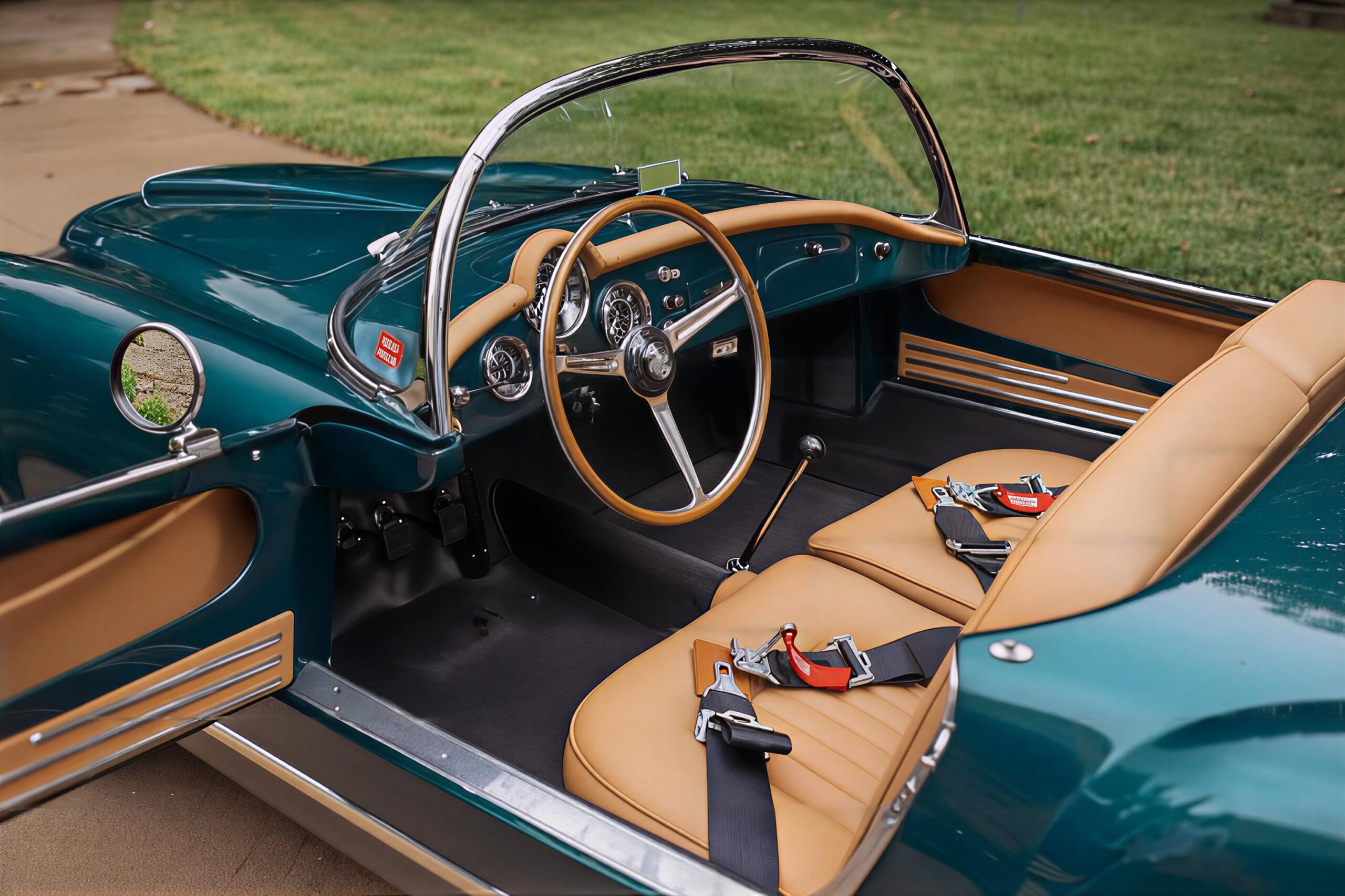
By mid-1954, Lancia’s Aurelia B20 GT was a proven grand tourer, but Gianni Lancia sought an even more exclusive drop‑top. He envisioned “an elite, sporting product” with style hints for overseas buyers. The answer was the Aurelia B24 Spider. The Pininfarina team began by radically shortening the B20’s frame by about 203 mm, to give the Spider a nimble stance under its elongated hood. They tucked the 2.5 L V6 deeper under a lower bonnet, giving the car a long nose and a forward cockpit. Architecturally, the B24’s cabin is almost centered between the bonnet and tail, a layout unique to the model. Masterfully restrained, its body has no excess: “low doors, leaving room for a high sill with a stylish chrome trim line,” no exterior door handles (the coachwork itself unclipped), and an elegantly simple dash with just three circular Veglia instruments. The front bumperettes split to mimic the fine Lancia grille below the scoop, lending a feline poise. Most striking is the panoramic curved windshield, whose rake perfectly matches the wheel, a detail celebrated in period reviews.
🔗 Read more: Italy’s Plexiglas Revolution in Postwar Car Design
As designer Franco Martinengo later recalled, Pininfarina’s Spider drew inspiration from earlier works and the transatlantic trend: it bore family resemblances to Pinin designs like the Ferrari 212 Coupé and even to American convertibles. In fact, its wraparound windshield was influenced by U.S. customs – GM’s Corvette had debuted a similar screen in 1953, and Lancia wanted that sleek, open feel. Each of the mere 240 first-series Spiders was hand-built at Pininfarina’s Grugliasco atelier. For all its beauty, the Spider was a “perfect example of form over function”: the folding hood was notoriously fussy to raise, and removable Plexiglas side-screens kept costs down at the expense of convenience. But Pininfarina’s clients sought artful driving more than practicality, and Lancia never hid it – the Spider was never cheap, and it offered “luxury and ride’s flexibility” unmatched by racier machines.
Debut and Reception: Brussels 1955
The Aurelia B24 Spider finally roared to the stage at the Brussels Motor Show in January 1955. Unveiled alongside more staid sedans and coupes, the Spider was an instant sensation. As Thornley Kelham’s feature notes, “surely one of Pininfarina’s most beautiful designs” made its debut in the Belgian capital. Turin’s coachbuilders had honed their curves to perfection, and the glittering Spider joined Italy’s other masterpieces on the continent’s biggest stage. The low, lean roadster stood out immediately – the Lancia press release at the time hailed it as “one of the most beautiful spiders of all time”, blending American-inspired flair with Italian refinement. Reviews rhapsodized over the purity of its lines and the novel features like that sweep-back windshield. Critics also noted the Spider’s sporting intent: with its shortened wheelbase and four-speed box, it felt like a tiny competition car hiding beneath its glamorous skin.
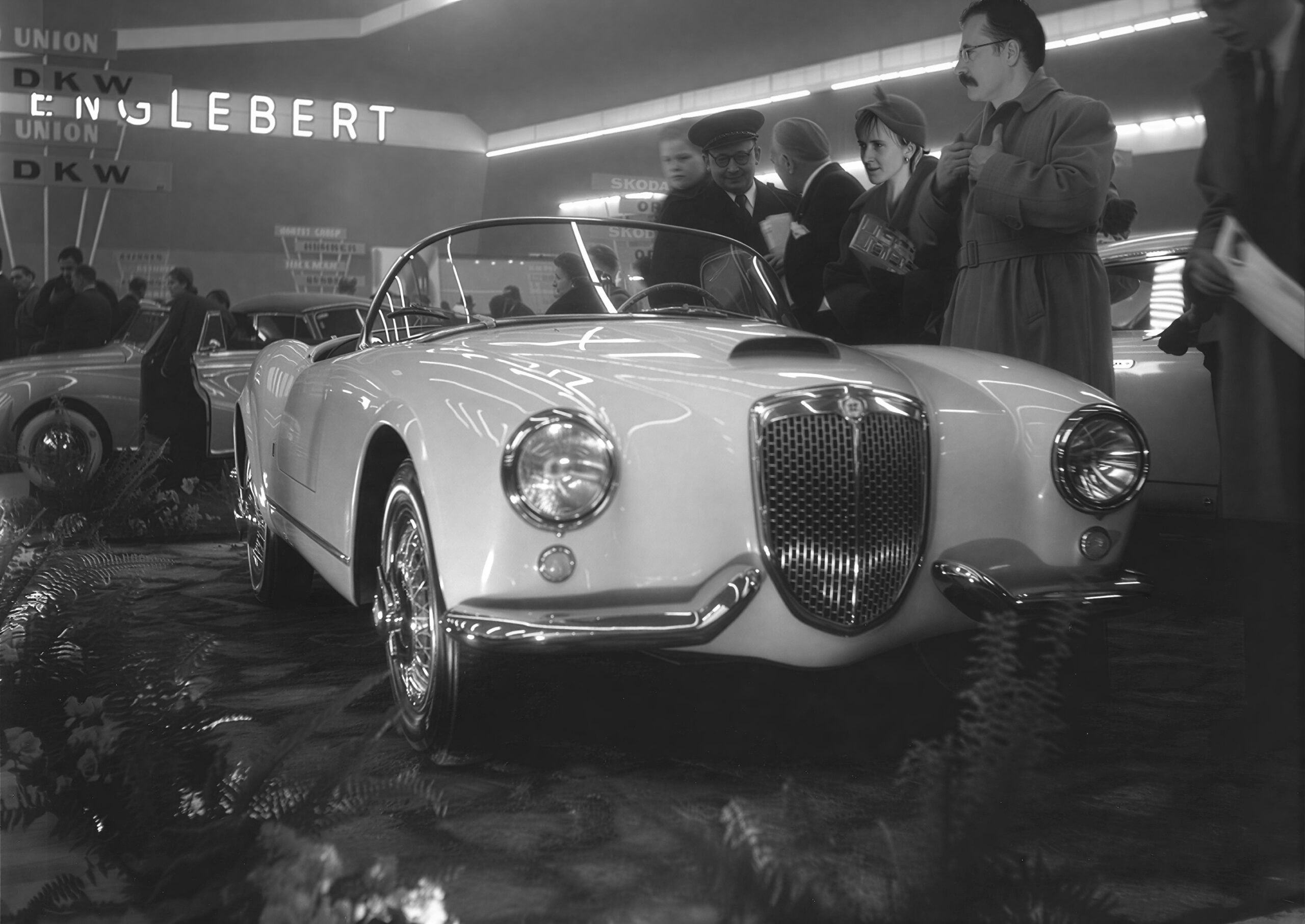
Lancia ambitiously marketed the B24 abroad, especially in the US. Indeed, early examples were even badged “Spider America” for export. The idea was clear: this was Italy’s answer to the roadster phenomenon – equally performative but dripping with boutique luxury. U.S. importers featured it in glossy magazines, where it danced by palm trees with tall New York dames and silver screen dreams. The only blemish was its practicality: American journalists noted that the tiny cockpit and low doors meant getting in was a bit of a struggle – “Wind in Your Hair” category at Pebble Beach indeed (Salon Privé) – but everyone agreed that once inside, the sight lines and the throaty V6 soundtrack more than repaid any awkwardness.
The B24 Spider “America” and Convertible “America”
The 1955 Spider was built in one series only. It wore what enthusiasts now call the “Spider America” spec: panoramic windshield, chrome “wing” bumperettes, and small coach doors. The car was exotic but extremely rare – only 240 Spider Americas were made (181 LHD “sinistra” and 59 RHD). The B24 Spider was costly even by exotic standards: in 1955 it listed around $5,830 (compare a DB2/4 at $6,295). Its buyers were a jetset crowd who cared little about entry wounds; among them were industrialists, aristocrats, and chic pioneers drawn to la dolce vita on four wheels. As one author quipped, “Brigitte Bardot drove one – and coincidentally, it’s best left topless.”
🔗 Read more: The Lancia B20 Design Story
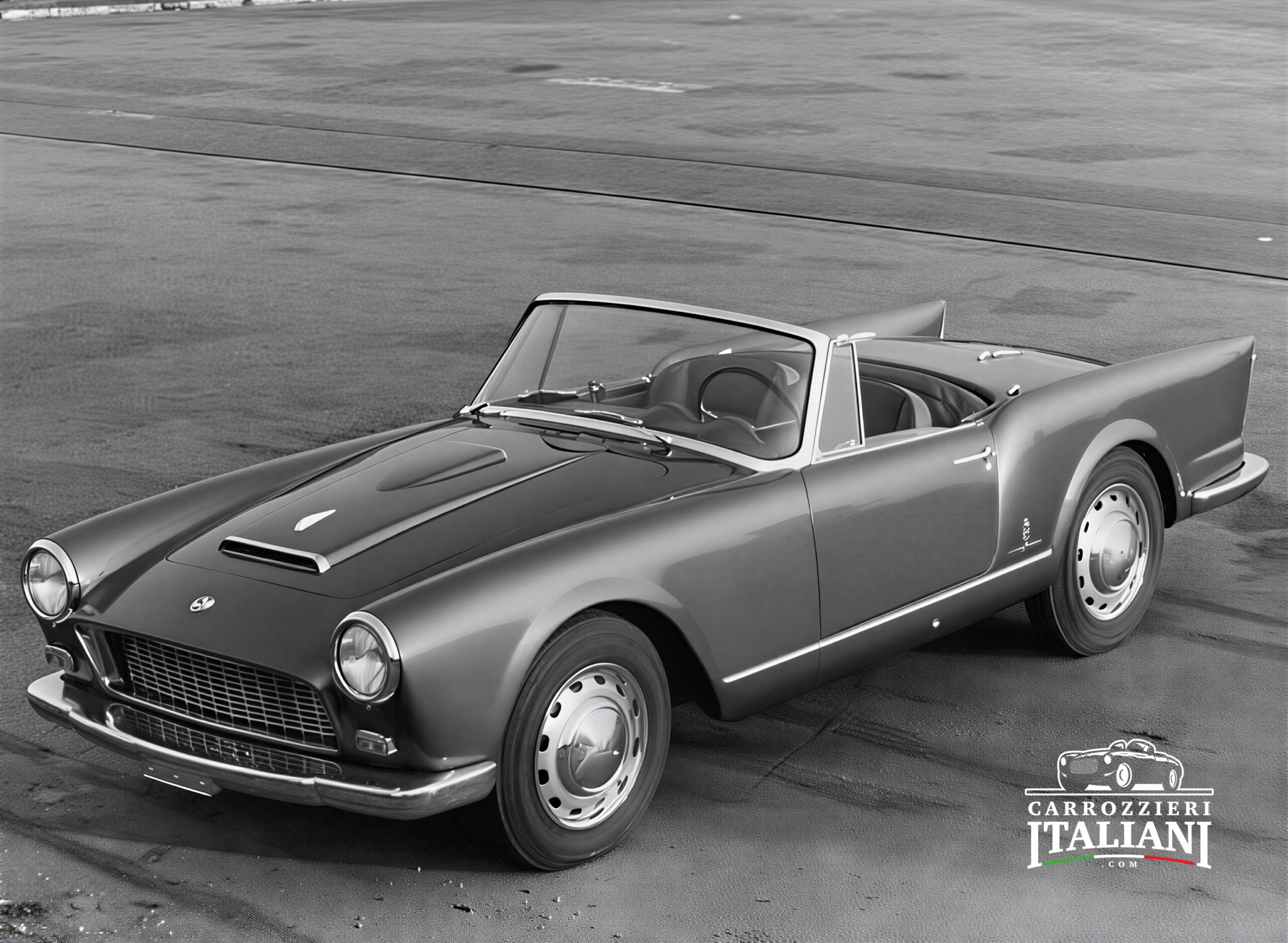
Midway through 1955, management changes at Lancia spelled the end of the first Spider. Under the new direction of Pesenti, Lancia restyled the open-top Aurelia into a more refined “Convertible America” (the Italian “Convertibile” series). The prototype Convertible debuted at the April 1956 Turin Motor Show, signalling a shift toward luxury and ease. Pininfarina’s craftsmen smoothed the radical edges: the flashy panoramic screen was replaced by a more upright windshield with slim pillars, making ingress and comfort far better. Instead of split bumpers, the Convertible got one-piece wraparound bumpers akin to the B20 GT’s, and the hood scoop was lowered and widened. The doors grew taller and now sported real handles and roll‑down glass windows with small vent windows up front. Inside, the dash was simplified to two big dials and trimmed with sumptuous leather – the Spider’s Spartan trim was sacrificed for full touring comfort. Lancia engineers even detuned the engine slightly for American use (the Spider’s 118hp was rated 110hp in the Convertible for US regulations).
This B24 Convertibile America was produced from 1956 into late 1958 and usually referred simply as the B24 Convertible. Early series II Convertibles (1956) numbered only 150 units, followed by a larger series III (371 units through 1958), all in left-hand drive. Collectors nowadays often prize the Spider over the Convertible due to its rarity and rawness, but at the time the Convertible outsold it and broadened Aurelia’s appeal. Indeed, Lancia even immortalized the new car in Italian cinema: in Dino Risi’s 1962 film “Il Sorpasso” (The Easy Life), Vittorio Gassman barrels through Rome in a B24 Convertibile, cementing its image as the ideal Roman playboy’s steed. As Stellantis notes, the Convertible was “perhaps the most elegant open-top of all time” and its fame was “reinforced by its use in film”.
A Legend Meets A Legend: The 1958 “Speciale” and Brigitte Bardot
The romance between the Aurelia and the stars of the silver screen reached its apex with the 1958 “Speciale” – a one-off B24 Spider Convertible built by Pininfarina’s atelier. This gleaming champagne-colored masterpiece debuted at the 1958 Geneva Salon as a bold design study, a vision of what a future Lancia Flaminia convertible might look like. It was essentially a B20 Flaminia body re-skinned as a B24 Spider, but to fans it was simply a Lancia spider like no other. Later that year in Paris it caught the eye of Brigitte Bardot, the sultry French icon of the era. Bardot was instantly enthralled by its curves – legend has it she fell for the car as much as Jean-Louis Trintignant fell for her in “And God Created Woman.”. She arranged to buy it on the spot, with one condition: she wanted it in her favorite color scheme and with ultra-luxurious interior. Pininfarina cheerfully obliged, repainting the Speciale in a vibrant two-tone and reupholstering it to suit the starlet’s taste.
Under Bardot’s ownership, the B24 Spider Speciale took on mythic status. It embodied a meeting of Hollywood glamor and Italian craftsmanship. As one retrospective notes, this unique Spider “ensured that Bardot’s Aurelia became a timeless icon of design and sophistication, blending Italian craftsmanship with Hollywood glamour”. Bardot herself drove it in Paris and the French Riviera, the top down, her blonde hair and double-B initials (for Brigitte Bardot) synonymous with the car’s narrative. Years later it would resurface at auctions and shows, its story legend; to this day it is known simply as “Brigitte Bardot’s Lancia”, a one-of-one showcase of Pininfarina’s skill to personalize a car into an extension of a personality.
Famous Owners and Enthusiasts
Beyond Bardot, the Aurelia Spider counted an eclectic array of admirers. Among them were wealthy enthusiasts and collectors who prized its fusion of performance and elegance. In Italy, one notable owner was Prince Tommaso Corsini of Florence – scion of a family whose ranks included a pope – who once possessed a B24 Spider. That very car later passed into the hands of a local figure nicknamed “Tarzan” (Florio Sarti), who famously repainted it racing-red and reupholstered it in white leather. Fortunately in restoration the Spider was returned to its original colors and kept its matching numbers. Though the prince and Tarzan were colorful stewards, others collected the car quietly for its merits.
In the decades since production, the Aurelia’s cachet has only grown among VIPs and collectors. High-end auctions have seen vintage Spiders and Convertibles fetch princely sums. Concours circles revere it as much as a Ferrari or Bugatti of the era. Collections like Blackhawk (USA) and national museums have featured expertly restored Aurelias. Aston Martin CEO Andy Palmer famously included an Aurelia Spider at a Pebble Beach preview of the DB11’s world debut in 2016, extolling how “when you see an Aurelia B24 you want to sit in it”, echoing Martinengo’s sentiment. In short, ownership of an Aurelia Spider has always been a badge of connoisseurship.
Racing Pedigree and Touring Triumphs
Though the B24 Spider was conceived as an elegant roadster, it carried a subtle racing pedigree. Lancia’s philosophy of marrying race-bred engineering with luxury meant even the Spider saw competition. Chief among these was the Mille Miglia: in 1956 Lancia factory driver Bernado Ferrari campaigned a B24 Spider in that thousand-mile rally, and another competed in 1957. Lancia’s marketing at the time touted these entries to prove that the Spider was “pure Lancia” in spirit. In 1956 the car even tackled the gruelling Coppa d’Oro delle Dolomiti hillclimb – demonstrating that beneath the “beautiful” body lay truly agile hardware. However, most owners used their B24s for spirited touring rather than full‑bore racing. Its independent suspension and 127 lb·ft of torque allowed rapid canyon runs or coast-to-coast tours, the latter later memorialized by Mille Miglia re-enactments where vintage Spiders now cut through the Italian landscape much as Bardot did. (One preserved B24S Spider, for instance, has been noted for participating in nearly every Mille Miglia classic rally since the 1990s.)
🔗 Read more: Elegance on Wheels: The Grand History of the Concours d’Elegance
Even the convertible spurred competition. During the late 1950s, Lancia entered B24 Convertibles in events like the Mille Miglia and Coppa d’Oro, but as the focus turned to Formula 1 (the ill-fated D50 car) some top drivers like Ascari left Lancia. Nevertheless, the Aurelia’s racing aura endured; with two wins and several class placings, its engineering reputation was cemented. These successes weren’t just trophies, but sold the idea: Gianni Lancia’s original gamble had paid off.
Concours and Honors
Today, the Lancia Aurelia – especially the B24 Spider – is a darling of the concours circuit. Rare original Spiders and quality restorations frequently grace events like Pebble Beach, Villa d’Este, and Villa Erba. Its classic lines echo perfectly in the setting of manicured lawns and classic-blue skies, and judges reward its purity of design.
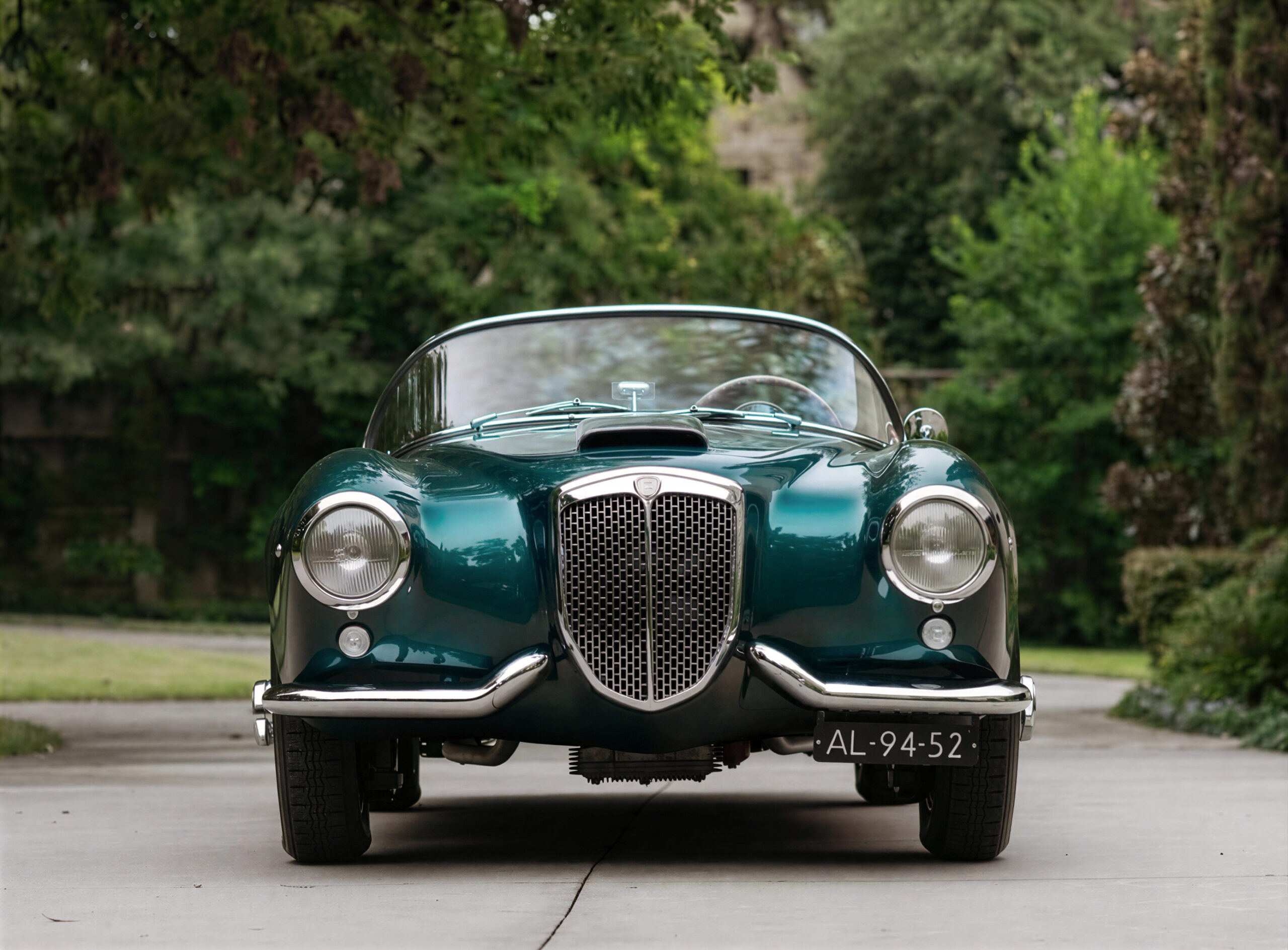
For example, one exquisitely restored B24 Spider won its class at the Blenheim Palace Salon Privé in 2015 for being the most befitting “Wind In Your Hair” motoring sculpture. Similarly, high-end auctions have showcased Aurelias as headliners; a 1955 B24S Spider “America” sold at a 2025 Villa d’Este auction, testament to its enduring allure. In one hall of fame moment, a 1952 Aurelia B52 Vignale took home Best of Class at Pebble Beach 1995 after a meticulous restoration, showing that Lancia’s 1950s craftsmanship still strikes judges as among the finest. Lancia’s own heritage collection prominently features the B24 Spider, and cites it as “one of the most beautiful “open-top” ever”.
Restoration and Enduring Legacy
Many surviving Aurelias have had meticulous restorations, preserving their originality. Italy’s Lancia club and independent ateliers like Thornley Kelham ensure the Spider’s history is not just romantic but tangible. A chorus of aficionados agrees with Lancia engineers that the B24, even with its quirks, is a car of “form over function” – and thus a canvas for the patina of real life. A wonderfully preserved example retains its factory patina and matching numbers, having been carefully maintained in Italy for decades. Others have been rebuilt to concours standard, their crafting honored with trophies. In 2019 one such B24 Spider won Best in Class at Concorso Italiano, and another claimed a similar honor at Amelia Island in 2022. These triumphs carry on the tradition that Lancia began: classing up motorsport and leaving an indelible imprint on the car world.
The Lancia Aurelia B24 Spider by Pininfarina sits at the intersection of history and legend. It distills postwar Italian creativity into a hand-built roadster that unites Vittorio Jano’s advanced V6 with Battista Farina’s design clarity and Franco Martinengo’s bold proportions. Born in an era of rising optimism, it projected a vision of effortless elegance and mechanical finesse—the open road, the low sun, and a smooth V6 as its soundtrack.

ABOUT THE AUTHOR
Andreas Scheidl
Italian classic car enthusiast with German roots. Renowned as a respected figure in the classic car community, he serves as a jury member at various international concours d'elegance, including the Classic Gala Schwetzingen and Mantova. As a content creator, Andreas passionately shares his profound knowledge and appreciation for vintage automobiles. His heart beats for cars designed by Giovanni Michelotti, showcasing his discerning taste and dedication to preserving the timeless elegance of automotive history.
More stories by Andreas Scheidl ↗CONTINUE READING
Posts You Might Like

A Central Driving Position, a Rear-Mounted V8. Was This Really a Lancia?
In 1948, visitors to the Turin Motor Show could see an unusual Lancia on the stand of Carrozzeria Ghia. It was a large two-door coupé with a two-litre V8 mounted behind the…
Read story
Fioravanti F100: The Ferrari He Was Allowed to Imagine
Enzo Ferrari’s centenary, Leonardo Fioravanti’s independent studio and a supercar that explored air brakes, steel wheels and a new way of driving—without ever wearing the Cavallino.
Read story
Michelotti Shellette: When the Fiat 850 Became a Yacht
The yacht designer, the Turin stylist and the tiny coachbuilt car that crossed between the quay, the royal holiday house and the auction room. Some automobiles were conceived for the open road,…
Read story
Maserati A6 1500: A New Road for the Trident
When the doors of the Geneva Motor Show opened in March 1947, Maserati was a name that required little introduction to anyone who followed motor racing. What it did not yet possess…
Read story
THE CONVERSATION
Comments 0
Share a memory, a period photograph or a documented detail about this story.