
Jaguar XJ Spider by Pininfarina: The Untold Story
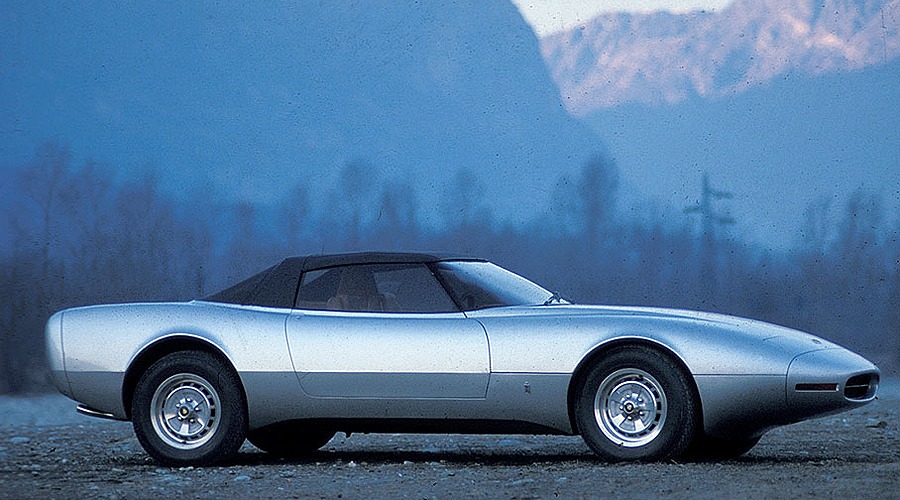
By the mid-1970s, Jaguar found itself at a crossroads. Its fabled E-Type – once hailed by Enzo Ferrari as “the most beautiful car in the world” – had ended production, leaving a void no successor seemed able to fill. The new XJ-S grand tourer, introduced in 1975, failed to capture hearts in the same way. By 1976, as one critic put it, “the automotive world had broadly coalesced around the belief that the XJ-S was a rather poor show from a carmaker renowned for the business of beauty.”
Behind the scenes, Jaguar was struggling to survive. Under British Leyland ownership, the Coventry marque faced bureaucratic interference, shrinking budgets, and dwindling morale. By late 1975, Jaguar’s engineers at Browns Lane were fighting for the company’s identity amid what one insider called “the forces of assimilation” consuming Britain’s once-proud car industry.
🔗 Read more: Pininfarina Through the Ages: The Complete History
It was in this tense atmosphere that the designers of Turin entered the picture. Pininfarina – by then one of the world’s most respected coachbuilders – saw an opportunity to help Jaguar rediscover its soul. In 1977, the Italian firm proposed an audacious idea: to restyle the XJ-S into a car worthy of Jaguar’s heritage.
Jaguar agreed, sending Pininfarina a well-used XJ-S development chassis, its roof and bodywork removed, leaving only the mechanicals and V12 powertrain intact. This stripped-down mule would become the foundation for Pininfarina’s most ambitious vision for Jaguar – the XJ Spider, a concept that sought to blend British engineering with Italian artistry and, perhaps, rekindle the romance that had once defined the marque.
Sculpting the Cat: Pininfarina’s Jaguar Experiment
Under the leadership of Leonardo Fioravanti and Lorenzo Ramaciotti, Pininfarina’s design and engineering team set out to weave Italian elegance into British engineering. Styling duties fell to a young but already seasoned hand — Emanuele “Elio” Nicosia — who would later go on to help shape several of Ferrari’s most admired models.
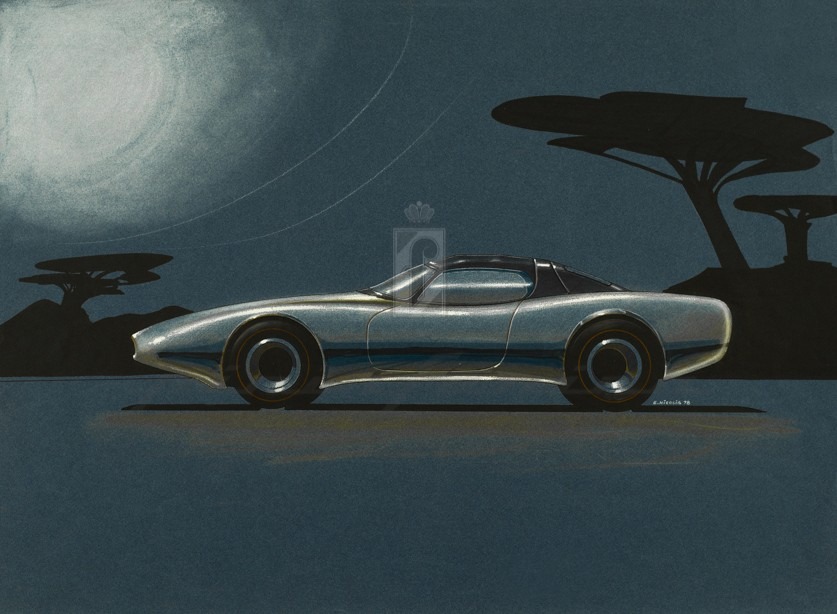
According to Ramaciotti, the concept came together with surprising ease: the XJ Spider’s form, he recalled, “flowed very easily… a fine blend of Jaguar tradition with a strong but contemporary Pininfarina flavour.” The mission was clear — to recapture Jaguar’s sports-car soul, the spirit of the D-Type and E-Type, but reinterpreted for the modern era.
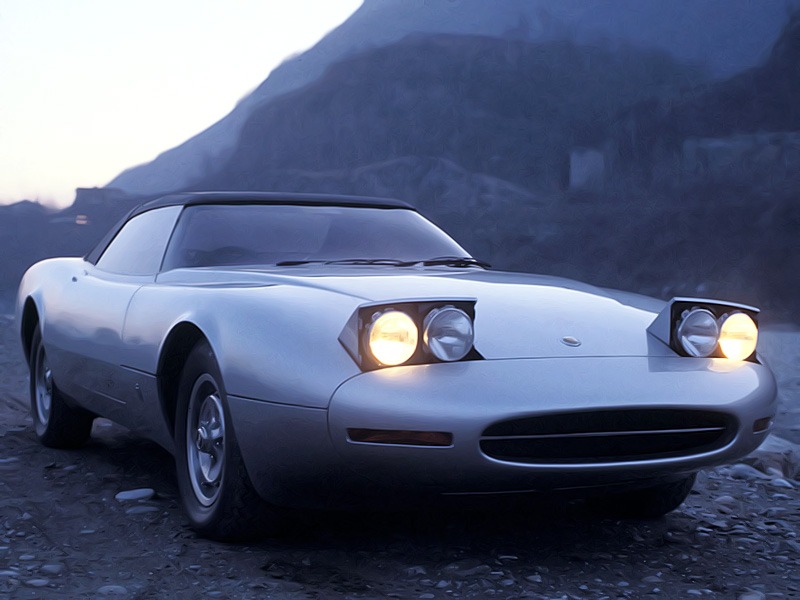
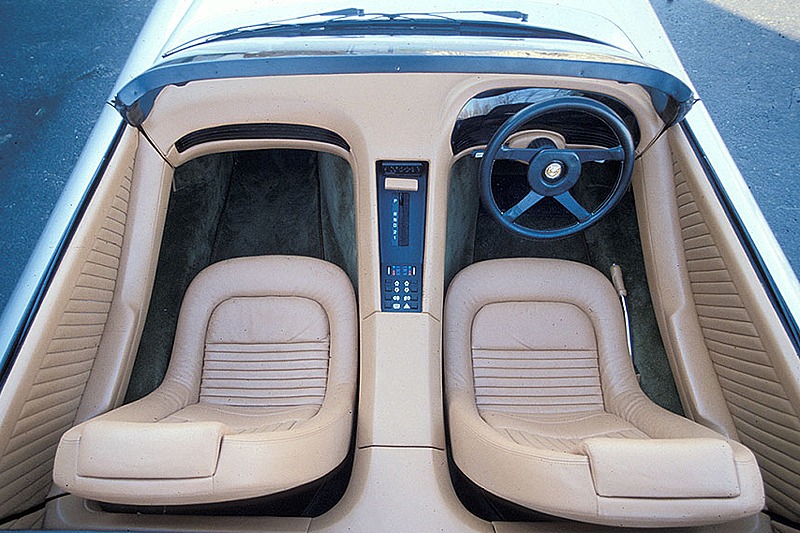
In practice, this meant rejecting the angular “folded-paper” fashion of the 1970s in favor of soft, flowing surfaces and genuine aerodynamic purity. The XJ Spider’s body was shorter, wider, and lower than the production XJ-S, a true two-seat roadster rather than a 2+2 grand tourer. Its long bonnet and low stance paid homage to Jaguar’s classic proportions, while its smooth curves reflected Pininfarina’s belief that beauty should come from aerodynamics, not decoration. Wind-tunnel testing confirmed the design’s effectiveness — the prototype achieved an impressively low drag coefficient of 0.36, remarkable for the period.
The new coachwork, a mix of steel and aluminum, was crafted entirely by hand at Cambiano. As one historian put it, Jaguar had “donated an XJ-S development hack” which Pininfarina then “comprehensively filleted” to create its new sculpture. Ramaciotti oversaw both the fabrication of the flowing panels and the intricate convertible-top mechanism. The resulting car sat lower and sleeker than anything Jaguar offered at the time.
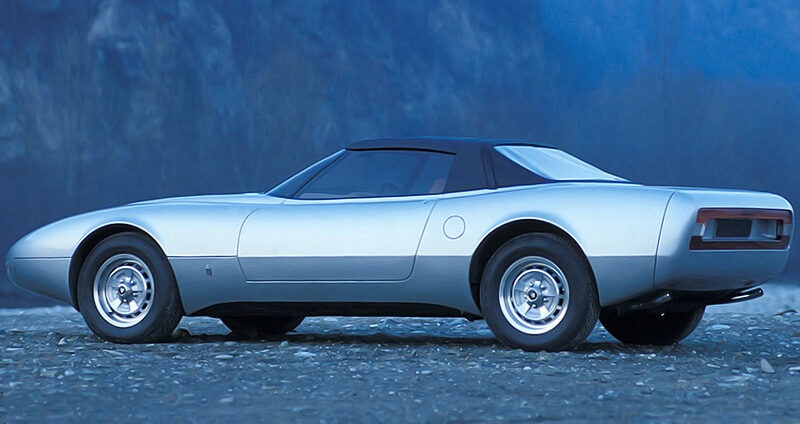
At the front, a wide oval intake behind the bumper nodded to Jaguar tradition, while the rest of the body was unmistakably Italian. Pop-up headlamp covers concealed modern lights — a detail that would later appear on Jaguar’s own design studies — and the compact greenhouse and broad rear haunches gave the car a muscular, almost Corvette-like stance. The XJ Spider perfectly balanced Jaguar’s feline elegance with Pininfarina’s sculptural precision — an “organic” sports car that seemed both nostalgic and futuristic.
🔗 Read more: The Italian Jaguars: Stylish Symphony of Elegance and Innovation
Beneath that beautiful shell lay pure Jaguar mechanics. The Spider retained the 5.3-liter V12 engine and ZF three-speed automatic transmission from the XJ-S donor car, making it a fully drivable prototype, not a static showpiece.
When it first rolled out of Cambiano, the Spider wore a deep British Racing Green, a respectful nod to Jaguar’s racing heritage. But the dark color muted the subtle curves, so it was later repainted in metallic silver, a hue that better revealed the car’s sensuous surfacing and shimmering reflections — the perfect finish for a machine that embodied two nations’ approaches to automotive beauty.
The Grand Reveal at Birmingham
The Pininfarina XJ Spider made its public debut at the 1978 British International Motor Show, the first edition held at the newly opened NEC exhibition centre outside Birmingham. That autumn, the event drew record-breaking crowds of more than 900,000 visitors, and among the countless cars on display, the silky Italian roadster on Pininfarina’s stand instantly commanded attention.
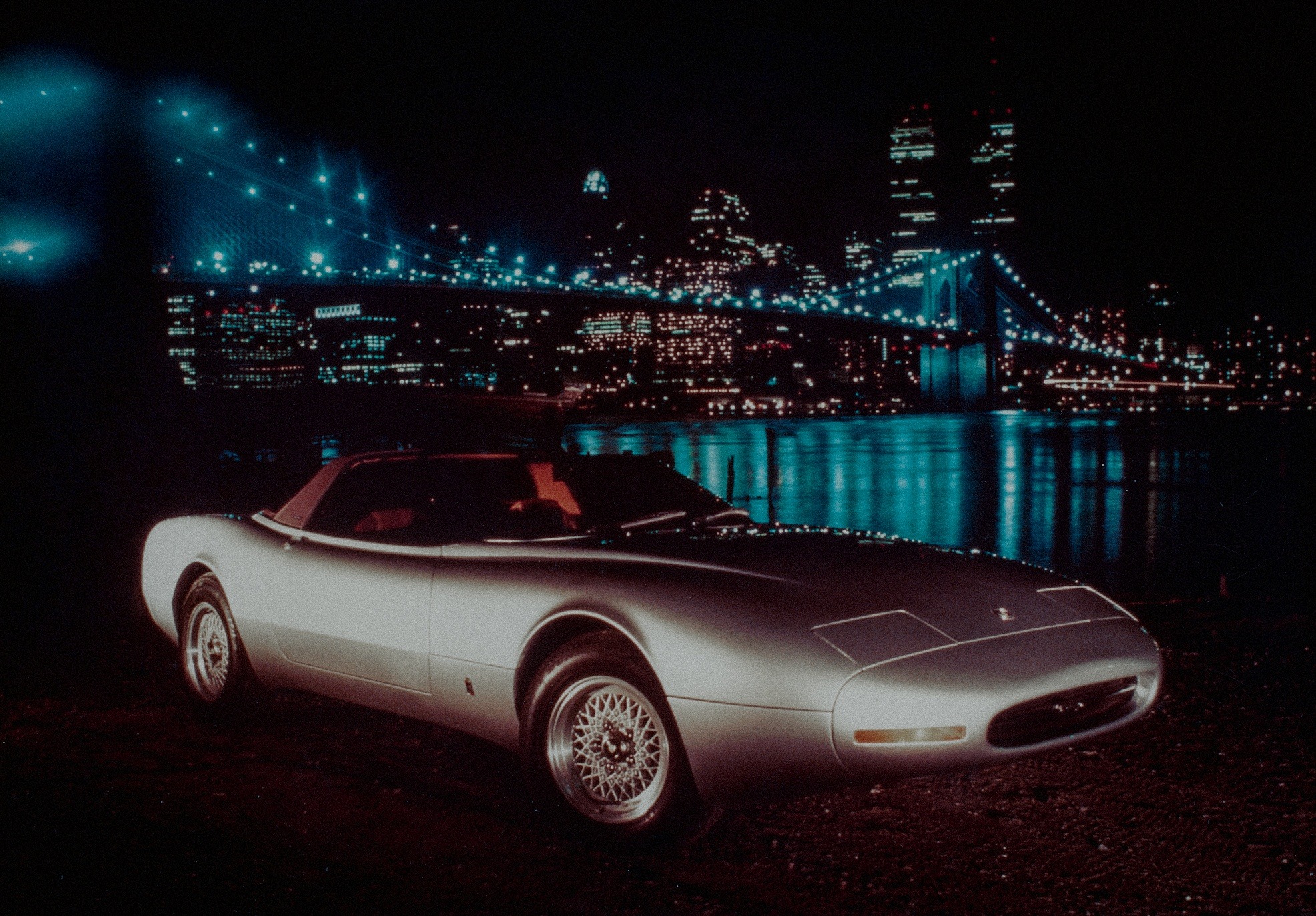
Contemporary reports agreed that the Spider “stole the Show.” Its harmonious curves and nostalgic grace stood in striking contrast to the angular, boxy aesthetic that dominated late-1970s car design. The international press noted how the concept seemed to channel Jaguar’s golden age: its sweeping flanks and rounded fenders “perfectly reflect[ed] Jaguar’s glorious sports-car heritage,” wrapping the venerable V12 in a modern neo-retro bodyshell. To many, the XJ Spider appeared to resurrect Malcolm Sayer’s aerodynamic spirit, reinterpreted through Italian artistry. Side by side, Jaguar’s own XJ-S coupe looked heavy and dated — a grand tourer upstaged by a vision of what might have been.
By the time of the show, the Spider was nearly finished, though one journalist observed it arrived as “an incomplete runner.” Autocar described its first impression as “a dark green slug” — a backhanded nod to its sleek, organic form. In truth, the prototype had been completed in haste, delivered to Birmingham barely drivable and missing a few interior details. Yet none of that mattered to the crowds. Visitors were captivated by the flowing body and open-top form, a romantic evocation of the E-Type’s legacy filtered through Pininfarina’s modern lens.
Mechanically, the car retained its Jaguar XJ-S underpinnings, meaning it could move under its own power, though it was never intended for road testing. For the thousands who gathered around it, such practicality was beside the point. What they saw — and dreamed of — was the return of a true Jaguar sports car, reborn in Italian metal. By the close of the show, the Pininfarina XJ Spider had become one of the most discussed and photographed concepts of the year, hailed as a triumphant fusion of British heritage and Italian style.
Echoes of a Lost F-Type
The warm reception in Birmingham did not go unnoticed at Jaguar’s headquarters in Coventry. For the first time since the E-Type, management could clearly envision what a modern two-seat Jaguar might look like. At Browns Lane, the Pininfarina XJ Spider ignited imaginations. Inspired by its elegance, Jaguar engineers quietly began sketching ideas for an in-house successor. Within months, they launched development of new prototypes using the familiar 5.3-liter V12 drivetrain — internally designated XJ41 (coupé/targa) and XJ42 (convertible).
These experimental cars drew heavily from the Spider’s aesthetic. They refined its proportions with a tidier greenhouse, a more taut rear deck, and replaced the pop-up headlamps with sleeker oval units — a feature that would later appear on the Jaguar XJ220 supercar. The vision was to create a new “F-Type”, a true sports car that would bridge the gap between the XJ saloon and the XJ-S grand tourer, reviving Jaguar’s reputation for pure performance and beauty.
But fate had other plans. As Jaguar struggled under British Leyland’s control and later transitioned toward independence in the 1980s, funding for new projects dried up. Although work on the XJ41/42 continued sporadically through the decade, the ambitious F-Type project never reached the showroom. When Ford acquired Jaguar in 1989, the new management reviewed its product pipeline and ultimately cancelled the F-Type program, redirecting resources to other models.
Still, the engineering effort was not wasted. Ford had also taken control of Aston Martin, and the groundwork laid for the XJ41/42 was repurposed there. Its structural concepts and some mechanical solutions directly influenced the Aston Martin DB7 — a car often described as “the Jaguar that never was.” In a poetic twist, traces of the Pininfarina Spider’s DNA, filtered through the F-Type prototypes, lived on beneath the DB7’s elegant curves, carrying Jaguar’s 1960s spirit into the 1990s.
Even without a production F-Type, the Spider’s impact endured. Jaguar’s own designers later admitted that Pininfarina’s 1978 concept had been a valuable lesson in proportion and grace. As Autocar columnist Mel Nichols observed in 1983, Jaguar’s next sports car “might even be styled in Italy” to capture that same flair — a reflection of how deeply the Spider had impressed both press and engineers.
Yet, when Jaguar finally updated the XJ-S into the HE and convertible variants, the results remained more conservative — squared-off and buttressed rather than flowing and feline. The XJ Spider had shown what could be; Jaguar, constrained by economics and corporate politics, could only dream of it.
A Dialogue That Never Ended
The Pininfarina XJ Spider remains one of the most romantic “what-if” cars in Jaguar history, joined decades later by another Italian vision — the B99 by Bertone — both glimpses of what Jaguar might have become through the eyes of Italy’s great design houses. It was never a mere showpiece: engineers built it to run, journalists drove it on roads and tracks, and it became the centerpiece of press coverage throughout 1979. Autocar took the Spider onto the streets of Turin with Leonardo Fioravanti riding shotgun, while Car magazine tested it with Jaguar’s alloy-wheel expert Mel Nichols at the wheel. Enthusiasts admired its sculpted aluminum panels and tapered tail — “broadly handsome,” as one critic put it — even if some found its shape a little heavier than the E-Type’s. More than anything, the Spider proved that Jaguar’s spirit of beauty and performance still burned bright, and that Italian craftsmanship could draw new poetry from British engineering.
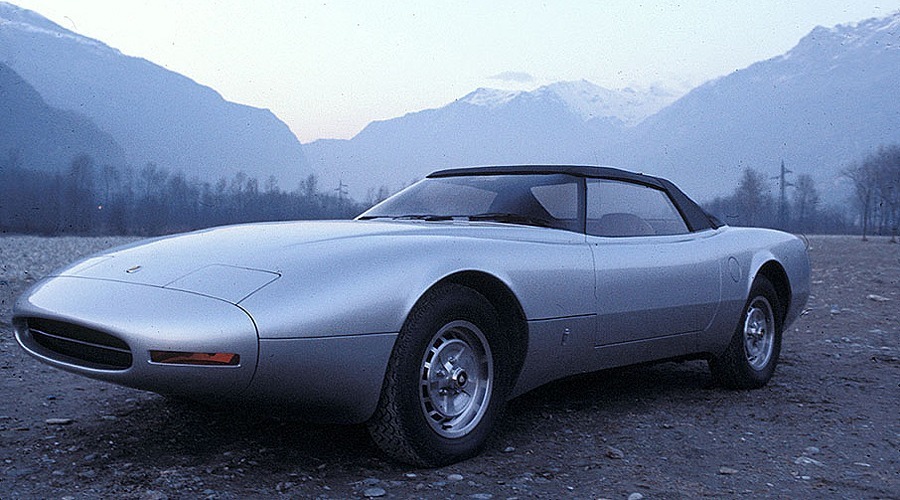
Today, the sole XJ Spider prototype survives as a treasured piece of Jaguar heritage. It has reappeared at classic-car events — notably at the 1996 Turin Motor Show, where it returned to the Pininfarina stand — and now rests in the care of the Jaguar Daimler Heritage Trust. Preserved at the British Motor Museum in Gaydon, it continues to draw admiration as “one of the greatest of all might-have-been Jaguars.”
🔗 Read more: The Jaguar B99: A Missed Opportunity
The XJ Spider bridges two eras: it captured the E-Type’s elegance in a 1970s idiom and pointed toward the sports car Jaguar wouldn’t fully realize until decades later. Every flowing fender and dropped roofline hints at a different future — one where Jaguar’s next icon emerged not from Coventry, but from Turin.
For lovers of design and coachbuilding, the Spider remains a landmark — a car built to make a statement, and one that still makes hearts race. A single prototype, yet an enduring idea: proof that when Italian artistry met British heritage, something unforgettable was created.
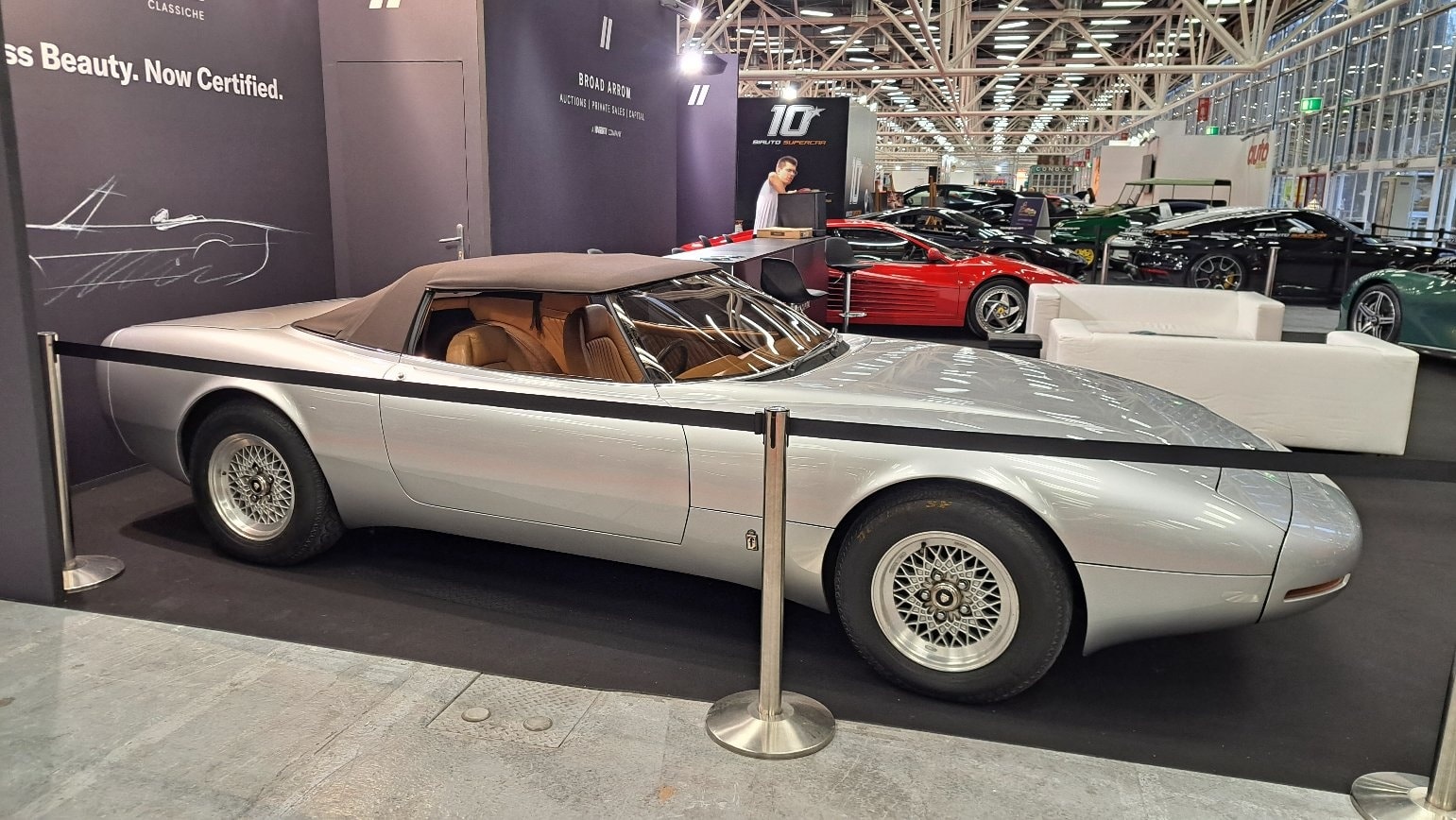
That timeless dialogue between beauty and craftsmanship was celebrated once again at Auto Moto d’Epoca Bologna 2025, where Pininfarina joined forces with the prestigious auction house Broad Arrow. Among the highlights of the show was the Pininfarina XJ Spider, displayed as a centerpiece in Broad Arrow’s stand — a fitting tribute to the coachbuilder’s international legacy. The event also marked the launch of “Pininfarina Classiche,” a certification program dedicated to restoring and authenticating historic Pininfarina creations with full technical and archival accuracy.
Through initiatives like Pininfarina Classiche, the masterpieces of the Turin atelier — from Ferraris and Peugeots to unique works like the Jaguar XJ Spider — continue to inspire, connect past and present, and remind the world that great design never truly fades. More than four decades after its debut, the XJ Spider still embodies that truth: a meeting of Italian artistry and British soul that remains as captivating today as it was in 1978.

ABOUT THE AUTHOR
Andreas Scheidl
Italian classic car enthusiast with German roots. Renowned as a respected figure in the classic car community, he serves as a jury member at various international concours d'elegance, including the Classic Gala Schwetzingen and Mantova. As a content creator, Andreas passionately shares his profound knowledge and appreciation for vintage automobiles. His heart beats for cars designed by Giovanni Michelotti, showcasing his discerning taste and dedication to preserving the timeless elegance of automotive history.
More stories by Andreas Scheidl ↗CONTINUE READING
Posts You Might Like
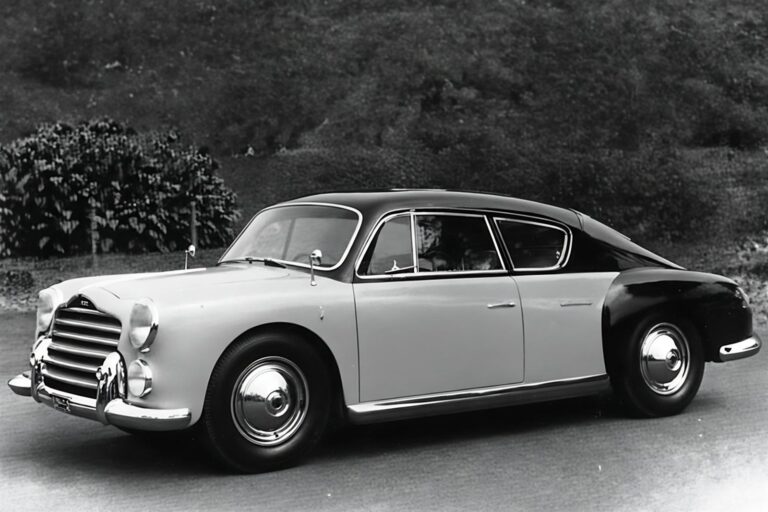
A Central Driving Position, a Rear-Mounted V8. Was This Really a Lancia?
In 1948, visitors to the Turin Motor Show could see an unusual Lancia on the stand of Carrozzeria Ghia. It was a large two-door coupé with a two-litre V8 mounted behind the…
Read story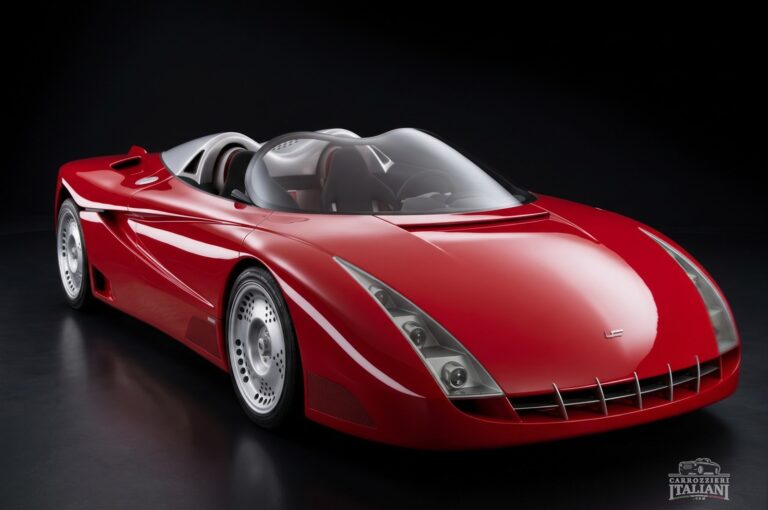
Fioravanti F100: The Ferrari He Was Allowed to Imagine
Enzo Ferrari’s centenary, Leonardo Fioravanti’s independent studio and a supercar that explored air brakes, steel wheels and a new way of driving—without ever wearing the Cavallino.
Read story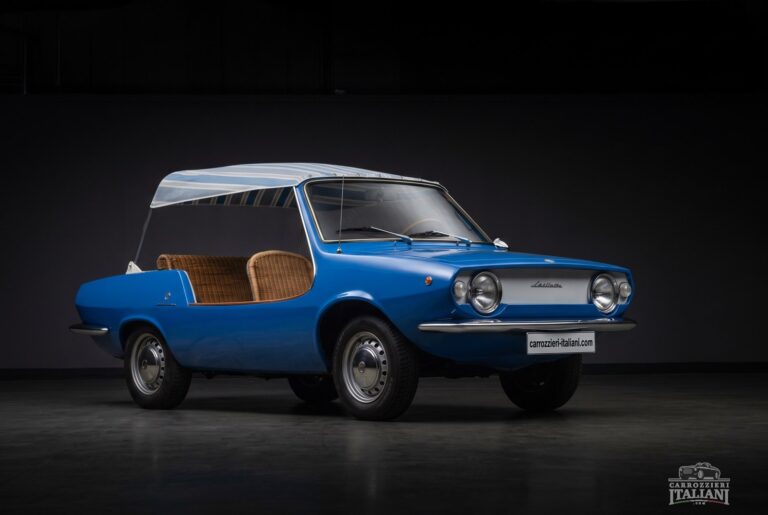
Michelotti Shellette: When the Fiat 850 Became a Yacht
The yacht designer, the Turin stylist and the tiny coachbuilt car that crossed between the quay, the royal holiday house and the auction room. Some automobiles were conceived for the open road,…
Read story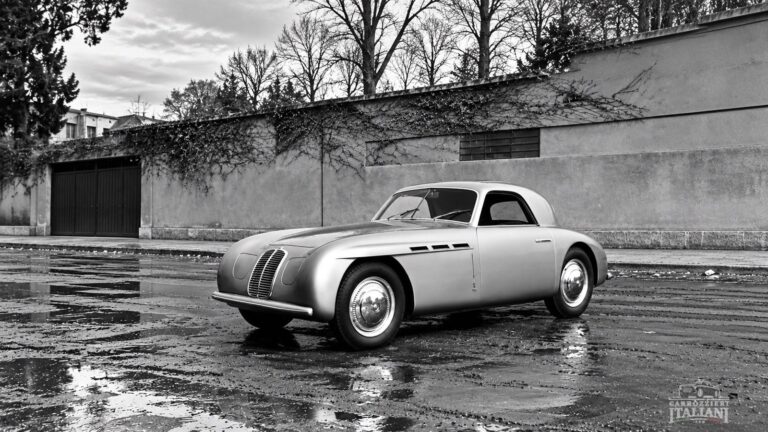
Maserati A6 1500: A New Road for the Trident
When the doors of the Geneva Motor Show opened in March 1947, Maserati was a name that required little introduction to anyone who followed motor racing. What it did not yet possess…
Read story
THE CONVERSATION
Comments 0
Share a memory, a period photograph or a documented detail about this story.