
How Third-Party Car Insurance and Comprehensive Cover are Priced Differently and Why That Matters

Third-party car insurance and comprehensive cover may both fall under car insurance, but they are priced very differently. One is designed to meet a legal requirement, while the other offers broader protection for both you and your car. The issue arises when buyers focus solely on the premium and assume the cheaper option is the better choice. The better approach is to understand how each policy is priced and what that pricing actually reflects.
In this article, you will learn how these two covers are priced differently and why that matters.
How Third-Party Car Insurance is Priced
Third party car insurance is priced differently because it is a mandatory cover under Indian law. Its main purpose is to protect you against legal liability for injury, death, or property damage caused to others, not to cover damage to your own car. That is why the pricing is more regulated and less personalised.
-
The base premium is decided as per regulatory guidelines
-
Pricing is generally linked to vehicle category and type
-
Your car’s repair cost or market value is not the main factor
-
You pay for legal liability protection, not own-damage cover
In simple terms, you are paying for mandatory liability protection, not for damage to your own vehicle.
How Comprehensive Car Insurance is Priced
Comprehensive car insurance is priced on a wider basis because it covers both third-party liability and damage to your own car. That means the premium is not fixed in the same simple way and can differ from one policyholder to another.
-
IDV matters because it reflects your car’s insured value.
-
Insurers also consider the car’s make, model, age, location, and claims record.
-
Deductibles and the type of cover chosen also affect the premium.
-
Add-ons like zero depreciation or roadside assistance raise the cost.
-
A claim-free record can lower renewal pricing through NCB.
That is why comprehensive cover pricing depends not only on the car itself, but also on the protection choices you make.
Why the Pricing Difference Matters
This difference matters because the premium you pay shapes the level of protection, flexibility, and future financial burden you may face.
1. Cost Vs Protection Trade-Off
Many buyers compare only the visible premium and assume the cheaper option is the smarter one. That can be misleading. Third-party cover usually costs less because it protects a narrower risk. Comprehensive cover costs more because it provides broader protection. The real comparison is not only about the car insurance price, but about how much financial exposure you are willing to keep on your own shoulders.
2. Risk Exposure
A third-party policy may keep you legally compliant, but it does not pay for damage to your own car. If your vehicle is stolen, damaged in an accident, or affected by flood or fire, the financial burden can stay with you unless you have broader cover. That is why pricing matters. A lower premium may also mean a far higher out-of-pocket cost when something goes wrong.
3. Flexibility
Comprehensive cover gives you the flexibility to tailor your protection to how you use your car. You can choose add-ons, adjust the level of cover, and build a policy that suits your vehicle profile and driving pattern. Third-party cover does not offer that same degree of flexibility because its role is limited and regulation-led. For policyholders who want more control, the pricing difference reflects a product difference as well.
4. Long-Term Savings
The cheaper premium is not always the more economical decision over time. Comprehensive plans can support long-term value through claim-free discounts, better repair protection, and coverage that reduces sudden financial shocks. A policyholder who thinks only about today’s premium may overlook tomorrow’s repair bill, depreciation burden, or theft loss. In that sense, pricing is closely tied to financial planning, not just policy purchase.
Conclusion
Third-party and comprehensive cover may sit under the same motor insurance umbrella, but they are priced with different aims in mind. One is built to satisfy a legal duty. The other is built to protect a vehicle owner against a wider set of financial risks. Once you understand that difference, choosing a policy becomes less about the cheapest premium and more about the right level of cover.

ABOUT THE AUTHOR
Carrozzieri Italiani Editorial Team
Guides, practical advice and editorial contributions from the Carrozzieri Italiani team.
More stories by Carrozzieri Italiani Editorial Team ↗CONTINUE READING
Posts You Might Like
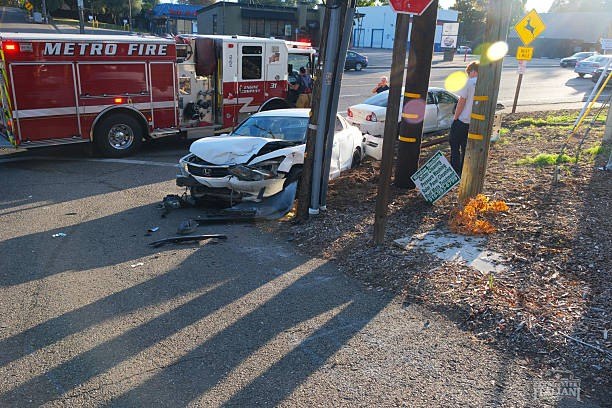
How Vehicle Design and Defective Components Can Contribute to Serious Car Accidents
A driver can do everything right and still end up in a hospital bed because a tire tread separated at highway speed. Federal crash investigators have spent decades tracing a measurable share…
Read story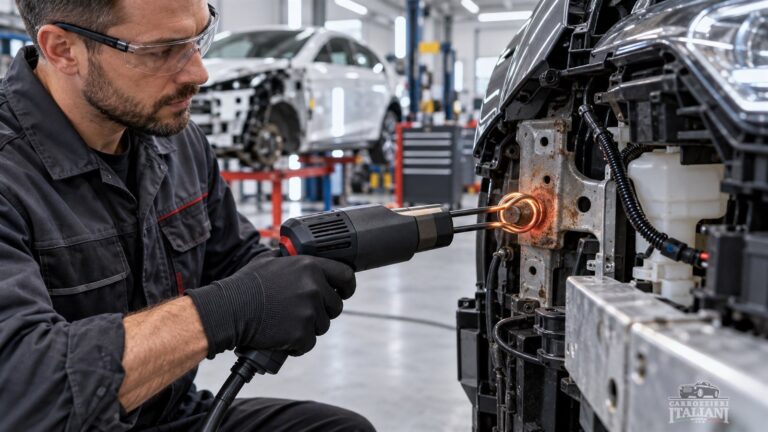
How Automotive Induction Heaters Improve Speed and Safety in Collision Repair
Collision repair has long relied on open-flame torches to loosen rusted bolts, soften adhesive, and free stuck body panels, but that approach carries real tradeoffs. Flame-based heating is slow to control precisely,…
Read story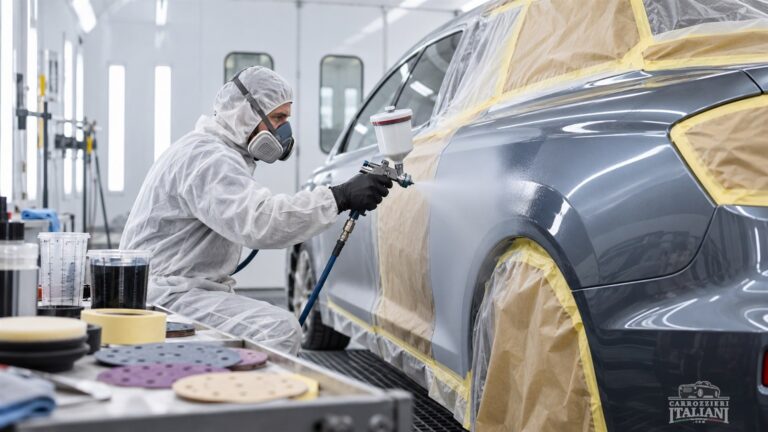
The Key Stages of a Professional Vehicle Paint Repair
Vehicle paintwork has to cope with stone chips, minor collisions, scratches, weather exposure, and everyday wear. When damage occurs, achieving a professional result involves far more than simply spraying fresh color over…
Read story
Il veicolo urbano dopo il viaggio: cosa distingue davvero un buon design per la città
Per gran parte della storia dell’automobile, il progetto di un veicolo è stato raccontato attraverso ciò che accade durante la guida: la velocità, la linea del cofano, il comportamento in curva, la…
Read story
THE CONVERSATION
Comments 0
Share a memory, a period photograph or a documented detail about this story.