
How Giugiaro Designed the Alfasud Without Knowing It Was an Alfa
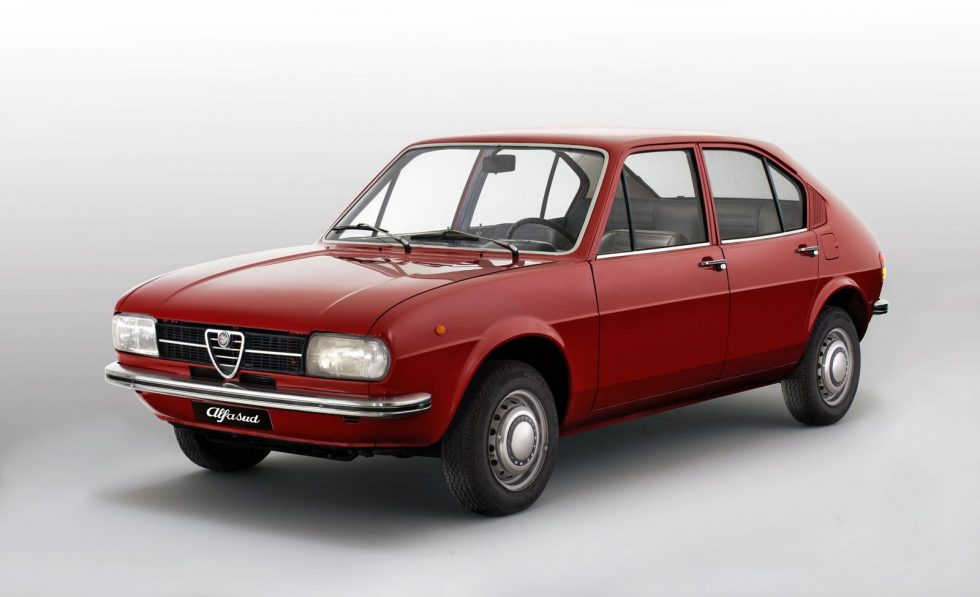
By the late 1960s, Alfa Romeo had a daring plan: build an “Alfa for the people” in Italy’s underdeveloped south to challenge Fiat on its home turf. But nobody expected how secretive, quirky, and obsessed with suitcases this car’s creation would be. Enter engineering chief Rudolf Hruska and young design maestro Giorgetto Giugiaro – and the unlikely birth of the Alfa Romeo Alfasud.
The Alfasud’s Secret Birth in the South
In 1967, Alfa Romeo set out to expand into the small car market and bring jobs to Southern Italy. Veteran engineer Rudolf Hruska was tasked with not only developing the new entry-level car, but also overseeing a brand-new factory to build it near Naples. This ambitious project – code-named Alfasud (“Alfa South”) – was so politically charged and secretive that when Hruska approached Giorgetto Giugiaro’s fledgling Italdesign studio in Turin, he wouldn’t even reveal which company the design was for at first.
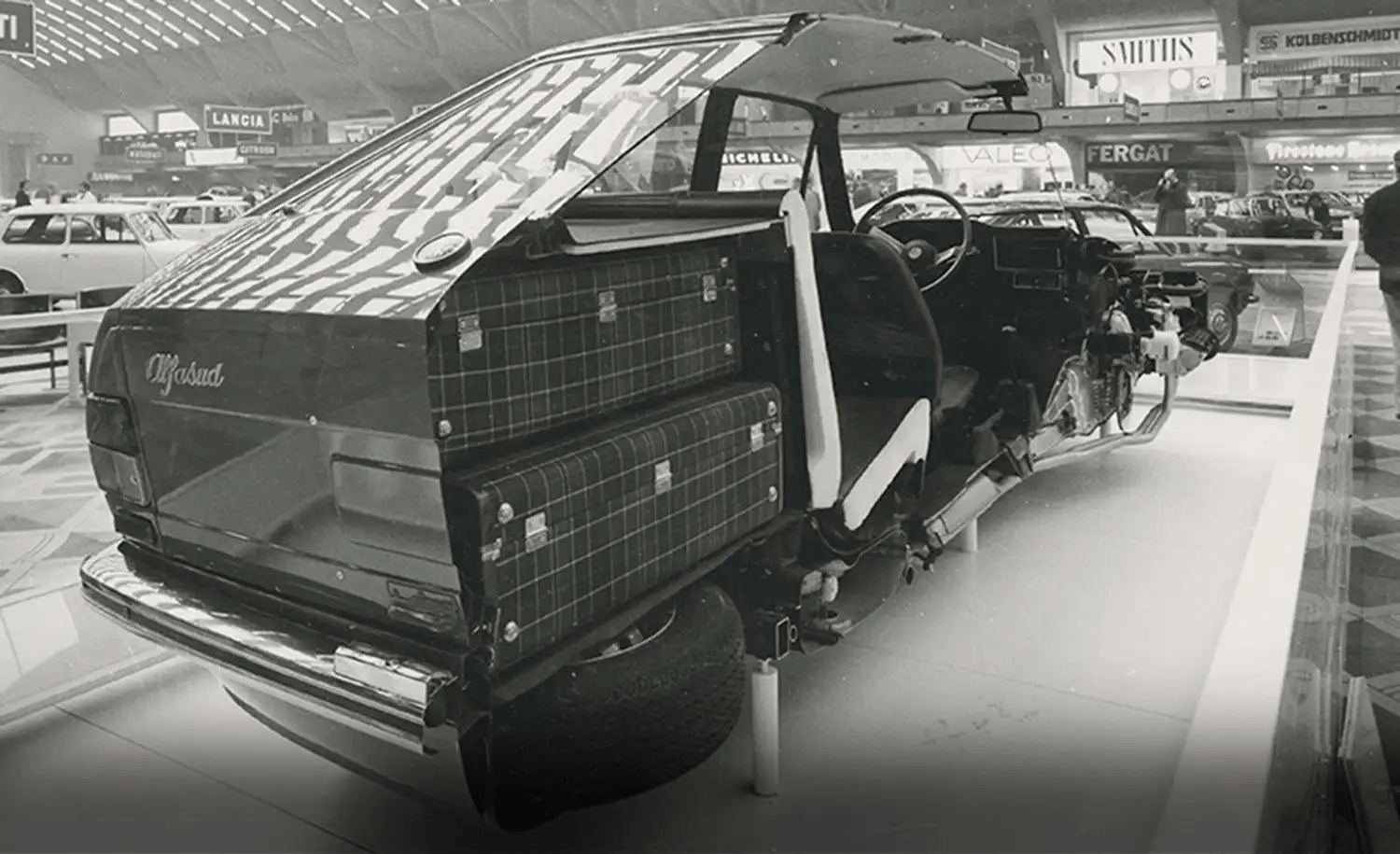
Giugiaro was intrigued by the mystery. Hruska gave him a brief with only the bare essentials: design a car about the size of a Fiat 128, but roomier inside. No brand name, no factory specs. Just a rough sketch on graph paper, a wheelbase, an engine type, and a trunk big enough for four suitcases. And that was it – the blueprint for what would become the Alfasud was basically a few scribbles.
With virtually “a blank sheet” to work from, Giugiaro and his small team had unprecedented freedom. They not only styled the Alfasud but engineered its layout and even contributed to factory planning. At one point, when Giugiaro asked where to place the fuel tank, Hruska responded, “That’s your job to figure out.” And only later, once they were well into development, did Hruska casually reveal the secret client: Alfa Romeo.
By the late 1960s, Alfa Romeo had a daring plan: build an “Alfa for the people” in Italy’s underdeveloped south to challenge Fiat on its home turf. But nobody expected how secretive, quirky, and obsessed with suitcases this car’s creation would be. Enter engineering chief Rudolf Hruska and young design maestro Giorgetto Giugiaro – and the unlikely birth of the Alfa Romeo Alfasud.
Designing with Suitcases and Quirks
Giugiaro crafted a clean, modern shape with a short nose and distinctive high tail. That high rear end wasn’t just stylish – it made room for Hruska’s sacred four-suitcase requirement. In fact, the Alfasud’s trunk could swallow more luggage than some larger German sedans.
But there was a hitch: the prototype’s trunk lid wouldn’t close with the suitcases inside. Hruska refused to compromise, so the team had to bolt the trunk hinges to the outside of the car. Elegant? Not really. Functional? Absolutely. Giugiaro wasn’t thrilled, but Hruska was triumphant. Those suitcases fit, and that was all that mattered.
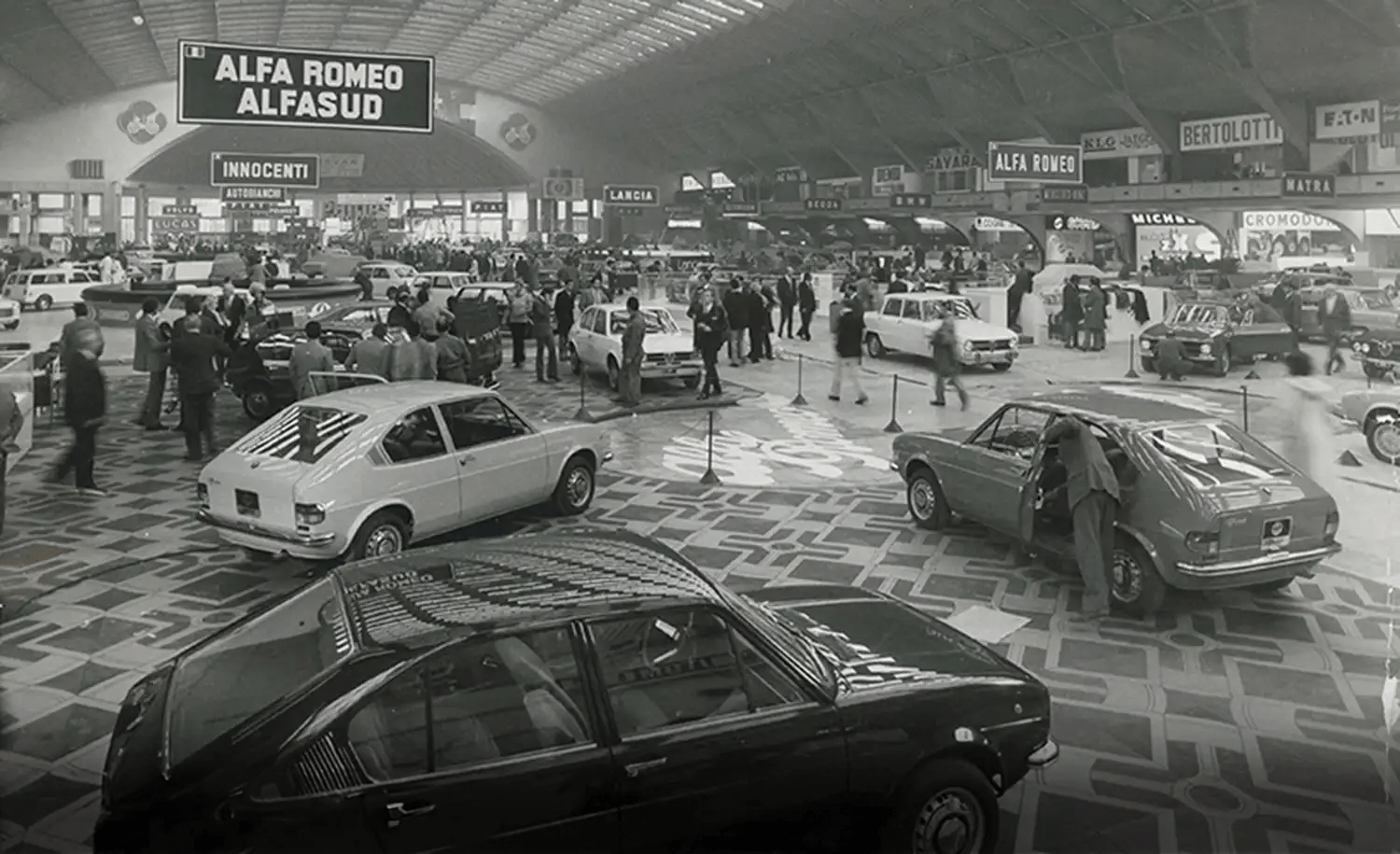
Despite such quirks, the Alfasud’s overall design was praised. It debuted in late 1971 with sleek fastback lines, aerodynamic efficiency, and a surprisingly spacious interior. Giugiaro managed to make an economy car look sporty and chic. This wasn’t just a small car—it was a statement. And for Giugiaro, it was a milestone: the first car he could shape from start to finish.
Advanced Engineering in a Fun-Size Package
Underneath the stylish skin, the Alfasud packed serious tech. It introduced Alfa Romeo’s first front-wheel-drive platform and a water-cooled flat-four “boxer” engine—a low, horizontally opposed unit chosen for its handling benefits. Initially displacing 1.2 liters, it produced around 63–68 horsepower. Later versions ranged up to 1.7 liters and 95 horsepower in the Ti models.
The chassis featured MacPherson struts up front and a beam axle with Watt’s linkage in the rear. Combine that with rack-and-pinion steering and a curb weight under 900 kg, and the Alfasud was a dream on twisty roads. It felt agile, light, and balanced—like a go-kart in a good su
It also had disc brakes on all four wheels, a rarity in its class. The front discs were mounted inboard to reduce unsprung weight—a sophisticated solution borrowed from motorsport. Even the fuel tank was cleverly tucked under the rear seats to free up trunk space. Every detail was engineered for performance, practicality, or both.
An Alfa for the People – Aimed at Fiat’s Turf
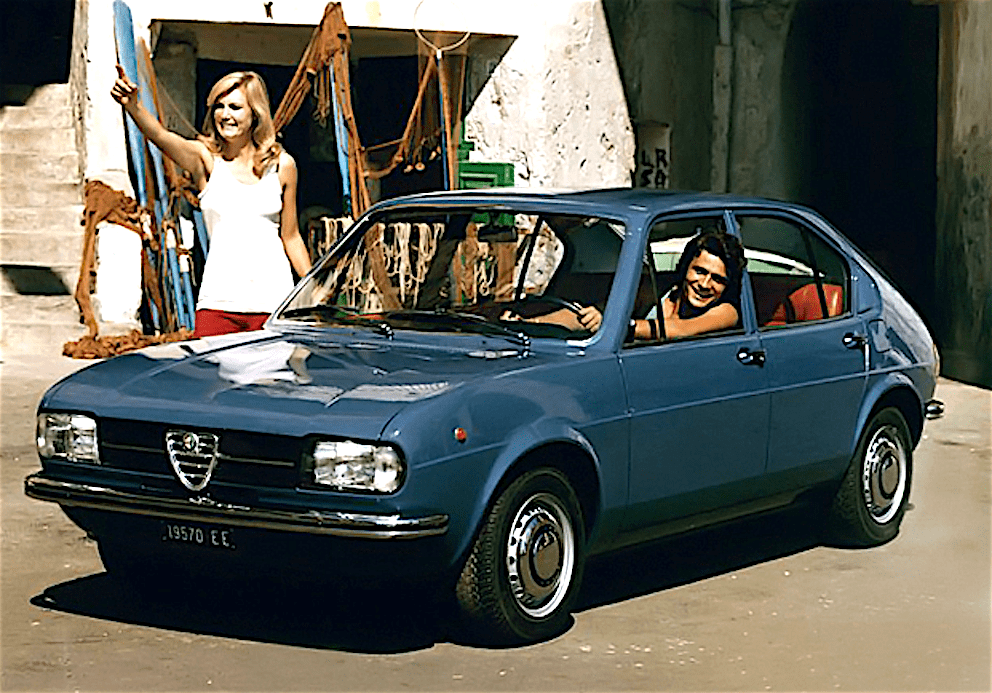
When the Alfasud hit showrooms in 1972, it was a bold move: Alfa Romeo was stepping into Fiat’s territory. Priced as an entry-level model, the Sud offered Italian buyers a front-drive family car with a dose of Alfa’s sporting flair. It was meant to democratize the Alfa driving experience—and for a while, it did just that.
Alfa fans were skeptical at first, but the Sud won them over. It was fun to drive, efficient, and affordable. Regular families got a reliable car with genuine performance, while Alfa loyalists found that trademark engine growl and precise handling in a more accessible package.
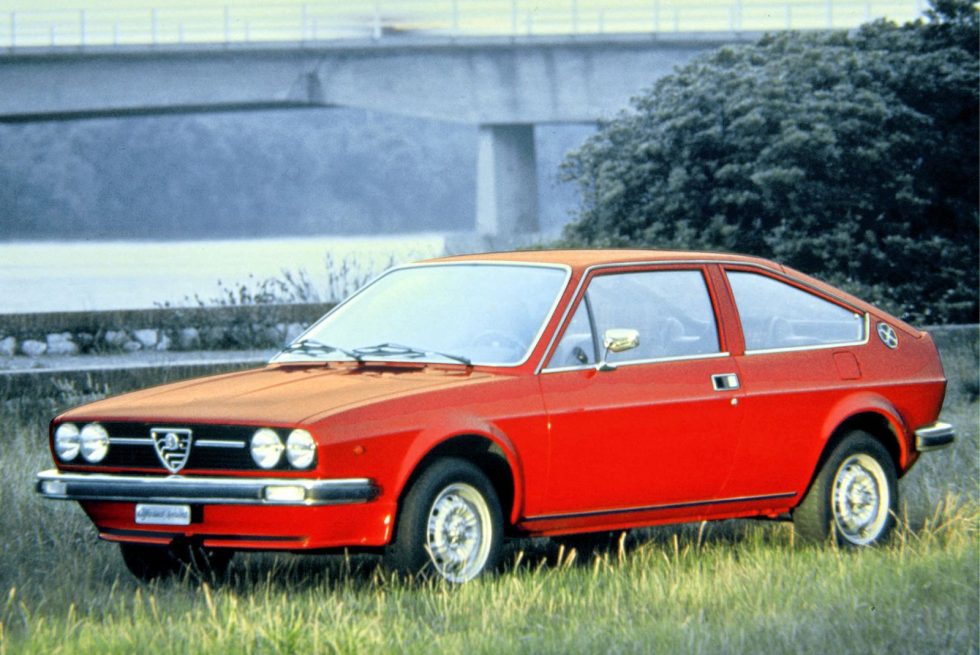
Variants soon followed. The sportier Alfasud Ti came in 1973 with a 5-speed gearbox and more power. The Giardinetta wagon added utility, while the Alfasud Sprint, a handsome coupé designed by Giugiaro, brought elegance and speed to the lineup. There was even a convertible prototype that sadly never made it to production.
By the time production ended in 1984, nearly 900,000 Alfasuds had been built—making it Alfa Romeo’s best-selling model ever. The Sud didn’t just sell cars; it reshaped Alfa’s image and opened new doors for the brand.
Quirks, Quality Gremlins and Legacy
Now, let’s talk about the elephant in the boot: rust. The Alfasud’s Achilles’ heel was its tendency to rot. Between subpar Soviet steel, poor rustproofing, and damp coastal air, early cars often showed rust within months. Labor unrest didn’t help—unfinished bodies sat outside for days, exposed to the elements.
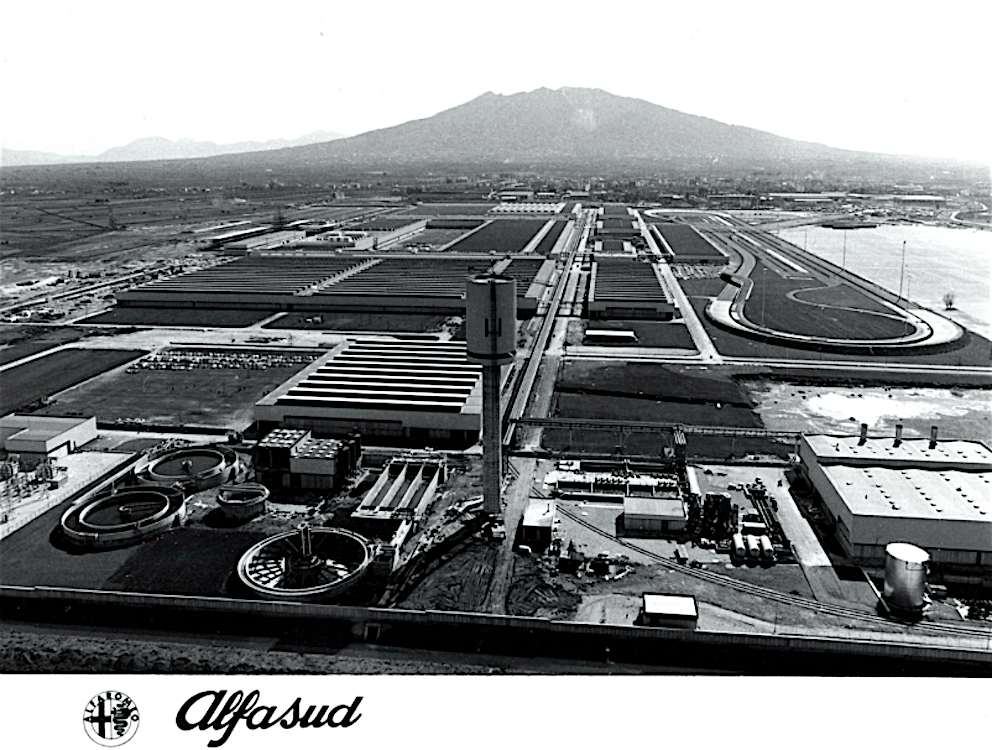
There were other gremlins too: flaky paint, electric issues, and trim that didn’t always fit. The brand-new Pomigliano factory took time to reach full quality control. Alfa later improved things, but the damage to the Alfasud’s reputation lingered.
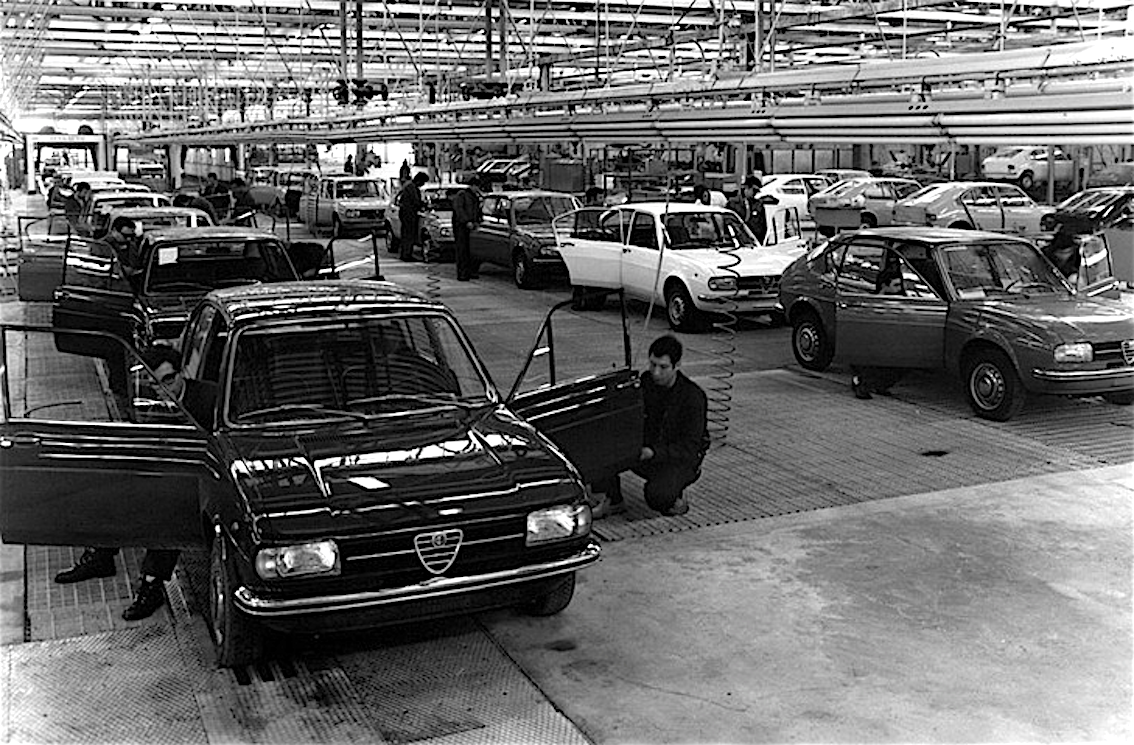
Yet despite its flaws, the Alfasud holds a special place in enthusiasts’ hearts. It was clever, fun, and far more advanced than most people realized. Today, surviving examples are rare treasures. Those odd trunk hinges? Now a badge of honor.
Giugiaro’s Alfasud-Based Dream: The Alfa Romeo Caimano
Giugiaro made a concept car on the Alfasud platform, and it was anything but ordinary. Presented in 1971, the Alfa Romeo Caimano was a bold design exercise by Italdesign, showcasing what could be done when imagination was unshackled from production constraints.
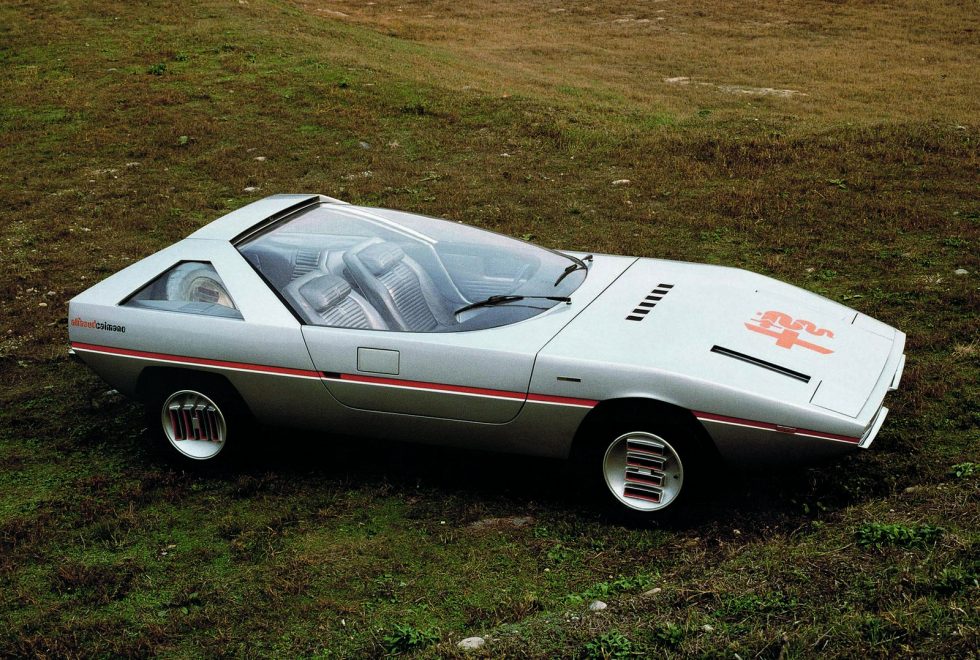
With a fully integrated dome canopy replacing traditional doors and windshield, an adjustable rear spoiler built into the roll-bar, and a cockpit featuring cylindrical rotating gauges, the Caimano turned the humble Alfasud into a futuristic showstopper. Powered by a 1300 cc engine producing 86 hp, it wasn’t just a design study—it could move, too.
Radical, playful, and completely unexpected, the Caimano proved that even a practical family sedan platform could serve as the foundation for something visionary.
Final Thoughts
The Alfa Romeo Alfasud was a bold experiment—a product of political ambition, engineering brilliance, and good old-fashioned Italian stubbornness. It gave us front-wheel drive Alfas, practical performance, and a suitcase story for the ages.
Sure, it rusted. Sure, it was flawed. But it was also fun, smart, and full of soul. The Alfasud wasn’t just a car—it was an Alfa. And like any true Alfa Romeo, it made you feel something, even if that something occasionally included mild panic about corrosion.
So next time you’re at an airport baggage carousel, think of Giugiaro. Somewhere in that sea of suitcases, the ghost of the Alfasud is smiling.

ABOUT THE AUTHOR
Andreas Scheidl
Italian classic car enthusiast with German roots. Renowned as a respected figure in the classic car community, he serves as a jury member at various international concours d'elegance, including the Classic Gala Schwetzingen and Mantova. As a content creator, Andreas passionately shares his profound knowledge and appreciation for vintage automobiles. His heart beats for cars designed by Giovanni Michelotti, showcasing his discerning taste and dedication to preserving the timeless elegance of automotive history.
More stories by Andreas Scheidl ↗CONTINUE READING
Posts You Might Like
A Central Driving Position, a Rear-Mounted V8. Was This Really a Lancia?
In 1948, visitors to the Turin Motor Show could see an unusual Lancia on the stand of Carrozzeria Ghia. It was a large two-door coupé with a two-litre V8 mounted behind the…
Read story
Fioravanti F100: The Ferrari He Was Allowed to Imagine
Enzo Ferrari’s centenary, Leonardo Fioravanti’s independent studio and a supercar that explored air brakes, steel wheels and a new way of driving—without ever wearing the Cavallino.
Read story
Michelotti Shellette: When the Fiat 850 Became a Yacht
The yacht designer, the Turin stylist and the tiny coachbuilt car that crossed between the quay, the royal holiday house and the auction room. Some automobiles were conceived for the open road,…
Read story
Maserati A6 1500: A New Road for the Trident
When the doors of the Geneva Motor Show opened in March 1947, Maserati was a name that required little introduction to anyone who followed motor racing. What it did not yet possess…
Read story
THE CONVERSATION
Comments 0
Share a memory, a period photograph or a documented detail about this story.