
Ferrari FX: Beyond the Limits of Maranello
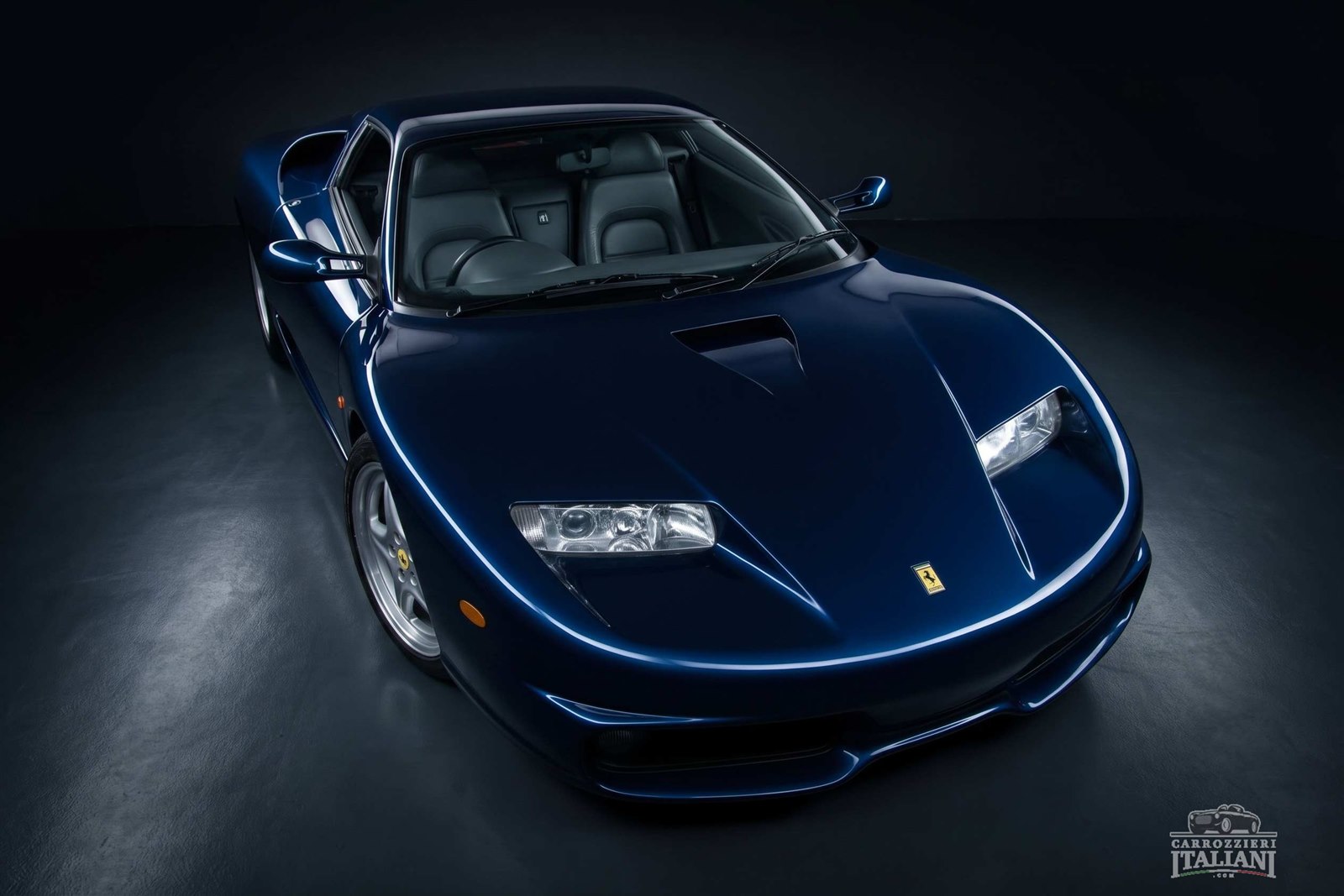
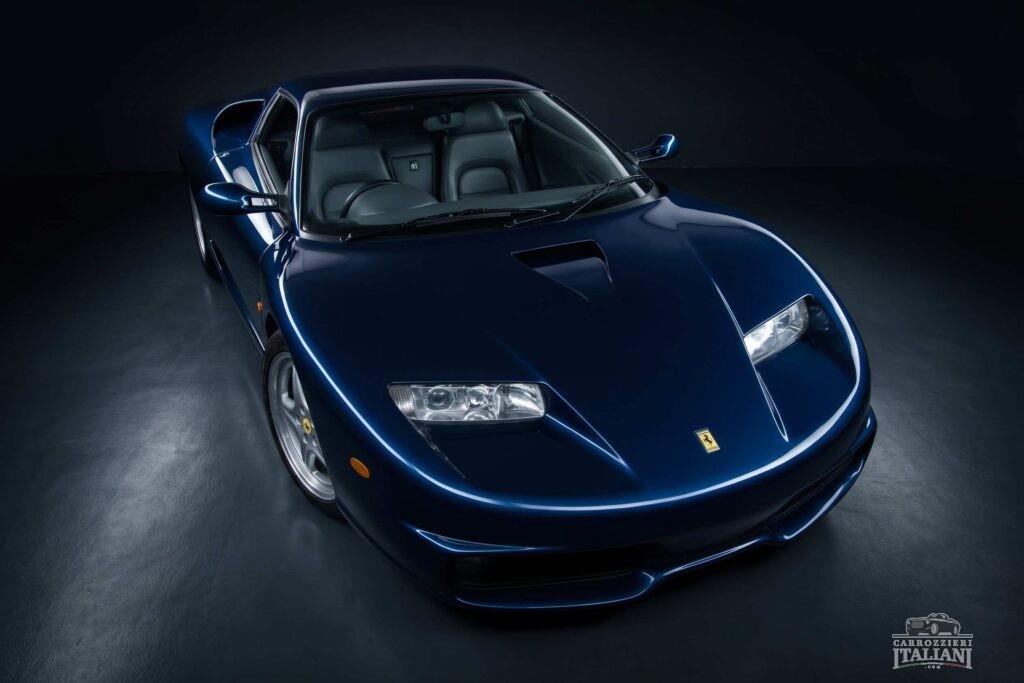
Six documented chassis, the disputed seventh car, Williams transmission development and the anatomy of one of the least understood Ferraris of the 1990s
There are rare Ferraris, and then there are Ferraris whose histories developed almost entirely outside Ferrari’s normal public record. The FX belongs to the second category. Conceived during the extraordinary burst of bespoke work commissioned by the Brunei royal family in the 1990s, it combined Ferrari’s final flat-twelve road-car architecture with a completely new Pininfarina body and, in its most developed form, an electro-hydraulic sequential transmission engineered with Williams. It looked neither like the Testarossa from which its bloodline began nor quite like the F512 M that represented the contemporary end of that lineage. It was a private supercar programme with its own name, its own body, its own interior and a drivetrain experiment that anticipated the direction high-performance road cars were about to take.
Secrecy quickly blurred the details. Accounts disagree over the number of cars, the precise donor specification and even the development of the transmission. One FX, however, did not disappear into Brunei. Dark metallic blue chassis 103396 remained in Britain while transmission work was being completed and later entered Dick Marconi’s collection in California. Its survival provides the clearest physical record of the programme.
A different kind of Ferrari programme
The FX makes more sense when placed beside the other Pininfarina projects commissioned for Brunei rather than beside Ferrari’s ordinary model range. During this period the Turin company was not simply supplying exterior styling. It could act as design studio, engineering department, prototype constructor and micro-series manufacturer for an exceptionally demanding private client. The results ranged from extensively modified production Ferraris to bodies that shared little visually with their donor cars. The F90 had already demonstrated how far a Testarossa-based commission could move from the production shape. The later 456 programme expanded the idea into estates, saloons and open cars, requiring structural work and limited-series manufacture rather than a cosmetic conversion.
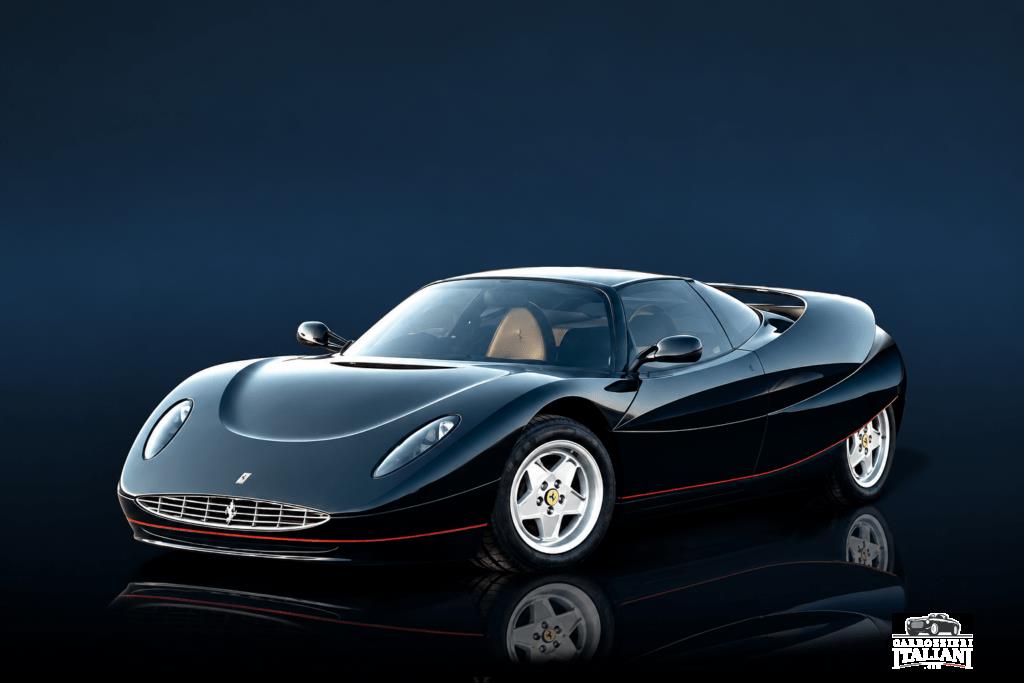
Seen in that context, the FX sits naturally between the Ferrari F90 and the later Ferrari 456 GT Venice programme. The F90 showed that a private client could fund a genuinely new Pininfarina body around Ferrari mechanical architecture; the 456 specials showed how deeply Pininfarina could re-engineer a current Ferrari for a very small production run. The FX combined both ideas and added something more radical: a transmission development programme involving British motorsport engineering.
That distinction matters. Describing the FX merely as a “rebodied Ferrari” misses much of the work. The new shape changed the packaging demands around the flat-twelve powertrain, cooling and exhaust system. The interior was purpose-made. Lightweight materials were used selectively in the body. Most significantly, the conventional Ferrari gearbox interface was replaced by a system whose electro-hydraulic operation had to communicate with a road-going flat-twelve in a way that remained usable outside a racing circuit. It was therefore coachbuilding in the older sense of the word—creating a different automobile around an existing mechanical identity—but executed with 1990s electronics, composites and Formula One-era transmission thinking.
What was underneath the FX?
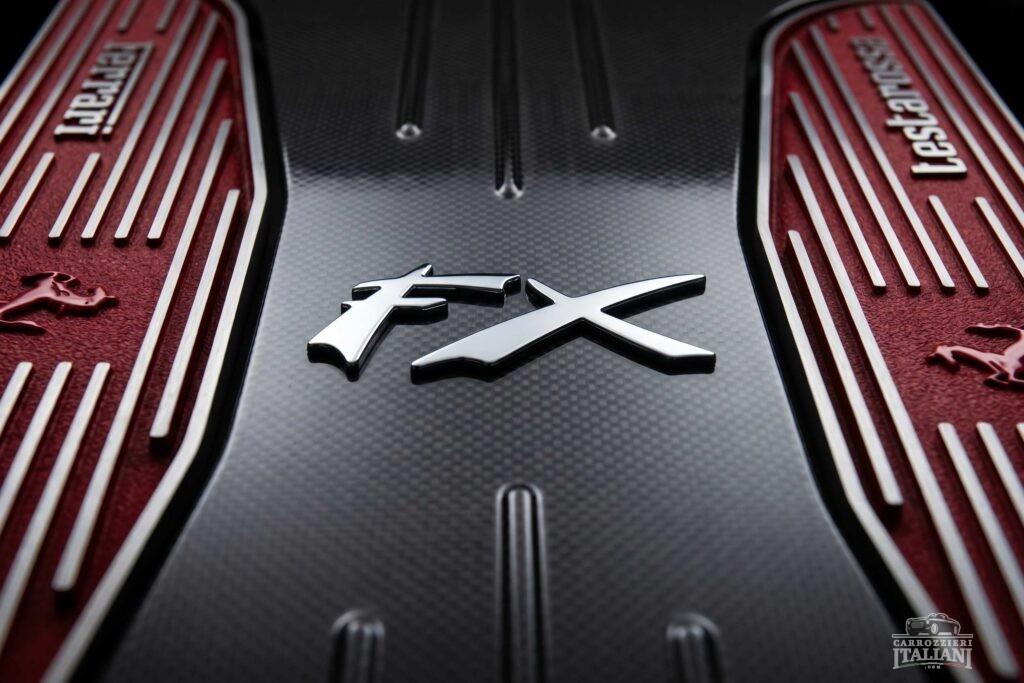
The production reference point was Ferrari’s mid-engined flat-twelve family. The original Testarossa had evolved into the 512 TR for 1992 and then into the F512 M for 1994. The M was the final production expression of the line: fixed headlamps replaced the pop-up units, the rear treatment changed substantially and the 4,943 cc twelve-cylinder engine reached roughly 440 hp. Only 500 F512 Ms were produced before Ferrari moved its twelve-cylinder grand-touring flagship back to a front-engined layout with the 550 Maranello.
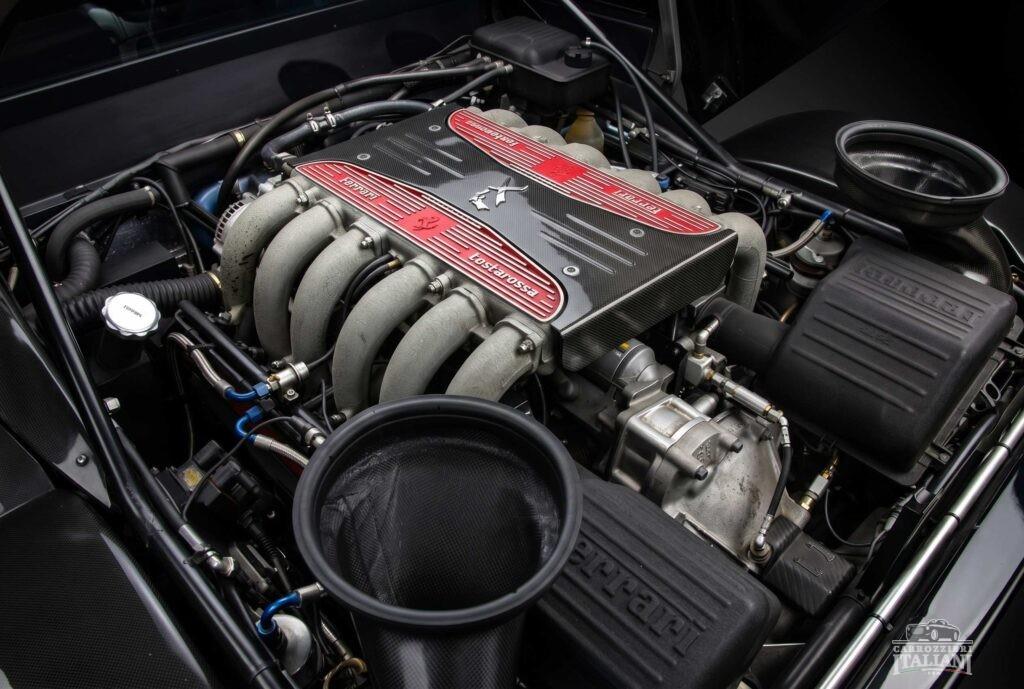
Accounts of the FX often call it Testarossa-based because the entire mechanical family is popularly grouped under that name. More precise descriptions identify the later cars, and especially chassis 103396, with the F512 M generation. The chassis numbers themselves also span different moments in the evolution of the donor family, which helps explain why blanket statements about every FX being mechanically identical should be treated cautiously. A surviving independent chassis compilation associates six serial numbers with the programme: 099664, 099665, 101368, 101676, 103396 and 103957. Their VIN prefixes are not all identical, another indication that the cars were drawn from more than one point in the Testarossa/512 production sequence.
For years, seven FXs has been the standard figure, usually accompanied by the claim that six went to Brunei while chassis 103396 remained outside the royal collection. The surviving chassis record is less tidy: six serial numbers can presently be identified. Contemporary and later accounts nevertheless continue to describe a seven-car programme, leaving open whether a seventh car was completed, merely planned or simply lost from the accessible record.
The Pininfarina body
Visually, the FX is remarkable for how completely it suppresses the architecture of its donor. The Testarossa family had been defined by horizontal strakes, deep side intakes, a wide rear deck and an emphatically geometric relationship between cabin and body. The FX keeps the fundamental mid-engined proportions but replaces the visual drama of the 1980s with a much smoother 1990s surface language. Its nose is low and rounded, with compact lamps under clear covers and a broad central opening. The front wings flow into a waistline that rises gently toward the rear rather than being interrupted by the Testarossa’s side strakes.
The side treatment is particularly revealing. Air still has to reach the radiators and the engine bay, but the openings are absorbed into the body rather than advertised as the car’s main graphic device. The cabin appears lighter because the side glass and rear-quarter treatment are less massive. At the back, the FX abandons the familiar slatted Ferrari tail for a cleaner composition, with circular lamps set into a broad panel and a rear volume shaped around the new exhaust and cooling requirements. The result is not a disguised F512 M but a different design proposition using the same basic mechanical geography.
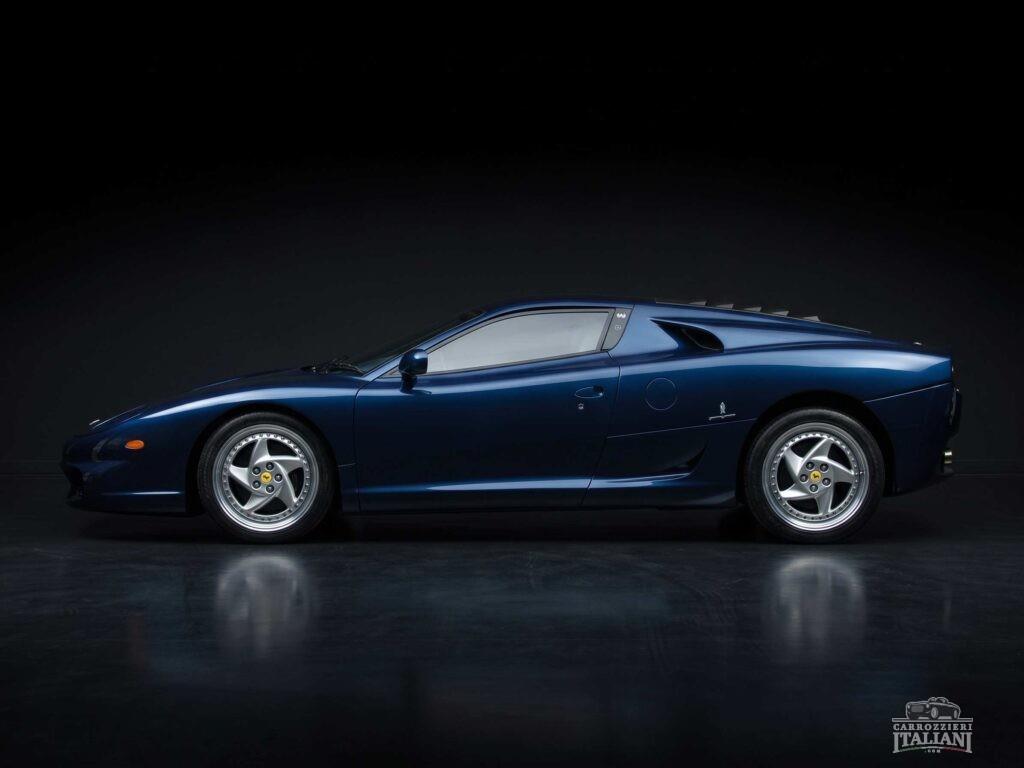
Construction reports describe aluminium bodywork with carbon fibre used for selected panels and structures such as the bonnet, doors and wheel-arch areas. Exact material distribution is difficult to establish for every car, and there is no reason to assume that all examples were absolutely identical. These were hand-built commissions produced in tiny numbers, not bodies emerging from a conventional series-production tooling set. The surviving blue car is especially valuable because its panel construction, glazing, interior fittings and transmission controls can be inspected as physical evidence rather than inferred from photographs taken in Brunei.
One contemporary description of chassis 103396 noted that virtually none of the external glazing and body panels matched the standard donor apart from the windscreen. Whether every component across the series followed precisely the same specification is harder to prove, but the observation captures the scale of the transformation. Pininfarina had not simply changed bumpers, lamps and outer skins. The FX required the sort of integrated package work associated with a new low-volume model.
Cooling, exhaust and the hidden engineering
The smooth body created a practical problem. Ferrari’s flat-twelve cars depended heavily on the management of heat and airflow around a very wide rear powertrain. The production F512 M used large lateral cooling arrangements immediately behind the cabin. Once the FX discarded the donor car’s characteristic side architecture, the air paths could no longer be treated as fixed. Period descriptions and examination of the surviving car indicate a substantially revised cooling installation, with radiator location and ducting altered to suit the new body.
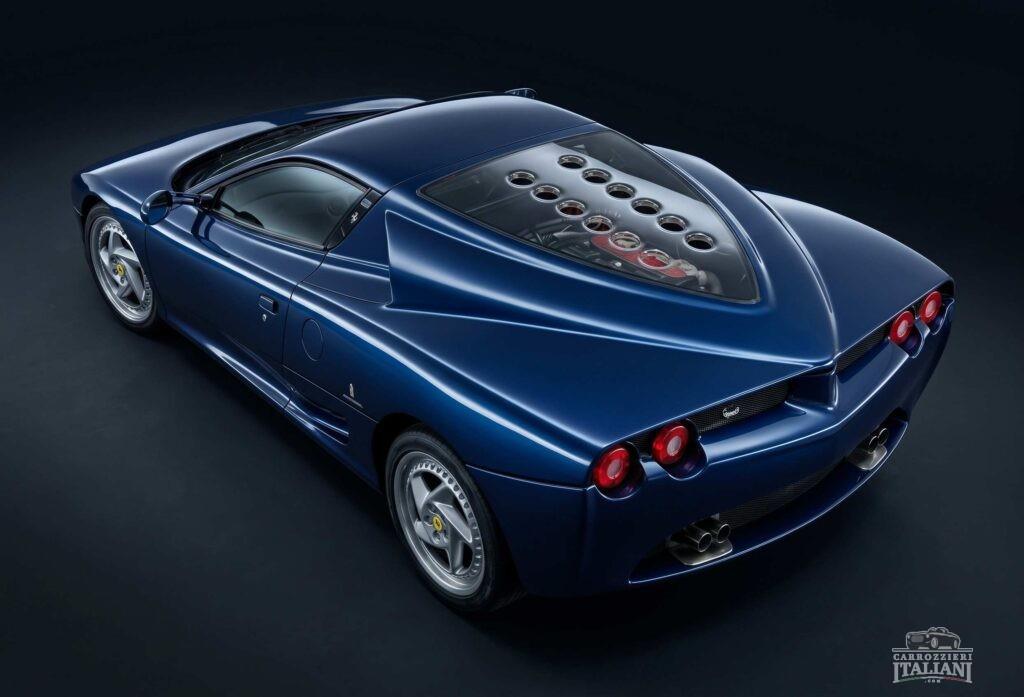
The exhaust also had to be repackaged around the redesigned rear. This is a small detail with large consequences: on a mid-engined car, exhaust routing, cooling airflow, rear crash structure and body volume compete for the same space. Changing one can force changes elsewhere. Claims that the engine itself received major internal modifications are less securely documented. Some sources quote power in the low-430 to 440 hp range, essentially consistent with the F512 M’s output, while others imply additional tuning. Until primary engineering records emerge, the safer historical conclusion is that the flat-twelve remained fundamentally Ferrari production hardware while its installation, breathing, exhaust and control environment were adapted for the FX.
From Prodrive to Williams: reconstructing the gearbox story
The transmission is where the FX stops being merely an extraordinary coachbuilt Ferrari and becomes a genuine technology story. In the mid-1990s paddle-operated gearboxes were familiar in Formula One but not yet normal equipment on high-performance road cars. Ferrari would introduce its production F1-style electro-hydraulic system on the F355 F1 in 1997. The FX programme was underway before that road-car technology had become part of Ferrari’s showroom vocabulary.
The usual shorthand says that Williams fitted the FX with a Formula One gearbox. That is too crude. The road car retained a transmission architecture suitable for its production-derived drivetrain; what made the system exceptional was the electro-hydraulic actuation and control strategy that allowed the driver to command sequential shifts from the steering wheel. Sources close to the history describe an earlier development phase involving Prodrive, followed by further work at Williams. That sequence also explains why both names appear in otherwise credible accounts rather than requiring one of them to be dismissed outright.
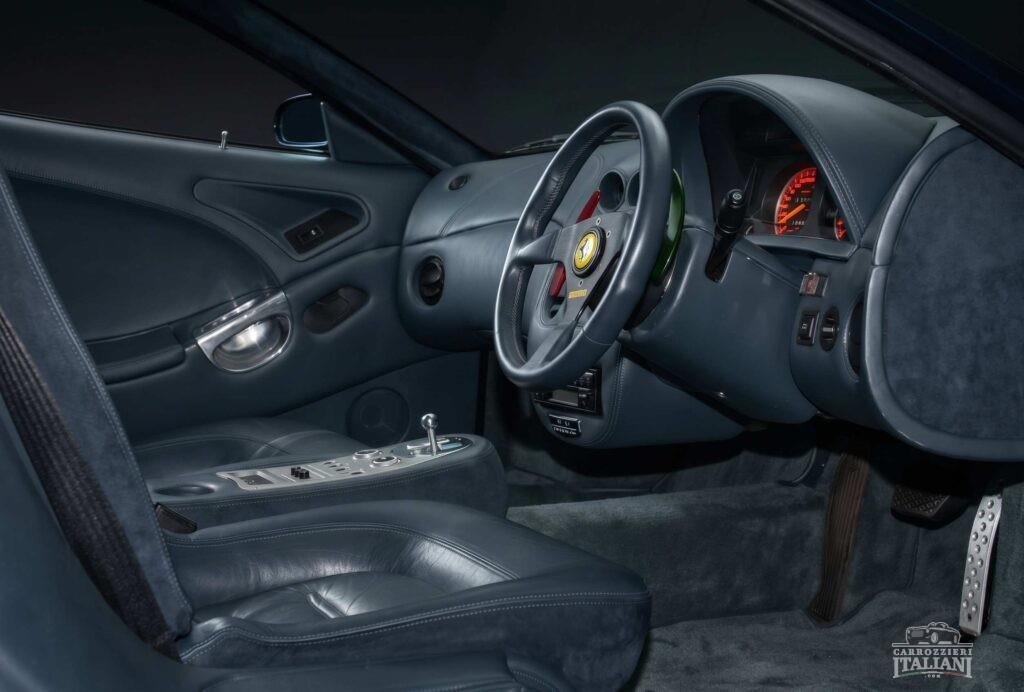
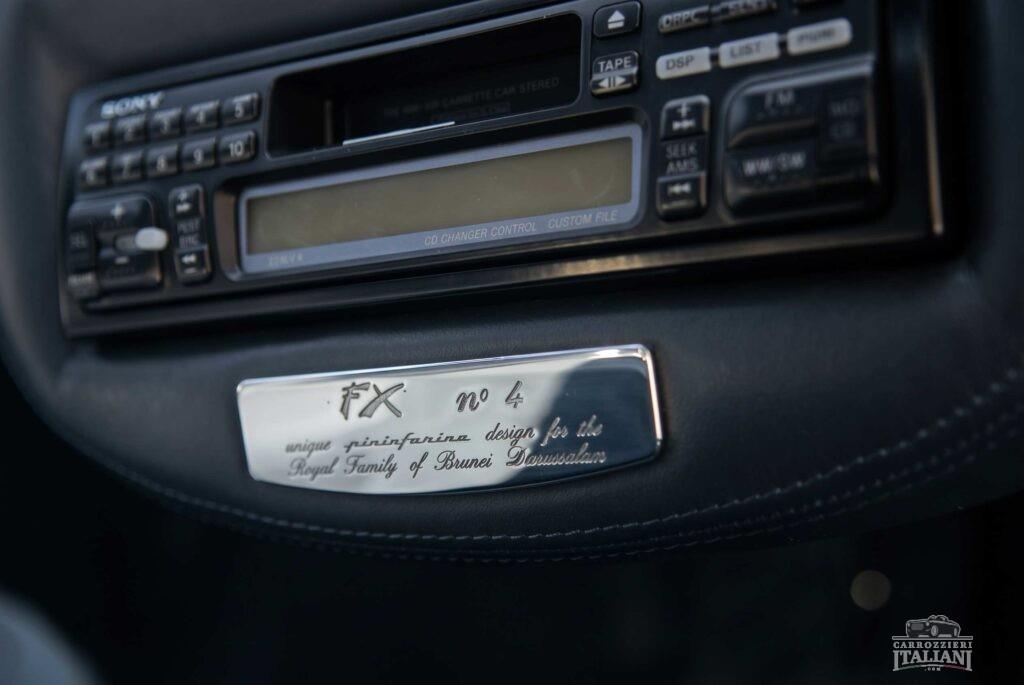
The surviving blue car provides the clearest view of the final installation. Behind its Momo steering wheel sit conspicuous coloured shift paddles—green and red in well-known photographs—while the centre console carries transmission controls and manual clutch-adjustment functions. An emergency cut-off and other development-car details reinforce the impression that this was not a production Ferrari interior with a decorative selector added later. The cockpit had been designed around a genuinely different operating system.
Descriptions of the final Williams-developed installation usually specify seven forward ratios and electro-hydraulic actuation. A museum description has also referred to six speeds, demonstrating how easily even the specification of the best-known FX has become muddled. The seven-speed figure is the one repeated in the detailed road-test lineage and in several technical databases, but the discrepancy deserves to remain visible in the historical record. What can be stated with confidence is more important than the precise count: the blue FX used a paddle-commanded sequential system developed at Williams, and a journalist who drove the car found the quality of its automated downshifts remarkable for the period.
The journalist who actually drove one
Most Brunei specials were discussed from photographs, leaked information or later sightings. Chassis 103396 was different. Automotive writer Winston Goodfellow drove it for a road test published in issue 32 of Forza, under the wonderfully revealing premise that Ferrari and Pininfarina maintained that the FX did not exist. That drive is crucial because it moves the car out of the realm of static specifications. Goodfellow later recalled the FX when discussing another early paddle-shift prototype, specifically remembering the mechanical sensation of the transmission working through its changes.
The test also undermines the idea that the FX was a styling exercise wearing exotic technical claims. The car ran, shifted and could be evaluated as an automobile. Contemporary accounts derived from that test describe the flat-twelve’s sound on downshifts and the effectiveness with which the electro-hydraulic system matched the engine. For a bespoke machine built in such tiny numbers, that degree of development is significant. Pininfarina and its British engineering partners had produced something intended to function, not merely to impress a private client when the garage doors opened.
Chassis 103396: number four
The dark blue FX is consistently described as number four within the programme. It was at Williams when the Brunei flow of commissions came to an abrupt end. Instead of being completed for shipment east, it remained outside the royal collection and was eventually acquired by American entrepreneur and collector Dick Marconi. Reports place the purchase at approximately $1.3 million, although the contractual details of the transaction are not publicly available.
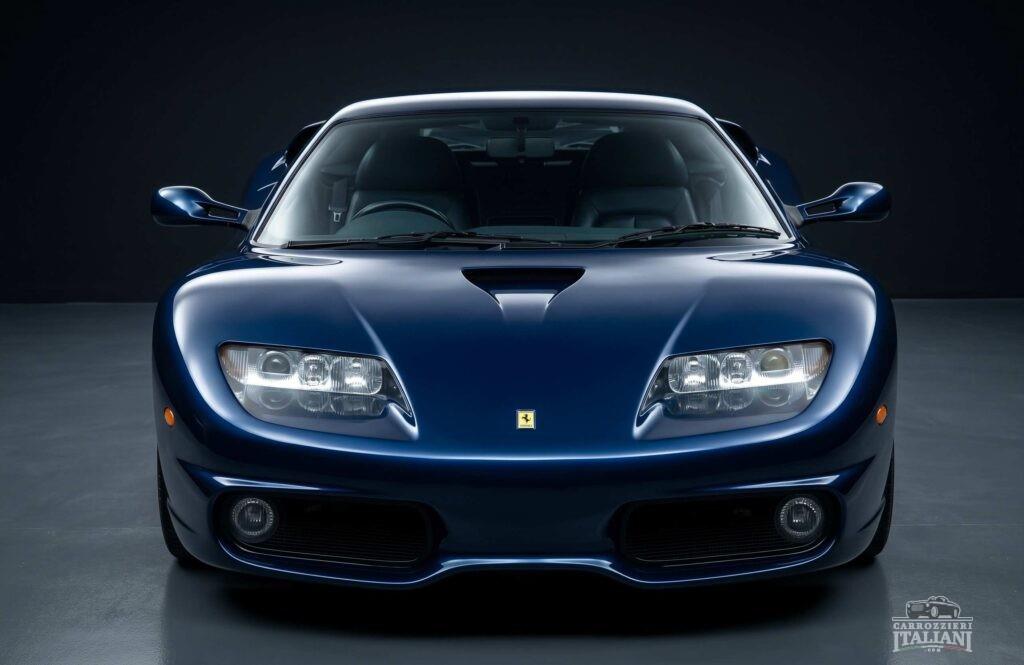
Its later home, the Marconi Automotive Museum in Southern California, gave the FX something none of its Brunei siblings enjoyed: a public afterlife. Visitors could see the body at close range, photograph the interior and record the chassis number. The museum context also preserved the car substantially as it emerged from the programme rather than subjecting it to the sort of restoration that can erase experimental details. Its period Sony audio equipment, special plaque, controls and two-tone cabin are not incidental curiosities; they are evidence of how Pininfarina conceived a royal-client supercar in the middle of the 1990s.
Chassis 103396 also helps anchor the donor question. Its VIN belongs to the late flat-twelve production era and the car is widely described as F512 M-based. A museum inventory explicitly lists it as an FX based on the F512 M. That does not automatically prove that every earlier FX began with an identical donor specification. Indeed, the six documented serial numbers span enough of Ferrari’s production chronology that the programme is better understood as a series developed across the evolving 512 family than as seven—or six—perfectly interchangeable F512 Ms.
Six documented chassis, seven cars in the story
The known serial numbers deserve to be set out plainly because they change the way the FX story can be written: 099664, 099665, 101368, 101676, 103396 and 103957. Six cars. Chassis 103396 is by far the best documented because of its life outside Brunei. The other numbers establish that the programme was real and serialised, but their individual colours, exact specifications and royal assignments are not equally secure in the public record.
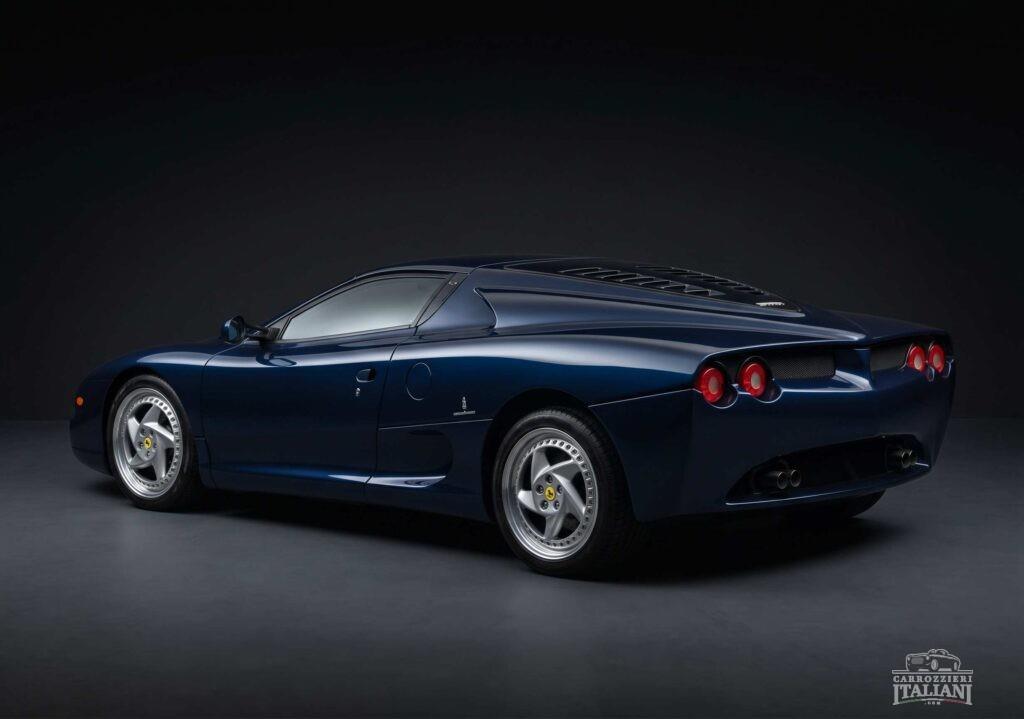
Why, then, does seven appear so often? The strongest narrative tradition describes 103396 as the fourth of seven nearly identical cars, with six intended for or delivered to the royal family. That formulation was repeated by specialist sites and by accounts based on the blue car’s history. Other modern sources, including a recent Italian motoring overview, state that six FXs were built. A chassis database also gives six. Rather than selecting whichever number makes the cleaner sentence, the evidence points to a more interesting conclusion: six physical identities are currently documented, while the seven-car figure belongs to the programme’s long-standing contemporary narrative. A serious history should preserve both facts until the seventh chassis is identified or the origin of the seven-car count is disproved.
Occasional claims of nine cars are harder to sustain: no corresponding chassis sequence has surfaced, and the figure lacks the documentary support of either the six identified cars or the long-established seven-car account.
Who commissioned the FX?
The phrase “Sultan of Brunei’s Ferrari FX” is convenient, but the royal collection was not the work of a single buyer making every decision personally. Hassanal Bolkiah, his brother Prince Jefri and younger members of the family were all associated with major automotive commissions, and later accounts do not always agree on which individual initiated a particular project. Some sources link the FX directly to the Sultan; others identify a younger royal, including Prince Hakeem, while the technical development is often described as part of the wider programme managed for the family through Pininfarina.
The distinction is worth maintaining because the Brunei projects were not simply a pile of cars ordered from catalogues. They were programmes, often involving repeated examples, individual colours, right-hand-drive requirements, tropical-climate adaptations and mechanical preferences such as automatic or automated transmissions. The FX’s gearbox makes particular sense within that environment. The objective was not to create a racing car for competition but to combine the drama of Ferrari’s flat-twelve supercar with a form of operation that suited the client’s preferences and curiosity about advanced technology.
The wider context can be seen in the Brunei special-car programme, where Pininfarina projects ranged from the 456 GT Venice estate and 456 GT Venice saloon to the 456 GT Venice Spider. The FX was unusual even in that company because the transformation reached both the visual identity and the way the driver controlled the powertrain.
A design between the Mythos and the next Ferrari generation
Stylistically, the FX belongs to a fascinating Pininfarina moment. The studio was moving away from the graphic excess and sharp separations that had characterised many 1980s supercars toward cleaner, more integrated volumes. The Ferrari Mythos had demonstrated how radically the Testarossa package could be reinterpreted as a low, fluid object. The 456 GT showed an entirely different face of the same studio: restrained, classical and almost deliberately free of theatrical decoration. The FX sits somewhere between those poles. It is unmistakably exotic, but its drama comes from proportion and surface rather than strakes and add-on graphics.
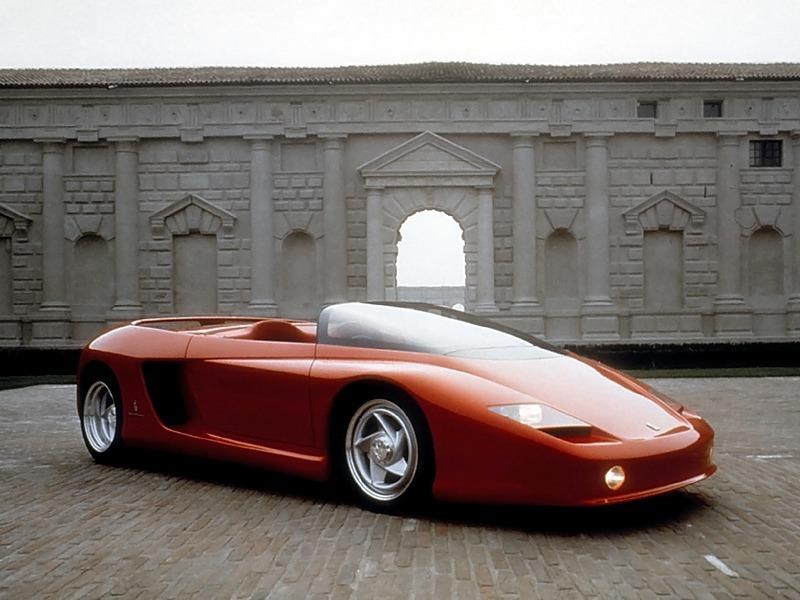
That period also produced the Ferrari Mythos and, a few years later, the production Ferrari F50. It is tempting to force the FX into a simple family tree connecting those cars, but the better reading is that all three emerged from a studio simultaneously exploring how Ferrari’s mid-engined supercar could evolve beyond the Testarossa vocabulary. The FX was the private-client branch of that exploration.
An individual stylist for the FX should not be assigned casually. Pininfarina was the design author in the corporate sense, but the accessible evidence does not yet justify attaching the complete exterior to a single named designer. That is different from the Mythos, whose authorship can be discussed specifically, or the F90, whose design history is closely tied to Enrico Fumia. The FX’s known story is much stronger on programme engineering and transmission development than on individual styling credit. Preserving that distinction is preferable to filling an attractive blank with an unsupported name.
More than an F512 M in a new suit
The FX is sometimes described as a concept car, although the term fits poorly. Several cars were built on Ferrari chassis, and the programme went far beyond a single show prototype. At the same time, it was never a Ferrari production model in the conventional sense. It belonged instead to the increasingly rare territory of bespoke coachbuilding: Ferrari supplied the mechanical foundations, while Pininfarina developed a distinct automobile for a private client outside the normal catalogue.
The relationship with the F512 M was nevertheless fundamental. Its flat-twelve architecture provided the starting point for the later cars, but Pininfarina did considerably more than replace the bodywork. The FX received its own aluminium and composite body, different glazing and cooling arrangements, a redesigned exhaust system and a completely individual interior. Most significantly, the conventional Ferrari transmission interface gave way, during the programme’s development, to an electro-hydraulically operated sequential system controlled from the steering wheel.
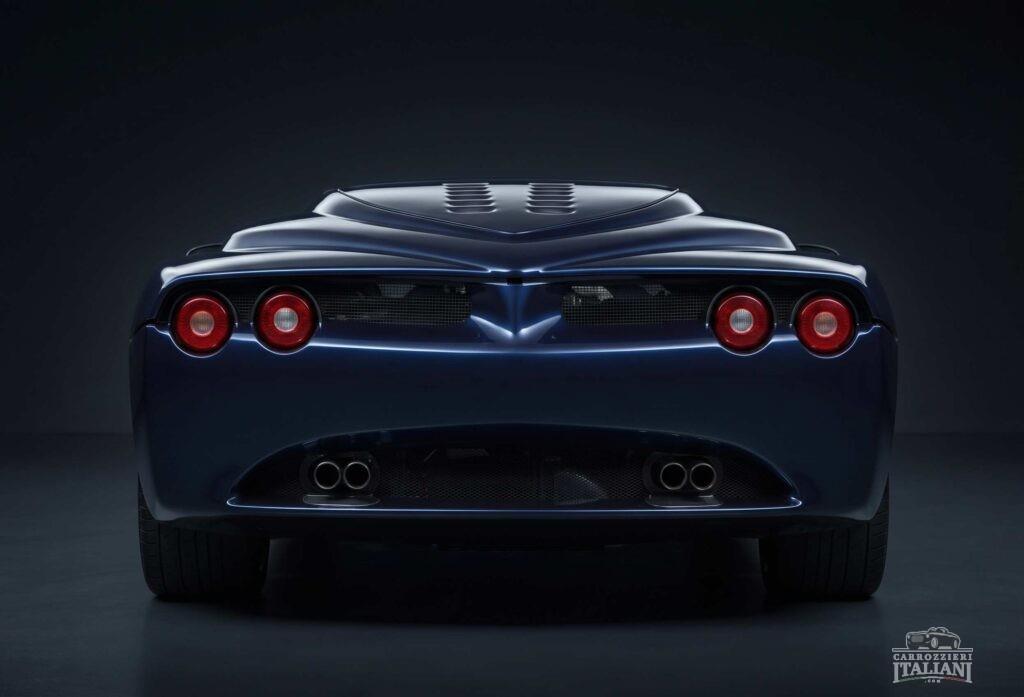
This was where the FX became more than an exercise in styling. Accounts of the programme involve both Prodrive and Williams, apparently at different stages of transmission development, while the best-documented car—chassis 103396—was developed with Williams and remained in Britain rather than joining the other cars in Brunei. The surviving documentation is not sufficient to assume that every FX was completed to precisely the same mechanical specification. Even period and museum descriptions differ over whether the developed transmission should be described as having six or seven forward ratios. What is certain is more revealing: the FX placed paddle-commanded electro-hydraulic shifting in a road-going Ferrari-based special before such systems became familiar showroom technology.
The chassis record is similarly incomplete. Six FX identities can presently be named—099664, 099665, 101368, 101676, 103396 and 103957—while contemporary and later accounts repeatedly refer to seven cars. Chassis 103396 is exceptional because its later history can be followed: retained during development with Williams, it eventually entered Dick Marconi’s collection in California and became the FX most often seen, documented and actually driven outside the Brunei collection. The other cars remain much less visible, leaving their colours, precise specifications and subsequent histories open to further reconstruction.
The Return of the Golden Age of Coachbuilding
The FX appeared at an unusually revealing moment. Traditional Italian coachbuilding had lost much of the industrial role it had enjoyed during the 1950s and 1960s, yet Pininfarina still possessed the design, engineering and manufacturing resources required to create an automobile in microscopic numbers. The Brunei commissions allowed those capabilities to be exercised without the commercial constraints of a normal production programme.
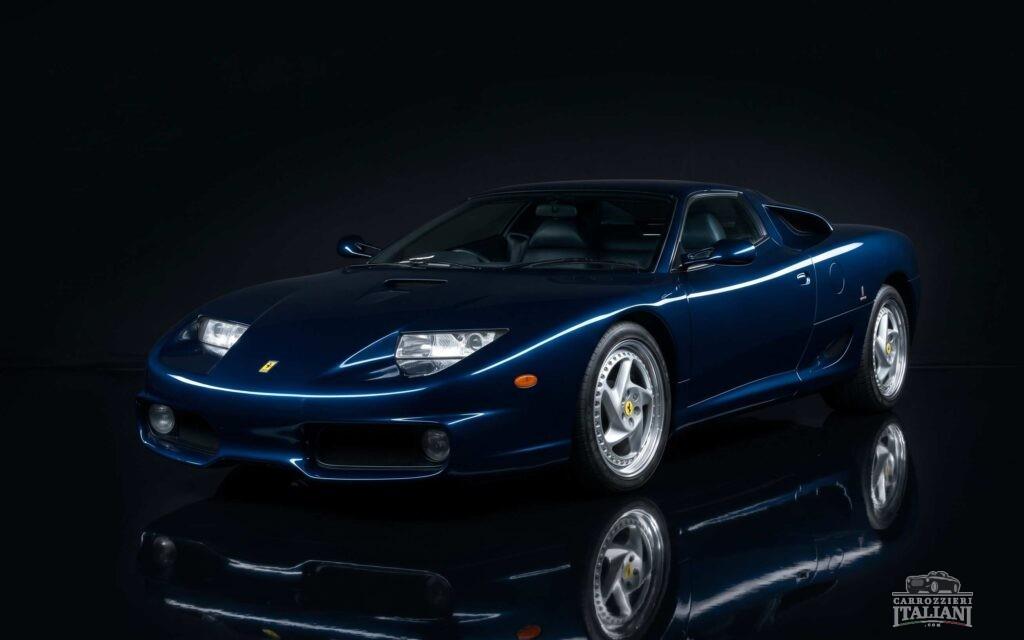
That freedom can be seen throughout the FX. Almost every visible surface was reconsidered, expensive materials could be used without concern for mass-production economics, and an experimental transmission could be developed for a handful of cars rather than thousands. In that respect the FX was not a nostalgic return to traditional coachbuilding but its contemporary equivalent: a Ferrari transformed for an individual patron using the materials, engineering specialists and electronic technology of the 1990s.
Its historical interest therefore extends beyond the familiar story of the Brunei royal collection. The FX brought together Ferrari’s final flat-twelve road-car architecture, Pininfarina’s ability to design and construct a genuinely bespoke automobile and British expertise in electronically controlled competition transmissions. It did so just before paddle-operated gearboxes began moving from experimental exotica into series-production Ferraris.
Chassis 103396, the blue car that never reached Brunei, has consequently become much more than the most visible survivor. It is the clearest physical record of a programme that would otherwise remain largely hidden behind palace doors: a tiny series of coachbuilt Ferraris conceived with freedoms that neither Ferrari nor Pininfarina could normally exercise on a production car. The FX was not a prototype for the Ferrari that followed, nor the origin of Ferrari’s F1 transmission. It was something rarer—a parallel Ferrari created outside the catalogue, at the point where traditional Italian coachbuilding met the electronic supercar age.

ABOUT THE AUTHOR
Andreas Scheidl
Italian classic car enthusiast with German roots. Renowned as a respected figure in the classic car community, he serves as a jury member at various international concours d'elegance, including the Classic Gala Schwetzingen and Mantova. As a content creator, Andreas passionately shares his profound knowledge and appreciation for vintage automobiles. His heart beats for cars designed by Giovanni Michelotti, showcasing his discerning taste and dedication to preserving the timeless elegance of automotive history.
More stories by Andreas Scheidl ↗CONTINUE READING
Posts You Might Like
A Central Driving Position, a Rear-Mounted V8. Was This Really a Lancia?
In 1948, visitors to the Turin Motor Show could see an unusual Lancia on the stand of Carrozzeria Ghia. It was a large two-door coupé with a two-litre V8 mounted behind the…
Read story
Fioravanti F100: The Ferrari He Was Allowed to Imagine
Enzo Ferrari’s centenary, Leonardo Fioravanti’s independent studio and a supercar that explored air brakes, steel wheels and a new way of driving—without ever wearing the Cavallino.
Read story
Michelotti Shellette: When the Fiat 850 Became a Yacht
The yacht designer, the Turin stylist and the tiny coachbuilt car that crossed between the quay, the royal holiday house and the auction room. Some automobiles were conceived for the open road,…
Read story
Maserati A6 1500: A New Road for the Trident
When the doors of the Geneva Motor Show opened in March 1947, Maserati was a name that required little introduction to anyone who followed motor racing. What it did not yet possess…
Read story
THE CONVERSATION
Comments 0
Share a memory, a period photograph or a documented detail about this story.