
The Ferrari 400 Superfast Saga
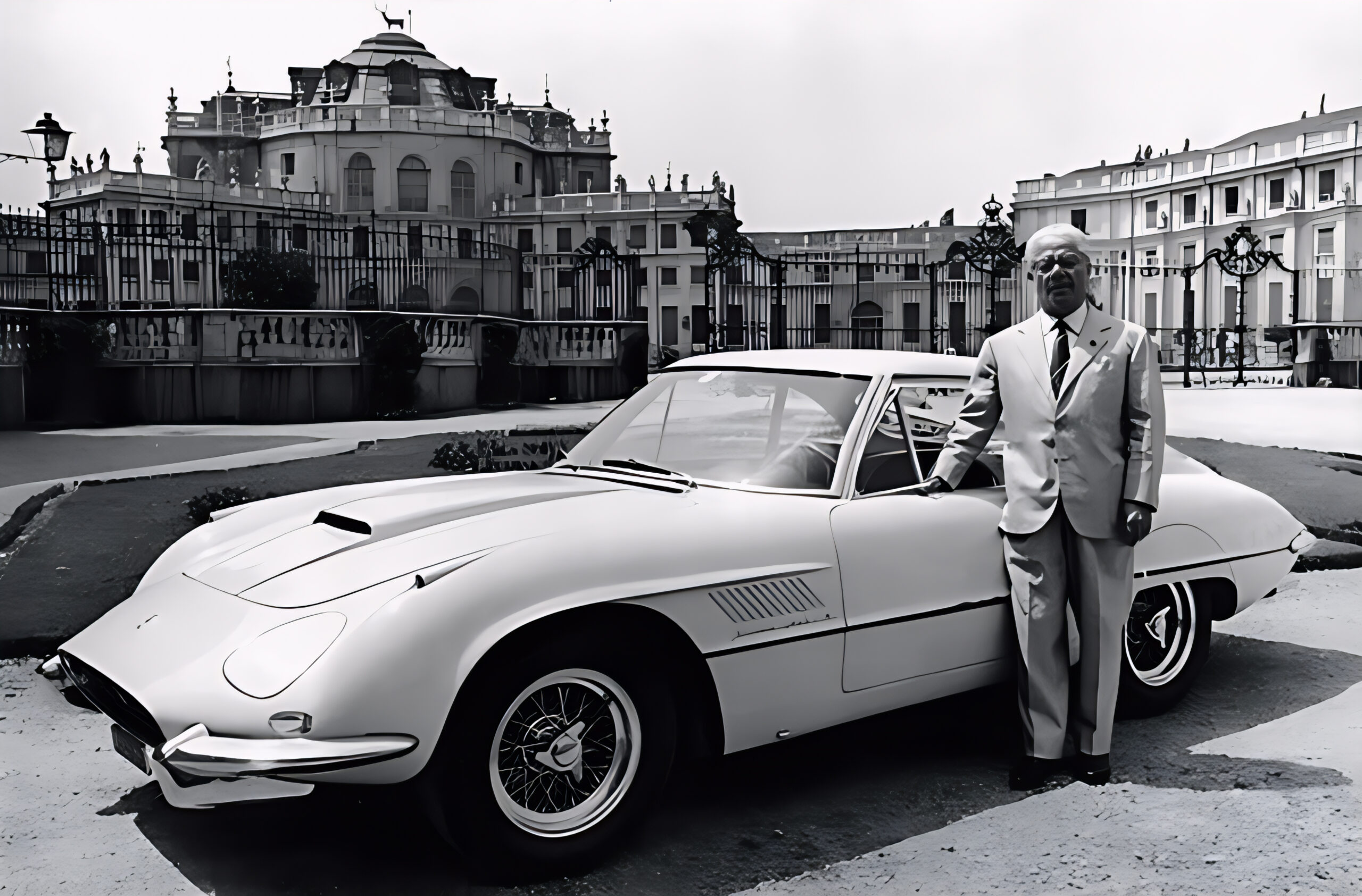
In the late 1950s, Ferrari faced a grand challenge: how to top its already extravagant 410 Superamerica and satisfy an elite clientele craving the very best. The answer arrived at the 1959 Turin Motor Show in the form of the Ferrari 400 Superamerica, a new flagship gran turismo packed with innovation and luxury. It marked a departure in Ferrari’s naming convention – instead of indicating the displacement per cylinder, the “400” stood for the engine’s total cubic capacity of 4.0 liters. This big V12 was a Colombo-designed short-block, essentially a stretched 250 GT engine bored out to nearly 4 liters. With around 340 horsepower on tap and Dunlop disc brakes at all four corners (replacing the old drums), plus an overdrive for relaxed high-speed cruising, the 400 Superamerica was as much about improved road manners as raw power. Ferrari had taken the heavy, brutish charm of the 410 and refined it into something still potent but far more civilized – a “super” America indeed, built to devour continents with speed and style.
🔗 Read more: The Legend of Ferrari and Pininfarina’s Partnership: When Enzo Met “Pinin”
As the heir to the 410 Superamerica, the new 400 Superamerica was produced from 1959 through 1964. It remained an ultra-exclusive offering – only 46 were built in total, each tailored to its owner’s tastes. In fact, Enzo Ferrari famously used these very costly road cars to bankroll his racing endeavors, so if a wealthy patron wanted a bespoke detail, Ferrari and coachbuilder Pinin Farina were happy to oblige. Spy another 400 Superamerica on the road (a rare occurrence!) and you’d likely find it differs in subtle ways from any other. Available as open-top Cabriolets or Coupés – most with a signature aerodynamic roofline – the 400 SAs were all bodied by Pinin Farina (which would become “Pininfarina” in 1962) except for a pair of special exceptions. These cars weren’t just automobiles; they were road-going works of art, each with its own personality.
Style and Innovation by Pinin Farina
From the outset, Pinin Farina’s influence on the 400 Superamerica was profound. The very first example built – chassis 1517SA – was a one-off coupé commissioned by Fiat boss Gianni Agnelli in 1959. Unveiled at the Turin Salon that year, this Agnelli special set the tone for what a top-tier Ferrari could be. It sported a bold, almost exaggerated grin of a grille: large, square, and extending nearly to the bottom of the front valance, flanked by “quarter” bumpers wrapping around the corners. Adding transatlantic flair, the car featured twin headlights at each front corner in a horizontal arrangement (an American-influenced styling cue) with a single fog lamp below each pair, plus a dramatic wrap-around windshield. Around back, Pinin Farina added a distinctive touch that would influence later production Ferraris: each rear fender had a vertical chrome bezel housing triple circular tail lights. (If that sounds familiar, it’s because the triple-tail-light motif later appeared on the production 400 Superamerica cabriolets, early coupes, and even the 1960 Ferrari 250 GTE 2+2.) This first 400 SA was as much a show car as it was Agnelli’s personal GT – and like any diva making a public debut, it went through a bit of a makeover before delivery. Between the Turin show and the handover to Agnelli in May 1960, Pinin Farina refined the design: the grille was trimmed down in size (still square, but less in-your-face) and now had a full-width bumper beneath it. The small air intakes above the original quarter bumpers were deleted for a cleaner look, the hood scoop was reshaped, and a shiny trim strip was added along the body’s side crease to accentuate the car’s elegant profile. The result was subtle sophistication – the Superamerica had gone from flashy show prototype to a polished bespoke GT worthy of Italy’s most powerful industrialist.
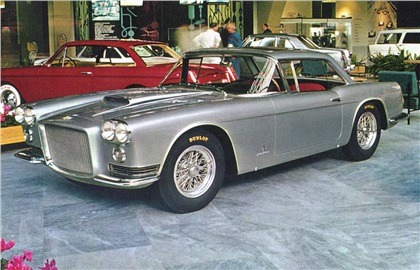
Following that one-off, Ferrari commenced “regular” production of the 400 Superamerica – though “regular” is a relative term when each car was essentially custom. The first production example was a Cabriolet, chassis 1611SA, debuting at the Brussels Salon in January 1960 and shortly after wowing the New York auto show. Its design was clearly rooted in Pinin Farina’s existing open-top 250 GT cabriolets, but with a few twists. The grille on the 400 SA cabrio was a bit shallower, giving the front a sleeker face, and typically a pair of fog lights occupied the outer ends of the grille opening. Some were even fitted with an extra driving light in the center for added nighttime punch. Inside and out, the craftsmanship was top-tier, and clients could request almost anything – different trim, custom colors, unique features – ensuring no two 400 SAs were exactly alike. One of the biggest visible choices a buyer could make was the style of headlamps: either traditional open headlights or recessed units under Plexiglas covers. This decision actually affected the front-end design significantly. Ordering your Superamerica as an “Aerodinamico” coupé with covered headlights gave it a streamlined, projected oval grille (a look that became the signature of the later series of coupes), whereas opting for open, exposed headlamps would result in a front end more like the cabriolet’s, with a conventional grille outline. Essentially, your choice of headlights was like choosing the car’s face – sunglasses on or off, style-wise.
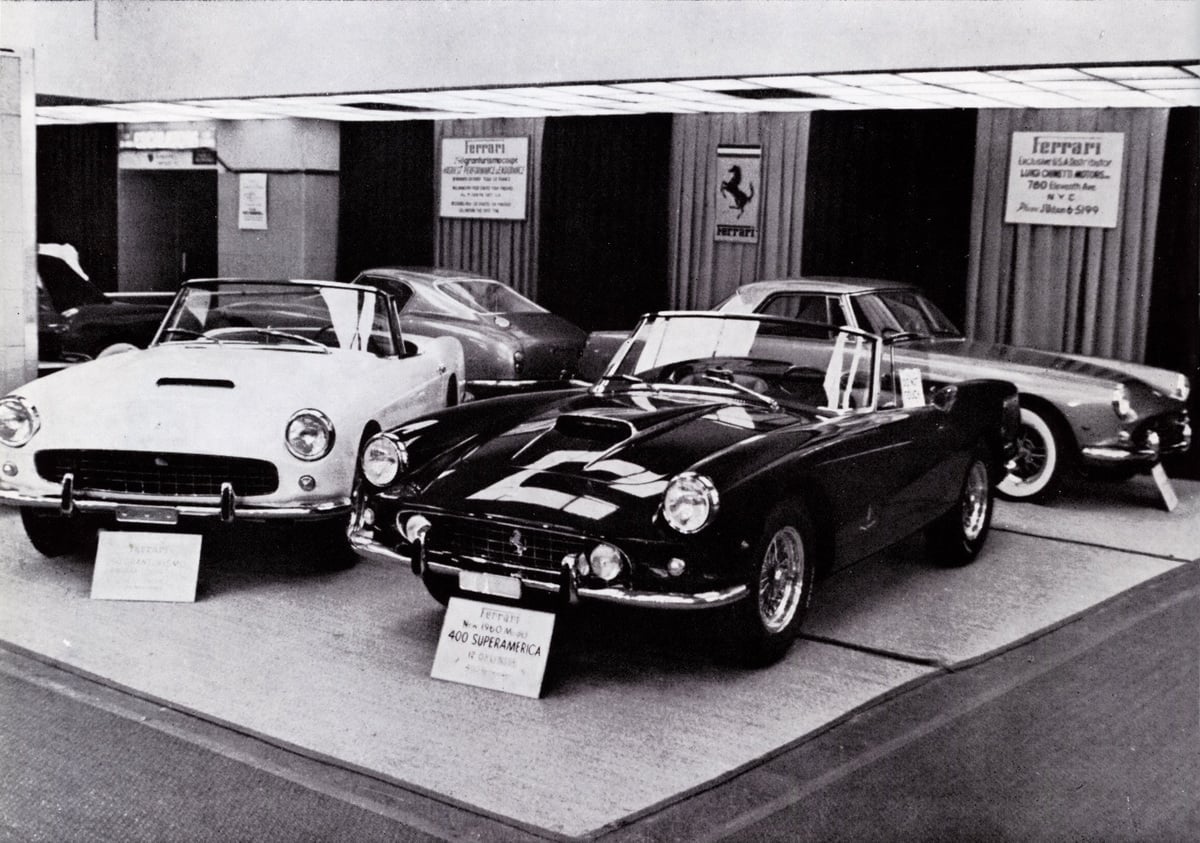
The 400 Superamerica’s combination of muscular engineering and bespoke Italian design attracted a who’s-who of wealthy enthusiasts. Some even pushed Ferrari for truly unique creations on the 400 SA chassis. For instance, one notable client, Ferrari board member Michel Paul-Cavallier, received chassis 2311SA fitted with a body almost identical to a 250 GT California Spider – right down to being a convertible and in this case with right-hand drive, built by Scaglietti as a one-off. Another special, chassis 3673SA, was clothed in the style of a 250 GT SWB (“passo corto”) Berlinetta, essentially turning a 400 SA into a short-wheelbase racing-style coupe. These outliers proved the rule that Ferrari would allow extensive personalization for their top clients – at a stratospheric price, of course. In fact, the 400 Superamerica was among the most expensive cars of its era; it was very much a “if you have to ask, you can’t afford it” kind of model. (Legend has it that even Il Commendatore Enzo Ferrari himself was rumored to be driving around in a secretly rebodied 400 SA disguised as a humble 250 GTE 2+2, just to fly under the radar. That juicy tale turned out to be false – factory archives revealed the supposed 400 SA in GTE clothing was simply a standard 250 GTE, chassis 2257GT – but it speaks to the almost mythic aura these cars had, even in period.)
The “Superfast” Series: Chassis 2207SA’s Three Acts
Among all the 400 Superamericas, one car in particular stands out as having a truly theatrical life: chassis number 2207SA. If regular Superamericas were rare gems, 2207SA was the unicorn – a single machine that, like a method actor, played multiple roles on the world stage. This car was known by the names Superfast II, Superfast III, and Superfast IV, reflecting how Pininfarina repeatedly redesigned it over a two-year span. It’s not often that a car gets three sequels and a wardrobe change for each, but 2207SA managed to pull it off in style.
🔗 Read more: Aldo Brovarone: The Quiet Master of Elegance
The saga began with Superfast II, a one-off prototype built on a short-wheelbase 400 SA chassis and unveiled at the Turin Motor Show in October 1960. Painted an eye-catching white, Superfast II was Pininfarina’s bold experiment in aerodynamics – in fact, Ferrari called it the first truly “aerodynamic” design they’d put on a Superamerica chassis. The nose of the car was low and pointed, with a wide-open oval grille that looked like it wanted to inhale the road. But the real party tricks were the headlights: Superfast II featured covered, pop-up headlamps (a very forward-thinking idea in 1960) that kept the front end smooth when not in use. Even the rear wheels had spats (fender covers) to further reduce drag. From the side, the car had a dramatic profile – a sloping roofline and converging beltline that flowed into a swooping fastback tail.
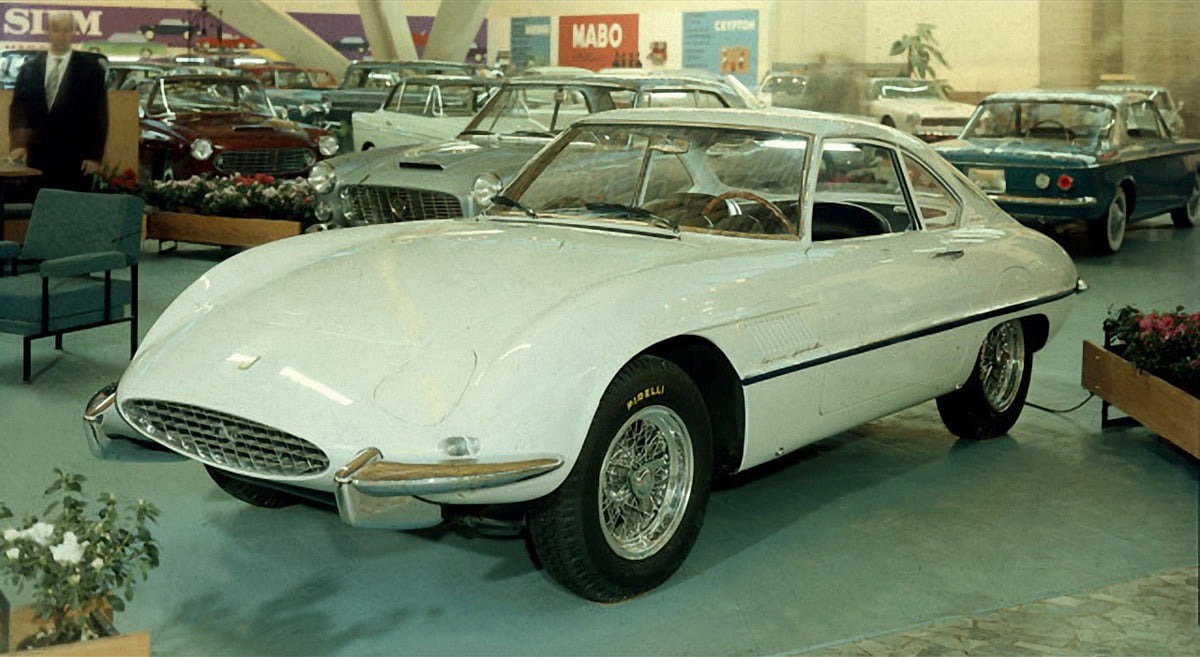
This wasn’t just styling for styling’s sake; it was aimed at making the big V12 GT slip through the air with minimal resistance. The crowds in Turin were stunned. Here was a Ferrari grand tourer with the heart of a sports car but the slippery form of a jet-age concept. It was a rolling laboratory for Pininfarina’s ideas, and it foreshadowed a new era of Ferrari design. Elements of Superfast II’s look would soon appear on other cars – most notably, the general “coupe aerodinamico” shape on production 400 Superamerica coupes, and even on the development of the legendary 250 GTO. (Indeed, a 250 GT prototype raced in 1961 had clear aerodynamic kinship with the Superfast’s design.)
Now, one might think after its Turin triumph, Superfast II would retire gracefully. Not so – the car was just getting started. By May 1961, Pininfarina had actually purchased chassis 2207SA back from Ferrari. Why? To transform it yet again. The designers went back to the drawing board and gave the car a comprehensive re-body, emerging in 1962 as Superfast III.
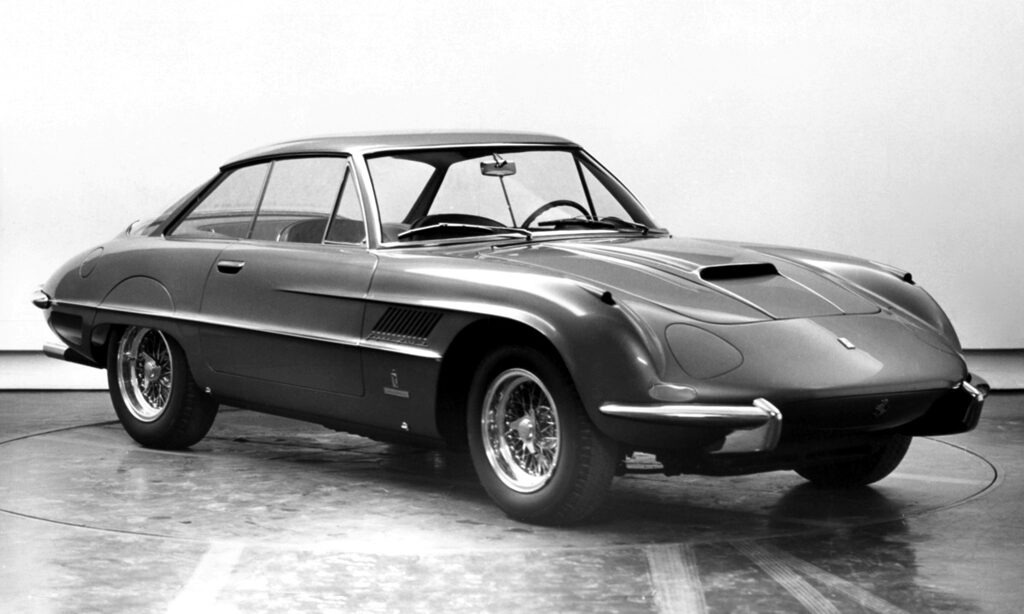
This time, the car was finished in an earthy metallic green with a dark red (burgundy) interior, a striking combo far removed from the original white/black scheme. Superfast III made its debut at the 1962 Geneva Motor Show, wowing attendees all over again – some likely not even realizing it was essentially the same machine they’d seen in Turin a year and a half earlier. The changes to create Superfast III included a redesigned nose (likely to explore a different approach to aerodynamics and aesthetics) and other stylistic tweaks. After all, Pininfarina wasn’t just building a car – they were refining a concept. Think of Superfast II as the rough draft and Superfast III as the edited version with a new creative direction (and a fancy paint job). The car still had a low-slung, aerodynamic presence, but it was evolving with each iteration.
Incredibly, Pininfarina still wasn’t done. After Geneva, they decided to give 2207SA one more dramatic makeover – enter Superfast IV. For this third act, the car was painted a deep dark blue with a contrasting natural tan interior (the color was called “Italver evening blue”). More importantly, Pininfarina altered the front-end design again, this time adopting a pair of twin headlamps (four headlights total) flanking a revised grille. This new setup might have looked a bit more conventional than the hidden lights of Superfast II, but it carried its own significance: the dual twin-headlamp look would soon appear on the 1964 Ferrari 330 GT 2+2 – effectively previewing the face of the next generation of Ferrari GT cars. Superfast IV wasn’t shown around the world for long, however, because by mid-1962 this chameleon of a car found a permanent home. In August 1962, chassis 2207SA was sold to Italian enthusiast Nicolò Oronzo de Nora of Milan. Before or upon delivery, a few final alterations were made to suit the new owner’s taste: reportedly the twin headlamps were swapped out for single headlights and the front fenders adjusted accordingly, and the car was repainted in a more subdued silver-grey. One imagines Signore de Nora might have preferred a slightly more understated look – or maybe after all those show appearances, the car just needed a quiet farewell outfit for its new life as someone’s personal grand tourer.
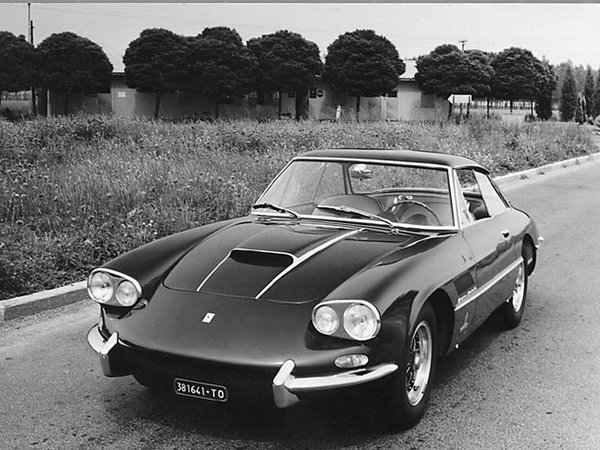
Thus ended the public whirlwind life of 2207SA – from Superfast II to III to IV in the span of two years, a car that reinvented itself more often than a Hollywood star at an awards show. Each version left an impact: Superfast II demonstrated cutting-edge streamlining and influenced racing GTs, Superfast III and IV refined the styling and previewed features (like the quad headlights) that would soon make their way into production Ferraris. In many ways, 2207SA was the ultimate rolling test-bed for Pininfarina’s design language in the early ’60s – a single chassis that allowed them to experiment and wow crowds multiple times. The “Superfast” name was so evocative and got such positive reception that Ferrari would later reuse it for the limited-production Ferrari 500 Superfast (1964–66), a 5-liter grand tourer that became the final word in exclusive Ferrari GTs of the 1960s. In fact, the sleek body of the 500 Superfast was directly influenced by the 400 Superamerica Aerodinamico coupes and especially the Superfast II show car designed by Pininfarina’s Aldo Brovarone. The lessons learned and the refinements previewed on 2207SA at various motor shows helped lay the foundation for the 500 Superfast’s design. In short, without 2207SA’s shape-shifting showcase, the Ferrari 500 Superfast might not have been quite so… super or fast (at least in visual presence)!
Restoration and Legacy
After living its early life in the spotlight, 2207SA settled into relative obscurity for a while – but like any good celebrity, its legend only grew. The car eventually made its way to the United States in the 1970s, then back across the pond to Europe in the 1980s, changing hands (and colors) along the way. By the late ’80s it wore a coat of metallic gold and appeared at a Ferrari show in the Netherlands. In the 1990s it surfaced in France, repainted blue once more. Like many vintage Ferraris, its ownership trail reads like a jet-set travelogue. Finally, in 2005 an American collector – Lee Herrington of New Hampshire – acquired this special machine (with the help of Ferrari historian Marcel Massini as broker). Herrington had a vision: he wanted to take the car back to its original Superfast II configuration and glory, just as it had stunned Turin in 1960. This was easier said than done. Remember, the car had been altered multiple times, and no factory drawings of the Superfast II body existed. Entrusted to Wayne Obry’s Motion Products (a shop renowned for Pebble Beach-level restorations), 2207SA underwent an exacting restoration that can only be described as a labor of love. Craftsmen had to re-create many body panels from scratch using period photographs as a guide. It was a bit like archeology – peeling back the layers of Superfast III and IV to uncover the original Superfast II hiding beneath. After several years of intensive work, the transformation was complete. In 2015, for the first time since it left the Turin Motor Show stand in 1960, Superfast II was reborn in its original form, white paint, covered headlights, wheel spats and all. The car made its post-restoration debut at the 2015 Pebble Beach Concours d’Elegance, one of the most prestigious classic car events in the world. It’s safe to say it stole the show – again. Enthusiasts and judges alike could finally see in the metal the car they had only known from old photos and magazine articles. It was as if a long-lost masterpiece had been pulled out of storage for the world to appreciate.
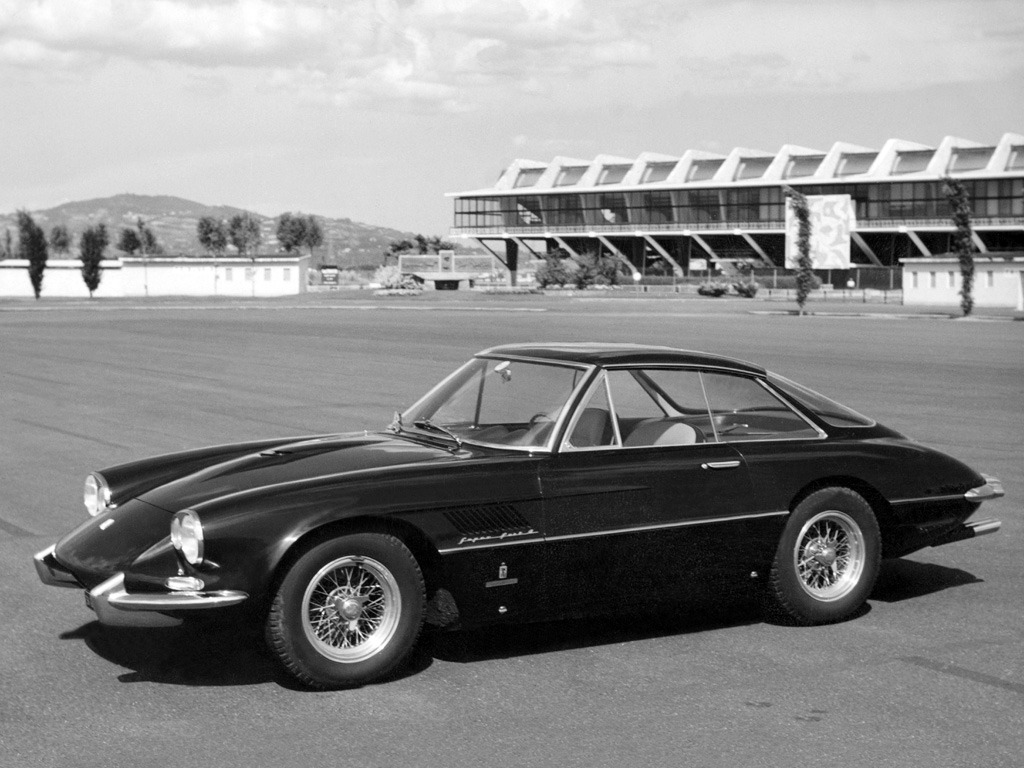
The Ferrari 400 Superamerica as a whole remains one of the marque’s most fascinating series. These cars encapsulate an era when Ferrari was finding the perfect balance between competition-bred performance and opulent luxury for the road. They were the ultimate grand tourers of their day, bought by kings, shahs, industrialists, and those few lucky (and wealthy) individuals who demanded the fastest and finest. With its 4-liter V12, the 400 SA could waft you to your villa in Cannes at speeds approaching 160 mph – with overdrive engaged, it had long legs for high-speed cruising that matched its name. Yet it did so with a level of craftsmanship, elegance, and yes, swagger, that justified its astronomical price tag. The Pininfarina styling, especially in the later Coupe Aerodinamico versions, was the height of 1960s Italian automotive design – low, sleek, and effortlessly chic. If the regular production 400 Superamericas were grand touring royalty, then chassis 2207SA was the mischievous prince – breaking the mold, influencing others, and refusing to be static. Its journey from Superfast II to IV and back to II is not just the tale of one car’s metamorphosis, but also a narrative of Ferrari’s design evolution during a pivotal time.
Today, the legacy of the 400 Superamerica lives on whenever one graces a concours lawn or comes up for auction (where values easily reach into the millions for these rare beauties). The innovations pioneered – from the adoption of four-wheel disc brakes to the very idea of limited-production flagship models – paved the way for later Ferrari legends. And the Superfast moniker itself was resurrected in modern times (the 812 Superfast of 2017, for example, nods to that heritage), proving that some names are just too good to retire. But perhaps the greatest testament to the 400 Superamerica’s impact is how it made Ferrari truly synonymous with ultra-exclusive grand tourers. These cars were literally the stuff of dreams in the 1960s; they combined Latin passion with technical prowess in a way that made even rivals stand back in admiration.
In a professional yet friendly tone, one might say the Ferrari 400 Superamerica was Ferrari at its most extroverted and indulgent, without ever losing the core Ferrari DNA. It had the heart of a race-winner and the body of a movie star. And in the case of Superfast II/III/IV, it had a flair for drama and reinvention that any Broadway actor would envy. No Italian stereotypes needed – the facts speak loudly enough: a Ferrari that changed clothes three times, wowed multiple continents, then vanished, only to reappear decades later restored to its first glory. The 400 Superamerica may have been born over 60 years ago, but its story and style remain evergreen – a reminder that sometimes, the pinnacle of automotive art isn’t just about one car, but about the evolution of a concept, and the bold characters (human and automotive alike) who bring it to life. In the pantheon of classic Ferraris, the 400 Superamerica – and especially our star chassis 2207SA – will always hold a special place, cruising “super fast” on the roads of legend and lore.

ABOUT THE AUTHOR
Andreas Scheidl
Italian classic car enthusiast with German roots. Renowned as a respected figure in the classic car community, he serves as a jury member at various international concours d'elegance, including the Classic Gala Schwetzingen and Mantova. As a content creator, Andreas passionately shares his profound knowledge and appreciation for vintage automobiles. His heart beats for cars designed by Giovanni Michelotti, showcasing his discerning taste and dedication to preserving the timeless elegance of automotive history.
More stories by Andreas Scheidl ↗CONTINUE READING
Posts You Might Like

A Central Driving Position, a Rear-Mounted V8. Was This Really a Lancia?
In 1948, visitors to the Turin Motor Show could see an unusual Lancia on the stand of Carrozzeria Ghia. It was a large two-door coupé with a two-litre V8 mounted behind the…
Read story
Fioravanti F100: The Ferrari He Was Allowed to Imagine
Enzo Ferrari’s centenary, Leonardo Fioravanti’s independent studio and a supercar that explored air brakes, steel wheels and a new way of driving—without ever wearing the Cavallino.
Read story
Michelotti Shellette: When the Fiat 850 Became a Yacht
The yacht designer, the Turin stylist and the tiny coachbuilt car that crossed between the quay, the royal holiday house and the auction room. Some automobiles were conceived for the open road,…
Read story
Maserati A6 1500: A New Road for the Trident
When the doors of the Geneva Motor Show opened in March 1947, Maserati was a name that required little introduction to anyone who followed motor racing. What it did not yet possess…
Read story
THE CONVERSATION
Comments 0
Share a memory, a period photograph or a documented detail about this story.