
Ferrari 375 MM Bergman: Ingrid’s Name, Rossellini’s Car
The story has all the ingredients of Italian mythology.
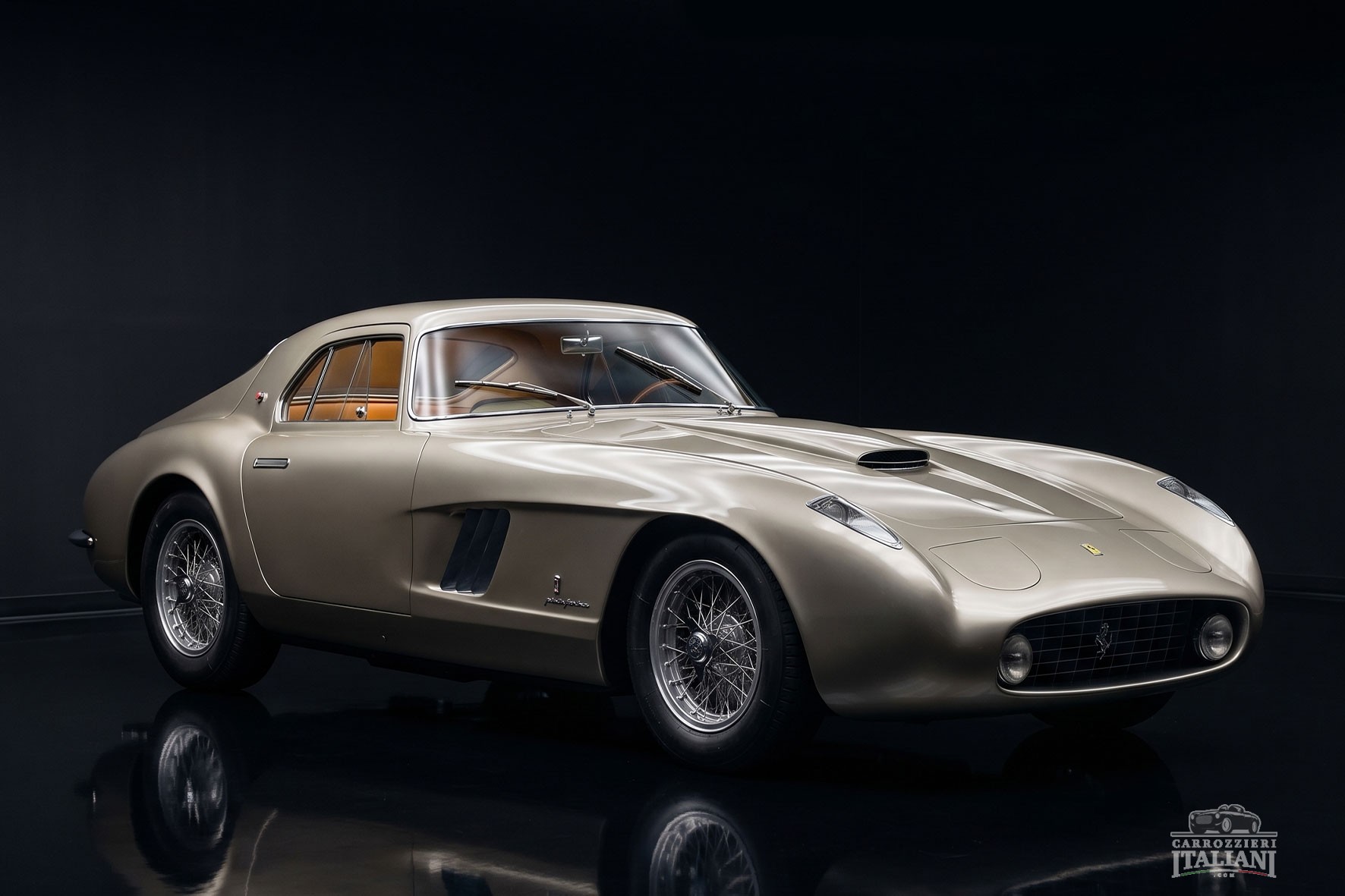
Roberto Rossellini, one of the defining directors of post-war cinema, commissioned a unique Ferrari for his wife, Ingrid Bergman. Pinin Farina gave it an extravagant aluminium body, and the finished car is painted in the pale metallic shade later known as Grigio Ingrid. Cinema, celebrity, Italian design and a large V12 come together in one object.
The reality was less tidy. Bergman did not share Rossellini’s enthusiasm for fast cars and appears to have been uneasy about the way he drove them. Although the 375 MM Coupé Speciale, chassis 0456 AM, became inseparable from her name, it was far closer to Rossellini’s idea of a desirable car than hers.
The commission began not with a refined grand tourer but with one of Ferrari’s most serious sports-racing chassis. Pinin Farina transformed it into a luxurious coupé without concealing the proportions, mechanical character or compromises of the competition car beneath it.
It was an extravagant answer to a question Bergman may never have asked.
A Competition Ferrari with a Roof
The 375 MM had not been created for discreet journeys between Rome and the film studios. It belonged to Ferrari’s early-1950s sports-racing programme, developed for events in which speed and endurance mattered more than comfort.
The MM designation referred to the Mille Miglia, while the number followed Ferrari’s practice of indicating the approximate displacement of one cylinder. Under the bonnet was a 4.5-litre version of Aurelio Lampredi’s long-block V12, producing around 340 horsepower in customer specification. Power was delivered to the rear wheels through a four-speed manual gearbox. The chassis used a steel tubular frame, independent front suspension, a live rear axle and large drum brakes.
In 1954, this was formidable machinery. The car had no power steering, no servo-assisted brakes and none of the systems that later made high performance easier to manage. The long engine filled much of the nose and brought with it the heat, noise and vibration expected from a Ferrari conceived for competition.
Pinin Farina was therefore not starting with a comfortable road-car platform. It was being asked to place a formal coupé body over a racing car.
The finished Speciale never fully disguised that conflict. It had leather upholstery, a proper roof and the presence of a coachbuilt luxury car, but its dimensions and mechanical arrangement were still dictated by the 375 MM beneath it.
Roberto Rossellini and Maranello
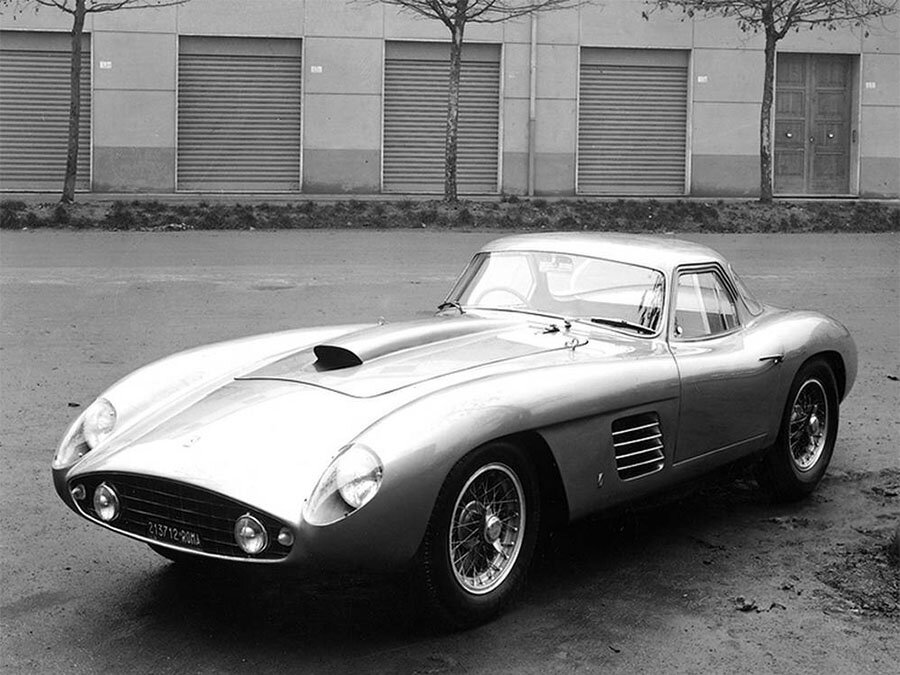
By the time chassis 0456 AM was commissioned, Roberto Rossellini was already an established Ferrari customer. His cars included a 166 Inter, a 212 Export, a 250 MM and a 250 Europa. He also owned another 375 MM, chassis 0402 AM, originally completed with a Pinin Farina spider body.
Rossellini was not simply a celebrity purchasing the fashionable car of the moment. He was genuinely attracted to fast machinery and particularly to Ferrari’s competition models. His cars were used rather than preserved, and his enthusiasm for speed sometimes exceeded the patience of those around him.
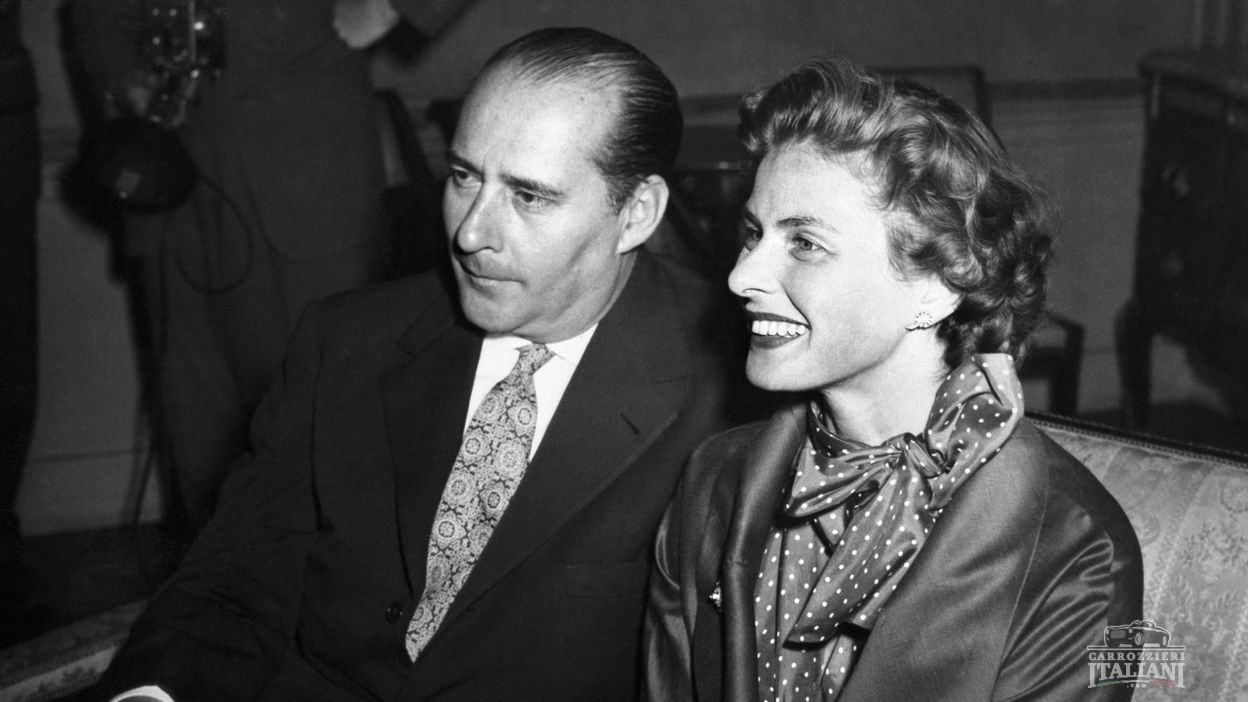
Ingrid Bergman entered his life after seeing Rome, Open City and Paisà. She wrote to Rossellini expressing her interest in working with him, and their first film together became Stromboli. Their relationship caused an international scandal because both were married when it began. They married in 1950 and continued to work together, but their partnership was neither simple nor calm.
🔗 Read more: Pininfarina Through the Ages: The Complete History
The Ferraris belonged mainly to Rossellini’s world.
Later accounts describe Bergman as uncomfortable with his driving and unimpressed by the cars he found so exciting. One of them was reportedly compared to a monster or a flying saucer. The wording changes from one retelling to another, but the broader picture is consistent: she did not share his enthusiasm for racing machinery.
The familiar story of the 1953 Mille Miglia reinforces that impression. Rossellini attempted to take part, only for Bergman to intervene and bring the effort to an end. The episode has acquired several versions over the years, but there is little to suggest that she encouraged his interest in competition.
Against that background, the idea that she had been waiting for a 4.5-litre Ferrari of her own becomes difficult to sustain. She may have inspired the name, the colour or the way the car was presented. The desire to have it built came from Rossellini.
Chassis 0456 AM
Chassis 0456 AM arrived at Pinin Farina in July 1954, with the intention of completing the car for the Paris Motor Show later that year.
This was not a standard Ferrari body fitted with a roof. Pinin Farina created an entirely new aluminium coupé, using the long 375 MM chassis as the basis for a design that was far more experimental than the company’s later Ferrari grand tourers.
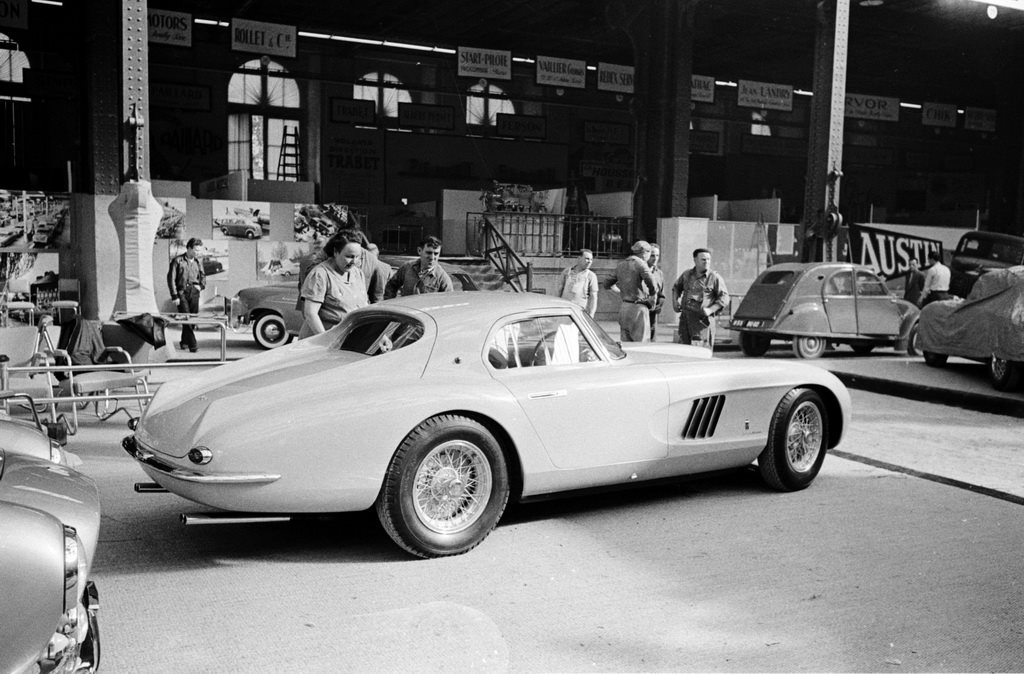
The shape is generally attributed to Aldo Brovarone, then still a young designer at Pinin Farina. Aldo Brovarone would later contribute to some of the company’s most admired work, including the Dino 206 and 246 GT. The 375 MM Speciale came much earlier, when the proportions of a modern front-engined Ferrari coupé had not yet settled into a familiar formula.
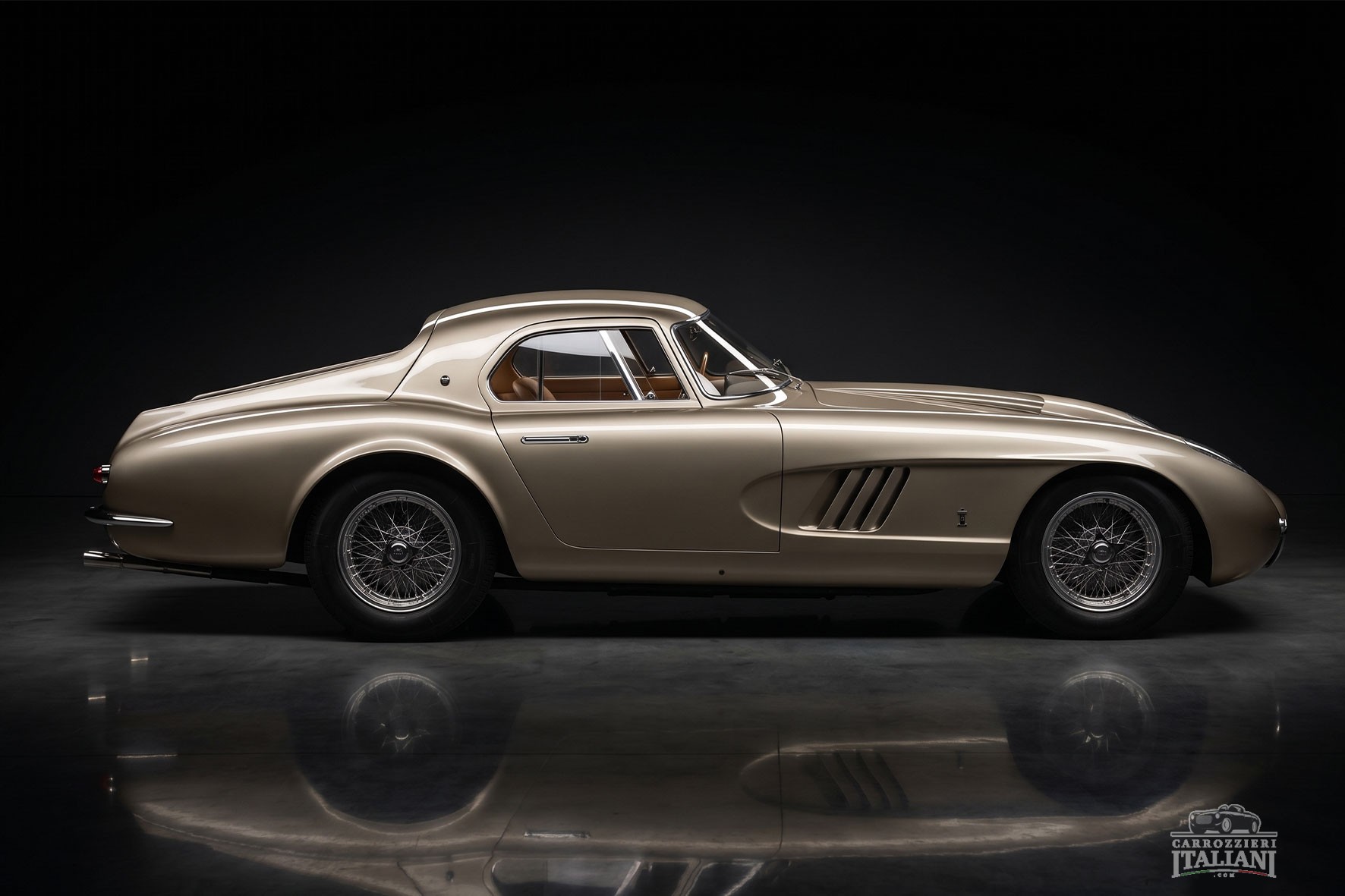
The first impression is length. The bonnet seems to occupy half the car, with the passenger compartment positioned well behind the front axle. The tail then continues beyond the cabin for longer than expected, giving the profile a stretched, slightly uneasy balance.
🔗 Read more: Aldo Brovarone: The Quiet Master of Elegance
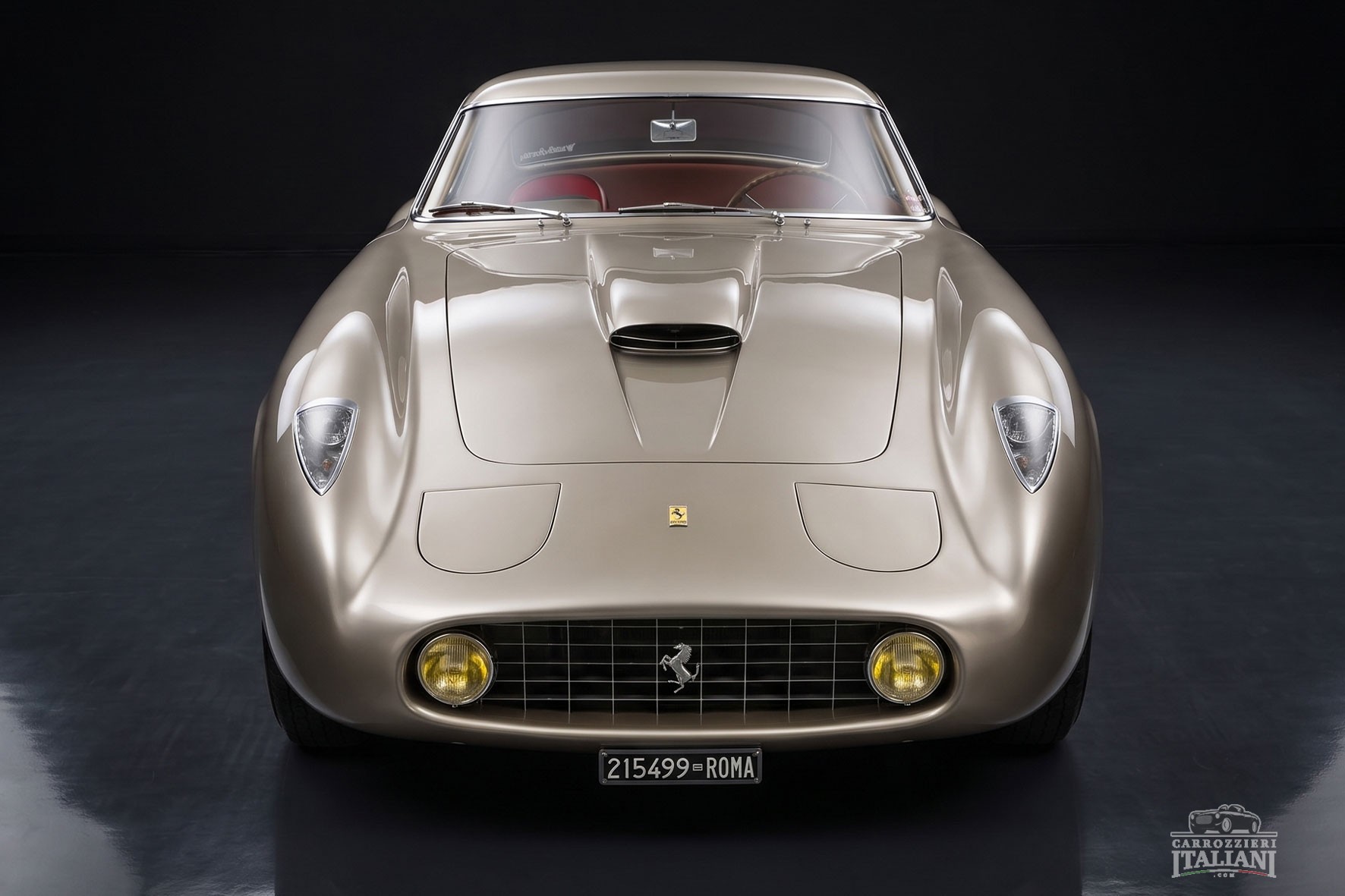
At the front, high rounded wings rise above a lower central bonnet. The main headlights sit close to the centre and are concealed behind rotating panels. With the covers closed, the nose becomes smoother, although the effect is interrupted by a wide low grille, auxiliary lamps and an additional intake in the bonnet.
It is not a delicate front end. The body still appears organised around the size and position of the engine.
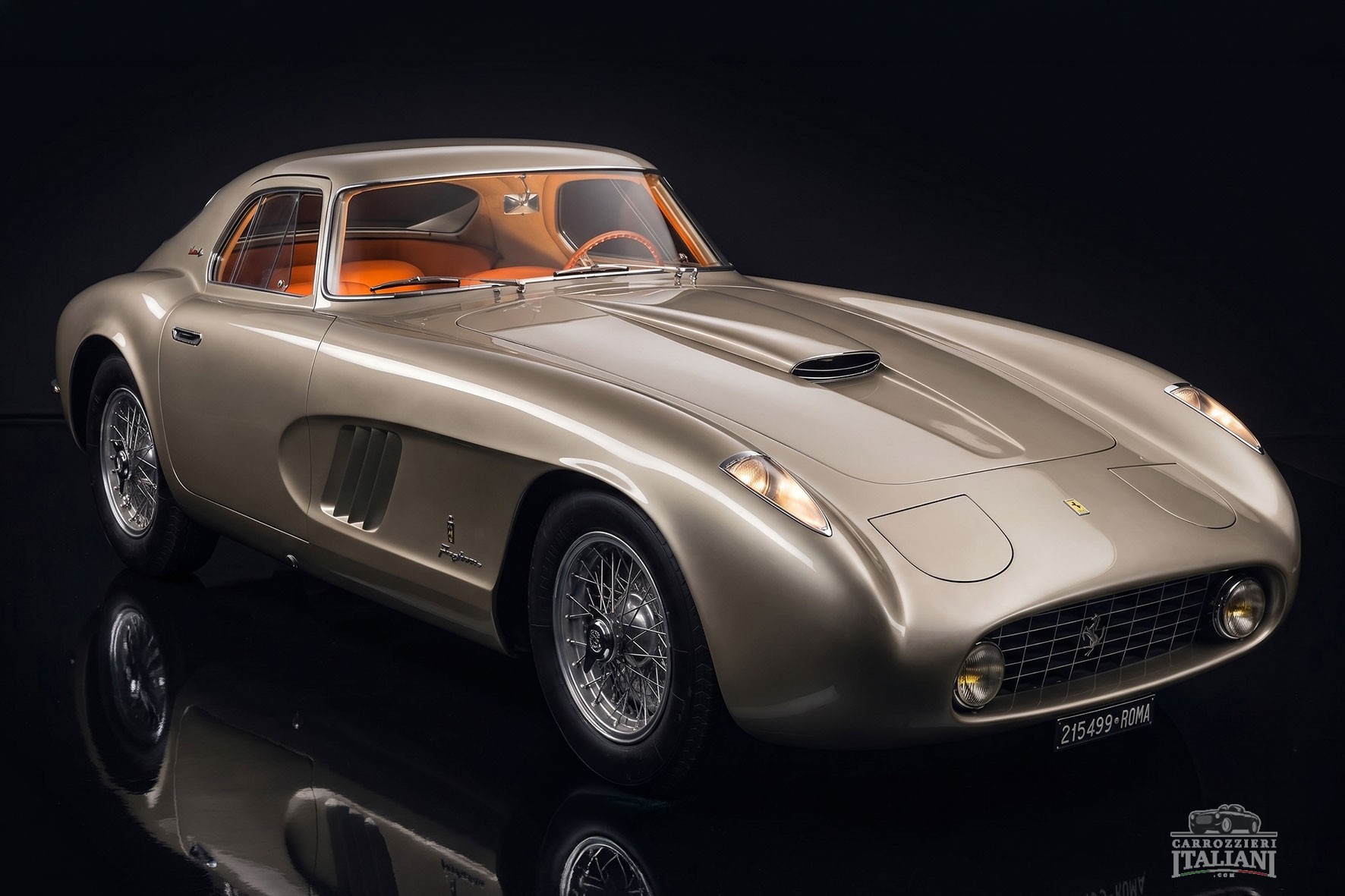
The flanks are more refined. A deep concave recess runs along each side, beginning behind the front wheel and continuing through the door area. These scallops remove visual weight from the body and prevent the long sides from becoming heavy slabs of aluminium. As the light changes, the recesses become darker and make the upper part of the car appear narrower.
Ferrari returned to a related idea many years later on the 612 Scaglietti. The resemblance should not be interpreted as a direct line of descent, but both cars use a large concave surface to reduce the apparent mass of a substantial front-engined coupé.
The rear is the most difficult part of the design.
Instead of descending into a simple fastback, the roof ends around a rear window recessed between two large buttresses. These continue backwards over the rear wings, forming raised fins above a long tail and pronounced rear overhang.
The individual ideas are interesting, but they do not always work together. The buttresses have a modern, architectural quality, while the rounded rear wings remain firmly rooted in the early 1950s. The fins add height to a tail that is already long, and the recessed glass creates a separate volume where a cleaner transition might have produced a more coherent result.
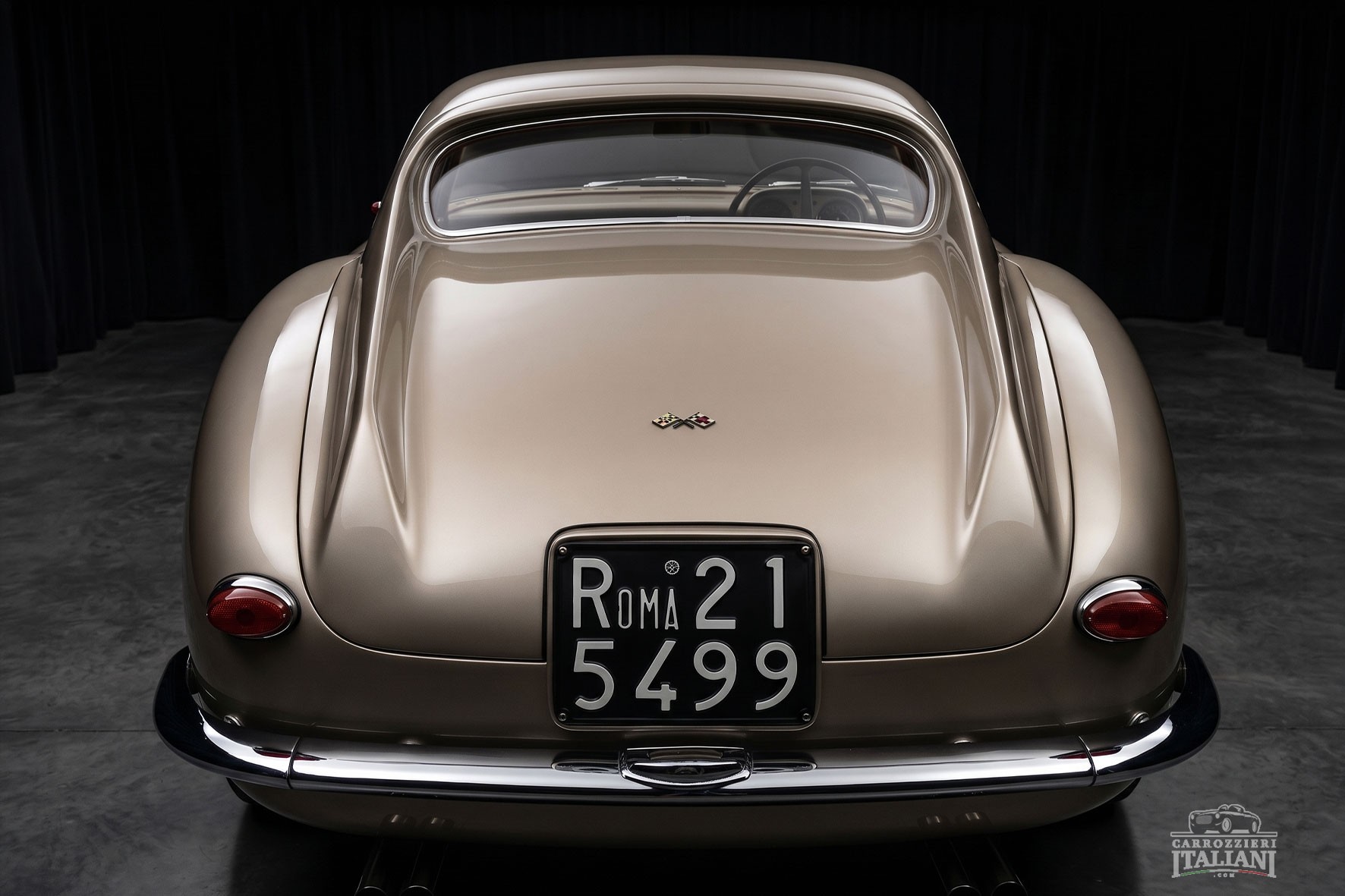
From some angles, particularly in three-quarter view, the Ferrari is dramatic and unexpectedly advanced. From others, the rear appears unresolved, as though several promising themes were combined without one being allowed to control the composition.
That does not diminish the importance of the car. Chassis 0456 AM was a one-off built for a motor show and a famous private customer, not a production model refined through several prototypes. Pinin Farina could test an idea in metal, judge the result and reuse the successful elements elsewhere.
The Bergman Ferrari did not establish a complete new design language. It records Pinin Farina searching for one.
Before the Ferrari Formula Was Settled
Pinin Farina is remembered for balance, restraint and a particular kind of effortless elegance. Looking back from the perspective of the 250 GT, the 275 GTB or the Dino, it is easy to imagine that the company moved towards those cars in a straight line.
The reality was more exploratory.
During the 1950s, Italian coachbuilders used motor shows to test concealed headlights, panoramic glass, fins, unusual roof structures and increasingly complex body surfaces. Some ideas appeared only once. Others were simplified, adapted to different proportions and used again years later.
The 375 MM belongs to that period of experimentation. Its front remains closely related to a competition Ferrari, while the rear-set cabin, long bonnet and muscular rear wings anticipate the proportions that would later define Ferrari’s front-engined berlinettas.
Later cars would resolve those elements with greater simplicity. On the Bergman Coupé, the effort is still visible. Pinin Farina was trying to reconcile a large engine, a long racing chassis and a formal closed body without hiding the machinery beneath it.
The design is valuable because it records the problem before Pinin Farina arrived at a familiar solution.
The Colour That Became Grigio Ingrid
The pale metallic finish is now inseparable from the identity of the car.
Grigio Ingrid sits somewhere between silver, beige and champagne gold. Its appearance changes noticeably with the light. On the 375 MM, this works particularly well: the rounded front wings pick up warmer highlights, while the concave side sections become darker and more pronounced.
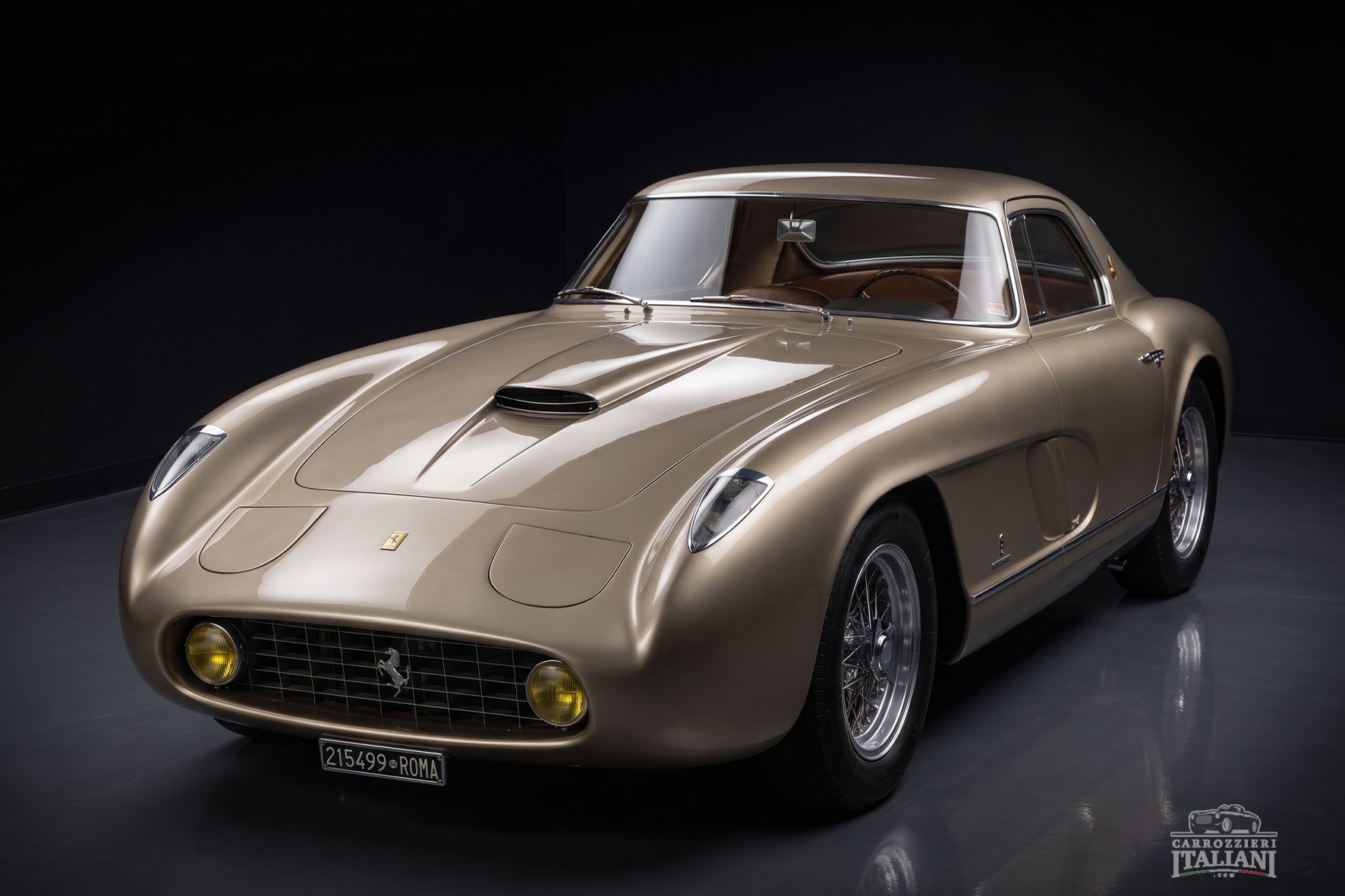
The familiar story says that the colour was created specifically for Ingrid Bergman, sometimes with the suggestion that it was chosen to complement her complexion or hair. The known chronology is less straightforward.
Period evidence indicates that the Ferrari may have appeared at the 1954 Paris Motor Show in pale blue with a red interior. The metallic shade later associated with Bergman appears to have been applied afterwards, before or around the time the car was delivered to Rossellini.
If so, Grigio Ingrid was not necessarily the starting point of the project. The association developed as the car’s identity became attached to Bergman’s name.
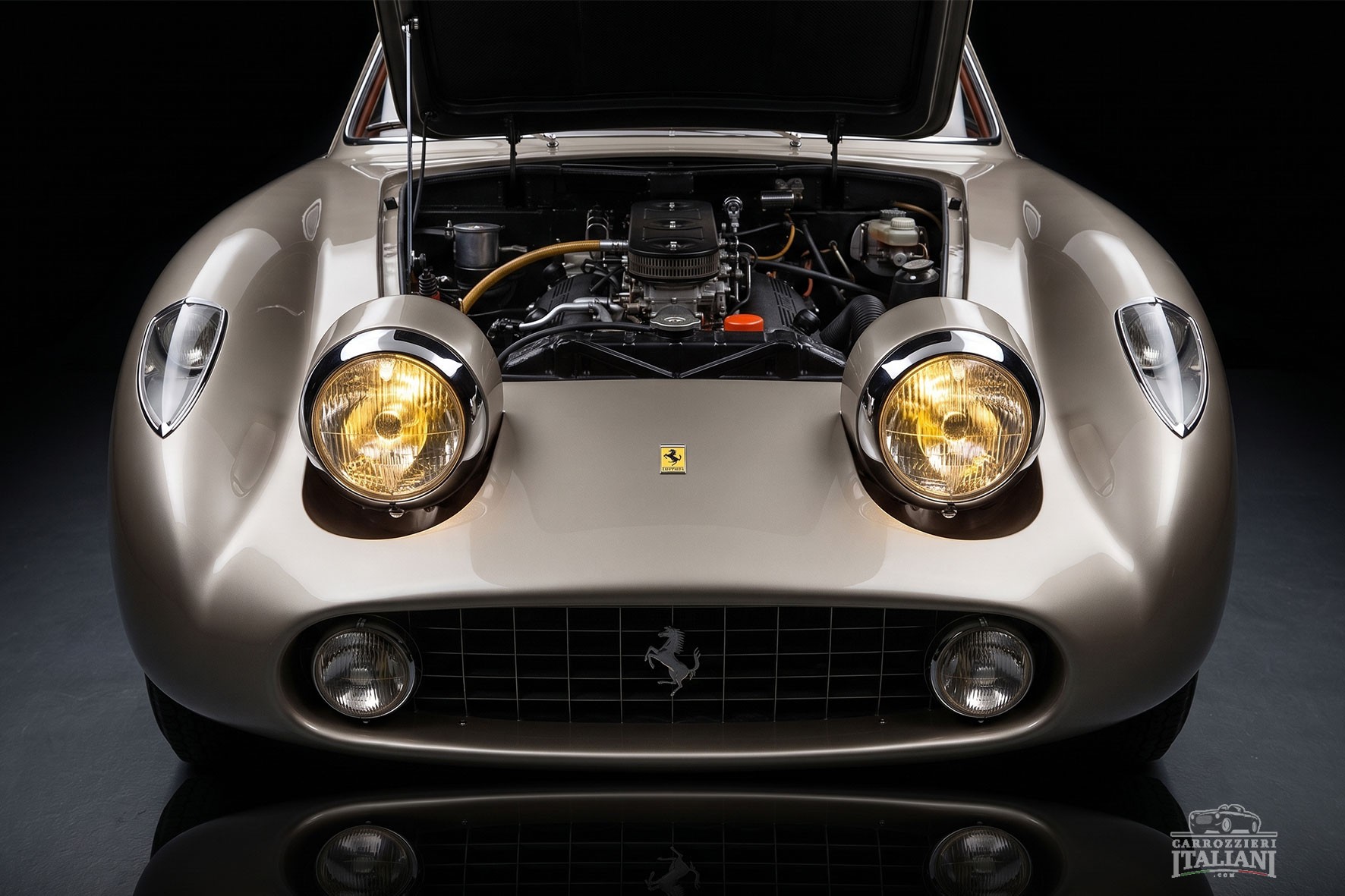
This is common in the history of one-off cars. A genuine detail is repeated and simplified until it produces a cleaner narrative than the evidence allows. Bergman was connected with the Ferrari, the colour became connected with Bergman, and eventually the whole commission was described as though it had been shaped around her from the first sketch.
The less polished version is more convincing. Rossellini ordered an extraordinary Ferrari, Pinin Farina produced an experimental body, and Bergman’s name gave both the car and its colour a lasting cultural identity.
Luxury over Competition Hardware
The cabin was more civilised than that of a normal 375 MM, although Pinin Farina could only go so far in disguising the car’s origins.
The dashboard was painted to match the body. A compact instrument binnacle was placed directly in front of the driver, while additional gauges occupied the centre. The seats were upholstered in leather, but the floor retained practical rubber matting.
That combination says more about the car than an elaborate description of its trim. It was neither a stripped competition machine nor a genuine grand tourer developed around passengers and luggage. The basic architecture continued to serve the mechanical requirements of the 375 MM.
The large rear body, for example, suggested more practicality than it could provide. The fuel tank occupied much of the available space, with the spare wheel mounted above it. From the outside, the Ferrari looked ready to carry two people across Europe. Beneath the body, it remained arranged like an endurance racer.
🔗 Read more: Carrozzeria Scaglietti: The Coachbuilder of the Prancing Horse
Driving it would also have required commitment. The V12 produced considerable heat and noise inside the closed aluminium body. The steering became heavy at low speed, the competition-derived clutch and four-speed gearbox demanded deliberate inputs, and the drum brakes required anticipation.
The Speciale was usable on the road, and Rossellini did use his Ferraris, but its idea of luxury was based on exclusivity, performance and visual drama rather than ease. For somebody already wary of his driving, it was an unlikely gift.
From Rome to America
There is little evidence that Ingrid Bergman used the 375 MM regularly. Rossellini retained it, which is perhaps the clearest indication of whose tastes the car represented.
It remained with him until 1957, the year his marriage to Bergman ended. The Ferrari then passed to John Treadwell in Rome before being acquired by John Koontz of San Francisco and exported to the United States.
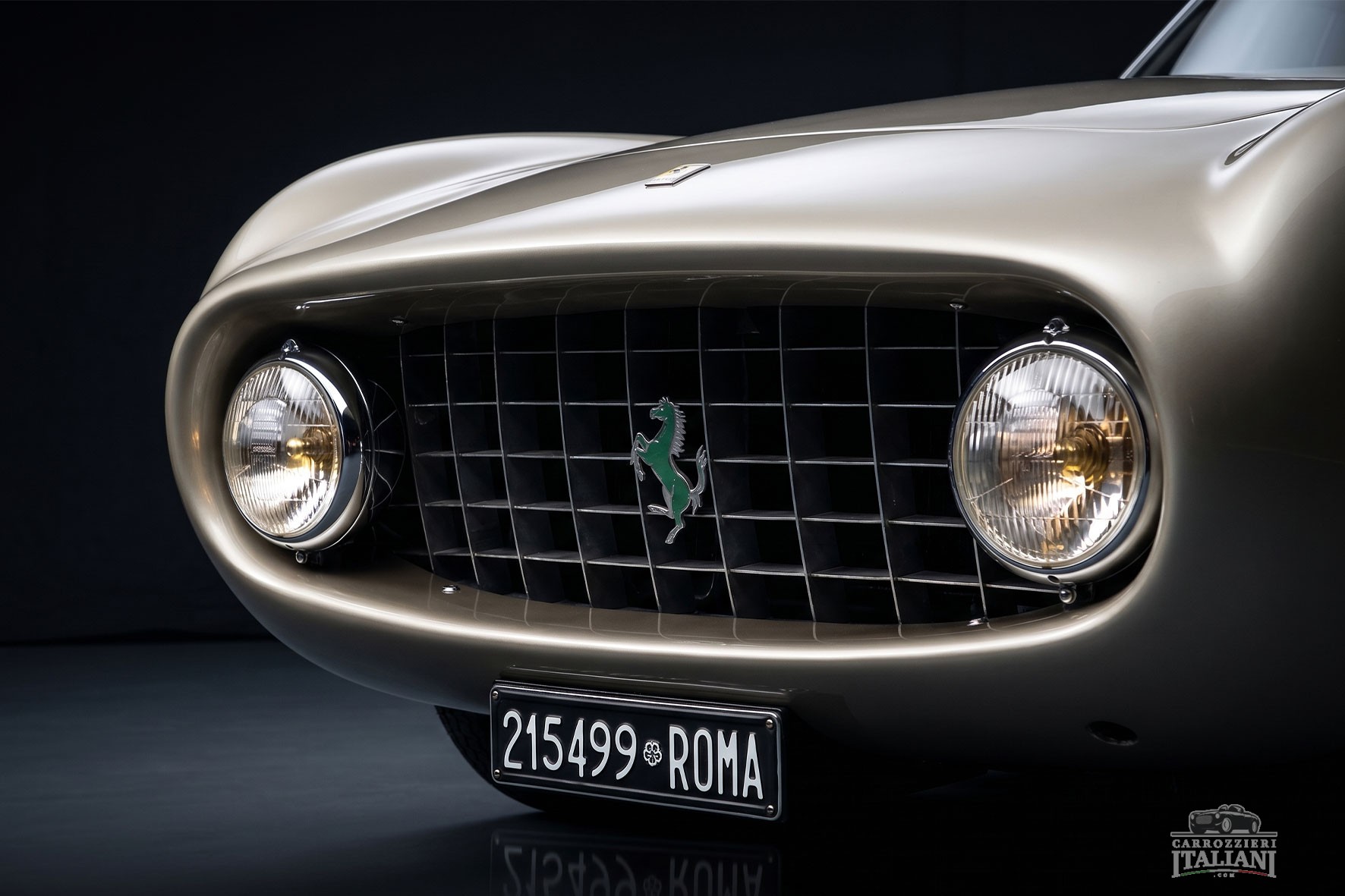
Chassis 0456 AM subsequently passed through several owners. By the end of the 1960s, it had been dismantled and survived as a restoration project rather than a complete automobile.
In 1978, the Ferrari was acquired by Illinois attorney and collector Wayne Golomb. It remained with Golomb and his family for decades. That long ownership appears to have protected the car from the cycle of hurried restoration and resale that affected many important Ferraris. The project could be researched and completed over time.
The restored car eventually returned to the concours circuit, including an appearance at the Pebble Beach Concours d’Elegance in 2017.
It remains a relatively rare sight. That has preserved some of its visual impact. Many famous Ferraris have become so familiar through auctions and international events that their shapes are known before the cars are seen. The Bergman Coupé can still catch an audience off guard because it does not look like the Pinin Farina Ferrari most people expect.
More Than a Celebrity Ferrari
The names of Ingrid Bergman and Roberto Rossellini guarantee attention, but chassis 0456 AM would remain important without them. It combines a unique Pinin Farina body with one of Ferrari’s great early competition chassis, created when the boundary between racing and road cars was still unusually thin.
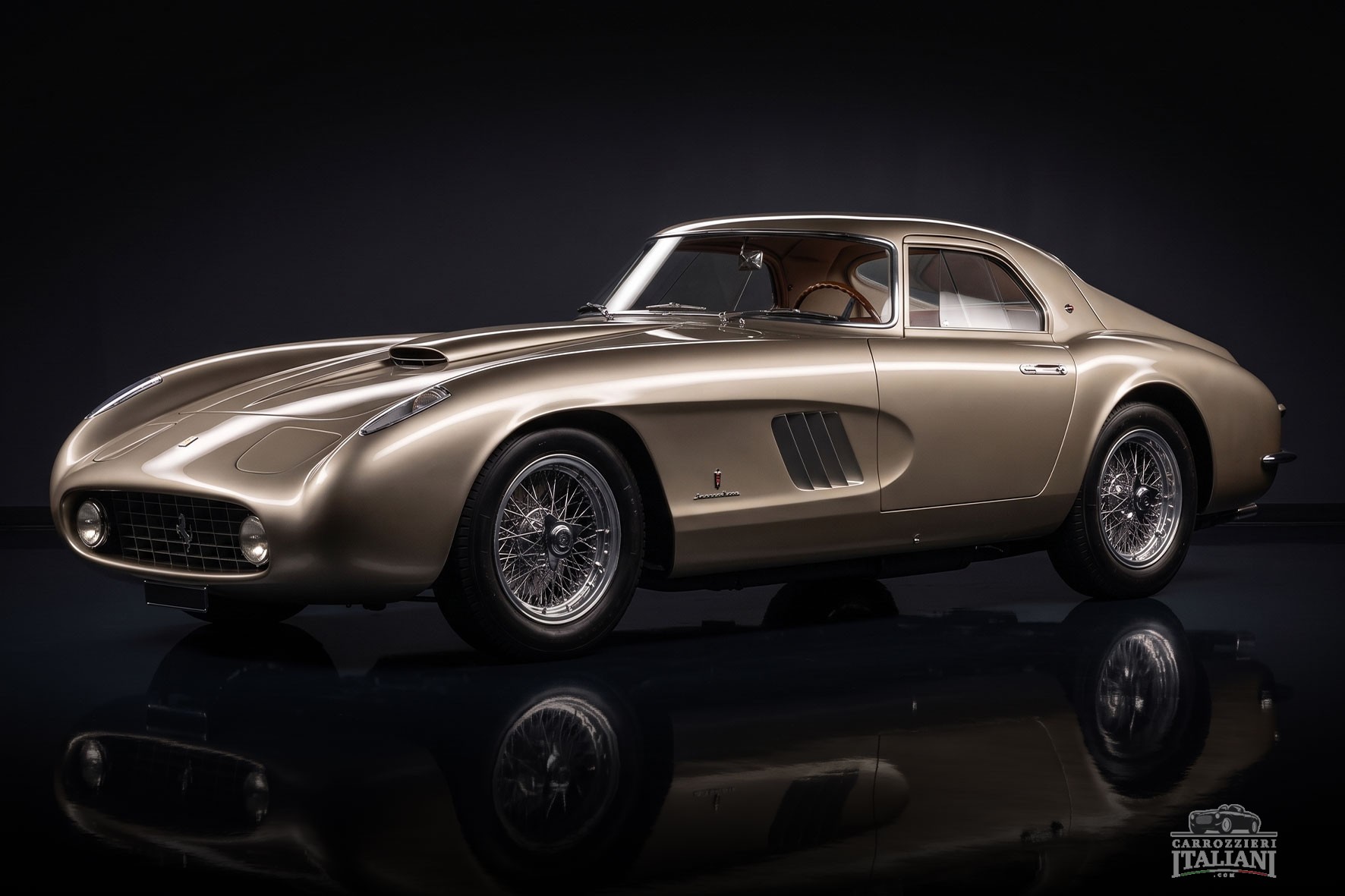
Its design is not perfectly resolved. The long bonnet, scalloped flanks and recessed rear window are imaginative, while the buttresses, fins and tail do not always work together. That unevenness is part of its value: it shows Pinin Farina experimenting before the proportions of the modern Ferrari grand tourer had fully settled.
Rossellini commissioned it, Bergman gave it her name, and Pinin Farina used it to explore ideas that would become clearer on later cars. Seventy years later, it is this experimental character—not the romantic legend—that makes the Ferrari 375 MM Bergman worth studying.

ABOUT THE AUTHOR
Andreas Scheidl
Italian classic car enthusiast with German roots. Renowned as a respected figure in the classic car community, he serves as a jury member at various international concours d'elegance, including the Classic Gala Schwetzingen and Mantova. As a content creator, Andreas passionately shares his profound knowledge and appreciation for vintage automobiles. His heart beats for cars designed by Giovanni Michelotti, showcasing his discerning taste and dedication to preserving the timeless elegance of automotive history.
More stories by Andreas Scheidl ↗CONTINUE READING
Posts You Might Like

A Central Driving Position, a Rear-Mounted V8. Was This Really a Lancia?
In 1948, visitors to the Turin Motor Show could see an unusual Lancia on the stand of Carrozzeria Ghia. It was a large two-door coupé with a two-litre V8 mounted behind the…
Read story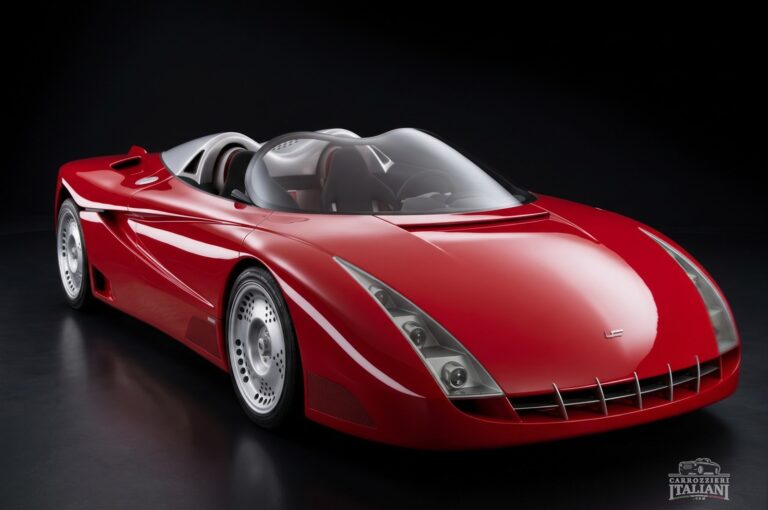
Fioravanti F100: The Ferrari He Was Allowed to Imagine
Enzo Ferrari’s centenary, Leonardo Fioravanti’s independent studio and a supercar that explored air brakes, steel wheels and a new way of driving—without ever wearing the Cavallino.
Read story
Michelotti Shellette: When the Fiat 850 Became a Yacht
The yacht designer, the Turin stylist and the tiny coachbuilt car that crossed between the quay, the royal holiday house and the auction room. Some automobiles were conceived for the open road,…
Read story
Maserati A6 1500: A New Road for the Trident
When the doors of the Geneva Motor Show opened in March 1947, Maserati was a name that required little introduction to anyone who followed motor racing. What it did not yet possess…
Read story
THE CONVERSATION
Comments 0
Share a memory, a period photograph or a documented detail about this story.