
Car Insurance for High-End Cars: Add-ons You Shouldn’t Skip

Owning a luxury car is a different kind of responsibility. The badge may be premium, but so are the repair bills, especially when a small bump affects radar sensors, adaptive headlights, imported panels, or electronics that need calibration at an authorised workshop.
That’s why insurance for high-end cars can’t be treated like a checkbox purchase. A basic policy might keep you legal, but it won’t always keep your finances stable when something actually goes wrong. The real value often comes from choosing the right add-ons on top of a solid, comprehensive base.
What The Law Requires
In India, the legal requirement is the same whether you drive a hatchback or a high-performance SUV. Under Section 146 of the Motor Vehicles Act, 1988, every vehicle used on public roads must have third-party liability insurance.
If you’re caught without it, Section 196 allows penalties that can include imprisonment (up to 3 months) or a fine of ₹2,000 for the first offence. On paper, that may look like a standard compliance issue, but for premium vehicles, the real risk is bigger: higher third-party liability exposure, higher asset value, and more expensive legal and repair outcomes if an incident escalates.
Also, remember that motor insurance typically includes mandatory Personal Accident (PA) cover for the owner-driver. If your policy lapses, it’s not just the car that becomes “uncovered”; your personal protection continuity can also break.
Why Renewals Matter More Than People Think
Luxury car insurance gets messy when there’s a break in coverage. Even a 1-day lapse in third-party coverage can trigger insurer requirements like inspection before issuing or reinstating the policy. That inspection step can delay activation, which creates a window where you’re vulnerable, both legally and financially.
There’s another cost people notice only later: No Claim Bonus (NCB). If a comprehensive policy is lapsed for more than 90 days, insurers commonly treat your NCB as forfeited. With high-end cars, losing that discount can sting because the base premium itself is already higher.
Add-Ons You Shouldn’t Skip For High-End Cars
Not every car insurance online add-on is worth paying for, but luxury ownership has predictable pain points. The covers below are usually the most “practically important” because they either reduce common out-of-pocket costs or protect you from big-ticket worst-case events.
Zero Depreciation Cover (Bumper-To-Bumper)
Standard claim settlement often applies depreciation on parts like plastic, rubber, fibre components, and sometimes even paint-related costs. With premium cars, that depreciation deduction can be surprisingly large because the parts themselves are expensive.
- Zero depreciation reduces (and sometimes eliminates) that depreciation impact on eligible replaced parts, which helps keep repair bills predictable after a claim. This add-on is especially useful for newer cars with costly lights, trims, bumpers, and painted panels.
- Keep in mind that insurers usually restrict zero dep by vehicle age and sometimes by number of claims per year, so check the wording before you assume it’s unlimited.
NCB Protection Cover
NCB is one of the few “quiet wins” in motor insurance. Every claim-free year builds a discount, and because luxury premiums are higher, the rupee value of that discount can be meaningful over time.
- NCB protection lets you make an eligible claim without losing your accumulated NCB, subject to the insurer’s conditions (such as the number of claims allowed, minimum claim-free history, and renewal timelines).
- For many premium owners, this becomes a smart trade-off: you don’t hesitate to claim for legitimate damage, and you also avoid resetting years of savings.
- Do note that NCB protection doesn’t mean “unlimited claims with no impact.” It’s typically limited and conditional, so read the fine print carefully.
Return to Invoice (RTI)
Luxury cars depreciate fast in market value, even when they’re well-maintained. In a total loss or theft scenario, standard settlement is usually based on Insured Declared Value (IDV), which reflects depreciation, not what you paid at the showroom.
RTI usually requires proper documentation and is commonly available only for relatively new cars, so it’s best chosen early rather than later.
Engine Protection Cover
Engine and gearbox repairs on luxury vehicles can be expensive, and some real-world scenarios fall into grey areas under standard policies. Water ingress during flooding, hydrostatic lock, oil leakage leading to major damage, these are the kinds of incidents where owners discover exclusions when it’s already too late.
- Engine protection typically covers specific engine/gearbox risks that may otherwise be excluded, as per the terms. If you live in an area with waterlogging risk or drive through unpredictable weather, this add-on is often worth serious consideration.
- Insurers may require that you follow maintenance schedules and safe driving practices (for example, not attempting to start the car after water ingress). Claims can be denied if the situation indicates negligence, so the “how” matters as much as the “what.”
How To Choose Add-Ons Without Overpaying
The best comprehensive insurance add-on bundle is the one that matches your risk profile, not the one with the longest list. Luxury owners sometimes over-insure out of caution and then resent the premium, even though a more selective approach would have covered the biggest risks.
Use these practical filters before you lock your add-ons:
- Vehicle age and eligibility (zero dep and RTI often have age limits).
- Where you drive and park (flooding history, theft incidence, open parking vs secured parking).
- Your workshop preference (authorised workshops vs multi-brand, and whether cashless is available).
- Your comfort with out-of-pocket expenses.
Wrapping Up
After purchase, keep a simple “claims-ready” folder: policy PDF, premium receipt, previous year policy, endorsement copies, and any inspection report. When a claim happens, speed and paperwork matter, and luxury repair timelines are already long enough without admin delays.

ABOUT THE AUTHOR
Carrozzieri Italiani Editorial Team
Guides, practical advice and editorial contributions from the Carrozzieri Italiani team.
More stories by Carrozzieri Italiani Editorial Team ↗CONTINUE READING
Posts You Might Like
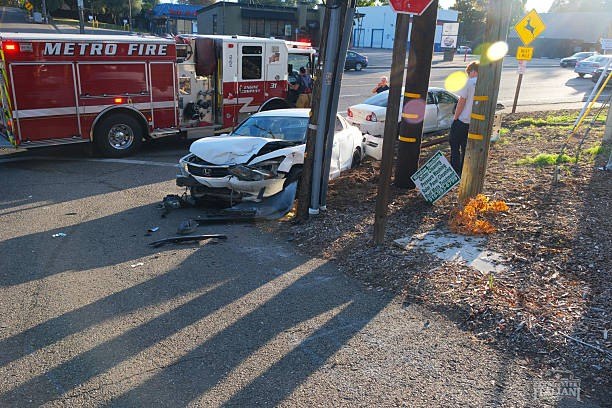
How Vehicle Design and Defective Components Can Contribute to Serious Car Accidents
A driver can do everything right and still end up in a hospital bed because a tire tread separated at highway speed. Federal crash investigators have spent decades tracing a measurable share…
Read story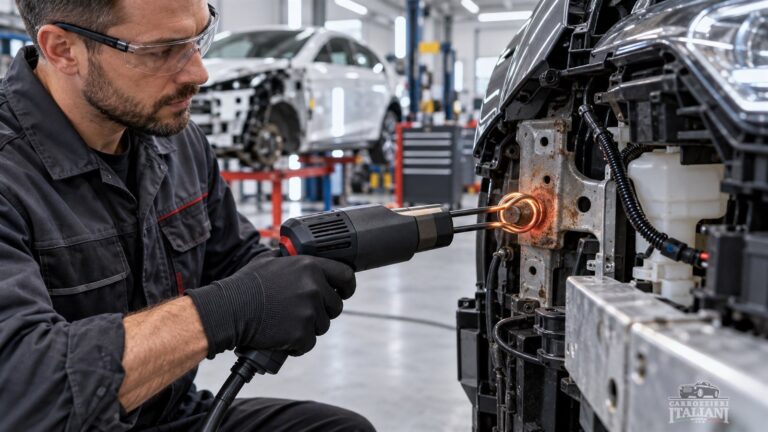
How Automotive Induction Heaters Improve Speed and Safety in Collision Repair
Collision repair has long relied on open-flame torches to loosen rusted bolts, soften adhesive, and free stuck body panels, but that approach carries real tradeoffs. Flame-based heating is slow to control precisely,…
Read story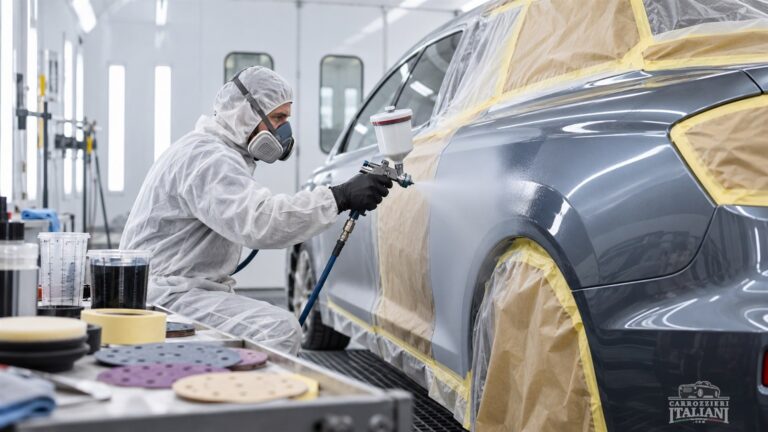
The Key Stages of a Professional Vehicle Paint Repair
Vehicle paintwork has to cope with stone chips, minor collisions, scratches, weather exposure, and everyday wear. When damage occurs, achieving a professional result involves far more than simply spraying fresh color over…
Read story
Il veicolo urbano dopo il viaggio: cosa distingue davvero un buon design per la città
Per gran parte della storia dell’automobile, il progetto di un veicolo è stato raccontato attraverso ciò che accade durante la guida: la velocità, la linea del cofano, il comportamento in curva, la…
Read story
THE CONVERSATION
Comments 0
Share a memory, a period photograph or a documented detail about this story.