
The Alfa Romeo Bella concept car by Bertone
There are concept cars that exist to flatter the present, and there are concept cars that exist to irritate it. The Alfa Romeo Bella belongs firmly to the second category. When it appeared in 1999, created by Bertone under the design direction of Luciano D’Ambrosio, it did not arrive as a nostalgic valentine to Alfa Romeo’s past, nor as a polite variation on the familiar themes that usually follow the marque around like loyal but slightly overbearing relatives. It arrived instead with a more interesting question: what might an Alfa Romeo of the near future look like if it were allowed to step away from its own clichés without losing its soul?
That question mattered more than it might sound today. Alfa Romeo has always been one of those names that alters the temperature of a room. Mention it, and even people who have no intention of buying one tend to smile as if they have just remembered a song, a road, or a mechanical disaster they are oddly fond of. The badge carries emotional weight in excess of mere commercial logic. Yet by the end of the 1990s, Alfa was also living with the burden that often comes with great heritage: everyone knew what they wanted it to mean, and almost everyone had a slightly different idea of what it ought to become.
That was the atmosphere in which the Bella was conceived. D’Ambrosio recalls that the project was born above all from the passion Italians still felt for their great historical brands, even those that, over time, had lost some of their sheen. Alfa Romeo, in his telling, remained one of those names that still generated warmth the moment it was spoken. The challenge, then, was not to remind people that Alfa had once been glorious. Everyone already knew that. The challenge was to imagine a future Alfa Romeo that felt fresh, high-performing, desirable, and unmistakably alive without merely dressing itself up in the usual costume of Alfa references.
Imagining an Alfa by breaking the obvious rules
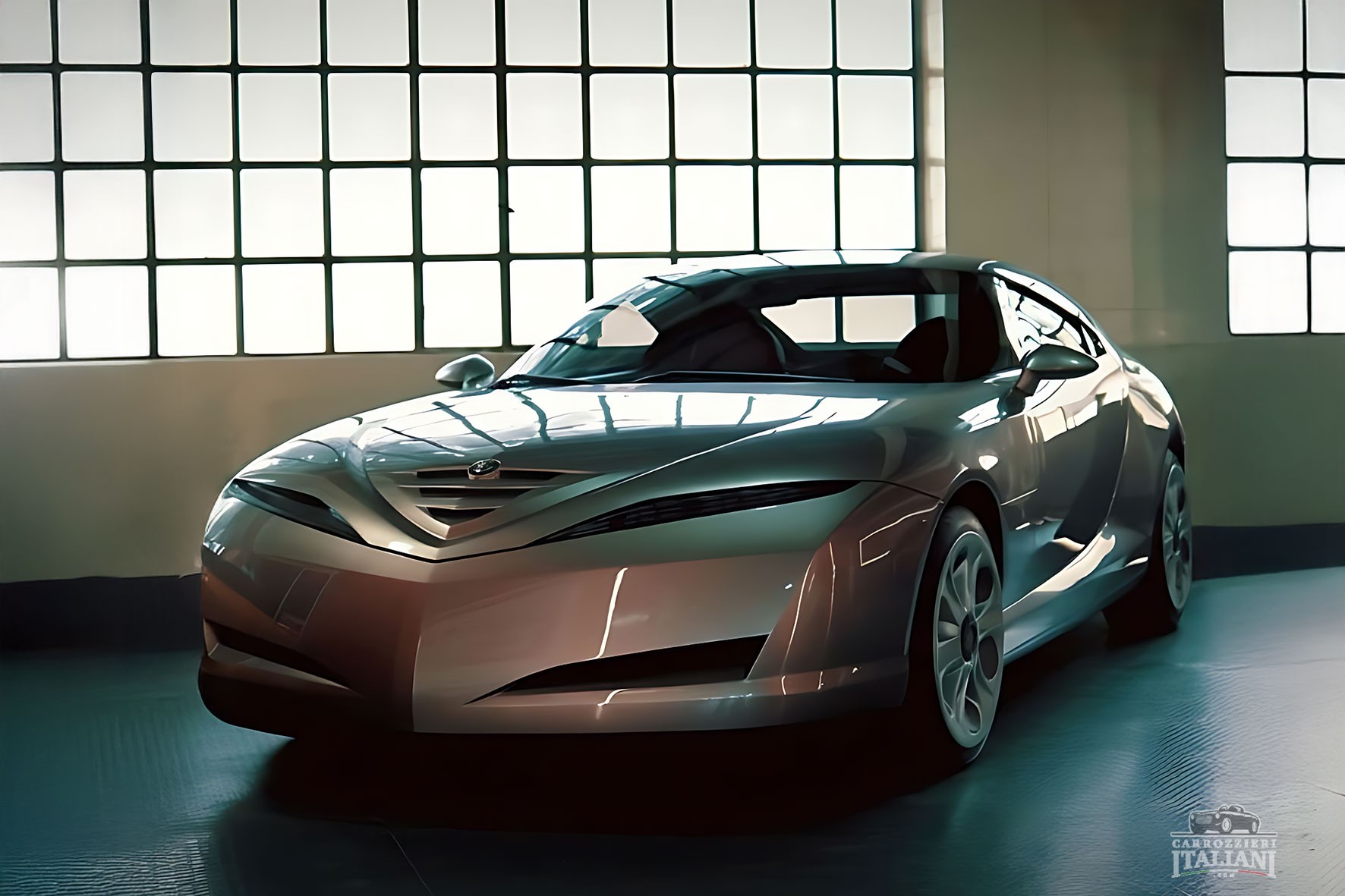
That may sound straightforward, but it required a deliberate act of design disobedience. D’Ambrosio and his team decided, quite consciously, to step away from the expected Alfa Romeo formula. Not to reject the brand’s identity, but to deconstruct it and rebuild it. The familiar central shield grille, so often treated as a vertical altar at the nose of every Alfa, was not eliminated, but reinterpreted. Instead of projecting outward as a three-dimensional emblem of brand orthodoxy, it was integrated more graphically into the sculpture of the hood, becoming part of the car’s formal language rather than a separate badge pinned onto it like a family crest on a blazer.
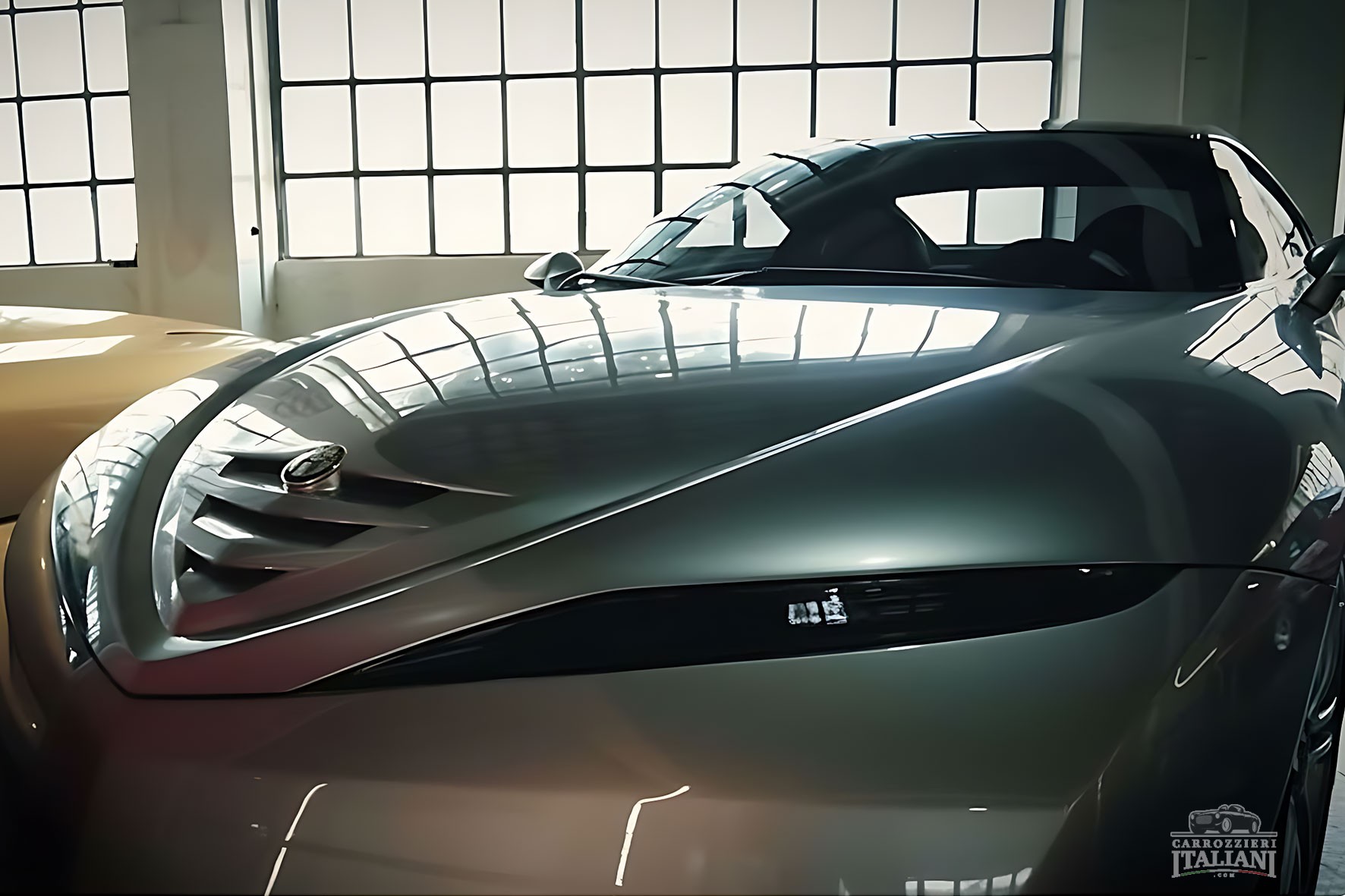
This was a subtle but important shift. The Bella did not pretend the Alfa grille no longer mattered; it simply refused to let that grille dictate the entire face of the car in the usual way. It was a gesture of confidence, and confidence is often what separates a memorable concept from a merely expensive one.
The headlights followed the same logic. D’Ambrosio describes them as half-closed eyes, a phrase that captures both the Bella’s visual attitude and its technical ambition. At the time, the use of LED technology in front lighting was almost unheard of. LEDs were only just beginning to appear timidly in rear lamps, and certainly not yet as a defining front-end signature. The Bella anticipated that shift with a calm certainty that now looks almost prophetic. It did not scream about the future; it simply wore it.
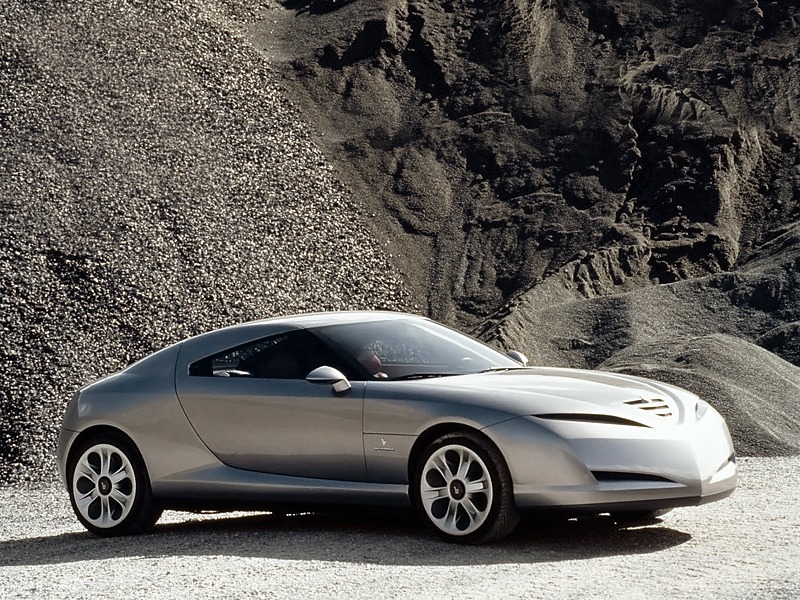
The front bumper, too, was handled in a way that now feels curiously farsighted. Instead of carving the nose into a festival of visible intakes and decorative aggression, Bertone kept the lower graphic exceptionally clean, with only a minimum of perceptible air openings. In retrospect, D’Ambrosio notes, this prefigured something we would later associate with electric vehicles, namely the visual reduction of open grilles and the move toward cleaner frontal surfaces. That was not the explicit goal at the time, but the Bella nonetheless seems to have sensed, long before most production designers did, that purity could be more modern than complexity.
A body that moved against the fashion of its own moment
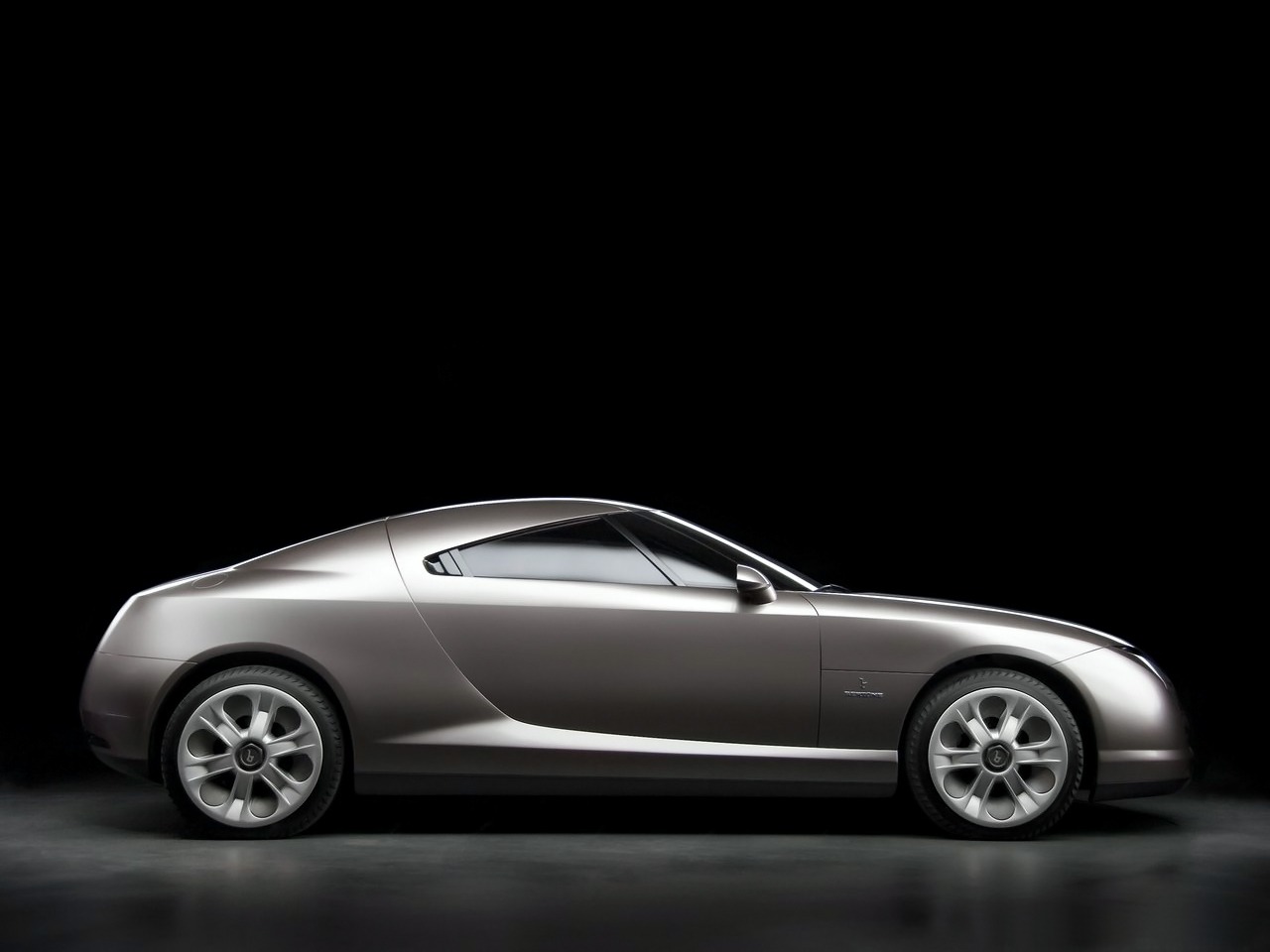
What makes the Bella especially compelling is that its rebellion was not confined to the face. The entire car moved against the currents of late-1990s proportion. At a time when many sporty coupes leaned heavily into wedge graphics and rising beltlines that kicked upward toward the rear in the approved language of speed, the Bella did something different. Its side line did not climb triumphantly toward the tail like a car convinced it had just delivered the final argument in a styling studio debate. Instead, it closed down toward the rear, giving the body a more contained, sculptural, and subtly unexpected tension.
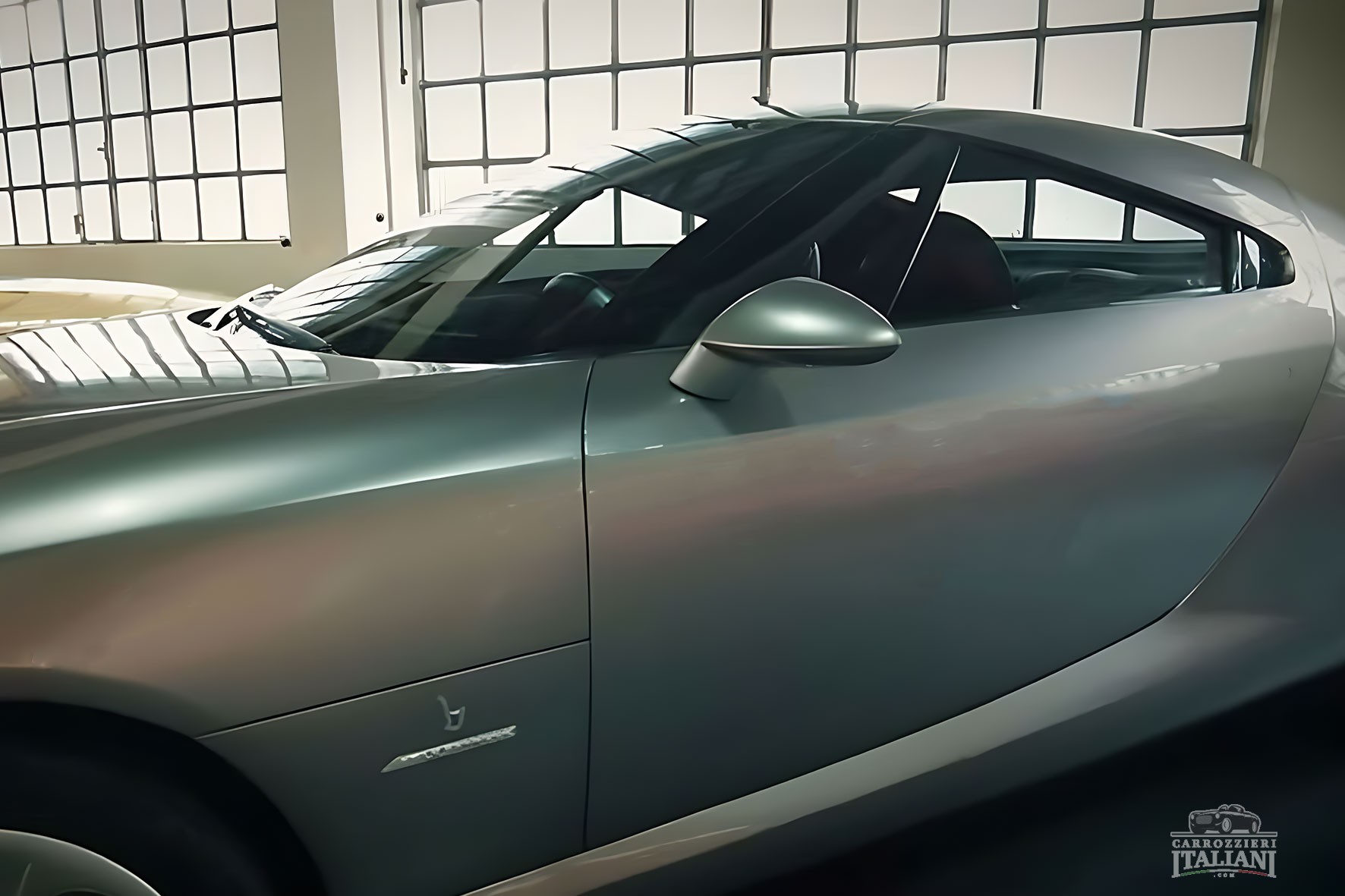
The greenhouse was equally distinctive. D’Ambrosio describes it as a visor-like canopy, and that is exactly how it reads: a continuous, helmet-like volume resting on the body with a sense of precision rather than ornament. He also acknowledges that this was a theme explored elsewhere in his work and that, if one wants to trace its ancestry, there is perhaps some distant Stratos heritage in the idea. Not literal quotation, not retro theatrics, but that sense of the cabin as a technical capsule, a visual device that compresses the upper body and gives the car an almost conceptual clarity.
🔗 Read more: The Unfulfilled Promise of the Lancia Kayak
At the rear, the Bella became even more unusual. D’Ambrosio describes the form as a full volume cut longitudinally by slim lamps, and that image explains the effect beautifully. Rather than treating the tail as a decorative afterthought or a place to stack familiar Alfa motifs, Bertone created a rear end that felt almost monolithic, then sliced through it with narrow lighting graphics. The result was visually dense, modern, and more than a little controversial. Some observers at the time were skeptical, especially about the front LEDs, because concept cars that arrive too early are often accused of being wrong until the future quietly apologizes to them.
The future, in this case, did apologize.
Bella was not a fantasy, and that is part of its strength
Concept cars often enjoy the freedom of unreality. They are brilliant because they can be impossible. The Bella was more interesting than that, because beneath its radical surface it was anchored to something very real: the Alfa Romeo 166.
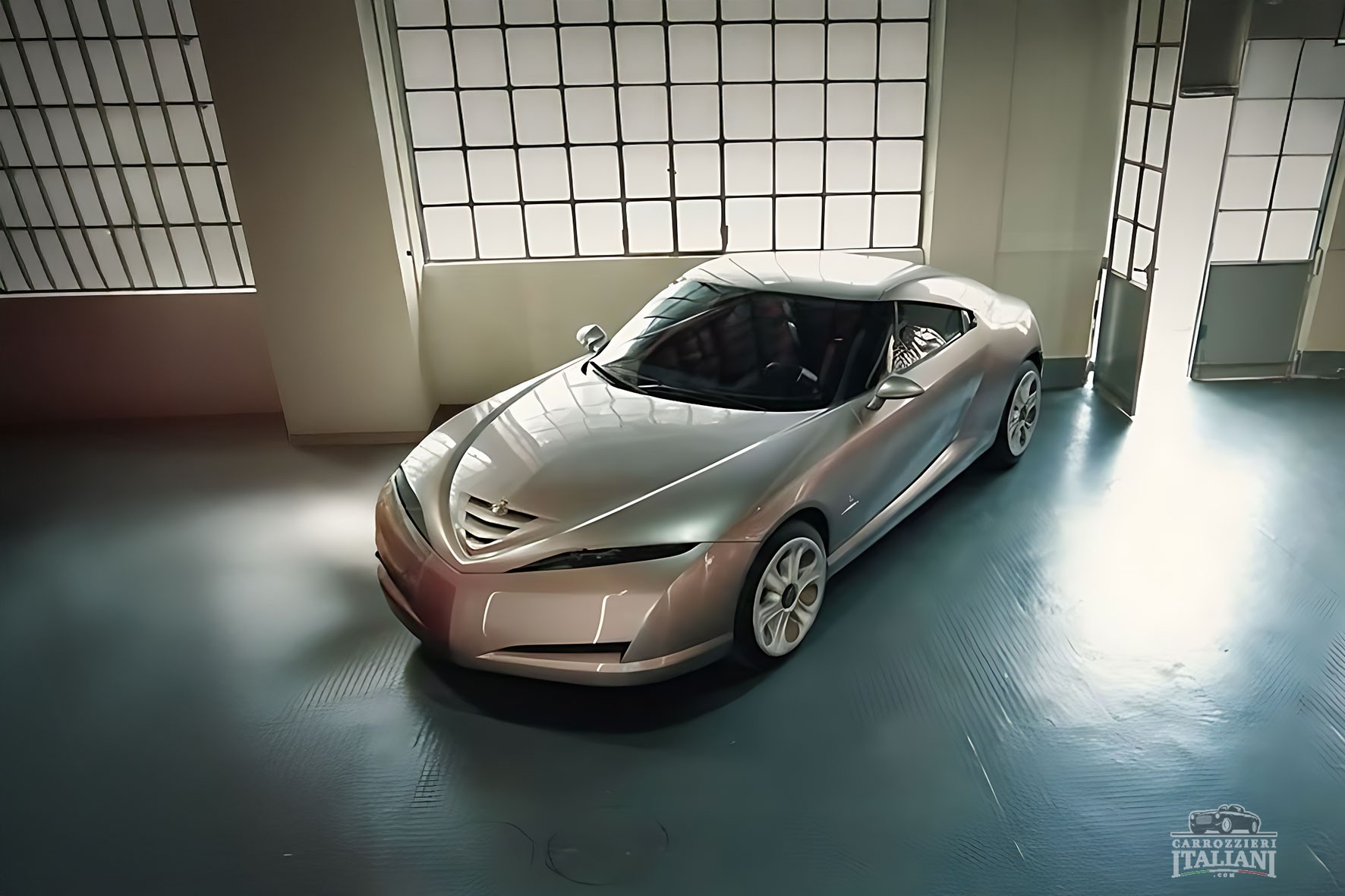
D’Ambrosio speaks warmly of the 166 as an underrated car, one that deserved far better commercial success than it achieved. More importantly for Bella, it offered a strong technical base. Bertone did not rewrite the underlying engineering. The mechanical package remained essentially untouched, including the crucial front overhangs, engine package dimensions, and overall hard points. In other words, Bella was not one of those dreamlike salons on wheels that only work until someone asks where the radiator goes. It was grounded in an existing platform, and that grounding gave its audacity credibility.
The main structural modification came at the rear. From the back axle rearward, in the area that would normally accommodate the spare wheel, the structure was cut and reworked in order to achieve the car’s compact tail and particular rear volume. The rest of the package remained fundamentally faithful to the production car. That fact matters because it reveals the project’s hidden seriousness. Like many Bertone show cars of the period, Bella was not merely intended to decorate a motor show stand. It was designed in the hope that it might attract the attention of a manufacturer and perhaps open a path toward production.
🔗 Read more: Lamborghini Genesis by Bertone: A Glimpse into the Future
That was the logic behind several Italian concept cars of that era. Investment remained relatively contained, but the emotional and strategic return could be immense if a parent company saw in the concept the seed of a real product. Bella, like Bertone’s earlier Lancia Kayak or other such exercises, existed in that tantalizing space between dream and proposal.
An interior designed for real life, not just the spotlight
If the exterior challenged conventional Alfa thinking, the interior revealed just how pragmatically imaginative the Bella really was. This is where many concept cars collapse into absurdity, producing cabins that photograph beautifully and function like modern art installations designed by people who have never carried a bag, ridden with a passenger, or parked in summer. Bella went in the opposite direction.
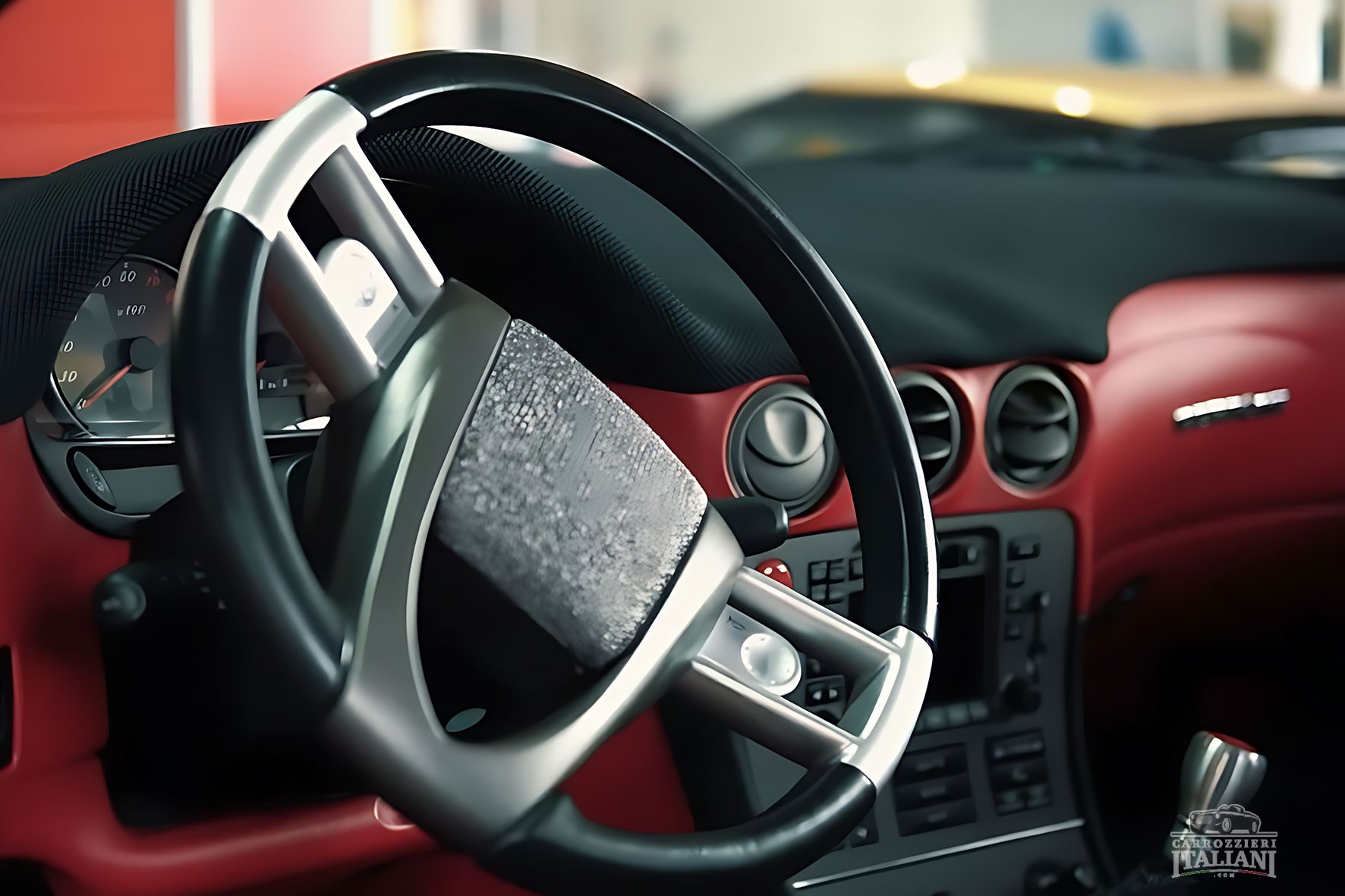
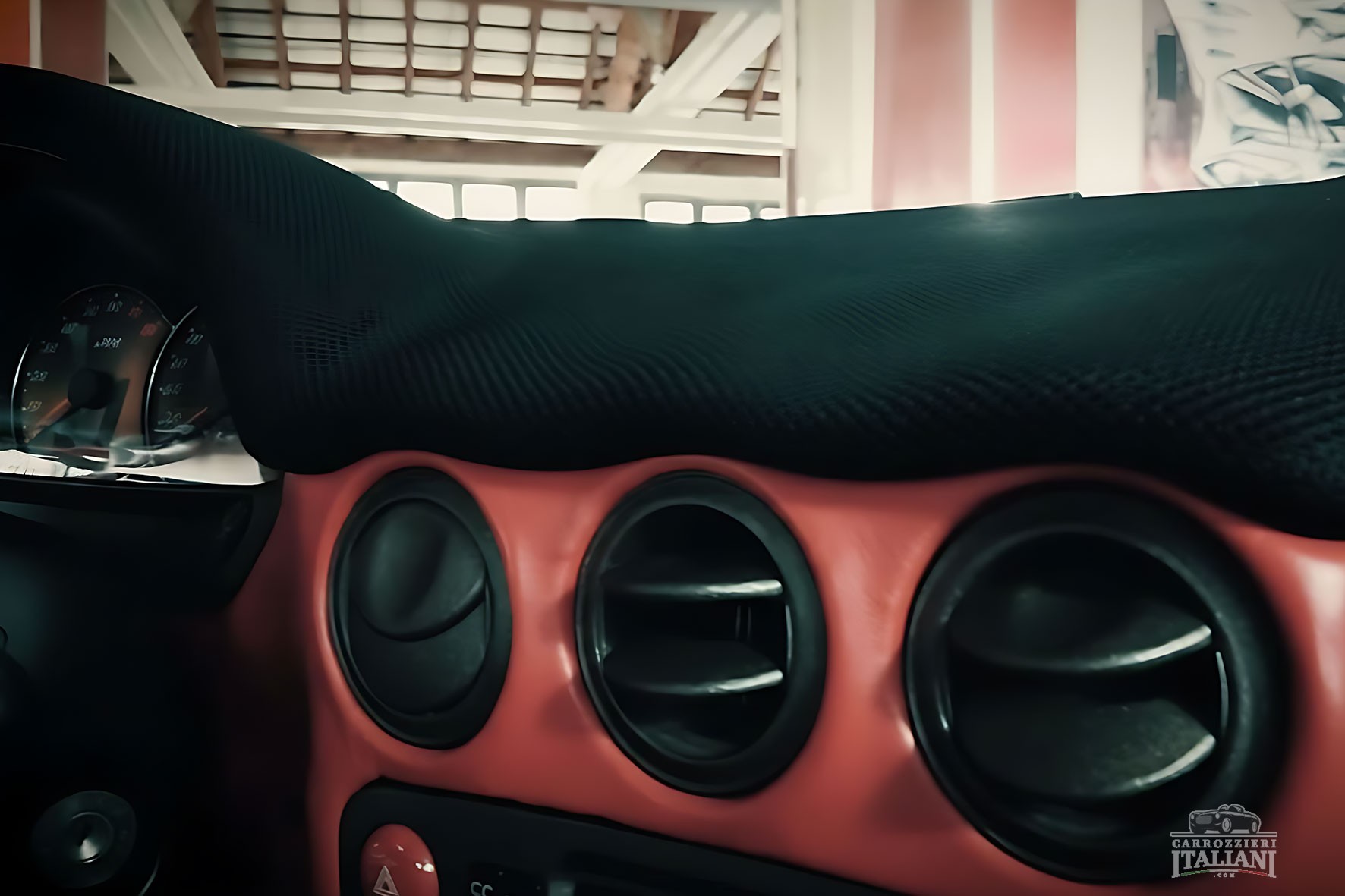
The dashboard incorporated materials and airflow ideas meant to address a very ordinary but very real problem: heat build-up inside a parked car. Anyone who has ever climbed into a vehicle that has been sitting in the August sun knows the sensation. The dashboard stores heat, the windshield reflects it straight back at your face, and for several glorious seconds your car behaves like an oven with seatbelts.
Bertone proposed a more intelligent solution. D’Ambrosio describes a system involving fans and a honeycomb-like textile structure capable of drawing accumulated heat into dedicated ducts and expelling it from the cabin, rather than allowing it to radiate back toward the occupants. It is a wonderfully specific piece of thinking, the sort of feature that never makes poster headlines but says far more about the seriousness of a concept than any number of oversized wheels or dramatic doors.
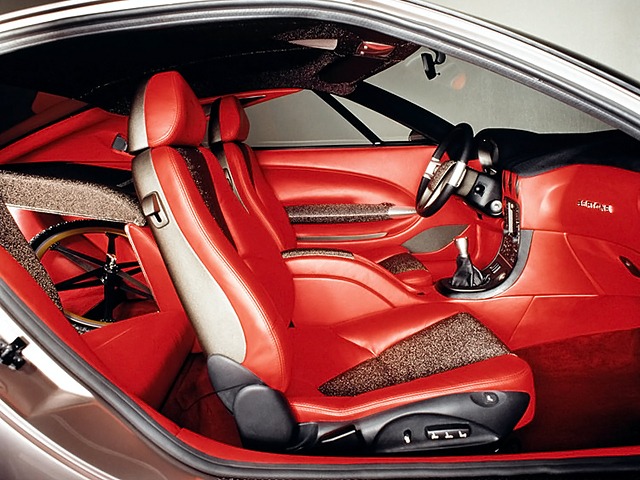
The Bella also offered real versatility. Although it was a coupe, it was conceived as a genuine 2+2, and not in the usual sense of “a place where two adults may contemplate their choices in moderate discomfort.” D’Ambrosio is clear that the rear accommodation was generous enough for adults, not merely children or apologetic luggage. Better still, the rear seating could be reconfigured to accommodate large sporting equipment.
And here Bella acquires one of those marvelous late-1990s concept-car details that ought to be absurd and somehow isn’t. Bertone designed a special bicycle to accompany the car, a carbon-fiber machine with a large, distinctive tube, and named it Bestia. The pairing was irresistible. At the shows, Bestia was placed beside Bella, the beast beside the beauty, which sounds like the sort of thing a less confident design house might have rejected for being too clever, but Bertone understood that concept cars are allowed a little theatre if they earn it.
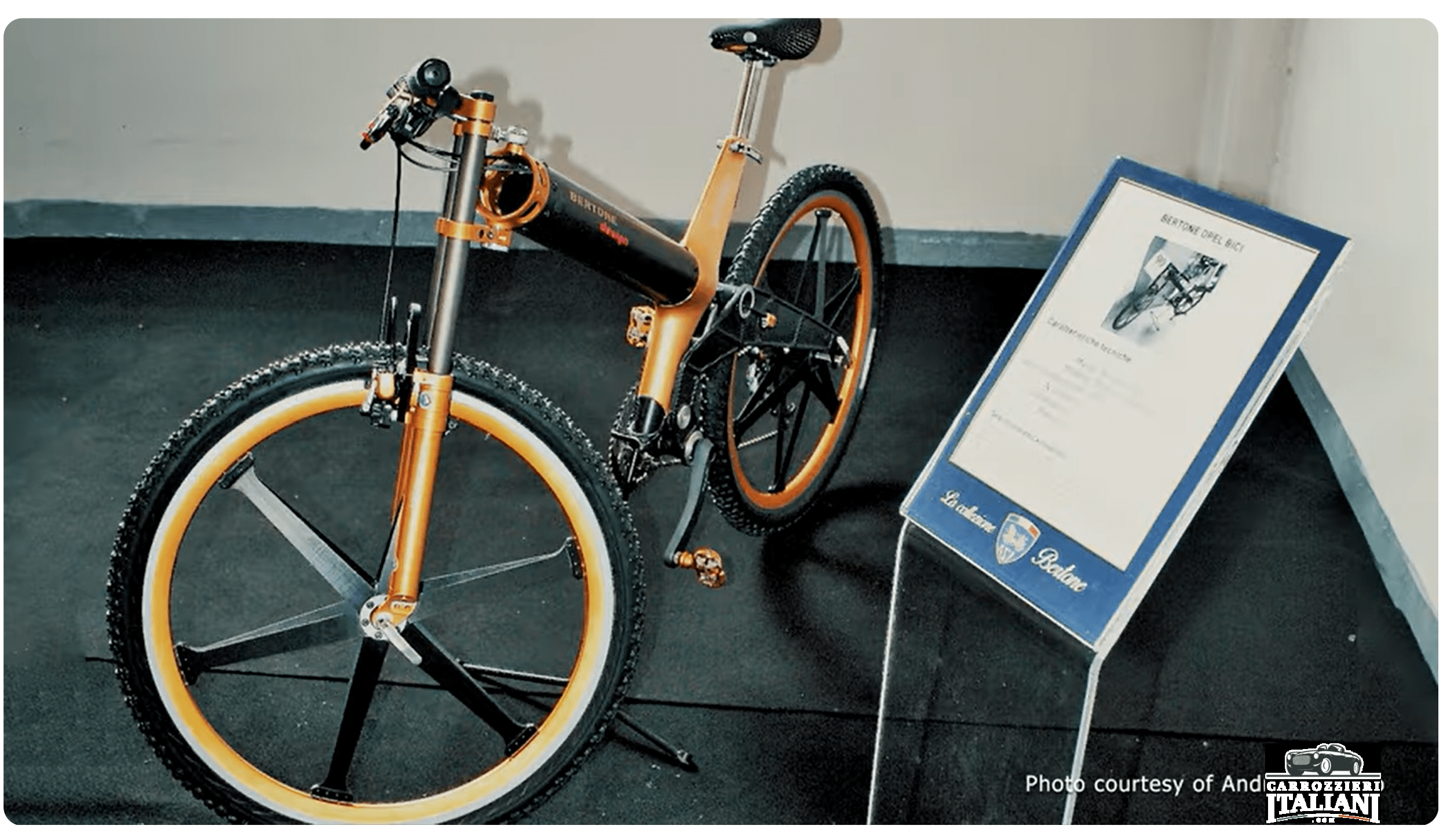
More importantly, the bicycle was not random stage dressing. It underscored the car’s practicality and the flexibility of the rear compartment. Bella was not only beautiful in the abstract. It was conceived as something a person could genuinely use, a high-performance coupe that still had room for life.
A concept with enough courage to annoy the experts
One of the most enjoyable details in D’Ambrosio’s recollection is that Bella did not immediately win universal approval from the self-appointed guardians of automotive correctness. Some commentators were skeptical of the front LEDs. Others likely found the car’s reinterpretation of Alfa proportions unsettling. This is usually a very healthy sign. If every expert at the time instantly agrees that a concept is tasteful, well-balanced, and appropriately branded, it probably means the concept has been very careful not to say anything interesting.
Bella said something interesting.
It proposed that Alfa Romeo’s future did not need to be a collage of remembered glories. It argued that high performance could wear cleaner surfaces. It suggested that the shield grille could become more graphic, the lights more technological, the side profile less obedient to the wedge formulas of the day, the rear more sculptural, and the cabin more useful. It showed that a concept can be emotionally charged without falling into self-parody.
🔗 Read more: Alfa Romeo Navajo: The Spaceship Bertone Actually Built
This was not anti-Alfa. Quite the opposite. Bella was born from affection for the marque, and affection of that kind tends to ask more of its object, not less. The project came from the belief that Alfa Romeo deserved not just reverence, but imagination. The easiest thing in the world would have been to build a show car that merely amplified the expected Alfa tropes, sprinkled a little 33 Stradale perfume over the clay, and waited for applause. Bella chose the riskier path. It tried to imagine what the future might be if Alfa’s identity were treated as a living language rather than a sacred script.
Why Bella still matters
That is why the Alfa Romeo Bella remains such a fascinating object today. Not because it predicted every later design trend, though it did anticipate some of them. Not because it was destined for production, though its technical realism made that fantasy more plausible than usual. And not because it is simply a beautiful coupe, though it certainly is that.
Bella matters because it captures a moment when Italian concept design still believed it could challenge a brand by loving it intelligently. It did not shout. It did not perform heritage in the usual melodramatic way. It asked, with unusual composure, whether an Alfa Romeo had to keep wearing the same expressions in order to remain recognisably Alfa Romeo.
The answer it offered was quietly radical. No, it did not. The brand could be emotional without being nostalgic, advanced without being cold, practical without being dull, and elegant without resorting to decorative noise. It could even put LED eyes on its face before the rest of the world had quite decided that such a thing was normal.
Seen now, Bella feels less like an eccentric footnote and more like one of those concept cars that understood the future in fragments, then wrapped those fragments in a body the present was not entirely ready to accept. Its forms remain distinctive, its ideas remain fresh, and its central provocation remains wonderfully alive: if a great marque is truly great, then it should survive being reimagined.
And perhaps that is the most Alfa Romeo thing about Bella after all. It did not settle for being respectful. It wanted to be passionate, modern, and just disruptive enough to leave a mark. Which, if we are being honest, is rather more flattering to the brand than simply repeating the old lines and hoping memory will do the rest.

ABOUT THE AUTHOR
Andreas Scheidl
Italian classic car enthusiast with German roots. Renowned as a respected figure in the classic car community, he serves as a jury member at various international concours d'elegance, including the Classic Gala Schwetzingen and Mantova. As a content creator, Andreas passionately shares his profound knowledge and appreciation for vintage automobiles. His heart beats for cars designed by Giovanni Michelotti, showcasing his discerning taste and dedication to preserving the timeless elegance of automotive history.
More stories by Andreas Scheidl ↗CONTINUE READING
Posts You Might Like

A Central Driving Position, a Rear-Mounted V8. Was This Really a Lancia?
In 1948, visitors to the Turin Motor Show could see an unusual Lancia on the stand of Carrozzeria Ghia. It was a large two-door coupé with a two-litre V8 mounted behind the…
Read story
Fioravanti F100: The Ferrari He Was Allowed to Imagine
Enzo Ferrari’s centenary, Leonardo Fioravanti’s independent studio and a supercar that explored air brakes, steel wheels and a new way of driving—without ever wearing the Cavallino.
Read story
Michelotti Shellette: When the Fiat 850 Became a Yacht
The yacht designer, the Turin stylist and the tiny coachbuilt car that crossed between the quay, the royal holiday house and the auction room. Some automobiles were conceived for the open road,…
Read story
Maserati A6 1500: A New Road for the Trident
When the doors of the Geneva Motor Show opened in March 1947, Maserati was a name that required little introduction to anyone who followed motor racing. What it did not yet possess…
Read story
THE CONVERSATION
Comments 0
Share a memory, a period photograph or a documented detail about this story.