
AC 428 Frua: When the Cobra Went to Turin
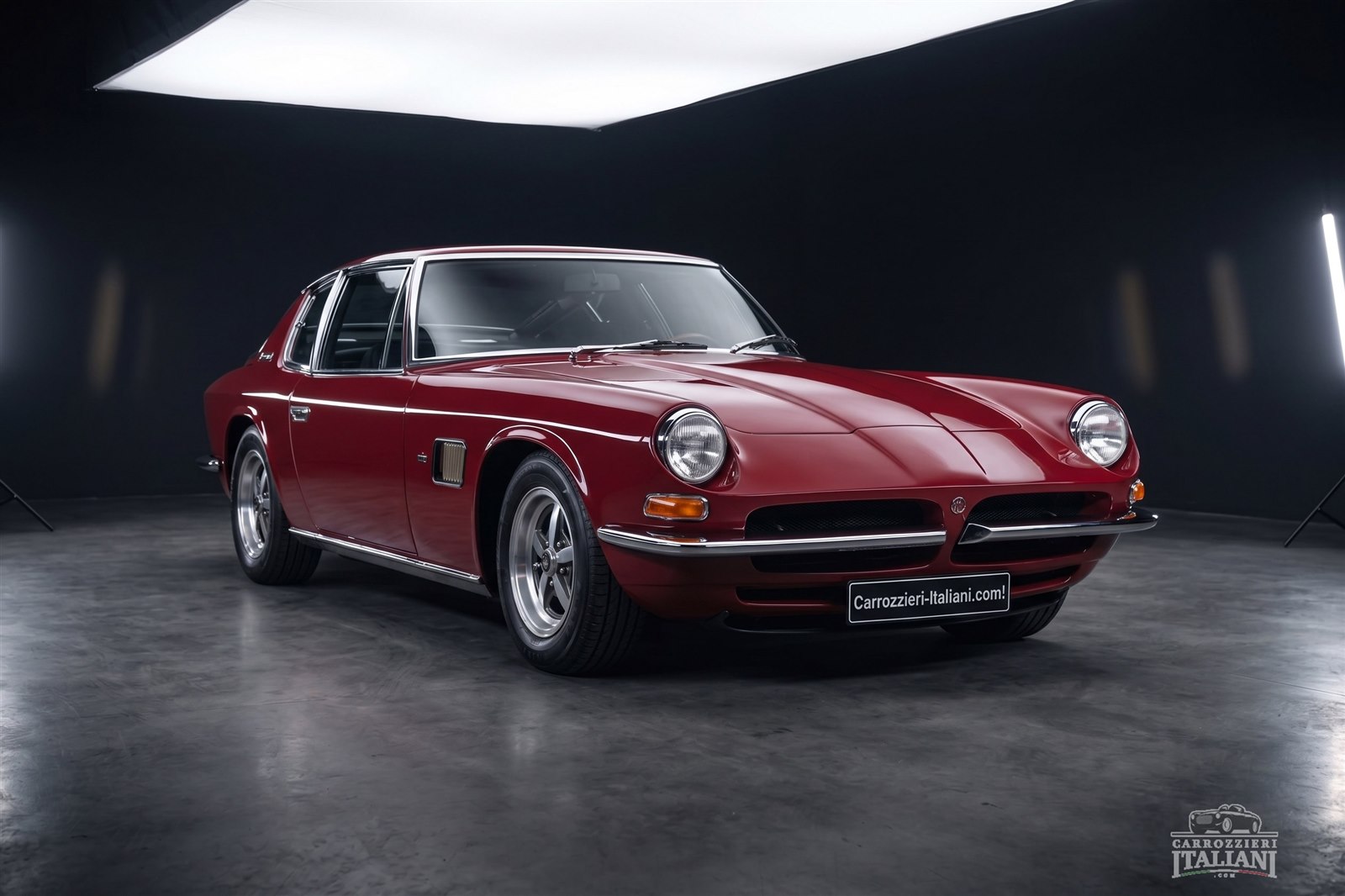
AC wanted the performance of a Cobra without the punishment. Pietro Frua gave it something altogether more sophisticated: one of the most intriguing Anglo-American-Italian grand tourers of the 1960s.
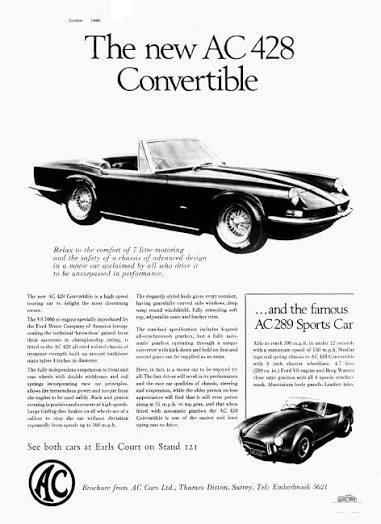
At the 1965 London Motor Show, AC Cars displayed two machines that seemed to belong to different worlds. One was the Cobra, by then already established as one of the decade’s great automotive troublemakers: compact, brutally powerful and forever associated with the unlikely Anglo-American alliance that had turned AC’s delicate sports car into a Ford-powered weapon.
Beside it stood something longer, lower and considerably better mannered.
Underneath, the family connection was unmistakable. The new car still relied on Cobra-derived engineering and had been conceived around a large Ford V8, but its body had been created in Turin by Pietro Frua. Gone was the Cobra’s compact, overtly muscular stance. In its place was a long bonnet, a low glasshouse and the restrained elegance of an Italian grand tourer.
This was not AC trying to make a prettier Cobra. Derek Hurlock, who ran AC with his family from Thames Ditton, had something more ambitious in mind. He wanted a car for the driver who appreciated the tremendous authority of the Cobra’s mechanical package but had no desire to endure its noise, exposure and competition-bred temperament on a journey across Europe.
The result became the AC 428 Frua, although the first cars appeared while AC was still using the 427 designation. It remains one of the most genuinely international grand tourers of its period: a British chassis, American V8 power and an Italian body, assembled through a production process that repeatedly sent cars back and forth between England and Turin.
That complicated journey gave the 428 much of its character. It also helped make the car commercially difficult from the beginning.
Only around eighty examples were ultimately completed, but treating the AC 428 simply as a rare curiosity misses the more interesting story. The programme connected Thames Ditton with one of Turin’s most prolific independent designers, and in doing so produced prototypes, convertibles, fastback coupés and eventually an extraordinary experimental offshoot linked to another Frua client, Monteverdi. The surviving chassis tell that story particularly well.
AC was looking beyond the Cobra
The idea of a more civilised AC predated Pietro Frua. During the early 1960s the company had already experimented with a larger and more comfortable road car. The MA-200 prototype, used by Derek Hurlock, explored the possibility of combining AC mechanicals with a substantial open touring body. It never became the basis of a production model, but it shows that Thames Ditton was already thinking beyond the stripped-back sports-car formula before the Cobra programme reached its most extreme form.
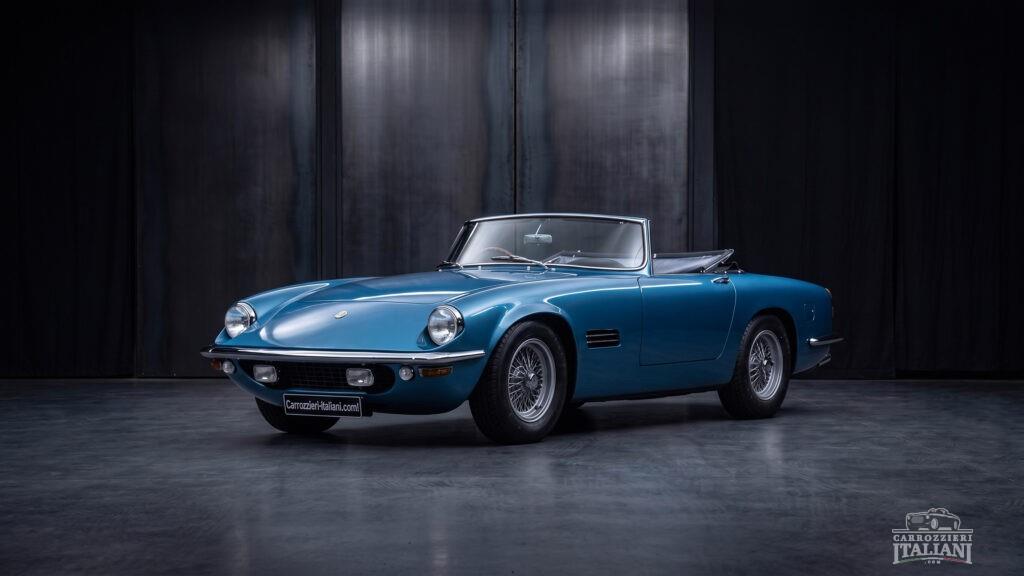
By 1965, however, AC had a much more sophisticated foundation available. The coil-sprung Cobra Mk III chassis represented a major advance over the old Ace platform, with a large-diameter tubular frame, independent suspension, four-wheel disc brakes and enough strength to accept Ford’s FE-series V8 engines. It had been created for a very different purpose, but it also gave AC the expensive engineering basis from which a serious grand tourer could be developed.
The company needed to make greater use of it. Several possibilities were investigated. Bertone was approached but reportedly lacked the capacity for the proposed programme. The eventual Frua connection is generally associated with Hubert Patthey, AC’s Swiss importer and a man with strong contacts in continental motoring circles. By April 1965, AC and Frua had reached an agreement.
The pace that followed seems remarkable today. A Cobra Mk III chassis with its wheelbase extended by six inches—about 152 mm—was sent to Turin in May. By October, the first open prototype was ready to appear at Earls Court. Its chassis number was CF1.
CF1: the car before the 428
Calling CF1 simply an early AC 428 rather understates its importance. It was a development car, and much of what eventually defined the production model was still being worked out.
The longer wheelbase gave Frua the proportions required for a true GT and provided the additional space needed to package the convertible roof. Despite the extra length, the car remained a two-seater rather than becoming a conventional 2+2. Frua used the opportunity to move decisively away from the Cobra’s swollen wheelarches and compact competition-derived shape. Instead, the body relied on a low nose, long bonnet, restrained flanks and a shallow windscreen. The aggression was still there, but it had been stretched and disciplined.
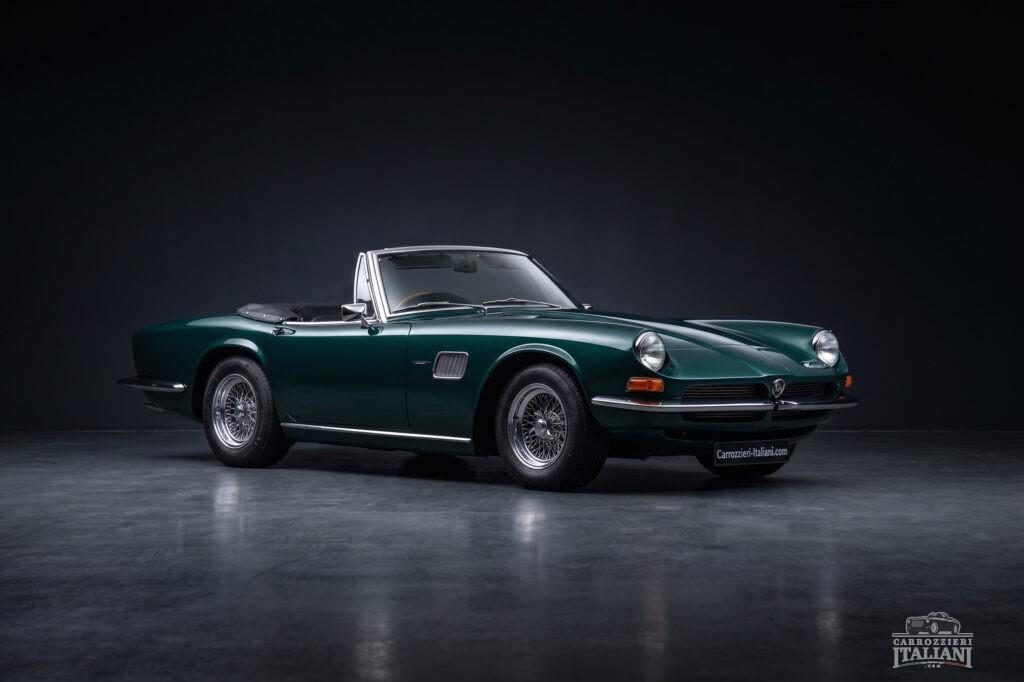
One detail remains unresolved. CF1 is often described as aluminium-bodied, yet other accounts suggest a steel structure with aluminium used only for selected panels. The distinction matters because later production cars were substantially steel-bodied, while aluminium continued to appear on parts such as the bonnet and boot lid. Without definitive period documentation, that conflict is better preserved than artificially resolved.
The mechanical specification also evolved. CF1 has been associated at different points with Ford 390, 427 and eventually 428 FE engines. What is not disputed is that the Frua-bodied car was considerably heavier than a Cobra, and turning the chassis into a refined high-speed touring car required more than fitting an elegant body. Tyres, damping and suspension settings were revised. Cooling became a recurring concern. Ventilation had to improve. The Ford big-block that made the Cobra so effective also generated an enormous amount of heat inside a much more tightly enclosed body.
CF1 therefore became far more than a motor-show exhibit. It was used for development, publicity and press work and later appeared on British television. Its survival makes it one of the most valuable physical documents of the entire AC–Frua programme.
Pietro Frua and the art of developing an idea
The AC 428 is unmistakably a Frua design, but it should not be examined in isolation. Its long nose, compact cabin, slim pillars and fast rear treatment belong to a visual language that Pietro Frua had already been developing on other grand tourers, most notably the Maserati Mistral. The relationship between the two cars is obvious enough that the AC is still occasionally dismissed as little more than a variation on the Mistral theme.
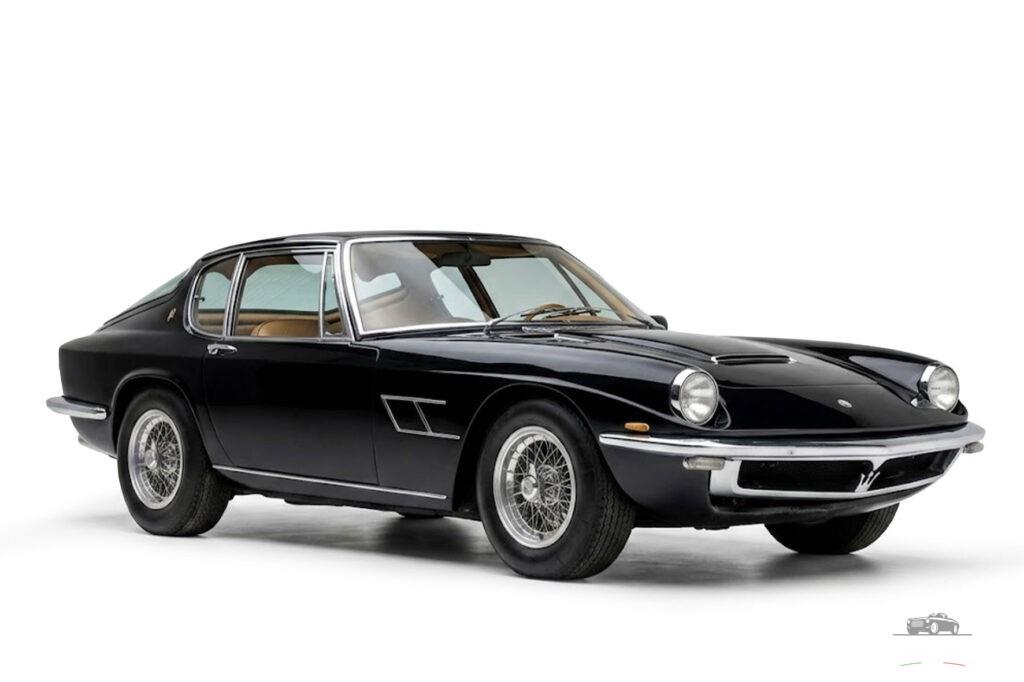
That interpretation overlooks the realities of independent Italian coachbuilding. Frua was not a corporate design department developing one carefully isolated visual identity at a time. He operated a relatively small design and body-building concern that worked for multiple manufacturers, often simultaneously. Successful ideas, glass profiles, detailing solutions and construction methods naturally moved from one programme to another, particularly when different clients were asking for broadly similar grand-touring automobiles.
What matters is how those ideas were adapted. The AC presented a very different problem from the Maserati. Ford’s FE V8 was large, heavy and extraordinarily productive of heat. The underlying chassis had a more muscular character, and the proportions had to accommodate hardware conceived originally for one of the most aggressive sports cars of the era. Frua did not hide all of that. He civilised it.
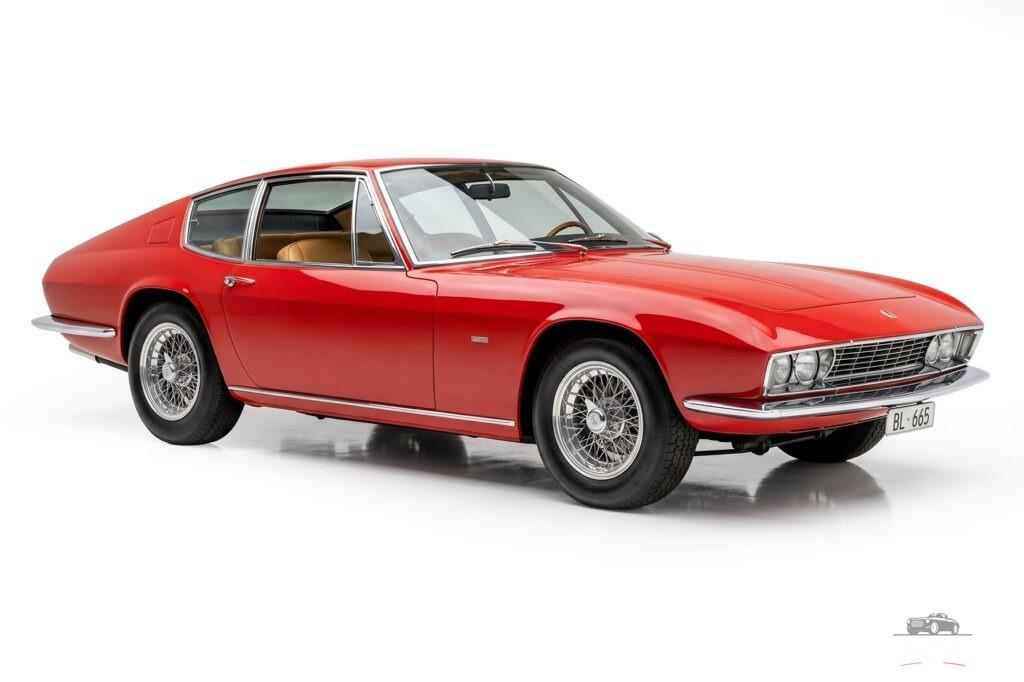
This shared design vocabulary becomes even more fascinating when the Monteverdi High Speed 375 S enters the picture. Across the AC, Maserati and Monteverdi programmes, familiar relationships appear in glasshouses, doors, rooflines, surface breaks and general proportions. They were not copies of one another, but they were clearly products of the same designer and, equally importantly, of the same Turin workshop culture. Seen together, they reveal something larger than a family resemblance. They show how independent Italian coachbuilding actually functioned.
Why the 427 became the 428
The change in the AC’s name was primarily mechanical. Early development was associated with Ford’s 427-cubic-inch FE V8, the formidable engine made famous by the big Cobra. It was also an expensive, competition-oriented unit and not the most logical choice for a luxury road car that AC hoped to manufacture in small but meaningful numbers.
Ford’s 428 FE was better suited to the role. It offered broadly similar displacement and immense low-speed torque in a more road-oriented specification. Once AC standardised around it, the car acquired the name under which it would become known: 428.
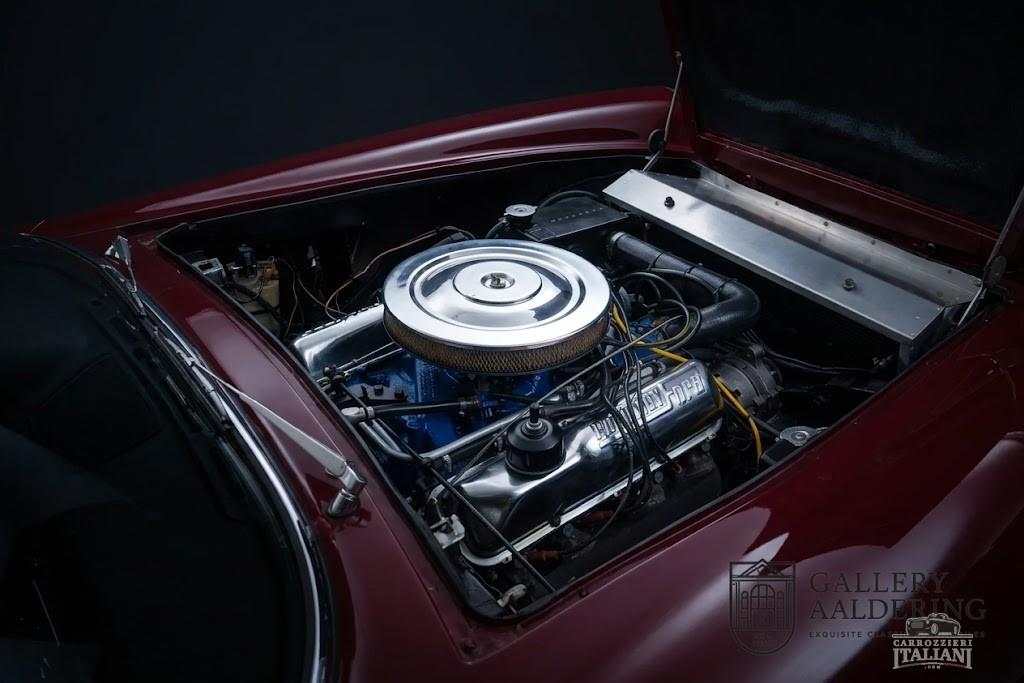
Output is generally quoted at around 345 bhp, with power transmitted through either a four-speed manual gearbox or, far more commonly, a three-speed automatic. Contemporary figures vary considerably, as they often do with low-volume cars, but the performance was beyond question. Depending on specification and source, maximum speed was generally placed somewhere in the 140–150 mph region. That made the AC an exceptionally fast grand tourer by late-1960s standards.
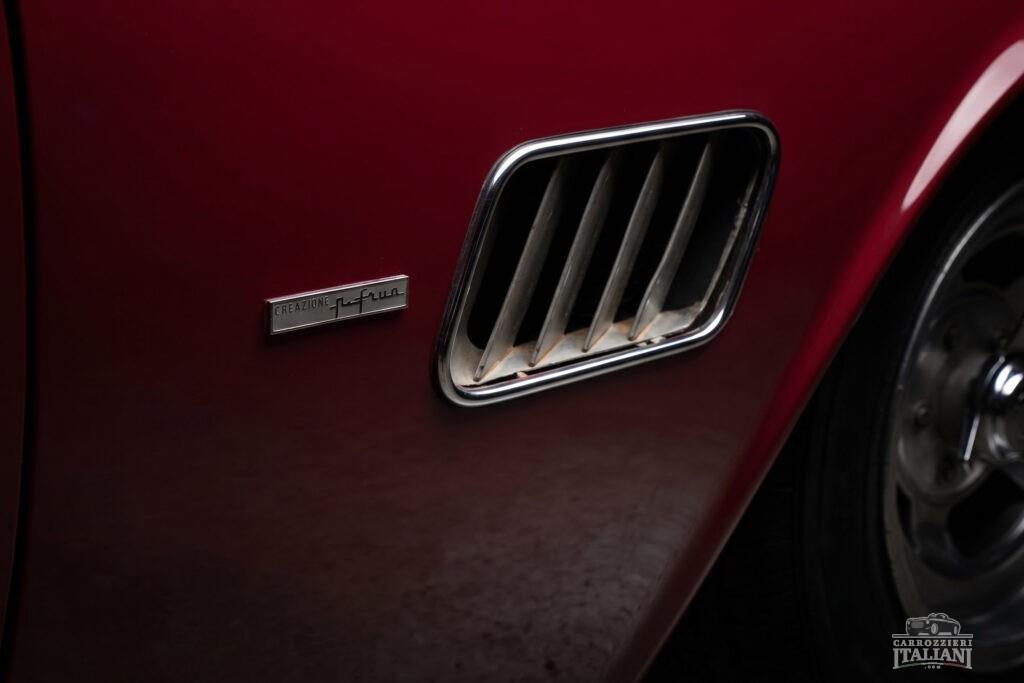
The engineering underneath remained closely related to the Cobra, with independent suspension on all four corners, coil springs, rack-and-pinion steering and four-wheel disc brakes. Yet production cars were progressively adapted to their new role. Competition-oriented suspension joints were replaced with more road-friendly solutions, cooling systems evolved and ventilation openings appeared behind the front wheels to help extract heat from the engine compartment. Those changes matter because they expose the weakness of describing the 428 as merely a rebodied Cobra. A new body was only the beginning. AC had to turn the Cobra’s engineering into a fundamentally different kind of automobile.
Built on a railway between England and Italy
The manufacturing process was wonderfully romantic and almost perfectly designed to cause accountants distress.
AC produced the rolling chassis at Thames Ditton. From there it travelled to Italy—generally by rail—where the body was constructed and fitted under Frua’s direction. Turin-area specialists were involved in the process, and later accounts identify ILCA and Maggiora in Moncalieri among the important production partners. The partly completed car then had to return to England for final assembly, mechanical installation, trimming, painting and preparation.
In other words, geography was part of the production line.
For very small volumes the arrangement made a certain kind of sense. Frua’s craftsmanship and Italian styling were precisely what AC wanted to sell. Yet every additional transport stage, every hour of hand labour and every piece of bodywork requiring adjustment also increased the cost. That became particularly problematic because the 428 was competing with cars from Aston Martin, Ferrari, Maserati and Jensen, companies whose own production methods were becoming steadily more sophisticated.
There were technical challenges as well. A largely steel body introduced obvious corrosion concerns, while containing the heat of the enormous Ford engine proved difficult. High engine-oil temperatures and cabin heat became recurring themes in period reports and later ownership accounts. None of this means the AC 428 was fundamentally flawed. It means that transforming such a car into a finished, repeatable product required more work than its elegant shape suggested.
Derek Hurlock understood exactly what he wanted: an extremely fast, luxurious touring car produced by a small manufacturer capable of treating individual cars as individual cars. The problem was that the economics of the motor industry were moving steadily away from that model.
CF3: when development became production
Chassis CF3 illustrates how blurred the line between prototype and production could be at a manufacturer the size of AC. Built as a convertible and first registered on 1 March 1967 as PPL 428E, CF3 appears in AC workshop records as a prototype. It was used extensively by Derek Hurlock as well as AC sales and service manager K. R. Judd, while surviving correspondence describes it as the first convertible using the steel-bodied construction method later adopted for production cars.
Its job did not end once engineering development was complete. CF3 appeared in brochures and advertising, served as a demonstrator and publicity car, and was reportedly flown to France for a BP promotional film. For a small company, there was little reason to separate these functions when one useful automobile could perform all of them.
The car later entered private ownership, travelled to the United States during the 1980s and was eventually restored. If CF1 established the visual and conceptual formula, CF3 helped demonstrate that the idea could become something AC could actually build and sell.
The fastback completes the shape
The convertible appeared first, but the fastback gave the AC Frua its most convincing grand-touring form. Its public debut is variously associated with the 1967 Geneva and Turin motor-show season, depending on the source and the particular chassis being discussed. What is certain is that the fixed roof transformed the car’s proportions.
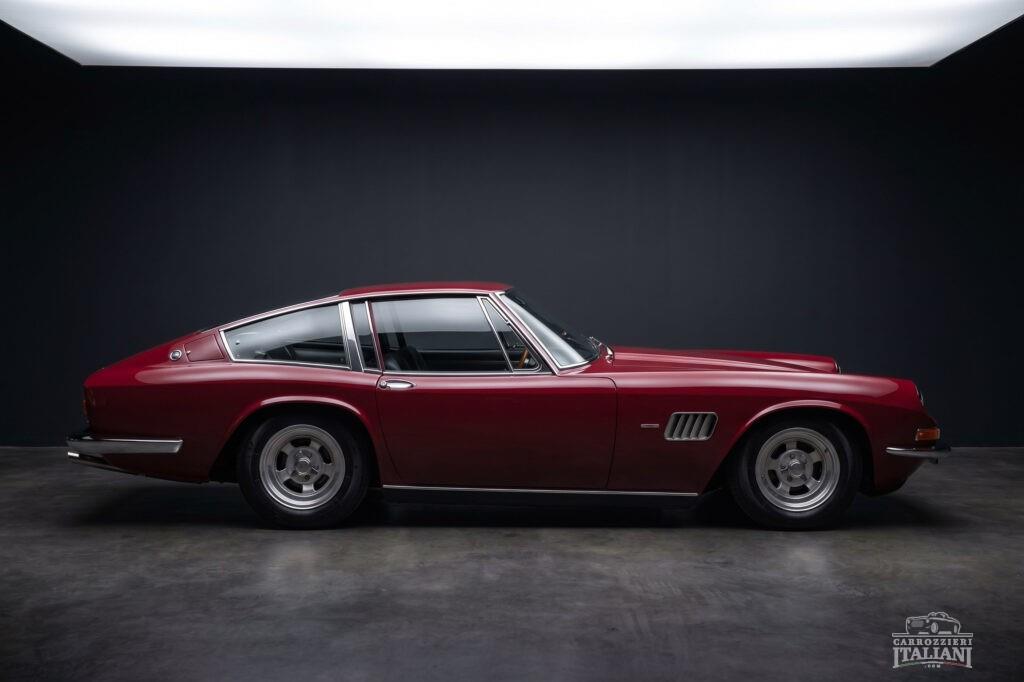
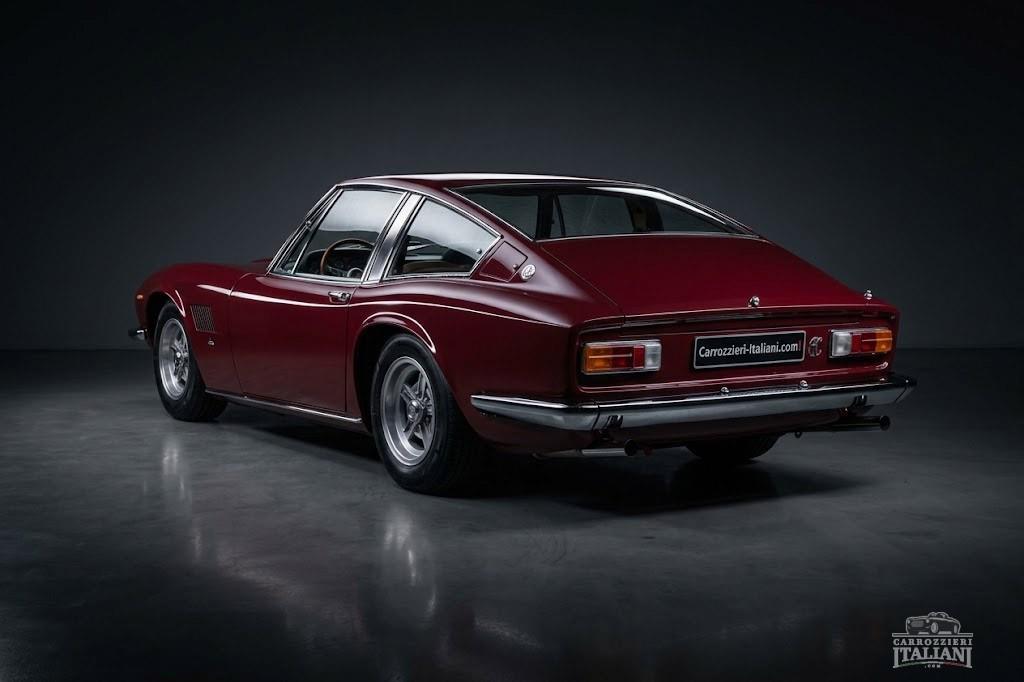
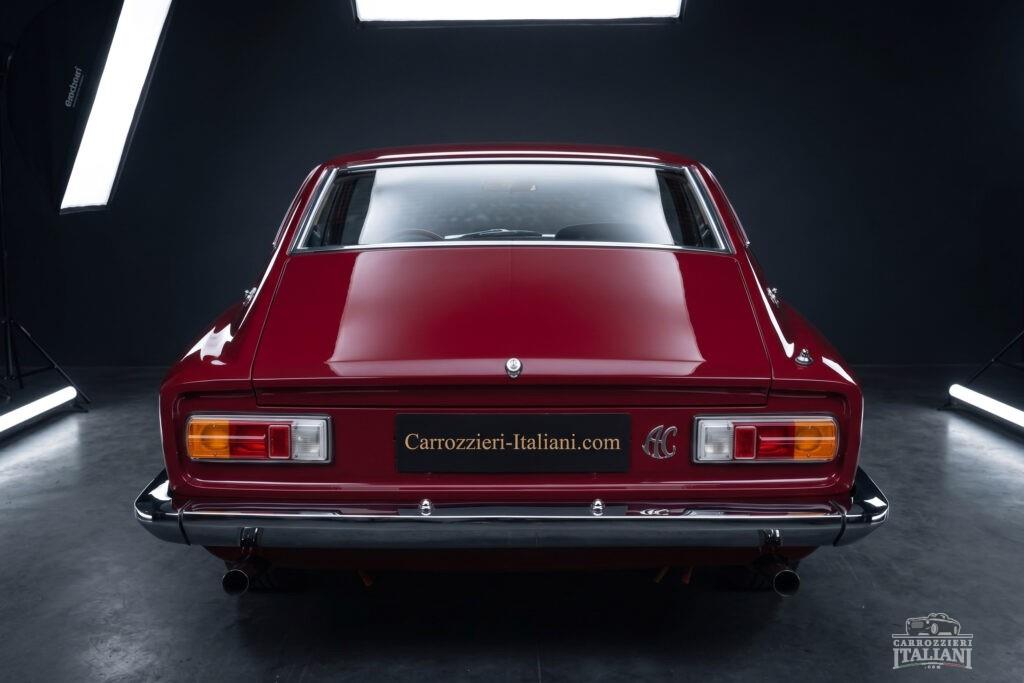
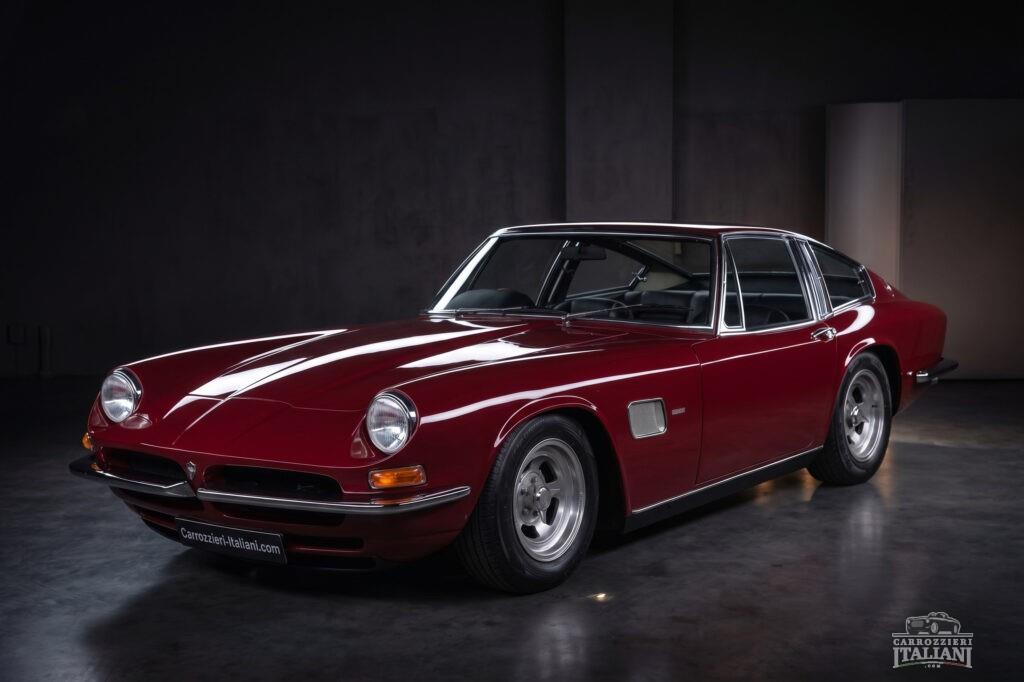
The bonnet remained dramatically long, but the roof and rear glass now flowed toward the tail in one continuous line. The resemblance to other Frua projects became stronger, particularly the Mistral and later Monteverdi designs, yet the large Cobra-derived chassis gave the AC a visual mass of its own. As a coupé, the 428 occupied an unusual space between sports car and luxury express. It looked expensive without relying on decoration and appeared far more discreet than the violence of its mechanical ancestry might suggest.
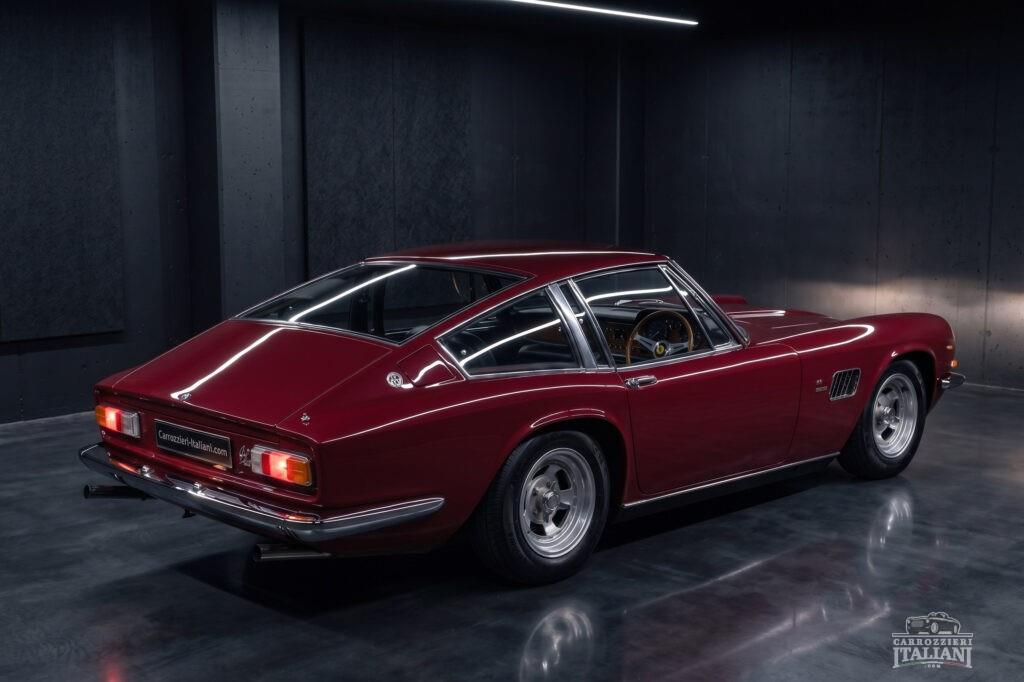
Exactly how many were built remains open to interpretation. One frequently quoted breakdown gives 51 fastback coupés and 30 convertibles, producing a total of 81. Other sources instead list 49 coupés, 29 convertibles and three special-bodied cars. The overall figure of approximately 81 appears considerably more stable than the division between variants.
That uncertainty is not unusual in the world of small-series coachbuilt automobiles. Prototypes were modified, bodies were changed and individual cars could be counted differently depending on whether a source was documenting chassis numbers, completed customer cars or conventional production derivatives. This is where individual chassis histories become more useful than a single production statistic.
CF14 and the grand-touring clientele
CF14 shows exactly the kind of buyer the 428 could attract. The convertible was originally owned by Rob Walker, the celebrated British private entrant whose racing team famously achieved Grand Prix victories with Stirling Moss against factory opposition. Walker belonged to a period when wealthy private teams could still compete at the highest level of international motorsport, but his ownership of an AC 428 is interesting for another reason. He knew what a genuinely fast car felt like.
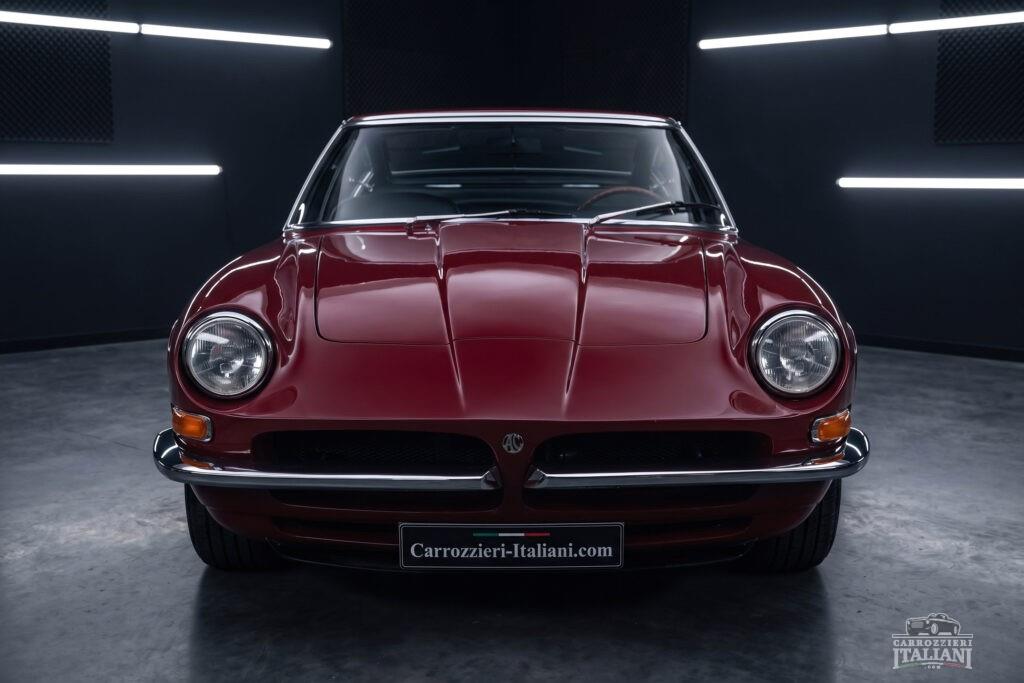
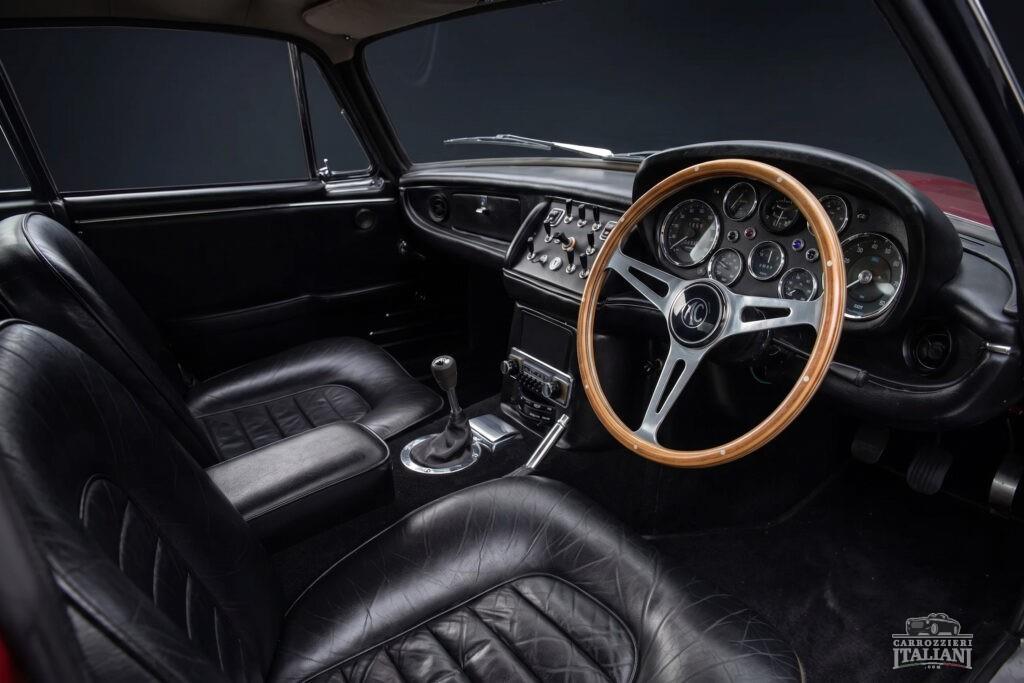
The 428 offered a very different interpretation of speed from the Cobra. It could deliver tremendous performance without demanding constant involvement from its driver, and the automatic gearbox fitted to many examples was entirely appropriate to that character. The Ford V8 possessed enough torque that frequent gear-changing was unnecessary.
A four-speed manual might appeal more strongly to modern enthusiasts, but the automatic arguably expressed Hurlock’s original brief more faithfully. This was intended to be a car in which serious distances could be covered quickly and without drama. CF14 later passed to Adrian McAlpine, another member of a major British industrial family, before eventually reaching the United States. Its provenance reinforces the point. The AC Frua was not aimed at somebody looking for the maximum amount of performance for the minimum degree of restraint. It was intended for a customer who understood performance and no longer needed to advertise it.
When collectors began to look again
For many years, the AC 428 sat in an awkward corner of the collector-car market. It was too rare to enjoy the instant recognition of an Aston Martin DB6, too civilised to be embraced simply as another Cobra derivative and too British-American mechanically to fit comfortably into the usual narrative surrounding Italian-bodied GTs. That gradually changed.
Chassis CF31 provides one useful reference point. The 1969 drophead, fitted with engine 7L0906, was completed on 31 January 1969 in Live Oak over black and later sold at RM Sotheby’s London auction in 2011 for £140,000. Documentation accompanying the car recorded its consignment through Mike Spence Ltd and subsequent sale through H. R. Owen.
Even more interesting than the auction result was the continuity of its history. An AA inspection carried out in 1976 recorded 17,810 miles, followed by decades of invoices from AC and later Autokraft. By 2010, the indicated mileage stood only a little above 30,000. That kind of documentation is particularly valuable on a largely hand-built automobile. Restoration can easily homogenise cars that left the factory with numerous small differences in trim, cooling arrangements, panel fit and other details.
By the beginning of the 2010s, the 428 was increasingly being treated as a significant grand tourer in its own right rather than as an exotic footnote to the Cobra story.
CF41, CF64 and the value of imperfect cars
An important car does not have to be a concours restoration. CF41, a 1969 coupé formerly associated with the Haynes Motor Museum collection, later appeared on the market after passing through only a small number of private owners. Its appeal lay as much in completeness and provenance as in cosmetic condition.
CF64 makes the point even more clearly. The 1971 coupé, fitted with engine 1126 RSKR, was offered by Bonhams at the Goodwood Revival sale in September 2022 after a long period in storage. It required recommissioning, yet still sold for £128,800. That result was significant not simply because of the price but because collectors were prepared to value the identity of an individual AC Frua even when it was not presented as a finished show car.
Another coupé, CFX28, has similarly circulated with a traceable chassis identity useful for reconstructing later production. This increasingly chassis-focused approach is important for the model. Transmission, steering position, originality, colour history, restoration quality and individual modifications can create substantial differences between cars that otherwise appear identical in a production table. The 428 has gradually stopped being “one of about eighty”. Individual cars have started to matter.
The Monteverdi connection
Then the story becomes considerably stranger. Peter Monteverdi had also employed Pietro Frua, commissioning him to design the High Speed 375 S and subsequently a larger 375 L. Their relationship eventually deteriorated amid disagreements concerning cost, production and rights.
One incomplete long-wheelbase Frua body associated with the Monteverdi programme remained available. AC acquired the basis of that project and turned it into what is generally known as the AC 429, or AC 7-Litre Saloon, associated with chassis 2002.
This was not merely another AC 428 with altered styling. The car pursued greater four-seat practicality and involved significant mechanical changes, including revisions to the rear suspension and steering. Development continued into the early 1970s, but the proposed successor never became a normal production model. Historically, however, it is enormously revealing.
The physical connection between Monteverdi and AC demonstrates that the similarity among different Frua designs was not simply the result of a designer returning to familiar shapes. In the world of low-volume Italian coachbuilding, body engineering, construction ideas, tooling and even project material could move between manufacturers when business relationships changed. The 429 makes that usually invisible economy tangible. Something conceived for a Swiss manufacturer could become the starting point for an experimental British grand tourer.
It is also one of the reasons why the AC, Maserati and Monteverdi chapters of Frua’s career make more sense when studied together than when treated as isolated marques. Frua’s workshop was the connecting thread.
The afterlife of the AC–Frua idea
The end of regular 428 production did not immediately end experimentation. Frua later developed an updated open AC with concealed headlamps and substantially revised rear styling, often referred to as the Spider II. It did not enter series production during the original life of the 428, although a running version was eventually completed around 1981–82 and used by Derek Hurlock.
Another surviving chassis, CFX32, went in an entirely different direction when it later became the basis of a unique spider created by Luigi Colani during the 1980s.
Neither should be casually included in the original production totals. They belong instead to the afterlife of the platform, when the rarity and adaptability of unused or surviving AC chassis made them attractive foundations for new design experiments. The same distinction applies to the 429. It was an experimental successor, not simply another catalogue body style. These footnotes matter because they demonstrate how long the underlying idea remained interesting even after the original commercial programme had disappeared.
Why the AC 428 disappeared
There was no single dramatic event that killed the AC 428. Instead, the programme was gradually squeezed from several directions.
The international production route had always been expensive. Labour disputes in Italy could interrupt the delivery of bodies. Hand-finished steel panels required time and adjustment. Ford’s engine supply evolved. The United States became increasingly difficult for small manufacturers as emissions and safety requirements tightened. Then the 1973 oil crisis arrived.
A hand-built seven-litre grand tourer assembled through a production chain stretching from England to Italy suddenly seemed particularly vulnerable. AC lacked the resources of a major manufacturer to redesign the car comprehensively for the new environment, and production simply faded away after roughly eighty examples.
The frustrating part is that the underlying concept had worked. The AC 428 genuinely transformed Cobra-derived engineering into a refined, extremely fast grand tourer. What AC and Frua could not transform was the economics of building such a car in tiny numbers across two countries.
That contradiction places the 428 very close to the end of the classic European coachbuilding era. It existed because a small British manufacturer could send a chassis to an independent Turin designer and receive back an automobile unlike anything AC could have created in its own body shop. It disappeared because the industrial world that made such a process possible was becoming increasingly difficult to sustain.
More than a Cobra in an Italian suit
The AC 428 is frequently summarised through nationality: British chassis, American engine, Italian body. All three descriptions are correct, but together they can make the car sound more accidental than it really was.
There was a coherent idea behind it. Derek Hurlock defined the programme as a grand tourer. AC lengthened and adapted the Cobra-derived chassis for that purpose. Ford provided the effortless torque required for very high-speed touring. Pietro Frua changed the social character of the machine by wrapping those mechanical ingredients in a body that looked entirely at home outside a hotel in Geneva, Turin or Monaco.
The production method was cumbersome, but it joined those ingredients into a genuine small-series automobile rather than a styling exercise.
Looking at the surviving chassis makes the achievement easier to appreciate. CF1 records the first experiment. CF3 documents the transition from prototype to production. CF14 ties the model to Rob Walker and the world of post-war motor racing. CF31 preserves an unusually continuous ownership and maintenance history. CF41 and CF64 demonstrate how important unrestored and incomplete survivors can be to historical research. And the AC 429 reveals the extraordinary overlap between AC and Monteverdi within Pietro Frua’s orbit.
None of those stories is well served by the familiar description of the car as a “Cobra with a Mistral body”.
The 428 was something considerably more ambitious: AC’s attempt to establish itself as a maker of expensive continental grand tourers, cars for the sort of buyer who might otherwise have considered an Aston Martin, Maserati or Ferrari. It never sold in enough numbers to change the future of the company.
Yet for several remarkable years, a railway route between Thames Ditton and Turin formed part of the production line for one of the most fascinating GTs of the coachbuilt era.

ABOUT THE AUTHOR
Andreas Scheidl
Italian classic car enthusiast with German roots. Renowned as a respected figure in the classic car community, he serves as a jury member at various international concours d'elegance, including the Classic Gala Schwetzingen and Mantova. As a content creator, Andreas passionately shares his profound knowledge and appreciation for vintage automobiles. His heart beats for cars designed by Giovanni Michelotti, showcasing his discerning taste and dedication to preserving the timeless elegance of automotive history.
More stories by Andreas Scheidl ↗CONTINUE READING
Posts You Might Like

A Central Driving Position, a Rear-Mounted V8. Was This Really a Lancia?
In 1948, visitors to the Turin Motor Show could see an unusual Lancia on the stand of Carrozzeria Ghia. It was a large two-door coupé with a two-litre V8 mounted behind the…
Read story
Fioravanti F100: The Ferrari He Was Allowed to Imagine
Enzo Ferrari’s centenary, Leonardo Fioravanti’s independent studio and a supercar that explored air brakes, steel wheels and a new way of driving—without ever wearing the Cavallino.
Read story
Michelotti Shellette: When the Fiat 850 Became a Yacht
The yacht designer, the Turin stylist and the tiny coachbuilt car that crossed between the quay, the royal holiday house and the auction room. Some automobiles were conceived for the open road,…
Read story
Maserati A6 1500: A New Road for the Trident
When the doors of the Geneva Motor Show opened in March 1947, Maserati was a name that required little introduction to anyone who followed motor racing. What it did not yet possess…
Read story
THE CONVERSATION
Comments 0
Share a memory, a period photograph or a documented detail about this story.