
THE VEHICLE AT A GLANCE
Model dossier
- Manufacturer
- SEAT
- Base model
- Ibiza II
- Version
- Second-generation series hatchback on VW Polo floorpan; Italdesign design programme
- Production period
- 1993
- Body style
- Hatchback
- Type
- Mass
THE PEOPLE BEHIND THE CAR
Coachbuilding, design & conversions

PRICE & SALES RECORD
Vehicle value
- Original price
- Not documented
- Latest recorded sale
- Not documented
01 / THE STORY
History & context
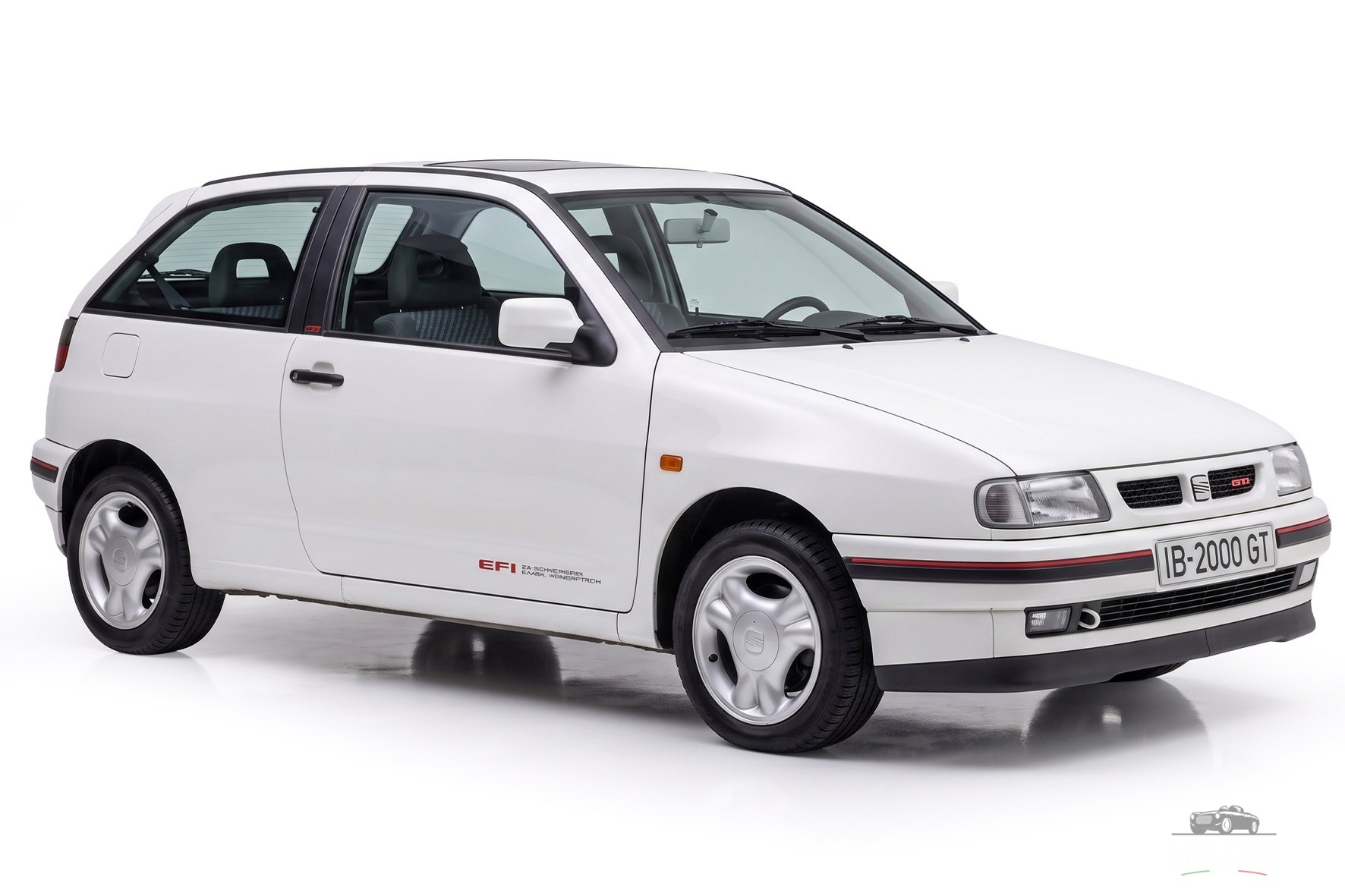
The 1993 Seat Ibiza, designed once again by the legendary Giorgetto Giugiaro at Italdesign, marked the debut of the second generation of this popular compact car. Introduced to the public in May 1993, the new Ibiza featured a design that was a noticeable departure from its predecessor. With softer, more rounded lines, it presented a more modern and refined aesthetic, moving away from the sharper, more angular forms of the first-generation model. This design evolution was paired with the latest generation of engines derived from the Volkswagen Golf, offering power outputs of up to 150 horsepower, bringing a new level of performance to the compact hatchback. The second-generation Ibiza saw significant changes in its dimensions, most notably an increase in overall size, offering more interior space for both passengers and cargo. However, the wheelbase was reduced compared to the previous generation, which affected the car’s handling characteristics and agility. Built on the Volkswagen A03 platform, which also underpinned other vehicles like the third-generation Volkswagen Polo, the Ibiza benefited from Volkswagen’s engineering expertise. The platform shared by the Ibiza and the Polo led to common features between the two models, including the “Playa” version marketed in South America and the SEAT Inca vans, which shared the same front end. The second-generation Ibiza also gave rise to several derivatives, expanding the model lineup. Among these was the 3-volume version, the Seat Córdoba, which replaced the earlier Seat Malaga. The Córdoba continued the Ibiza’s success story by offering a more traditional sedan option. Additionally, the Ibiza platform was used for the station wagon version, the Córdoba Vario, closely related to the Polo Variant. These variants provided further choices for customers looking for practicality and versatility in a compact vehicle. Overall, the 1993 Seat Ibiza was a crucial development for SEAT, combining Giugiaro’s design expertise with advanced engineering and modern features. It successfully expanded the Ibiza range and helped solidify SEAT’s position in the competitive compact car market.
02 / TECHNICAL IDENTITY
Specifications & construction
Production & construction
- Production type
- Mass
Engine & performance
- Drive
- Front-wheel drive
- Specification notes
- 1993 Ibiza II (6K1) invariant hatchback baseline: FWD, wheelbase 2440 mm, dimensions 3813 × 1640 × 1408 mm. Engine, gearbox and weight remain version-level.
Dimensions & accommodation
- Wheelbase
- 2,440 mm
- Length
- 3,813 mm
- Width
- 1,640 mm
- Height
- 1,408 mm
03 / DESIGN, BODY & SUPPLIERS
Design, body & suppliers
Design & manufacture
- Design Studio · Documented
- Italdesign
- Manufacturer · Documented
- SEAT
Body form & construction
- Body style
- Hatchback
04 / EVENTS & CHRONOLOGY
Events & awards
No events or documented awards are currently recorded for this vehicle.
08 / GALLERY
Photo gallery
No publishable photographs are currently catalogued for this vehicle.
09 / PERIOD ARCHIVE
Period photographs & advertising
The period archive gallery will show historical photographs, advertisements, brochures and press images once assets, provenance and usage rights have been recorded in the masterfile.
THE CONVERSATION
Comments 0
Share a memory, a period photograph or a documented detail about this car.