
THE PEOPLE BEHIND THE CAR
Coachbuilding, design & conversions

PRICE & SALES RECORD
Vehicle value
- Original price
- Not documented
- Latest recorded sale
- Not documented
01 / THE STORY
History & context
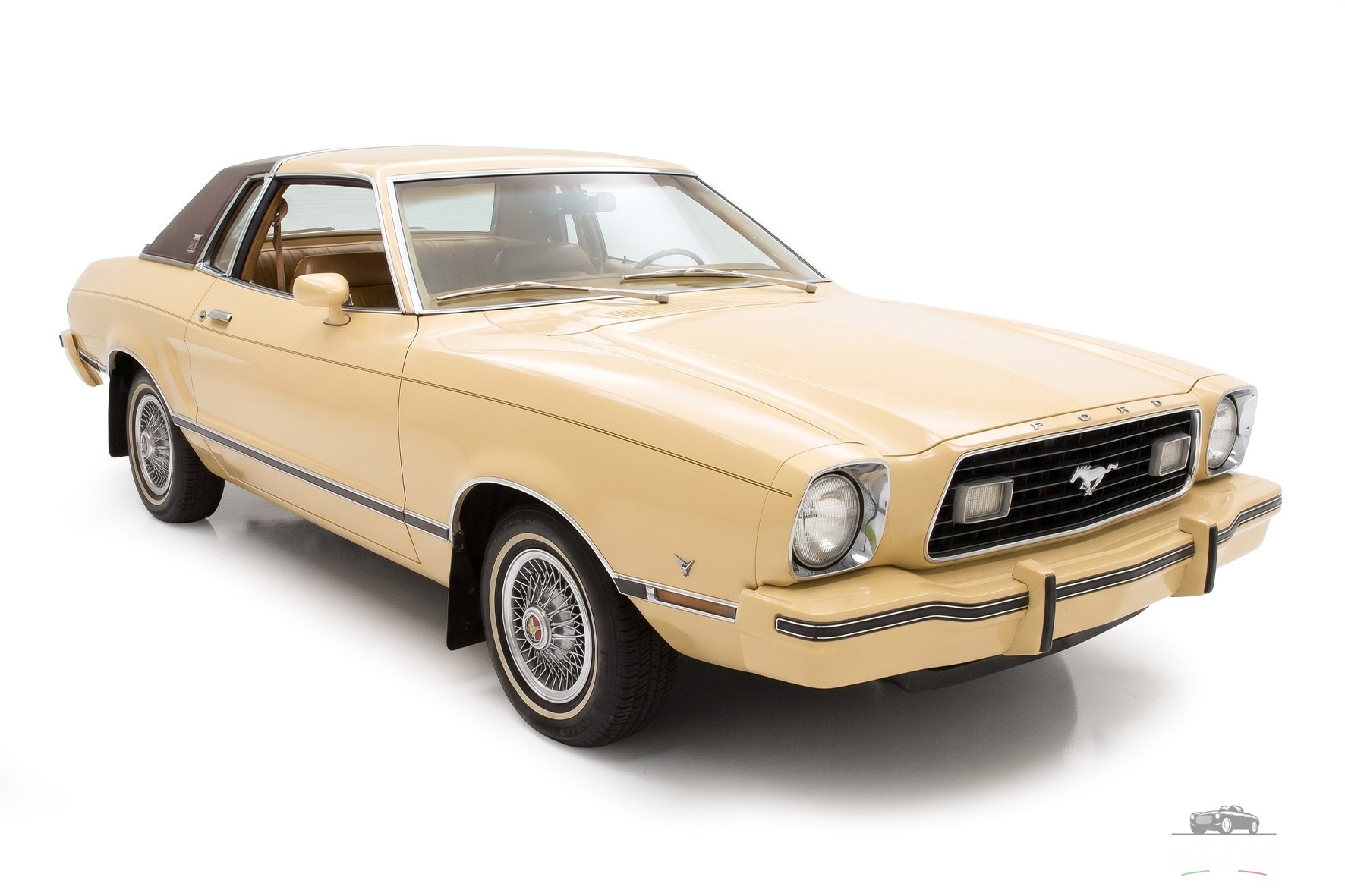
The Ford Mustang II Ghia was a trim level offered on the second generation of the Ford Mustang, produced from 1974 through 1978. The model emerged during a transitional period in the American automotive industry, characterized by tightening emissions regulations, economic instability, and shifting consumer expectations. The Mustang II, including the Ghia variant, was developed in response to these pressures, replacing the original Mustang’s performance-oriented character with a focus on compact dimensions, improved fuel economy, and increased comfort. The Ghia trim derived its name from Carrozzeria Ghia, Ford’s Italian design subsidiary, and was positioned as the most luxurious specification within the Mustang II lineup. Externally, it featured distinctive elements such as a padded vinyl roof, opera windows, and enhanced brightwork. These additions signaled a shift in design priorities, with an emphasis on perceived sophistication rather than sportiness. The Mustang II Ghia was configured as either a notchback coupe or a three-door hatchback, both utilizing the same shortened platform adapted from the Ford Pinto. Powertrain offerings for the Ghia variant reflected the constraints of the era. Standard configurations included a 2.3-liter inline-four engine, with optional upgrades to a 2.8-liter V6 or a 5.0-liter V8 in later production years. Despite the V8 option, performance remained restrained, governed by emissions controls and consumer interest in efficiency over acceleration. Available transmissions included a four-speed manual and a three-speed automatic, with suspension tuning favoring ride quality over handling precision. The interior treatment of the Ghia focused on material richness and convenience features. Upholstery options included velour and leatherette, accompanied by simulated woodgrain trim and expanded instrumentation. The cabin was intended to provide a refined atmosphere within the context of a compact footprint, catering to drivers who prioritized comfort and appearance over dynamic engagement. Though it departed from the Mustang’s original design philosophy, the Mustang II Ghia represented a strategic adaptation to the market forces of the mid-1970s. Its significance lies not in innovation or performance, but in its embodiment of an industry’s response to crisis and its role in sustaining the Mustang nameplate during a period of considerable transformation.
IN THE ARCHIVE
Coachbuilders & design studios
02 / TECHNICAL IDENTITY
Specifications & construction
Production & construction
- Production type
- Mass
- Mechanical platform
- Ford Mustang II
Engine & performance
- Specification notes
- MODEL-YEAR / TECH GUARD — Ford's 1974 Mustang II documentation is dated 28 August 1973. Preserve canonical 1973 as presentation/documentation chronology while treating the Ghia as a 1974 model-year derivative. Ford Mustang II is the platform/model basis; Ghia is a Ford trim, not a coachbuilt body. No single engine specification is projected across the trim.
Design & manufacture
- Coachbuilder / Body Builder · Documented
- Ghia
- Manufacturer · Documented
- Ford
06 / EVENTS & AWARDS
Events & awards
No events or documented awards are currently recorded for this vehicle.
07 / THE VEHICLE IN DETAIL
Photo gallery
No publishable photographs are currently catalogued for this vehicle.
08 / FROM THE ARCHIVE
Archive
References held in the vehicle dossier. Their inclusion does not establish that every historical claim has been independently verified.
| Reference | Source type |
|---|---|
| Ford — 1974 Mustang II data/brochure media.ford.com | Manufacturer period document |
| 1974 Mustang II Ghia model reference mustangii.co.uk | Marque specialist reference |

THE CONVERSATION
Comments 0
Share a memory, a period photograph or a documented detail about this car.