
THE VEHICLE AT A GLANCE
Model dossier
- Production period
- 2004
- Body style
- MPV
- Engine
- Inline-4
- Type
- Concept
THE PEOPLE BEHIND THE CAR
Coachbuilding, design & conversions
PRICE & SALES RECORD
Vehicle value
- Original price
- Not documented
- Latest recorded sale
- Not documented
01 / THE STORY
History & context
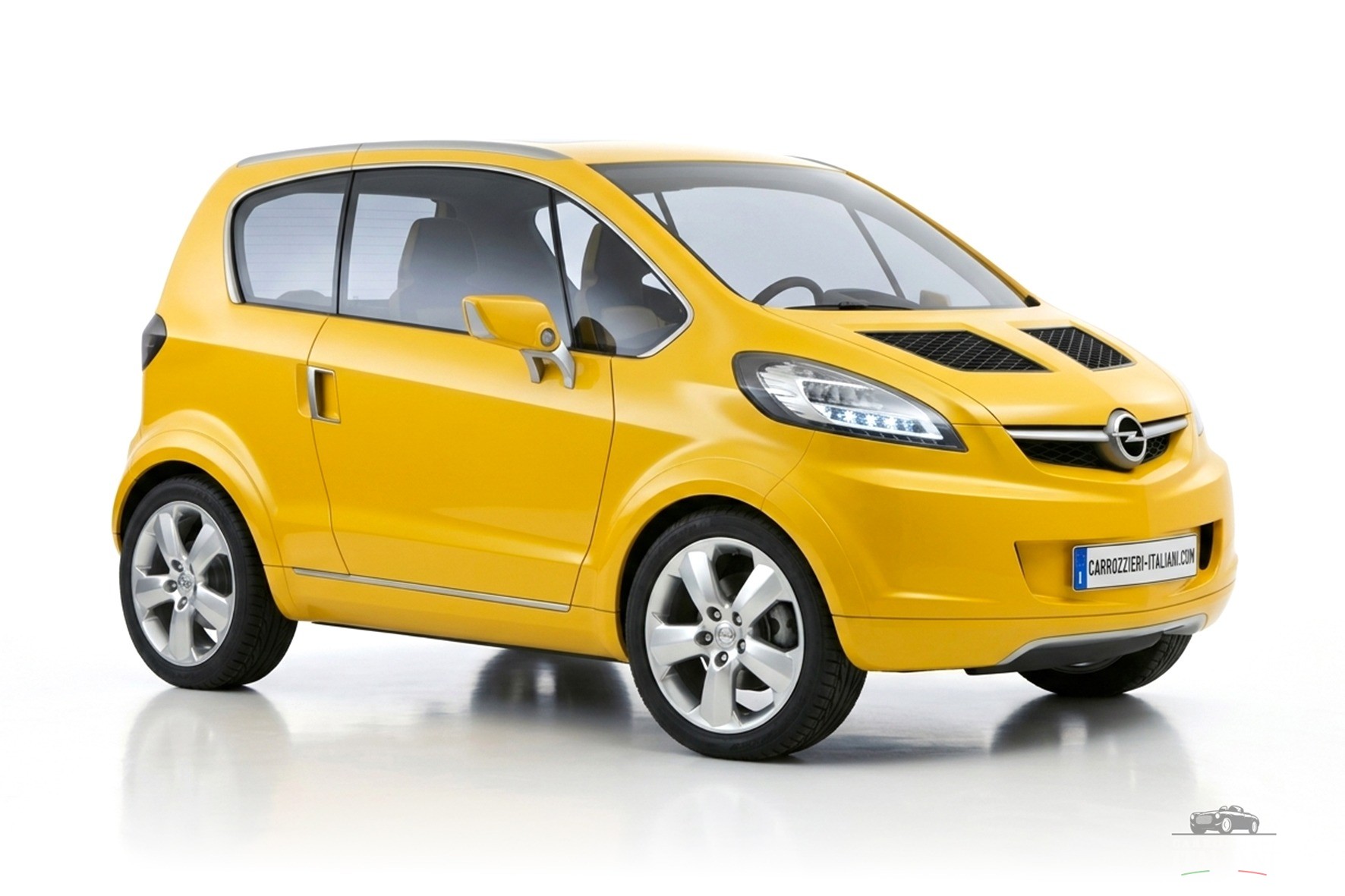
The Opel Trixx, unveiled at the 2004 Geneva Motor Show, was an innovative ultra-compact concept car built and assembled by Italian coachbuilder Coggiola. However, it was designed in-house by Opel. The Trixx was Opel’s response to the growing demand for city-friendly vehicles, aimed at demonstrating how much versatility and practicality could be packed into a car just 3 meters long. Its design showcased Opel’s focus on maximizing space and functionality for urban mobility. This small car was remarkably versatile and spacious for its size. It could accommodate up to three adults and one child or be configured for just the driver, with ample room for cargo. One of the Trixx’s standout features was its three electric pantograph doors—two on the passenger side and one on the driver’s side—designed for easy access to both the cabin and the trunk, simplifying the loading of passengers and large items. Opel also incorporated several clever space-saving solutions, such as an inflatable rear seat, a removable front passenger seat, and a roof hatch that opened at the touch of a button, allowing the transport of tall objects vertically. Additionally, the trunk was mounted on rails and could slide backward like a drawer, making it easier to load heavy or bulky items. The Trixx was powered by a 1.3-liter turbodiesel common-rail engine with 70 horsepower, the same engine used in the Opel Corsa and Agila. According to Martin Smith, Opel’s executive director of design at the time, the Trixx illustrated the company’s vision of a compact car with maximum functionality. Measuring 3.04 meters in length, 1.66 meters in width, and 1.57 meters in height, the Trixx’s flexible interior allowed it to offer 890 liters of cargo space, enough to transport large items like bicycles or scooters without disassembly. Additional features included foldable seats that could create more space, an onboard compressor to inflate or deflate the rear seat, and pantograph doors that opened parallel to the car, facilitating the loading of bulky items. The Trixx’s straight lines, flared wheel arches, and elevated hood reflected Opel’s design language of the era, making it a forward-thinking, functional city car concept.
IN THE ARCHIVE
Coachbuilders & design studios
02 / TECHNICAL IDENTITY
Specifications & construction
Production & construction
- Production type
- Concept
Engine & performance
- Engine configuration
- Inline-4
Dimensions & accommodation
- Length
- 3,040 mm
- Width
- 1,660 mm
- Height
- 1,570 mm
Design & manufacture
- Coachbuilder / Body Builder · Documented
- Coggiola
- Manufacturer · Documented
- Opel
- Designer · Candidate
- Martin Smith
06 / EVENTS & AWARDS
Events & awards
No events or documented awards are currently recorded for this vehicle.
07 / THE VEHICLE IN DETAIL
Photo gallery 5 photographs
08 / FROM THE ARCHIVE
Archive
References held in the vehicle dossier. Their inclusion does not establish that every historical claim has been independently verified.
| Reference | Source type |
|---|---|
| Opel / Stellantis Media — Opel TRIXX, intelligente e versatile city-car www.media.stellantis.com | Manufacturer official history |
| Opel Automobile GmbH — TRIXX 2004 press release www.presseportal.de | Manufacturer period press release |

THE CONVERSATION
Comments 0
Share a memory, a period photograph or a documented detail about this car.