
Maserati 3500 GT: The Tipo 101 and Its Coachbuilt Variants
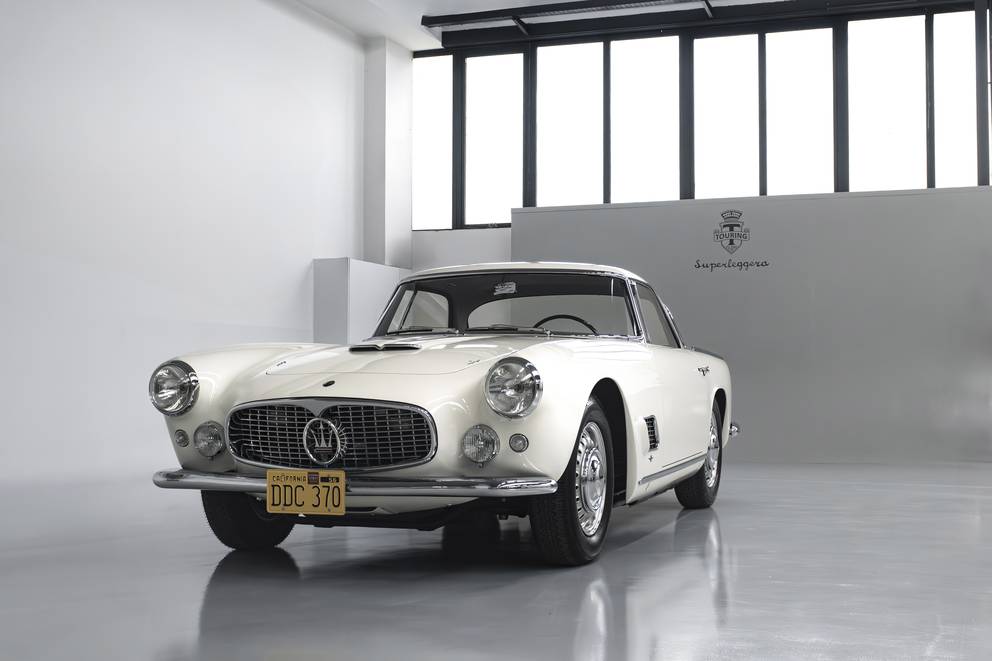
There is a familiar way of telling the Maserati 3500 GT story. A successful racing manufacturer decides to build a refined road car, Touring supplies an elegant body, and the result becomes the company’s first genuine production Gran Turismo. None of that is wrong. It is simply too neat. The 3500 GT mattered because almost every part of Maserati’s identity was being renegotiated at the same time: how its engines should behave, how a small competition workshop could produce cars repeatedly, what comfort meant in a fast Italian automobile, how much could be bought from outside suppliers, and what role an independent carrozziere should play once production volumes began to rise.
The car that emerged as the Tipo 101 was therefore more than a model. It became the hinge between two Maseratis. Behind it stood the small-series A6 road cars and the competition programme; ahead of it stood the 5000 GT, Sebring, Quattroporte, Mistral and the larger family of road-going Maseratis that would define the 1960s. Yet the 3500 GT still belonged to the older coachbuilding world. Its separate chassis allowed Touring, Allemano, Vignale, Frua, Bertone, Boneschi, Moretti and others to propose radically different answers to the same mechanical question.
That overlap — industrialisation without the immediate death of the fuoriserie tradition — is what makes the 3500 GT one of the most revealing Maseratis ever built.
From the 350S to the road
The mechanical story begins before Geneva. Giulio Alfieri recalled the sequence as a gradual enlargement and civilising of Maserati’s six-cylinder thinking: the 2.5-litre competition engine, the 3.0-litre unit of the 300S, and then the long-stroke 3.5-litre engine developed for the 350S. In the 350S form, the bore and stroke were 86 x 101 mm — an unusually long stroke for the period. Alfieri later explained that he had deliberately favoured that direction because he associated it with useful torque and reasonable fuel consumption rather than the pursuit of a fashionable short-stroke layout.
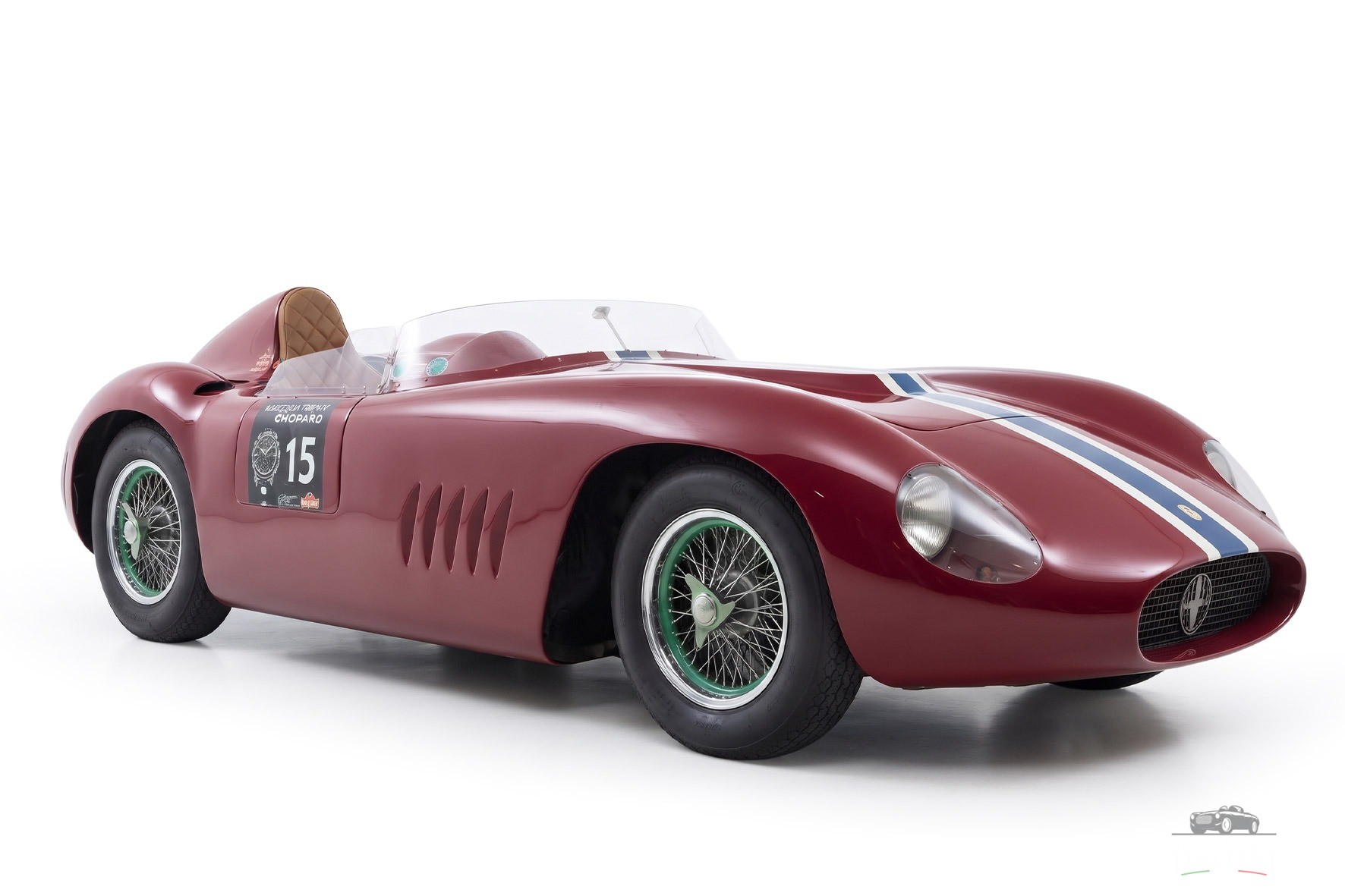
The road engine was not simply a racing unit dropped unchanged into a coupé. Maserati retained the architecture and the competition knowledge — six cylinders, twin overhead camshafts and twin-plug ignition — but reworked the engine for sustained use. Accessories were changed, a wet sump replaced the racing arrangement, and the whole package was asked to do something a competition Maserati had never been required to do: start, idle, pull cleanly in traffic, cruise for hours and survive the expectations of customers who were buying transport as well as performance.
Alfieri’s own retrospective explanation is revealing. He did not describe the 3.5-litre displacement as an act of bravado. Quite the opposite. At 32 years old in 1956, he remembered feeling the responsibility of designing a car that had to work within the capabilities of the factory. If other manufacturers were using three litres, half a litre more gave Maserati a margin: enough torque and power without forcing the engine into an extreme state of tune. It was a young engineer’s conservative decision in the best sense — performance through capacity, not fragility.
A week a month in England
The rest of the 3500 GT was deliberately less romantic. Maserati did not have the scale to design and manufacture every clutch, brake component, axle and ancillary from scratch, and Alfieri was unusually candid about the problem. In his 2000 AISA conference he described spending roughly one week a month for several months in England studying the supplier industry. Britain’s multitude of small car manufacturers had created a deep ecosystem of specialist component makers. Italy, as Alfieri remembered it, had strong names such as Marelli and Weber but far fewer independent suppliers across the whole range of automotive systems.
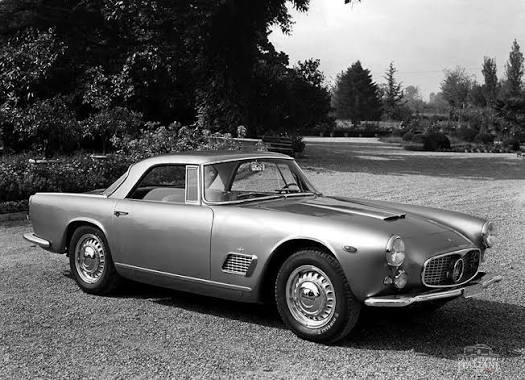
Maserati therefore did something important: it accepted that buying a proven component could be better engineering than designing a proprietary one merely for reasons of pride. The Tipo 101 combined Maserati’s engine and chassis thinking with outside components from established suppliers, including Girling, Salisbury, Borg & Beck and ZF. The exact national mix was less important than the principle. A small manufacturer could concentrate its resources on the things that gave the car its identity and purchase the things that others already made well.
That pragmatism was one of the hidden foundations of the 3500 GT’s success. It also marked a cultural change inside a company whose instinct had been to approach each racing car almost as a fresh problem.
Geneva 1957: the body was still undecided
The 3500 GT was presented at Geneva in 1957 while Maserati was still immersed in the World Sports Car Championship season it would go on to win. Alfieri remembered the automobile department as a group of only about 110 to 120 people. The contrast is striking: the same organisation preparing competition cars at the highest level was simultaneously trying to create a repeatable luxury GT.
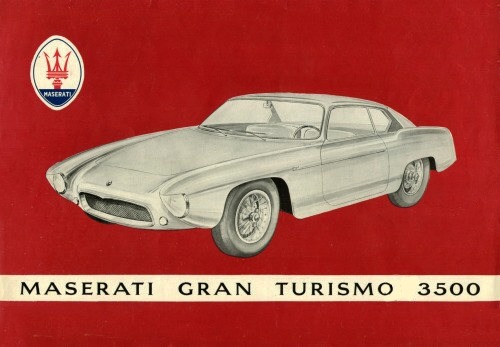
The production body was not inevitable. Maserati had a Touring proposal and a competing Allemano prototype, while Adolfo Orsi later remembered seeing a Zagato proposal on paper, conceived as a more overtly sporting berlinetta with faired headlamps and a character related to the A6G54. Alfieri himself described the process as a kind of competition in which several parties presented their ideas. Touring won because its solution was judged not only beautiful but functional and closest to what Maserati believed its customers actually wanted.
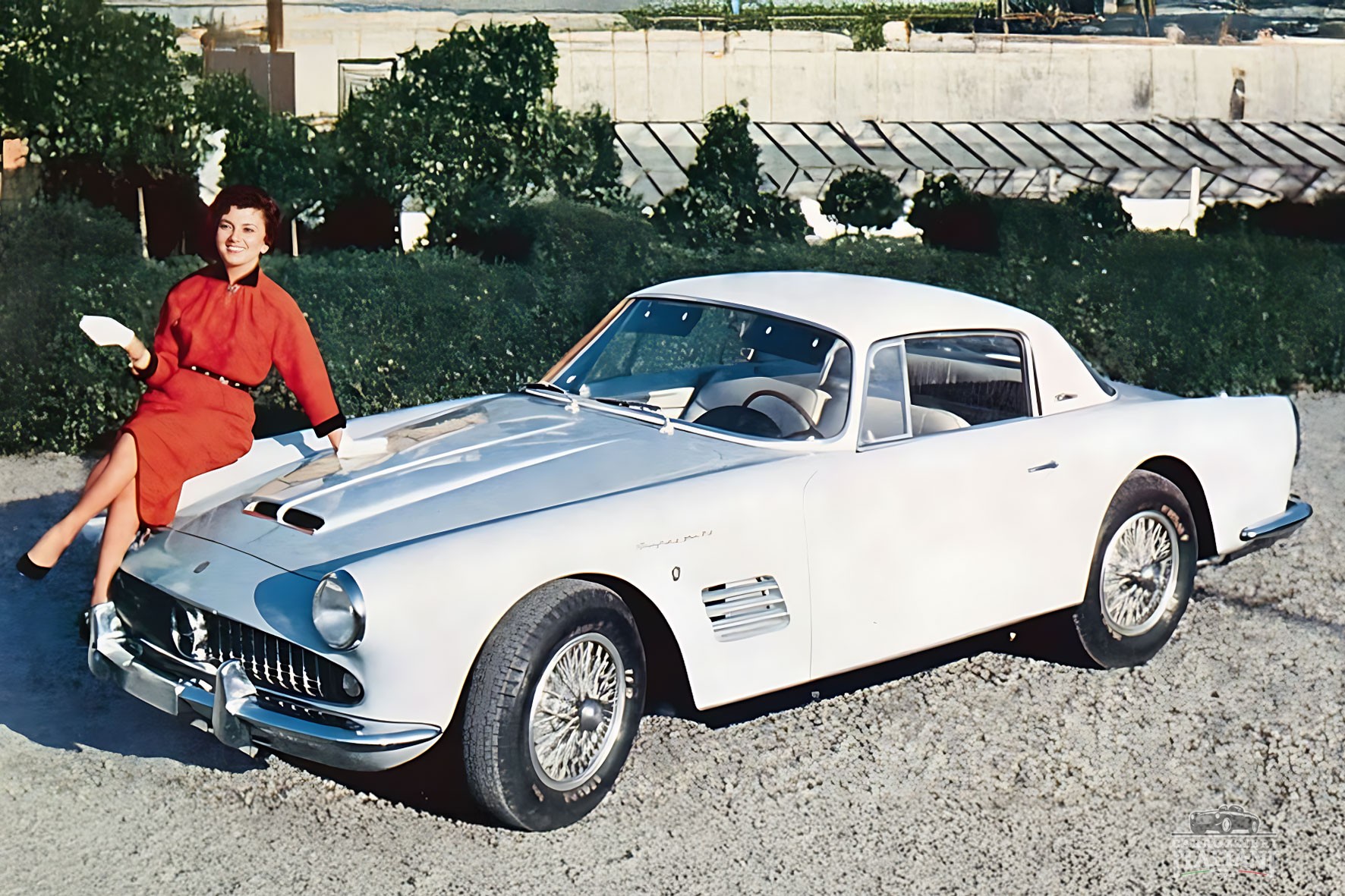
That word — functional — matters. Maserati was not choosing a concours one-off. It was choosing the shape of an industrial programme.
Cornacchia, Touring and the face of the Maserati
Even the beginning of the Maserati–Touring relationship survived in memory rather than in a single clean corporate narrative. Alfieri said he no longer clearly remembered why Touring had been chosen, but thought Franco Cornacchia had acted as the intermediary. Carlo Felice Bianchi-Anderloni was more certain: in the same AISA discussion he said he was “99%” sure that Cornacchia had introduced Touring to the Orsi family.
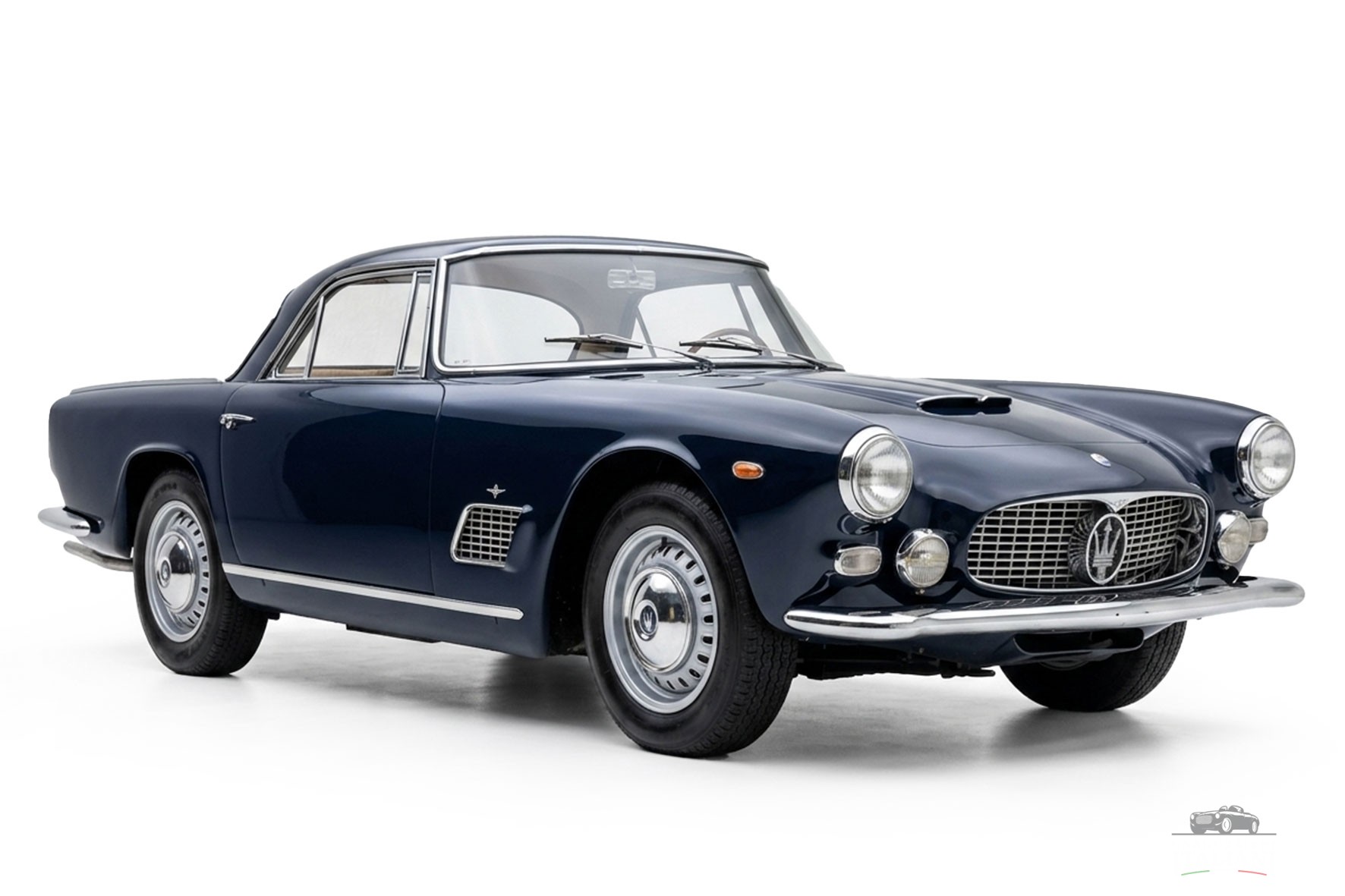
Cornacchia was not a neutral figure. He had been an important Ferrari representative in Italy and had even raced while promoting the marque before falling out with Ferrari. Bianchi-Anderloni remembered him as a man with enormous confidence in Maserati. He also credited Cornacchia with the only significant change to Touring’s Geneva shape: the first grille was wider, but Cornacchia felt it did not look sufficiently Maserati or sufficiently aggressive. The front was revised. According to Bianchi-Anderloni, the fundamental production body then remained remarkably stable through the long run of Touring coupés.
The Dama Bianca
Inside Maserati, the early white Touring prototype acquired a name: the Dama Bianca — the White Lady. Alfieri’s explanation of the nickname is more revealing than the nickname itself. He remembered it not as a joke but almost as a form of courtesy. The car was a “dama”, a lady, and the people around it treated the name with a certain respect.
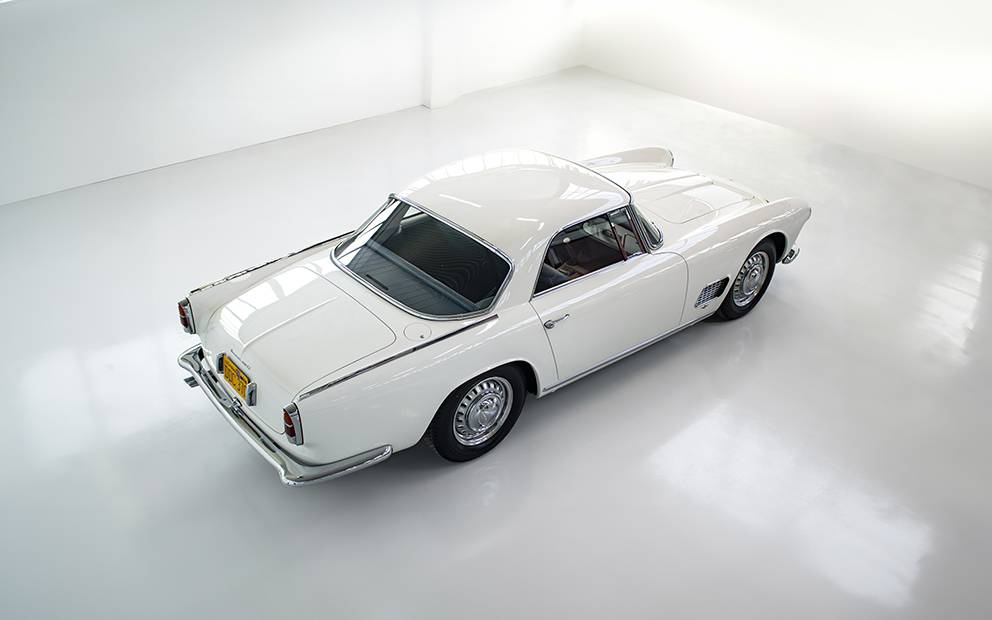
For approximately a year the Dama Bianca served as a development car. Alfieri remembered that the balance of power, road holding, brakes and clutch was already so convincing that the changes required after testing could almost be counted on one hand. Whether softened by forty years of memory or not, the recollection tells us how Maserati’s engineers came to regard the project: not as a troubled prototype dragged reluctantly toward production, but as a combination that seemed to work unusually early.
It also explains why the 3500 GT acquired such confidence as an object. The car did not need to look like a competition machine in evening clothes. It could establish a different idea of speed.
Superleggera as comfort, not only lightness
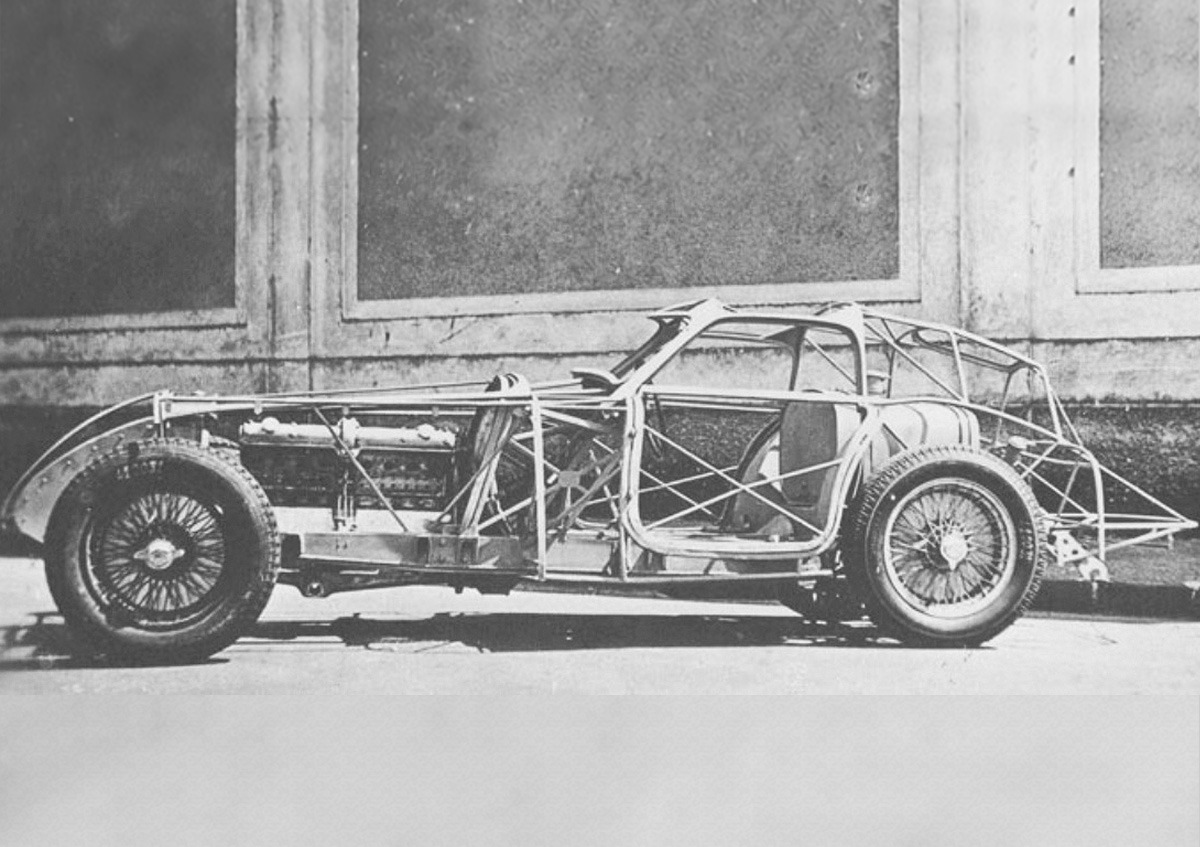
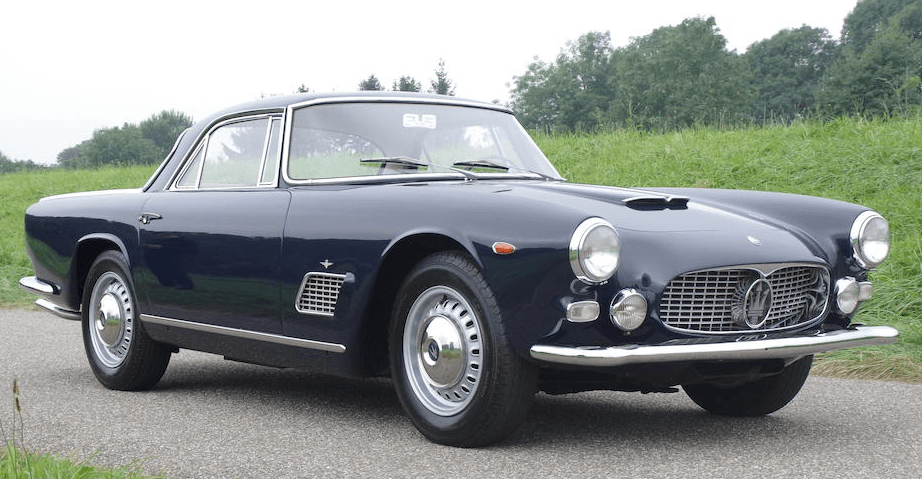
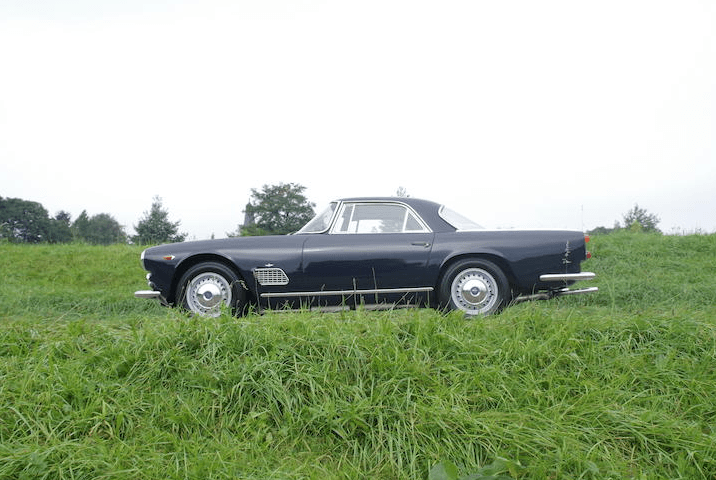
The production coupé used Touring’s Superleggera method: an aluminium skin supported by a fine tubular framework over the Maserati chassis. The system is usually discussed in terms of weight, but Alfieri remembered another quality — noise. In his description, aluminium transmitted less sound than steel, and the Touring body helped the 3500 become unusually quiet and low in vibration for a fast Italian car of the period.
The visual authorship is best understood in the same layered way. Carrozzieri-Italiani attributes the production design to Federico Formenti within Touring, while Carlo Felice Bianchi-Anderloni represented the company and worked closely with Maserati. Modern shorthand often collapses organisation, designer and constructor into one phrase. The surviving testimony instead suggests a genuine dialogue between Maserati and Touring.
Alfieri later described Touring as one of the most faithful and intelligent interpreters he had ever worked with. His most memorable formulation was simple: he saw beauty where they saw beauty. For a manufacturer and a carrozziere, he considered that shared instinct one of the greatest advantages possible.
A sports car that did not punish its owner
The 3500 GT’s real innovation was not that it was fast. Maserati already knew how to make fast cars. It was that performance could be made compatible with silence, stability, ventilation, luggage, easy entry and long-distance use. Alfieri repeatedly returned to the same principle: the person should remain master of the machine, and the machine should serve the person.
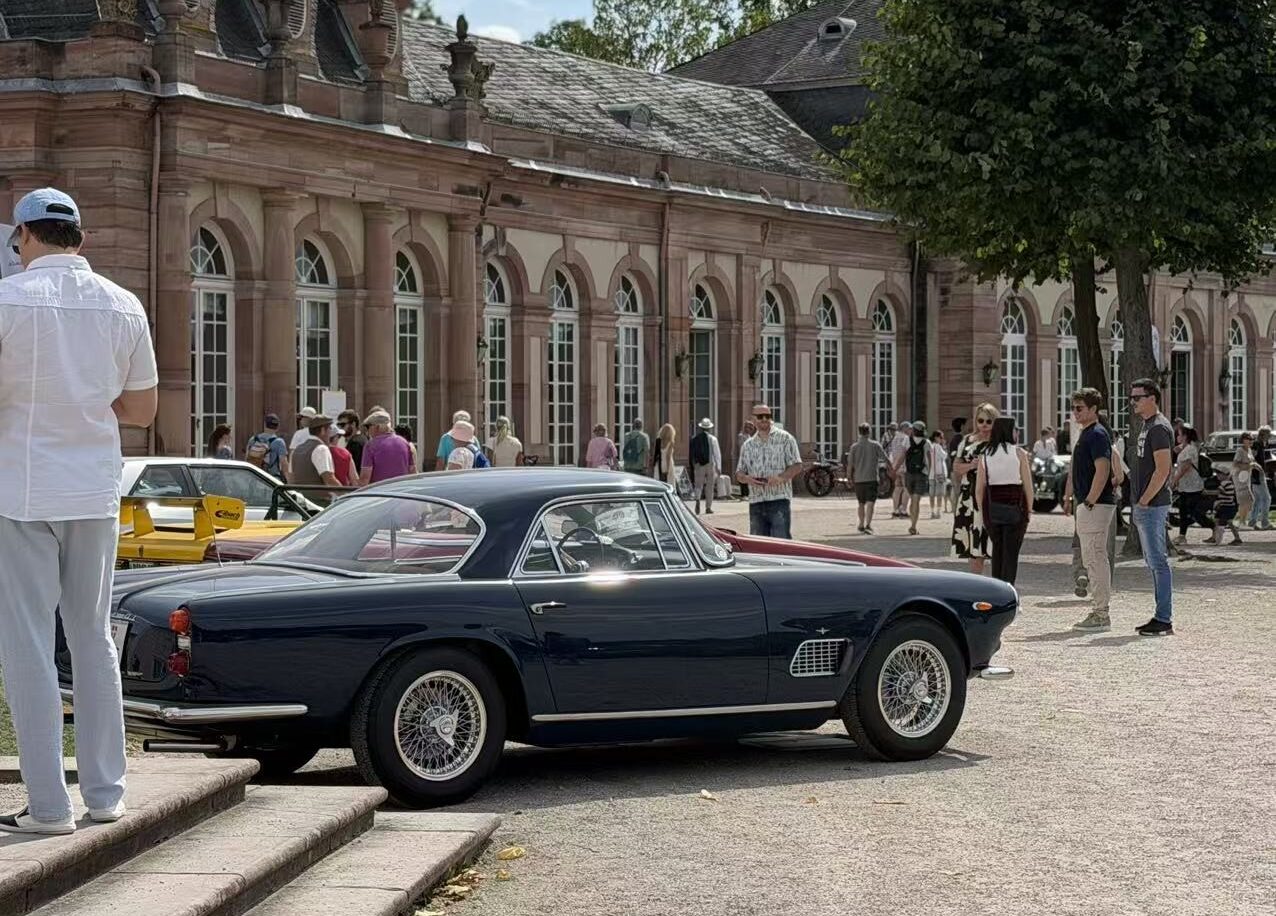
He described the ideal Maserati as a serious, elegant automobile capable of delivering high performance not for a few dramatic minutes but for a ten-hour journey. That distinction separated the 3500 GT from the idea that a sporting car had to be hot, cramped or exhausting. Air conditioning was adopted early and then increasingly integrated into the car because, as Alfieri put it with engineer’s pragmatism, sometimes it was easier to generate cold air than to keep the heat out.
Even the exhaust routing followed the same logic. In a technical exchange after the lecture, Alfieri explained that the silencers and pipes were routed laterally through protected tunnels rather than simply beneath the centre of the floor. The arrangement helped manage heat, allowed a lower floor and contributed to a lower centre of gravity. It was a small detail, but exactly the sort of detail that reveals the project’s priorities: comfort was engineered into the architecture rather than added with upholstery.
From two or three cars a month to two cars a day
The most radical part of the 3500 GT may have taken place not on the road but inside the factory. Before the new GT, Alfieri said Maserati had never built more than two or three cars per month. Real series production did not exist in the modern sense. The 3500 created a new target: two cars a day.
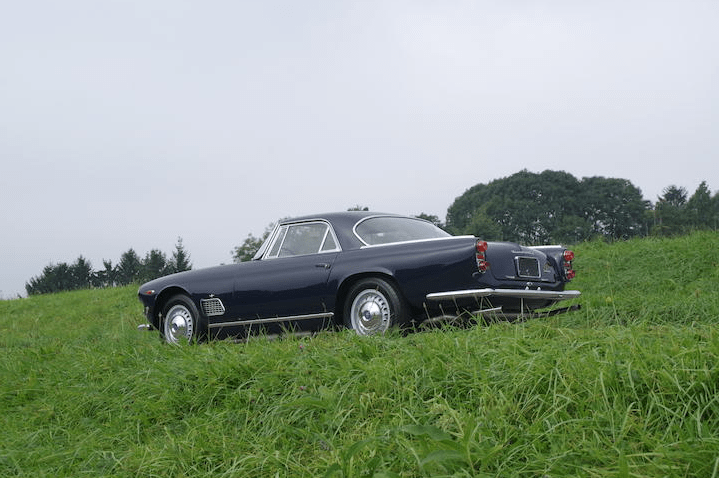
That required rhythm. Production had to be measured quantitatively as well as qualitatively; forecasting, costing and repeatability became part of the daily language of a company accustomed to racing programmes. Alfieri recalled annual output increasing dramatically through the late 1950s and early 1960s while the workforce remained broadly similar. His figures are best read as a retrospective illustration of Maserati’s industrial expansion rather than a chassis census of Touring coupés, but the direction is unmistakable: the 3500 GT forced Maserati to learn how to manufacture, not merely how to build.
Adolfo Orsi went further. He argued that the 3500 GT essentially allowed Maserati to continue existing. In April 1958 the company entered amministrazione controllata during a period of financial difficulty linked partly to the wider Orsi industrial group and the machine-tool business. Orsi’s conclusion was stark: without the market success of the 3500, Maserati’s life might have stopped there.
The white Maserati that passed Ferruccio Lamborghini
One of the finest anecdotes from Bianchi-Anderloni. Ferruccio Lamborghini, he remembered, was obsessed with speed and modified almost everything he owned to make it faster. One day on the autostrada he saw a white car rushing up behind him. It passed him with enough ease to leave an impression. Lamborghini chased it to the Modena toll gate and discovered that the white projectile was the new Maserati.
He subsequently bought two.
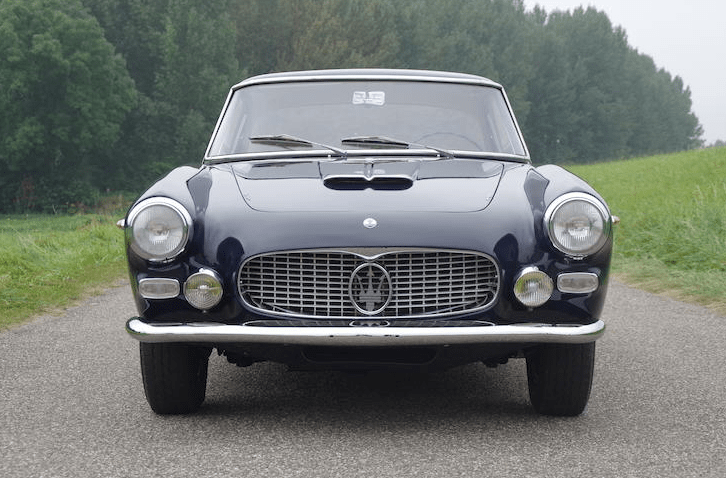
Alfieri confirmed the purchases but added the part that makes the story more interesting. Lamborghini still complained that the Maserati was not sporting enough. To Alfieri, that criticism missed the point: the 3500 combined speed with comfort, silence and stability. Lamborghini, he recalled, wanted to prove that he could make a car better than both Maserati and Ferrari. Years later, after Alfieri himself moved to Lamborghini, he found the philosophy so different from his own that he remembered asking himself whether he was still the same Giulio Alfieri. Ferruccio wanted sportiness not only in performance but in image and form — an extremity that was almost the opposite of the mature restraint Alfieri had pursued at Maserati.
Seen from that perspective, the 3500 GT is not a footnote to Lamborghini’s origin mythology. It is a useful contrast. It shows one of the ideas of the Gran Turismo against which the next generation of Italian exotic cars would define itself.
580,000 kilometres and the famous “anellino”
The 3500’s racing ancestry did not condemn it to racing-car maintenance. Orsi remembered a Milanese businessman — he thought the man dealt in flowers, though he was careful about the uncertainty — who visited Maserati after covering 580,000 kilometres in his Touring-bodied 3500. The cylinder head had been removed, but the lower engine had apparently never been opened. Alfieri added that 400,000-kilometre examples without head removal were not isolated enough to surprise him by then.
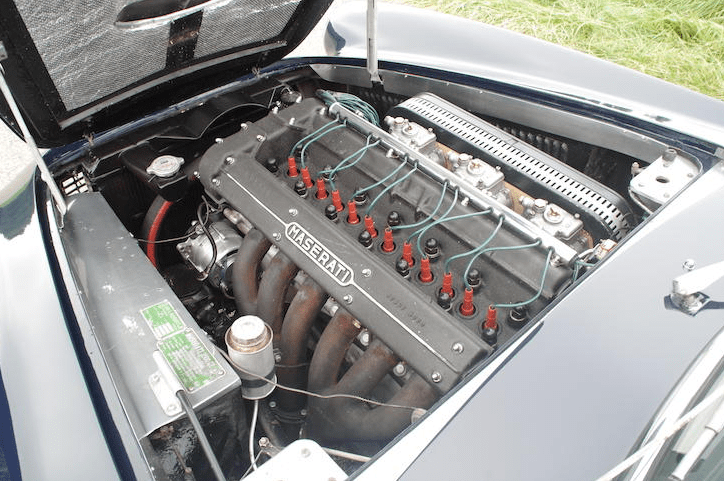
That durability was not accidental. Alfieri used the discussion to recall one apparently modest component: the rigid sealing ring around the cylinder head, known internally as the “anellino”. Head sealing was difficult, and the solution demanded exceptionally accurate machining. Here the other side of the Orsi empire became an advantage. Maserati’s familiarity with machine tools meant familiarity with tolerances measured in thousandths. The road engine’s longevity was connected to a manufacturing culture that rarely appears in the glamorous photographs.
GTI and the difficult Lucas injection
The later 3500 GTI pushed the road car further with Lucas mechanical fuel injection. Orsi described the model as the first Italian production automobile to use petrol injection as standard; that retrospective claim deserves to remain attributed to him rather than turned into an unqualified universal first. What matters beyond the headline is his defence of the system. Collectors often cursed Lucas injection, he said, but he believed much of the reputation came from decades of poor maintenance and from mechanics being more comfortable with carburettors.
Alfieri had a genuine technical interest in injection. He described the 3500 system as a relatively low-pressure installation, around seven atmospheres, and valued the control it could provide over mixture distribution. The GTI was therefore not simply a badge update. It reflected Maserati’s continuing effort to make a competition-bred engine more precise and usable in the real world.
The open car: Touring, Frua and Vignale
Once the coupé was established, the 3500 chassis invited an obvious question: what should the open version look like? The answer was not immediate. Orsi recalled early Touring convertible prototypes on the long-wheelbase chassis, followed by a Frua experiment and then the production solution from Vignale on a wheelbase shortened by roughly 100 mm.
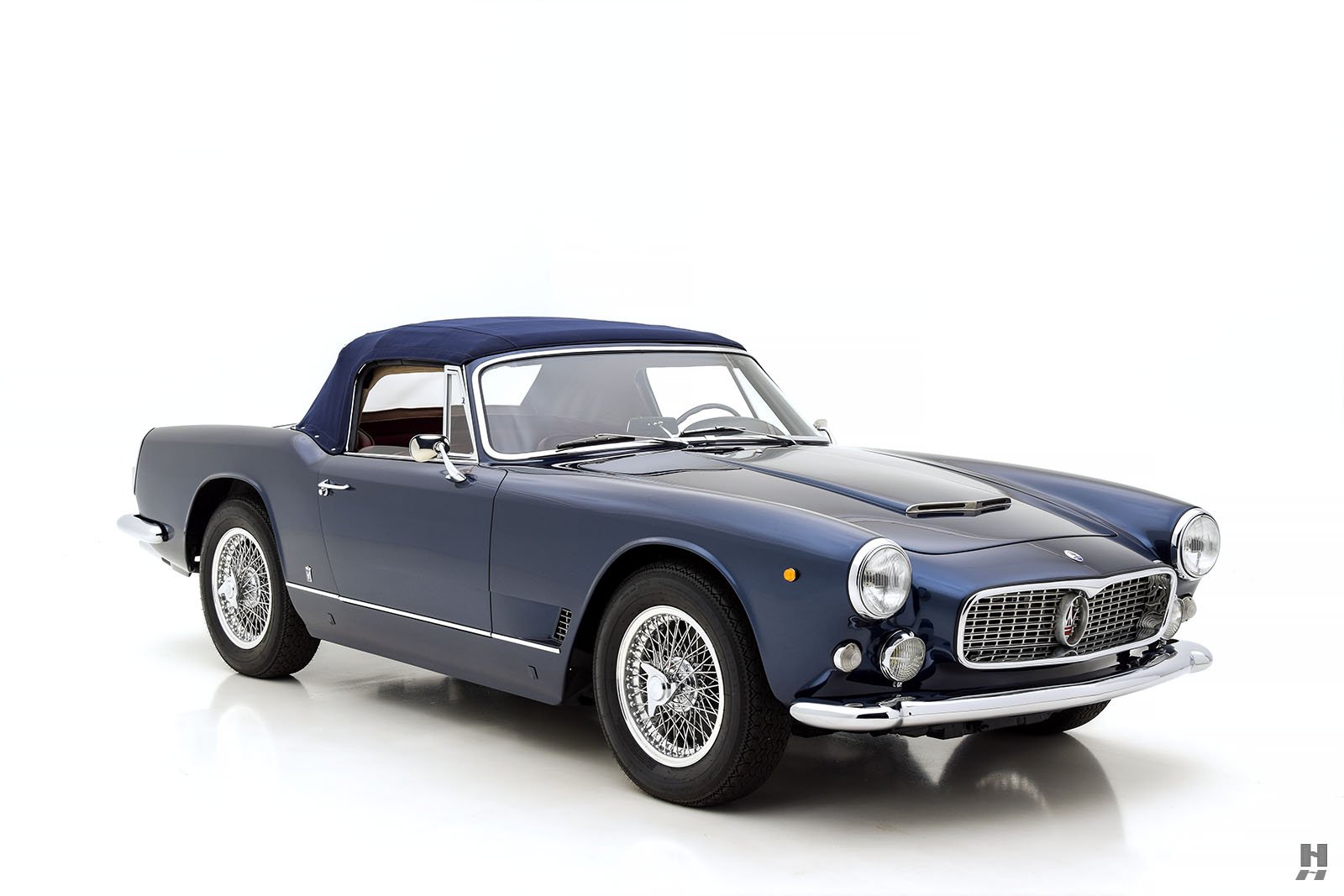
Pietro Frua’s open proposal, chassis AM101.268, remained unique. The production contract instead went to Carrozzeria Vignale, where the 3500 GT Spyder was styled in collaboration with Giovanni Michelotti. It was not a roofless Touring. The shorter chassis, different proportions and Turin body gave the open 3500 its own identity, and that shortened platform would help lead Maserati toward the Vignale-bodied Sebring.
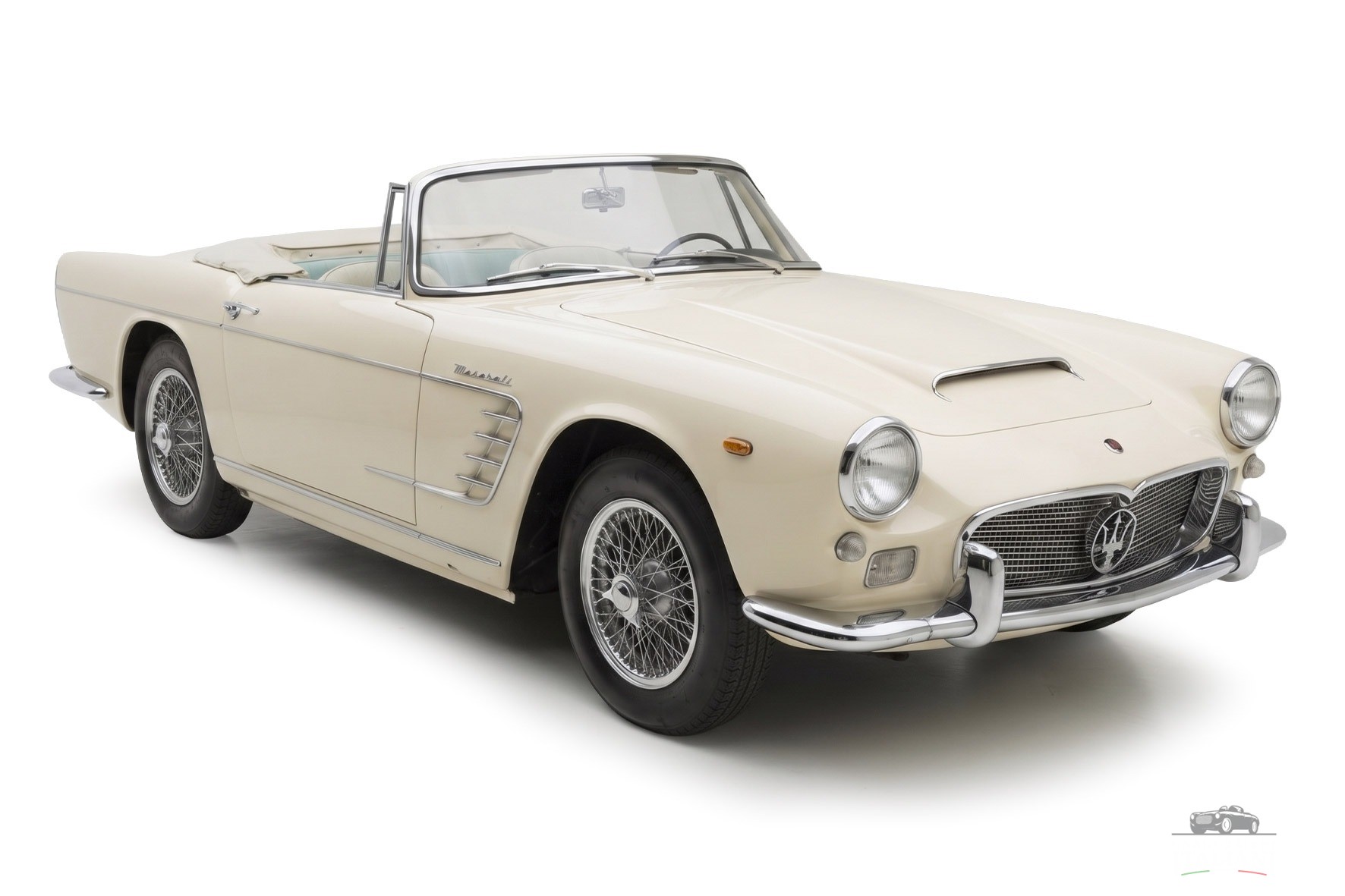
The sequence matters because it shows Maserati still behaving like an Italian manufacturer of the old school. Even after selecting Touring for the coupé, it did not assume that a single coachbuilder had to answer every body style.
The Tipo 101 becomes a canvas
The success of the standard 3500 GT did not eliminate the independent carrozziere. For a few crucial years it did almost the opposite: it gave designers a proven Maserati platform on which to demonstrate alternative ideas. Some were factory proposals, some tiny series, some later rebodies. Together they make the Tipo 101 one of the richest coachbuilt families of the post-war period.
The Allemano 3500 GT prototype is important because it stood close to the moment of selection. Rather than being a later stylistic exercise, it belonged to the initial search for the production car’s identity. Michelotti’s involvement connected the car to another major strand of Italian design, but Maserati ultimately preferred Touring’s balance of appearance, functionality and manufacturability.
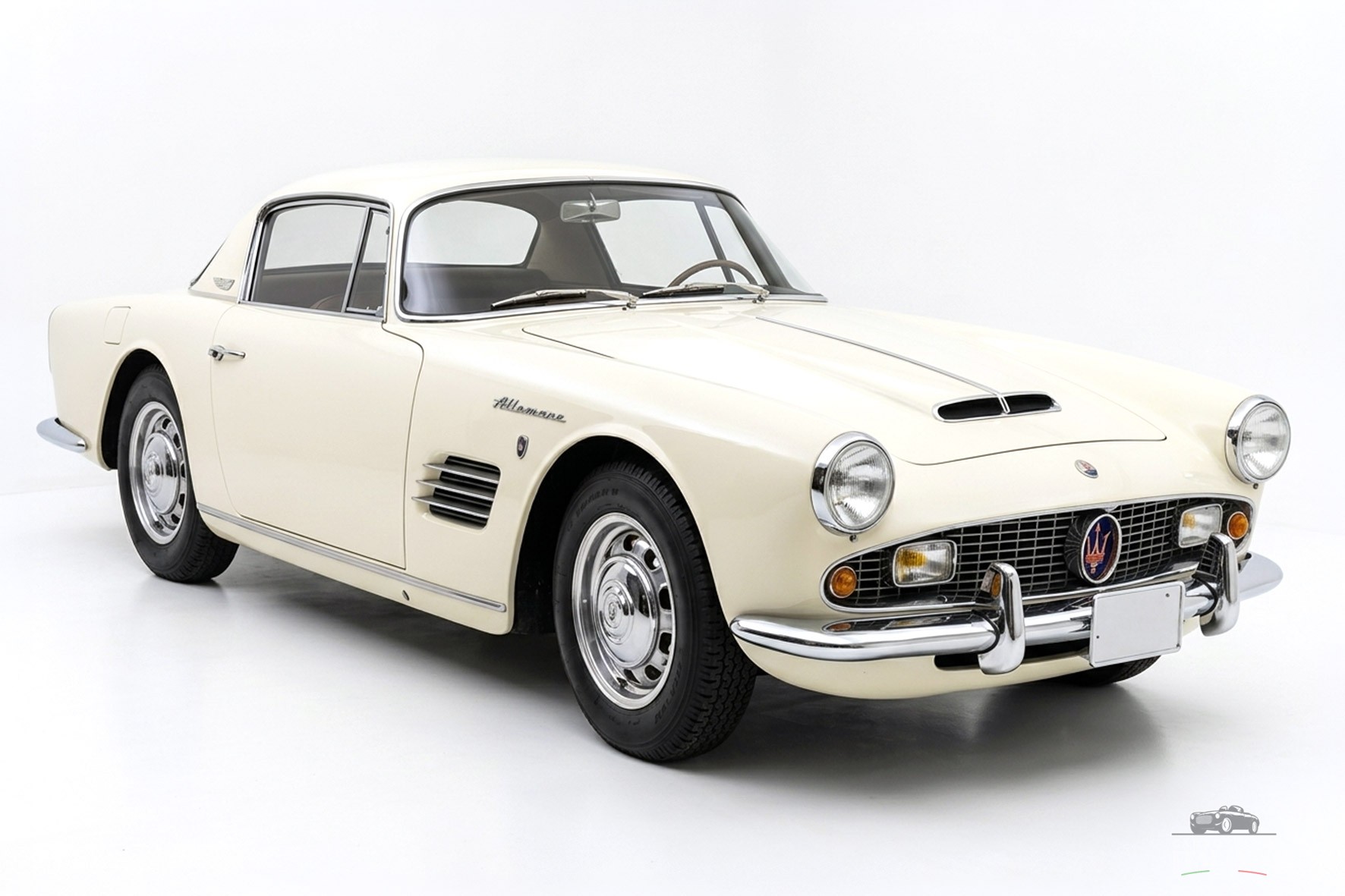
Adolfo Orsi remembered a Zagato proposal with faired lamps and a more sporting character recalling the A6G54 berlinettas. He specifically said he had seen the idea only on paper and did not believe it had been built. That distinction is important. The Zagato 3500 belongs to the design history of the Tipo 101, but not to its surviving physical chassis register unless new evidence proves otherwise.
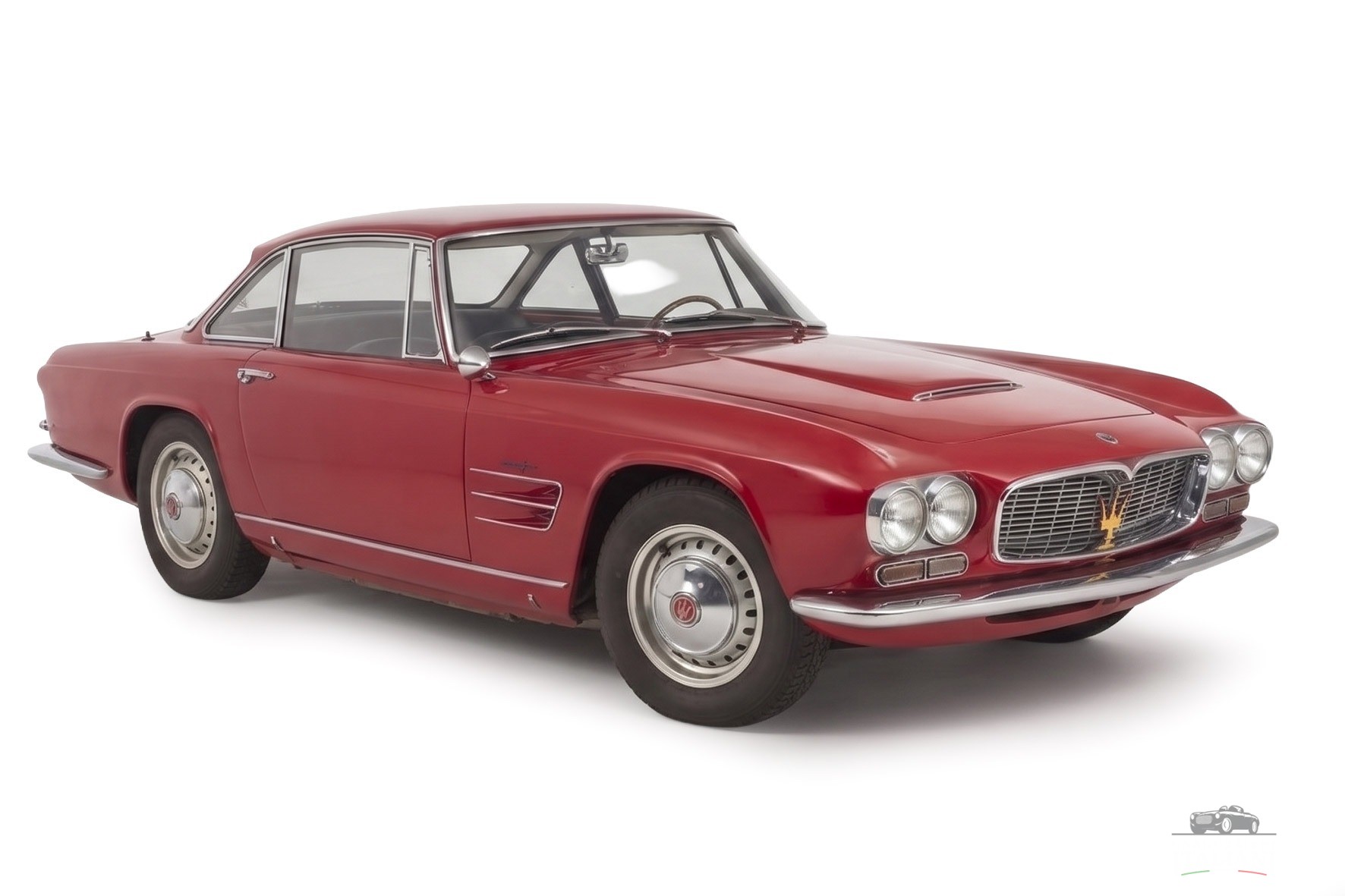
Frua returned to the platform after the unique spider with a small group of closed cars. Four chassis are presently documented by Carrozzieri-Italiani for the 3500 GT/GTI Coupé Frua: AM101.1494, AM101.1496, AM101.2200 and AM101.2242. Their straighter flanks, cleaner roofline and larger glass areas pull the 3500 visually into the 1960s. They also form a useful bridge between Frua’s earlier Maserati work and the increasingly architectural language of the Mistral era.
The Bertone 3500 GT, chassis AM101.0666, is perhaps the most dramatic rejection of Touring’s solution. Designed by Franco Scaglione and shown in 1959, it treated the Maserati as a much more sculptural object. Strong longitudinal forms and a visually forward cabin gave the one-off a tension that had little to do with the calm balance of the production coupé. It is precisely this distance from Touring that makes the car historically useful: the mechanical platform was stable enough to support a completely different design philosophy.
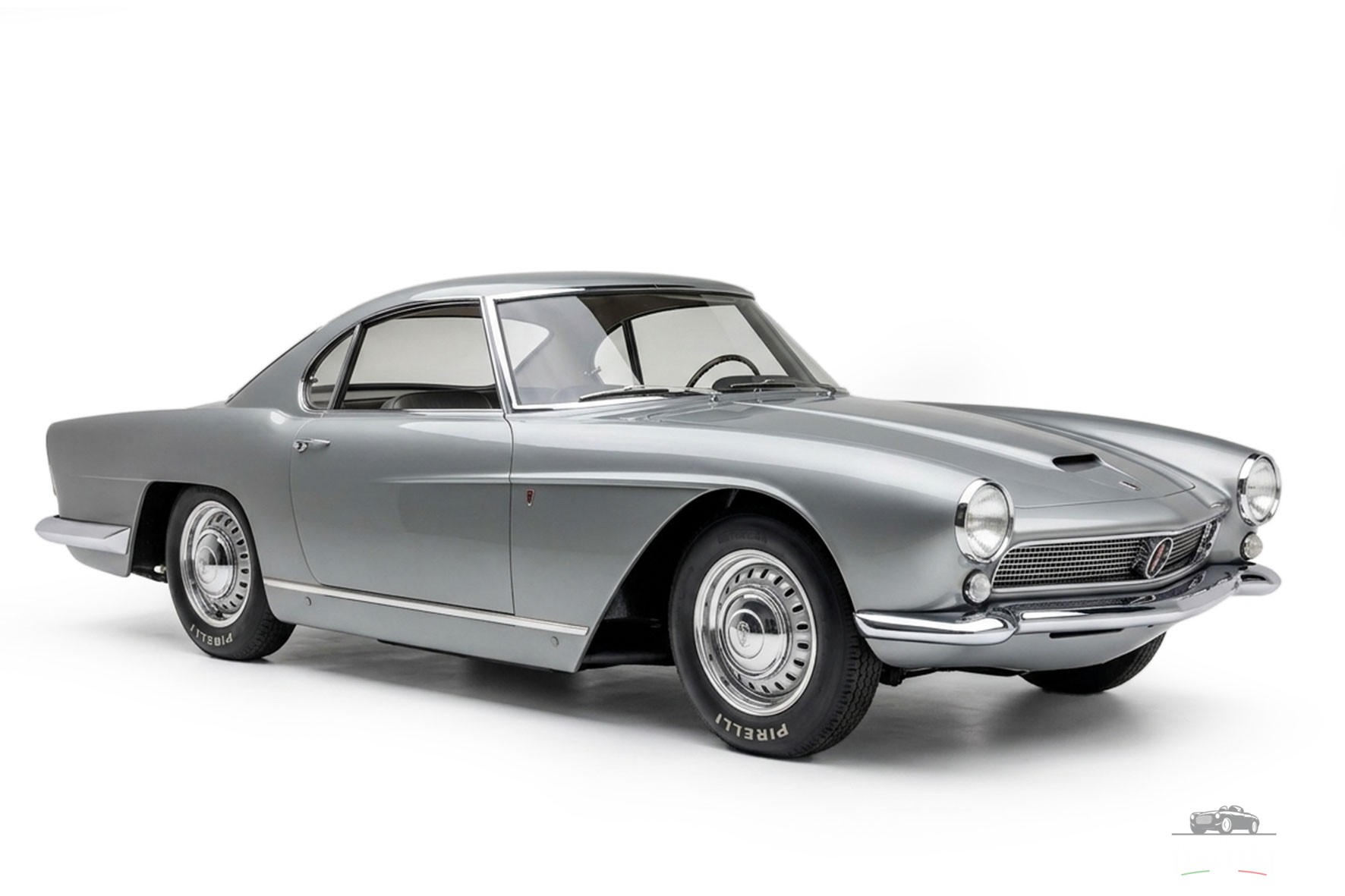
By 1962, Boneschi’s 3500 GT Tight used the Tipo 101 not merely for another luxury body but as a manifesto. Rodolfo Bonetto’s Linea Tesa language replaced much of the 1950s’ softness with sharper lines and tauter surfaces. Two chassis are documented: AM101.2500, shown at Turin in 1962, and AM101.2724, displayed in revised form at Geneva the following year. Differences around the front wings, bonnet intakes and windscreen show that the idea itself continued to evolve.
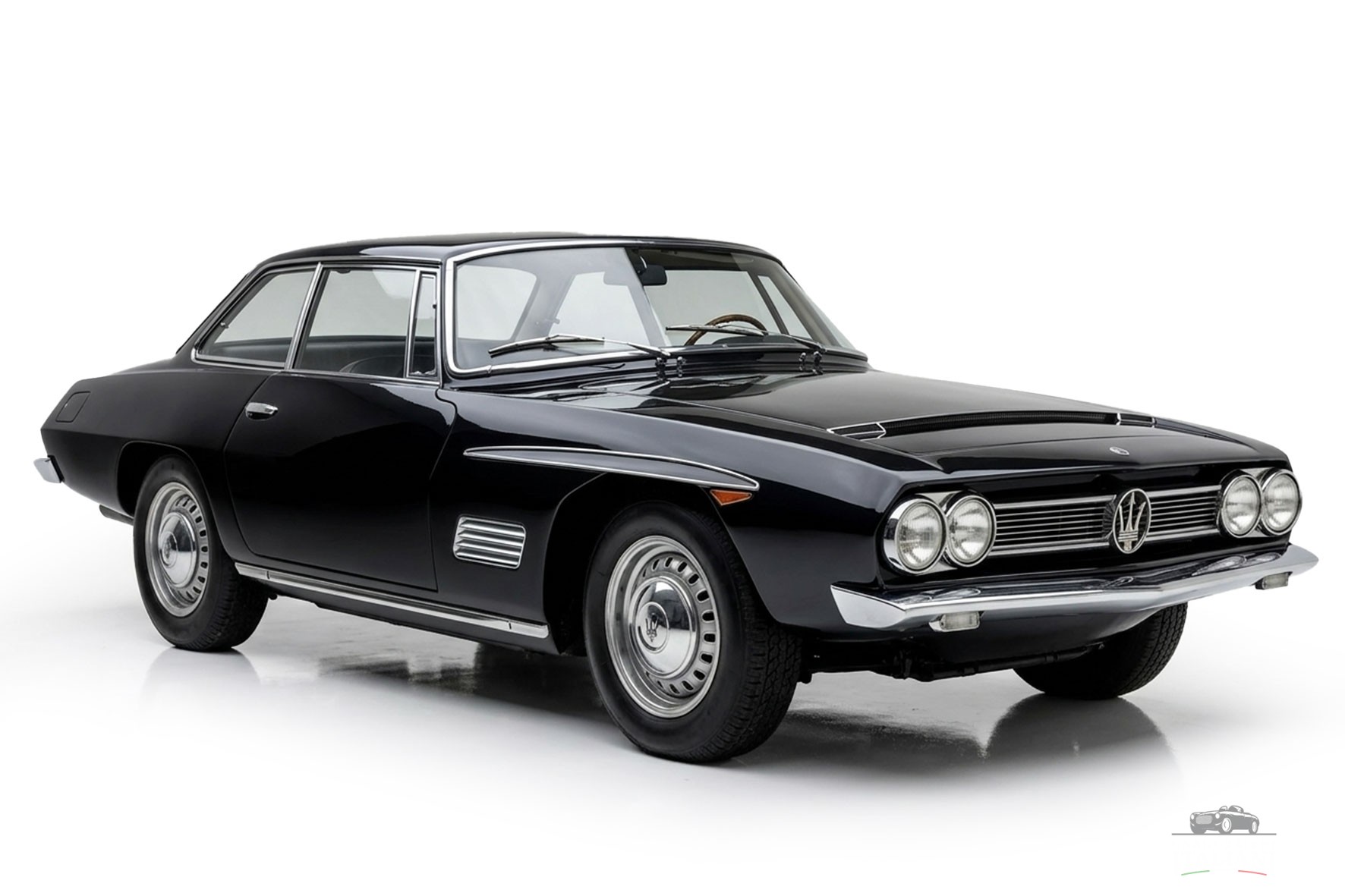
The Moretti-bodied 3500 GT, chassis AM101.1858, belongs to a different category. Delivered originally as a Touring coupé, it was rebodied after an accident and appeared with its new Moretti body at Geneva in 1966. By then the 3500 GT was no longer a new Maserati project, yet the separate chassis still allowed the car to acquire a completely new identity. It is a late demonstration of how long the possibilities of the Tipo 101 remained alive.
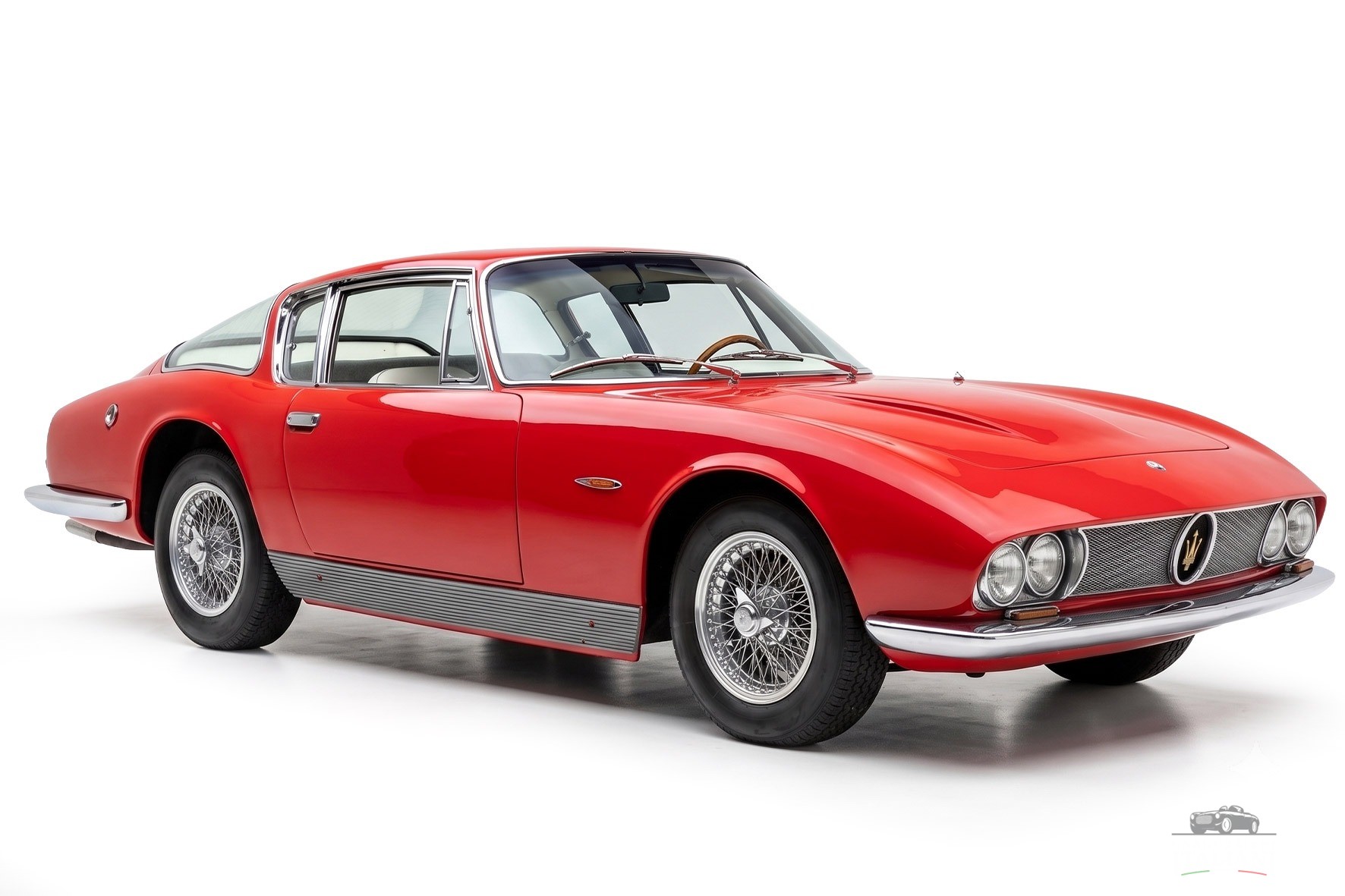
A further special recorded by Carrozzieri-Italiani is the 3500 GT Scaglietti/Scalco, a later transformation associated with Pierino Scalco. It should be understood differently from a factory-supported proposal such as Allemano or the Vignale production programme. Its importance lies in the afterlife of the chassis: even once Maserati had moved on, owners and craftsmen could continue rewriting the car.
Maserati was not simply “the other Ferrari”
The 3500 GT also helps correct one of the easiest simplifications in post-war Italian motoring history: that Maserati and Ferrari were chasing exactly the same road-car customer. Adolfo Orsi rejected that idea explicitly. In his recollection, perhaps only 10 to 15 percent of the clientele moved between the two marques. He believed Maserati buyers overlapped at least as naturally with customers of Mercedes-Benz, Jaguar, Rolls-Royce or Iso as with Ferrari.
The distinction was partly philosophical. Orsi described the 3500 as a car an Italian industrialist could use throughout the week — a machine for travelling from Milan to Rome rapidly and reliably when private aviation was not yet the normal answer for European business travel. In the United States, by contrast, wealthy clients often already flew long distances and used exotic European cars more as weekend objects. Orsi believed that helped favour the more aggressive image associated with Ferrari, while Maserati’s European strength lay in being fast without becoming inconvenient.
Alfieri agreed with the larger point. For him the person remained the centre of the project. Maserati’s elegance was not merely decorative; it was behavioural. The car should be serious, fast, comfortable and capable of doing the same thing for hours.
The customer, the wife and the mistress
Alfieri’s recollections were not always solemn. While discussing the new clientele of Italy’s economic expansion, he described watching the psychology of people who came to buy the car. Some arrived with their wives, others with their mistresses, and, he joked, one could often sense the probability of closing the sale from the combination. Behind the humour was a sharp observation: the 3500 GT appeared at the moment when a new class of Italian entrepreneurs wanted an automobile that could visibly express success.
The clientele broadened far beyond traditional racing enthusiasts. Actors, industrialists, the very rich and the merely prosperous were all drawn into Maserati’s orbit. The 3500 GT became, in Alfieri’s phrase, a catalyst. It was not selling the old idea of a competition car made tolerable for the road. It was selling a new social object: rapid, refined, recognisably Italian and capable of being used rather than endured.
A service network built on sleepless nights
The product alone was not enough. Orsi credited much of Maserati’s European reputation to a dealership and service network whose effort was often invisible to the customer. He remembered assistance staff leaving Rome in the evening, driving to Modena during the night to collect parts, and returning in time to deliver the repaired car the next morning. The owner might never know what had happened behind the scenes.
Alfieri reduced the story to three words: absolute dedication. It is easy to romanticise that level of service, but it mattered enormously for a small manufacturer selling complicated high-performance machinery far from Modena. It also exposes one reason Maserati’s American expansion was more difficult: the same density and responsiveness of support did not exist there.
What the 3500 GT made possible
Once Maserati had proved that it could build the 3500 repeatedly, sell it internationally and support it in daily use, the company’s sense of what was possible expanded. Alfieri connected the 3500 directly to the confidence required for the Quattroporte. A four-door Maserati demanded even more silence, rigidity, comfort and control. The task looked audacious because it was — but the industrial discipline learned through the Tipo 101 made the idea credible.
The same confidence moved in other directions. The 5000 GT took the 3500’s Gran Turismo idea into an ultra-exclusive V8 world. The Vignale Spyder’s shortened chassis helped point toward the Sebring. Alfieri later described the Ghibli as joining something of the old 3500 tradition to newer Quattroporte mechanical thinking, and saw the later Mexico, Indy and Bora as descendants of the cultural turn initiated by the 3500.
That is why the model’s production count, important as it is, does not fully measure its significance. The 3500 GT gave Maserati a manufacturing rhythm, a customer philosophy, a service obligation and a repeatable road-car identity. It also gave Italian coachbuilders one of the last great separate-chassis platforms on which to argue about what a modern Gran Turismo should look like.
The car between two worlds
The Maserati 3500 GT arrived at exactly the point when the traditional carrozzeria system was beginning to lose the conditions that had sustained it. Manufacturers were moving toward monocoque structures, higher volumes and increasingly integrated design departments. Touring itself would close its original operation in 1966. The world in which a client or coachbuilder could take a bare prestige chassis and create another identity was narrowing quickly.
Yet Maserati’s industrial breakthrough happened before that door closed. Touring could build the standard coupé in substantial numbers while Vignale produced a distinct spider; Frua could explore alternative bodies; Scaglione could make the same chassis look almost unrelated; Boneschi could use it to announce a new design language; Moretti could rebody one years after delivery. Industrial success and coachbuilding plurality briefly coexisted.
That is the deeper meaning of the Tipo 101. It did not end Maserati’s artisanal past. It used that past to create the company’s industrial future.
The Maserati that changed everything
The strongest evidence for the 3500 GT’s importance does not come from a modern collector market description. It comes from the people who built it. Alfieri remembered the Dama Bianca almost affectionately, described the production challenge without heroics and returned again and again to the idea of the automobile serving its driver. Bianchi-Anderloni remembered Cornacchia shaping the Maserati face and a white 3500 humiliating Ferruccio Lamborghini on the autostrada. Orsi remembered sleepless service journeys, extraordinary mileages and a moment in 1958 when the success of one model may have determined whether Maserati continued at all.
The familiar Touring coupé is therefore only the visible centre of a much larger story. Around it sit race-bred engineering made durable, British and European suppliers chosen without ego, a coachbuilder competition at Geneva, the White Lady prototype, a new production culture, early air conditioning and injection, a shortened Vignale chassis, and a constellation of bodies by some of Italy’s most important designers.
Before the 3500 GT, Maserati knew how to build great cars. After it, Maserati knew how to be a road-car manufacturer. And for a few extraordinary years, the Tipo 101 still left enough room for the carrozzieri to dream.

ABOUT THE AUTHOR
Andreas Scheidl
Italian classic car enthusiast with German roots. Renowned as a respected figure in the classic car community, he serves as a jury member at various international concours d'elegance, including the Classic Gala Schwetzingen and Mantova. As a content creator, Andreas passionately shares his profound knowledge and appreciation for vintage automobiles. His heart beats for cars designed by Giovanni Michelotti, showcasing his discerning taste and dedication to preserving the timeless elegance of automotive history.
More stories by Andreas Scheidl ↗CONTINUE READING
Posts You Might Like

A Central Driving Position, a Rear-Mounted V8. Was This Really a Lancia?
In 1948, visitors to the Turin Motor Show could see an unusual Lancia on the stand of Carrozzeria Ghia. It was a large two-door coupé with a two-litre V8 mounted behind the…
Read story
Fioravanti F100: The Ferrari He Was Allowed to Imagine
Enzo Ferrari’s centenary, Leonardo Fioravanti’s independent studio and a supercar that explored air brakes, steel wheels and a new way of driving—without ever wearing the Cavallino.
Read story
Michelotti Shellette: When the Fiat 850 Became a Yacht
The yacht designer, the Turin stylist and the tiny coachbuilt car that crossed between the quay, the royal holiday house and the auction room. Some automobiles were conceived for the open road,…
Read story
Maserati A6 1500: A New Road for the Trident
When the doors of the Geneva Motor Show opened in March 1947, Maserati was a name that required little introduction to anyone who followed motor racing. What it did not yet possess…
Read story
THE CONVERSATION
Comments 0
Share a memory, a period photograph or a documented detail about this story.