
Italian Coachbuilding – The Art of Carrozzeria
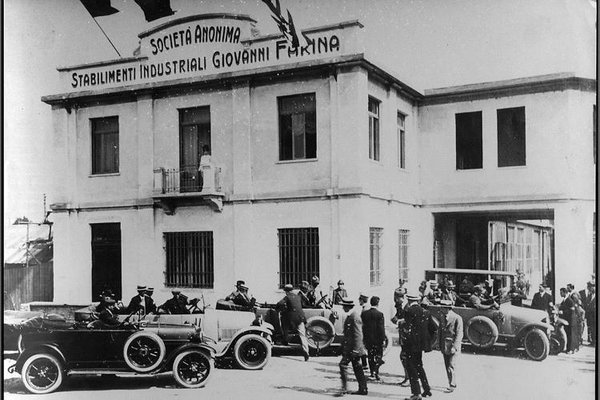
What do you think about when someone mentions the Italian automotive industry? Ferrari, Lamborghini, Maserati, Alfa Romeo, Fiat, Lancia, etc. Right?
Unlike the German mass-produced vehicles, the Italian automotive industry was never about that; it was about creating art. Creating a car that’s closer to something Leonardo da Vinci would create than an everyday car. It’s iconic, and it’s timeless. It’s something car lovers dream of. It is… world-class.
What made this possible is the carrozzeria tradition, which ensured the cars have their identity and they’re built right. A vision turned into something you can touch, see, and admire.
Lots of ideas and historic concepts of historic car manufacturing have been incorporated into modern production today.
This article will go over that exact adaptation and artistry that changed and defined the automotive industry.
The Origins
Italian coachbuilding started in the early 20th century. And this all came to be because car-making was all about the engine and the chassis design. That was the focus, and that was it. There was no art or beauty behind it. It was all practicality.
And the bodywork? It was left to small workshops as it was considered ‘not that important’.
Some Italians disagreed. And they focused on the bodywork.
It was at that time that in cities such as Turin (Fiat), Modena (Ferrari, Lamborghini, Maserati), and Milan (Alfa Romeo), body workshops started opening. And they began to flourish.
Early carrozzerie such as Carrozzeria Bertone, Carrozzeria Pininfarina, and Carrozzeria Zagato were design houses, and they were at the forefront of redefining what automotive aesthetics are.
Every one of these coachbuilders had their own unique philosophy – a philosophy that became their signature mark. Each varied. Some focused more on elegance and proportion, while others tended to go more for the aerodynamic and sporty factor. But the philosophy/approach didn’t really matter this much here. This had to do with one simple (core) fact that they all shared the same love towards making (creating) the best and the most beautiful car possible.
This was the foundation to it all. And this was the driving factor behind all their methodology.
This was because – in their minds – a car was not just a tool used to get someone from point A to point B, no. It was something more.
The Golden Age of Italian Coachbuilding
It was right around after WW2 ended that Italian coachbuilding had its best years. It was during all the economic reconstruction that happened throughout Europe and all the technological progress/innovations that followed.
For the first time since its inception, Italian Coachbuilding had all the tools necessary to completely turn its vision into art.
It was then that all the experimentation and innovation began. And it was – beautiful.
Chassis manufacturers (e.g., Fiat, Alfa Romeo, Maserati, Lamborghini, etc.) were just starting out like a blank canvas, and like a blank canvas, they were ready to put their ideas and visions on paper. Coachbuilders then worked closely with engineers and clients with the common goal of making individualized vehicles. It goes without saying that this type of work ethic produced a handful of variations, each with its own unique set of subtleties.
During that time, it wasn’t uncommon to have limited models as they each depended on the customer’s requests and wishes. Lightweight construction techniques were hallmarks during this period, and also aerodynamic experimentation.
It was car design turned art; that was the core idea behind Italian coachbuilding.
The Philosophy
What do you think about when someone tells you the term ‘coachbuilding’ today? You picture a massive factory, an assembly line, perhaps even robots. It’s efficient, it’s soulless, it’s capitalistic.
The main driver here is profit.
Traditional coachbuilding used to be different. It was more human-oriented. Human, the artist, and the other human, the client. Before any single car would be created, there needed to be a conversation between the client and the artists (both the designers and the craftsmen).
Every single measure was taken manually, every panel was hand-crafted, and the assembly was done by experienced working hands with meticulous precision and pedantry.
Just like art. You don’t rush to finish the painting or a sculpture. You take your time. You make sure that every movement and every blow of a hammer has purpose.
It was a fully customized process from start to end. Due to the nature of this process, variations were an inevitability. This is why no two coachbuilt cars were the same, even when they were based on the same principle and structural concept.
And since the entire process was human-focused, flaws emerged. And even though flaws are synonymous with something negative, in some cases, these flaws ended up being something that defined a car and gave it authenticity.
Inside workshops like Carrozzeria Touring and Carrozzeria Ghia, artisans treated metal like fabric. It was a delicate and precise process.
The Racing Influence
Many principles done then are principles that are used in modern automotive engineering and manufacturing.
This concept was further pushed forward due to collaboration with racing teams, especially when it came to lightweight construction and speed.
This innovation influenced not only Italian manufacturers but also various brands in Europe and the United States.
And these principles we’ve talked about extend way beyond just design; they transfer into all aspects of carmaking (wiring, safety, power, electrical systems, etc.).
Car electrical systems are a great example of this, especially when you factor in that you can’t really find a car today that isn’t massively dependent on electrical power.
This means that the electrician has to be absolutely meticulous in order to develop something that’ll be fully reliable for the next decade or more. If they aren’t, then they not only risk building a lemon, but safety is also a massive (potential) issue.
And you can see this not only in the EU (European Union), but also in the U.S.
And even though regulatory oversight and manufacturing compliance might differ based on law, you regularly see lawyers working cases that have to do with defective wiring, with unsafe electrical systems, and/or any injuries that have to do with electricity. A Chicago electrocution lawyer would work their laws to defend their clients, just as an Italian lawyer would. The laws, the rules, and the regulations were different. But at their core, they’re the same. It’s about safety. It’s about human lives.
And to get there, it’s the details that always matter. And Italian coachbuilding is a great teacher when it comes to this.
Conclusion
Before, every part of the car creation process was something that was done separately; unlike the big industrial lines and automation of today, cars were not just made; they were crafted. And it was in a quite meticulous and personal manner.
But, despite the concept being different today, most of the historic coachbuilding methods survived and, in some cases, thrive even today.
And that is the core of Italian automotive design that endures even in modern manufacturers.

ABOUT THE AUTHOR
Carrozzieri Italiani Editorial Team
Guides, practical advice and editorial contributions from the Carrozzieri Italiani team.
More stories by Carrozzieri Italiani Editorial Team ↗CONTINUE READING
Posts You Might Like
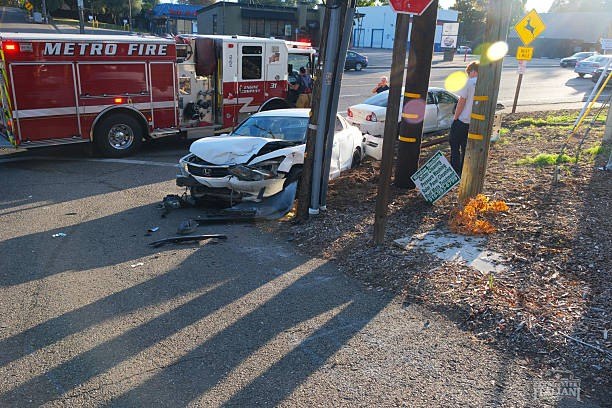
How Vehicle Design and Defective Components Can Contribute to Serious Car Accidents
A driver can do everything right and still end up in a hospital bed because a tire tread separated at highway speed. Federal crash investigators have spent decades tracing a measurable share…
Read story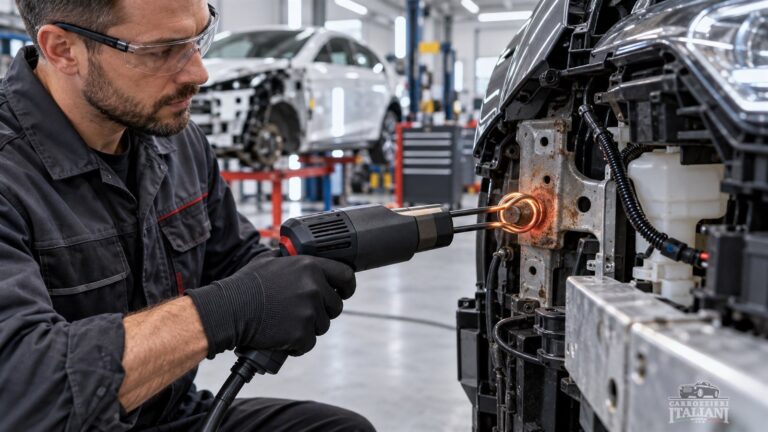
How Automotive Induction Heaters Improve Speed and Safety in Collision Repair
Collision repair has long relied on open-flame torches to loosen rusted bolts, soften adhesive, and free stuck body panels, but that approach carries real tradeoffs. Flame-based heating is slow to control precisely,…
Read story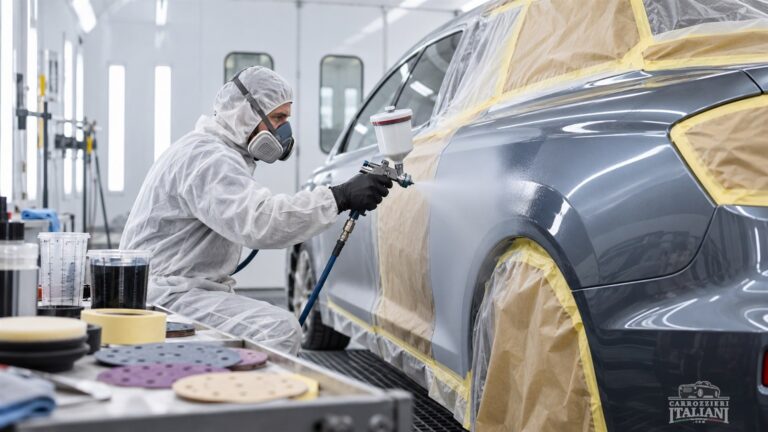
The Key Stages of a Professional Vehicle Paint Repair
Vehicle paintwork has to cope with stone chips, minor collisions, scratches, weather exposure, and everyday wear. When damage occurs, achieving a professional result involves far more than simply spraying fresh color over…
Read story
Il veicolo urbano dopo il viaggio: cosa distingue davvero un buon design per la città
Per gran parte della storia dell’automobile, il progetto di un veicolo è stato raccontato attraverso ciò che accade durante la guida: la velocità, la linea del cofano, il comportamento in curva, la…
Read story
THE CONVERSATION
Comments 0
Share a memory, a period photograph or a documented detail about this story.