
Fiat Multipla Eden Roc II A Beach Car No One Saw Coming
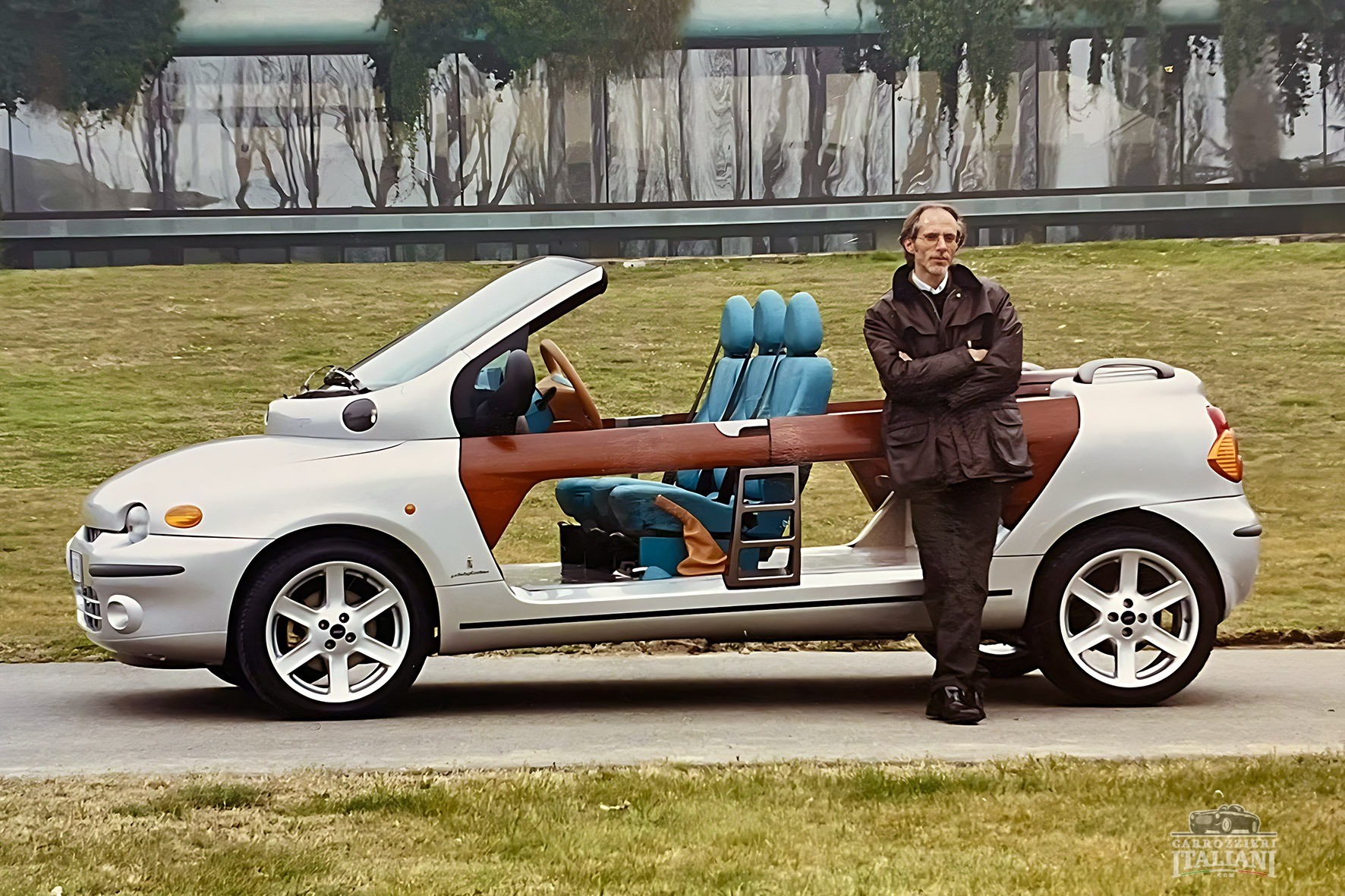
When i met Maurizio Corbi to talk about the Fiat Multipla Eden Roc II, the conversation didn’t begin with nostalgia or reverence. It began with a grin.
Because the story starts with the Fiat Multipla — and that, in itself, requires a certain honesty.
🔗 Read more: La dolce vita: the Spiaggina beach cars
The Multipla was never universally loved. It arrived on the market like a conceptual dare, with its wide stance, unconventional proportions and its now infamous double-volume front end. It broke rules with enthusiasm. Even inside Pininfarina’s own design department, Corbi admits, there was no shortage of raised eyebrows. The car was seen as bizarre, almost stubbornly unconventional, and yet at the same time there was a reluctant respect for the courage behind it. Fiat had dared to put into production an architecture that was truly original — six seats across two rows, extraordinary interior width, space used in a way no one else had attempted.
That architectural boldness would soon become its redemption.
In 2001, Fiat approached Pininfarina with a request that was less commercial strategy and more symbolic gesture: to create a special car as a birthday gift for Gianni Agnelli on the occasion of his eightieth year. The choice of the Multipla as a base was not ironic, nor provocative. It was suggested directly by Fiat’s leadership. The model was recent, important internally, and most of all, it offered generous dimensions that could be reinterpreted creatively.
Pininfarina was given complete freedom.
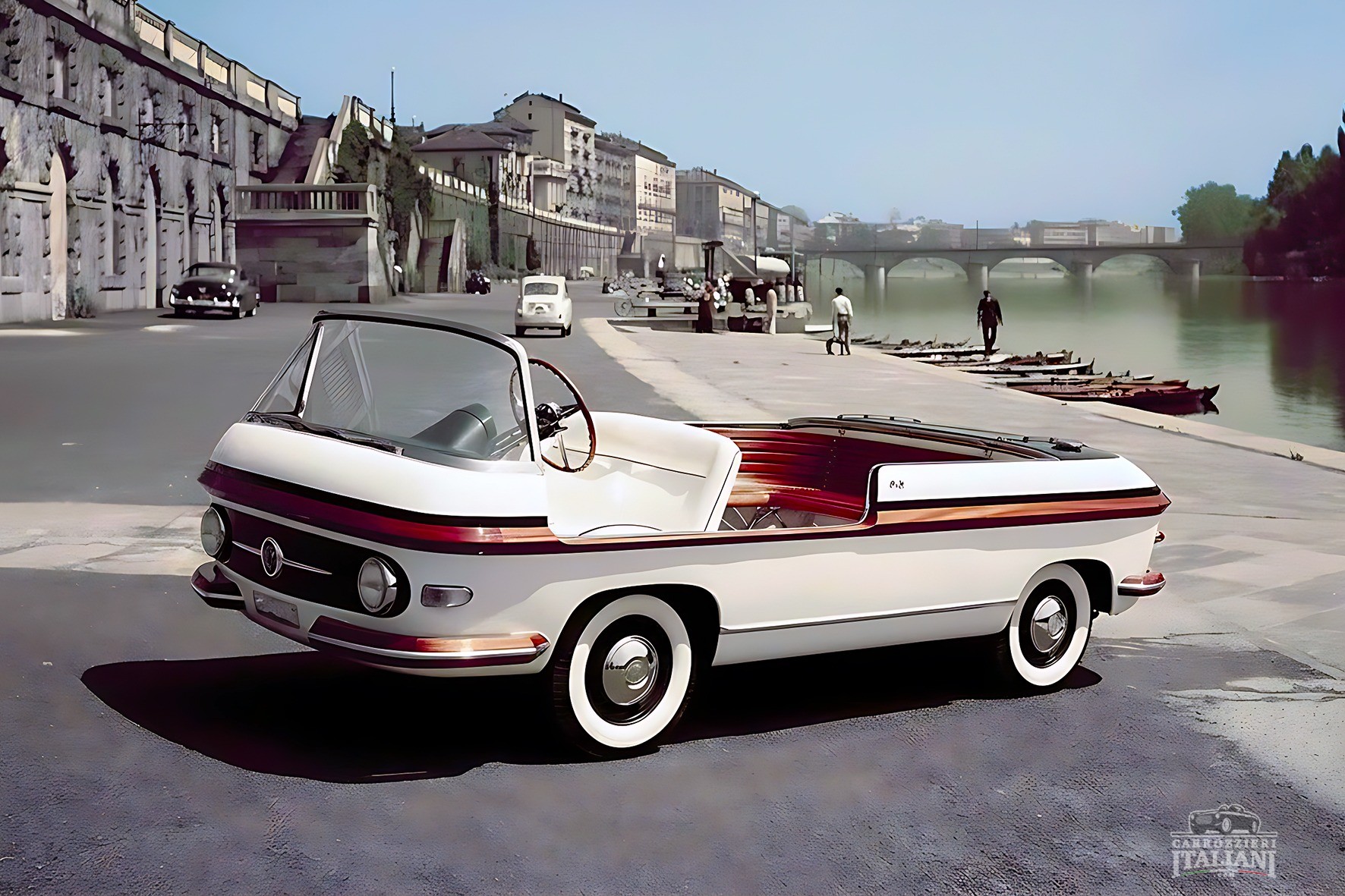
The direction quickly aligned around an evocative idea: to revive the spirit of the Eden Roc. The original Fiat 600-based Eden Roc of the 1960s had embodied a uniquely Italian blend of leisure and elegance, a car that seemed designed not for commuting but for sunlight, sea air and long afternoons. The objective now was not to replicate that car mechanically, but to recreate its atmosphere — to channel its relaxed sophistication into something contemporary.
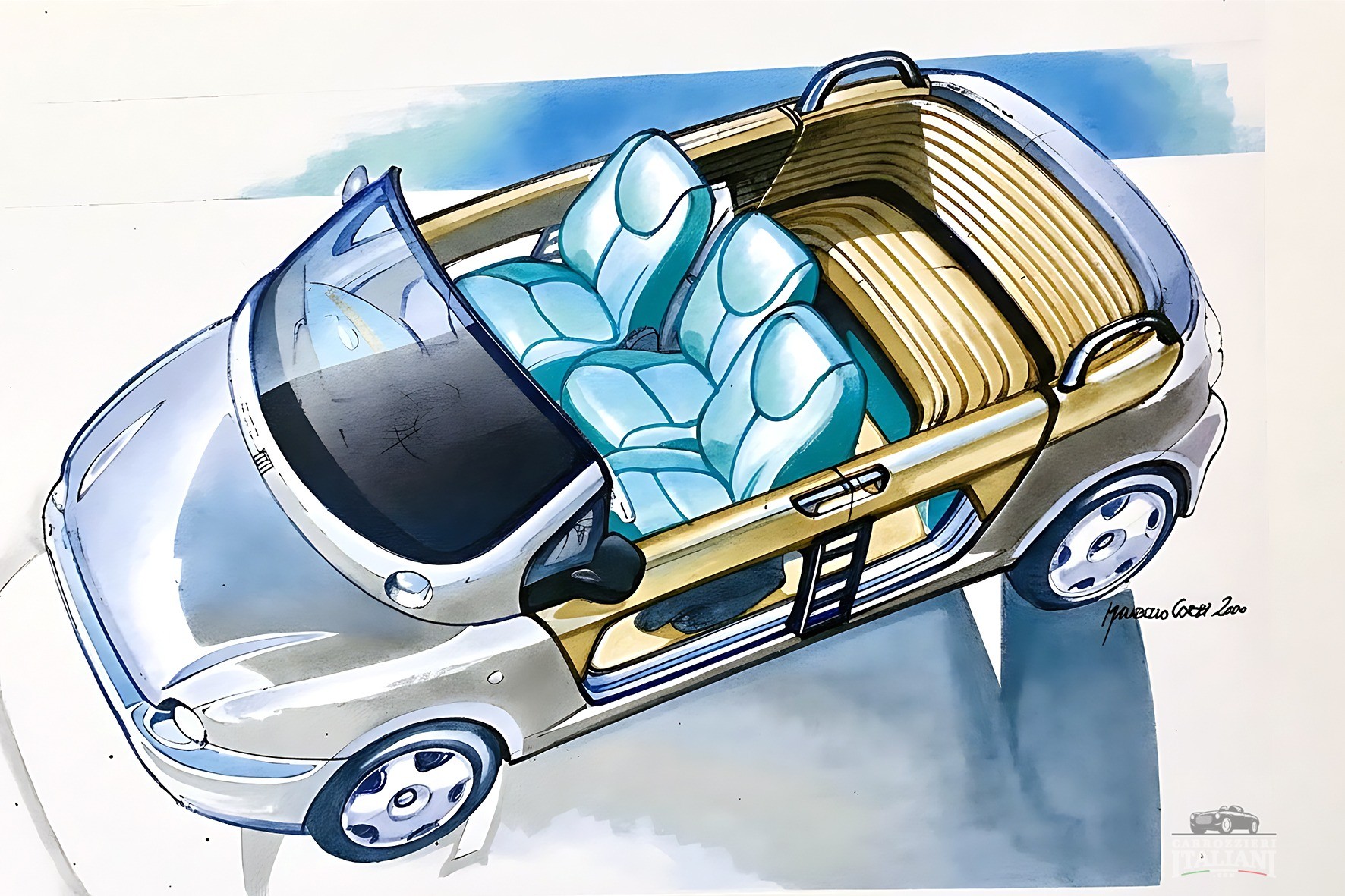
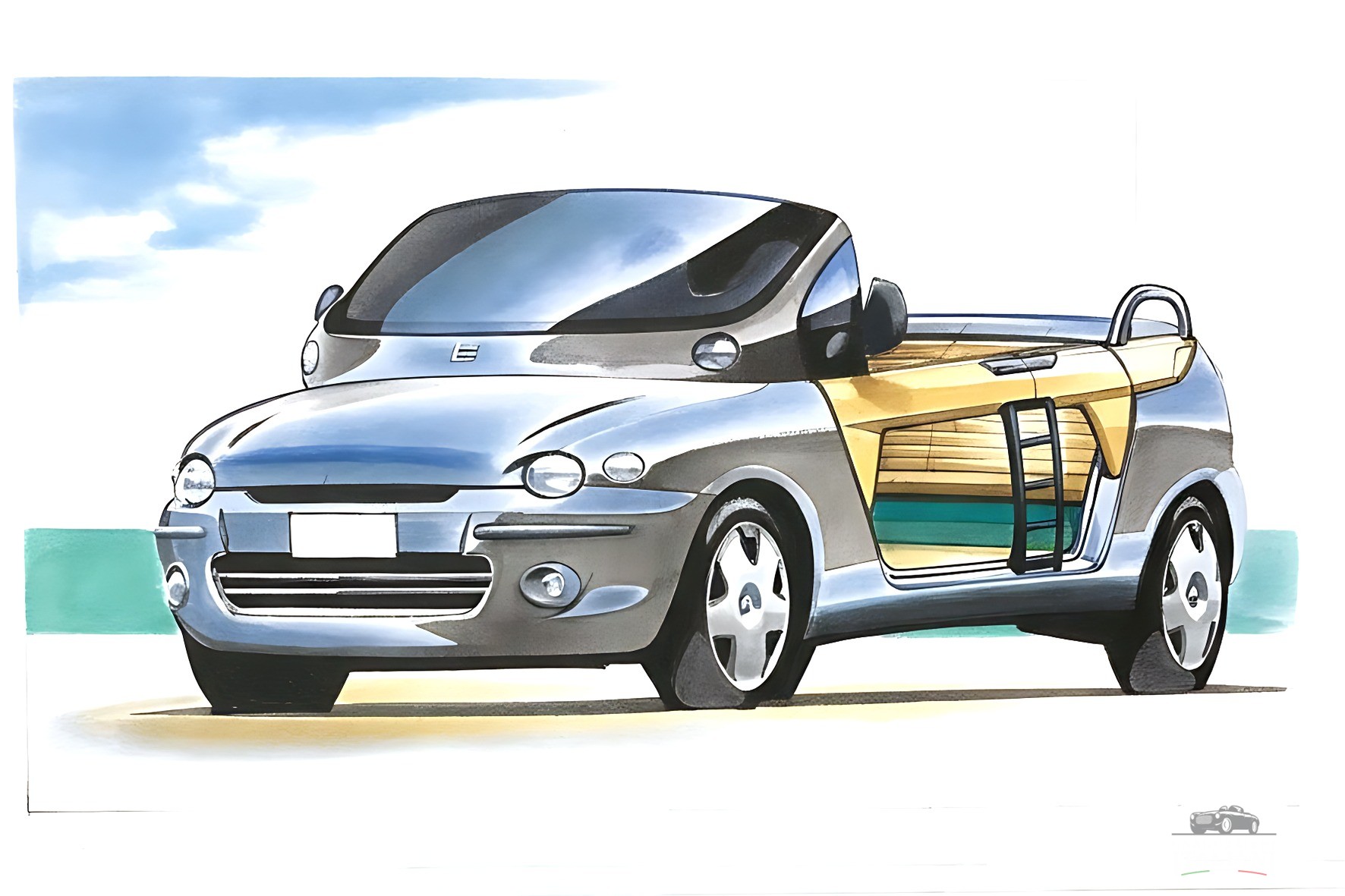
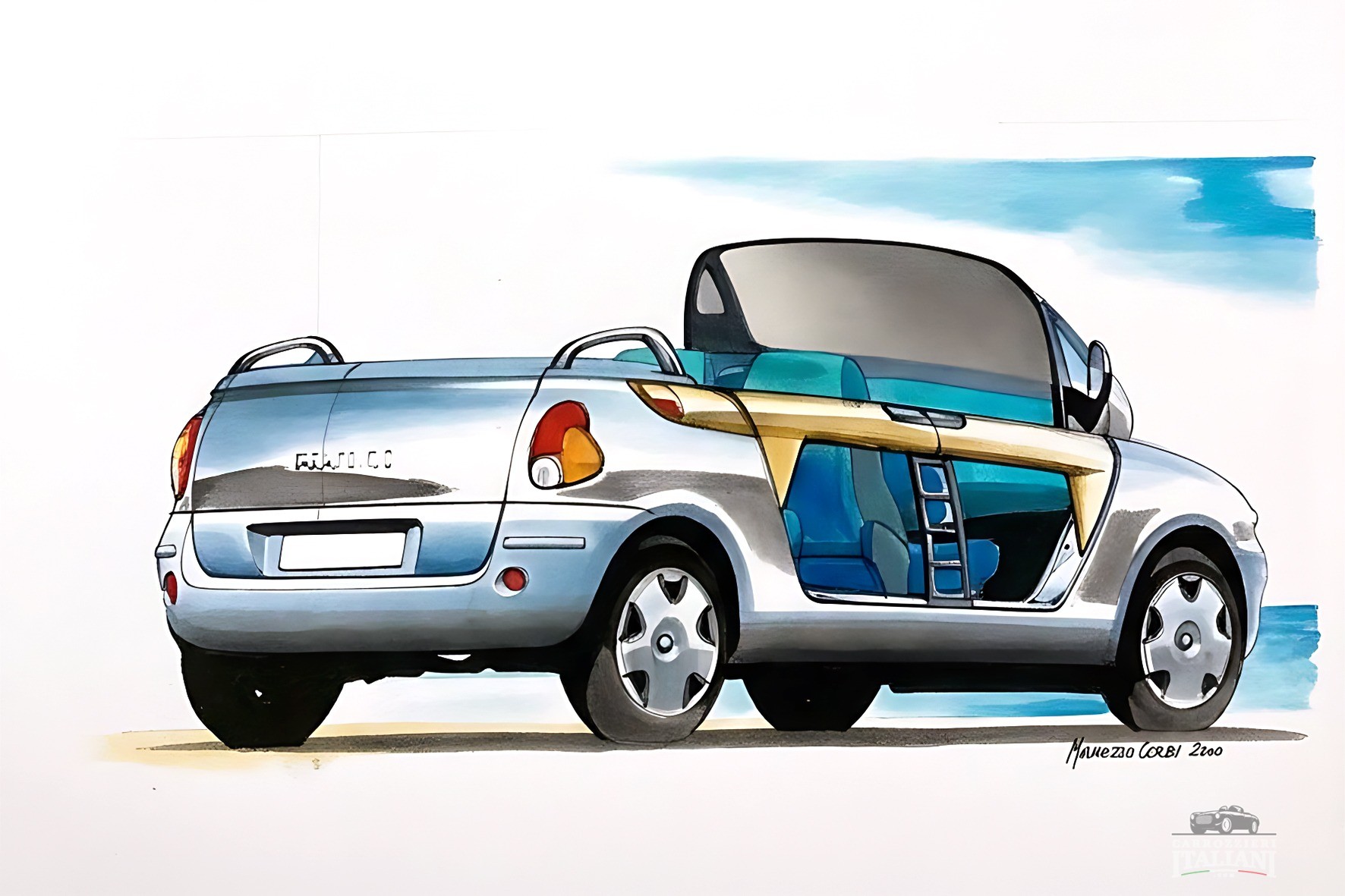
Lorenzo Ramaciotti entrusted Corbi with the project from beginning to end. That meant responsibility, certainly, but also autonomy. Designing a one-off always carries a different energy compared to production programs. There are fewer constraints, fewer committees, fewer compromises imposed by mass manufacturing. And in this case, the brief itself had a certain lightness to it. The model shop atmosphere was playful. Colleagues joked about transforming the already controversial Multipla into a “spiaggina.” There was room to experiment, to exaggerate slightly, to enjoy the process.
Yet beneath that relaxed surface lay real engineering challenges.
Converting a wide MPV into an open beach car is not as simple as removing a roof panel and celebrating. The Multipla’s generous width, which had been one of its selling points, became a structural concern once upper body rigidity was reduced. Without a roll-bar, reinforcing the floorpan was essential. Corbi explains that significant strengthening of the lower structure was required to compensate for the loss of rigidity. Safety and torsional integrity could never be elevated to sports-car levels in such a transformation, but everyone involved understood the context. This was not a vehicle intended for high-speed touring or cross-country adventures. It was, in essence, a crafted gesture.
And yet the engineering discipline never gave way to carelessness.
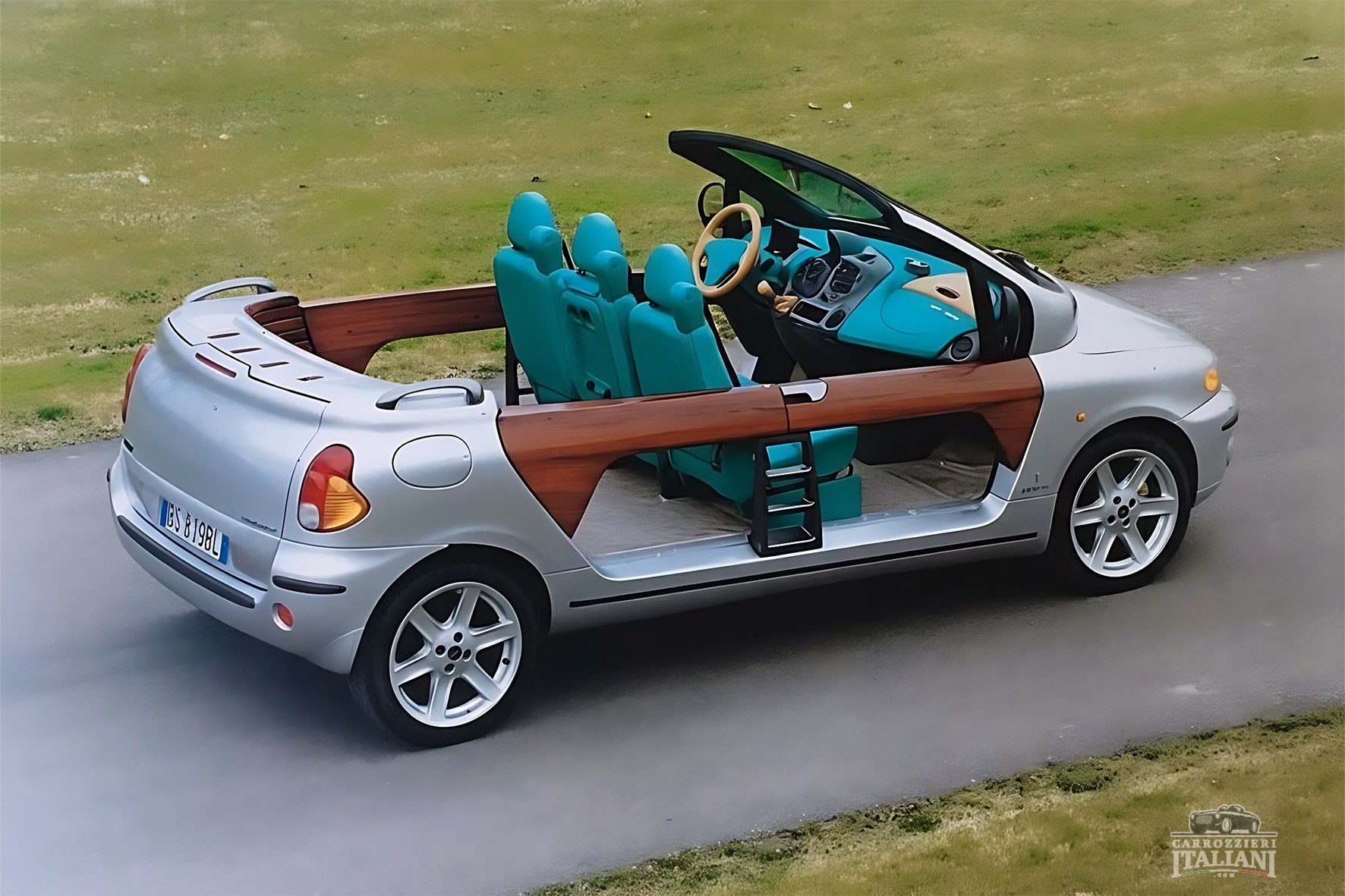
One of the most charming — and revealing — aspects of the project lies in its use of wood. The nautical inspiration was clear from the outset, but it was handled with restraint rather than cliché. The exterior was finished in a carefully chosen white, a tone intended to evoke the brightness of Mediterranean light reflecting off water. The seats were upholstered in a marine aqua blue that reinforced the seaside mood. That colour, Corbi recalls with mild amusement, was later replaced with a beige tone that he describes as “very sad,” an alteration that diluted the original freshness of the concept.
🔗 Read more: The Fiat Panda Destriero: A Odyssey of Creativity and Uniqueness
The rear bench incorporated wood in homage to classic runabouts, but the real surprise concerns the doors. They were not simply covered in wood. They were made of wood. Solid wood. A romantic decision that immediately revealed its practical consequences. When the doors were first mounted, the hinges bent under their weight. The solution required oversized, reinforced hinges capable of bearing the mass. It was a moment where design poetry met mechanical reality, and mechanical reality won — albeit elegantly.
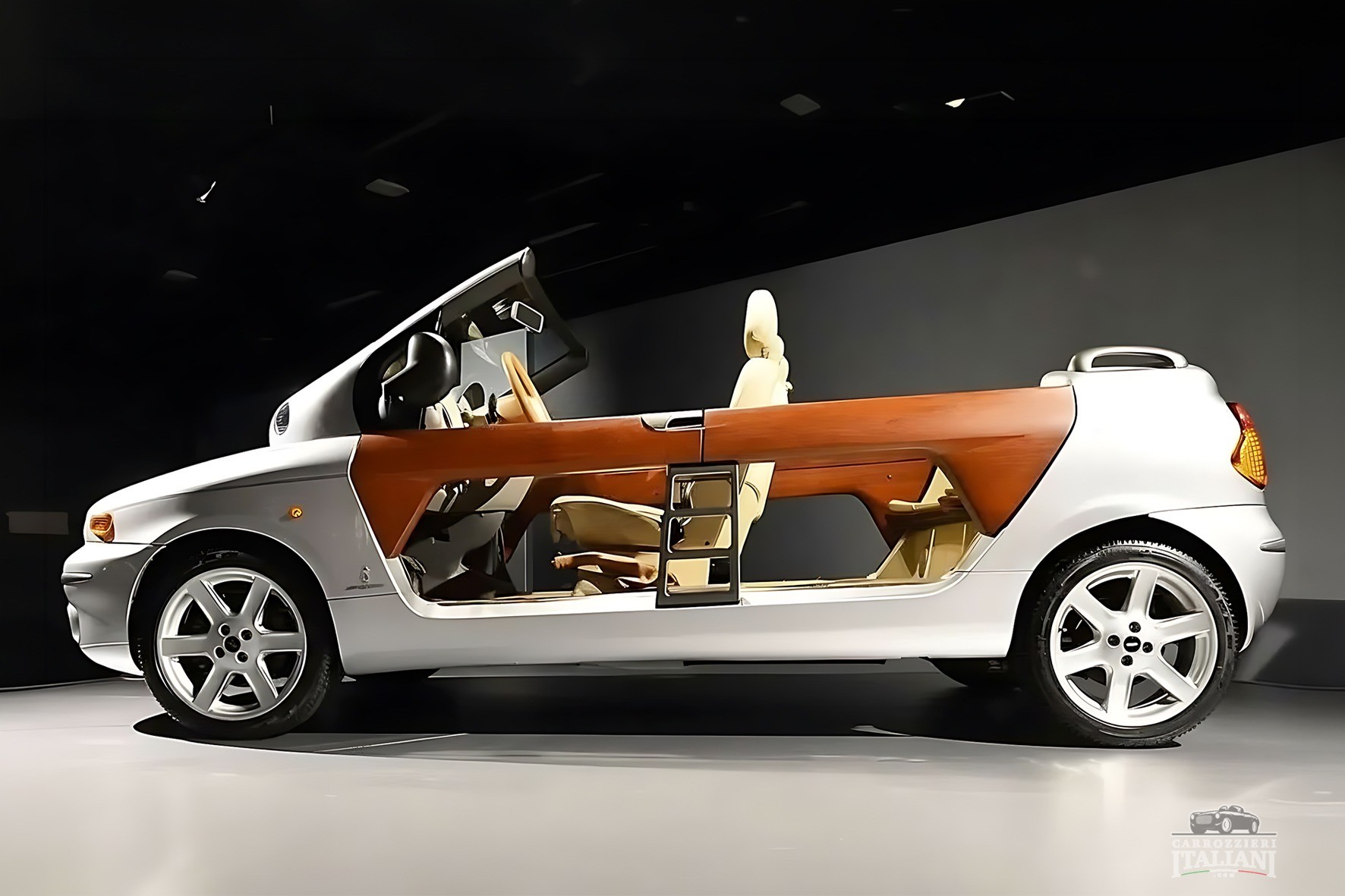
The lateral “ladder” element along the side, reminiscent of boarding a small yacht, served both aesthetic and structural purposes. It anchored the two book-style wooden doors and reinforced the visual narrative of maritime leisure. It was decorative, certainly, but never purely so. Each gesture had to justify its existence technically as well as visually.
A Caprice, Not a Crown Jewel
Interestingly, Corbi never perceived the Eden Roc II as a luxury product in the traditional sense. It was not conceived as opulence on wheels, nor as a statement of wealth. Instead, he describes it as modern, slightly extravagant, youthful — a caprice. The word suits it perfectly. A caprice suggests spontaneity, indulgence without excess, something created for the joy of the idea rather than for strategic necessity.
🔗 Read more: Ferrari F355: Designer Maurizio Corbi on Creating a 1990s Icon
The fact that Gianni Agnelli never truly used the car does not trouble Corbi. If anything, it seems almost inevitable in hindsight. An industrialist who had experienced nearly every automotive milestone of the twentieth century was unlikely to be astonished by yet another machine, however thoughtfully executed. The Eden Roc II was not designed to transform his life. It was designed to exist as a gesture — affectionate, slightly ironic, unmistakably Italian.
When Time Brings the Tide Back
For years, the project remained a curious footnote in Corbi’s career. It was remembered, certainly, but not elevated to mythical status. Then, unexpectedly, it found new life. A recent post on his Instagram account featuring the Eden Roc II attracted more than 100,000 views. The reaction surprised him. A car conceived as a one-off birthday gift two decades earlier had suddenly captured contemporary attention.
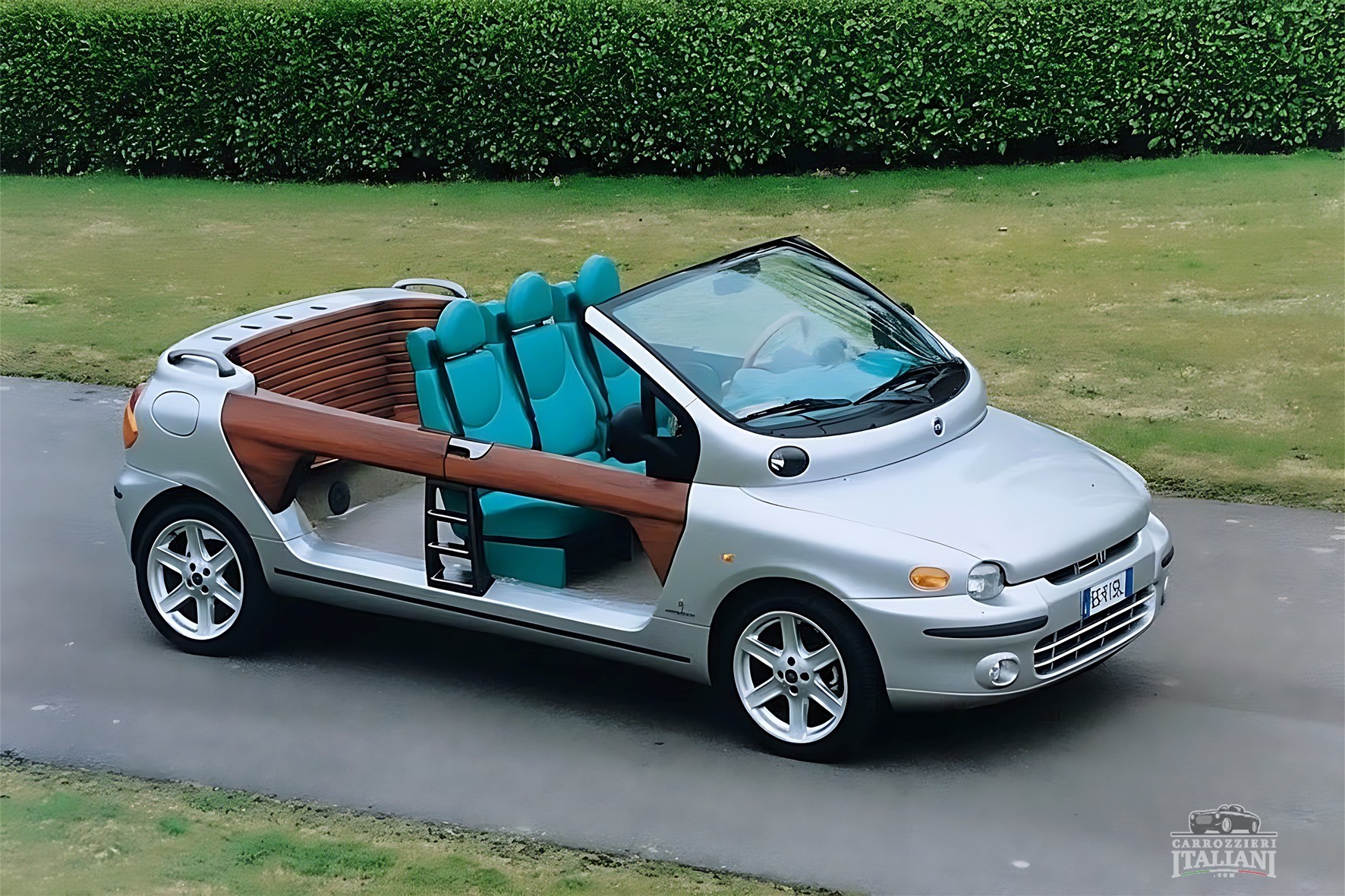
Perhaps that reaction says something about today’s automotive landscape. In an era dominated by cautious design language, regulatory frameworks and global platform sharing, the Eden Roc II feels refreshingly unconstrained. It represents a moment when design could afford to be slightly whimsical without apologizing for it.
If he were to reinterpret the concept today, Corbi admits he might choose a smaller donor vehicle and perhaps integrate a fabric roof to make the composition more articulated. Yet he would not erase its essence. The spirit of the Eden Roc II lies precisely in its willingness to embrace contradiction: a controversial MPV turned into a seaside toy; solid wooden doors on a modern platform; structural reinforcement hidden beneath playful surfaces.
It is a car that does not take itself too seriously, and perhaps that is why it endures.
The Fiat Multipla Eden Roc II was never meant to change the market. It was never destined for production lines or collector auctions. It was a birthday caprice shaped by freedom, humor and craftsmanship. And sometimes, that kind of project reveals more about design culture than any mainstream success ever could.

ABOUT THE AUTHOR
Andreas Scheidl
Italian classic car enthusiast with German roots. Renowned as a respected figure in the classic car community, he serves as a jury member at various international concours d'elegance, including the Classic Gala Schwetzingen and Mantova. As a content creator, Andreas passionately shares his profound knowledge and appreciation for vintage automobiles. His heart beats for cars designed by Giovanni Michelotti, showcasing his discerning taste and dedication to preserving the timeless elegance of automotive history.
More stories by Andreas Scheidl ↗CONTINUE READING
Posts You Might Like

A Central Driving Position, a Rear-Mounted V8. Was This Really a Lancia?
In 1948, visitors to the Turin Motor Show could see an unusual Lancia on the stand of Carrozzeria Ghia. It was a large two-door coupé with a two-litre V8 mounted behind the…
Read story
Fioravanti F100: The Ferrari He Was Allowed to Imagine
Enzo Ferrari’s centenary, Leonardo Fioravanti’s independent studio and a supercar that explored air brakes, steel wheels and a new way of driving—without ever wearing the Cavallino.
Read story
Michelotti Shellette: When the Fiat 850 Became a Yacht
The yacht designer, the Turin stylist and the tiny coachbuilt car that crossed between the quay, the royal holiday house and the auction room. Some automobiles were conceived for the open road,…
Read story
Maserati A6 1500: A New Road for the Trident
When the doors of the Geneva Motor Show opened in March 1947, Maserati was a name that required little introduction to anyone who followed motor racing. What it did not yet possess…
Read story
THE CONVERSATION
Comments 0
Share a memory, a period photograph or a documented detail about this story.