
Siata 208 CS – History, Design & Coachbuilders of Fiat’s V8-Powered Gem
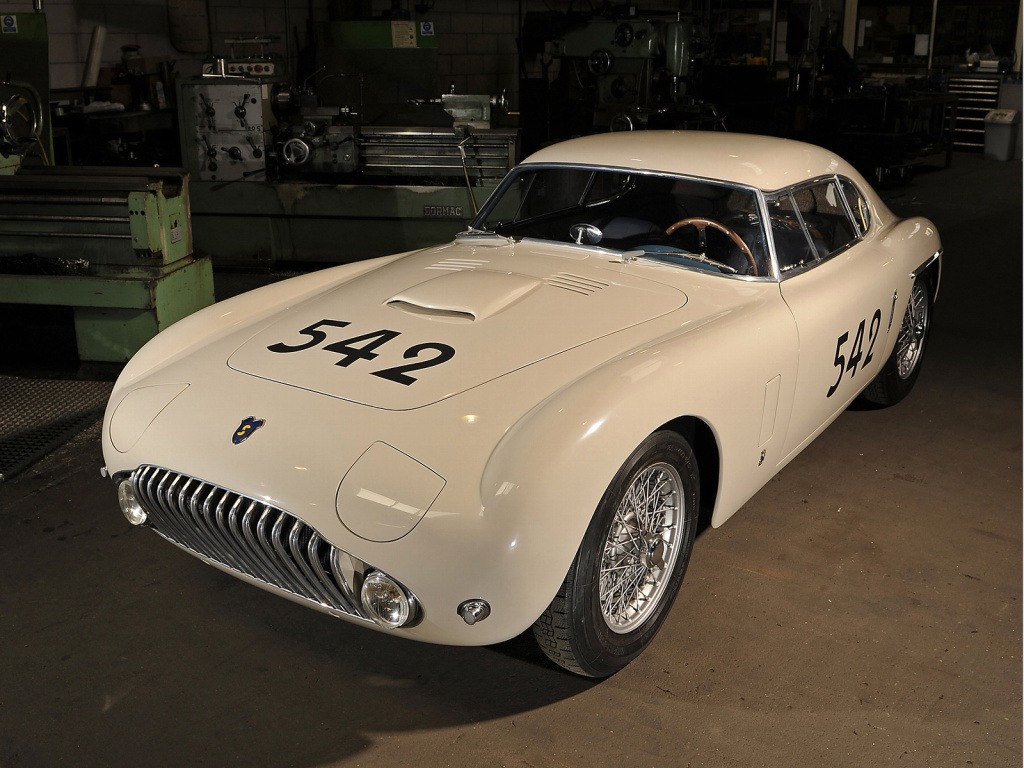
In the early 1950s, amidst Italy’s booming post-war sports car renaissance, a small Turin outfit decided to play David among Goliaths. Siata – short for Società Italiana Auto Trasformazioni Accessori – had made its name hot-rodding Fiats, but with the 208 CS it stepped out of the shadows of Ferrari and Maserati to create something truly special. Beneath its elegant coachbuilt curves lay the heart of Fiat’s advanced “Otto Vu” V8, a high-revving 2.0-liter jewel that Siata helped develop in secret. Only 18 examples of the Siata 208 CS would be built (11 clothed by Carrozzeria Balbo and 7 by Stabilimenti Farina), but each one embodied the ingenuity of a boutique carmaker punching above its weight. The result? A witty yet sophisticated grand tourer – as if Turin’s engineering academia threw on an Italian bespoke suit for a spirited night out. It was a car that combined technical innovation, bespoke styling, and racing ambition, all with a hint of cheeky charm.
Origins: A Little Jewel with a Big Heritage
To understand the 208 CS, we must start with its lineage. Siata had been founded in 1926 by Giorgio Ambrosini as a tuner of Fiats, selling speed parts and clever gadgets to make the humble Topolino sing. After World War II, this scrappy firm even built its own sports cars (the Siata Daina being the first, in 1950) and caught the eye of Fiat. When Fiat decided to create a new 2.0-liter V8 for a luxury sedan aimed at America, they enlisted Siata’s expertise. Though Fiat’s sedan project flopped in planning, the all-alloy Tipo 104 V8 was too good to waste. Fiat put this 70-degree marvel into their limited-production 8V coupé, and when that proved a hard sell in the austere early ’50s, about 50 surplus engines were gifted to Siata as a parting gesture of goodwill.
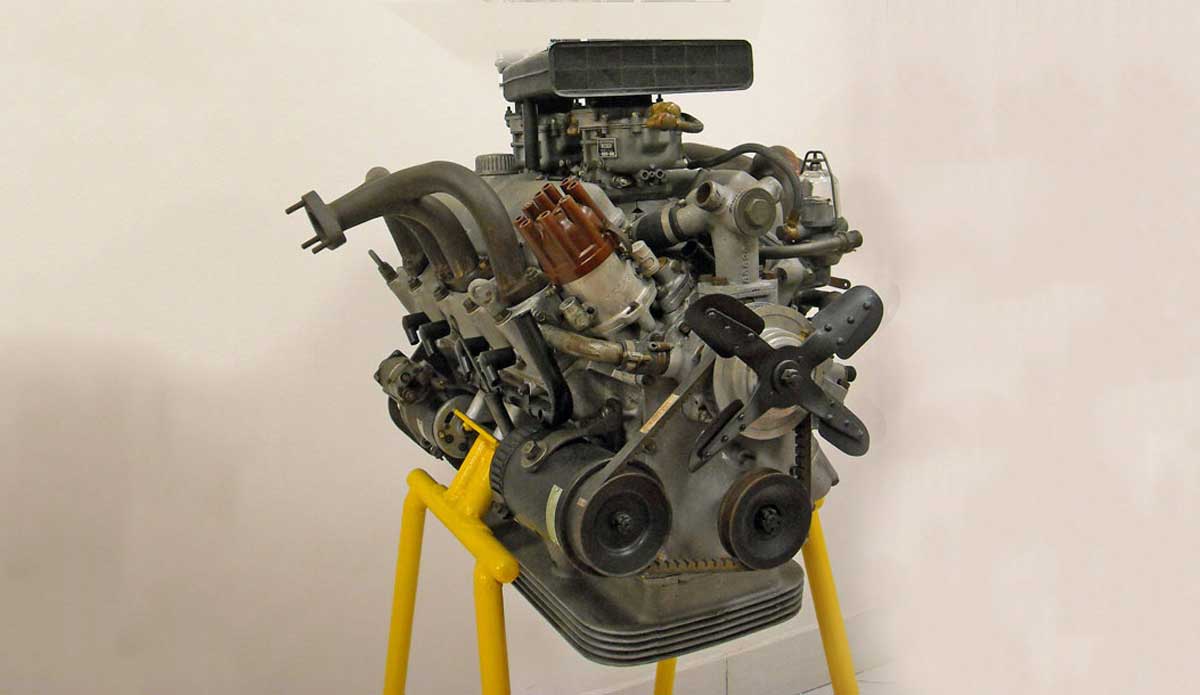
Armed with a bundle of high-tech Fiat V8s, Siata did what any self-respecting Italian artisan would: built its own sports cars to show up the big boys. The 208 series was born – “208” for 2.0 liters, 8 cylinders. There was the open-top 208S (Spider) and our protagonist, the 208 CS (Coupé Sport), introduced at the 1952 Turin Motor Show. Siata’s engineers, led by the talented Rudolf Hruska of ex-Porsche and Cisitalia fame, crafted a tubular steel chassis not unlike the advanced frame underpinning the Fiat 8V. This wasn’t some lash-up of old Fiat parts; it was a sophisticated platform featuring independent suspension at all four corners with coil springs and telescopic dampers, at a time when many rivals still jigged around on live axles and cart springs. Add four-wheel alloy drum brakes and a Siata-tuned version of the Fiat V8, and the little coupé could genuinely punch above its class. Siata quoted about 110 horsepower, but in reality the “Otto Vu” had closer to 125 hp on twin Webers – and even 140 hp with hotter cams and triple carbs in full race tune. All that oomph was fed through a Siata-designed five-speed gearbox, giving the 208 CS long legs on the straights when Ferraris were still managing with four gears. This car was, in short, a technical tour de force in a tailored 2+ brief – the kind of over-achiever that made motoring journalists swoon over its spec sheet as much as its beauty.
🔗 Read more: The Fiat 8V
Yet the 208 CS wasn’t just a nerdy engineering exercise. It had style and charisma to match its advanced guts. Siata didn’t have an in-house styling department, so they farmed out the coachwork to Italy’s finest artisans, encouraging them (with a wink) to borrow cues from the Ferrari designs of the era. The result was a handful of distinct, hand-built dresses for this athletic chassis, each with its own flair. Stabilimenti Farina, the coachbuilder run by Battista “Pinin” Farina’s brother Giovanni, was tapped for the initial bodies. Later, when Stabilimenti Farina shut its doors in 1953, the torch passed to Carrozzeria Balbo of Turin for the remaining production. Along the way, one-off specials by Bertone and even Vignale added further spice to the mix. The 208 CS, therefore, is not one car but an ensemble – a theme interpreted by different Italian coachbuilding maestros, each adding a chapter to the story.
Stabilimenti Farina: Debut in Discretion and Speed
The first act of the 208 CS saga was played out by Stabilimenti Farina, and it set an elegant tone. Farina crafted the initial six coupés in 1952–53, and these cars were subtle in their beauty – a blend of Turin sophistication and latent aggression. They featured sleek, retractable headlamps faired into the nose, which gave a clean shark-like front when closed. In profile, the Farina-bodied 208 CS had an intoxicatingly low stance, sitting just a meter or so off the ground, as if hugging the Italian roads it was meant to conquer. The greenhouse was tight and the roofline fastback, flowing into a neatly tapered tail. Inside, the cockpit was competition-oriented: bucket seats, a drilled three-spoke steering wheel, and a full complement of gauges – all business, no frivolity. These cars looked ready to race, because that’s exactly what Siata intended.
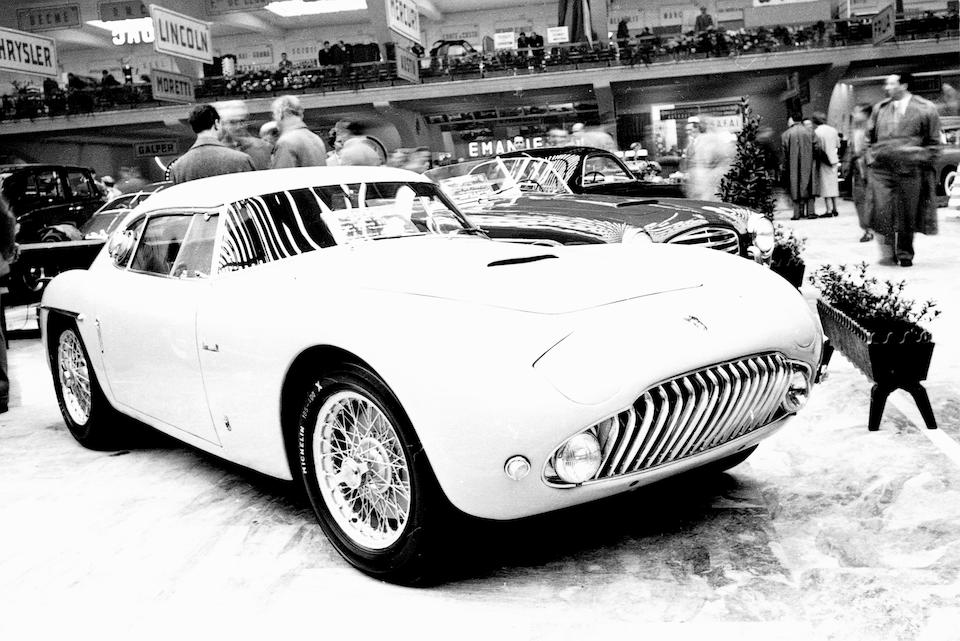
Unveiled at the Turin Motor Show in April 1952, the 208 CS made an immediate impression. Here was a petite GT car, painted a stately midnight blue or Italian racing red, that promised the performance of a larger Ferrari 2-litre but in a more compact, perhaps even practical, package. Siata wasted no time proving its mettle. They entered the 208 CS in some of the toughest events of the day – the Mille Miglia, the Giro di Sicilia, the Tour de France Automobile, you name it. In the 1952 Mille Miglia, in fact, a trio of fresh 208 CS coupés took the start alongside the titans of the era. Two encountered the typical heartbreaks of that grueling 1000-mile road race, but one 208 CS, driven by seasoned racers Franco Rol and Gino Munaron, went on to finish a stunning 11th overall (3rd in class). Imagine it: amid the thundering Ferraris and the new Lancias, an upstart Siata coupe zipping through Italy to claim a top-15 finish – it was like a privateer boxer sneaking onto the podium with a black eye and a grin. Another Siata 208 managed 12th in the Giro di Sicilia that same year, proving the car’s stamina on Sicily’s mountain roads. One of the Farina spiders also had its moment, reportedly finishing 11th overall in the 1952 Mille Miglia – a result that firmly established the Siata as a dual-purpose sports car, as happy on a race course as on a boulevarde.
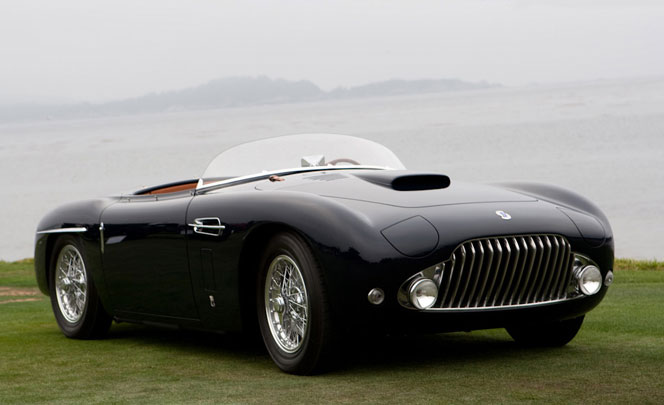
Stylistically, the Farina-bodied cars were understated, almost gentlemanly, belying their racing intent. Giovanni Farina had long perfected a formula for Franco-Italian elegance, and on the 208 CS it meant restrained chrome detailing, a tidy oval grille, and flowing fender lines uninterrupted by fussy trim. The retractable lights (predating the pop-up craze by a decade) gave a sleek face for high-speed runs at night – or just for showing off at the café. It was a sophisticated aesthetic that perhaps lacked a bit of the flash that other coachbuilders would later bring, but exuded class. One might say the Farina 208 CS was the quiet introvert of the family, with a serious competitive streak hidden beneath the tailored suit. Notably, Stabilimenti Farina was also responsible for one 208 CS Spyder, a convertible version that stands as one of the final projects the firm completed before closing. With its wraparound windshield and open-top profile, that Spyder showcased how versatile the Siata chassis could be in interpretation. Sadly, 1953 would mark the end of Stabilimenti Farina – the company folded, leaving just those few Siata berlinettas and the lone spider as its swansong.
Carrozzeria Balbo: Bold Curves and American Dreams
If the Farina-bodied Siatas were the refined introverts, the Balbo-bodied 208 CS were the extroverts of the family – a bit more flamboyant, a dash more daring, and with stories as curvy as their bodywork. Carrozzeria Balbo of Turin was not a household name like Pinin Farina or Bertone; in fact, Balbo was a rather unsung hero among Italian coachbuilders. Founded in 1914, Balbo had survived war and lean times, mostly crafting special Fiats and even dabbling in microcars. By the early 1950s, they were eager for a project to prove their mettle, and the Siata 208 CS was just the ticket. Balbo took over construction of the 208 CS bodies after 1953 and ultimately clothed perhaps nine examples in total.
🔗 Read more: Carrozzeria Balbo: The Forgotten One
What did a Balbo Siata look like? In a word: dramatic. Balbo’s design for the 208 CS was lower and wider in appearance, with pronounced fender peaks and a distinctive oval grille that seemed inspired by contemporary Ferraris yet had its own flair. The bonnet stretched long and low between the subtly raised front wings, and the roofline was taut, often finished in a contrasting color on some cars to accentuate the lines. If the Farina had hidden headlamps, Balbo went the opposite direction – most of their Siatas wore exposed oval or round lamps, often set into slightly hooded fenders that gave a hint of aggression. A particularly Balbo touch was the side treatment: a curved character line swooped along the flank, sometimes punctuated by two-tone paint or a flash of chrome. The overall effect was curvaceous and a bit baroque, in that early-’50s Italian way – perhaps not to everyone’s taste at the time, but today these Balbo berlinettas are considered among the most striking shapes of the era.
Beyond looks, the Balbo Siatas quickly embarked on adventures overseas. Siata had grand ambitions in the New World – the company actively courted the American market, where wealthy sports car enthusiasts prowled for European exotica. Through dealers like Tony Pompeo in New York and Ernie McAfee in Los Angeles, a number of 208 CS coupés set sail for the USA. Pompeo, in particular, was instrumental: operating out of Manhattan, he brought in specialty Italian cars for a niche clientele and made sure they got seen on track as well as on Park Avenue. For one Balbo Siata, chassis CS071, Pompeo enlisted Robert Grier – a young American sportsman – as the wheelman. Grier thrashed the little V8 coupe in SCCA events and even entered a 100-lap race at Floyd Bennett Field in Brooklyn in late 1953, where the Siata finished a respectable 18th out of 43 starters. Not exactly a win, but finishing a brutal airport race in one piece was an achievement for a newcomer.
Meanwhile on the West Coast, Ernie McAfee – a charismatic racer and car dealer – had his eyes on something bigger for the Siata. McAfee obtained a very special 208 CS, known by its chassis number BS537. This car was unique: essentially a 208 CS Berlinetta built on the shorter wheelbase of the 208S Spider, making it a one-off lightweight special. It was a factory effort aimed at endurance racing, a bit of a mutant with drilled-out everything for lightness and a giant fuel tank to take on long races. McAfee planned to enter it in the 1954 Carrera Panamericana, the famously treacherous Mexican road race. He’d run a 208S spider in the 1953 Carrera (nicknamed the “Holey Terror” for McAfee’s habit of drilling holes in the chassis to shed weight), and now wanted to try with a closed coupe for ’54.
Chassis BS537 arrived in New York just in time for some shakedown races: McAfee and co-driver Bill Thomas took it to the Palm Springs Road Races in California and finished 5th overall in a preliminary event – not bad for a fresh-off-the-boat Italian newcomer. A couple of weeks later they attempted another race at March Field, but mechanical gremlins struck and the car DNF’d. As the Carrera’s start loomed in November 1954, McAfee’s Siata was prepared – its riveted tank filled, twin four-barrel Webers gulping air – but at the eleventh hour the entry was withdrawn. Word on the street was that Fiat’s announcement ending the 8V engine program dampened the enthusiasm, and McAfee pivoted back to focusing on Ferraris. Thus the Siata 208 CS never got to chase glory in Mexico. Fate took an even crueler turn when McAfee himself perished in a crash in early 1956, leaving behind this special Siata coupe which had been mothballed after the Carrera plans fizzled.
Yet BS537’s story didn’t end there. After McAfee’s death, his partner Bill Doheny tucked the car away in storage, and eventually it was sold on to a sportsman named Wesley Belt. Belt ran the Siata at a few club events in California in the late ’50s before retiring it. By the 1960s it sat in disassembled, bare-aluminum form – a mysterious alloy carcass lurking in the back of a workshop, catching the eye of design students and car nuts who wondered what on earth it was. Rediscovered in the 1980s, that special Siata would be restored and live on as a holy grail for Siata aficionados: the coupe that almost conquered the Carrera.
Not all Balbo Siatas had such dramatic lives, but each seems to have collected a colorful scrapbook of anecdotes. Another, chassis CS069, is believed to have been exhibited at the Geneva and Turin auto shows in 1953 as a showpiece for Siata’s transatlantic dreams. Chassis CS072 remained in Europe initially, but by the late 1950s found its way to France and then to the U.S., passing through the hands of enthusiasts and even starring at Pebble Beach after a meticulous restoration. Perhaps the most heartwarming tale belongs to chassis CS071 (the ex-Pompeo/Grier car): in 1959, a young doctor named Julius Eisenstark spotted this very Siata languishing on a New York used-car lot, of all places. He promptly bought it – likely for a song, since Siatas were obscure and second-hand by then – and proceeded to keep it in his family for an astonishing 64 years! The Eisenstark Siata was raced in the northeast US through the late ’50s, then lovingly maintained as a family heirloom for decades, eventually undergoing a full restoration in its original sky-blue paint by the doctor’s children. It even made an appearance on Jerry Seinfeld’s show Comedians in Cars Getting Coffee, proving that this once-forgotten Italian gem still knew how to charm the spotlight.
Balbo’s chapter came to a close as well in 1954 – the coachbuilder shut down, meaning the Siata 208 CS was orphaned without a body-building partner. By then, however, production of the 208 series was winding down. Siata ultimately sold around 53 of the 208-series cars (Spider and Coupe combined), of which only those 18 were 208 CS Berlinettas. The Balbo-bodied cars, once considered the odd ducks of the bunch, are today some of the most prized – their rarity compounded by that unmistakable style and the rich transatlantic racing history many carry.
Bertone: Nuccio’s Corsa Spider and a Michelotti Masterstroke
No Italian automotive tale would be complete without a cameo by Bertone, and indeed Bertone’s role in the 208 CS story is small but scintillating. While Bertone didn’t participate in the main production run, it built at least two one-off Siata 208 CS specials that have since become legends in their own right. The first was a factory-backed race spider commissioned by Nuccio Bertone himself – effectively a 208 CS chassis turned into a barchetta for competition. Chassis CS054 was that car, known as the 208 CS Corsa Spider by Bertone, and it was Nuccio’s personal racing car in 1952-53.
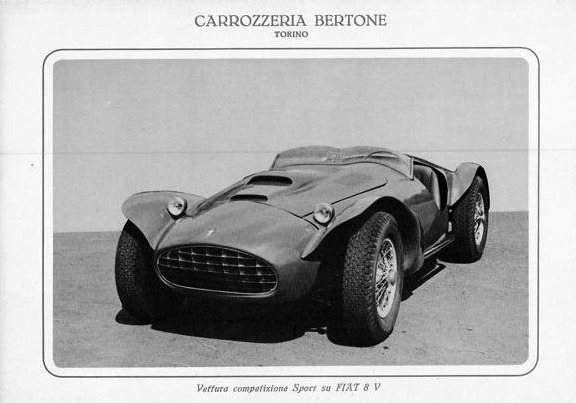
Imagine the scene: Nuccio Bertone, the young scion of the Bertone design house, tearing around Italian circuits in a metallic blue Siata spider that he helped create. With a tiny wraparound windscreen, cut-down doors, and no roof, the Bertone Corsa looked every inch a purpose-built racer. It was lighter and rawer than the enclosed coupés – an aluminum bullet designed to exploit that high-revving V8 to the fullest. Under the guidance of designer Franco Scaglione, Bertone sculpted the spider’s body with a focus on aerodynamics and minimal weight. The result was sleek and muscular, with rounded nose and tail sections and beautifully curved wheel arches that bared the tires like a motorcycle’s.
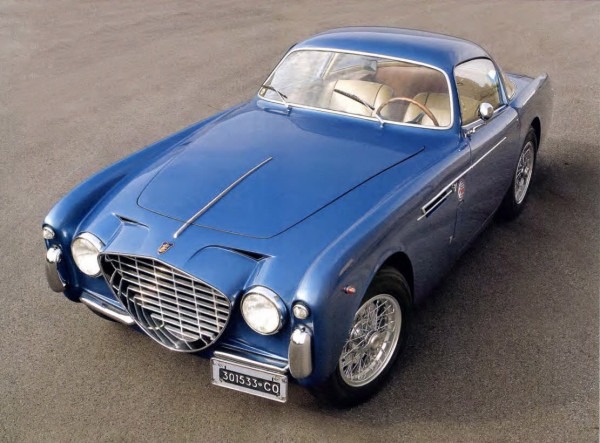
The second Bertone contribution is perhaps more enigmatic. Chassis CS068 was a 208 CS coupe bodied by Bertone, but with a twist: its design is attributed to Giovanni Michelotti, the prolific freelance designer who later became famous at Vignale and beyond. In the early ’50s, Michelotti was indeed designing for whomever knocked on his door – and after Stabilimenti Farina’s closure, where Michelotti had worked, he was a free agent. It appears that a wealthy client commissioned Bertone to build a one-off Siata coupe around 1954, and Michelotti provided the styling. The result was a one-of-a-kind 208 CS Bertone coupe that looked unlike either the Farina or Balbo versions.
Between these two – the Nuccio spider and the Michelotti coupe – Bertone demonstrated the range of what could be done on the Siata platform. From an uncompromising race barchetta to a refined grand touring coupé, the 208 CS proved adaptable in the hands of talented craftsmen.
Vignale and the Lone Grand Tourer
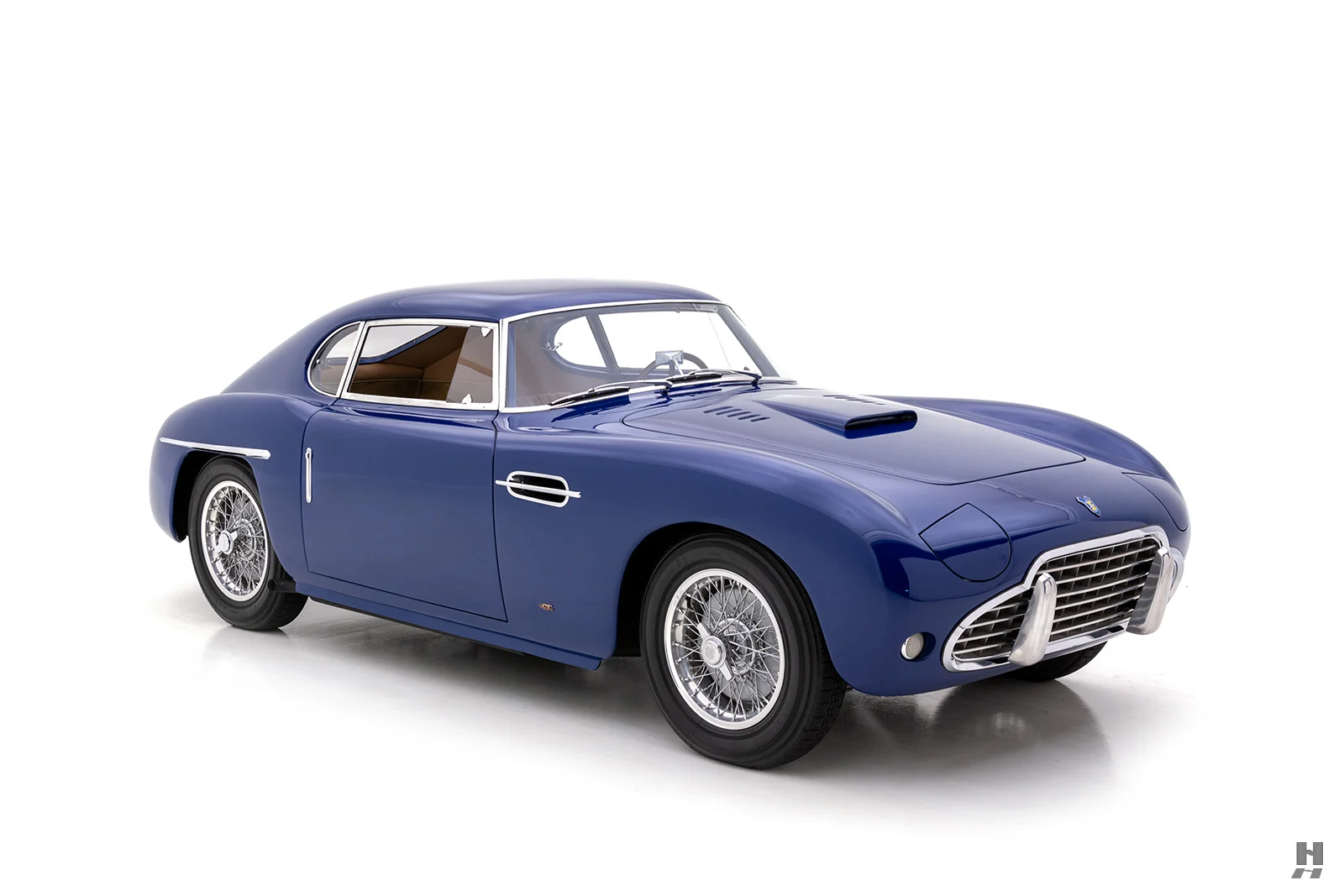
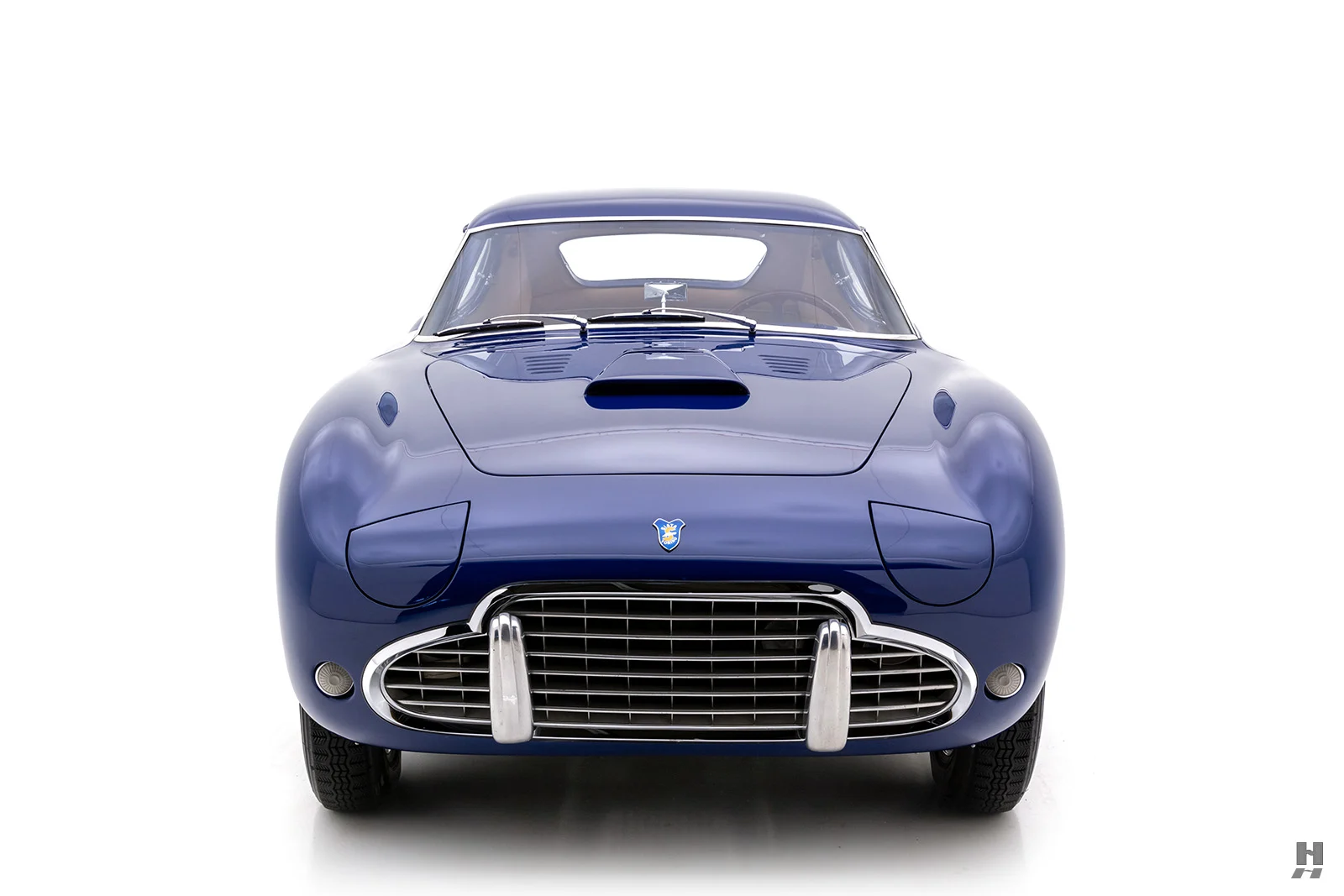
Among the varied interpretations of the Siata 208 CS, perhaps none stands out more dramatically than the sole coupé bodied by Carrozzeria Vignale. Penned by Giovanni Michelotti, this was no mere variant but a fully fledged grand tourer with its own character and proportions. Built on chassis CS070, it rode on an extended 2700 mm wheelbase, instantly setting it apart from its shorter, racier siblings. Where the Farina and Balbo cars hugged the road like sports prototypes, the Vignale Siata carried itself with the poise of a Milanese aristocrat on holiday.
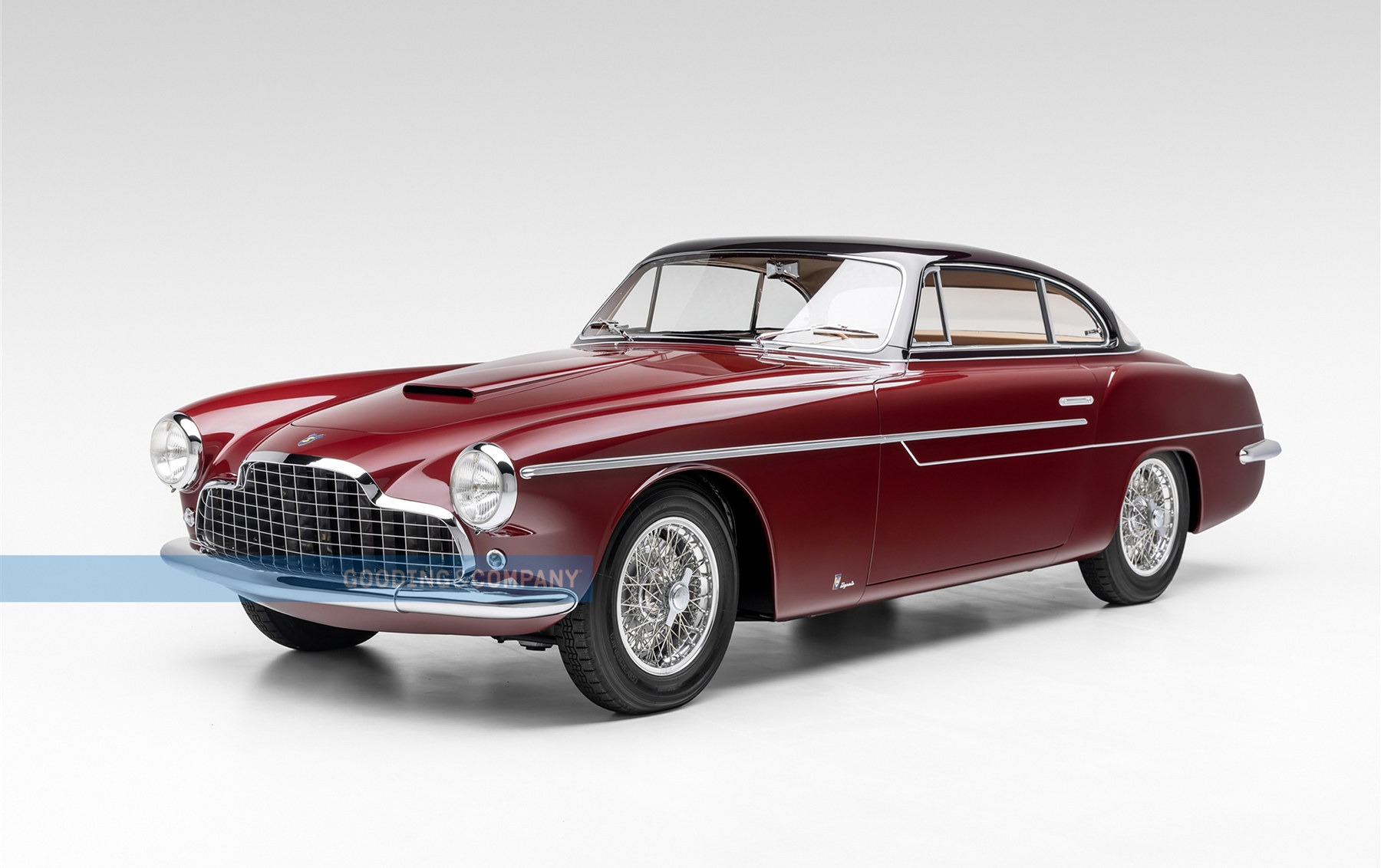
Michelotti drew heavily from themes he had already explored for Ferrari — particularly the 212 and 250 Europa “Geneva Coupes” — but gave the Siata his own twist. The coupe wore a distinctive egg-crate grille, a clean three-box silhouette softened by elegant curves, and dynamic two-tone color schemes that played up its flowing surfaces. Inside, the car was dressed more like a Ferrari than a boutique Siata: leather, chrome, hand-finished switchgear, and the sense that this was a machine not only for the Mille Miglia but also for an evening at the opera.
The story of CS070 begins in late 1952, when its engine (CS040) was invoiced to Siata just before the year’s end. By October 1953, the finished car took pride of place at the Paris Salon, followed in March 1954 by another showing at the Geneva Motor Show. Its first registered owner wasn’t a dashing count or an American racer, but a pharmaceutical company in Rome — Stabilimenti Chimico-Farmaceutici Dott. R. Ravasini e C.ia. S.p.A. Registered as “Roma 225576,” the car nevertheless exuded glamour even in corporate hands.
By 1960, like so many exotics, the Vignale Siata migrated across the Atlantic, finding its way into the stock of Larry Reed, a Los Angeles dealer. In classic Californian hot-rod fashion, its jewel-like V8 was replaced with a thundering Corvette small-block and a close-ratio three-speed. Road & Track even carried advertisements describing it as a “Gran Turismo 4-pass coupe” with 270 horsepower — a strange hybrid of Italian grace and American muscle. For decades, the car survived in this altered state, a curiosity known to enthusiasts but far removed from its Turin origins.
🔗 Read more: The Story of Carrozzeria Vignale
Salvation came only in the 2010s, when a new custodian took the bold step of restoring CS070 to its original specification. With the guidance of historian John de Boer, the original Otto Vu engine and gearbox were miraculously located, setting the stage for a meticulous restoration led by Brian Hoyt’s Perfect Reflections and Epifani Restorations. Completed in 2024, the result was nothing short of breathtaking: a faithful resurrection of Michelotti’s design and Siata’s engineering, preserved in every curve and every nut and bolt.
The restored Vignale Siata 208 CS made its re-debut at The Quail, A Motorsports Gathering — an event judged by fellow enthusiasts rather than juries. There, under the California sun, this one-off grand tourer was celebrated for exactly what it is: a singular expression of Italian artistry, restored with passion and authenticity. Among all the coachbuilt Siatas, CS070 remains utterly unique — the grandest of grand tourers, a reminder that even the smallest marques could produce something to rival Ferrari’s finest.
Rocco Motto and the Open Spider Connection
Before we wrap up this saga, it’s worth tipping our hat to Rocco Motto, another artisan who played a critical role in Siata’s story – albeit more with the 208’s open sibling. Motto’s carrozzeria in Turin was the go-to shop for lightweight aluminum bodies, and indeed he was responsible for clothing the production run of 208S Spiders. These were the rakish roadsters that shared the same engine and many chassis bits as the 208 CS coupé, but with a shorter wheelbase and no roof.
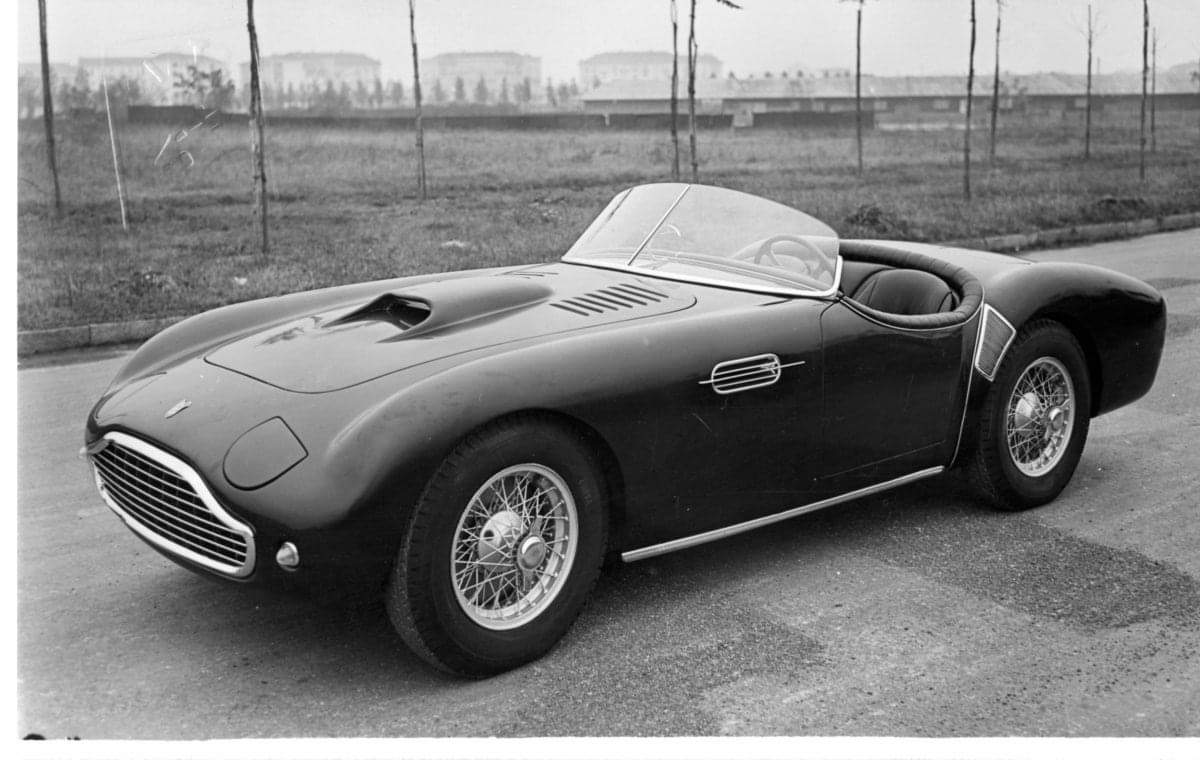
While Motto didn’t craft any of the 208 Coupé bodies (aside from possibly assisting in prototype work), his legacy is intertwined with the 208 CS by virtue of the shared engineering and performance. The same advanced suspension, the same throaty 2.0 V8, and the same Siata ethos coursed through both spider and coupe.
Epilogue: An Enduring Legacy
The Siata 208 CS may not be as universally known as a Ferrari 166 or a Maserati A6G, but in connoisseur circles it has attained a near-mythical status – the kind of car that, when one appears, collectors swoon and historians reach for their notes. Why? Perhaps because the 208 CS represents a perfect storm of 1950s motoring magic: a small independent maker daring to use big-league technology, wrapping it in hand-crafted artistry, and sending it to battle on roads and tracks against far better-funded rivals. It’s the story of a talented underdog, narrated through the creative voices of multiple coachbuilders. Each surviving car (and indeed, only a dozen or so remain intact) is a rolling piece of art and history, often with racing scars or celebrity anecdotes to prove it.
In period, the 208 CS did not lead to a grand Siata empire – by 1955, Siata was moving on to smaller, more practical cars, and the era of bespoke coachbuilt GTs was waning. But those 18 coupés that were made have since become revered. They’re the kind of machine a Top Gear presenter might describe with a twinkle in the eye: “If Italian cars are operas, the Siata 208 CS is a brilliant one-hit wonder – short in run-time, high in drama, and utterly unforgettable.”
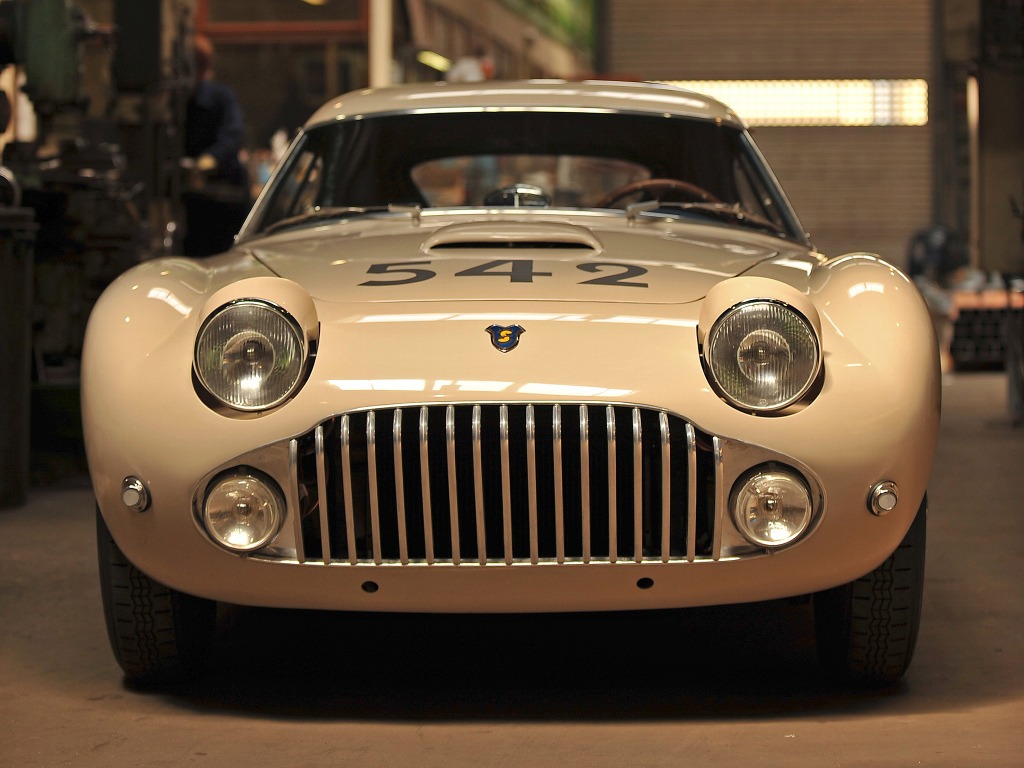
Ultimately, the 208 CS’s legacy is also one of collaboration. It’s a car that could only have existed in that magical moment of Italian car culture, when engineers, coachbuilders, and racers all worked in concert on small batches of dream machines. Stabilimenti Farina gave it sophistication; Balbo gave it boldness; Bertone gave it a competitive edge; Motto gave its sibling an extra dose of glamour. And Siata orchestrated it all, demonstrating that sometimes the little guy with a big idea can leave behind something more memorable than many larger series-production cars.
Today, whenever a Siata 208 CS rolls onto the lawn at Villa d’Este or clicks off another Mille Miglia Storica kilometer, it reminds us of what the 1950s were all about: ambition, artistry, and the sheer joy of driving. In an era where giants roamed, this tiny Turin-built V8 coupé managed to stand tall – and even occasionally beat them at their own game. That’s the kind of story that makes classic car enthusiasts wax poetic. The Siata 208 CS might have been a footnote in its day, but it has grown into a legend – one chassis, one coachbuilder, one race at a time. And if you ever find yourself next to one, perhaps at an Italian rally or a concours, take a moment to drink in the details: the craftsmanship, the clever engineering, the brio. Cars like this don’t come around often, and when they do, they remind us why we love classic cars in the first place. In the Siata 208 CS, wit and passion meet in metal, and the result is nothing short of bellissimo.

ABOUT THE AUTHOR
Andreas Scheidl
Italian classic car enthusiast with German roots. Renowned as a respected figure in the classic car community, he serves as a jury member at various international concours d'elegance, including the Classic Gala Schwetzingen and Mantova. As a content creator, Andreas passionately shares his profound knowledge and appreciation for vintage automobiles. His heart beats for cars designed by Giovanni Michelotti, showcasing his discerning taste and dedication to preserving the timeless elegance of automotive history.
More stories by Andreas Scheidl ↗CONTINUE READING
Posts You Might Like

A Central Driving Position, a Rear-Mounted V8. Was This Really a Lancia?
In 1948, visitors to the Turin Motor Show could see an unusual Lancia on the stand of Carrozzeria Ghia. It was a large two-door coupé with a two-litre V8 mounted behind the…
Read story
Fioravanti F100: The Ferrari He Was Allowed to Imagine
Enzo Ferrari’s centenary, Leonardo Fioravanti’s independent studio and a supercar that explored air brakes, steel wheels and a new way of driving—without ever wearing the Cavallino.
Read story
Michelotti Shellette: When the Fiat 850 Became a Yacht
The yacht designer, the Turin stylist and the tiny coachbuilt car that crossed between the quay, the royal holiday house and the auction room. Some automobiles were conceived for the open road,…
Read story
Maserati A6 1500: A New Road for the Trident
When the doors of the Geneva Motor Show opened in March 1947, Maserati was a name that required little introduction to anyone who followed motor racing. What it did not yet possess…
Read story
THE CONVERSATION
Comments 0
Share a memory, a period photograph or a documented detail about this story.