
Torpedo of the Future: The Story of the Alfa 40-60 HP Siluro Ricotti
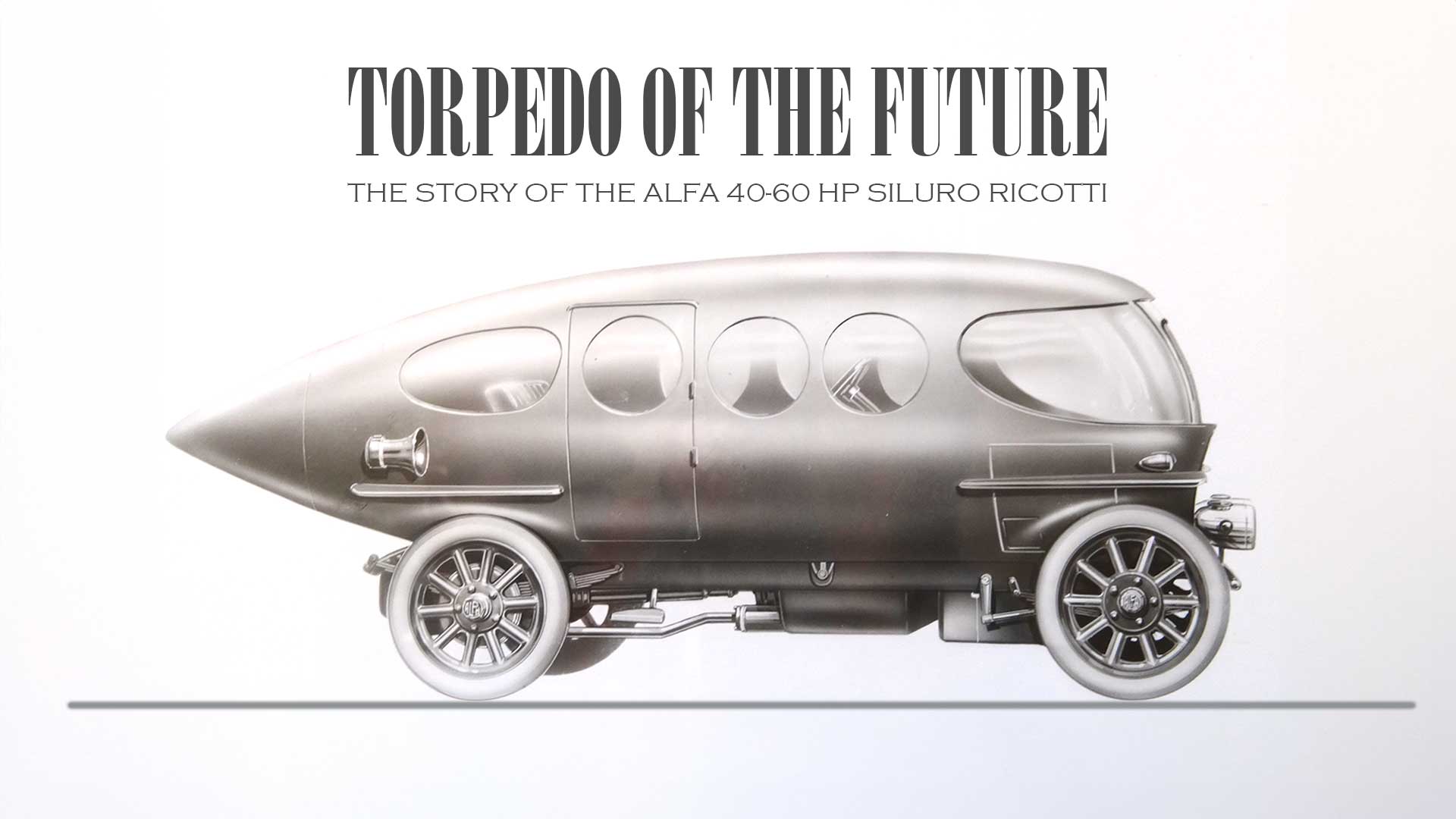
In the years leading up to World War I, the automobile was shaking off its infancy and racing toward a bold new future. Europe’s roads teemed with ever-faster machines as engineers and enthusiasts chased speed records and race victories. This was the era of the “Torpedo” body style – a term coined in 1908 for streamlined, low-profile cars that hinted at aerodynamic thinking even before wind tunnels or “streamlining” entered the automotive vocabulary. The newfound obsession with flight – from the Wright brothers’ airplanes to Zeppelin airships – cast a spell on car designers. It’s no surprise that by 1914, one intrepid Italian nobleman dreamed of a car that could pierce the air like a dirigible on wheels. This climate of experimentation and daring would give birth to a truly revolutionary automobile: the Alfa 40-60 HP Aerodinamica, better known as the “Siluro Ricotti.” It would be a one-of-a-kind machine that embodied the era’s inventive spirit – a car so ahead of its time that it looked like something out of a Jules Verne novel. In this romantic yet factual tale, we explore the world that produced the Siluro Ricotti, the visionary Count behind it, the technical marvels under its skin, and the master coachbuilder who made fantasy into reality.
The Count’s Flight of Fancy: Count Ricotti and His Bold Vision
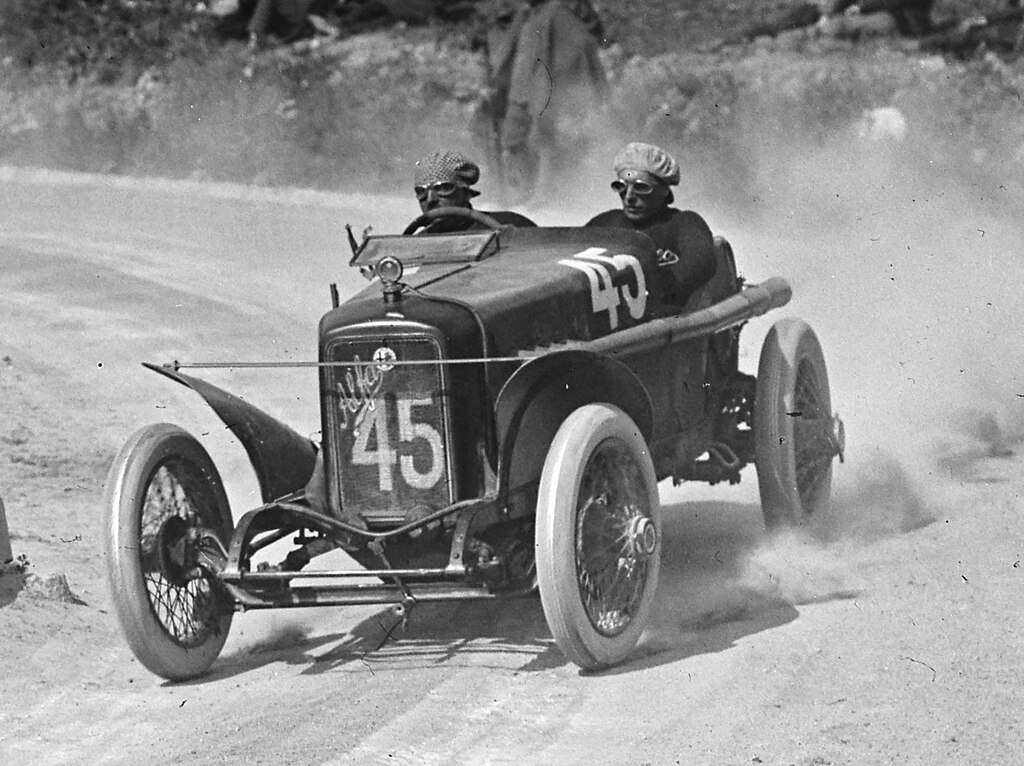
The story begins with Count Marco Ricotti of Milan – a wealthy, eccentric aristocrat and passionate automobile enthusiast (some sources refer to him as Count Mario Ricotti, but all agree on his visionary spirit). By 1914, ALFA’s latest offering, the 40/60 HP, had captured his imagination. This new ALFA (the company founded in 1910, Anonima Lombarda Fabbrica Automobili, which would later become Alfa Romeo) was a powerful two-seater built for sporting drivers. With its 6.1-liter four-cylinder engine making about 70 horsepower, the standard ALFA 40/60 HP could reach 125 km/h (78 mph) – an almost frightening velocity for the time. A tuned Corsa racing version pushed the limit to 137 km/h (85 mph) and would go on to win races after World War I. But Count Ricotti was not satisfied with off-the-shelf speed or a mere two seats.
Ricotti dreamed of something unprecedented: a “family sports car” that could carry five people in comfort and still deliver the thrills of a high-performance machine. In an era when “sports car” meant a stripped, unruly two-seater, this was an outrageous request. He essentially wanted to square the circle: combine the spacious practicality of a touring car with the heart-pounding performance of a racer. The Count’s imagination was fired by the possibilities of modern engineering – and perhaps by the romantic notion of defying gravity on wheels, just as aviators were doing in the skies. As a man who loved spirited driving and pastoral retreats with family and friends, he envisioned a single vehicle that could do it all. It would need at least five seats for passengers, ample covered luggage space for weekend getaways, and performance figures that could rival any roadster of the day. In short, Count Ricotti wanted a car that had never been seen before – part luxury saloon, part race car, an eclectic dream on wheels.
🔗 Read more: Carrozzeria Castagna Milano: A Timeless Legacy
To realize this daring vision, Ricotti knew he would require expert help. He turned to one of Italy’s finest coachbuilders, the famed Carrozzeria Castagna of Milan. Approaching Castagna’s proprietor with his idea, the Count presented a list of specifications that must have sounded like pure fantasy in 1914. Yet he found a willing ally. The master coachbuilder saw merit in the challenge and agreed to collaborate, setting in motion one of the most remarkable coachbuilt projects in automotive history. What emerged from this partnership was nothing less than a road-going revolution.
Under the Hood: Transforming the ALFA 40/60 HP into a Prototype Wonder
At the heart of the Siluro Ricotti was the proven mechanical package of the ALFA 40/60 HP. Designed by Giuseppe Merosi, ALFA’s chief engineer, the 40/60 HP chassis was a robust and advanced platform for its day. It featured a massive 6082 cc inline-four engine with overhead valves, good for about 70 horsepower at 2,200 rpm. This engine sat on a sturdy ladder frame with solid axles and semi-elliptic leaf springs – typical architecture for the time, but built to handle high speeds and competition stresses. The road-going 40/60 HP had rear-wheel drum brakes (operated by both pedal and hand lever) and a four-speed manual gearbox mounted amidships in the chassis. With a long 3.2-meter wheelbase and weighing roughly 1,250 kg, the standard 40/60 HP was no featherweight. But it was a formidable machine – essentially ALFA’s top-of-the-line model between 1913 and 1922.
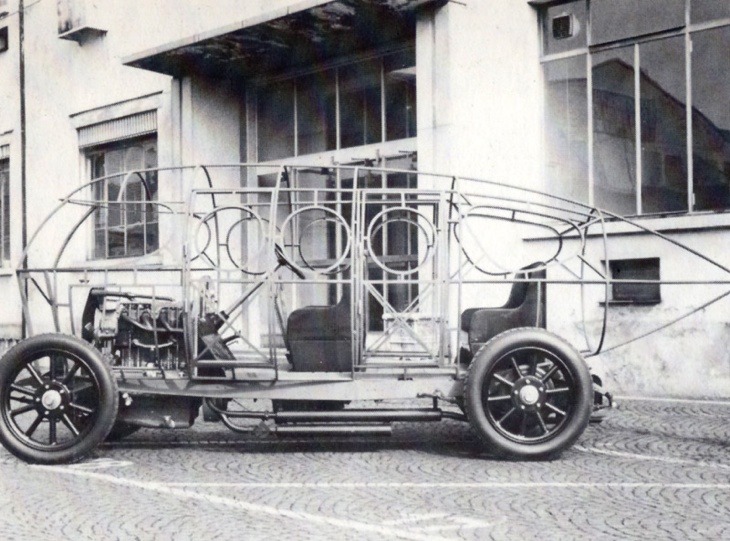
Count Ricotti acquired a 1913 40/60 HP chassis as the foundation for his special project. Mechanically, the running gear and engine remained largely as Merosi designed – the brilliance of the Siluro Ricotti lay not in hot-rodding the engine, but in re-bodying the car to achieve greater performance through aerodynamics. That said, some modifications were inevitable. To offset the added weight of a larger enclosed body, Castagna took measures to reduce mass and preserve maneuverability. The coachbuilder famously chose aluminum for the bodywork – at a time when most car bodies were built of wood frameworks with steel or brass panels. The entire body shell was crafted of lightweight aluminum alloy, riveted together like an aircraft’s skin. Using aluminum was cutting-edge in 1914, but crucial to keeping the car’s weight reasonable given its size. Castagna’s workshop essentially turned the ALFA’s chassis into a rolling laboratory for new construction techniques.
The Siluro Ricotti’s chassis may also have been slightly modified for its new role. Some accounts suggest the car was built on ALFA’s long 3.2 m wheelbase frame (the standard length), providing a stable platform for high speed and a roomy cabin. The suspension and engine output remained stock, meaning about 70–75 hp to propel the creation. However, because the body would be far more aerodynamic than any conventional car, that power could propel the Siluro to higher speeds than the stock tourer could manage. Importantly, the engine and even the radiator were enclosed within the new body’s contours, a radical departure from the exposed radiators and upright grilles of the era. This required clever ducting and a front intake to feed the radiator, as well as a trap door on the side of the hood for engine access. Underneath it all, it was still the hearty ALFA engine and drivetrain doing the work – but the Siluro Ricotti would demonstrate just how much more speed one could unlock by wrapping the mechanicals in the right shape.
Teardrops and Torpedoes: An Aerodynamic Marvel Takes Shape
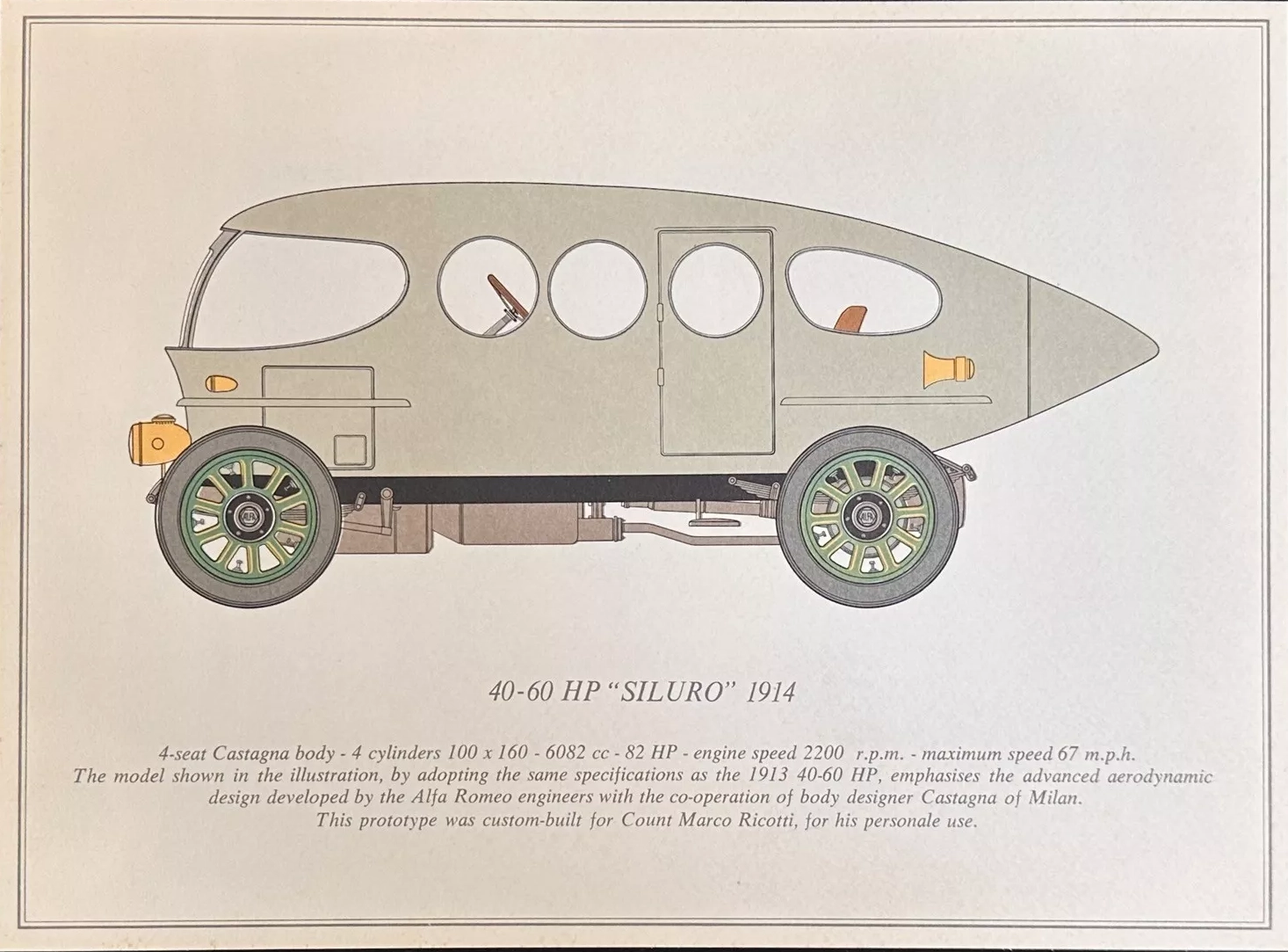
When Carrozzeria Castagna unveiled the finished creation, it looked like nothing else on wheels. Dubbed “Aerodinamica” for its emphasis on airflow, and nicknamed “Siluro” (torpedo) for its shape, the car was essentially a teardrop-shaped metal shell perched on an ALFA chassis. This futuristic fuselage was clearly inspired by the aeronautical forms of the day – part Zeppelin, part submarine, and entirely outlandish to the average motorist. One historian vividly described the Siluro Ricotti as “seemingly an escapee from a Jules Verne novel,” with a streamlined aircraft-like body “pierced with large portholes.” Indeed, along the sides of the car, Castagna fitted round windows – three large circular windows on each flank – giving passengers a view out and giving the vehicle a distinctly nautical or aviation-like appearance. At the rear quarters, triangular rear side windows added even more visual flair and light into the cabin. Up front, instead of a flat windshield, the driver faced a panoramic windscreen comprised of three curved glass panels that wrapped around in an early attempt at a wide field of view. This curved windshield was remarkably advanced for 1914, predating the panoramic “Vistatotal” designs Castagna and others would popularize in the 1930s.
The overall silhouette of the Siluro Ricotti was that of a droplet, widest near the front seats and tapering to a pointed tail. The hood line flowed smoothly into the roof and then into a long tapered rear deck – a true “goccia” (Italian for drop) profile that reduced air resistance. In side profile, the car lacked the abrupt corners and upright stance of its contemporaries; everything was rounded, sloped, and elegant in its pursuit of the air. Even the fenders were integrally designed: the front and rear fenders hugged the wheels in flowing arches, and the running boards blended into the body. Hiding the radiator and even the engine under the bodywork eliminated the typical bluff grille, improving the aerodynamic nose. The result was a car that looked like a sleek silver bullet – or perhaps a grounded airship – among the boxy carriages of its day. Observers in 1914 must have been slack-jawed at the sight of it.
But this design was not just for show. The teardrop body dramatically reduced drag, allowing the Siluro Ricotti to reach speeds previously unimaginable for a five-passenger automobile. In fact, the streamlined ALFA was tested on a flying kilometer and clocked at 139 km/h (86 mph) at top speed. This was astonishing for the era – faster even than ALFA’s own race-tuned 40/60 HP Corsa, and on par with the world’s quickest racing cars of the time. It meant the heavy, multi-passenger Siluro could outrun many featherweight race cars. Contemporary reports noted roughly a 14 km/h increase in top speed thanks to the slippery shape. In effect, Castagna’s smooth aluminum “balloon” of a body acted like a speed booster over the standard chassis. This was one of the earliest real-world proofs that aerodynamics could trump brute horsepower in the quest for velocity – a revelation that would influence automotive design for decades to come.
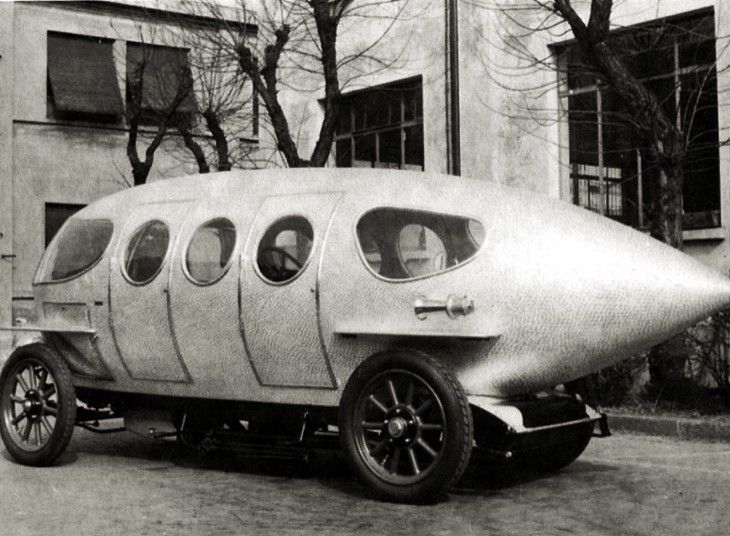
Inside, the Siluro Ricotti was as novel as its exterior. Castagna managed to fit five full seats in the sleek cabin – fulfilling the Count’s wish to bring family or friends along for the ride. Despite the tapered tail, space was allotted for luggage as well, making it a true grand tourer. Entry to the cabin was clever and asymmetric: the car had three doors in total, with two doors on the curbside (likely for rear and front passenger access) and one on the driver’s side. This unusual three-door layout prefigures later designs like certain mid-century sedans and modern minivans – another reason some historians playfully call the Siluro Ricotti the “first minivan”. The driver’s seat was set far back from the front axle due to the long nose and windshield rake, so the chauffeur sat nearly in the middle of the car’s length. From there, the pilot had an expansive view through that wraparound windshield – a fantastic panorama of the road ahead, at least in fair weather. However, with all that glass and an engine in front pouring heat into the enclosed cabin, the cockpit could become sweltering in summer. The fully enclosed body, a rarity in 1914, also meant ventilation was limited and the driver had to contend with smaller side windows. These practical issues aside, the Siluro’s interior must have felt like a lounge in a luxury Zeppelin: bright, airy, and utterly unlike the Spartan two-seat racers Ricotti was used to.
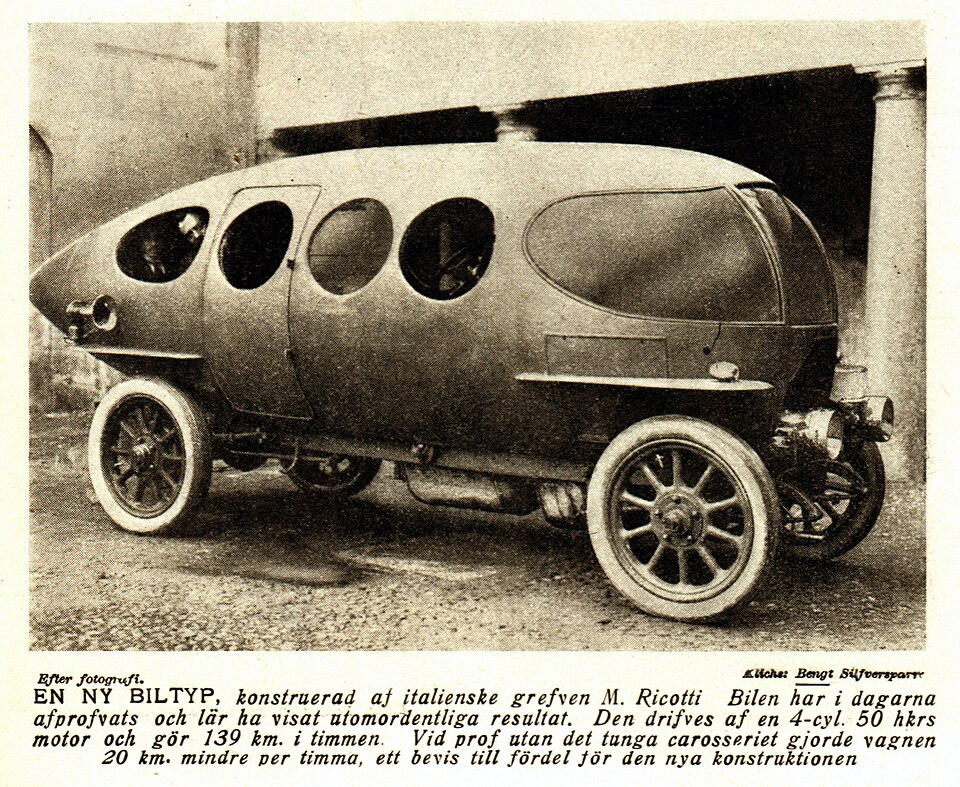
Every aspect of the design balanced on the cutting edge of 1910s technology. The bodywork’s fabrication from aluminum was an artisanal tour de force – lightweight “damascened” aluminum panels were hand-formed and riveted, displaying a jeweler’s touch in metalworking. The use of curved safety glass for the windshield was trailblazing, as most cars still had flat panes. The attention to airflow extended to small details: the Siluro’s nose had a brass grille discreetly molded into the front, and little hinged flaps or hatches (almost like those on an airplane’s engine cowl) provided access to the engine and radiator cap. It was a design that anticipated the Art Deco streamliners of the 1930s and even concept cars of the 1950s – truly ahead of its time.
A Sensation Unveiled: Public Debut and the Fate of the Siluro
When the Aerodinamica Siluro Ricotti hit the road in 1914, it must have caused an uproar in fashionable Milanese circles. Here was a car that looked like it had leapt from the pages of science fiction cruising past the cafes of Corso Venezia. Unfortunately, detailed records of its public debut are scarce – 1914 was a tumultuous year, and Europe’s attention would soon turn to war rather than whimsical automotive experiments. It’s believed that the Siluro Ricotti was a private prototype rather than a factory concept, so it wasn’t formally launched at an auto salon or international exhibition. Instead, Count Ricotti likely unveiled his prized creation at private gatherings or on the streets of Turin and Milan, where he maintained residences and country estates. Period photographs (one was a “mystery photo” solved by vintage racing enthusiasts a century later) show the car in its original fully enclosed form, with Ricotti proudly at the helm. Contemporary observers marveled at its appearance and performance; one account from a later historian notes it was “one of the first aerodynamically designed automobile bodies for a road car,” achieving about 86 mph in an era when most family cars struggled to reach half that speed.
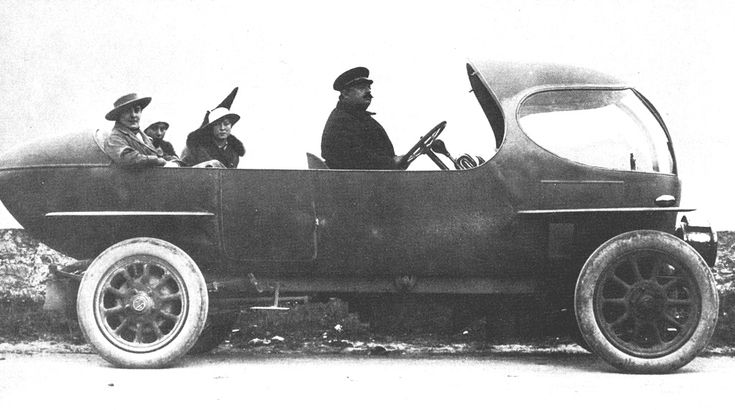
However, the Siluro’s radical design also exposed the trade-offs of such innovation. The fully enclosed cabin, combined with an engine that shared the breathing space, made for an unbearably hot and stuffy interior during summer drives. Visibility to the sides and rear was limited by the small porthole windows and the absence of a rear window. Driving such an unusual machine at high speed required courage and perhaps a bit of blind faith – one imagines the Count hurtling down a country road, three friends in tow, peering out the front glass while the long tail blocked any view of who might be coming up from behind! Within a year or so, Count Ricotti decided to make a significant alteration. Sometime in 1915, he removed the roof and converted the Siluro into a partly open-top car. This modification essentially turned the Aerodinamica into a unique torpedo-bodied touring car: it kept the streamlined lower body, fenders, and pointed tail, but lost the closed roof and gained an open cockpit for better ventilation. The panoramic windshield reportedly remained in place as a tall windscreen, providing a bit of wind protection even with the top off. Sacrificing the roof likely compromised the aerodynamics that had been so painstakingly achieved, but it made the car far more drivable in warm weather. In this open form, the car continued to be used by the Count, though by then World War I had curtailed extravagant motoring for a time.
Ultimately, the original Siluro Ricotti did not survive into the modern day – it was “lost” at some point after its years of use. It may have been dismantled or scrapped, as many pre-war cars were, especially once its mechanical base grew outdated. For decades, the Siluro existed only in faded photographs and the memories of a few who had seen it. Yet its legend endured among Alfa Romeo enthusiasts and historians of automotive design. In the 1970s, Alfa Romeo’s own museum team decided that this milestone in their history deserved resurrection. In 1979, the Alfa Romeo Historical Museum (Museo Storico Alfa Romeo) built a meticulous full-scale replica of the 1914 Aerodinamica. Using whatever drawings, photos, and technical data could be found, they recreated the Siluro Ricotti so that future generations could appreciate its groundbreaking design. Today, this replica is displayed in the Alfa Romeo Museum in Arese (Milan) as a proud reminder of Alfa’s innovative lineage. Museum visitors stare in awe at the gleaming aluminum torpedo with its red wooden artillery wheels, marveling that such a space-age looking contraption was conceived over 110 years ago. The Siluro Ricotti’s public re-debut in modern times – whether at the museum or special exhibitions – continues to fascinate car lovers, validating its status as a pioneering concept car long before the term existed.
Enter Castagna: Milan’s Coachbuilding Maestro
No account of the Siluro Ricotti would be complete without celebrating the coachbuilder that made it possible: Carrozzeria Castagna of Milano. Castagna was (and is) one of Italy’s most illustrious coachbuilders, a company with a storied history and a flair for marrying luxury with innovation. Founded in 1849 by Carlo Castagna, the firm originally crafted exquisite horse-drawn carriages for European aristocracy. As the automobile dawned in the late 19th century, Castagna seamlessly transitioned to motorcar bodies – by 1905, they were building custom automobile coachwork, and their clientele included Italian nobility and even royalty. The very first car body by Castagna was built for the Princess of Savoy on a Fiat chassis, establishing the carrozzeria’s reputation for elegance. Throughout the 1910s and 1920s, Castagna became the go-to coachbuilder for the elite, known for superior craftsmanship and avant-garde designs. They built bespoke bodies for marques like Isotta Fraschini, Fiat, Lancia, Mercedes-Benz, and Alfa Romeo – often producing opulent town cars and limousines for wealthy industrialists and even the Pope. By the 1930s, Castagna was the largest custom coachbuilder in Italy, with a 32,000 m^2 facility and 400 employees producing around 100 bodies per year at its peak.
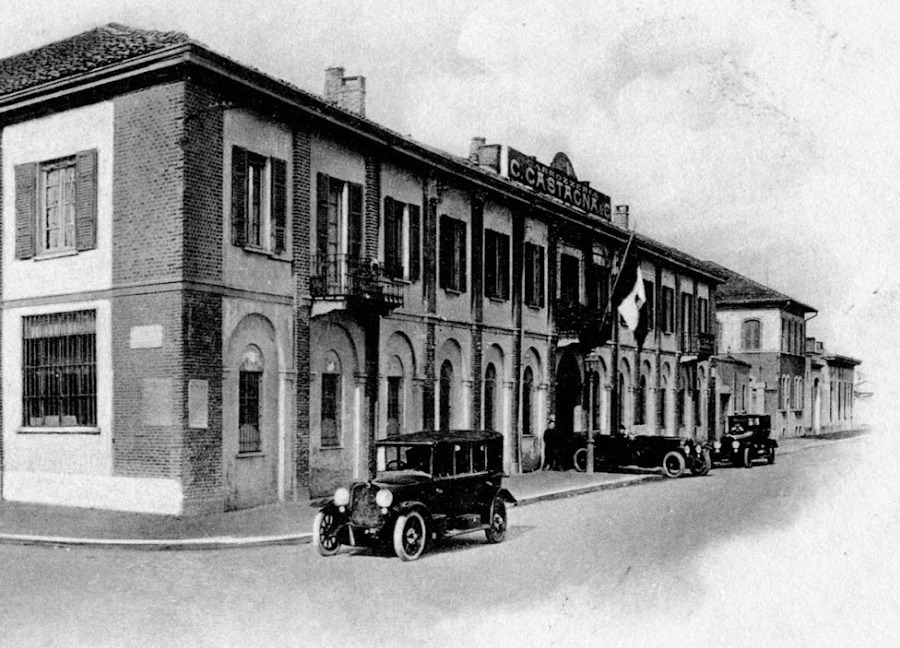
What set Castagna apart was not just the quality of their workmanship, but their stylistic boldness. They were early adopters of new materials and techniques: for instance, Castagna was among the first to use aluminum panels extensively to save weight. The Siluro Ricotti project in 1914 perfectly exemplified Castagna’s willingness to push boundaries. It was described as one of the “sensational creations” of the pre-war period – a “teardrop-shaped limousine” commissioned by Count Ricotti on the ALFA 40/60 HP chassis. Ercole Castagna (Carlo’s son, who took over the firm after his father’s death in 1914) personally oversaw the construction of this aerodynamic wonder. Castagna’s team proved that a coachbuilder could also be an innovator: they solved complex engineering challenges to make the fully enclosed, streamlined body practical (for example, inventing the multi-panel curved windshield and incorporating aircraft-style portholes). This forward-thinking approach earned Castagna a place in automotive history – the Siluro Ricotti is often cited by experts as the first Alfa Romeo concept car and even, humorously, the first minivan, due to its one-off, visionary nature and multi-passenger design.
Beyond the Siluro, Carrozzeria Castagna continued to leave its mark on design. In the 1920s and 30s, they produced numerous aerodynamically influenced bodies, especially on Alfa Romeo 6C and 8C models, foreshadowing trends that would become mainstream later. They also pioneered the “Vistotal” panoramic windshields (frameless glass giving an unobstructed view) under license from Parisian coachbuilder Labourdette, showing Castagna’s penchant for incorporating the latest ideas. Castagna’s creations were regular winners at concours d’elegance and often shocked and delighted the public. Each car was an art piece, tailored to its owner’s desires – much like Count Ricotti’s Siluro had been a personal flight of fancy. The company’s pre-war success, however, was tempered by the turmoil of World War II, which saw their facilities destroyed in bombings. The original Carrozzeria Castagna eventually closed in 1954 amid postwar economic challenges. But the legend did not end there: the Castagna name was revived in the 1990s, and today a boutique Castagna Milano firm continues to produce custom cars, carrying on the spirit of bespoke Italian coachbuilding.
🔗 Read more: The Vistotal System by Carrozzeria Castagna
In the context of Italian automotive history, Castagna’s importance cannot be overstated. They were true maestros of coachbuilding, blending Milanese luxury and artistry with technical progress. The Siluro Ricotti stands as a shining example of Castagna’s artistry: they took an ambitious concept from a daring client and made it real, with a stylistic approach that combined romantic elegance (a nod to the horse-drawn carriage lineage in its luxurious interior and attention to detail) with futuristic innovation (a body that looked ready for the next century). This balance of tradition and innovation is a hallmark of the great Italian carrozzieri, and Castagna was arguably the first to achieve it on such a scale. It’s little wonder that a century later, enthusiasts still celebrate Castagna’s work – from the Princess of Savoy’s stately coach to the Count of Milan’s torpedo-shaped fever dream – as an integral part of Italy’s automotive artistry.
Legacy of a Streamlined Dream
The Alfa 40-60 HP Aerodinamica Siluro Ricotti may have been born as a one-off indulgence for an adventurous Count, but it left a lasting imprint on automotive history. In a romantic melding of art and engineering, this car foretold the trajectory of car design: proving that aerodynamics could unlock performance gains, and that bold styling could capture imaginations. It arrived at a historical moment when the world stood on the brink of immense change – just before WWI would pause such extravagances – and in its brief life the Siluro demonstrated what peacetime creativity could achieve. With its torpedo body and teardrop curves, it quietly influenced later designers who pursued the streamlined ideal in the 1920s and 30s. Long before words like “concept car” or “people carrier” existed, the Siluro Ricotti embodied both: it was an experimental concept and a fast family car rolled into one.
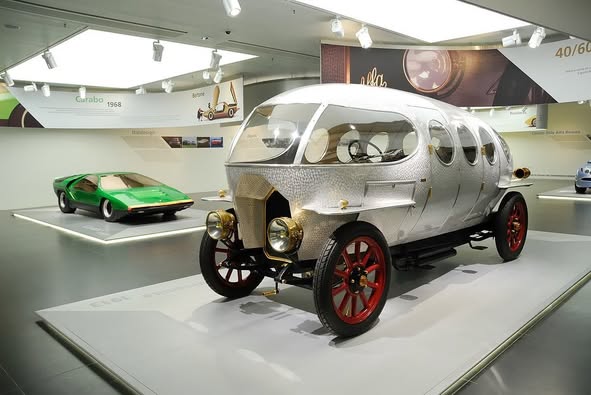
Today, standing before the replica in Alfa’s museum, we can appreciate how romantic and daring this 1914 creation was. It was the product of a visionary client, a gifted coachbuilder, and an automaker eager to push limits – the very collaboration that continues to drive automotive innovation. Alfa Romeo itself proudly cites the Siluro Ricotti as a cornerstone of its 110+ year legacy of design daring. For car enthusiasts, the Siluro is a reminder that the past is full of forgotten futurism: ideas that were ahead of their time, waiting for history to catch up. The next time you marvel at a sleek supercar or a family SUV shaped in the wind tunnel, remember that more than a century ago, Count Ricotti’s “flight of fancy” already rozaba il cielo – brushing the sky – at 139 km/h in a teardrop on wheels. The Siluro Ricotti’s story is a triumphant chapter in the book of automotive lore, where passion and innovation combine to create something truly timeless.

ABOUT THE AUTHOR
Andreas Scheidl
Italian classic car enthusiast with German roots. Renowned as a respected figure in the classic car community, he serves as a jury member at various international concours d'elegance, including the Classic Gala Schwetzingen and Mantova. As a content creator, Andreas passionately shares his profound knowledge and appreciation for vintage automobiles. His heart beats for cars designed by Giovanni Michelotti, showcasing his discerning taste and dedication to preserving the timeless elegance of automotive history.
More stories by Andreas Scheidl ↗CONTINUE READING
Posts You Might Like

A Central Driving Position, a Rear-Mounted V8. Was This Really a Lancia?
In 1948, visitors to the Turin Motor Show could see an unusual Lancia on the stand of Carrozzeria Ghia. It was a large two-door coupé with a two-litre V8 mounted behind the…
Read story
Fioravanti F100: The Ferrari He Was Allowed to Imagine
Enzo Ferrari’s centenary, Leonardo Fioravanti’s independent studio and a supercar that explored air brakes, steel wheels and a new way of driving—without ever wearing the Cavallino.
Read story
Michelotti Shellette: When the Fiat 850 Became a Yacht
The yacht designer, the Turin stylist and the tiny coachbuilt car that crossed between the quay, the royal holiday house and the auction room. Some automobiles were conceived for the open road,…
Read story
Maserati A6 1500: A New Road for the Trident
When the doors of the Geneva Motor Show opened in March 1947, Maserati was a name that required little introduction to anyone who followed motor racing. What it did not yet possess…
Read story
THE CONVERSATION
Comments 0
Share a memory, a period photograph or a documented detail about this story.