
Alfa Romeo 6C 2500 SS Supergioiello: Ghia’s Jewel
Carrozzeria Ghia emerged from World War II as an Italian coachbuilder with a bold new vision. Founded in 1916 by Giacinto Ghia in Turin, the company had built a reputation before the war for lightweight, elegant aluminum bodies on high-end Italian chassis. However, Ghia’s facilities were devastated by Allied bombing in 1943, and Giacinto Ghia himself died in 1944. In 1948, Mario Boano and Giorgio Alberti took over Ghia, determined to restore its prominence in a changed automotive landscape. They relocated the firm and even established a Swiss subsidiary (Ghia-Aigle) as they rebuilt. Under Boano’s leadership, Ghia embraced an avant-garde design philosophy that pushed boundaries in the late 1940s and early 1950s. Young talents like Giovanni Michelotti contributed fresh ideas, helping Ghia produce some of the era’s most adventurous one-off show cars and concepts. This period saw Ghia exploring streamlined, futuristic forms that often broke with traditional brand styling cues, reflecting the optimistic spirit of postwar Italy.
Yet, Ghia’s survival did not rely on flamboyant show cars alone. To keep the lights on, the coachbuilder balanced extravagant custom projects with limited-series production on more affordable platforms. In particular, Fiat’s new 1100 and 1400 models became Ghia’s bread-and-butter work. Ghia created sporty coupè and cabriolet designs known as the “Gioiello” (Italian for “Jewel”) on Fiat, and an uprated “Supergioiello” (“Super Jewel”) design later. These stylish spider and coupe bodies, penned by Giovanni Michelotti, were built in small numbers and provided steady business. The very name “Supergioiello” would soon become synonymous with Ghia’s elegant postwar creations. Originally applied to these Fiat-based designs, it denoted a jewel-like showpiece quality – a blend of luxury and modernity. Notably, Ghia even presented a Fiat 1500 Supergioiello coupe in 1949 (a polished Michelotti creation) alongside a nearly identical Lancia Aprilia Supergioiello; both debuted at the 1949 Villa d’Este Concours d’Elegance, where the Fiat won its class. This demonstrated Ghia’s shrewd practice of design reuse: a beautiful shape could grace multiple marques with minimal changes, maximizing impact while reducing development time. Such practices were common among Italian coachbuilders in that era of scarce resources, though they sometimes drew criticism when brand identities blurred.
🔗 Read more: The story of Carrozzeria Ghia
By 1949–1950, Ghia was hitting its stride, with Boano and Michelotti crafting a series of showstoppers on a variety of chassis – from humble Fiats to exotic Alfa Romeos and Ferraris. At the Salone dell’Automobile di Torino (Turin Motor Show) and glamorous Concours d’Elegance competitions, Ghia’s creations were turning heads. It was in this ferment that the Alfa Romeo 6C 2500 SS “Supergioiello” coupes were born – a limited series of cars that would blend Alfa Romeo’s revered engineering with Ghia’s cutting-edge design artistry.
The Alfa Romeo 6C 2500 SS and Coachbuilt Grandeur
The Alfa Romeo 6C 2500 was an ideal canvas for Italian coachbuilders in the late 1940s. Originally designed before WWII, the 6C 2500 (with “6C” indicating a six-cylinder engine) was a high-performance luxury chassis that Alfa Romeo continued to produce in small numbers postwar. By 1949–50 it was an aging platform – a prewar-style ladder frame with independent front suspension, solid rear axle, and a 2.4–2.5 liter inline-six (around 110–125 bhp in Super Sport trim). However, its prestige and proven engineering made it attractive for bespoke bodies. Firms like Touring, Pinin Farina, and Ghia all bodied 6C 2500s for wealthy clients who desired something more exclusive than Alfa’s own offerings. The 6C 2500 SS (Super Sport) was the top performance version, and its sturdy chassis could carry the elaborate one-off designs shown at Europe’s auto salons and concours.
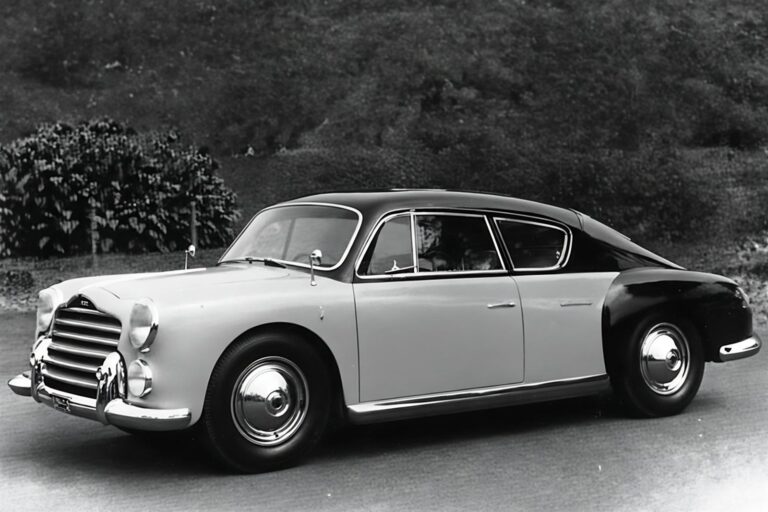
By investing the 6C 2500 with their creativity, Carrozzeria Ghia aimed to make a statement in automotive design. In total, four special coupés on Alfa 6C 2500 SS underpinnings would be crafted by Ghia around 1949–1950. All shared a common design DNA – so much so that they came to be known collectively as the “Ghia Supergioiello” coupes, even though each was unique in detail. These cars showcased Ghia’s elegantly simple yet forward-looking approach, courtesy of Michelotti’s pen. Hallmarks of the series included clean, aerodynamic lines, a low-profile greenhouse with a steeply raked windshield, a high beltline, minimal chrome ornamentation, and often distinctive two-tone paint schemes. Brightly polished full wheel covers (or wheel discs) gave the cars a sleek, modern look, and subtle hints of tail fins and fender vents appeared as the designs evolved.
Crucially, Ghia experimented with Alfa’s signature styling element: the triangular front grille or “scudetto.” The first car in the series daringly omitted the traditional Alfa grille, a decision that, as we’ll see, elicited mixed reactions. Subsequent examples reincorporated the scudetto in creative ways. In effect, these four cars became a design laboratory – a gradual refinement of a theme, each iteration responding to feedback from critics, clients, and Ghia’s own artistic sensibilities. All four Supergioiello coupes were showpieces at major events, embodying the postwar enthusiasm for concours d’elegance and auto shows as proving grounds for new design directions. Below, we delve into each of these four “super jewels,” culminating in the most technically advanced of them – the one-off Gilco-chassis car, #64251, which is the primary focus of our story.
The First Ghia Supergioiello (Chassis 915.762) – A Gift for a Prince (1949)
The inaugural Alfa 6C 2500 SS by Ghia – chassis 915.762 – was completed in 1949 and was truly a car fit for a prince. In fact, it was commissioned by Prince Igor Troubetzkoy, a French Russian prince and sports car racer, as a gift for his wife Barbara Hutton, the American socialite heiress. Troubetzkoy was notable in racing circles (he had piloted a Ferrari in competition), and through this car he bridged the worlds of Ferrari and Alfa. Giovanni Michelotti was tasked with designing a unique coupé for the prince, and the result was striking. The Ghia-bodied Alfa Romeo 6C 2500 SS (915.762) emerged as a streamlined coupe with an almost minimalist elegance. Its body was tightly contoured with smooth, flowing lines wrapping over the wheels and a curvaceous tail – a stark departure from the ornate prewar styles. Notably, Michelotti’s design for this first Supergioiello was almost devoid of overt Alfa Romeo cues: the front end lacked the familiar Alfa grille entirely, featuring instead a delicate oval opening and thin horizontal blades. This clean, unbranded nose gave the car a pan-European, modern look – but also courted controversy among Alfa purists.
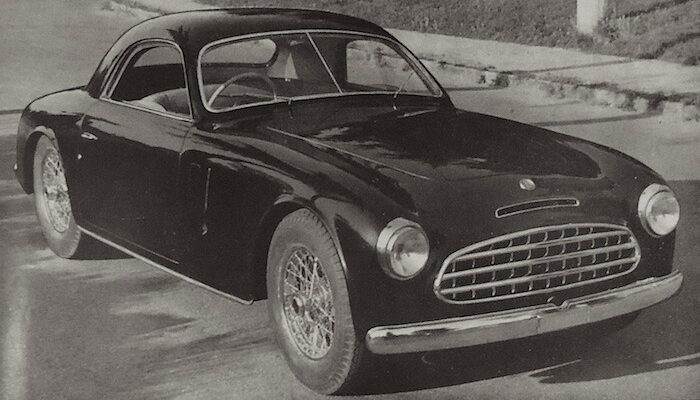
When the car debuted on the show circuit, reactions were mixed. While many admired its ground-breaking form, some critics complained that it “lacked a clear brand image or signature style associated with Alfa Romeo”. In their eyes, Michelotti’s design was perhaps too generic or futuristic, missing the iconic Alfa heart-shaped grille that defined the marque’s identity. Nonetheless, the Supergioiello Coupe captivated the public. One especially novel feature was its unique seating arrangement: the interior was configured as a three-seater, with an asymmetrical front bench that could accommodate a third passenger – an unusual layout for a sporty coupe of that era. This detail highlighted the car’s dual nature: a grand touring machine for two, yet with an extra seat for an intimate third – perhaps a nod to luxurious indulgence suitable for a princess (Barbara Hutton herself).
Chassis 915.762 made its public debut at the 1949 Paris Auto Show, where it stood out amid the first postwar automotive designs. With its low-slung stance and smooth envelope body, the car embodied the optimism of the time. It was presented in an attractive finish (period photos suggest a light hue, possibly silver or a pastel tone) and reportedly wowed the Parisian crowd with its blend of performance and elegance. This Ghia coupe signaled that Alfa Romeo’s venerable 6C chassis could be reborn in a thoroughly modern guise. After the show, the car indeed joined Prince Troubetzkoy’s collection. Its association with royalty and high society, plus its daring aesthetics, quickly made it one of the most talked-about one-offs of 1949. However, Ghia took the Paris feedback to heart: to win over the purists, the next Supergioiello would restore Alfa’s signature face.
The Second Ghia Supergioiello (Chassis 915.862) – Refining the Jewel (1950)
By 1950, Ghia was ready to produce a second act. The next example, chassis 915.862, incorporated some design updates and addressed critiques of the first. Most significantly, this second Supergioiello “wore a traditional Alfa Romeo grille” up front. Ghia reworked the nose to include a proper Alfa scudetto (the vertical shield-shaped grille) flanked by two horizontal side intakes, blending brand identity with the new design language. The rear fenders, which had been fully rounded on the first car, were squared off at the ends to accommodate vertical tail lamps, giving a slightly crisper tail treatment. These changes marked an evolution from the original concept – the car was now officially dubbed “Supergioiello” to emphasize its elevated status as a “super jewel”.
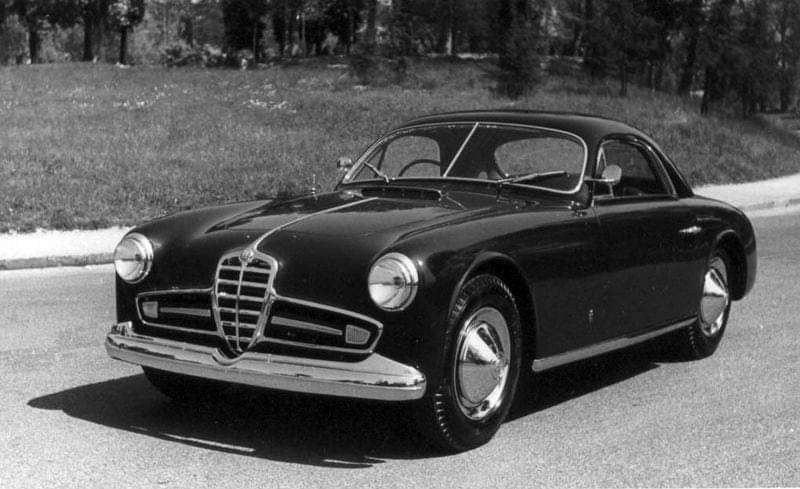
Painted in a single elegant color (period accounts do not record the exact shade, but many Ghia show cars of the time sported rich solid hues), chassis 915.862 made its grand debut at the Turin Motor Show in May 1950. Unveiling the car on home turf in Turin was a strategic move – this was Italy’s premier auto salon, and Ghia’s creation appeared alongside the latest from rival coachbuilders. The Alfa Romeo 6C 2500 SS Supergioiello by Ghia impressed showgoers and the press with its blend of modern styling and identifiable Alfa heritage. The reintroduced grille likely appeased Alfa Romeo enthusiasts while the overall design remained sleek and forward-looking. Ghia’s effort to marry brand identity with artistry paid off.
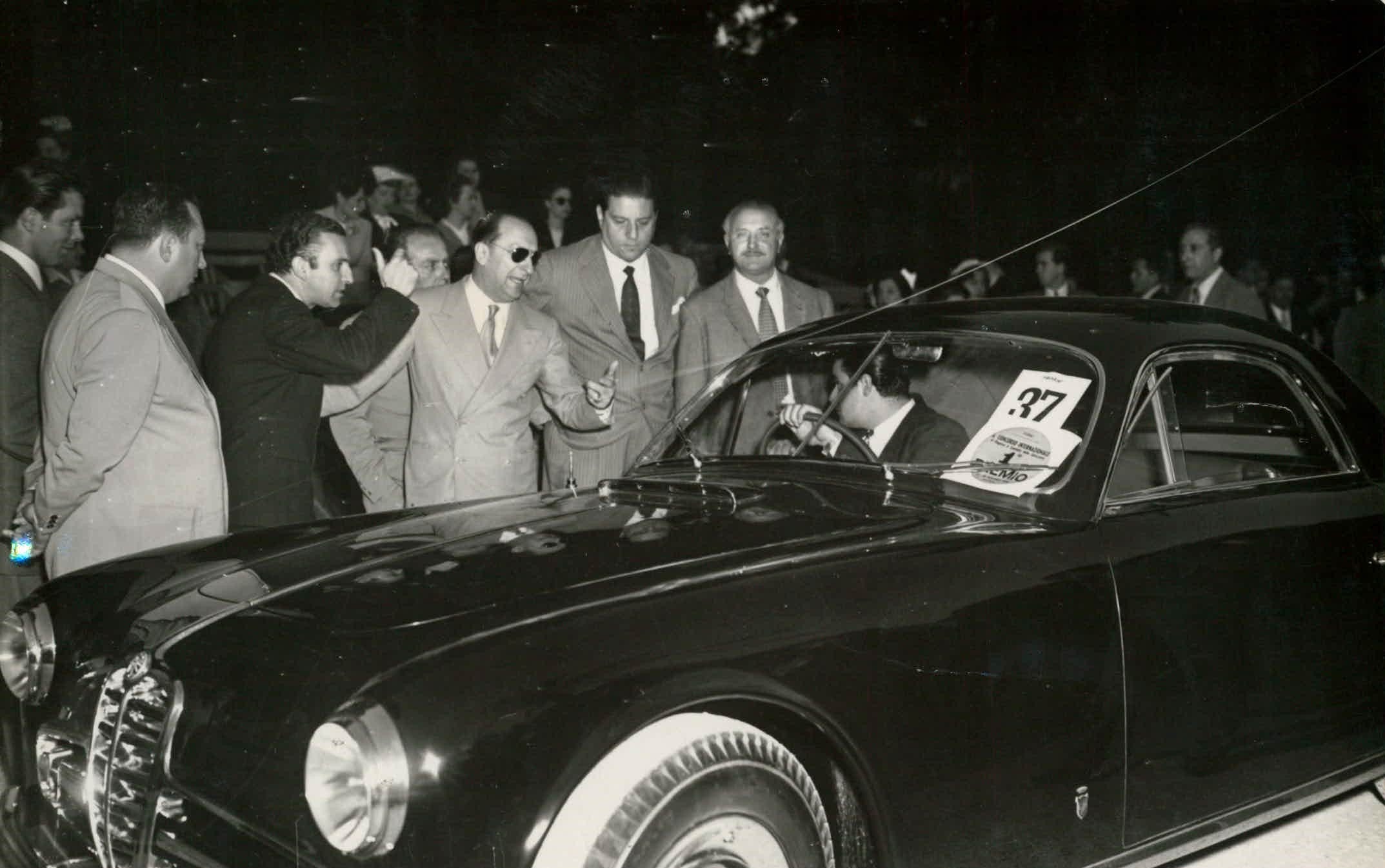
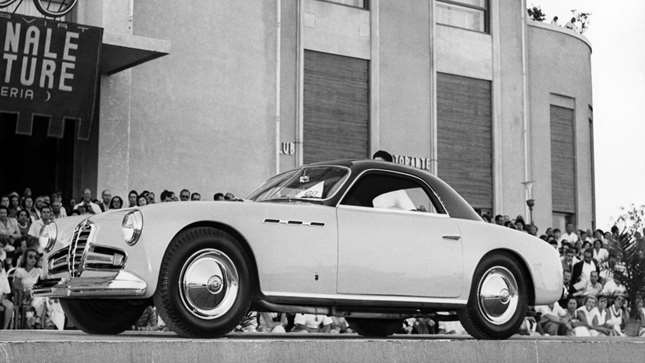
The car’s reception went from mixed (for the first car) to enthusiastic. In fact, the second Supergioiello went on to earn accolades on the Italian show circuit. In 1951, it garnered first prize at the Concorso d’Eleganza della Carrozzeria on the Pincio Terrace in Rome. The Pincio Terrace event, held in the heart of Rome, was essentially a coachbuilders’ concours d’elegance where the finest Italian custom-bodied cars were judged. Winning first prize there was a significant honor, marking the Supergioiello as one of the most beautiful and well-executed designs of the year. Photographs from that event show the car with its gleaming paint and proud Alfa grille, surrounded by admirers in elegant attire – a scene that underscores how concours d’elegance in the 1950s were glamorous social affairs, where automakers and carrozzeri (coachbuilders) competed for prestige. Ghia’s Supergioiello, blending innovation with tradition, had struck gold.
🔗 Read more: Giovanni Michelotti: Automotive Maestro
It’s worth noting that this second car and its immediate successor were built on Alfa’s standard 6C 2500 chassis, which dated back to prewar design. While robust, it was a conventional ladder-frame. Even so, the Supergioiello’s sensual body made the whole car look utterly contemporary. Under the hood, it carried Alfa’s 2.5L inline-6 with triple carburetors (typical for the 6C 2500 SS), delivering spirited performance for the grand touring coupe. The combination of a proven drivetrain with avant-garde styling made chassis 915.862 a compelling proposition – truly a jewel on wheels that connected Alfa’s past glory to the emerging postwar style.
The Third Ghia Supergioiello (Chassis 915.897) – Two-Tone Splendor (1950)
Ghia did not stop at one revision. Later in 1950, a third Supergioiello coupe was completed, built on chassis 915.897. This car further explored the possibilities of color and trim to enhance the already striking design. The flanks were embellished with stylish fender air vents echoing those front intakes. It was finished in a dramatic two-tone paint scheme – a popular trend in the early 1950s that added visual flair by contrasting the roof and body or upper and lower sections. Contemporary descriptions note that this third example “wore a two-tone color scheme”, likely with a lighter shade on the lower body and a darker hue on the roof (or vice versa) to accentuate its lines. Ghia’s execution of the two-tone was surely elegant and well-integrated, complementing the chrome accents and the polished wheel discs.
Mechanically and in general design, chassis 915.897 was similar to the second car – retaining the Alfa grille and other updates introduced in 915.862. However, Ghia may have made further subtle tweaks in trim and detailing. One can imagine details like flush-fitting or body-colored door handles and slightly extended tailfin hints, as these features were noted on the final car and may have appeared in embryo on this third one.
The public unveiling of the third Supergioiello took place at another prestigious venue: the Concorso d’Eleganza del Lido di Venezia (Venice Lido Concours) in August 1950. The Venice Lido event was an exclusive open-air car beauty pageant held on the fashionable resort island – a setting of sun, sea, and style. When the two-tone Ghia Alfa rolled onto the lawn, it must have been a showstopper, its paint glinting in the summer light. The timing was ideal – late August – just when high society might be holidaying in Venice. According to reports, the car was “unveiled” there rather than entered in a competitive class, suggesting it was a star exhibit to delight the crowd. By now the Supergioiello design had evolved into a truly refined form: the panoramic windshield, flowing fenderlines, tasteful brightwork, and finely wrought grille gave it a sophisticated presence.
Ghia’s confidence was evident. Having won an award in Rome with the previous car, this Venice showing was more about cementing the Supergioiello’s reputation and perhaps attracting a buyer for the unique vehicle. (Many show cars were sold to private clients after their rounds on the circuit.) The use of a two-tone livery underscored the car’s role as a fashion statement. It is not recorded if chassis 915.897 won any specific prize at Venice, but its appearance in such a venue helped Ghia further market its prowess. This car was likely sold to a discerning customer following its concours appearance.
By the end of 1950, Ghia had thus built three Alfa 6C 2500 Supergioiello coupes, each on the standard Alfa chassis and each showcasing the iterative refinement of Michelotti’s design. The Supergioiello series by now was acclaimed for its clean, modern aesthetic, blending aerodynamic form and Italian elegance. But Ghia had one more jewel to create – the most technically advanced and exclusive of them all, commissioned under special circumstances. This final car would take the Supergioiello concept to new heights by incorporating a thoroughly modern chassis built by a racing specialist.
The Ultimate Supergioiello: Gilco-Chassis One-Off (Chassis 0064251, 1950)
The fourth and final Alfa Romeo 6C 2500 SS Supergioiello is the centerpiece of our story – a true one-off completed in 1950 with a bespoke tubular chassis. Known by its Gilco chassis number 0064251, this car is often referred to simply as “the Gilco-Alfa 6C 2500 Ghia Supergioiello.” It represents the culmination of Ghia’s Supergioiello project, combining the refined Michelotti-designed body with an innovative frame by Gilco Milano. Gilco (headed by Gilberto Colombo) was a specialist engineering firm famous for lightweight tubular structures – they built chassis for racing Ferraris and others in the 1950s. Utilizing Gilco’s expertise, this Supergioiello would have a far more modern foundation than the previous three, delivering improved rigidity and weight distribution to match its advanced styling.
The car’s creation was spurred by an external request. It was ordered by S.I.R.C.A., Milan’s foremost automobile distributor at the time and incidentally Ghia’s official agent in Milan. Rather than use another standard Alfa chassis, SIRCA specified that Gilco construct a special frame to accept all the Alfa 6C 2500 SS mechanicals (engine, drivetrain, suspension). The rationale was likely to produce a state-of-the-art show car that would truly be a halo vehicle – perhaps to impress important clients or even to present to a VIP. (An apocryphal story suggests this car was initially intended as a gift for legendary racing driver Juan Manuel Fangio, though this remains unconfirmed.) In any case, the decision to go with a Gilco tubular steel chassis was visionary: it made the Supergioiello not just a design exercise but a step forward in engineering, moving beyond Alfa’s prewar underpinnings.
Gilberto Colombo’s frame (numbered 64251) was a welded tubular structure, likely lighter and stiffer than the stock chassis. It was designed in late 1950 and completed by early 1951, as indicated by the car’s Italian homologation. The finished vehicle received its road approval by the Milanese authorities on March 13, 1951 (approval number 0064251), indicating the project’s completion around that time. Thus, although often called a “1950” Alfa (referring to its series and design year), the car was essentially ready in spring 1951.
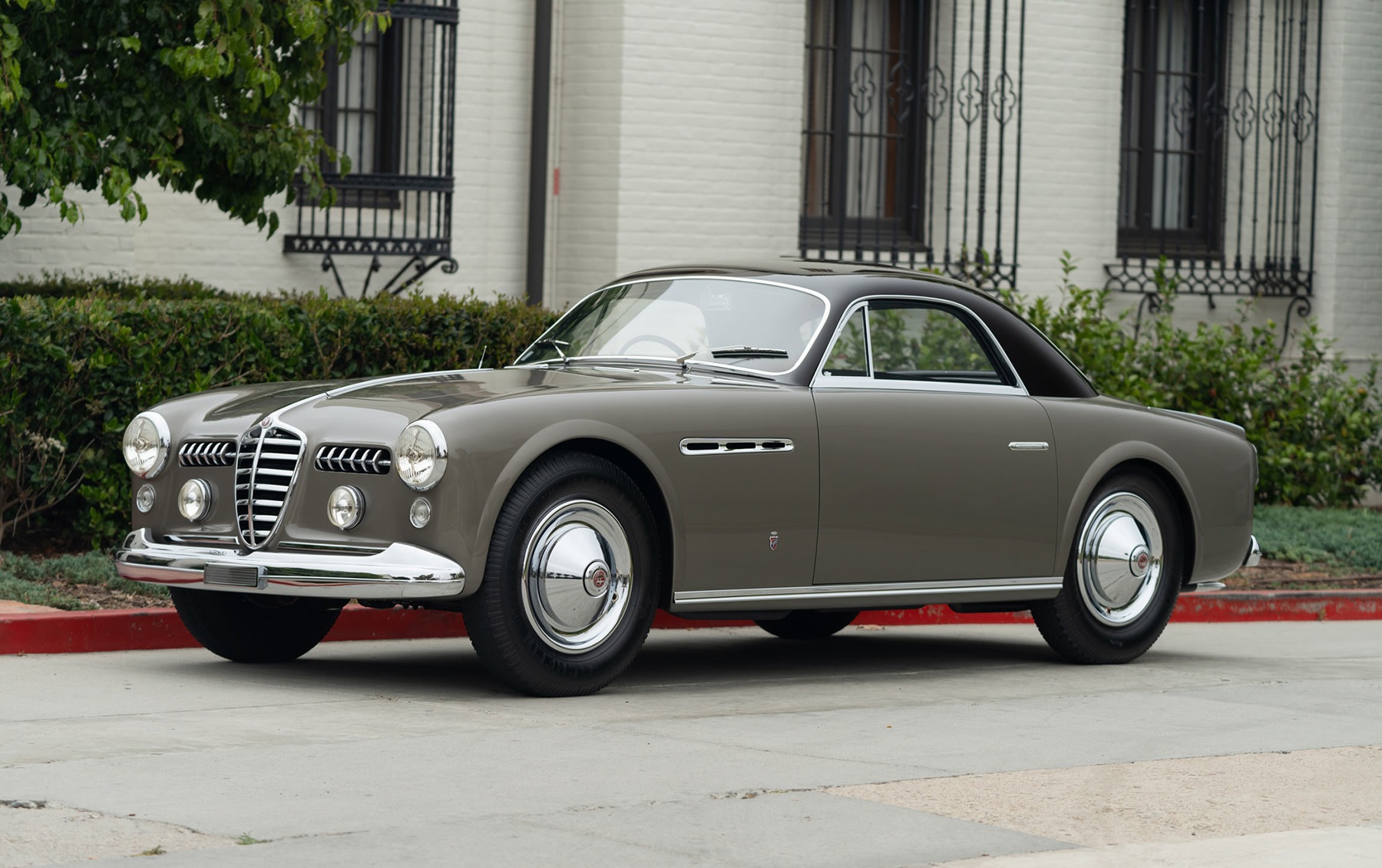
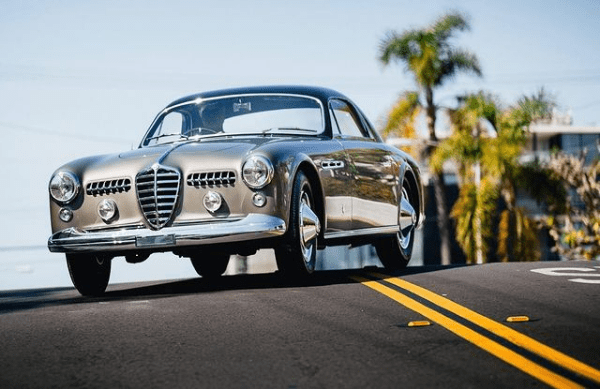
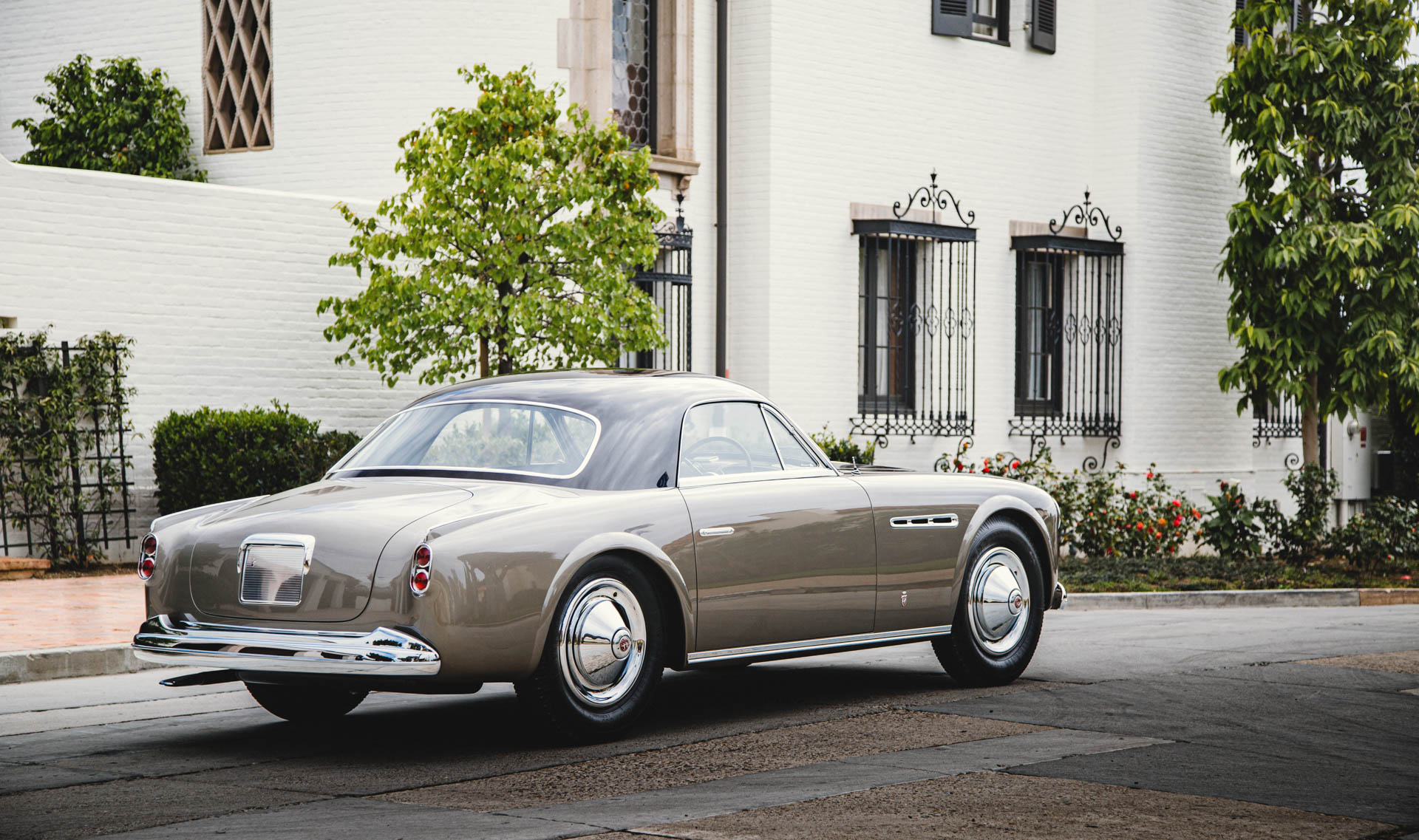
In terms of styling, chassis 0064251 was the zenith of the Supergioiello design evolution. Ghia fine-tuned the aesthetics with numerous exquisite details. The car was finished in a two-tone exterior – originally a combination of blue and white according to later advertisements (and restored in modern times to a period-correct two-tone scheme, albeit different colors). The two-tone paint accentuated the car’s graceful lines: archival photos show a lighter color on the lower body with a contrasting roof and pillars. The frontal treatment was redesigned once more, likely to distinguish this ultimate version. It retained the Alfa Romeo shield grille, but Ghia may have altered its size or surround; flanking the grille were integrated headlamps and perhaps a re-contoured bumper arrangement. The front end of the Gilco car appeared a touch more aggressive and streamlined than its predecessors – truly a face unique to this one-off. In profile, the door handles were mounted flush with the body for a cleaner look (a very advanced touch for 1950). A subtle crease flowed down the flanks, and tasteful chrome strips highlighted the beltline and rocker panels. The car also sported small rear tailfins – described as “subtle tail fins” – which were likely modest upward flicks at the rear fenders’ trailing edge, housing or adjacent to the taillights. This reflected the burgeoning jet-age influence on automotive styling, executed in a restrained way. Every angle of the Supergioiello exuded a harmonious balance of elegance and modernity.
Despite the new chassis, the mechanical components were pure Alfa Romeo 6C 2500 SS, ensuring proven performance. The 2,443 cc straight-six (with dual overhead cams) and 4-speed manual transmission, along with the independent front and live rear axle setup, were transplanted onto the Gilco frame. Thanks to the lighter tubular chassis, this Supergioiello likely had improved handling and perhaps a slight edge in acceleration. It was, in essence, the ultimate Gran Turismo from Alfa’s 6C lineage – combining the old-world engine smoothness with a new-world chassis.
When the Gilco-based Supergioiello was completed, it was truly one of one. While the previous three sisters had been sold to private owners, this car’s early fate is a bit murky. It seems SIRCA may have kept it initially as a promotional flagship or sold it quietly. Unlike its siblings, there’s no record of chassis 0064251 being exhibited at a public salon or concours in period – possibly because by spring 1951, the design had already been seen, and this example might have been finished after the major shows. There’s mention that the second Supergioiello (915.862) was the one Ghia showed at the 1950 Turin Salon, and the third at Venice later that year; by 1951, Ghia’s focus might have shifted to other projects (indeed Ghia was crafting bodies for the new Lancia Aurelia B20 GT around 1951, and working on American show cars). It’s plausible the Gilco Supergioiello was privately shown to select clients or used by SIRCA as a demonstrator of what Ghia could do.
What is known is that by the late 1950s, chassis 0064251 surfaced in England. The car had been exported to the UK and registered there, indicating it had been sold to a British owner during the 1950s. By 1961 it was advertised for sale by Bunny’s Garage in Nottinghamshire, described as a right-hand-drive special Ghia coupe painted blue and white. The mention of RHD is intriguing – it suggests the car may have been built with right-hand drive from the start (possibly at the request of SIRCA’s client or to appeal to export markets), or converted in England. The blue/white scheme matches the known original colors. The ad attracted a series of British owners through the 1960s; one notable owner was Alan John “Adge” Cutler, and later in 1971 it was acquired by Douglas John Cartledge. Cartledge kept the car for decades, and it remained in his family until 1995. During this time, the Supergioiello was largely out of the public eye, essentially tucked away and slumbering as an unrestored survivor.
Enthusiasts only re-discovered this jewel in the late 1990s. In October 1995, the car was put up for auction at Brooks’ Earls Court sale, where noted collector/dealer Egon Zweimüller purchased it. Recognizing its significance, he undertook a comprehensive restoration. Over 5,000 hours were invested to bring the Supergioiello back to its former glory. The restoration was completed in time for the car’s debut at the 1997 Concorso d’Eleganza Villa d’Este – coming full circle to the very concours venue where the Supergioiello concept had made waves in 1949 (with the Fiat and Lancia). At Villa d’Este 1997, the freshly restored Alfa 6C Supergioiello wowed the crowds anew, nearly 50 years after its conception. It even returned to Villa d’Este in 2001 and won Best in Class, underscoring the enduring appeal of its design.
The car changed hands a few times in the 2000s, including a stint in a noted U.S. collection. American enthusiast Craig Davis owned it for a period and showed it at events like the Pebble Beach Concours. After passing to a Dutch collector and then back to Davis, it was finally acquired in 2016 by its current custodian. A second, no-expense-spared restoration was commissioned to elevate the car to absolute top condition. Carried out by RX Autoworks in Canada (specialists in Pebble-winning restorations), this fresh restoration took two years and saw the Supergioiello outfitted in a stunning metallic bronze with chocolate-brown roof two-tone scheme, matching bespoke interior trim. Every mechanical component was rebuilt (the engine by Phil Reilly & Co.), ensuring it not only looked but ran as new.
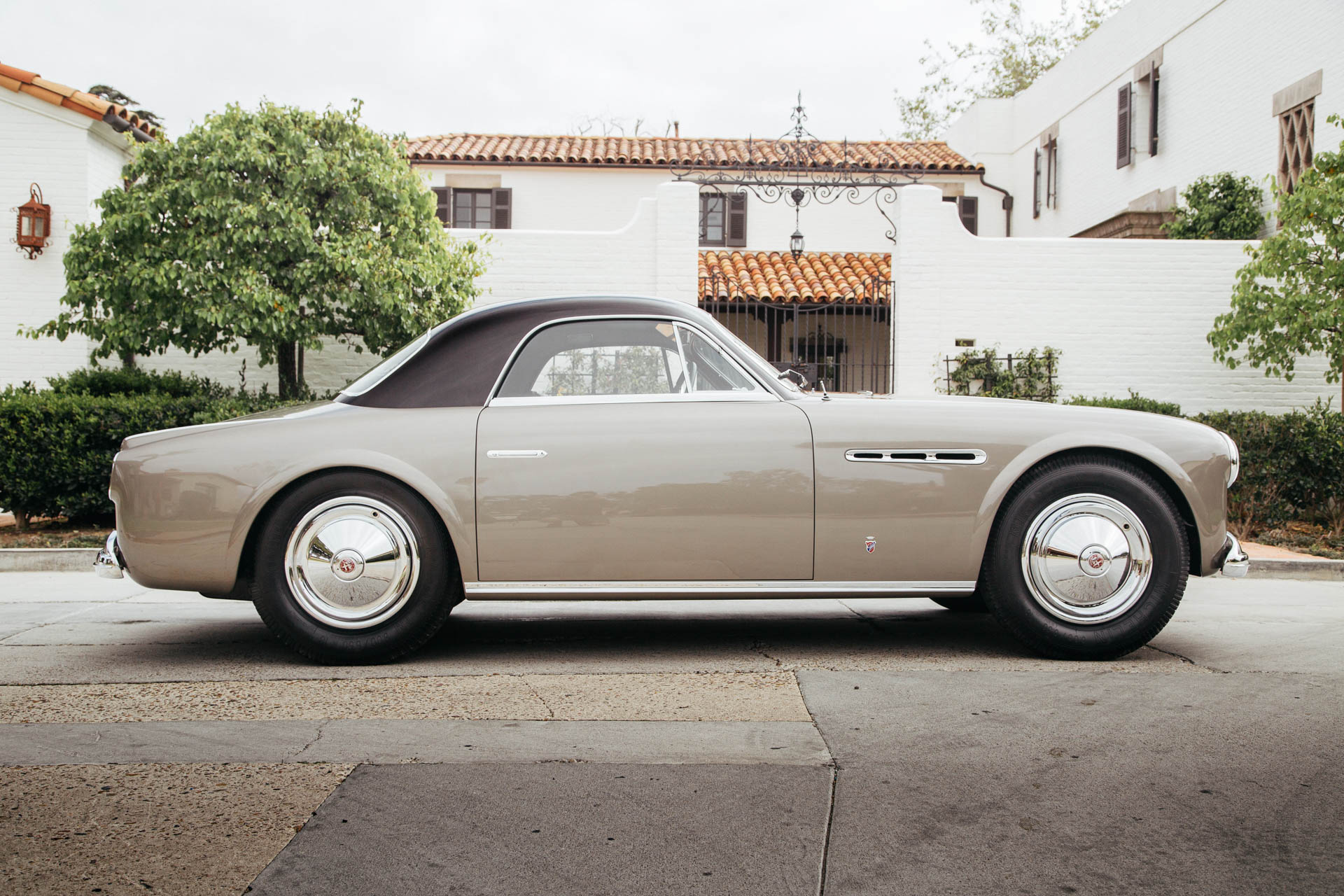
The crowning moment for chassis 0064251 came at the 2019 Pebble Beach Concours d’Elegance, the world’s most prestigious car show. There, the Alfa Romeo 6C 2500 SS Supergioiello by Ghia wowed the judges and earned First in Class (in the Italian coachbuilt category) as well as the coveted Most Elegant Closed Car trophy. Its exquisite restoration and inherently superb design made it a standout even among the best of the best. Additional honors followed, including the Chairman’s Award at Hampton Court Palace Concours and Best of Show at the Carmel Concours on the Avenue. After decades in obscurity, the Supergioiello was celebrated as an automotive work of art. In 2022, it was auctioned by Gooding & Co. at Pebble Beach, fetching about $1.38 million – a testament to its value as a singular piece of Alfa Romeo and Ghia history.
“Supergioiello” Design Legacy: From Alfa to Fiat and Ferrari
While the four Alfa Romeo Supergioiello coupes were a limited series, the influence of their design spread to other makes – a reflection of the coachbuilt era when designers often adapted successful themes across different chassis. Giovanni Michelotti’s work at Ghia did not stop with Alfa Romeo; he helped shape similar creations for Fiat, Lancia, and Ferrari around the same time, often carrying the “Gioiello” or “Supergioiello” name or style.
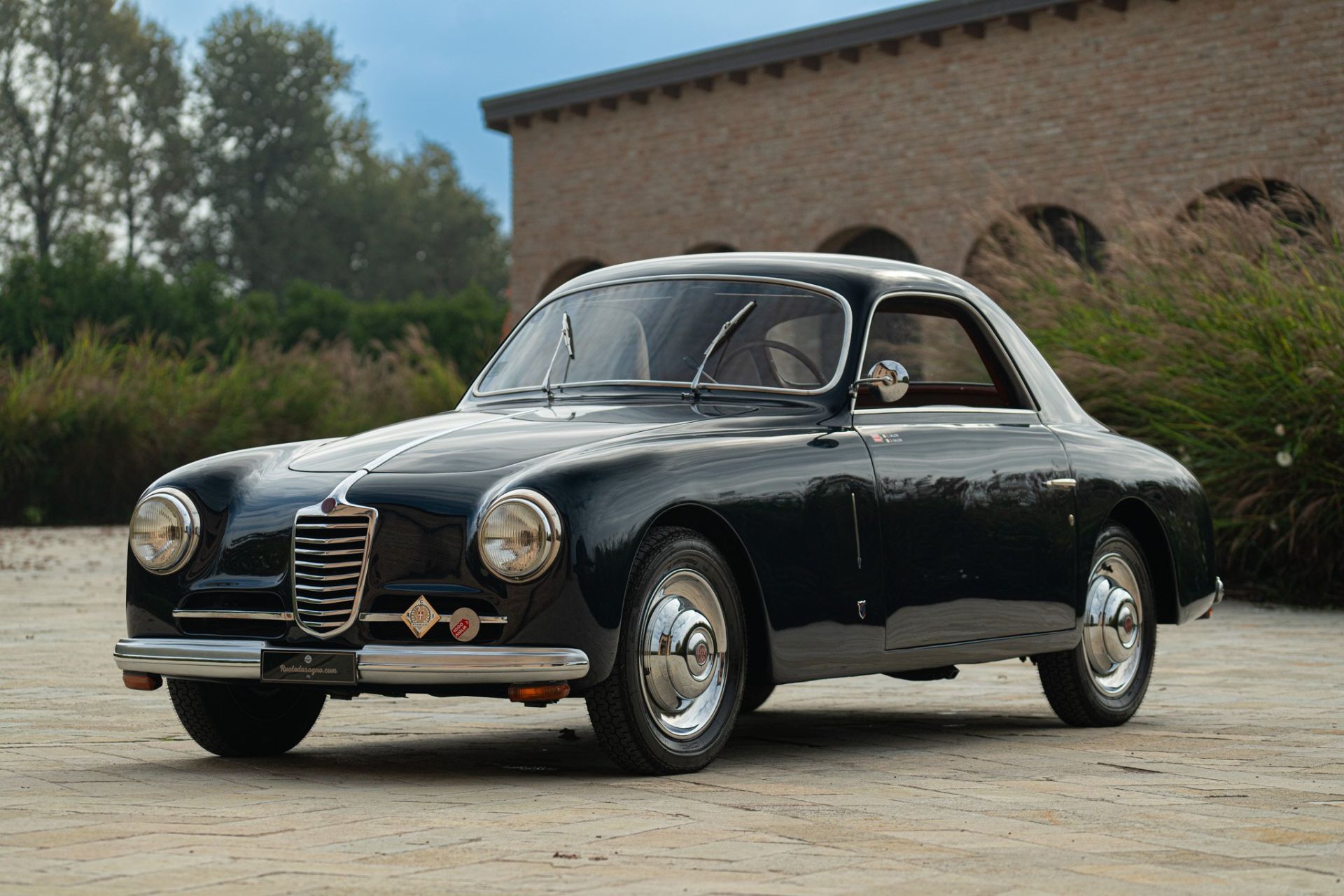
The Supergioiello body style, widely recognized today from its use on Alfa Romeo coupes—with its trademark domed greenhouse and jewel-like proportions—actually made its debut on a Fiat. The earliest known example was a 1949 Fiat 1100 E Gioiello owned by Malpiero Ernesto, which appeared at that year’s Concorso d’Eleganza di Roma. Designed by Giovanni Michelotti and built by Ghia, this elegant coupe introduced a refined design vocabulary that would soon be adapted across several marques.
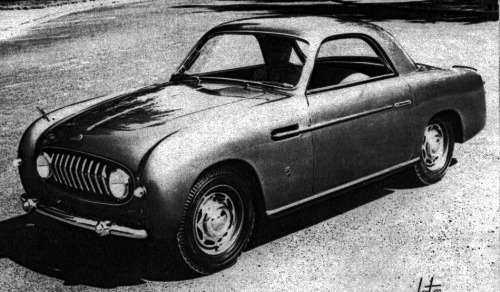
Ghia quickly applied the Supergioiello design language to other platforms, including a one-off Lancia Aurelia B50 coupe and a very limited run of Fiat 1100 E Supergioiellos. One notable version of the 1100 E featured a pioneering experimental front grille that integrated the headlights—a bold, American-influenced styling element that was rare in Italy at the time. This feature, however, was specific to the 1100 E Supergioiello and did not appear on the other adaptations.
Other chassis, such as the Lancia Aprilia, were also clothed in Ghia’s evolving coupe forms, though it’s important to note that the Supergioiello look was not the only design language Ghia employed. The 1950 Fiat 1400 coupe, for instance—also a Michelotti design—represented a different stylistic direction. Built on Fiat’s new sedan platform, this model had clean, modern lines that many felt anticipated the design of the 1951 Lancia Aurelia B20 GT. While the production Aurelia GT was ultimately done by other coachbuilders including Pininfarina, its overall shape bore a striking resemblance to Ghia’s earlier Fiat 1400 coupe.
🔗 Read more: The Lancia B20 Design Story
Perhaps even more intriguing is the Ferrari connection. In 1950–52, Ghia bodied a handful of Ferrari road cars, bringing a Supergioiello-esque flair to Maranello’s V12 machines. The most famous is the 1951 Ferrari 212 Inter Coupe, chassis 0213 EL, which was Ghia’s show car at the Turin Motor Show in April 1951. This one-off Ferrari wore “Supergioiello” coachwork designed by Giovanni Michelotti. The resemblance to the Alfa Supergioiello is evident in its thin pillars, low roofline, high beltline, and elegant profile with slight tail fins. However, being a Ferrari, it also incorporated cues to please Ferrari’s ethos: by 1952 Ghia revised its grille to a proper Ferrari-style oval, and the car was even featured in Ferrari’s own sales literature – a stamp of approval by Enzo Ferrari. Painted black with a silver roof, the Ghia-bodied 212 Inter wowed crowds and is considered one of the finest Ghia designs. In fact, it’s often referred to as the Ferrari 212 Inter “Supergioiello” in enthusiast circles. This car survived in exceptionally original condition, spending most of its life with one owner (Rodolfo Junco in Mexico) for over 65 years, and recently re-emerged to great fanfare. It stands as the only Ferrari coupe by Ghia with the three-window Supergioiello styling.
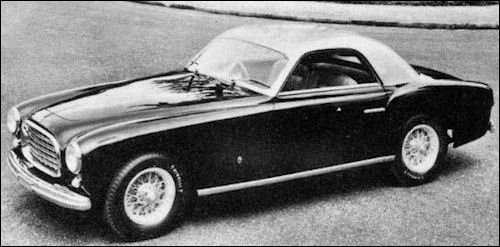
Ghia also built other Ferrari 212s and even a Ferrari 340 America with related designs. One Ghia-bodied 212 (chassis 0233 EU) shown at the 1952 Paris Salon was a unique notchback coupe that reportedly ended up owned by Argentine President Juan Perón. By 1953, however, Ferrari’s partnership with coachbuilders changed – Pinin Farina secured an exclusive agreement with Ferrari in 1952 to become their primary road car designer, which meant houses like Ghia would no longer freely body Ferrari chassis. This marked the end of the design-sharing era for Ferrari. The Ghia “Supergioiello” Ferrari thus remains a special snapshot in time when cross-pollination of design between Alfa, Fiat, and Ferrari was possible.
The stylistic legacy of the Supergioiello can also be seen in Ghia’s subsequent projects. Meanwhile, Ghia under Luigi Segre and then Giovanni Savonuzzi moved into the futurist “Supersonic” designs by the mid-1950s (like the famous Ghia Supersonic on Fiat 8V and others). But aspects of the Supergioiello’s “International Style” – the uncluttered lines, the balanced proportions, the subtle use of two-tone and chrome – influenced many cars of the 1950s. Even the Volkswagen Karmann-Ghia (designed in 1953–55), though often credited to a scaled-down Chrysler show car, can trace part of its elegant DNA to the groundwork laid by Ghia’s early 1950s coupés.
A “Super Jewel” in Automotive History
As the final and most advanced of the four Supergioiello coupes, #64251 encapsulated the evolution of a design concept from bold experiment to refined reality. Its striking looks – from the two-tone paint and streamlined profile to the subtle fins and iconic grille – make it timeless. Indeed, even today it is hard to believe this car was conceived in 1950; it looks years ahead of its time.
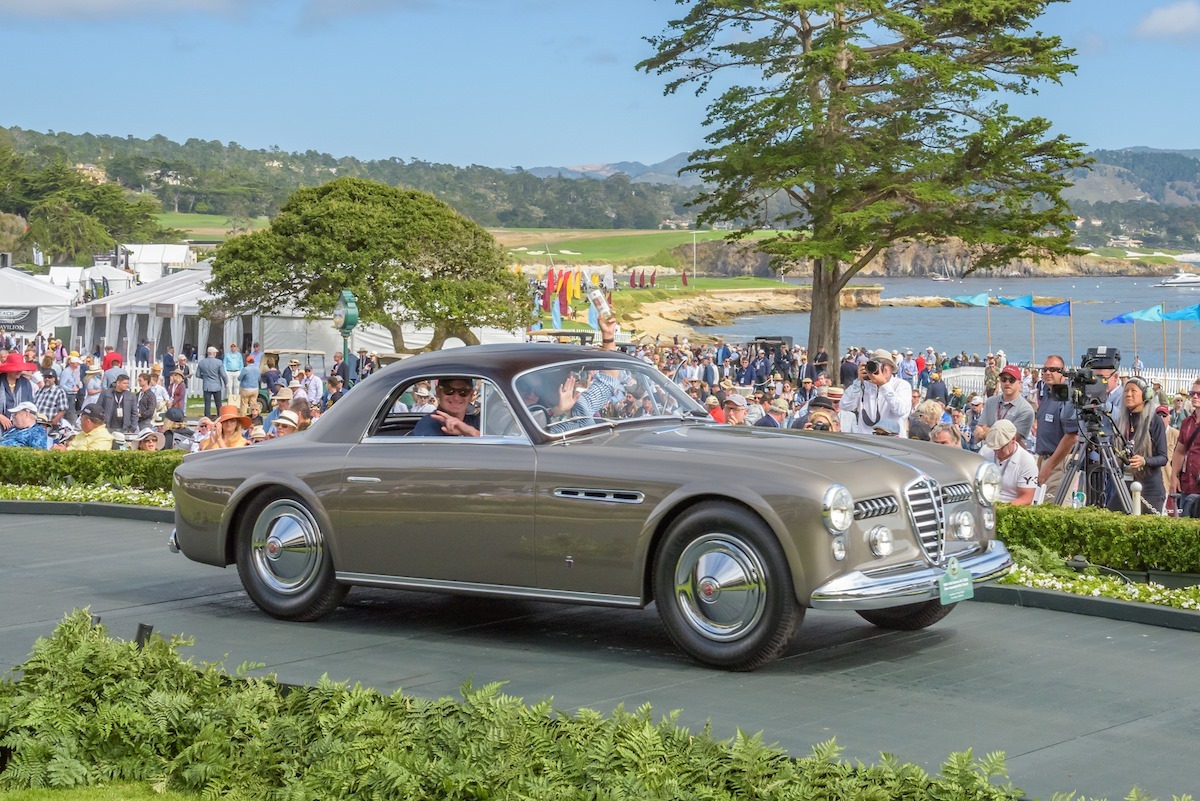
The journey of chassis 64251 from a one-off showpiece to a hidden gem in England, and finally to a Pebble Beach champion, adds to its mystique. Alongside its sister cars, it helped set trends in the early 1950s and proved that Italian coachbuilders could marry innovation with elegance like no others. The Supergioiello series also highlights an important chapter in automotive history – when independent design houses had the freedom to “recycle” great designs across different marques, creating a fascinating web of related exotic cars. The fact that a Ferrari, a Fiat, a Lancia, and an Alfa of that era could all share a design DNA speaks to a unique period that soon passed into history as brands became more guarded.
🔗 Read more: Concours d’Elegance: We Need to Talk
Most of all, the Supergioiello is a celebration of automotive artistry. Its name – meaning Super Jewel – is no exaggeration. Each of the four coupes is a jewel in its own right, and the Gilco-chassis car is the crown jewel. These cars remind us of a time when an automobile could be tailor-made like a piece of fine jewelry for the road, each facet thoughtfully shaped by craftsmen. They graced the grand stages of salons and concours, bringing beauty and excitement to a world recovering from war. And decades later, their beauty still resonates, winning top honors among today’s connoisseurs.
The Alfa Romeo 6C 2500 SS Ghia Supergioiello represents the meeting of Alfa Romeo’s heritage, Ghia’s creativity, and a client’s ambition to push the envelope. As a historical artifact, it offers insight into design trends and social trends of the 1950s. As an object of design, it is breathtaking from every angle – truly worthy of the description “one of the most beautiful cars ever made”. The Supergioiello may have been born in a specific time and context, but like any great jewel, its luster remains undimmed by time – a shining example of the golden era of Italian carrozzeria.

ABOUT THE AUTHOR
Andreas Scheidl
Italian classic car enthusiast with German roots. Renowned as a respected figure in the classic car community, he serves as a jury member at various international concours d'elegance, including the Classic Gala Schwetzingen and Mantova. As a content creator, Andreas passionately shares his profound knowledge and appreciation for vintage automobiles. His heart beats for cars designed by Giovanni Michelotti, showcasing his discerning taste and dedication to preserving the timeless elegance of automotive history.
More stories by Andreas Scheidl ↗CONTINUE READING
Posts You Might Like
A Central Driving Position, a Rear-Mounted V8. Was This Really a Lancia?
In 1948, visitors to the Turin Motor Show could see an unusual Lancia on the stand of Carrozzeria Ghia. It was a large two-door coupé with a two-litre V8 mounted behind the…
Read story
Fioravanti F100: The Ferrari He Was Allowed to Imagine
Enzo Ferrari’s centenary, Leonardo Fioravanti’s independent studio and a supercar that explored air brakes, steel wheels and a new way of driving—without ever wearing the Cavallino.
Read story
Michelotti Shellette: When the Fiat 850 Became a Yacht
The yacht designer, the Turin stylist and the tiny coachbuilt car that crossed between the quay, the royal holiday house and the auction room. Some automobiles were conceived for the open road,…
Read story
Maserati A6 1500: A New Road for the Trident
When the doors of the Geneva Motor Show opened in March 1947, Maserati was a name that required little introduction to anyone who followed motor racing. What it did not yet possess…
Read story
THE CONVERSATION
Comments 0
Share a memory, a period photograph or a documented detail about this story.