
The Partnership between Ferrari & Zagato
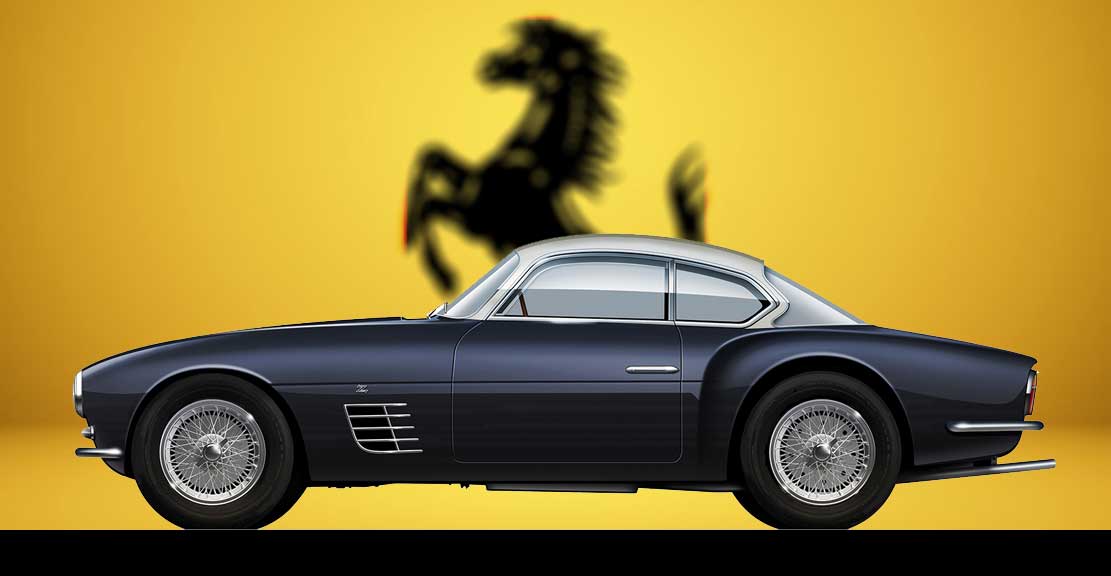
Ferrari and Zagato have crossed paths only a handful of times since the late 1940s, but each encounter produced something truly special. When the prancing horse of Ferrari met the distinctive “Z” of Zagato, the result was a fusion of prestige and performance, elegance and sportiness. This partnership was never a continuous, routine alliance – unlike Ferrari’s long-standing relationship with Pininfarina – but rather a series of unique collaborations sparked by personal meetings between Enzo Ferrari and Ugo Zagato. Often, these projects were driven by visionary racing drivers and gentlemen enthusiasts who craved that extra something for their Ferraris: a mixture of lightness, aerodynamic efficiency, and bespoke design that only Zagato’s artisan touch could provide.
🔗 Read more: The story of Zagato Milano
Setting the Stage: The story begins in post-war Italy. Ugo Zagato had earned renown before WWII for crafting lightweight, aerodynamic bodies – many for Alfa Romeos raced by Enzo Ferrari’s Scuderia in the 1930s. His aircraft-industry background led him to use advanced materials like aluminum and plexiglass, focusing on weight savings and streamlining. By the late 1940s, Zagato introduced the innovative “Panoramica” design: cars with large curved plexiglass windows flowing into the roofline for panoramic visibility. This concept was applied to various makes and proved Zagato’s forward-thinking approach to design and construction. Meanwhile, Enzo Ferrari had just founded his own car company (in 1947) and was eager to make a mark with high-performance sports cars. It was only natural that these two innovators – old acquaintances from Alfa Romeo days – would eventually collaborate when the right opportunity arose.
1949: The First Ferrari Zagato – 166 MM Panoramica
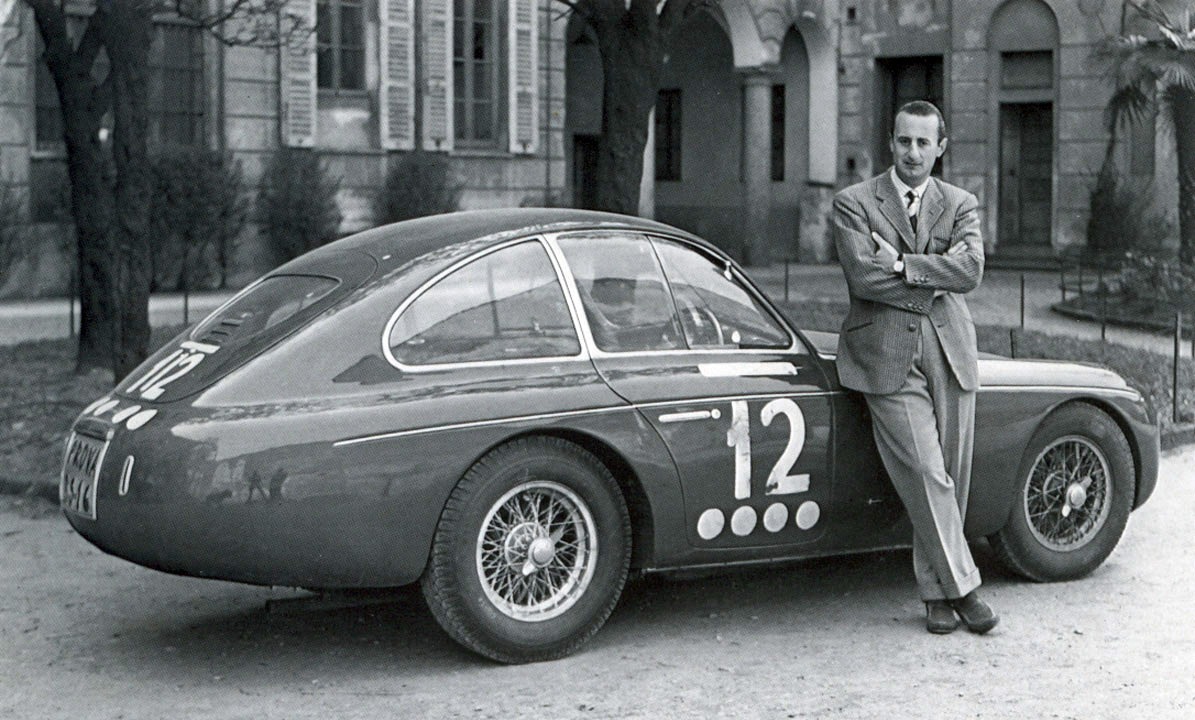
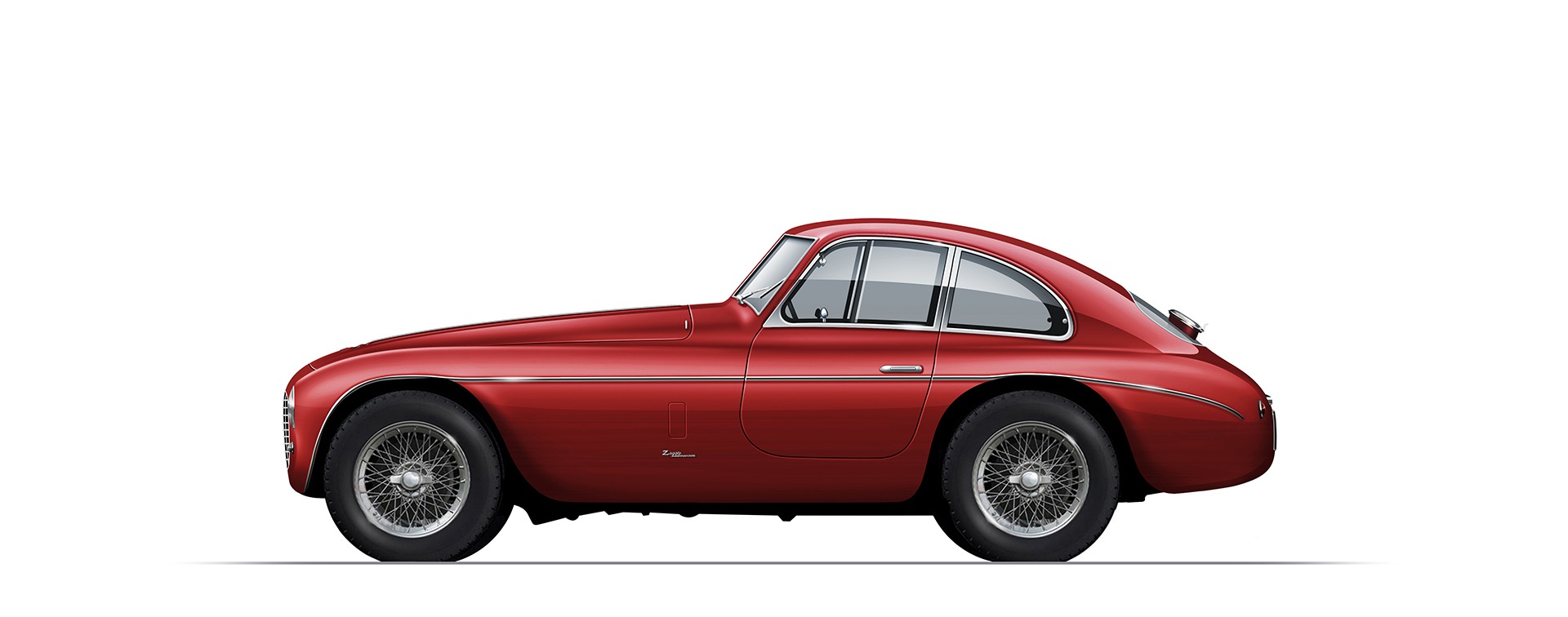
The first meeting of minds between Ferrari and Zagato came in 1949. A gentleman driver named Antonio Stagnoli, hungry for racing success, approached Enzo Ferrari with a bold proposal: let Zagato body one of Ferrari’s new 166 MM competition chassis. Enzo agreed, perhaps persuaded by Ugo Zagato’s reputation and a bit of lobbying from Ugo’s son Elio, who was Stagnoli’s teammate and saw the potential of a Ferrari “Panoramica” with his family name on it. The resulting car – the Ferrari 166 MM Panoramica – was groundbreaking on several levels. It was the first Ferrari ever clothed by Zagato, and in fact Ferrari’s first closed coupé design, since all earlier Ferraris were open-top barchettas. For this special project, even legendary engineer Gioacchino Colombo (designer of Ferrari’s V12 engine) collaborated on the final design, blending Ferrari engineering with Zagato’s coachbuilding artistry.
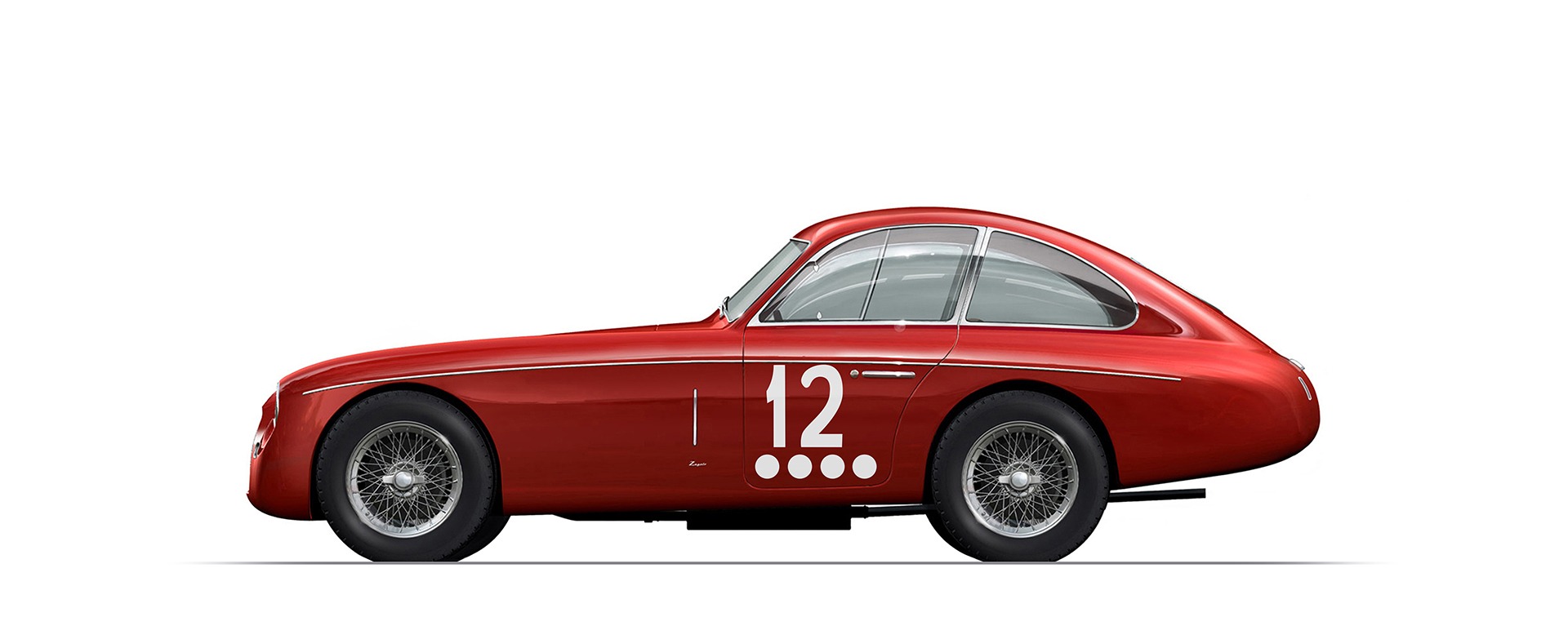
Zagato’s Panoramica principles defined the car’s appearance. The roof and body merged seamlessly with curved plexiglass windows, creating a wraparound greenhouse that offered unparalleled visibility. The roofline was slightly raised compared to a typical sports car, and the side and rear windows curved into it – much like the cockpit of a bomber plane, a likely inspiration from Ugo Zagato’s aviation days. These large glazed areas made the cabin bright and improved driver sightlines, an advantage in endurance races. Despite the generous glass, Zagato’s use of lightweight aluminum panels meant the car remained very light. He eschewed heavy ornamentation; the lines were sleek and clean, the fenders integrated into the body, and any superfluous elements were trimmed away – all in the name of performance and aerodynamics.
🔗 Read more: The Panoramica by Zagato
When Stagnoli first rolled out the Ferrari 166 MM Zagato Panoramica, painted a striking two-tone scheme, it caused a stir. Here was a Ferrari like no other, looking almost futuristic for 1949. Underneath, it was pure competition machine – the 166 MM was named for the Mille Miglia race and had a lively 2.0L V12. Stagnoli entered the car in Italian sports car events and immediately found success. He debuted it at the Circuito di Senigallia in 1949 and the next year took 2nd place in the Coppa Intereuropa at Monza (March 1950), also achieving a class win in that race. The coupé even started the 1950 Mille Miglia, where it caught attention (though it didn’t finish that grueling 1000-mile contest). Stagnoli and the 166 Panoramica continued to rack up podium finishes through 1950, proving the merits of Zagato’s design. Observers noted the car’s distinctive fastback tail, which elegantly linked the roof to the lower body – a styling challenge Zagato met with aplomb – and its competitive pace on track.
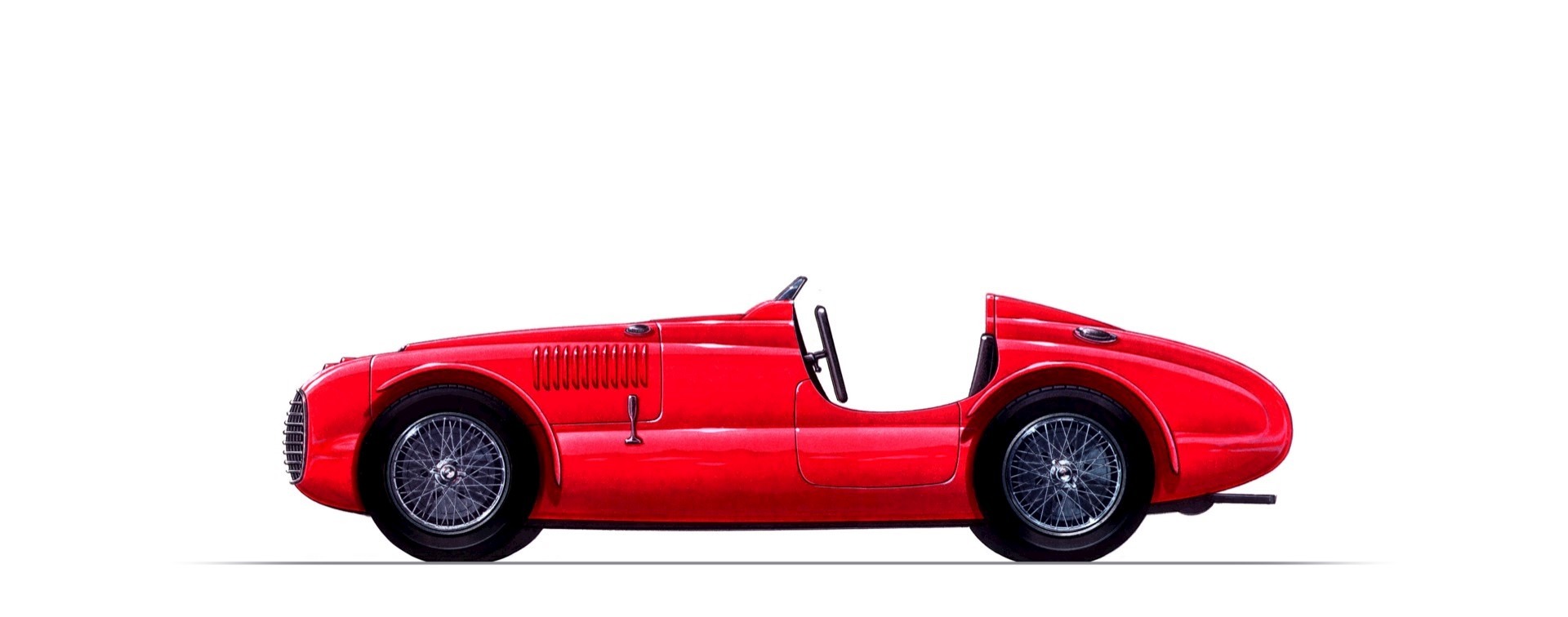
Despite its success and singular beauty, Stagnoli wasn’t entirely satisfied. By 1951, open-top “barchetta” racers were proving quicker in sports car races, and Stagnoli decided to have Zagato transform the coupé into a barchetta for better competitiveness. It was a startling decision – effectively sacrificing the first Ferrari coupé. Zagato removed the Panoramica roof and reshaped the body into an open two-seater with small cycle fenders over each wheel, giving it the appearance of an “extremely racy torpedo” on wheels. The new 166 MM Zagato Barchetta looked more spartan and focused, without some of the refined curves of the coupé, yet still bore Zagato’s touch in its proportions and details. Stagnoli’s hunch paid off in competition: the barchetta Zagato scored several victories in 1951, including winning the Coppa d’Oro in Sicily, another Coppa d’Oro in Tuscany, the Varese–Campo dei Fiori hillclimb, and the Bolzano–Mendola hillclimb. This string of wins underscored how Zagato’s lightweight construction and aerodynamic shape gave Ferrari’s V12 an extra edge. The success of these first two Ferrari-Zagato bodies – the coupé and later the barchetta on the same chassis – demonstrated a promising synergy. Ferrari’s race cars could benefit from Zagato’s unique blend of engineering and artistry, and a precedent was set for future collaborations.
There is a poignant footnote to this 166 MM Panoramica story. When Zagato converted the original coupé into the barchetta, the world effectively lost the very first Ferrari Zagato coupé. But decades later, in 2007, Zagato and Ferrari decided to recreate the lost 166 Panoramica for history’s sake. Using another period Ferrari 166 chassis that had worn a different body, the Zagato team employed a photometric analysis of old photos and worked with Ferrari Classiche to rebuild the car as it appeared in 1949. The result was a stunning resurrection of the iconic design, unveiled in time for Ferrari’s 60th Anniversary celebrations. Thus, the spirit of that first Ferrari-Zagato coupé lives on, certified by Ferrari Classiche and appreciated by new generations of enthusiasts.
1952: A New Coupe from Old Roots – 166 MM Zagato “Elaborata”
The early 1950s saw Ferrari experimenting with various coachbuilders for their racing and road machines. By 1952, two Ferrari Zagato creations were already known (the Panoramica and its barchetta incarnation). The third Ferrari Zagato came about under rather different circumstances – not built fresh on a spare chassis, but by rebodifying an existing Ferrari. This car is often referred to as the 166 MM Zagato Coupe “Elaborata” (Elaborated), built in 1952, and it carries a story intertwined with some famous names of Italian motoring.
Chassis no. 0046 M started life with a Touring barchetta body – in fact, this Ferrari 166 MM was driven by Nuccio Bertone (son of coachbuilder Giovanni Bertone) in the 1951 Mille Miglia. After a season of racing, Nuccio sold the car to another well-known racing gentleman, Emilio Giletti (father of future racing driver and textile heir Edoardo Loro Piana, and himself part of the Loro Piana textile family). Giletti campaigned the 166 MM through the 1952 season with considerable success. By the end of 1952, he passed the car to Luigi Bosisio, a member of the same amateur racing club (Scuderia Sant’Ambroeus) that included Antonio Stagnoli and the young Elio Zagato. It was through this network that the idea arose to give 0046 M a new lease on life – Zagato style.
🔗 Read more: The story of Bertone: the Most Controversial Coachbuilder Ever
At Bosisio’s request (encouraged by his friend Elio Zagato), Ugo Zagato’s workshop transformed the old barchetta into a sleek berlinetta coupe. Instead of starting from a bare chassis as with the first Panoramica, this time Zagato had to work around an existing body’s framework. They retained some elements of the Touring design – for instance, the pronounced curved crease over the wheel arches (a styling “vein” typical of Touring) was echoed in the new body. But Zagato lowered and reshaped the tail, added a completely new lightweight aluminum roof, and fitted his trademark Panoramica-style windows wrapping into the roofline. The nose was also simplified and modernized, giving the car a cleaner face than it had in its barchetta form. The result was a unique hybrid of Touring and Zagato design cues – a true one-off.
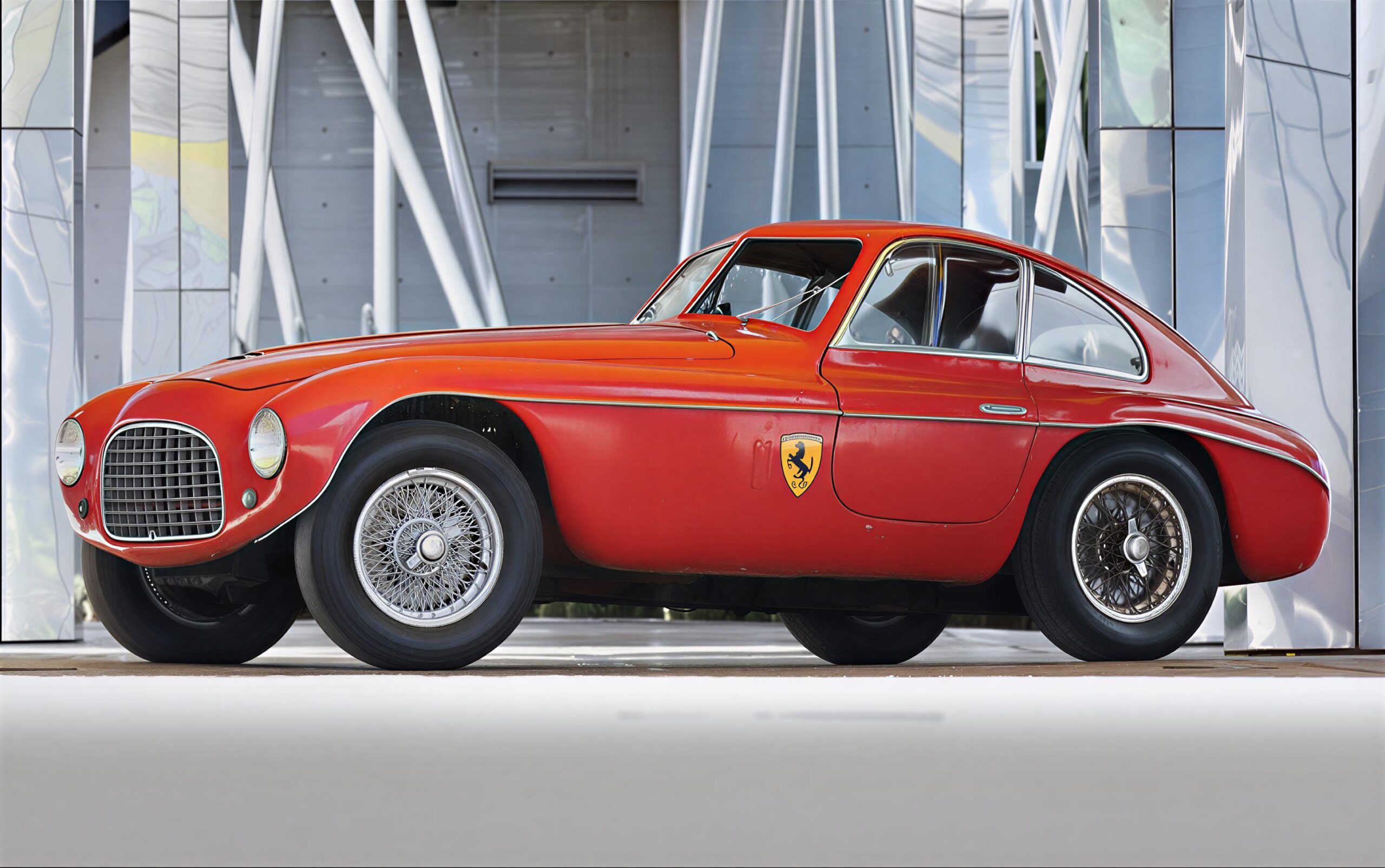
This 1952 166 MM Zagato Coupe blended elegance with function. Its roofline was lower and included subtle double curvature (foreshadowing Zagato’s later “double-bubble” roofs), and the rear end now sloped gently downward – a characteristic touch that added a sense of motion even when the car was still. Inside, the cabin benefited from the increased visibility and brightness afforded by the large windows. On the track, Bosisio campaigned the rebodied coupe in local events. While not as widely documented in competition as Stagnoli’s car, it symbolized the first time Zagato re-“clothed” a Ferrari that had already lived a racing life, proving that even an older Ferrari could be reborn with improved aerodynamics and style.
This one-off also underlined something fundamental about Zagato’s construction philosophy: whether starting from scratch or modifying an existing design, Zagato aimed to remove anything superfluous and enhance functionality. In the 166 “Elaborata”, extra trim was pared down and the focus was on lightweight strength – the new coupe roof made the car more aerodynamic and probably added rigidity, without adding much weight thanks to aluminum. Zagato’s ability to adapt and modernize a Ferrari in this way impressed Ferrari and the racing community. Little did they know that even greater things would emerge when the V12 got bigger and the stakes got higher in the coming years.
1956–1959: The Zagato 250 GT Era – Five Unique Berlinettas
By the mid-1950s, Ferrari’s 250 GT series had become its flagship grand touring and racing platform. These V12-powered 3.0-liter machines, especially in competition trim, were dominant in GT racing. Ferrari typically partnered with Pinin Farina or Carrozzeria Touring for road-going 250 GT bodies, and Scaglietti for the racing versions (like the 250 GT “Tour de France” and later the 250 GT SWB). Yet, between 1956 and 1959, five special 250 GTs were clothed by Zagato, marking the zenith of the Ferrari-Zagato partnership in terms of competition impact. Each of these five berlinettas was a one-off, tailored to its owner’s wishes and refined progressively by Zagato’s design evolution. Together, they are often referred to as 250 GTZ (Z for Zagato) models, and their rarity and beauty make them some of the most coveted Ferraris ever built.
1956 Ferrari 250 GT Zagato (chassis 0512 GT): The series began with a commission from gentleman driver Vladimiro Galluzzi in early 1956. Galluzzi wanted a dual-purpose GT – a car he could race on weekends and also turn heads at concours d’elegance. Zagato delivered on both counts. Chassis 0512 GT was originally a long-wheelbase Ferrari 250 GT competition chassis (similar to the 250 GT “Tour de France”), but Zagato draped it in a new all-aluminum body of great elegance and aerodynamic purity.
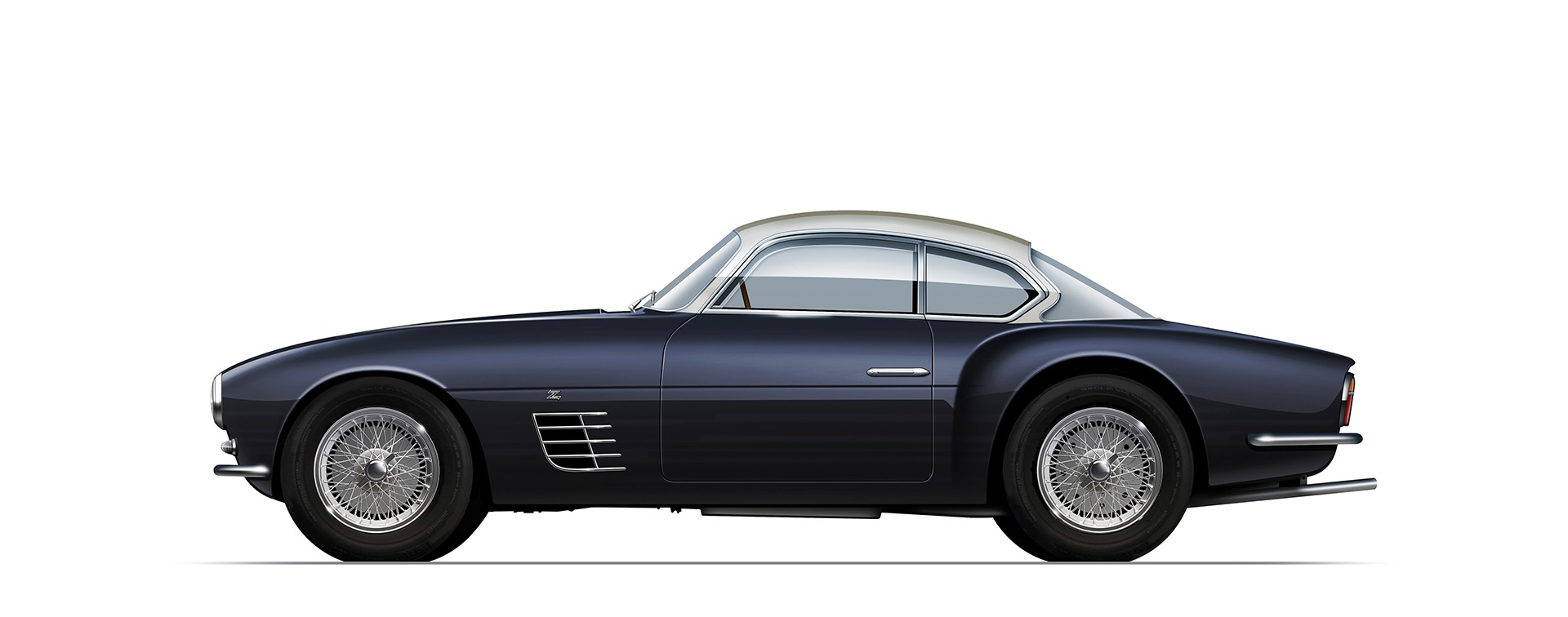
The design featured a smoothly rounded front with integrated oval grille, a low roof with Zagato’s signature double-bubble domes, and a sporty short tail. Notably, the body was finished in an exquisite two-tone paint scheme – a refined grey and blue – visually separating the roof from the lower body. This accentuated the low-slung stance and curvaceous roofline. Observers at the time and historians since have often proclaimed 0512 GT as one of the most beautiful Ferraris of all time. Importantly, it was not just about looks: Zagato’s aerodynamic, lightweight coachwork gave the car a competitive edge on the track. Galluzzi raced the car, and its blend of “prestige and performance” proved Ferrari’s Zagato experiment was worthwhile. This first 250 GTZ set the template: a compact, elegant berlinetta that could win trophies both on circuits and on the lawn.
1956 Ferrari 250 GT Zagato (chassis 0537 GT), often dubbed the 250 GTZ Coupé Corsa: Hot on the heels of Galluzzi’s car, a second was commissioned by a passionate private racer Camillo Luglio in mid-1956. Luglio had seen the potential of the Zagato-bodied 250 and wanted one to gain an edge in national GT races. Remarkably, Zagato completed 0537 GT in record time – reportedly just a few weeks – in order to have it ready for a hillclimb event, the Vermicino-Rocca di Papa race in May 1956. The car was delivered in bare aluminum, with only a primer coat of paint, straight to the event. Despite barely having time to familiarize himself with the new car, Luglio drove it to a 2nd place finish on its debut. Afterward, the car received its final livery: a handsome grey paint with a bold longitudinal red stripe down the center of the hood – a striking, purposeful look.
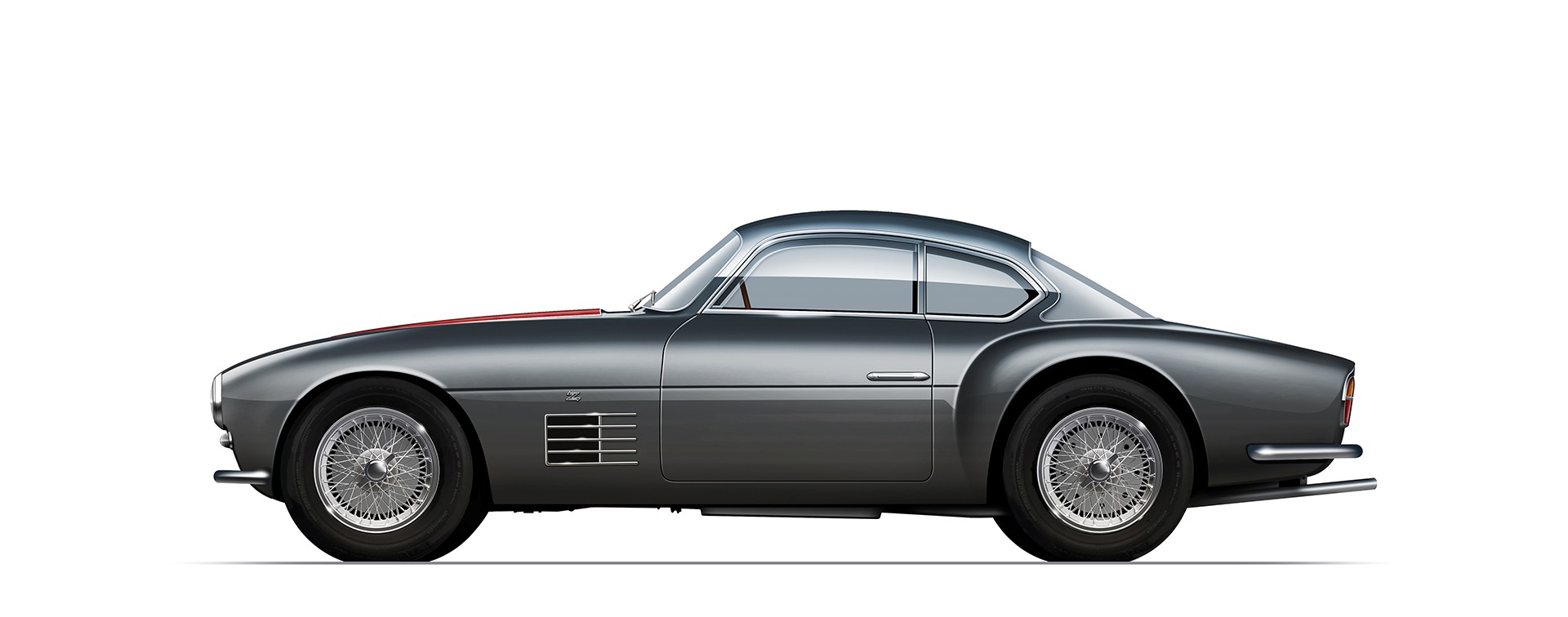
Chassis 0537 GT’s design was an evolution of the Galluzzi car. It had the trademark double-bubble roof and was similarly proportioned, but certain details were even more competition-oriented. Photographs reveal it initially lacked bumpers and featured faired-in headlamps covered by clear plexiglass shields, enhancing the aerodynamics. Indeed, Zagato’s extreme aerodynamic research on this car was evident – the front light clusters were set back and covered, flush with the body, giving the nose a very sleek appearance for its time. During 1956, Luglio campaigned the car vigorously, and it won numerous events across Italy. Among its victories were the Coppa d’Oro delle Dolomiti (a prestigious sports car road race through the Dolomites) and the Giro delle Calabrie, and with consistent high finishes Luglio clinched the Italian Sports Car Championship in 1956. The partnership of Luglio’s driving talent and Zagato’s coachwork had proven a championship-winning formula.
1957 Ferrari 250 GT Zagato (chassis 0665 GT), sometimes called 250 GTZ Competizione: After his triumphant 1956 season, Camillo Luglio returned to Zagato for an updated car to tackle 1957. Chassis 0665 GT was the third Zagato-bodied 250 GT, and it incorporated further refinements for speed. The overall silhouette remained low and aggressive, but Zagato made the front end even sleeker: the headlights were moved further back along the fenders and covered by curved plexiglass “lids” that blended into the lines of the nose. This gave 0665 GT an especially modern look – almost a preview of 1960s GT styling. Additionally, the roof’s double-bubble profile and the rear pillar design were subtly modified for better airflow.
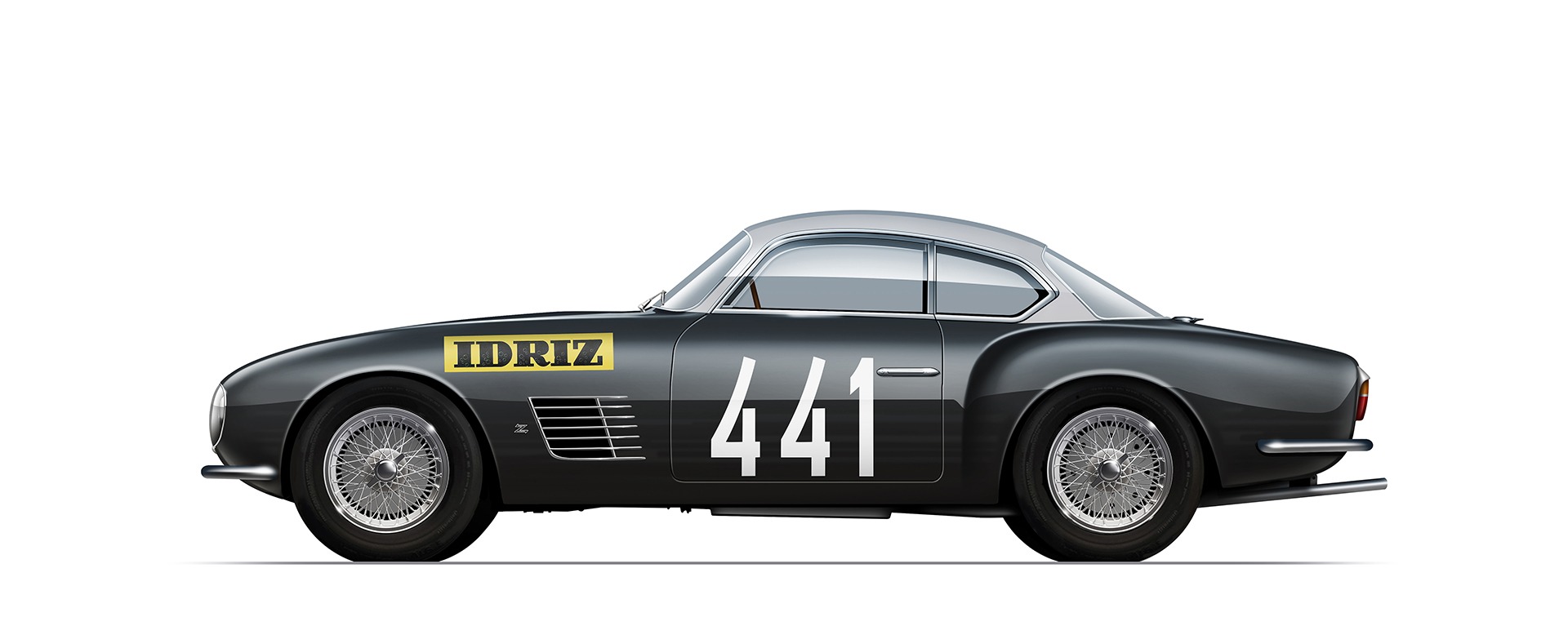
One can see Zagato’s iterative approach – each car learning from the last. Under the skin, Ferrari had improved mechanicals as well, but Zagato’s body likely shaved weight off the standard competition 250 GT, boosting performance. Luglio raced 0665 GT through 1957, though that year brought stiffer competition (Ferrari’s own new 250 GT “Tour de France” model and the emerging Maserati and Aston rivals). Even so, Zagato and Luglio remained at the sharp end of Italian events, with the car proving fast and tractable – a testament to how Zagato’s design enhanced drivability as well as speed.
1957 Ferrari 250 GT Zagato (chassis 0689 GT), often termed 250 GTZ Lusso: The fourth Zagato-bodied 250 GT was commissioned in late 1957 by Vittorio de Micheli, another gentleman driver who admired Zagato’s work. While de Micheli intended to race his car, he also emphasized grand touring comfort and style – hence this car had a bit more “Lusso” (luxury) in its character. The red-painted 0689 GT had the most refined interior of the series, with a nicely trimmed cockpit suitable for road use. Externally, it introduced a notable departure from its predecessors: Zagato deleted the double-bubble roof on this car.
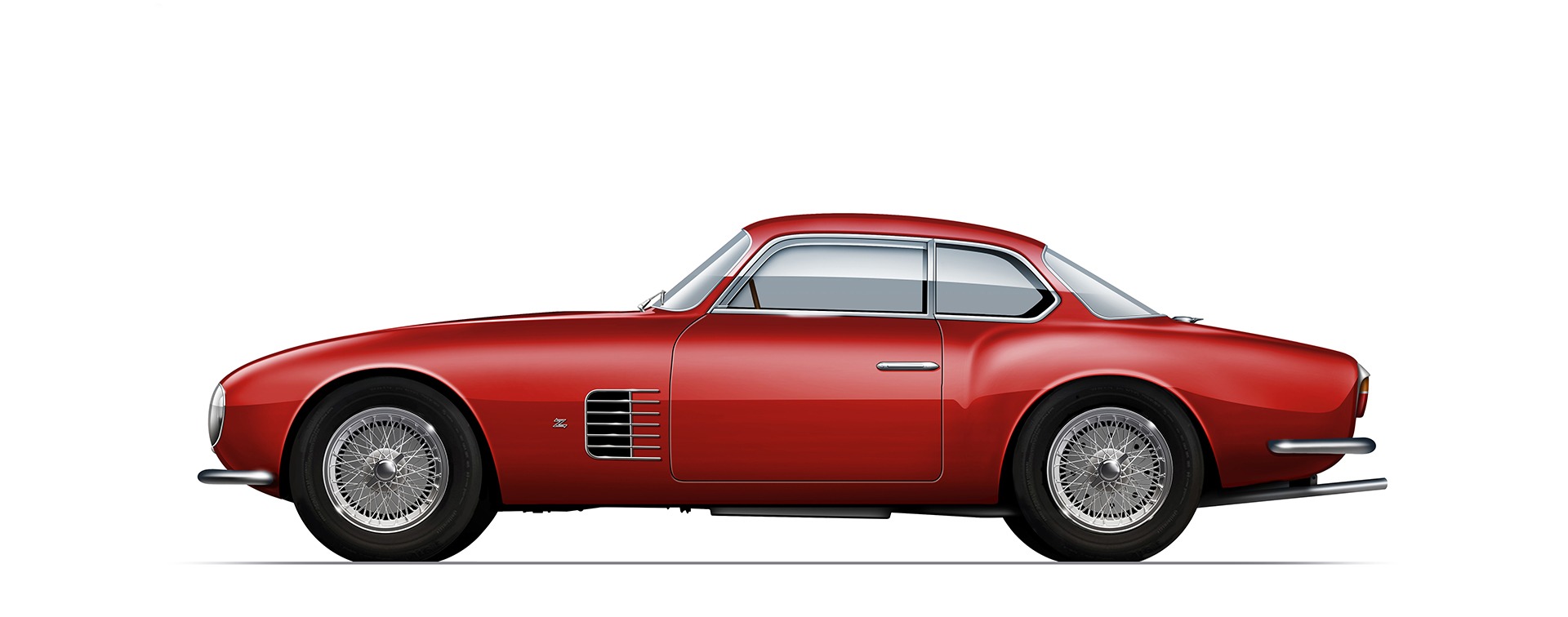
The roof was made smooth, perhaps for a cleaner aesthetic or at the customer’s request. Without the twin domes, the car’s profile was a touch more subdued, but still sleek. The side vent grilles on the front fenders were reshaped, and overall the bodywork appeared slightly smoother and more blended. The front end retained the faired-in covered headlights like Luglio’s second car, but with an even more flush, rounded treatment at the lower nose. The result was a design some describe as the bridge between a pure racing berlinetta and a road-going GT – it had competition DNA but an added dose of elegance. De Micheli indeed raced the car in 1958 and 1959, and it won numerous trophies in Italian events during that period. Despite lacking the double bubbles, 0689 GT was indisputably a Zagato, showcasing the coachbuilder’s adaptability to an owner’s preferences while still delivering performance.
🔗 Read more: The Ferrari 250 GT Interim: Bridging the Gap Between Icons
1959 Ferrari 250 GT Zagato (chassis 1367 GT), often referred to as the 250 GTZ “Prototipo”: This car was the fifth and final 250 GT Zagato of the 1950s, completed in mid-1959. Interestingly, it was delivered once again to Camillo Luglio – his third Zagato Ferrari – as a potential new weapon for competition. In 1959, however, the racing landscape was changing (FIA rules and new models were coming in), and ultimately 1367 GT was never raced in anger. Nevertheless, it was perhaps the most aesthetically refined of the series. Zagato gave this car a very polished design, to the point that one could imagine it as a small-series production GT if circumstances had allowed. The nose was entirely new, with a wide oval grille and no protruding lights – the headlamps sat behind clear covers integrated smoothly into the front fenders.
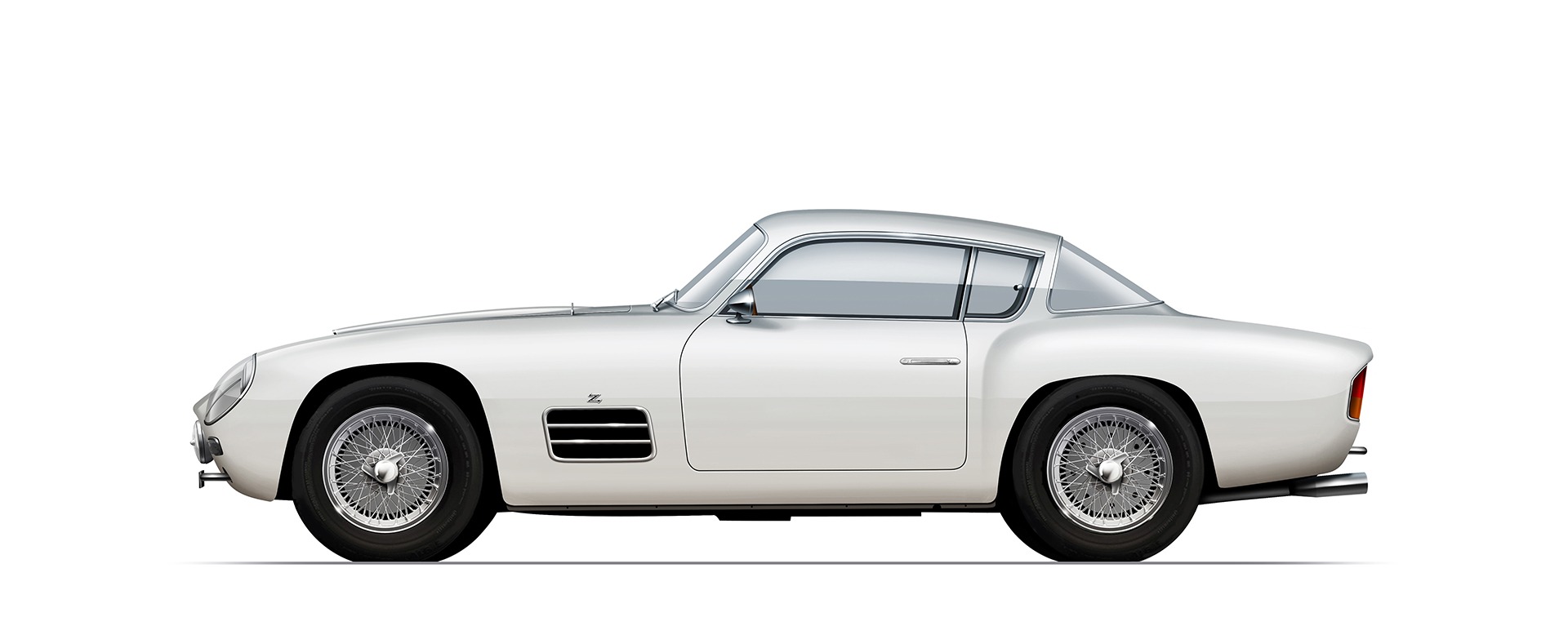
The tail of the car was unique too: it sported twin small fins protruding from the rear fenders, subtly echoing contemporary styling trends (and possibly aiding high-speed stability). The rear window was more steeply inclined and did not feature the earlier double-bubble curvature, as Zagato had moved on from that design element in favor of a sleeker roofline. A quirky detail was the fitment of a tubular bumper at the front – likely to satisfy road legality – which gave the car a slight prototype aura. Painted in a pale yellow in period, 1367 GT looked every inch a road-ready GT racer of the new era. It’s often noted that this car’s styling was ahead of its time; had Ferrari not already been aligned with Pininfarina for GT coupes, a Zagato-bodied production run could have been conceivable. In any case, 1367 GT marked the end of an era. With it, Zagato closed the chapter on Ferrari collaborations for nearly two decades.
The five Ferrari 250 GT Zagato berlinettas today are automotive jewels. Each survived to the modern day and has been lovingly restored by collectors. They are regular stars at prestigious concours and auctions, valued not only for their scarcity (just five built) but for their storied racing histories and Zagato’s timeless design. These cars also solidified certain Zagato trademarks: the early ones popularized the “double-bubble” roof, which Zagato initially devised to allow extra helmet clearance and rigidity without increasing overall height – an idea that became a signature of the brand. They also showcased Zagato’s focus on functional beauty: elements like plexiglass-covered headlights, deletion of unnecessary chrome, and tailored aerodynamics all served a purpose in going faster, while simultaneously creating an alluring shape. For Ferrari, these Zagato specials demonstrated that external coachbuilders could indeed enhance Maranello’s products in niche cases. Yet, after 1959, Ferrari largely standardized around Pininfarina for road cars and its own competition department for race cars, leaving little room for outside firms like Zagato. The special relationship went into hibernation for many years.
1970–1974: Chinetti’s Vision – Zagato Revives Ferrari Specials
It would take the influence of Luigi Chinetti, Ferrari’s famed North American importer and a man with a taste for unique creations, to rekindle the Ferrari-Zagato partnership in the late 1960s. Chinetti had been watching Zagato’s work and, as a three-time Le Mans winner and close friend of Enzo Ferrari, he had the clout to commission special cars. Two very unusual Ferrari Zagato projects emerged under Chinetti’s guidance around the turn of the 1970s, each with its own story and flavor.
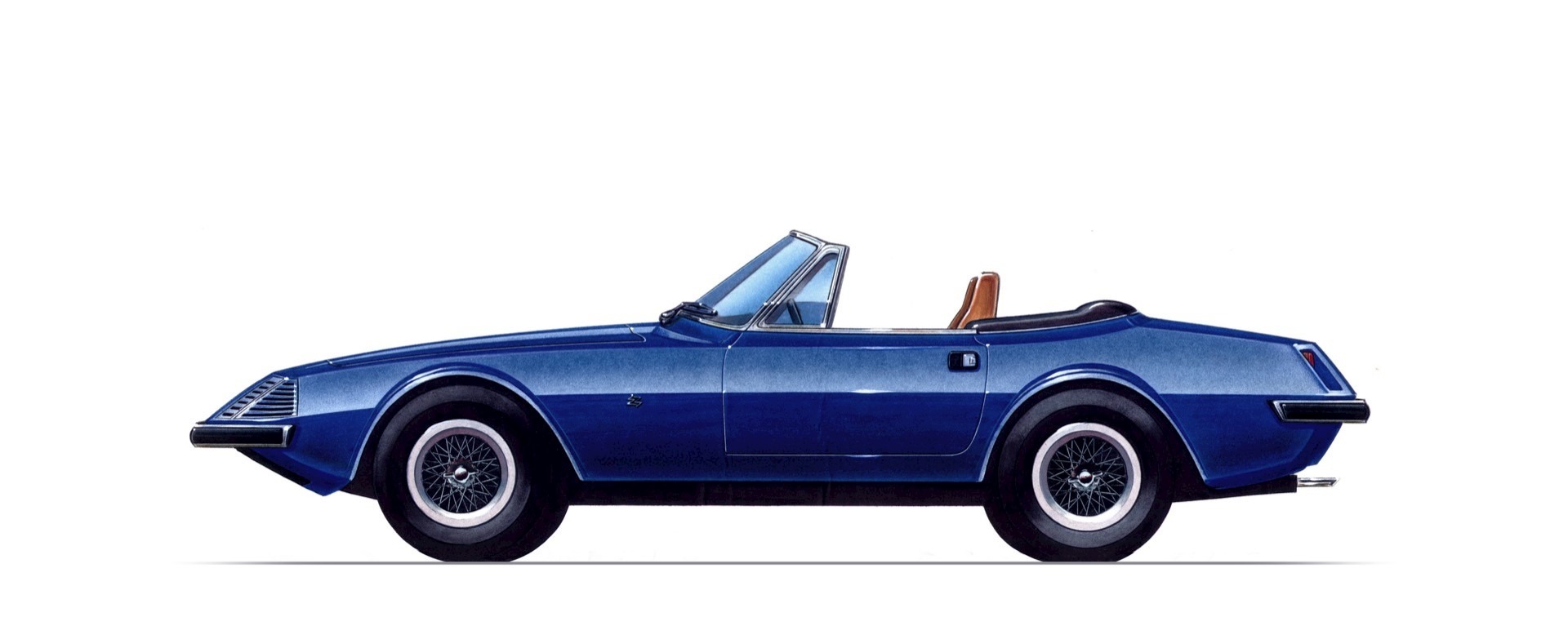
1971 Ferrari “3Z” Spyder: In 1969, Chinetti decided to give one of his personal Ferraris a dramatic new look. The car in question was a 1961 Ferrari 250 GT SWB California Spider – a highly prized machine even then – but Chinetti wasn’t afraid to modify it. He approached Zagato to transform this classic roadster into a modern show car, with the goal of debuting it at the 1970 Turin Motor Show. Chinetti was deeply involved in the project, reportedly spending long sessions with Ugo’s sons Elio and Gianni Zagato to brainstorm the design. The project took longer than anticipated (the complexity of reboding a car and perfecting every detail led to delays), and the debut was pushed to the 1971 Turin Motor Show, where it became one of the highlights.
Zagato designer Giuseppe Mittino led the styling effort, bringing a radical new look to the familiar Ferrari chassis. Dubbed the “Ferrari 3Z Spyder” (with 3Z referencing “3 Zagato” – perhaps signifying the third major era of collaboration, or simply a project code), the car was a sharp departure from 60s curves. It had a distinctly angular, wedge-shaped design in tune with early 1970s trends. The front was low and pointed, featuring innovative pop-up headlamp covers with horizontal slits, said to resemble the visor of a medieval knight’s helmet. When closed, these covers hid the headlights completely, giving the nose a smooth, uninterrupted form. The sides of the car had chiseled, geometric lines, and the tail was truncated with an abrupt Kamm-back profile. The rear lights were set in recessed niches and covered with red lenses flush to the body, a neat touch of minimalism. In profile, the 3Z Spyder bore some resemblance to Zagato’s contemporary work on the Alfa Romeo Junior Z – a small coupe that was one of the first true “wedge” designs of the era. Essentially, the 3Z applied that edgy aesthetic to a V12 Ferrari platform.
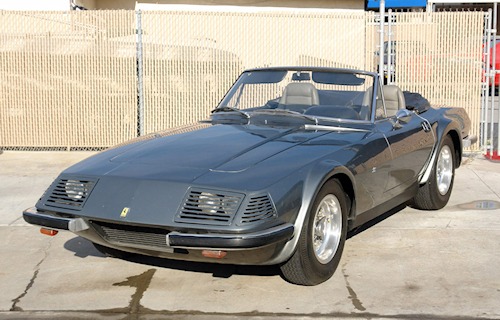
Painted metallic blue and fitted with Borrani wire wheels (later swapped for more modern alloys), the 3Z Spyder wowed the Turin crowds in 1971. It was a bold statement: Zagato had shown it could reimagine even an iconic Ferrari (the California Spider) into something thoroughly futuristic. While “innovating on an iconic Scaglietti design is a bold move,” as one journalist put it, “that’s Zagato’s style” – they were unafraid to push boundaries. Chinetti was pleased enough that he kept the car, and it remains unique – one of one. The 3Z Spyder signified that the Ferrari-Zagato relationship, dormant for years, still had creative sparks to ignite.
🔗 Read more: Sharper Than a Leisure Suit: The Wedge-Shaped Revolution of Italian Concept Cars
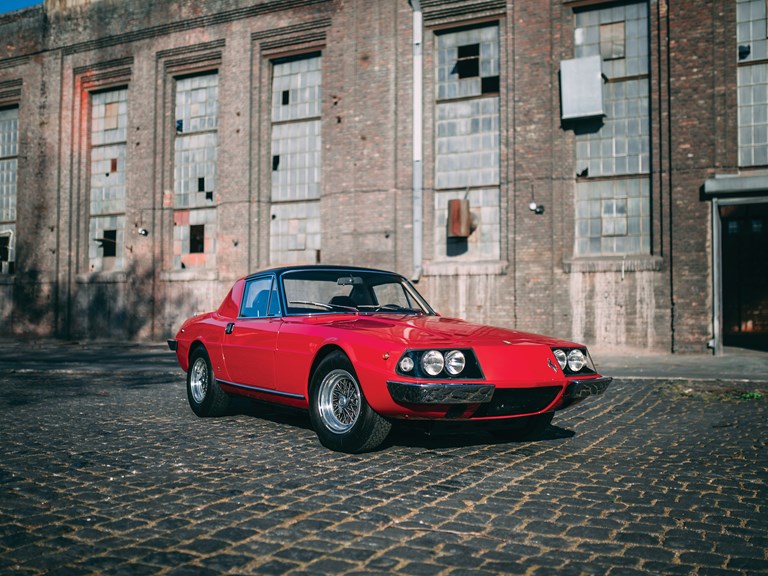
1974 Ferrari 330 GTC Zagato “Convertibile”: Encouraged by the 3Z’s success, Chinetti commissioned another Zagato special a few years later. In this case, a Ferrari 330 GTC – a mid-1960s 2+2 coupe – had been damaged in an accident by its owner (coincidentally named Robert Kennedy, though not the American senator). Chinetti saw an opportunity to create something new from the wreck. He sent the car to Zagato in Milan with instructions to craft a distinctive open-top grand tourer. The resulting car, completed in 1974, was a one-off Zagato-bodied 330 often called the 330 GTC Zagato Convertibile. It made its public debut at the 1974 Geneva Motor Show, where crowds saw a Ferrari unlike any in the official lineup.
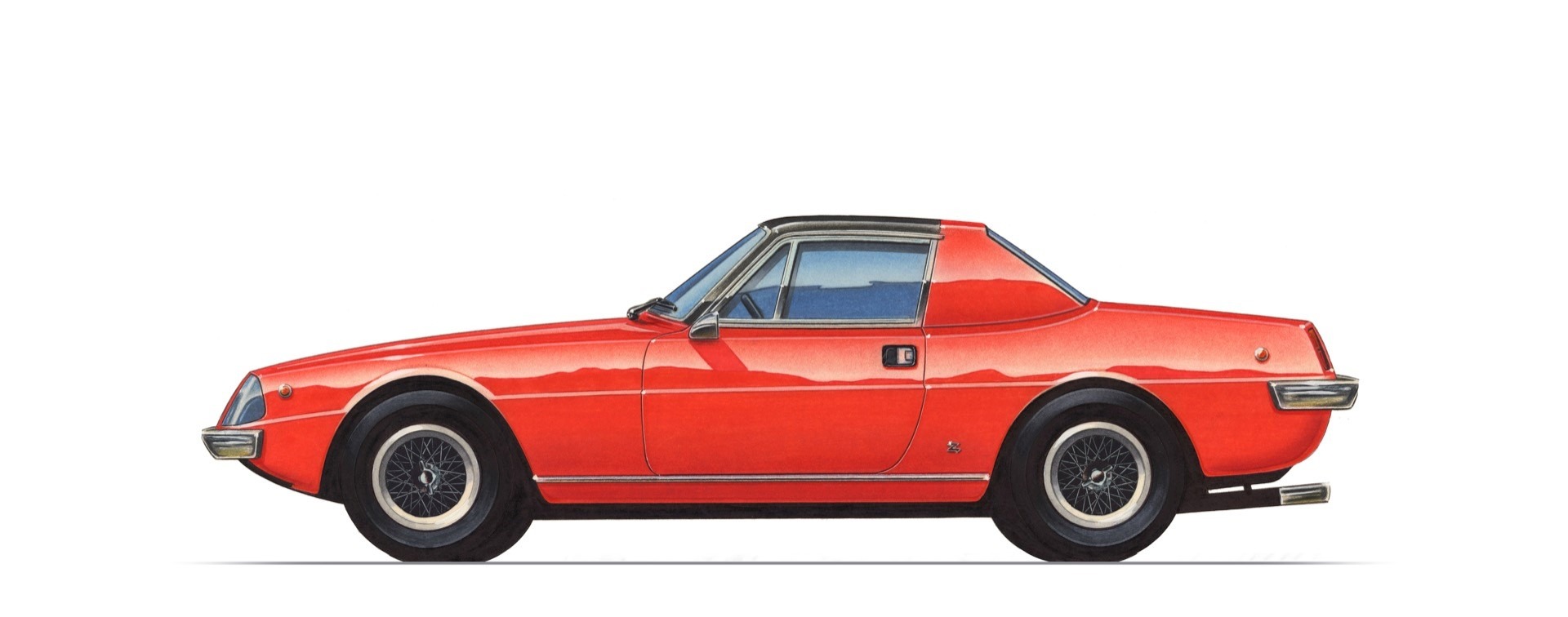
Zagato’s design for the 330 Convertibile drew inspiration from the earlier 3Z Spyder but had its own identity. Unusually, Zagato chose a “targa” style roof: the car had a fixed windshield frame and roof section over the front seats, but a removable panel over the middle, and a distinctive pair of rear pillars supporting a wraparound rear window. In effect, it was a semi-convertible – perhaps an answer to Ferrari’s Daytona Spider, but with a unique Zagato twist. The body was painted a light metallic red and had a slightly more muscular, chunky look than the lithe 3Z. The tail in particular was higher and less tapered, likely to accommodate the 2+2 seating and provide a different aesthetic.
Up front, instead of hidden headlamps, the headlights were exposed but behind a rectangular dark-tinted Plexiglas cover that was flush with the nose of the car. This gave the illusion of a single full-width headlight panel – very avant-garde for the time. The rear lights were similarly behind smoked covers, nestled into smaller recesses. Overall, the 330 Zagato looked a bit more robust than the 3Z, as if Chinetti wanted a grand touring convertible feel rather than an all-out sports car. Indeed, period commentary suggests Chinetti may have requested a slightly less extreme design so the car could appeal as a luxurious convertible rather than a raw spyder.
Despite its appealing design, the timing for the 330 Zagato was unfortunate. By 1974, the global oil crisis and economic recession hit the market for bespoke grand tourers hard. Ferrari itself was reeling from a downturn in sales. As a result, the 330 Zagato Convertibile remained a solitary exercise. It did not spur further coachbuilt Ferrari commissions at the time, and stands as the only one of its kind. Chinetti had effectively bookended an era – after this, we would not see another Ferrari-Zagato collaboration for over 15 years. Nonetheless, the 3Z Spyder and 330 GTC Zagato were proof that the creative flame still burned between the two companies, awaiting the right moment to resurge.
1991–1993: New Ideas – Zagato’s Modern Takes on Ferrari
After the mid-1970s, Ferrari shifted focus to production models and in-house design projects, while Zagato found fruitful partnerships with brands like Aston Martin, Alfa Romeo, and others. It wasn’t until the early 1990s that the stars aligned again. This time, it was Zagato itself that initiated projects on contemporary Ferraris, as opposed to private owners commissioning one-offs. Under the direction of Ugo Zagato’s grandchildren (Elio’s son Andrea Zagato now at the helm), the coachbuilder explored modern styling ideas on Ferrari platforms. Two low-volume “boutique” projects emerged, bringing the Ferrari-Zagato connection into the late 20th century.
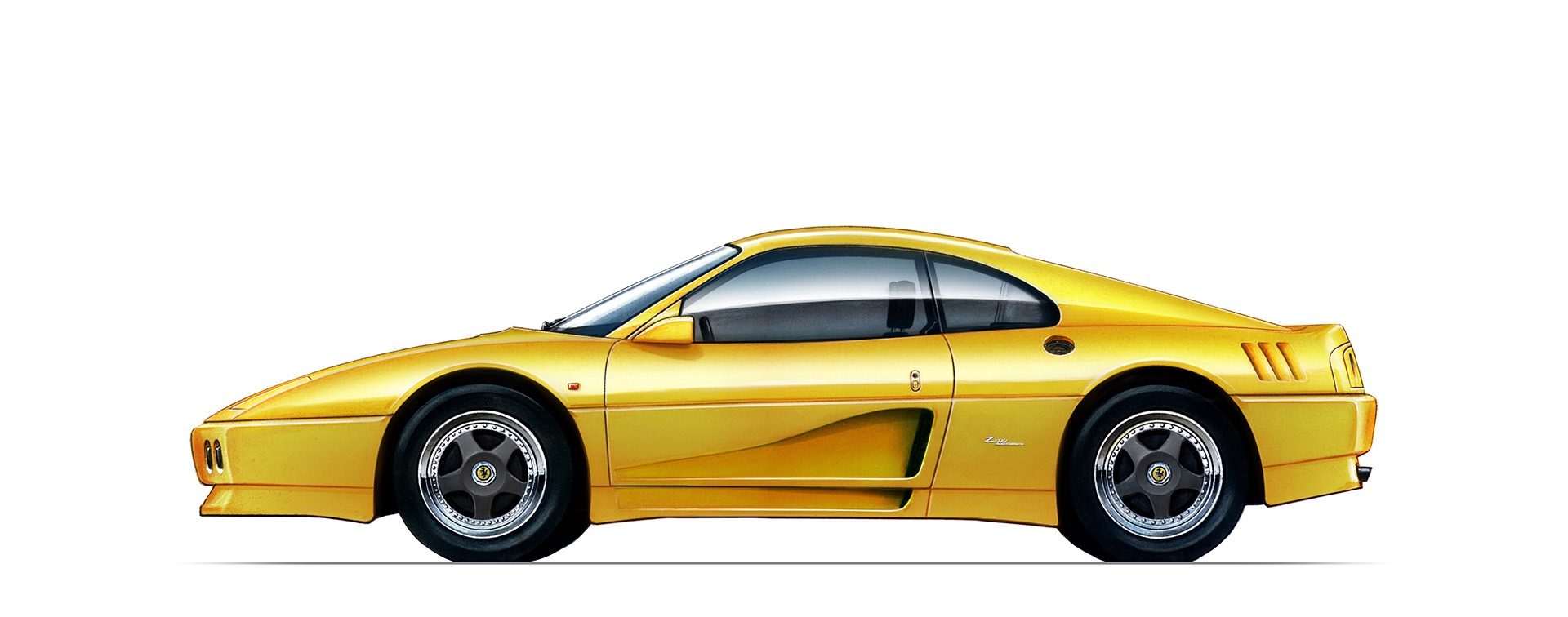
1991 Ferrari 348 Zagato Elaborazione: In 1991, Zagato unveiled a radical reworking of the Ferrari 348 TB, calling it the 348 Zagato Elaborazione (“Elaborazione” meaning elaboration or reworking). Whereas previous collaborations had been one-offs, Zagato intended this as a limited series offered to existing 348 owners. The idea: take Ferrari’s V8 mid-engine sports car and give it a distinctly Zagato suit – more aggressive, lighter, and with unique styling cues that even Ferrari’s own designers hadn’t tried. Importantly, this project had no direct involvement from Ferrari S.p.A; it was an independent Zagato initiative made possible by the flourishing supercar tuning culture of the 1980s/90s.
The Zagato Elaborazione treatment replaced or modified nearly every body panel of the stock 348. Up front, Zagato removed the 348’s signature black grille between the pop-up headlights and installed a solid nose with a small rectangular intake and two additional driving lamps, plus a tiny prancing horse badge – simplifying the face of the car. The pop-up headlights were retained but recontoured. The most notable change was the roof: Zagato added a low, sweeping double-bubble roof panel over the cockpit, instantly identifying the car as one of their creations. This not only paid homage to their classic designs but also added rigidity. Along the sides, the 348’s straked air intakes were enlarged, and the door handles and mirrors were redesigned for a cleaner look. Out back, Zagato anticipated future Ferrari styling by discarding the 348’s slatted taillight cover and instead fitting round, uncovered taillights (three on each side) set into a smooth rear fascia. This was a full decade before Ferrari themselves switched to round exposed taillights on the 360 Modena and F430. Another ahead-of-its-time feature was a glass engine cover: Zagato cut a window into the rear engine lid so the 3.4L V8 could be seen from outside – an idea that became popular on exotics later on.
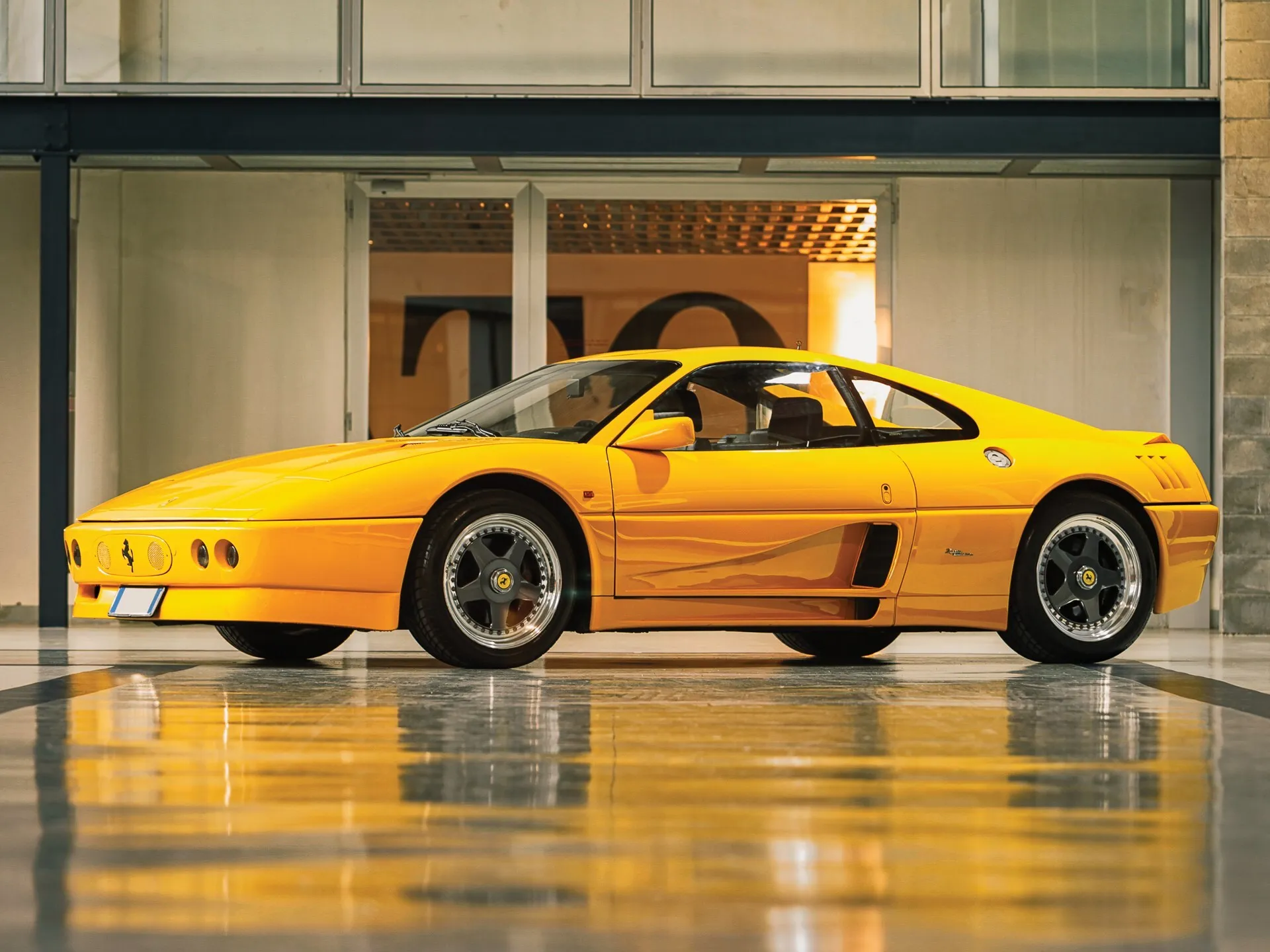
The 348 Zagato rode on unique wheels (OZ Racing five-spoke star alloys, black with polished rims) and had a slightly lowered stance, enhancing its purposeful look. Interiors were often customized per client, sometimes with Zagato logos and new trim. Ultimately, while 22 conversions were initially planned, only about 10 were completed – making this a very rare car. Each carries a numbered Zagato plaque. Reception was mixed: some enthusiasts loved the extroverted design and nods to Zagato heritage, while others found it controversial to alter Pininfarina’s lines. Nonetheless, the 348 Elaborazione demonstrated Zagato’s “enterprising spirit” and their ability to inject new life into a production Ferrari. It stands as a fascinating “what-if” – what if Ferrari had collaborated with Zagato on a production model in the 90s? The Elaborazione gives a glimpse, combining Ferrari performance with Zagato’s unique styling language of the time.
1993 Ferrari FZ93 (Formula Zagato 93): Zagato wasn’t done experimenting. Two years later, they took a Ferrari Testarossa as the basis for an even wilder concept car. Unveiled at the 1993 Geneva Motor Show, the Formula Zagato 93 – often just called FZ93 – was a one-off design exercise showcasing Zagato’s vision for a futuristic supercar. Overseen by Zagato’s then-chief designer Ercole Spada (famous for his 1960s designs at Zagato as well), the FZ93 pushed the envelope with extreme aerodynamic shapes and F1-inspired elements.
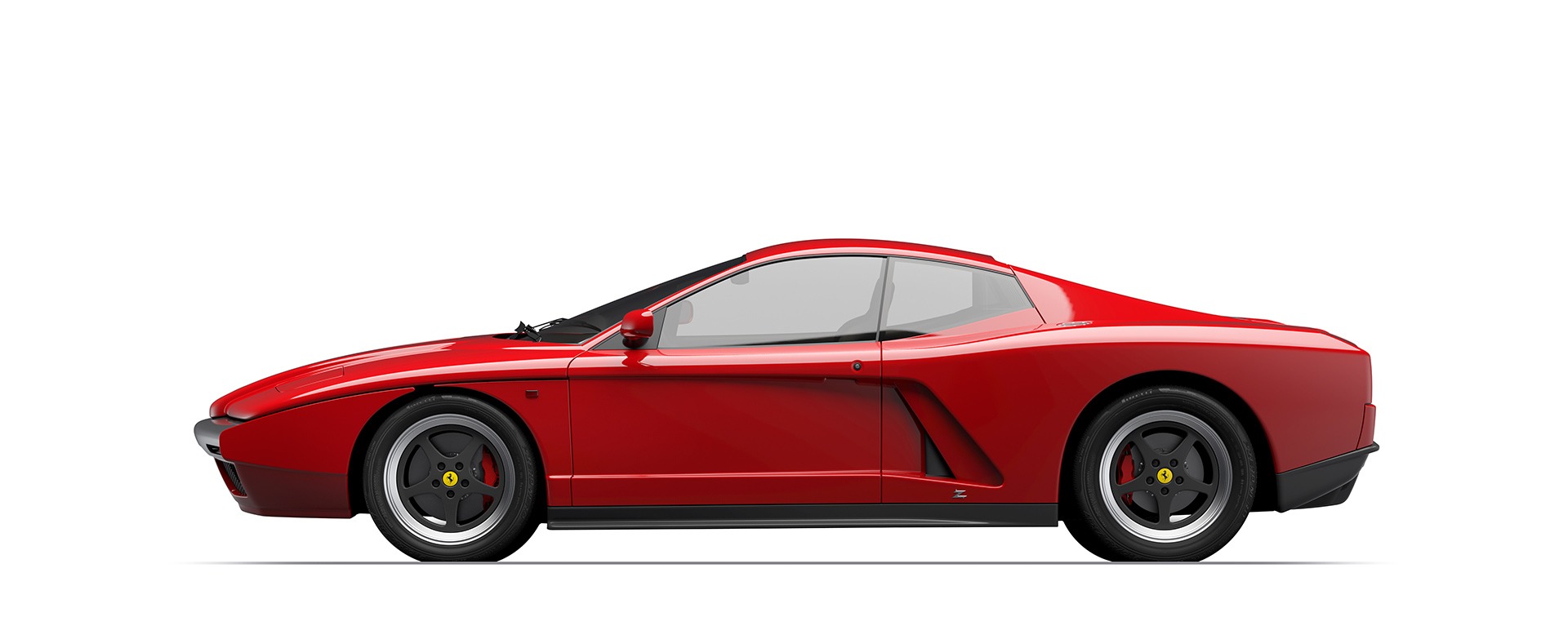
If the 348 Elaborazione had hints of classic Zagato, the FZ93 was a clean-sheet look into the future. The Testarossa’s chassis and 4.9L flat-12 engine were hidden under entirely new bodywork. At the front, the FZ93 had a low, sharp nose that was “suspended” above the road – meaning the tip of the nose didn’t dip down as in traditional cars, but rather ended abruptly as if floating above the front splitter. This mimicked a Formula One car’s raised nose cone and also improved airflow. Two large air intakes flanked the nose, evoking fighter jet intakes or the sidepods of an F1 car. The cockpit area was set back, and the windshield flowed into a long rear deck. From above, the car had a distinct wedge shape.
🔗 Read more: Zagato’s “Coda Tronca”: The Legacy of the Cut-Tail Design
The rear of the FZ93 was perhaps its most striking angle: it featured vertical stabilizer-like fins at the edges (again recalling both jet aircraft and F1 cars). Between them sat a periscope-style rear view mirror and a very narrow, high-mounted rear wing. The taillights and exhaust were nestled within a futuristic mesh-and-fin arrangement. Painted in a two-tone scheme (black on the lower half, vivid red on top) for its Geneva debut, the FZ93 later was repainted solid red for further appearances. Many observers noted design cues in the FZ93 that seemed to foreshadow elements of the 2002-2004 Ferrari Enzo – particularly the pointed nose and NACA-duct-like intakes. Whether coincidental or influential, it underscores how forward-looking Zagato’s concept was.
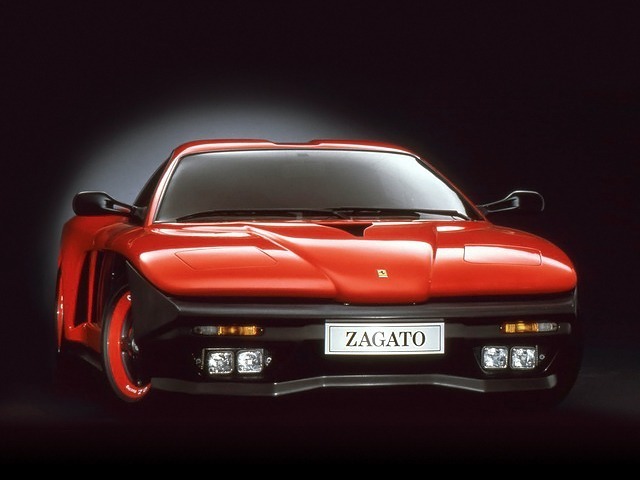
Though purely a show car, the FZ93 was fully functional. Andrea Zagato considered it his first personal foray into a Ferrari project, and it was a bold statement. While Ferrari’s own style in the ’90s under Pininfarina was more conservative (think 456 GT and F355), Zagato showed an alternative path with the FZ93 – one focused on track-derived aesthetics and experimental aerodynamics. Today, the FZ93 remains unique and resides in Zagato’s collection, occasionally shown at events as a curiosity from a time when coachbuilt supercars were rare. Together, the 348 Elaborazione and FZ93 of the early ’90s illustrate Zagato’s enduring fascination with Ferrari and their willingness to push design boundaries, even without a direct factory commission.
2006–2009: Revival of a Romance – Modern Classics by Zagato
As the 21st century began, it seemed Ferrari and Zagato might remain on separate trajectories. Ferrari had even established its own Special Projects division to handle one-off commissions for VIP clients, reducing the need to involve outside coachbuilders. Yet, the allure of a Zagato-bodied Ferrari had not faded. In the mid-2000s, a series of events brought Ferrari and Zagato together once more – this time with Ferrari’s official blessing, resulting in limited-production specials that honor the past while embracing modern performance.
2006 Ferrari 575 GTZ: The catalyst for this new chapter was Yoshiyuki Hayashi, a renowned Japanese car collector and Ferrari aficionado. Hayashi owned one of the original 1956 Ferrari 250 GT Zagatos and wished to celebrate that car’s 50th anniversary in style. His idea was to commission Zagato to create a modern counterpart evoking the spirit of the 250 GTZ. Ferrari approved the project, seeing it as a way to pay homage to their heritage. The base car chosen was the Ferrari 575M Maranello, a front-engined V12 grand tourer of the early 2000s. Zagato, working closely with Ferrari, unveiled the result at the 2006 Geneva Motor Show: the stunning Ferrari 575 GTZ.
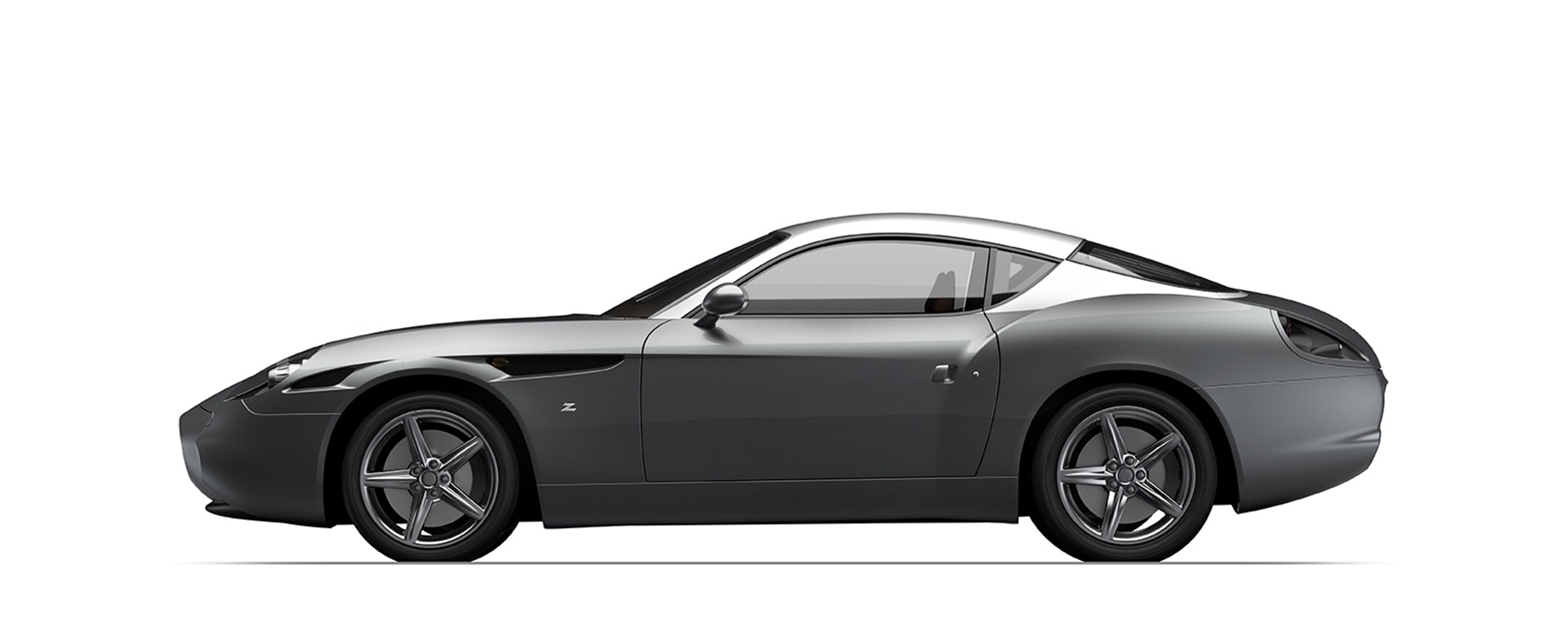
The 575 GTZ was more than a simple rebody; it was a carefully crafted neo-classic. Dressed in a two-tone paint scheme (most were silver over dark grey or other subtle combos), it immediately drew parallels to the two-tone liveries of the 1950s Zagato Ferraris. The design by Zagato featured a gracefully rounded body, eschewing the sharp edges of the stock 575. The front grille became an oval twin-opening reminiscent of 1950s Ferraris, and the headlights were custom units positioned to give a slightly retro feel. Most prominently, Zagato incorporated their trademark double-bubble roofline into the 575’s silhouette, blending it so naturally one might think the car was originally designed that way. The roof bubbles flowed into a truncated Kamm-tail rear deck, where twin circular taillights (a departure from the 575’s stock design) sat within a smooth rear panel – again a nod to Zagato’s classic aesthetic. Despite these changes, mechanically the car remained a 575M, with the 5.75-liter V12 and interior largely untouched, meaning it could be serviced at Ferrari and drove with the reliability of a modern car.
Ferrari was sufficiently impressed to give the 575 GTZ an official endorsement – it’s one of the few non-Ferrari-built bodies to be acknowledged in Ferrari’s own records. Originally intended as a one-off for Hayashi, demand from other collectors grew quickly once the car was shown. In total, six examples of the 575 GTZ were built.
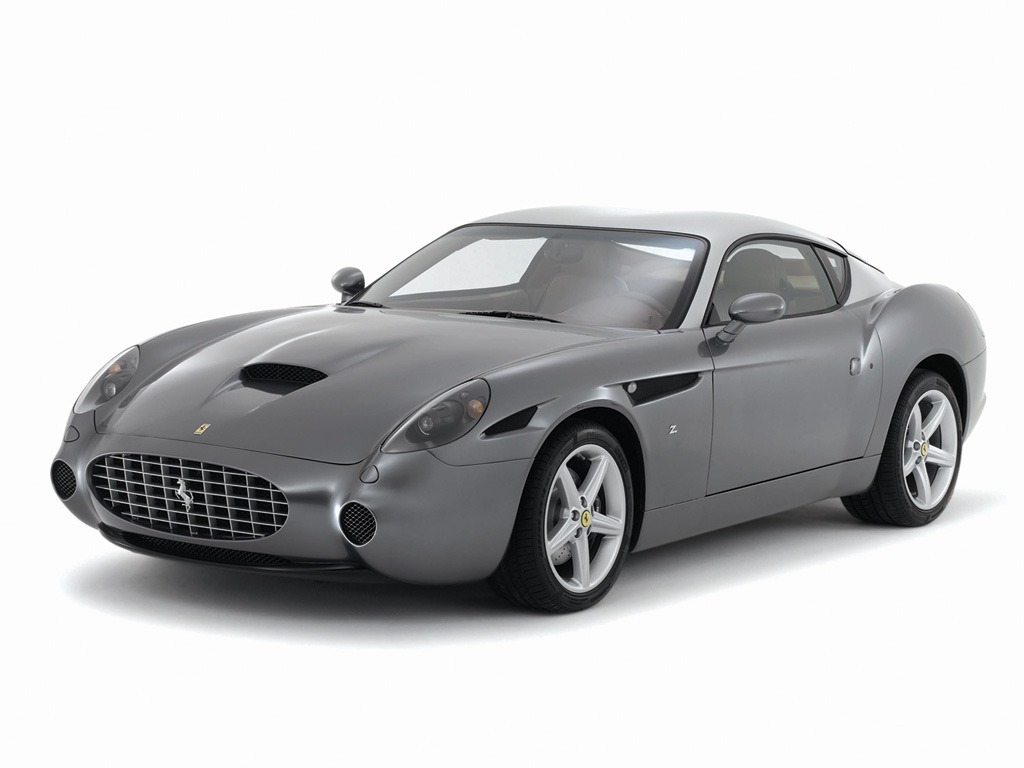
Hayashi received two (perhaps a coupe and a convertible variant, as rumors suggest), and the other four were sold to hand-picked clients. Each of the six cars was personalized in color and trim to its owner, making every 575 GTZ slightly unique. These cars blended modern performance (515 hp, 200+ mph potential) with coachbuilt exclusivity. They also rekindled the idea that Zagato and Ferrari could cooperate to celebrate Ferrari’s history (in this case, the golden jubilee of the 250 GTZ) in a way that enriched both brands.
2007 Ferrari 550 GTZ Barchetta: The final flourish (to date) in the Ferrari-Zagato saga came in 2007. Zagato decided to pay homage not just to the 250 GTZ of the 1950s, but also to one of Ferrari’s more recent limited models – the 2001 550 Barchetta Pininfarina (an open-top version of the 550 Maranello). Marrying these inspirations, Zagato created the Ferrari 550 GTZ Barchetta, a car that echoed the classic front-engined Ferrari roadsters while sporting Zagato’s signature touches. To execute this, Zagato took donor cars from Ferrari’s 550 Barchetta (a limited run model itself) and completely rebodied them. Each received a new roadster body with a lower windscreen and speedster-style fairings behind the seats. The design language combined cues from the earlier GTZ projects and some novel elements: the nose had an oval grille similar to the 575/599 GTZ, the tail borrowed some inspiration from the Ferrari 612 Scaglietti (notably the shape of the rear buttresses), and even a dash of the BMW Z8 in the curved fender forms. Indeed, Andrea Zagato mentioned they wanted to blend a bit of retro Italian flair with contemporary proportions, and the result was quite harmonious.
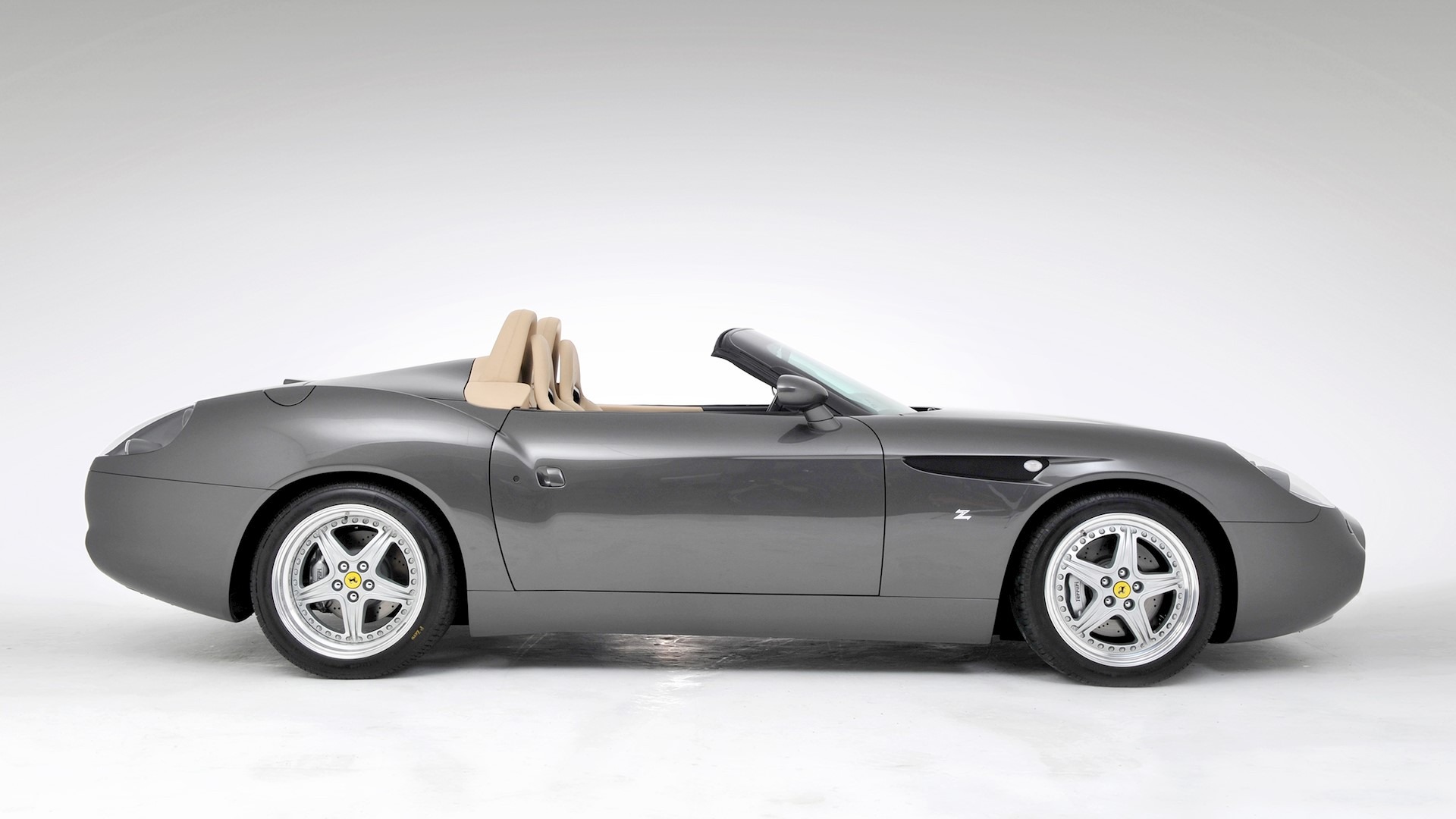
Only five specimens of the 550 GTZ Barchetta were built, each reportedly carrying a price tag above $1 million. All five were spoken for before the first car was even completed, highlighting the demand for these coachbuilt Ferraris. The lucky owners received their cars in 2009, making them some of the last manual-transmission, V12 open-top Ferraris made – and certainly the only ones with hand-crafted Zagato coachwork. With their open cockpits and striking double-bubble humps behind the headrests (a clever twist on the roof bubbles, implemented here as rear cowls), the 550 GTZ Barchettas are perhaps the most extravagantly styled of the modern Zagato Ferraris. They serve as a fitting bookend to the story: just as Antonio Stagnoli had Zagato turn a coupe into a barchetta back in 1951, now Zagato was converting Ferrari coupes into barchettas again in the 21st century, this time with Ferrari’s blessing.
2007 Ferrari 599 GTZ “Nibbio”: The 599 GTZ Nibbio project represented the continuation of Zagato’s modern reinterpretations of front-engined Ferrari GTs. Introduced in 2014 and based on the Ferrari 599 GTB Fiorano, the model carried forward design themes previously established on the 575 GTZ while adapting them to the proportions of Ferrari’s V12 platform. The name “Nibbio,” referring to a sparrowhawk, was selected to convey an emphasis on agility and precision.
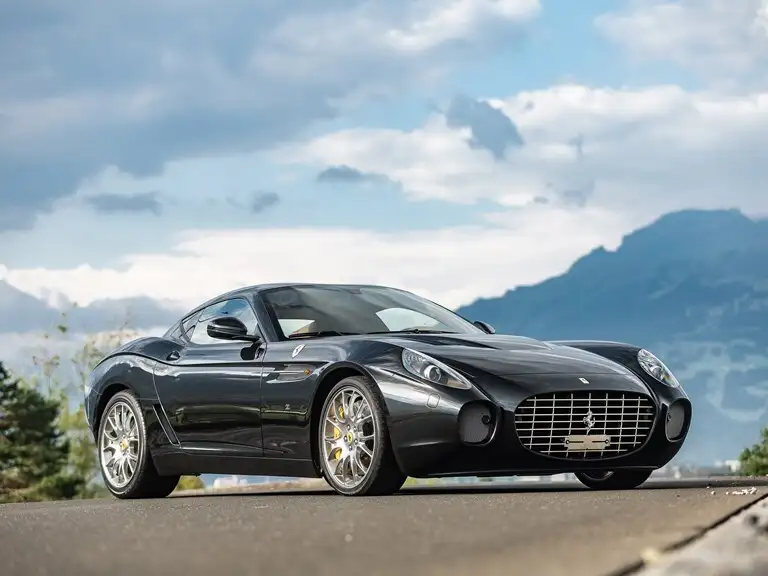
The bodywork was comprehensively reworked. The front fascia adopted a rounded grille aperture and redesigned light units beneath clear covers. Additional extraction vents were added to the hood, and the flanks were simplified relative to the standard 599, incorporating restrained curvature that echoed earlier GTZ cues. At the rear, Zagato developed a bespoke roof and glass treatment and introduced a two-tone paint division along the beltline. The double-bubble roof, a recurring Zagato signature, appeared again; due to the shorter roofline of the 599, the effect was especially pronounced on this model. Observers noted parallels to certain Aston Martin Zagato projects, particularly in the grille geometry and surfacing, reflecting stylistic continuity within Zagato’s broader portfolio.
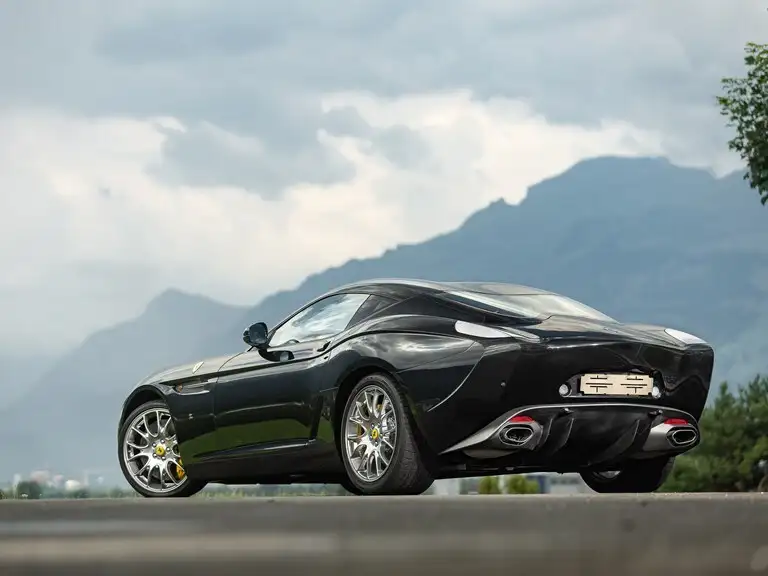
Zagato constructed nine examples of the 599 GTZ Nibbio, including at least one equipped with a six-speed manual transmission—a configuration made possible by the limited number of manual 599 GTBs produced. All units were built to order for clients and delivered individually, often presented at private gatherings or concours events rather than major public exhibitions. The model generated mixed reactions, with some favouring the integration of historic Zagato elements onto a contemporary Ferrari chassis and others preferring the original Pininfarina design of the 599. The 599 GTZ Nibbio nonetheless affirmed the ongoing collaboration between Ferrari and Zagato into the 2010s.
🔗 Read more: The Double Bubble Roof by Zagato: A Bump in the Right Direction
2017 Ferrari 599 GTZ Nibbio Zagato Spyder: The 599 GTZ Nibbio Zagato Spyder, introduced in 2017, served as the open-top counterpart to the earlier 599 GTZ Nibbio Coupé. Built from donor 599 GTB Fioranos, it adapted Zagato’s modern design language to a roadster configuration while retaining the underlying proportions of Ferrari’s front-engined V12 platform.
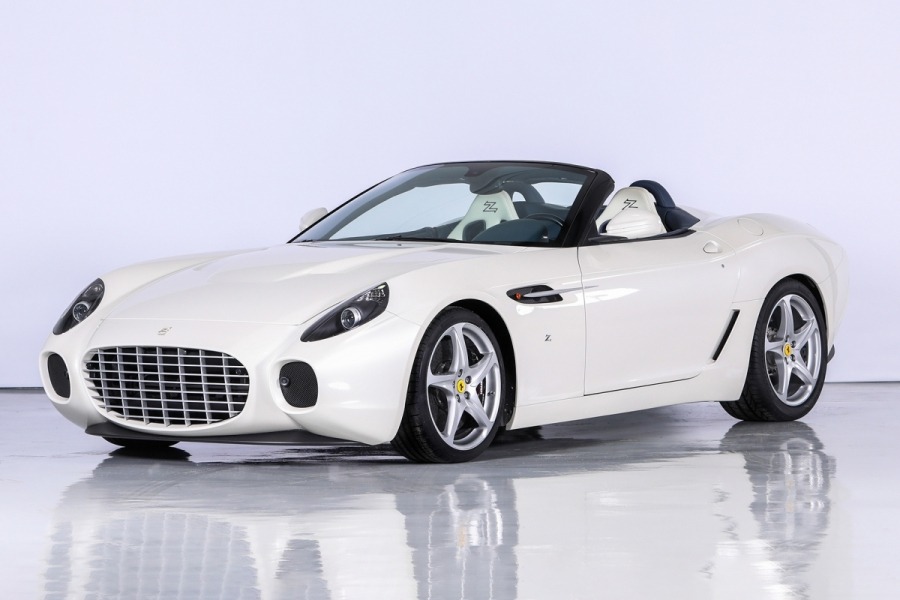
The front maintained the rounded grille and clear-covered headlights characteristic of the Nibbio series, paired with vented hood panels and simplified side surfaces that echoed earlier GTZ themes. The removal of the roof prompted a significant redesign of the upper body: in place of the double-bubble roof found on the Coupé, the Spyder employed paired speedster-style rear fairings that defined the car’s profile and visually anchored the open layout. The rear section incorporated a revised deck and continued the two-tone beltline division used across the Nibbio range. Production was extremely limited, with each example commissioned individually. Like other Zagato specials, the model appeared primarily at private showings and concours events rather than major public exhibitions. The 599 GTZ Nibbio Zagato Spyder represents the final open-air interpretation in Zagato’s series of modern coachbuilt Ferraris based on the 599 platform.
A Lasting Impression
The partnership between Ferrari and Zagato has been anything but routine – decades of quiet, punctuated by moments of brilliance. Each chapter of this story, from the Panoramica coupé of 1949 to the GTZ specials of the 2000s, highlights a unique convergence of talents. Enzo Ferrari’s machines have always embodied performance and passion, and Ugo Zagato (along with his successors) brought a flair for innovative design and weight-saving construction that complemented Ferrari’s ethos. Zagato’s role in these collaborations was often that of the outside maverick – introducing bold new ideas, whether it was wrapping a Ferrari in a plexiglass canopy for better visibility, adding double-bubble roofs for function and style, or reshaping modern supercars with nostalgia-tinged artistry.
Historically, many of these joint projects sprang from the initiative of third parties – private racers like Stagnoli, Luglio, and de Micheli, or influential figures like Luigi Chinetti and Yoshiyuki Hayashi – acting as catalysts. They were the dreamers who imagined a Ferrari with that extra Zagato touch and made it happen. The results often achieved racing glory (notably in the 1950s, with championships and hillclimb victories credited to Zagato-bodied Ferraris) and always turned heads with their design. From a coachbuilding perspective, Zagato applied its construction methods consistently: an emphasis on lightweight aluminum bodies, aerodynamic optimization (flush lights, minimal bumpers, streamlined shapes), and a signature styling element in the double-bubble roof (where appropriate) which improved both aesthetics and function. These were not mere styling exercises; they were purposeful designs, often tested in the crucible of competition.
As of today, the Ferrari-Zagato liaison appears to be in another dormancy. The last collaboration was over a decade ago, and with Ferrari’s in-house Special Projects now creating one-offs for clients, the role of independent coachbuilders has diminished. Yet, if history teaches us anything, it’s that long pauses do not mean a permanent goodbye. Enzo Ferrari and Ugo Zagato’s friendship set a tone that has echoed through the generations – whenever Ferrari’s uncompromising performance meets Zagato’s inventive design, magic happens. Perhaps one day soon, a new visionary will persuade Maranello and Milan to dance together again. Until then, we have the rich legacy of the Ferrari Zagatos: cars that tell a romantic story of Italian racing soul fused with hand-built artistry, each one a chapter in a book that enthusiasts will continue to read with admiration. Whether on the track at Mille Miglia, on the show stand at Geneva, or on the lawn at Villa d’Este, the creations of Ferrari and Zagato remain enduring legends – a testament to what can be achieved when engineering and art embrace each other at 150 miles per hour.

ABOUT THE AUTHOR
Andreas Scheidl
Italian classic car enthusiast with German roots. Renowned as a respected figure in the classic car community, he serves as a jury member at various international concours d'elegance, including the Classic Gala Schwetzingen and Mantova. As a content creator, Andreas passionately shares his profound knowledge and appreciation for vintage automobiles. His heart beats for cars designed by Giovanni Michelotti, showcasing his discerning taste and dedication to preserving the timeless elegance of automotive history.
More stories by Andreas Scheidl ↗CONTINUE READING
Posts You Might Like
Fiat Panda Cabrio: The Italian Coachbuilders Who Opened Giugiaro’s Box
From Moretti’s Panda Rock to Italdesign’s experimental Strip, Maggiora’s four-wheel-drive convertible and Stola’s remarkable Destriero, the history of the open-top Panda reveals an unexpected chapter in Italian coachbuilding. When Giorgetto Giugiaro designed…
Read story
Gabriele d’Annunzio and the Cult of the Automobile
There was a time when the automobile had not yet become part of the landscape. It announced itself from afar through the beating of an engine, the smell of petrol and hot…
Read story
Fiat 1400: The Last Great Playground of the Carrozzieri
From Touring and Abarth to Farina, Ghia, Vignale, Boneschi, Bertone, Viotti and the smaller carrozzerie, the new Fiat quickly became one of the richest bases for Italian special bodies in the early…
Read story
How a Swiss Dealer Challenged Ferrari: The Story of Monteverdi
How Peter Monteverdi went from Swiss Ferrari dealer to creator of rare Frua and Fissore-bodied GTs, the Hai supercar and luxury off-roaders.
Read story
THE CONVERSATION
Comments 0
Share a memory, a period photograph or a documented detail about this story.