
THE VEHICLE AT A GLANCE
Model dossier
- Production period
- 1959
- Body style
- MPV
- Type
- Concept
- Production
- 1
THE PEOPLE BEHIND THE CAR
Coachbuilding, design & conversions

PRICE & SALES RECORD
Vehicle value
- Original price
- Not documented
- Latest recorded sale
- Not documented
01 / THE STORY
History & context
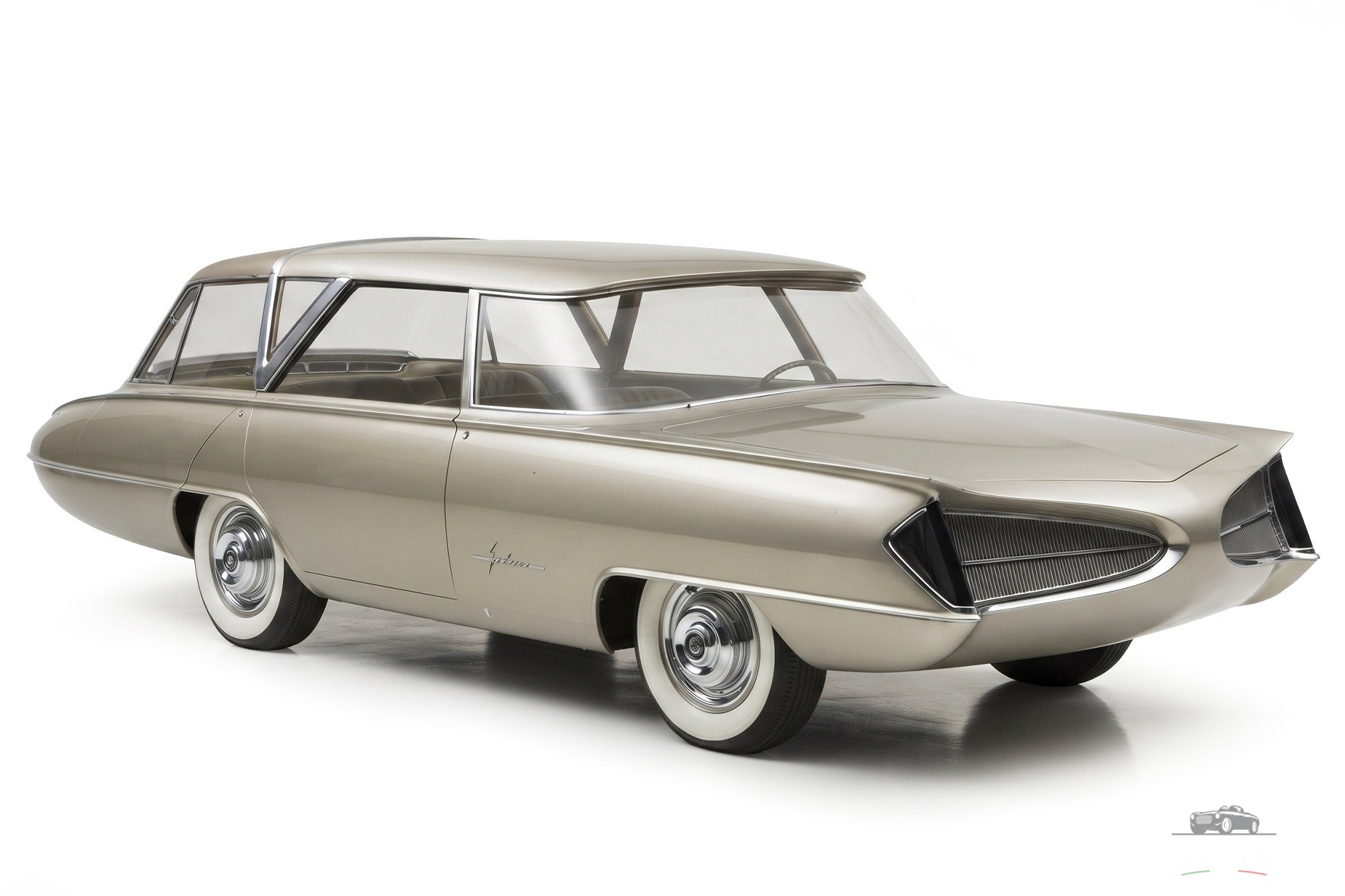
The Ghia Selene I stands out as an audacious and forward-thinking concept car that embodied innovative design trends of the late 1950s. Designed by Sergio Sartorelli, one of Ghia‘s most talented stylists, the Selene I made its debut at the 1959 Turin Motor Show, where it captivated audiences with its unconventional cab-forward layout and futuristic features. The Selene I shared notable similarities with the Renault Project 900 concept, particularly in its radical design philosophy. Both vehicles embraced a cab-forward configuration, which positioned the passenger compartment far forward on the chassis, allowing for a spacious rear area intended for the engine. This unique design made the Selene I appear as if its front and rear ends had been reversed, an effect that further emphasized its groundbreaking approach to automotive styling. The Selene I was designed as a luxurious “people carrier,” capable of seating six passengers. Two occupants sat in the front, while the rear compartment featured four seats facing each other. This lounge-like layout, complete with a strikingly modern interior, was conceived to enhance comfort and promote interaction among passengers. Remarkably, the Selene I was purely a design study, as no engine was ever fitted to the car, underscoring its purpose as an exploration of form and space rather than a functional prototype. Sartorelli’s bold concept left a lasting impression on the automotive design world, influencing future trends in people-focused vehicle architecture. In 1962, Ghia introduced the Selene II, a follow-up design created in collaboration with Tom Tjaarda. This iteration retained the spirit of innovation, featuring a central driving seat with airplane-style controls, a bar-equipped lounge area, and the ability to drive the car from either side thanks to dual steering and instrument setups. Unfortunately, the fate of the Ghia Selene I remains unknown, and it’s unclear whether the concept survived beyond its initial public appearances. Nevertheless, the Selene I remains a testament to Sartorelli’s talent and Ghia’s willingness to push the boundaries of automotive design during a time of exciting experimentation.
IN THE ARCHIVE
Coachbuilders & design studios
02 / TECHNICAL IDENTITY
Specifications & construction
Production & construction
- Production
- 1
- Production type
- Concept
- Production notes
- Independent design references consistently associate the 1959 Ghia Selene I with both Sergio Sartorelli and Tom Tjaarda. Keep Sartorelli as candidate in the single designer_key field until explicit multi-designer relations are materialized; do not imply sole authorship. NO_AUTO_INHERIT.
Design & manufacture
- Coachbuilder / Manufacturer / Body Builder · Documented
- Ghia
- Designer · Candidate
- Sergio Sartorelli
06 / EVENTS & AWARDS
Events & awards
41° Salone Internazionale dell'Automobile – Torino General · legacy_preserved
- Date
- 1959
- Chassis
- General
Preserved CI 1.0 relation. Evidence field: _yoast_wpseo_primary_events. No award inferred.
Torino General · From the historical archive
- Date
- 1959
- Chassis
- General
07 / THE VEHICLE IN DETAIL
Photo gallery 4 photographs
08 / FROM THE ARCHIVE
Archive
References held in the vehicle dossier. Their inclusion does not establish that every historical claim has been independently verified.
| Reference | Source type |
|---|---|
| COACHBUILD.com — Tom Tjaarda infparts.coachbuild.com | Specialist designer archive |
| CarStyling.ru — 1959 Ghia Selene www.carstyling.ru | Independent design archive |
| Tom Tjaarda model chronology it.wikipedia.org | Independent designer chronology |
THE CONVERSATION
Comments 0
Share a memory, a period photograph or a documented detail about this car.