
Pininfarina
Coachbuilder / Manufacturer / Body Builder · Documented
700 linked vehicles
Explore record ↗
1960Coachwork by Pininfarina
THE VEHICLE AT A GLANCE
THE PEOPLE BEHIND THE CAR
Coachbuilder / Manufacturer / Body Builder · Documented
700 linked vehicles
Explore record ↗PRICE & SALES RECORD
01 / THE STORY
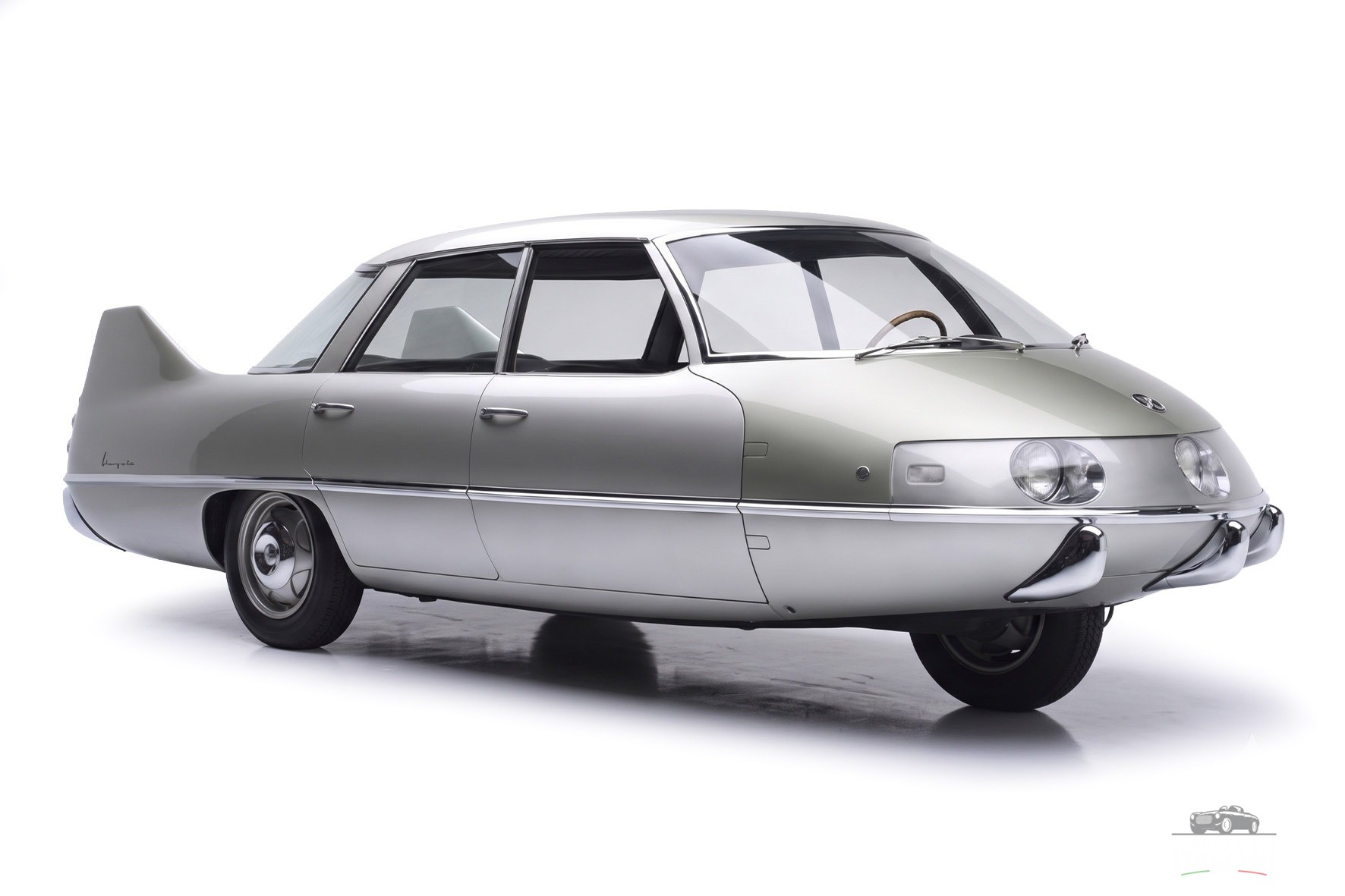
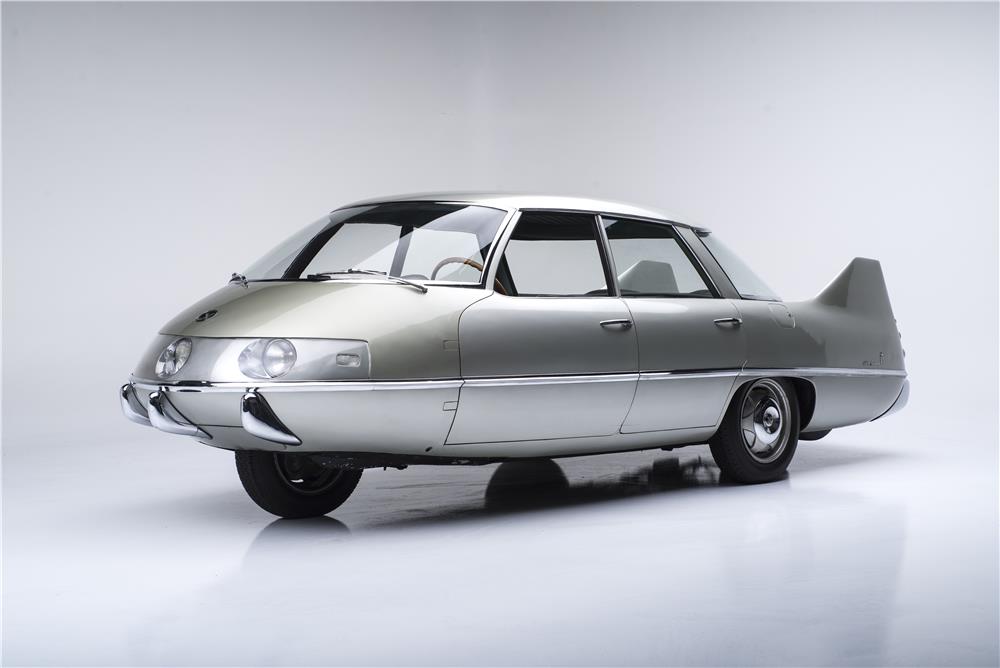
The Pininfarina X: Aerodynamics were the topic of the moment in the late Fifties and early Sixties. The search for efficiency was nowhere more prevalent than in Italy where its cadre of talented, imaginative, creative coachbuilders sought to wring high speed performance out of small displacement powerplants. The likes of Abarth and Conrero produced amazing power from high strung little engines. Pinin Farina, Bertone, Ghia and Zagato maximized the efficiency of their coachwork with conventional, but also imaginative, bodies. This was the time of Franco Scaglione’s Bertone B.A.T.s, Abarth’s diminutive record-setters, Ghia’s Gilda and the double-bubble Abarths. Coachbuilders like Pinin Farina built their own wind tunnels to refine road car designs, then stretched conventional wisdom with advanced concepts. In a period of continuous experimentation perhaps no vehicle pushed the boundaries like the Pininfarina X. Years of experimental and empirical experience had shown that the teardrop was the most efficient way to minimize the resistance of a solid body (an automobile or airplane) passing through a fluid (air.) The problem remained for designers to adapt the shape of an automobile with four wheels and room for four passengers to the teardrop shape without becoming large and impractical. Pinin Farina (it would become Pininfarina in 1961) resolved this issue with its 1960 concept, called the Pininfarina X. Instead of a conventional 4-corner layout for the wheels Pininfarina (we’ll defer to the later name) created a cruciform platform with a single steering wheel at the front, a single driving wheel at the rear and two outrigger wheels on the sides positioned behind the four doors. Large fins at the rear (it was, after all, 1960 when fins were ‘in’ and the teardrop shape provided little in the way of lateral or crosswind stability) stabilized the Pininfarina X’s dart shape. There was, even in the Fifties and Sixties, no more daring and imaginative approach to breaking the mold of conventional automobile design. It is powered by a diminutive rear-mounted 1089cc Fiat four producing just 43 horsepower with a 4-speed transmission driving the single rear tire. The coefficient of aerodynamic drag is just 0.23, a figure that even the most modern fuel efficient automobiles can only aspire to achieve. Shown at Turin in 1960 and Brussels in 1961 by Pininfarina, it resided in the company’s museum until 2007 and is in largely original and unmolested condition with sound paint and interior. Unusually for a design concept it was engineered and built by Pininfarina as a running, driving vehicle. Batista ‘Pinin’ Farina is believed to have driven it to various manufacturers in an effort to have its concept implemented in production and today it runs and drives. It was sold in 2015 for € 530.000. Big thanks to Hyman Ltd.
IN THE ARCHIVE
02 / TECHNICAL IDENTITY
04 / INDIVIDUAL HISTORY
06 / EVENTS & AWARDS
Preserved CI 1.0 relation. Evidence field: _yoast_wpseo_primary_events. No award inferred.
07 / THE VEHICLE IN DETAIL
08 / FROM THE ARCHIVE
No publishable archival references are currently catalogued for this vehicle.
10 / CONNECTED HISTORY
CONTINUE EXPLORING
CONTINUE READING
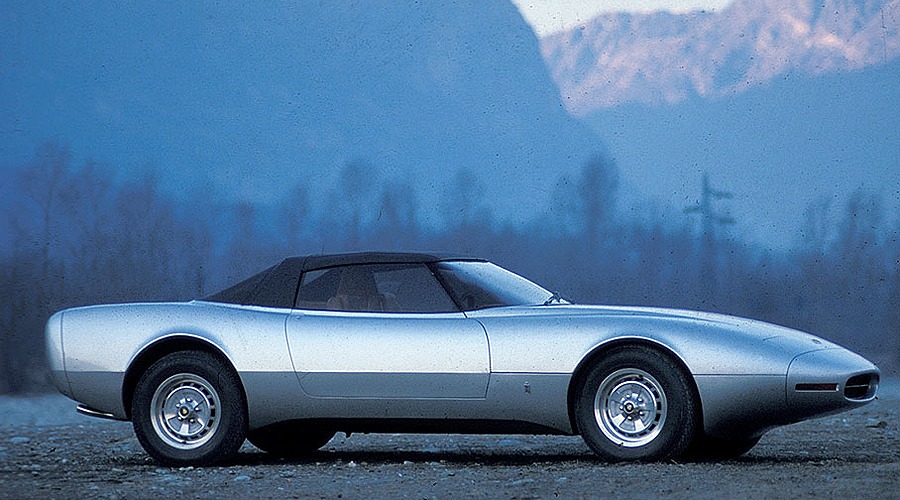
When Jaguar met Pininfarina, the result was the 1978 XJ Spider — a breathtaking fusion of British engineering and Italian design. From its Birmingham debut to its influence on the F-Type and…
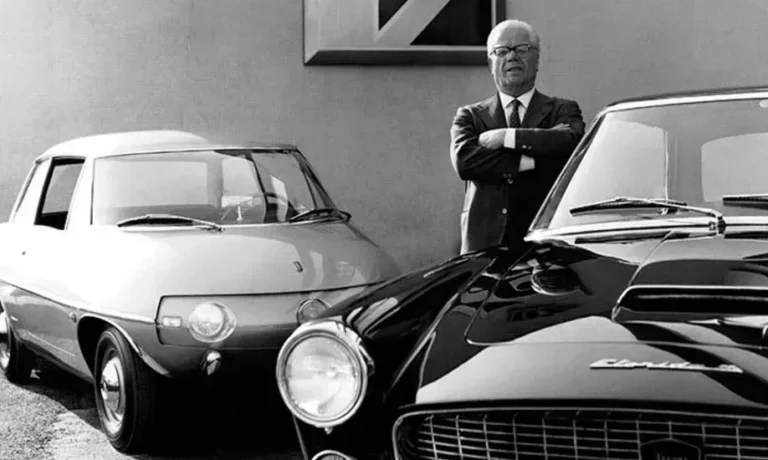
Read storyDiscover the fascinating journey of Pininfarina, a name synonymous with luxury automotive design and innovation. From its inception in 1930 to its status as a leader in the industry, this article explores…
Read storyIn 1950s Italy, Space Age Car Design, inspired by the optimism of space exploration and technological advancements, introduced sleek, futuristic aesthetics to consumer products, from automobiles to fashion and animation.
Read storyPininfarina, the venerable Italian design house, has left an indelible mark on the automotive world with its avant-garde concept cars. From the iconic Ferrari Modulo to the futuristic Pininfarina X, each creation…
Read story
THE CONVERSATION
Comments 0
Share a memory, a period photograph or a documented detail about this car.