
THE VEHICLE AT A GLANCE
Model dossier
- Production period
- 1957
- Body style
- Spider
- Engine
- Inline-4
- Type
- Limited
THE PEOPLE BEHIND THE CAR
Coachbuilding, design & conversions

PRICE & SALES RECORD
Vehicle value
- Original price
- Not documented
- Latest recorded sale
- Not documented
01 / THE STORY
History & context
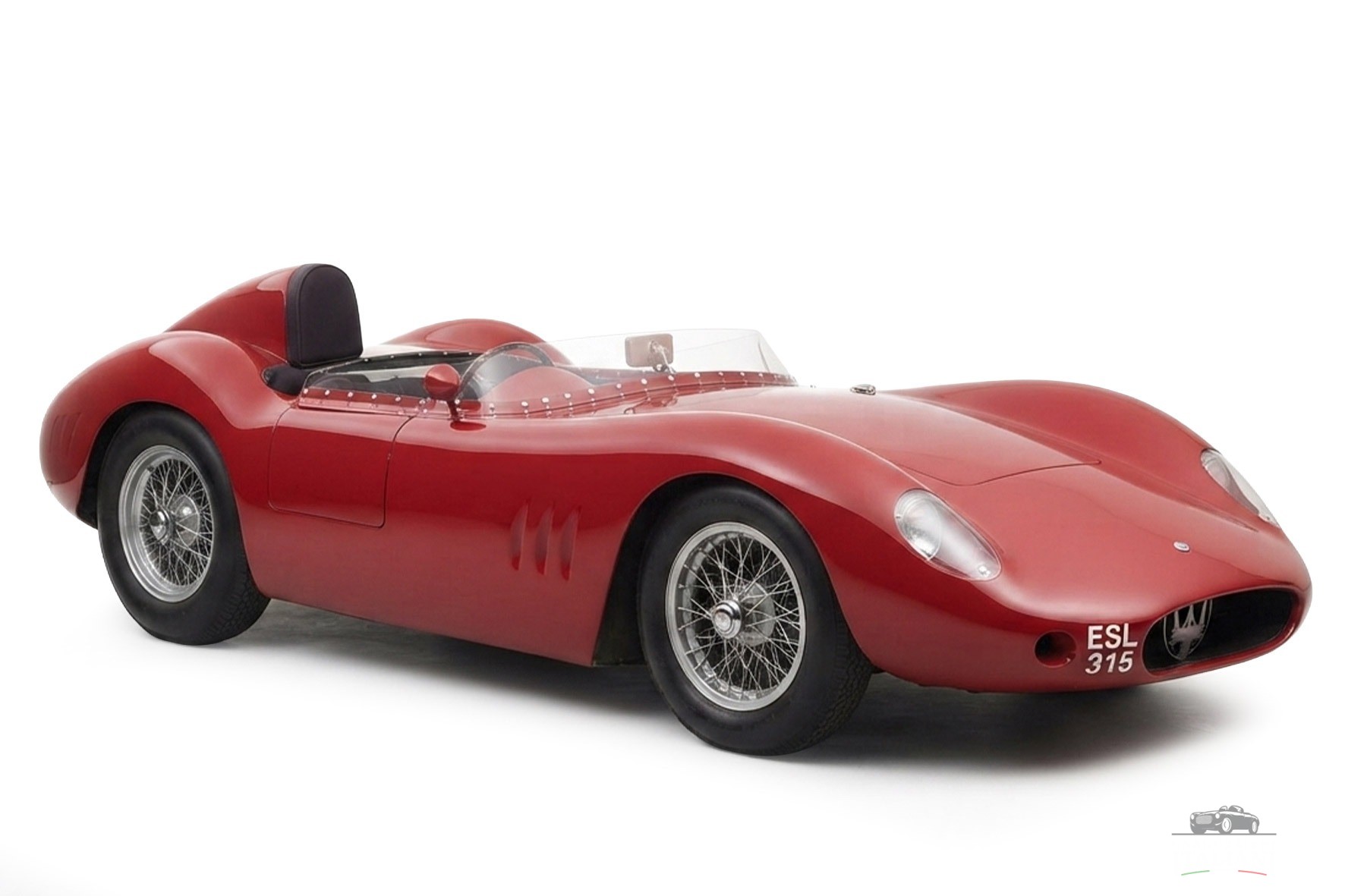
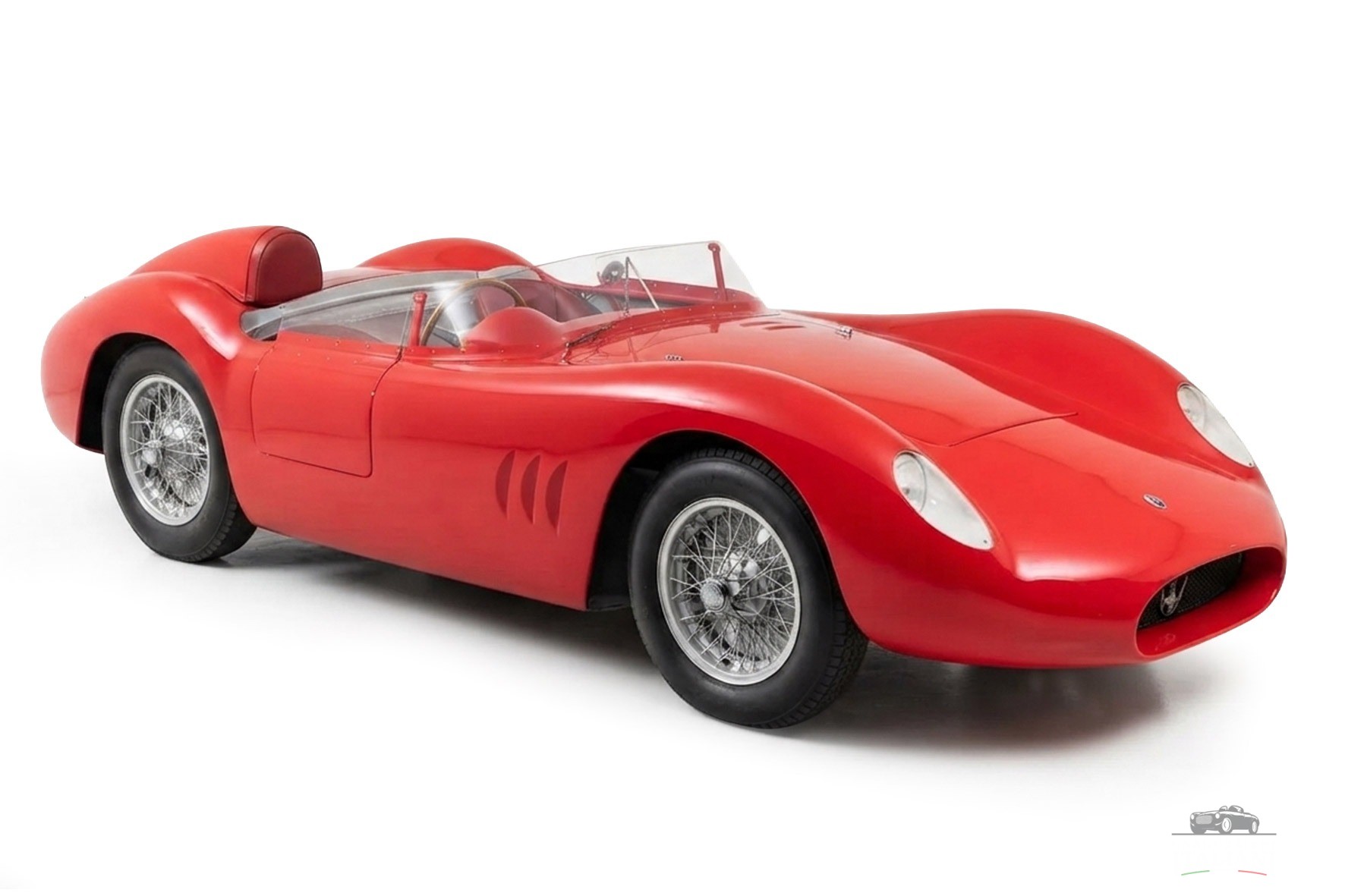
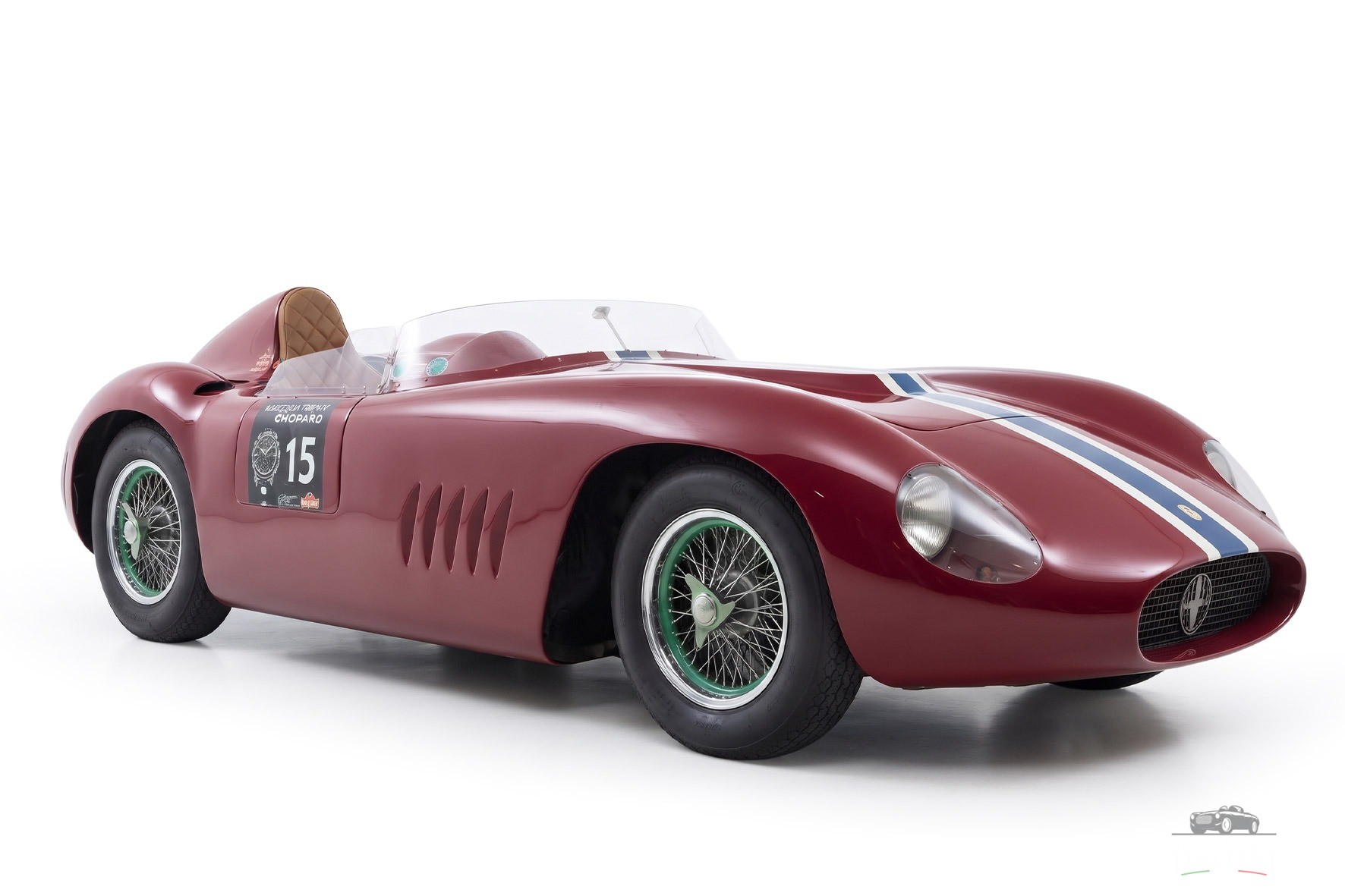
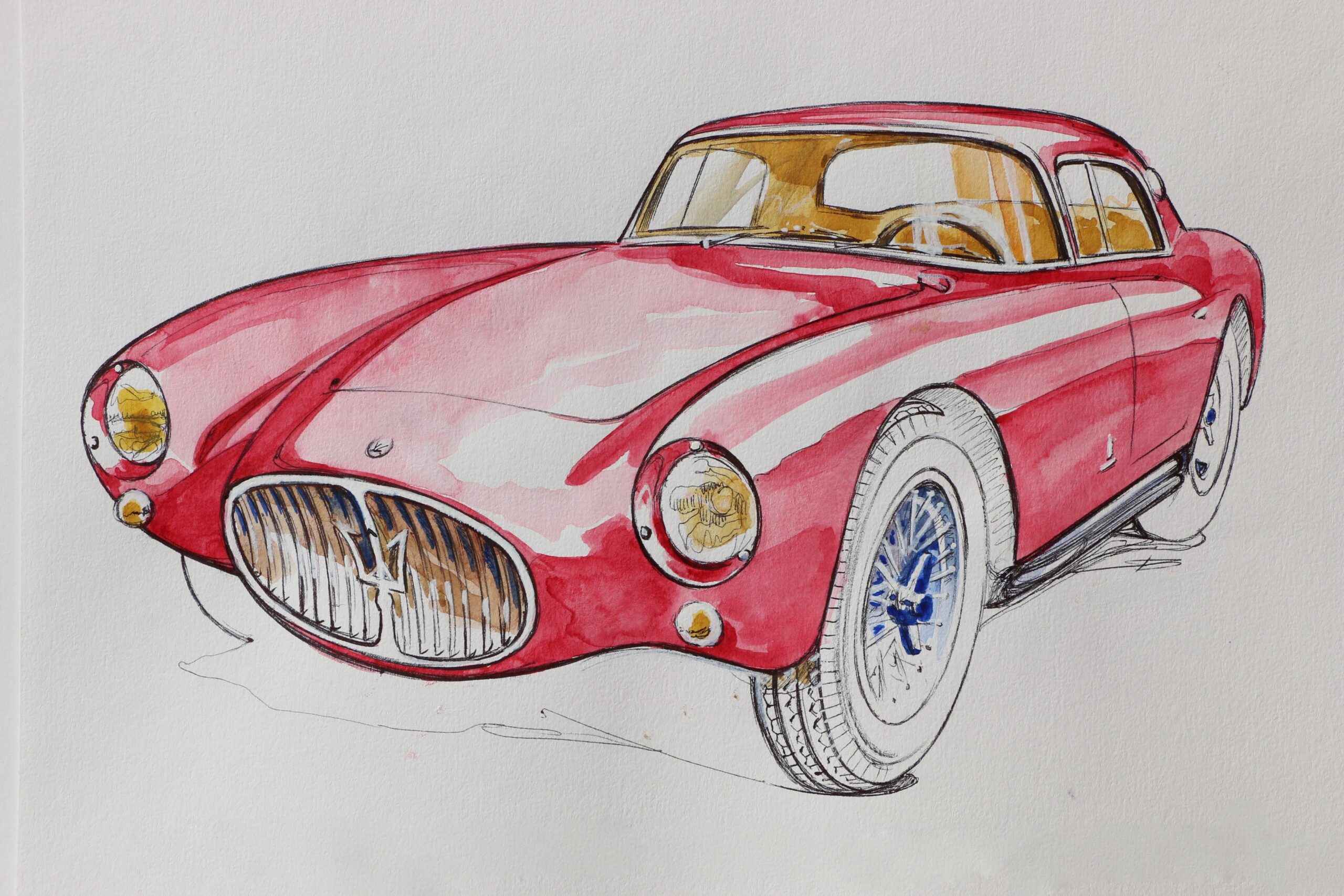
The Maserati 250S designation encompasses two distinct strands of sports-racing car development undertaken by Maserati in the mid-1950s, unified by a nominal displacement of 2.5 liters but differing substantially in technical conception, chronology, and intended role. The first version, sometimes referred to as the 2500 Sport, was constructed in a single example in 1954. It was derived from an A6GCS/53 chassis adapted to accept the 2,494 cc inline six-cylinder engine of the Formula 1 Maserati 250F, modified to comply with sports-car regulations. The engine featured an 84 mm bore and 75 mm stroke, dual overhead camshafts, and induction via three Weber 42 DCO3 carburetors. The car competed in selected events during the 1954 season, including the Mille Miglia and the Supercortemaggiore Grand Prix at Monza, without achieving notable results. Following these appearances, the project was set aside as Maserati redirected its resources toward the development of the forthcoming 300S. A brief experimental revival occurred in 1956, when a modified A6GCS incorporating a De Dion rear axle and a combined gearbox and differential assembly was assembled in Modena. This car was entered in competitions at Agadir and Dakar without success and was later used for testing purposes by Stirling Moss in preparation for the Mille Miglia. The second iteration of the 250S emerged in 1957 and represented a fundamentally different project. In this case, the mechanical basis was the Maserati 200SI, fitted with an enlarged inline four-cylinder engine displacing 2,489 cc. The engine employed a 96 mm bore and 86 mm stroke, dual overhead camshafts, and two Weber 45 DCO3 carburetors. Four examples were constructed, with the objective of preserving the agility of the two-liter sports cars while providing increased power to contend with higher-displacement rivals. The cars were clothed in aluminum bodywork by Carrozzeria Fantuzzi, featuring a markedly revised form compared with earlier Maserati sports racers. Their first public appearance took place during practice for the 1000 km of Buenos Aires, where performance potential was evident but the cars were judged insufficiently developed for immediate competitive use. Further evolution was curtailed by internal competition from the Maserati 300S and by the withdrawal of the official Maserati team from racing at the end of the 1957 season. Nevertheless, a limited number of 2.5-liter engines were produced for customer teams to upgrade existing 200SI chassis, and between 1958 and 1959 several 250S-specification cars achieved notable results in national SCCA competitions in North America. Technically, the 250S featured a Gilco tubular spaceframe chassis, hydraulically actuated drum brakes on all four wheels, front suspension with coil springs, Houdaille hydraulic dampers and an anti-roll bar, and a rear suspension using a transverse leaf spring with matching dampers and stabilizer bar, with an aluminum body completing the lightweight construction.
IN THE ARCHIVE
Coachbuilders & design studios
02 / TECHNICAL IDENTITY
Specifications & construction
Production & construction
- Production type
- Limited
- Construction features · Legacy attribution
- Gilco Chassis
Engine & performance
- Engine configuration
- Inline-4
Dimensions & accommodation
- Length
- 3,900 mm
- Width
- 1,450 mm
- Height
- 980 mm
Individual vehicle
- Documented chassis
- 2432
- Documented chassis count
- 1
Design & manufacture
- Manufacturer · Documented
- Maserati
- Coachbuilder / Body Builder · Documented
- Fantuzzi
06 / EVENTS & AWARDS
Events & awards
No events or documented awards are currently recorded for this vehicle.
07 / THE VEHICLE IN DETAIL
Photo gallery 6 photographs
08 / FROM THE ARCHIVE
Archive
References held in the vehicle dossier. Their inclusion does not establish that every historical claim has been independently verified.
| Reference | Source type |
|---|---|
| Maserati Classiche — 200S / 250S historical development www.maserati.com | Manufacturer official heritage article |
THE CONVERSATION
Comments 0
Share a memory, a period photograph or a documented detail about this car.