
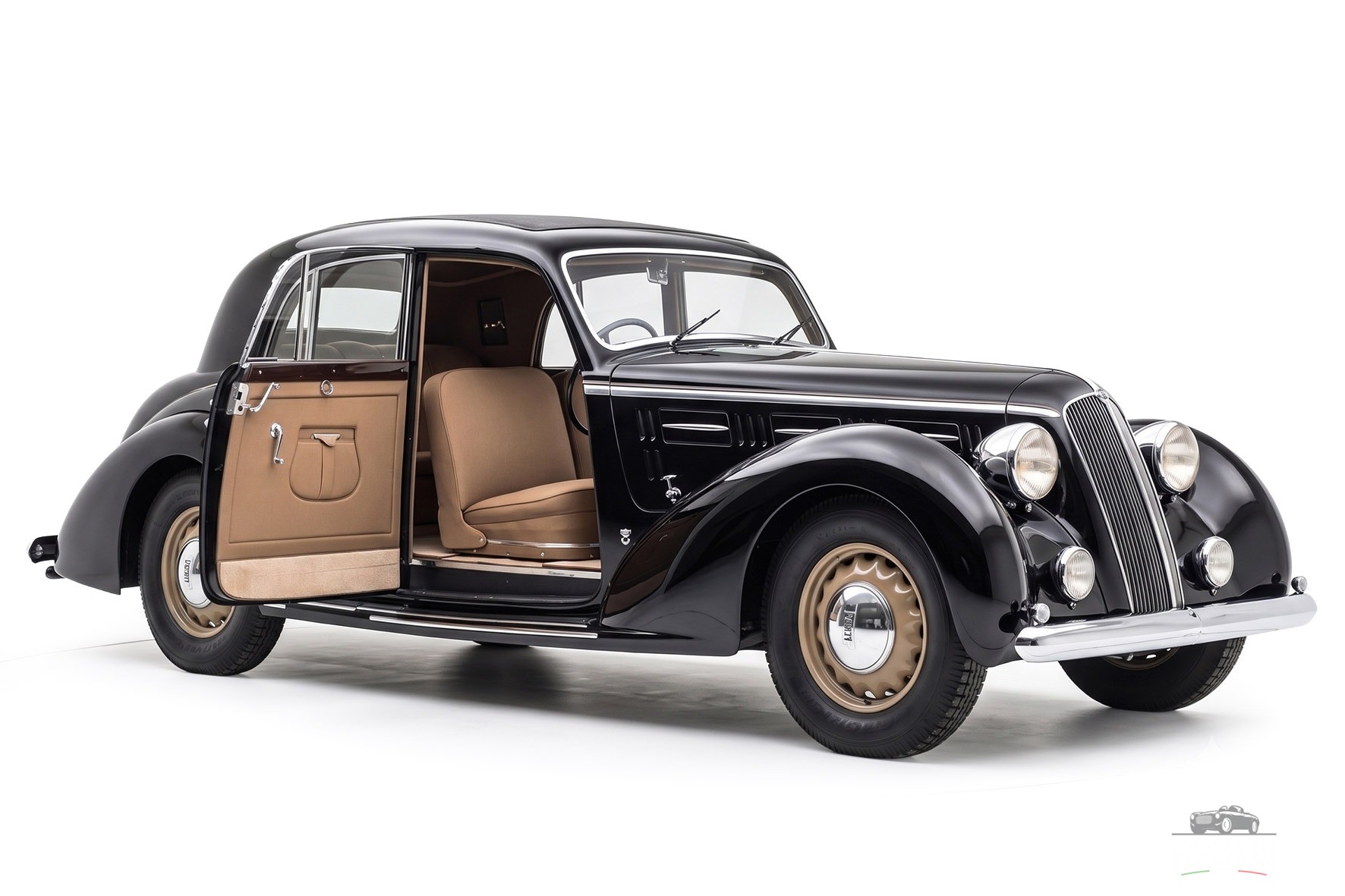
THE VEHICLE AT A GLANCE
Model dossier
- Manufacturer
- Lancia
- Base model
- Astura Berlina
- Coachbuilder
- Stabilimenti Farina
- Production period
- 1934
- Body style
- Berlina
THE PEOPLE BEHIND THE CAR
Coachbuilding, design & conversions

PRICE & SALES RECORD
Vehicle value
- Original price
- Not documented
- Latest recorded sale
- Not documented
01 / THE STORY
History & context
The Lancia Astura Berlina Gran Sport by Stabilimenti Farina, now part of the Museo Nicolis collection, stands as a remarkable example of luxury and automotive craftsmanship from the 1930s. Introduced alongside the Lancia Artena in 1931, the Astura was named after a famous medieval castle in the Lazio region. It was developed as part of Lancia’s strategy to offer both a more modest and affordable vehicle (the Artena) and a powerful, sporty car (the Astura). This approach was influenced by the economic austerity following the Wall Street Crash of 1929. The Astura’s first and second series were available until 1933. With the introduction of the third series, significant modifications were made, including increased power and the introduction of two versions: the long-wheelbase (L) and the short-wheelbase (C). The tilted radiator and the shield emblem, replacing the previous round one, became standard features. The Lancia Astura Berlina Gran Sport by Stabilimenti Farina is one of the most prestigious versions of the Astura. Because the car did not have a monocoque body, coachbuilders could express their creativity and produce more elevated and luxurious styles. This specific example is a 4-light passenger model, a luxurious saloon car favored by those who preferred to drive themselves rather than be chauffeur-driven. Illustrious names like Pinin Farina contributed to making the Astura one of the top cars of the 1930s. The fourth and final series of the Lancia Astura, produced until 1939, is particularly remembered for its large torpedo-shape representation vehicles commissioned by Mussolini during a time when the Italian government needed ministerial vehicles. This luxurious 4-light Berlina exemplifies the elegance and sophistication that made the Astura a favorite among discerning drivers of its time.
02 / TECHNICAL IDENTITY
Specifications & construction
Production & construction
- Production type
- Limited
Engine & performance
- Engine configuration
- V8
- Displacement
- 2,973 cc
- Power (CV)
- 82 CV
- Engine speed
- 4,000 rpm
- Transmission
- Manual 4-speed
- Drive
- Rear-wheel drive
- Specification notes
- Confidence detail moved from confidence: high_disposition_only | Source-backed donor/model-level baseline for Lancia Astura Series III–IV: narrow-angle V8, 2973 cc, 82 CV at 4000 rpm, 4-speed manual, rear-wheel drive. Coachbuilt-body dimensions, weight and maximum speed are intentionally not inherited.
- Gearbox
- Manual 4-speed
- Drivetrain
- RWD
- Power RPM
- 4000 rpm
03 / DESIGN, BODY & SUPPLIERS
Design, body & suppliers
Design & manufacture
- Manufacturer · Documented
- Lancia
- Coachbuilder / Body Builder · Documented
- Stabilimenti Farina
Body form & construction
- Body style
- Berlina
04 / EVENTS & CHRONOLOGY
Events & chronology
No events or documented awards are currently recorded for this vehicle.
06 / CHASSIS REGISTER
Chassis register
Ownership & provenance
- Ownership & history · Legacy attribution
- Museum Car
08 / GALLERY
Photo gallery 10 photographs
Show 4 more photographs Show fewer photographs
09 / PERIOD ARCHIVE
Period photographs & advertising
The period archive gallery will show historical photographs, advertisements, brochures and press images once assets, provenance and usage rights have been recorded in the masterfile.
THE CONVERSATION
Comments 0
Share a memory, a period photograph or a documented detail about this car.