
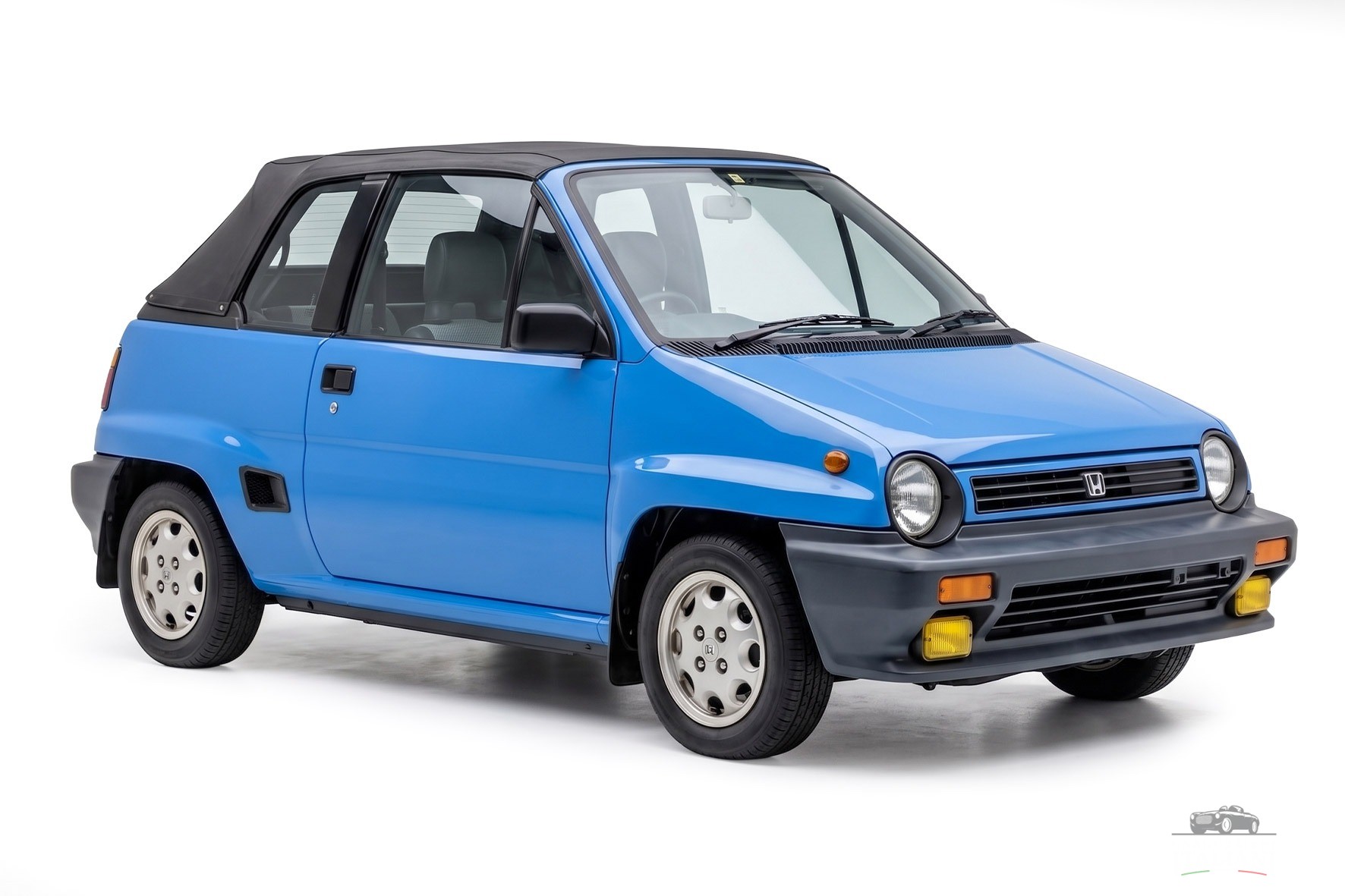
THE VEHICLE AT A GLANCE
Model dossier
- Production period
- 1984
- Body style
- Cabriolet
- Engine
- Inline-4
- Type
- Mass
THE PEOPLE BEHIND THE CAR
Coachbuilding, design & conversions

PRICE & SALES RECORD
Vehicle value
- Original price
- Not documented
- Latest recorded sale
- Not documented
01 / THE STORY
History & context
The Honda City Cabriolet was designed by Pininfarina and introduced in August 1984. It was a drop-top Cabriolet which used the wider track, fenders, and bigger bumpers of the Turbo II “Bulldog”, but was only normally available with the naturally aspirated 67 PS (49 kW) engine. These widetrack models were designated “FA” rather than “AA”. The Honda City Cabriolet, a gem designed by Pininfarina, stands out as a quintessential representation of the 1980s’ fascination with convertible adaptations of family cars, marking a significant first for Japan. This innovative model diverged from its hatchback siblings not just in design but also in offering features such as a glass rear window and an exclusive palette of twelve pastel colors, enhancing its allure and distinctiveness. Its debut at the Tokyo Motor Show in 1981 followed an extensive development phase initiated in 1978, highlighting Honda’s commitment to precision and innovation over the three-year period leading to its unveiling. This remarkable sedan was built on a platform characterized by front-wheel drive mechanics and a transversely mounted engine, embodying efficiency and forward-thinking engineering. Despite its relatively compact length of just under 3.40 meters, the City was ingeniously designed to maximize interior space. Its width and a rearward seating configuration ingeniously created additional legroom, cleverly prioritizing passenger comfort over cargo space. This thoughtful design contributed to the City’s accolade as the runner-up in the 1982 Car of the Year award in Japan, underlining its significant impact shortly after its release. Dubbed the “Tall boy” due to its boxy, angular design, the Honda City was powered by the 1.231-liter CVCC-II engine from the “ER” four-cylinder engine family, specifically developed to complement its unique characteristics. Among its most intriguing features was the Motocompo, a compact “pop-up” scooter designed to fit snugly in the trunk, epitomizing the era’s innovative spirit and Honda’s commitment to versatility and mobility. Initially, the sportier R version captured the market’s attention, but Honda later expanded the City’s appeal by introducing the economy-focused E model and two commercial (“Pro”) variants. The Turbo version, launched in September 1982, further broadened its appeal, showcasing Honda’s prowess in performance enhancement. The Honda City Cabriolet, introduced in August 1984, was a masterpiece from Pininfarina, featuring a stylish cloth top and benefiting from the widened track, fenders, and bumpers of the Turbo II variant. However, it was powered by a 1.3-liter, 67-horsepower naturally aspirated engine, ensuring a blend of performance and elegance. This unique collaboration between Honda and Pininfarina not only set the City Cabriolet apart from its contemporaries but also cemented its legacy as a pioneering convertible that perfectly captured the innovative and adventurous spirit of the 1980s.
IN THE ARCHIVE
Coachbuilders & design studios
02 / TECHNICAL IDENTITY
Specifications & construction
Production & construction
- Production type
- Mass
Engine & performance
- Engine configuration
- Inline-4
Dimensions & accommodation
- Length
- 3,380 mm
- Width
- 1,570 mm
- Height
- 1,460 mm
Design & manufacture
- Design Studio · Documented
- Pininfarina
- Manufacturer · Documented
- Honda
06 / EVENTS & AWARDS
Events & awards
No events or documented awards are currently recorded for this vehicle.
07 / THE VEHICLE IN DETAIL
Photo gallery 3 photographs
08 / FROM THE ARCHIVE
Archive
References held in the vehicle dossier. Their inclusion does not establish that every historical claim has been independently verified.
| Reference | Source type |
|---|---|
| Honda — City Cabriolet launch release, 4 July 1984 global.honda | Manufacturer press archive |
THE CONVERSATION
Comments 0
Share a memory, a period photograph or a documented detail about this car.