
THE VEHICLE AT A GLANCE
Model dossier
- Production period
- 2000
- Body style
- Berlina
- Type
- Mass
THE PEOPLE BEHIND THE CAR
Coachbuilding, design & conversions


PRICE & SALES RECORD
Vehicle value
- Original price
- Not documented
- Latest recorded sale
- Not documented
01 / THE STORY
History & context
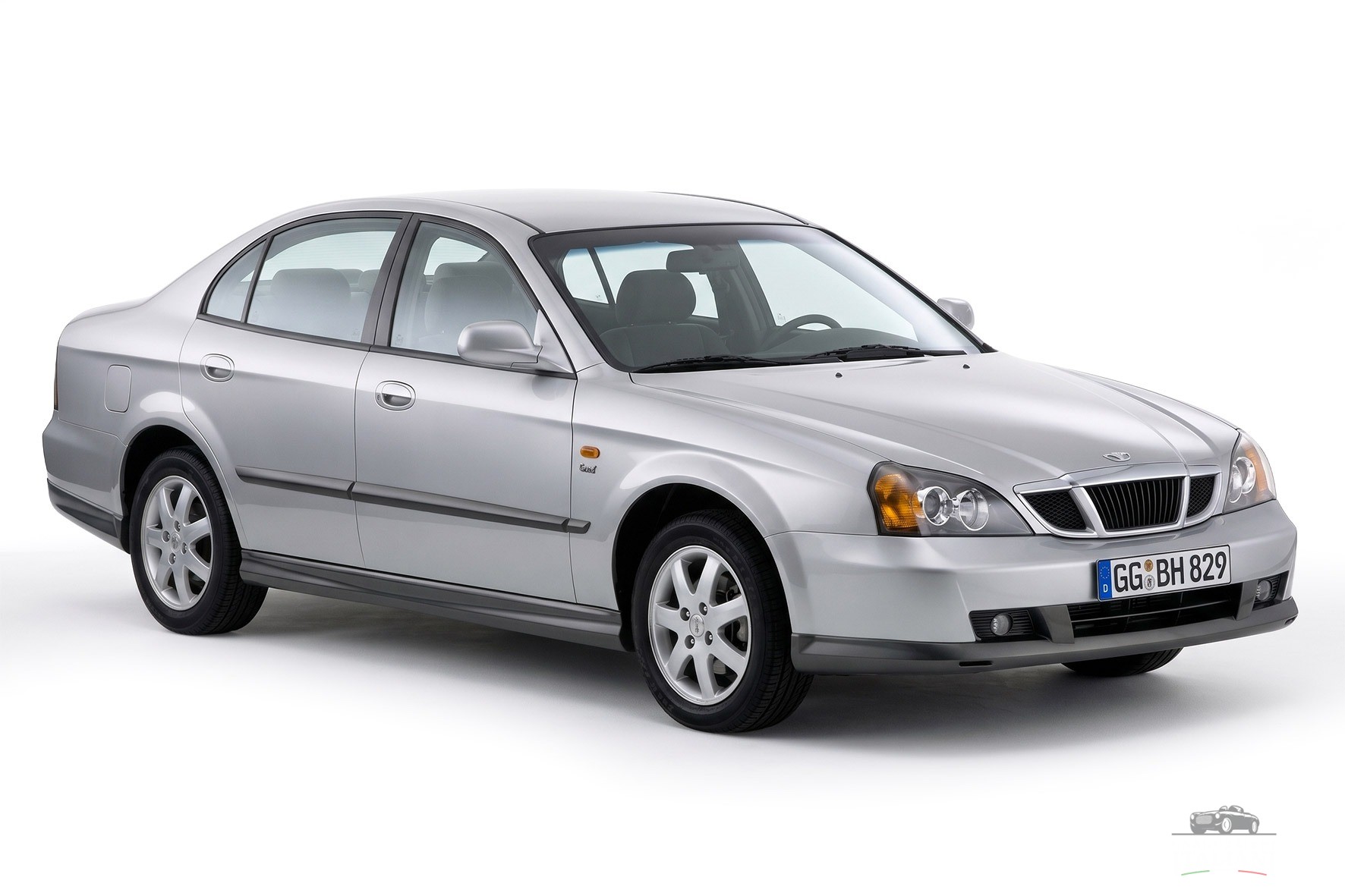
The Daewoo Magnus, introduced in 2000, was a mid-size sedan developed under the internal code name V200, positioned as the successor to the Daewoo Leganza (V100). Designed by Giorgetto Giugiaro at Italdesign, the Magnus marked a key step in Daewoo’s strategy to expand its global presence at the turn of the millennium—just as the company was entering into a major partnership with the General Motors Group. The Magnus was built on an extended version of the Leganza’s platform, offering greater interior space, a more substantial road presence, and refined styling to compete in the growing D-segment. Giugiaro’s design retained the classic three-box sedan format but introduced smoother surfaces, a more prominent front grille, and elegantly sculpted headlights that emphasized the vehicle’s upscale aspirations. The design was understated yet mature, appealing to a wide audience across various global markets. While it was primarily manufactured and sold in Southeast Asia, the Magnus was also exported widely. Between 2000 and 2004, it was sold as the Daewoo Evanda in Western Europe and rebranded as the Chevrolet Evanda in Eastern Europe, where GM chose not to use the Daewoo name due to brand overlap with locally assembled older models. The Magnus featured a range of inline four- and six-cylinder combustion engines, designed to deliver a smooth and quiet driving experience. Comfort and refinement were key priorities, and the car offered generous interior space, quality materials, and a well-equipped cabin for its class. Though it remained a single-generation model, the Daewoo Magnus played an important role in bridging the transition between Daewoo’s independent operations and its integration into the GM global lineup. It demonstrated the brand’s capability to design and build vehicles for international markets, with Giugiaro’s styling providing a level of sophistication that helped elevate Daewoo’s image in the early 2000s.
IN THE ARCHIVE
Related people
IN THE ARCHIVE
Coachbuilders & design studios
02 / TECHNICAL IDENTITY
Specifications & construction
Production & construction
- Production type
- Mass
Engine & performance
- Drive
- Front-wheel drive
- Specification notes
- V200 Magnus/Evanda sedan invariant body baseline: FWD, wheelbase 2700 mm, dimensions 4770 × 1815 × 1440 mm. Engine, transmission and weight remain market/version-level.
Dimensions & accommodation
- Wheelbase
- 2,700 mm
- Length
- 4,770 mm
- Width
- 1,815 mm
- Height
- 1,440 mm
Design & manufacture
- Designer · Candidate
- Giorgetto Giugiaro
- Design Studio · Documented
- Italdesign
- Manufacturer · Documented
- Daewoo
06 / EVENTS & AWARDS
Events & awards
No events or documented awards are currently recorded for this vehicle.
07 / THE VEHICLE IN DETAIL
Photo gallery 1 photographs
08 / FROM THE ARCHIVE
Archive
References held in the vehicle dossier. Their inclusion does not establish that every historical claim has been independently verified.
| Reference | Source type |
|---|---|
| Daewoo Magnus V200 technical dimensions auto.mail.ru | Specialist range technical reference |
| Daewoo Magnus model history en.wikipedia.org | Model history reference |

THE CONVERSATION
Comments 0
Share a memory, a period photograph or a documented detail about this car.