
THE VEHICLE AT A GLANCE
Model dossier
- Production period
- 1955
- Type
- Prototype
- Production
- 1
THE PEOPLE BEHIND THE CAR
Coachbuilding, design & conversions
PRICE & SALES RECORD
Vehicle value
- Original price
- Not documented
- Latest recorded sale
- Not documented
01 / THE STORY
History & context
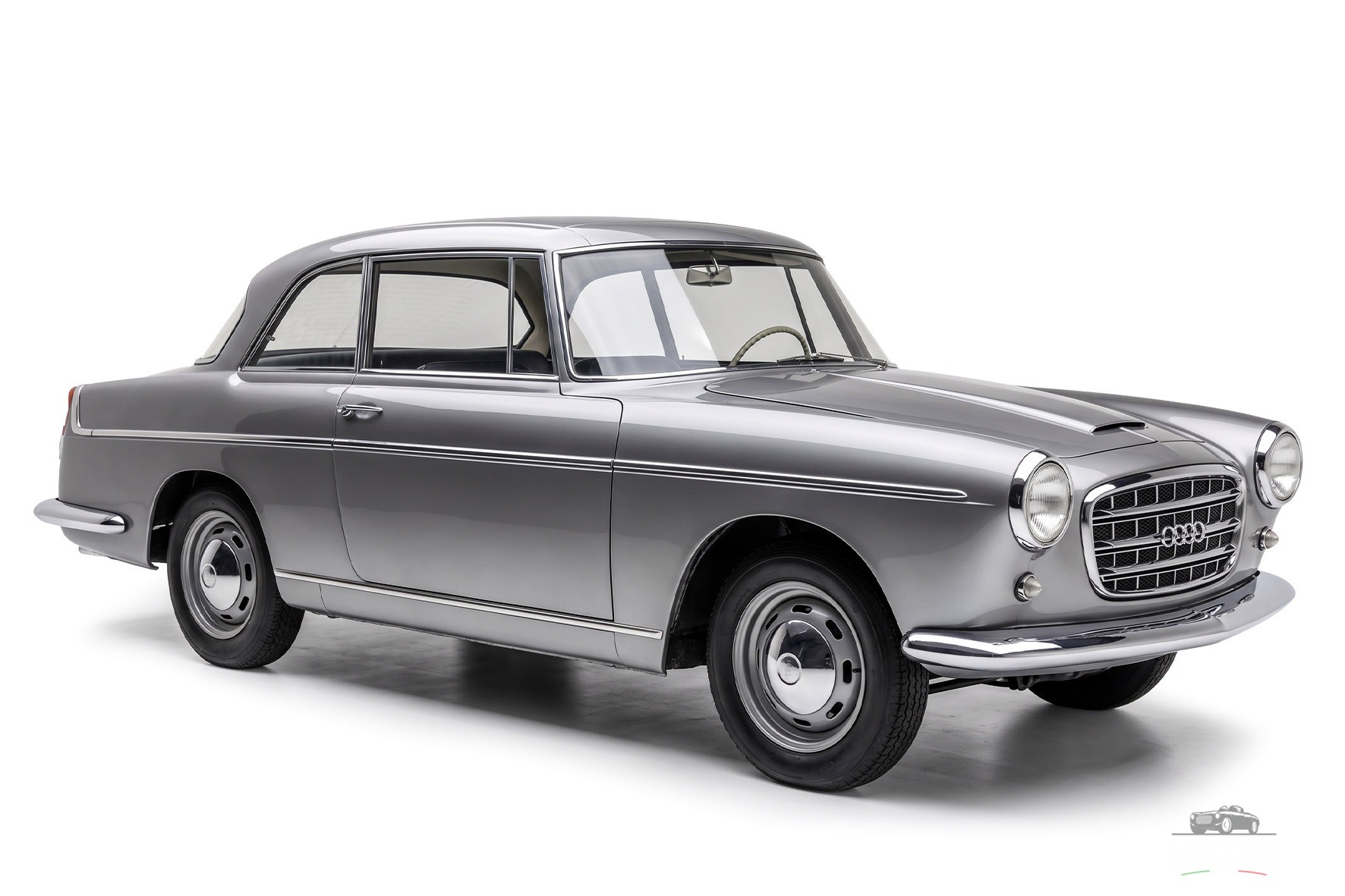
The DKW 3 Pininfarina was a singular prototype coupé developed in 1956 as a joint effort between Auto Union’s DKW division and the Italian design firm Pininfarina. The vehicle was based on the DKW 3=6 platform, which featured front-wheel-drive architecture and a transversely mounted two-stroke three-cylinder engine. The 3=6 platform was notable for its compact dimensions and engineering efficiency, employed widely in DKW’s passenger car range during the 1950s. Pininfarina was commissioned to create an alternative body design with an emphasis on aerodynamic efficiency and stylistic refinement. The resulting prototype featured an aluminum body with clean lines and a streamlined profile distinct from the standard DKW 3=6 saloon and coupe bodies. The design employed subtle curvature and tapering, incorporating design elements fashionable in mid-1950s European automotive styling. The coupé’s dimensions adhered closely to the donor chassis, maintaining the wheelbase and track widths as per factory specifications. Mechanically, the vehicle retained the standard DKW drivetrain. The two-stroke, three-cylinder engine displaced approximately 900 cubic centimeters and produced power figures in the range of 38 to 40 horsepower. Power was delivered to the front wheels via a four-speed manual transmission. Suspension utilized torsion bars and wishbones at the front, with a swing axle arrangement at the rear. Drum brakes were standard on all four wheels. The DKW 3 Pininfarina remained at the prototype stage. Despite favorable reception to the design concept, Auto Union decided against initiating production, citing excessive manufacturing costs and limited market demand for an alternative body style. No production tooling was developed, and the vehicle did not enter series manufacturing. Chassis identification and ownership records for the prototype are not publicly documented. The prototype’s ultimate disposition is unclear; it is believed to have been retained within Auto Union archives or dismantled. The vehicle stands as a historical example of cross-border design collaboration during the postwar European automotive industry’s period of transition. It reflects both DKW’s engineering principles and Pininfarina’s stylistic influence in an era characterized by innovation and experimentation.
IN THE ARCHIVE
Coachbuilders & design studios
02 / TECHNICAL IDENTITY
Specifications & construction
Production & construction
- Production
- 1
- Production type
- Prototype
- Mechanical platform
- DKW F93/F94
Engine & performance
- Specification notes
- The historical marque archive explicitly identifies the Pinin Farina study as an F93/F94 prototype project. Only that project base is structured; production DKW technical specifications are not inherited.
Design & manufacture
- Coachbuilder / Body Builder · Documented
- Pininfarina
- Manufacturer · Documented
- DKW
06 / EVENTS & AWARDS
Events & awards
No events or documented awards are currently recorded for this vehicle.
07 / THE VEHICLE IN DETAIL
Photo gallery 1 photographs
08 / FROM THE ARCHIVE
Archive
References held in the vehicle dossier. Their inclusion does not establish that every historical claim has been independently verified.
| Reference | Source type |
|---|---|
| Motorarkiv — DKW F93/F94 Pinin Farina study motorarkiv.dk | Historical marque archive |
THE CONVERSATION
Comments 0
Share a memory, a period photograph or a documented detail about this car.