
THE VEHICLE AT A GLANCE
Model dossier
- Production period
- 1955
- Body style
- Berlina
- Type
- Prototype
- Production
- 1
THE PEOPLE BEHIND THE CAR
Coachbuilding, design & conversions

PRICE & SALES RECORD
Vehicle value
- Original price
- Not documented
- Latest recorded sale
- Not documented
01 / THE STORY
History & context
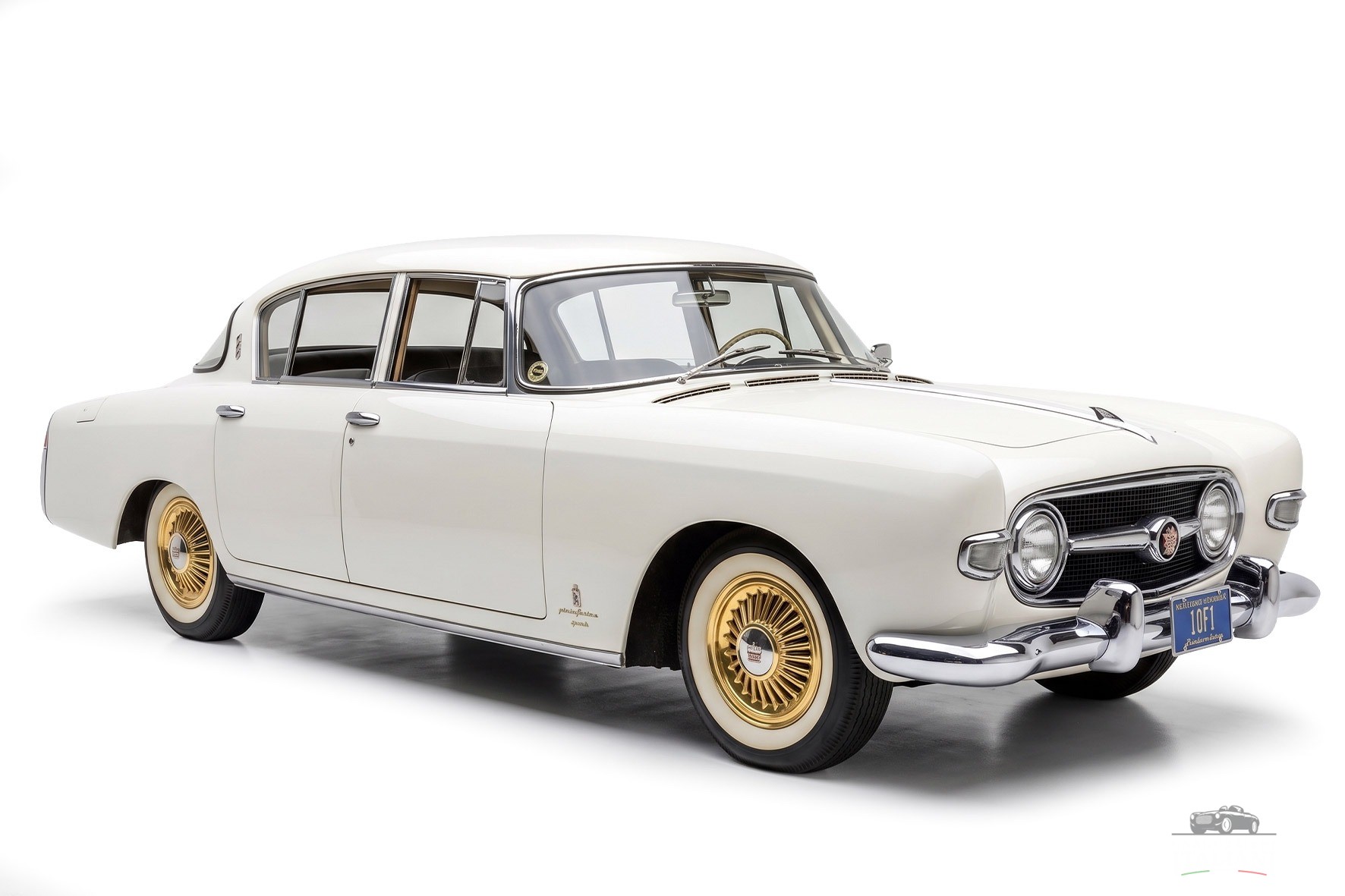
The Nash Special Ambassador by Pininfarina emerged as a pivotal contender in the race to replace the iconic “bathtub” Nash, a legacy that had defined an era. In the quest for innovation, Nash’s in-house team labored over the 1952 design, birthing a stately sedan characterized by enclosed wheels and distinctive design elements. Notably, the front doors boasted a unique notch, injecting flair into the vehicle’s otherwise smooth profile. The oval grille, adorned with heavy vertical bars and fine horizontal strips proudly displayed the Nash badge, while the cathedral-style headlamps added a touch of elegance, reminiscent of the iconic 1955 Packard but with a delicate finesse. Chrome accents, including three vents on the body sides and a spear wrapping beneath the headlamps, lent the car a refined allure. The formal front end, complete with a U-shaped bumper and robust bumper guards, exuded sophistication. Meanwhile, across the Atlantic, the esteemed designer Pinin Farina embarked on his own design odyssey in Italy. His creation, meticulously crafted and shipped to America as a full-scale prototype, promised to rival Nash’s endeavors. Yet, when unveiled to Nash executives, it garnered a lukewarm reception. Criticized for its “soft” design and failure to meet U.S. standards, Farina’s model faced skepticism from those who deemed its European influence a hindrance to success in America. Undeterred, Nash’s in-house team pressed forward with their vision, incorporating elements of Farina’s design while staying true to their American roots. Despite disappointment over management’s decision to leverage Farina’s name for marketing, the team remained steadfast in their commitment to crafting a compelling design. The resulting composite design, featuring reverse-slanted C-pillars and an enlarged oval grille, captured the essence of Nash’s heritage while embracing Farina’s touch. Ultimately, George Mason’s approval paved the way for production, marking a triumph of collaboration and perseverance. As George Romney aptly observed, attributing Farina’s name to the project was a strategic decision aimed at bolstering sales. In the ever-evolving landscape of automotive design, the Nash Special Ambassador stood as a testament to the ingenuity and adaptability of those who dared to push the boundaries of innovation.
IN THE ARCHIVE
Coachbuilders & design studios
02 / TECHNICAL IDENTITY
Specifications & construction
Production & construction
- Production
- 1
- Production type
- Prototype
- Mechanical platform
- Nash Ambassador
Engine & performance
- Specification notes
- Historical correspondence supports the Nash Special Ambassador prototype/production programme context. Only the Nash Ambassador basis is structured; production Ambassador technical data are not inherited to the Pininfarina special.
Design & manufacture
- Coachbuilder / Body Builder · Documented
- Pininfarina
- Manufacturer · Documented
- Nash
06 / EVENTS & AWARDS
Events & awards
37° Salone Internazionale dell'Automobile – Torino General · legacy_preserved
- Date
- 1955
- Chassis
- General
Preserved CI 1.0 relation. Evidence field: _yoast_wpseo_primary_events. No award inferred.
07 / THE VEHICLE IN DETAIL
Photo gallery 3 photographs
08 / FROM THE ARCHIVE
Archive
References held in the vehicle dossier. Their inclusion does not establish that every historical claim has been independently verified.
| Reference | Source type |
|---|---|
| Hemmings — Nash/Pininfarina historical correspondence www.hemmings.com | Specialist automotive archive |
THE CONVERSATION
Comments 0
Share a memory, a period photograph or a documented detail about this car.