
THE VEHICLE AT A GLANCE
Model dossier
- Production period
- 1988
- Body style
- Coupé
- Type
- Prototype
- Production
- 1
THE PEOPLE BEHIND THE CAR
Coachbuilding, design & conversions

PRICE & SALES RECORD
Vehicle value
- Original price
- Not documented
- Latest recorded sale
- Not documented
01 / THE STORY
History & context
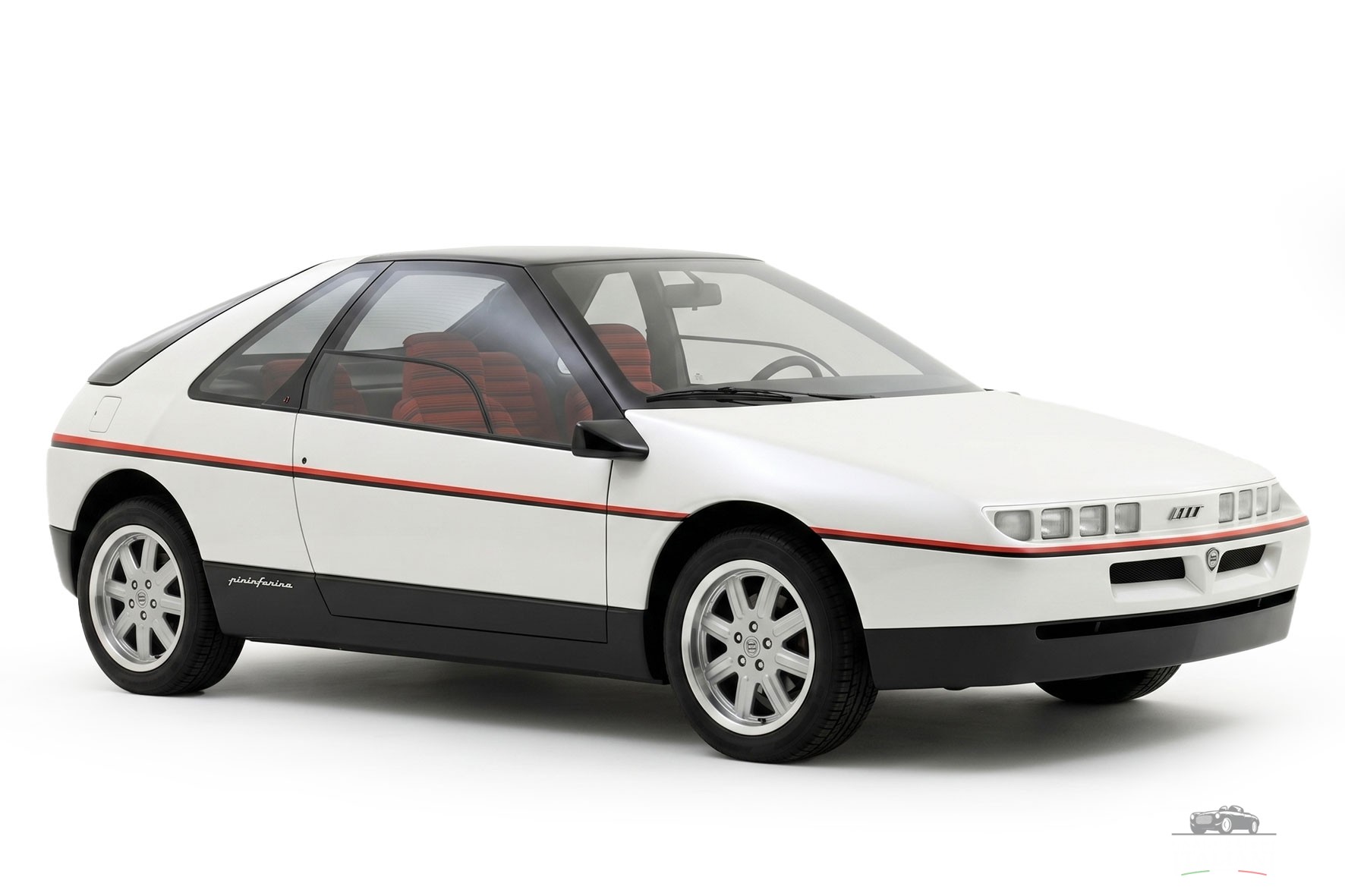
The Lancia HIT, unveiled in 1988 at the Turin Motor Show, epitomizes a remarkable fusion of cutting-edge technology and timeless Italian design. Crafted as a prototype based on the Lancia Delta Integrale 8v, it represents the pinnacle of collaboration between two Turin-based powerhouses, Lancia and Pininfarina. Standing as a testament to Pininfarina’s vision for lightweight materials, the HIT (High Italian Technology) project aimed to push boundaries by integrating carbon fiber and Kevlar into mass-produced vehicles, a concept previously reserved for high-performance racing machines like the Lancia ECV prototypes. At first glance, the Pininfarina HIT captivates with its modern, sleek lines and refined details. Two distinctive red and green stripes along the beltline accentuate the pristine white exterior, while subtle design elements like the rear pillar indentation add depth and sophistication. The front fascia boasts concealed rectangular headlights beneath a transparent lid, paying homage to Lancia’s iconic grille design of the era. Inside, the HIT seamlessly blends modernity with sporty elegance. Two-tone Alcantara upholstery with a unique striated pattern adorns the seats and door panels, exuding luxury and performance. The central console, adorned with buttons from Olivetti, further emphasizes the marriage of technology and style. Beneath the surface, the HIT is more than just a static showcase. Built on the chassis of the Lancia Delta Integrale 8v, it features simulated instrumentation and a carbon fiber central tunnel, showcasing the innovative use of materials like Nomex for enhanced safety and lightweight construction. Notably, the transformation from a 4-door to a 2-door layout required strategic engineering, including the relocation of the fuel tank behind the rear seats. Shielded by a Kevlar partition covered in carbon fiber, this adaptation ensures both safety and performance without compromising the vehicle’s aerodynamic profile. Today, over three decades since its debut, the Lancia HIT remains a symbol of innovation and style, embodying the spirit of Italian automotive excellence. Its legacy endures as a testament to the collaborative efforts of Lancia and Pininfarina, leaving an indelible mark on the history of automotive design and technology.
IN THE ARCHIVE
Coachbuilders & design studios
02 / TECHNICAL IDENTITY
Specifications & construction
Production & construction
- Production
- 1
- Production type
- Prototype
- Chassis construction
- Carbon-fibre chassis
- Mechanical platform
- Lancia Delta HF Integrale mechanicals
Engine & performance
- Specification notes
- HIT's published technical architecture is project-specific: Delta HF Integrale mechanicals, carbon-fibre chassis and 980 kg weight. Exact Integrale engine output is not inherited unless separately documented for HIT.
Dimensions & accommodation
- Weight
- 980 kg
Design & manufacture
- Manufacturer · Documented
- Lancia
- Coachbuilder / Body Builder · Documented
- Pininfarina
- Designer · Candidate
- Diego Ottina
06 / EVENTS & AWARDS
Events & awards
Torino General · legacy_preserved
- Date
- 1988
- Chassis
- General
Preserved CI 1.0 relation. Evidence field: _yoast_wpseo_primary_events. No award inferred.
07 / THE VEHICLE IN DETAIL
Photo gallery 5 photographs
08 / FROM THE ARCHIVE
Archive
References held in the vehicle dossier. Their inclusion does not establish that every historical claim has been independently verified.
| Reference | Source type |
|---|---|
| Autoappassionati — interview with Diego Ottina autoappassionati.it | Direct interview specialist press |
| CarStyling — 1988 Lancia HIT (Pininfarina) carstyling.ru | Specialist design archive |
THE CONVERSATION
Comments 0
Share a memory, a period photograph or a documented detail about this car.