
THE VEHICLE AT A GLANCE
Model dossier
- Manufacturer
- Lancia
- Base model
- Flaminia Coupé
- Coachbuilt version
- Pininfarina Coupé production family
- Coachbuilder
- Pininfarina
- Production period
- 1958
- Body style
- Coupé
THE PEOPLE BEHIND THE CAR
Coachbuilding, design & conversions

PRICE & SALES RECORD
Vehicle value
- Original price
- Not documented
- Latest recorded sale
- Not documented
01 / THE STORY
History & context
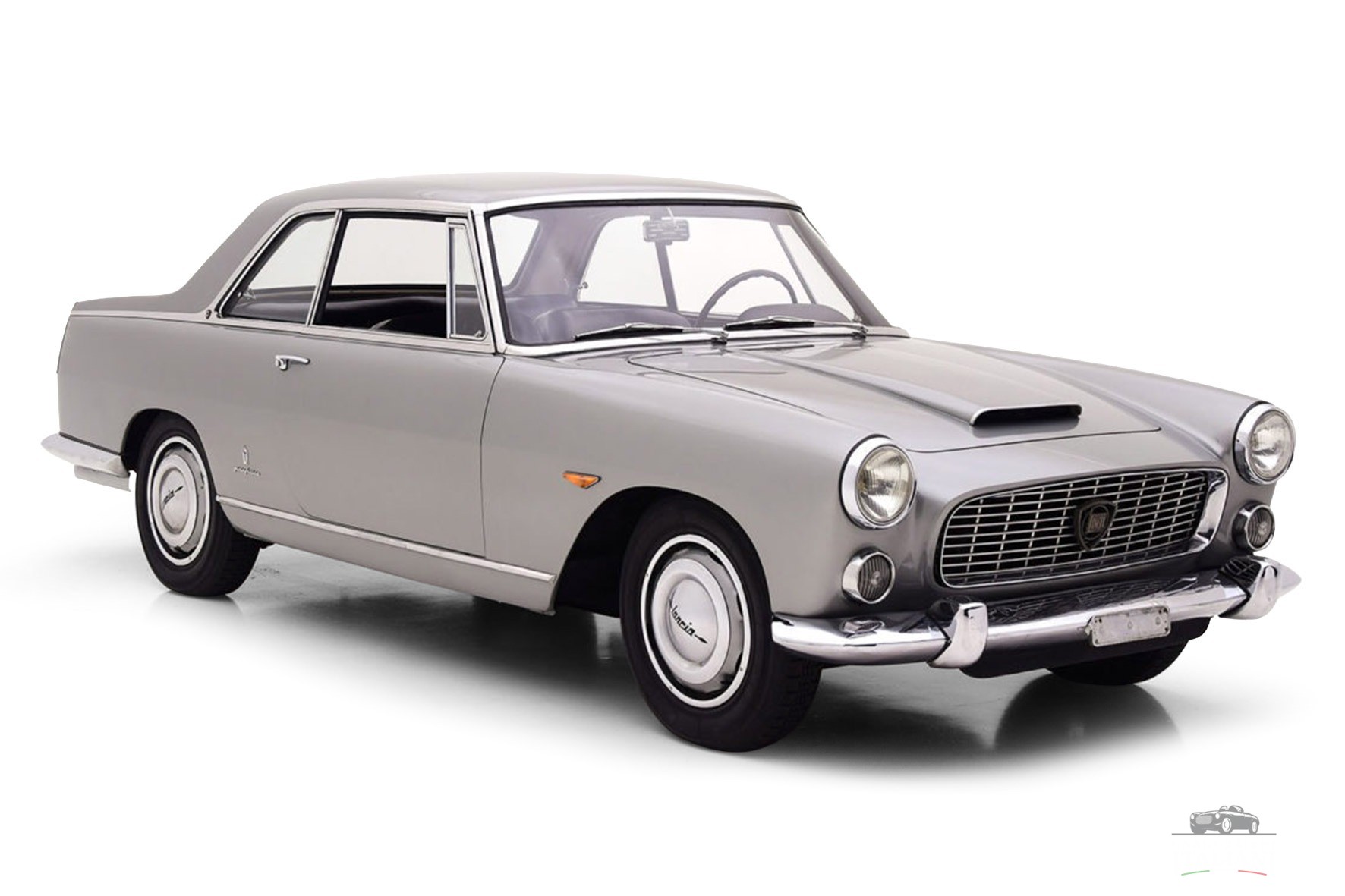
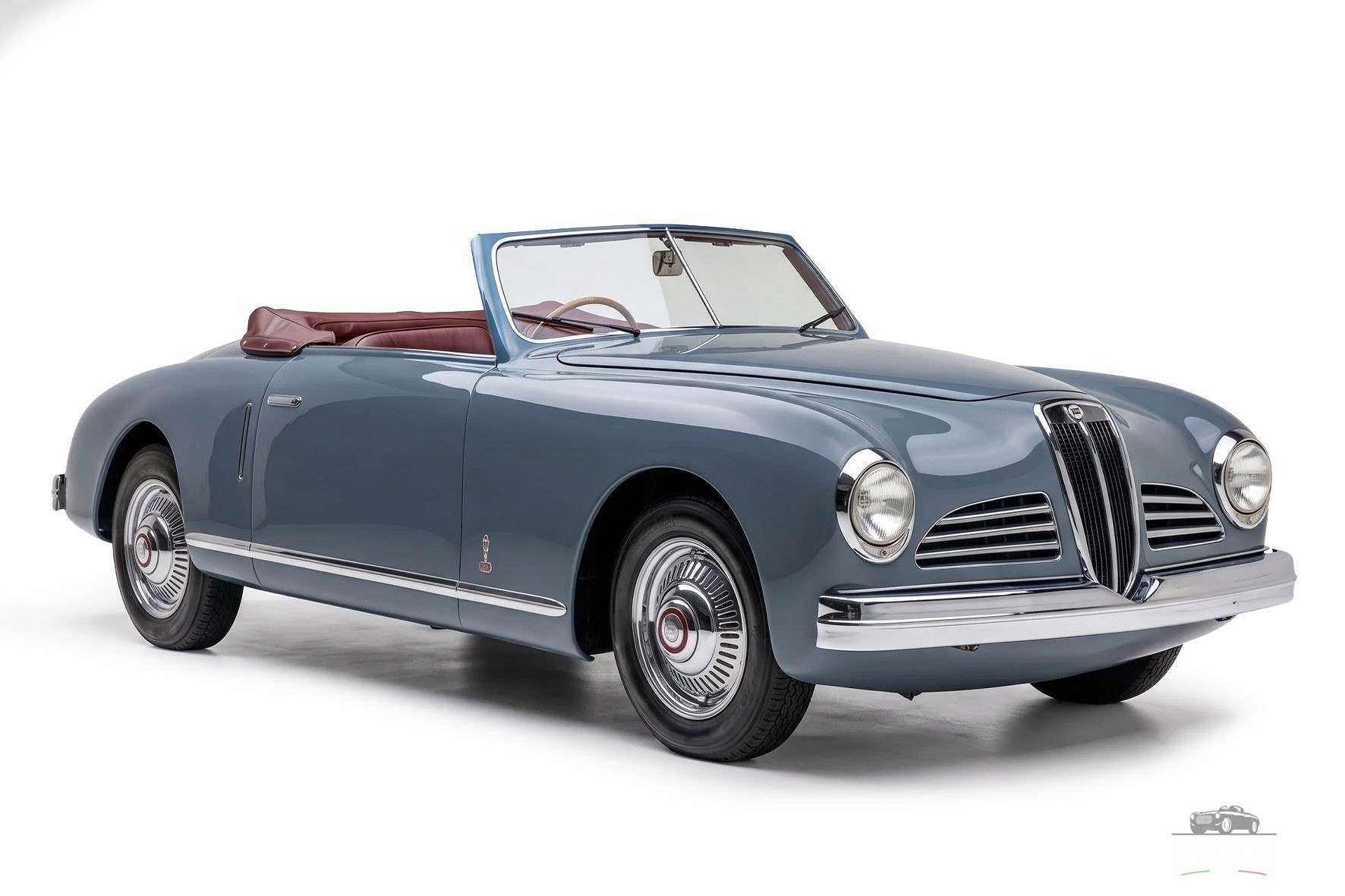
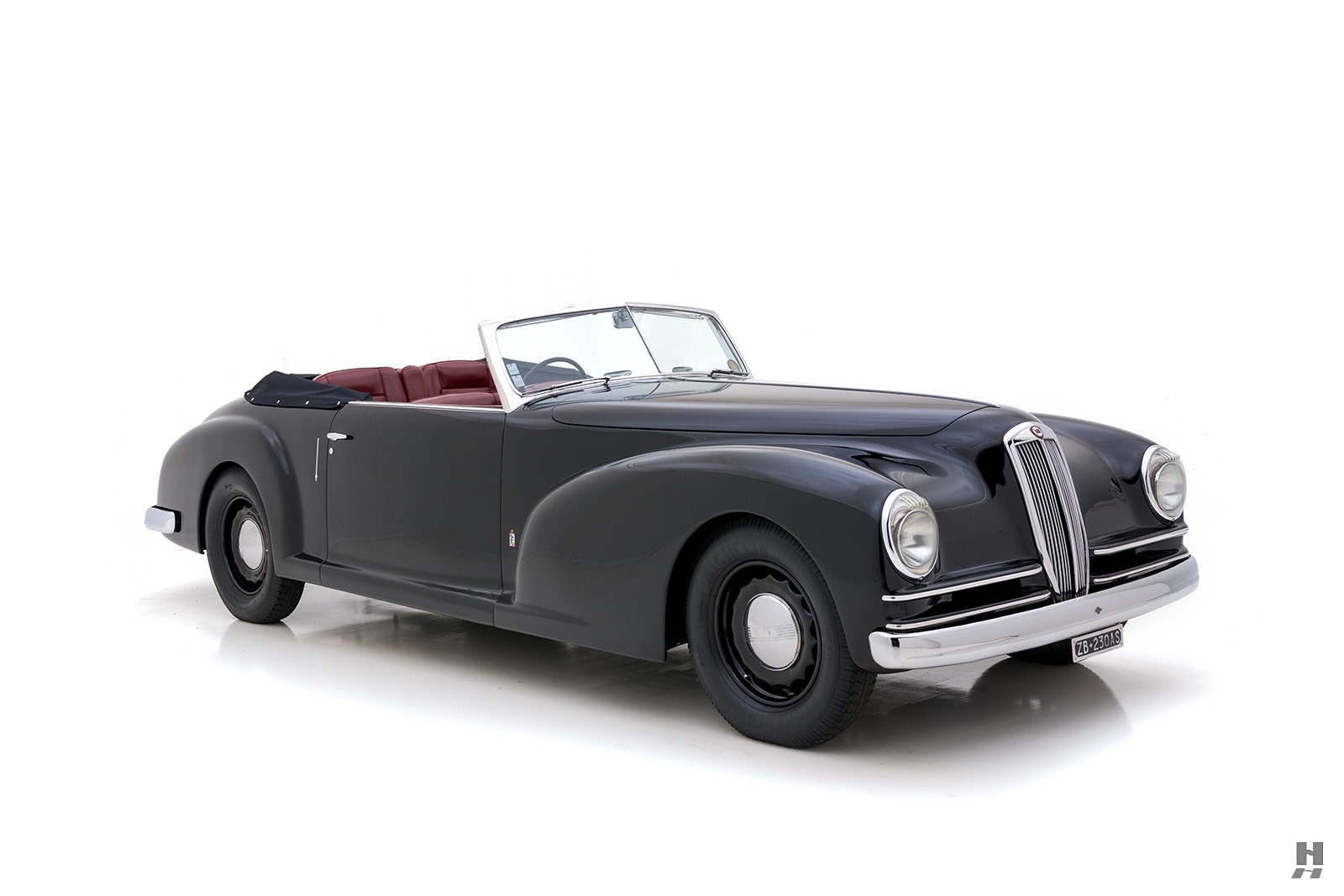
The Lancia Flaminia Coupé Pininfarina was officially born at the 15th Turin Motor Show (November 5-16, 1958), where exactly twelve months earlier its progenitor, the Florida II, had been exhibited. The general lines of this coupe, which joins the sedan in the company of its sportier sisters built by Touring and Zagato, traced those of the Florida, although here the two small rear doors were abolished and there were more points in common with the Flaminia sedan (lowered grille, different cut of the rear fenders, which here are much less sloping, addition of rostrums to the bumpers). Compared to the sedan, however, one notices, beyond the obvious reduction of the longitudinal footprint and the absence of the rear doors, the abandonment of the American-style wrap-around windshield and the less massive rear end in which the headliner connects in a slightly different way. The coupe is built on a chassis with a shortened wheelbase compared to that of the sedan (275 vs. 287 cm) while the engine delivers significantly more power (119 hp instead of 102) that pushes it up to 170 km/h, a limit reached by few “four-seaters” of its contemporaries. Thanks to the lighter weight, acceleration and pickup are also significantly brighter. Mechanically, appreciable is the fact that, after the very first examples, the Pininfarina Coupé, like its sportier Touring and Zagato sisters, would be equipped with disc brakes: in the end, very few Flaminia coupes would ride with traditional drum brakes. The production was almost artisanal: Pininfarina was ready to equip this quasi-fuoriserie, in case of customer demand, with off-the-shelf colors or accessories. It should immediately be said that this charming coupé judged by many to be one of the masterpieces of the master Pinin seemed to have all the credentials to establish itself on the market: and so it would, so much so that, of all the Flaminia cars, it would be the most successful and, despite its not indifferent price (3,100,000 Lire), it would be built, in its three series, in a total of 5284 examples, a good 30 percent more than the sedans. The first series of the Flaminia coupe began its life in January-February 1959, and as early as the Geneva Motor Show in early March it was displayed with disc brakes on the 4 wheels, although this technical feature was offered, like other optionals, for a price surcharge of 60,000 Lire. At the end of 1959, roughly coinciding with the traditional Turin salon event, mahogany-wrapped dashboard, electrically operated windows (by push-button from the driver’s seat), wooden steering wheel and leather upholstery were offered as standard or at extra charge. In 1960 Lancia Flaminia Coupé, like the sedan and its other sporty sisters, also had to adapt the headlights to the new highway code regulations; in the summer of that year the steering wheel was modified, where a hydraulic telescopic shock absorber intended to absorb even the small recoils arising from the vertical suspension movements of the wheels and thus to reduce the reactions of the steering wheel shocks. A curiosity: owners of Flaminias not yet equipped with this improvement can obtain it upon payment of a sum of 20,000 Lire. In November 1960, a Lancia Flaminia Coupé with an air conditioner was exhibited at the 17th Turin Motor Show: it was the first experiment of its kind put into operation on an Italian production car. The system, built by the company I.P.R.A. of Turin, consists of a compressor with thermostatic control of its electromagnetic clutch engagement, a condenser mounted in front of the radiator, and a unit under the dashboard (containing the evaporator, an expansion valve, a filter tank, and a fan). The air temperature inside the passenger compartment is adjustable by thermostat. It is not known whether this useful accessory was later actually fitted, from 1961, to any examples. More updates in 1961: added reverse lights and modified the transmission, where the shaft is no longer split but single. Although the Lancia Flaminia Coupé is in a market segment where the aspects that matter most are comfort, finish and luxury, the good performance given to it by the engine and road-holding mean that some examples, in the hands of private individuals sometimes assisted by the company, try their hand at competition, with results that are also noteworthy. It is worth noting that the design was used by Pininfarina for the Lancia Aurelia B24 Speciale Spider one-off, which is basically the open version of the Flaminia Coupé. Photo courtesy of Hyman Ltd.
02 / TECHNICAL IDENTITY
Specifications & construction
Production & construction
- Production
- 5236
- Production type
- Limited
Engine & performance
- Engine configuration
- V6
03 / DESIGN, BODY & SUPPLIERS
Design, body & suppliers
Design & manufacture
- Manufacturer · Documented
- Lancia
- Coachbuilder / Body Builder · Documented
- Pininfarina
Body form & construction
- Body style
- Coupé
04 / EVENTS & CHRONOLOGY
Events & chronology
40° Salone Internazionale dell'Automobile – Torino General · legacy_preserved
- Date
- 1958
- Chassis
- General
Preserved CI 1.0 relation. Evidence field: _yoast_wpseo_primary_events. No award inferred.
XII Rassegna Internazionale dell'Automobile – Pincio General · legacy_preserved
- Date
- 1960
- Chassis
- General
Preserved CI 1.0 relation. Evidence field: list_of_awards_0_events. No award inferred.
CHRONOLOGICAL RECORD
General chronology
Chronological history2 dated records
- Unassigned chassis · Event
40° Salone Internazionale dell'Automobile – Torino
- Unassigned chassis · Event
XII Rassegna Internazionale dell'Automobile – Pincio
08 / GALLERY
Photo gallery 8 photographs
Show 2 more photographs Show fewer photographs
09 / PERIOD ARCHIVE
Period photographs & advertising
The period archive gallery will show historical photographs, advertisements, brochures and press images once assets, provenance and usage rights have been recorded in the masterfile.

THE CONVERSATION
Comments 0
Share a memory, a period photograph or a documented detail about this car.