
THE VEHICLE AT A GLANCE
Model dossier
- Manufacturer
- Maserati
- Base model
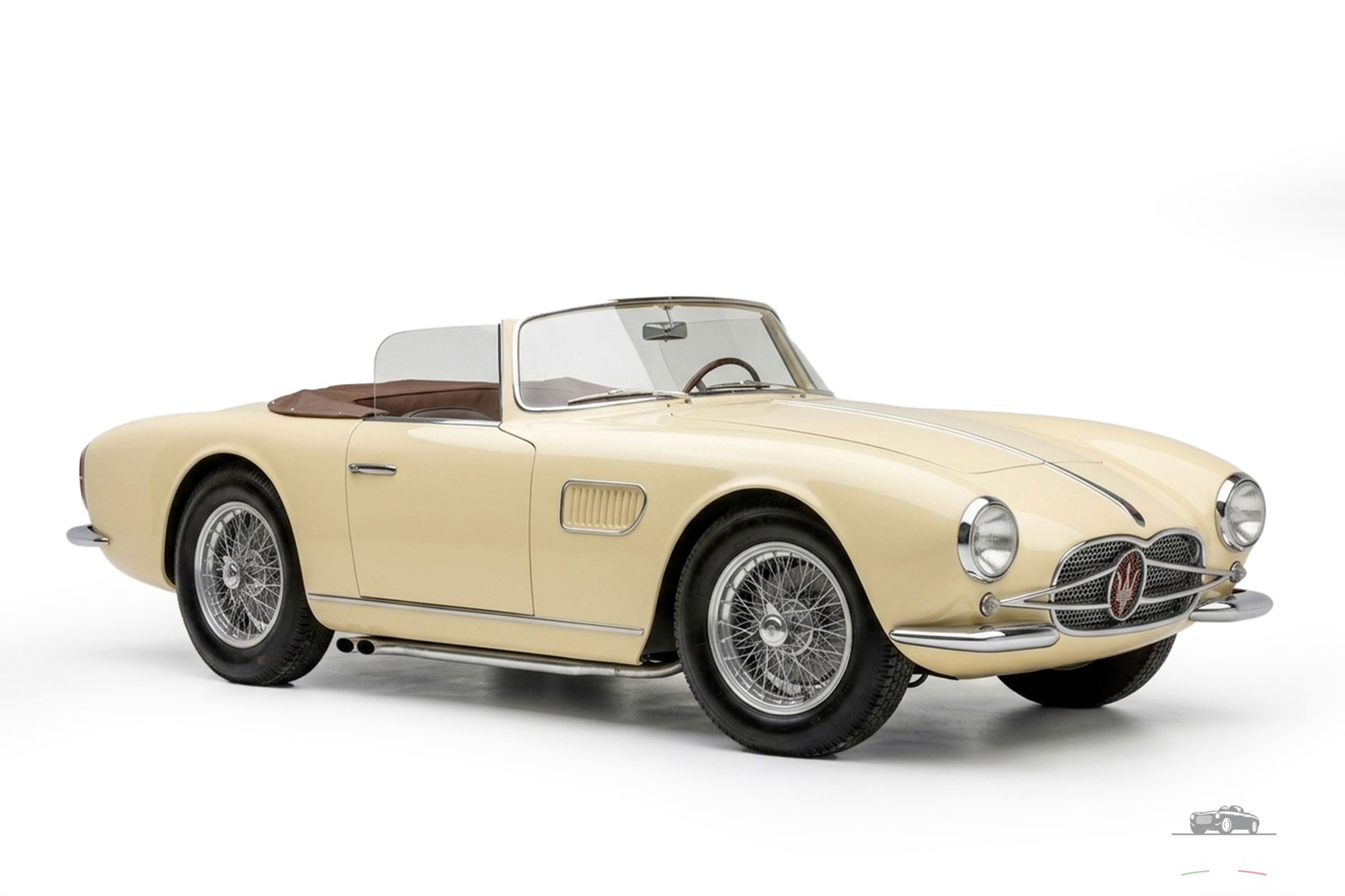
- 150 GT Spider
- Coachbuilt version
- One-off road prototype using extensively reused competition chassis lineage
- Coachbuilder
- Fantuzzi
- Production period
- 1957
- Body style
- Spider
- Designer
- Pietro Frua
THE PEOPLE BEHIND THE CAR
Coachbuilding, design & conversions
PRICE & SALES RECORD
Vehicle value
- Original price
- Not documented
- Latest recorded sale
- Not documented
01 / THE STORY
History & context
The Maserati 150 GT Spider was created with the need to replace the A6 family of road cars. Chief engineer Giulio Alfieri was responsible for the project, which was carried out under the sponsorship of Maserati’s racing department. The project aimed to create a sports car that could be sold in significant numbers to wealthy customers in competition with sports cars such as the Porsche 550 Spyder. The bodywork was entrusted to Medardo Fantuzzi of Carrozzeria Fantuzzi. Since Fantuzzi usually made designs for other manufacturers, the aluminum bodywork of the 150 GT Spider was inspired by the work of Pietro Frua, with elements also found on Zagato-bodied Maseratis. The car featured a soft top with roll-up side windows. Maserati 150 GT on display at the Enzo Ferrari Museum. The 150 GT remained in its prototype state in a single example and was never mass produced, as construction would have been too complex and expensive to bring profit to the company, which had already decided to focus on the 3500 GT project. The car remained unsold and was stored at the factory for a number of years. After the public presentation, Maserati decided to sell the 150 GT. The Maserati 150 GT Spider had a slightly depowered engine derived from the Maserati 150S. It was an inline four-cylinder with smaller carburetors and a lower compression ratio than the original engine, with 81 by 72 mm bore and stroke for a total displacement of 1484.1 cm³. Power output was 130 hp at 6800 rpm. The powerplant was fed by two Weber twin-body carburetors and had a DOHC configuration with two spark plugs per cylinder. The lubrication system was modified for easier road use with an oil pump from the 150S. The manual transmission had four gears all synchronized. The front suspension was independent with coil springs and hydraulic Houdaille shock absorbers. The rear suspension was of the rigid axle type with semi-elliptical leaf springs. The front brakes were hydraulic drum brakes from a Maserati 250F and the rear brakes from an A6GCS. In addition, the steering mechanism came from both the 250F and A6G/2000.
02 / TECHNICAL IDENTITY
Specifications & construction
Production & construction
- Production
- 1
- Production type
- One-off
Engine & performance
- Engine configuration
- Inline-4
Dimensions & accommodation
- Length
- 4,030 mm
- Width
- 1,480 mm
- Height
- 1,204 mm
Individual vehicle
- Documented chassis
- 03
- Documented chassis count
- 1
- Length
- 4030 mm
- Width
- 1480 mm
- Height
- 1204 mm
03 / DESIGN, BODY & SUPPLIERS
Design, body & suppliers
Design & manufacture
- Designer · Candidate
- Pietro Frua
- Manufacturer · Documented
- Maserati
- Coachbuilder / Body Builder · Documented
- Fantuzzi
Body form & construction
- Body style
- Spider
04 / EVENTS & CHRONOLOGY
Events & chronology
No events or documented awards are currently recorded for this vehicle.
08 / GALLERY
Photo gallery 8 photographs
Show 2 more photographs Show fewer photographs
09 / PERIOD ARCHIVE
Period photographs & advertising
The period archive gallery will show historical photographs, advertisements, brochures and press images once assets, provenance and usage rights have been recorded in the masterfile.


THE CONVERSATION
Comments 0
Share a memory, a period photograph or a documented detail about this car.