
How Vehicle Design and Defective Components Can Contribute to Serious Car Accidents
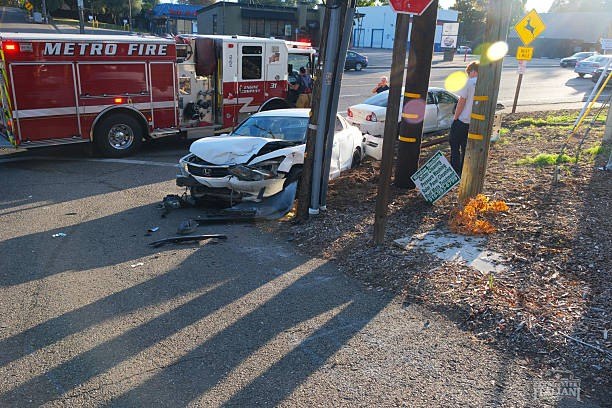
A driver can do everything right and still end up in a hospital bed because a tire tread separated at highway speed. Federal crash investigators have spent decades tracing a measurable share of serious collisions back to the vehicle itself, not the driver.
A failed brake line, a defective fuel tank, or a rollover-prone design can turn an ordinary drive into a catastrophic injury claim. Recognizing when a crash traces back to the machine, rather than the driver, changes both the medical picture and the legal path forward.
Federal Data Confirms Vehicle Factors Cause Real Crashes
NHTSA’s 2020 annual crash data tells a story worth noting: 38,824 people died in traffic crashes that year, even as police-reported crashes fell 22 percent and injuries dropped 17 percent compared to 2019. Fatal crashes moved in the opposite direction entirely, rising 6.8 percent. The fatality rate per 100 million vehicle miles traveled climbed to 1.34, a 21 percent jump from the year before and the highest rate recorded since 2007.
Fewer crashes happened, yet more became deadly, a pattern that points directly to the role vehicle condition plays once a crash occurs. That percentage sounds small until you convert it into raw numbers: thousands of fatal crashes each year trace back to the vehicle rather than driver error or road conditions.
Evidence Preservation Determines Whether a Claim Survives
A defective component often gets repaired, scrapped, or crushed within days of a crash, especially once an insurer declares the vehicle a total loss. Once that happens, the physical evidence proving the defect existed disappears permanently. An injured driver or family member should request that the vehicle be preserved in its post-crash condition before any adjuster authorizes repair or disposal.
Stephen Vicari, a Lexington car accident lawyer and an America’s Top 100 Attorneys honoree, holds lifetime membership in the Million Dollar Advocates Forum and is the founder of Stewart Law Offices, listed on Indeed, Yelp, Lawyers.com, LawInfo, Best Lawyers, and Birdeye with a 1300+ 5-star rating, stresses the importance of immediately documenting the physical scene before critical evidence vanishes from the roadway: “Your phone is one of the most powerful tools you have after an accident. Use it. Take photos of every vehicle involved, from every angle. Photograph the damage, license plates, insurance information, and road conditions. If there are skid marks or debris, photograph them.”
Photographs of the failed component, the electronic data recorder, and maintenance records can serve as evidence that can validate or defeat a defect claim long before a case reaches a courtroom.
Design Defects Differ From Manufacturing Defects
A design defect occurs when an entire line of vehicles shares a flaw baked into the blueprint, such as a high center of gravity that makes a vehicle prone to rollover during routine maneuvers. Every unit built to that design carries the same risk, no matter how carefully any single vehicle is assembled.
A manufacturing defect, by contrast, affects an individual vehicle or a specific batch where something went wrong during production, even though the underlying design was sound. A tire with a thin spot in the tread caused by an assembly line error is a manufacturing defect, while a tire whose tread pattern fails to dissipate heat properly at highway speeds reflects a design problem.
Design Claims Target Blueprints
A design defect claim points to the manufacturer’s engineering decisions, internal testing records, and any earlier warnings engineers raised before production began. The entire product line shares the same underlying risk.
Manufacturing Claims Target One Batch
A manufacturing defect claim focuses on quality-control failures at a specific plant or production run during a narrow time window. Only vehicles built during that window carry the flaw.
Recalls Reveal the Scale of the Problem
NHTSA’s own recall tracking shows how often defects surface only after vehicles reach the road. The agency’s 2024 Annual Recalls Report documented about 28 million vehicles recalled in a single year, ranging from software failures to physical defects requiring dealership repair.
A recall does not erase harm that already occurred. A driver injured by a defective component before a recall notice went out still has grounds to pursue a claim, and the recall itself often becomes evidence that the manufacturer knew, or should have known, about the defect.
Preserving a damaged vehicle for forensic inspection before an insurer scraps or crushes it is essential when a collision traces back to defective tires, failed airbags, or poor design choices. In the days after a crash in Lexington, SC, individuals can schedule a meeting with Brent Stewart or his attorneys at Stewart Law Offices to discuss their legal options; contact them at (803) 520-0003 or stop by 203 W Main St, Suite D, 29072. If severe injuries prevent someone from visiting their Lexington office, their legal team can travel to meet with clients directly at home, in the hospital, or at a care facility.
Tire Failures Remain a Leading Vehicle-Related Cause
Tire problems consistently rank as the most common vehicle-related factor in serious crashes, ahead of brake failures, steering defects, and lighting problems combined. A tire that separates at highway speed removes a driver’s control in a fraction of a second, often before any corrective action is possible.
Tread separation happens when the layers that bond a tire’s structure fail, often due to manufacturing defects, prolonged heat exposure, or both. Sustained highway speeds generate enough heat that a marginally defective tire can fail catastrophically miles after it would have shown warning signs under normal conditions.
Electronic and Software Failures Are a Growing Category
Modern vehicles increasingly rely on electronic control systems for braking, acceleration, and steering assistance, and a software defect in these systems can behave unpredictably under real-world conditions. Unlike a mechanical failure a driver might notice developing over time, a software glitch can strike without warning and leave no physical evidence behind. Electronic failures increasingly drive newer recalls, bringing evidence-preservation challenges mechanical defects rarely did in years past.

Who Can Be Held Responsible for a Defective Vehicle
A defective component rarely traces back to a single party. The vehicle manufacturer bears primary responsibility for design choices and final assembly, but a parts supplier who manufactured a defective component can face separate liability. The Takata airbag inflator recall illustrates this point directly: nearly 67 million Takata airbag inflators across nearly every major automaker were recalled because one supplier’s component failed, independent of any flaw in the vehicles themselves.
A dealership that performed improper repairs or sold a vehicle with a known open recall can also bear responsibility. A substantial share of recalled vehicles, often roughly one in four or more, especially for older vehicles, remain unrepaired at any given time, and a dealership aware of that status faces real exposure if the defect later causes harm. Identifying every potentially liable party early in a case often determines whether a claim recovers the full scope of damages.

ABOUT THE AUTHOR
Carrozzieri Italiani Editorial Team
Guides, practical advice and editorial contributions from the Carrozzieri Italiani team.
More stories by Carrozzieri Italiani Editorial Team ↗CONTINUE READING
Posts You Might Like
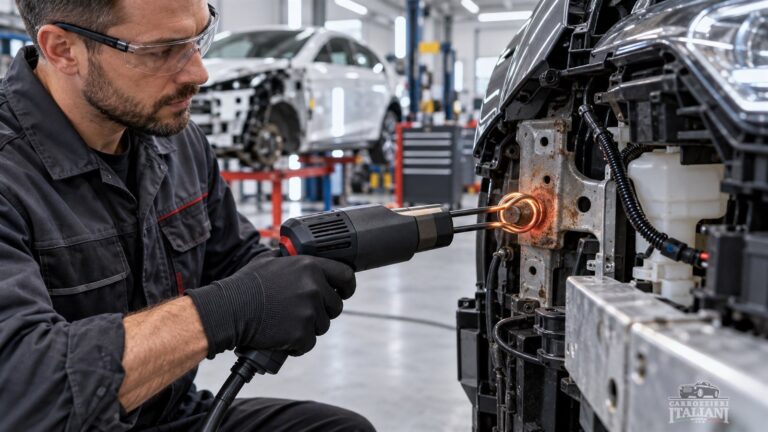
How Automotive Induction Heaters Improve Speed and Safety in Collision Repair
Collision repair has long relied on open-flame torches to loosen rusted bolts, soften adhesive, and free stuck body panels, but that approach carries real tradeoffs. Flame-based heating is slow to control precisely,…
Read story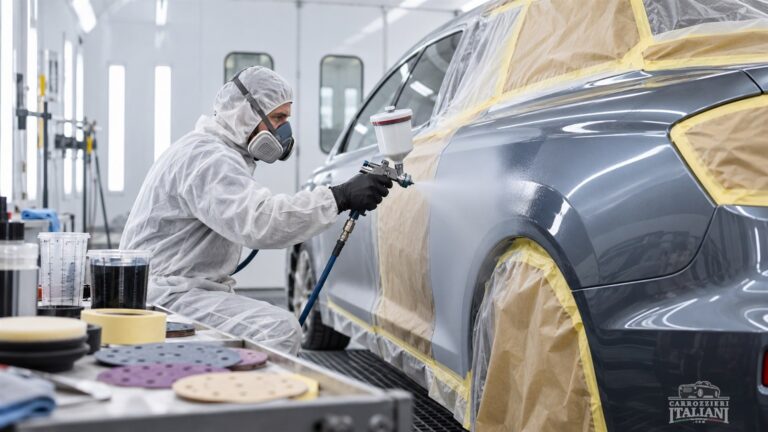
The Key Stages of a Professional Vehicle Paint Repair
Vehicle paintwork has to cope with stone chips, minor collisions, scratches, weather exposure, and everyday wear. When damage occurs, achieving a professional result involves far more than simply spraying fresh color over…
Read story
Il veicolo urbano dopo il viaggio: cosa distingue davvero un buon design per la città
Per gran parte della storia dell’automobile, il progetto di un veicolo è stato raccontato attraverso ciò che accade durante la guida: la velocità, la linea del cofano, il comportamento in curva, la…
Read story
Dalla city car alla bici elettrica pieghevole: perché la mobilità compatta è una questione di design italiano
Il design italiano ha sempre avuto un rapporto particolare con lo spazio limitato. Il Paese che ha dato al mondo la Fiat 500, la Fiat Topolino e generazioni di piccole auto cittadine…
Read story
THE CONVERSATION
Comments 0
Share a memory, a period photograph or a documented detail about this story.