
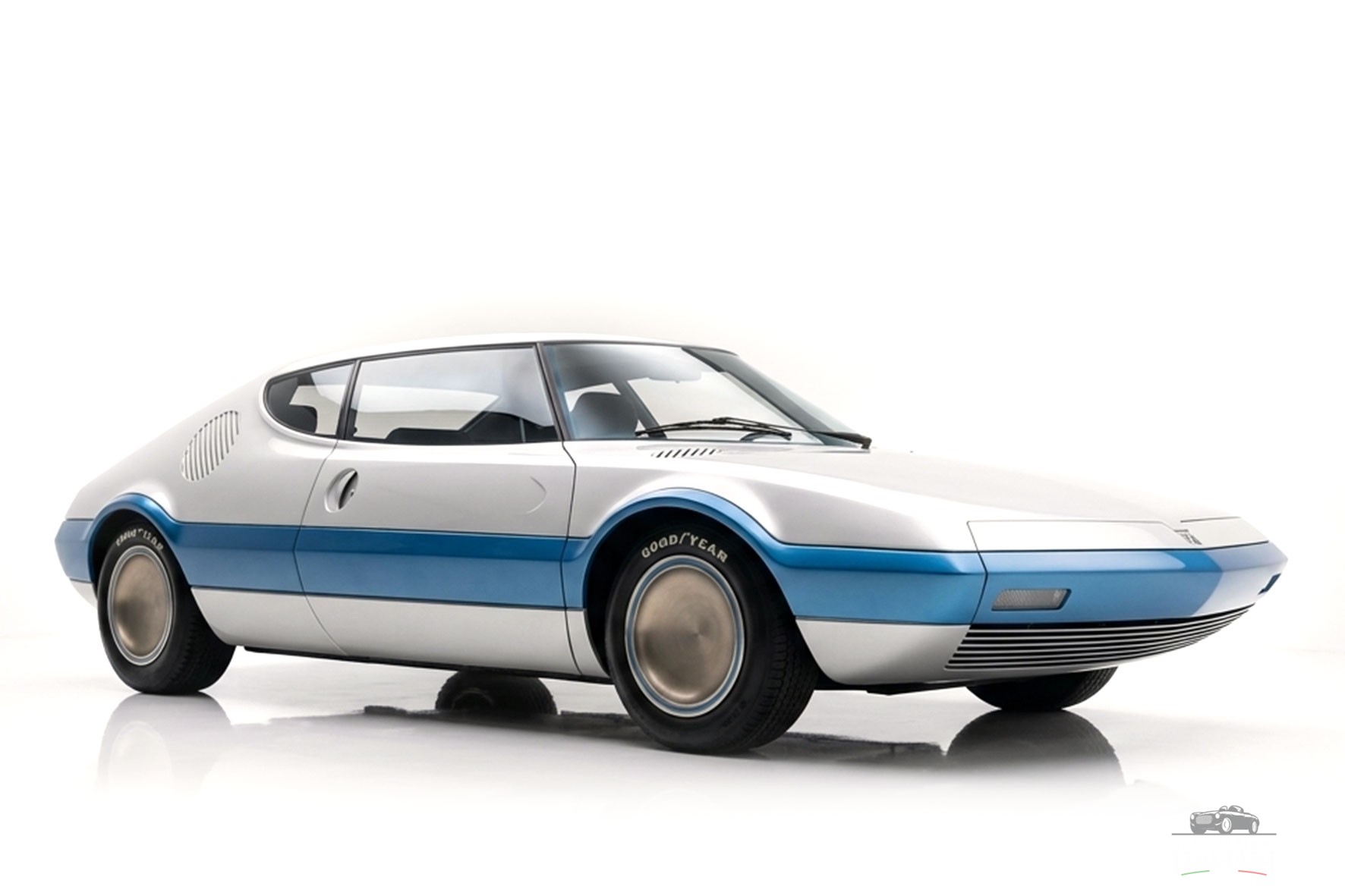
THE VEHICLE AT A GLANCE
Model dossier
- Production period
- 1973
- Body style
- Coupé
- Engine
- 2-rotor Wankel, rear-mid engine
- Type
- Concept
- Displacement
- 995 cc
- Power
- 115 hp
- Seats
- 4
THE PEOPLE BEHIND THE CAR
Coachbuilding, design & conversions


PRICE & SALES RECORD
Vehicle value
- Original price
- Not documented
- Latest recorded sale
- Not documented
01 / THE STORY
History & context
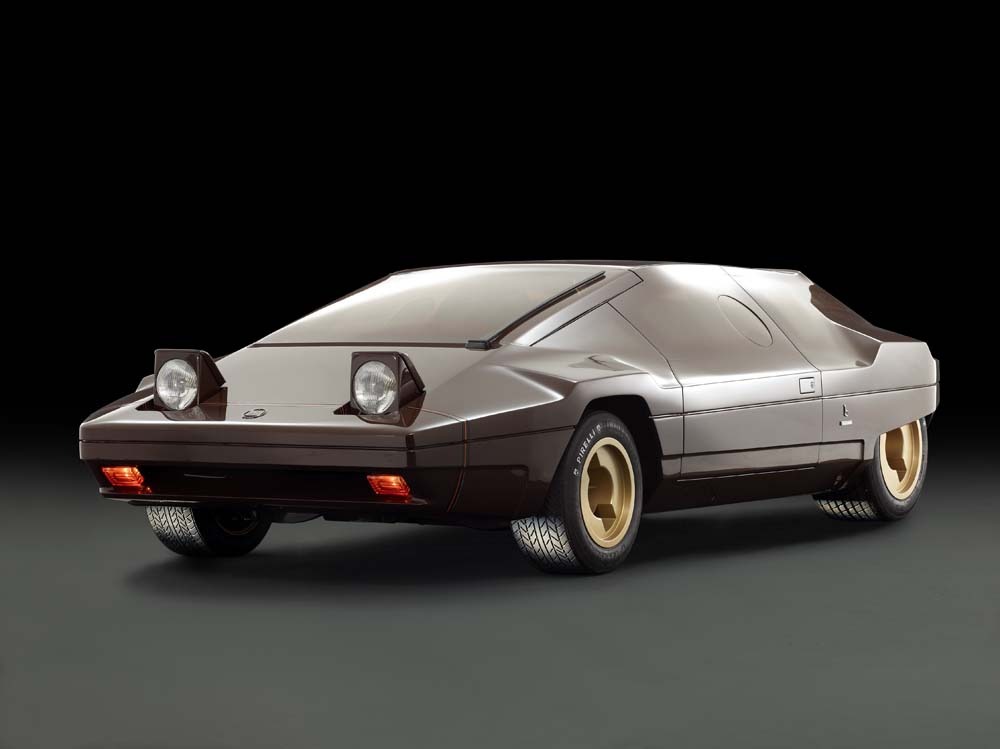
The NSU Trapeze was a groundbreaking concept car presented by Bertone at the 1973 Paris Motor Show. Designed to showcase Bertone’s expertise in innovative automotive design, the Trapeze featured a distinctive, futuristic style inspired by the Stratos. It was powered by the NSU RO80’s rotary piston engine, which was mounted centrally in the rear, a bold choice that allowed Bertone to explore new approaches to both engineering and design. This choice was influenced by the fact that the patent for the rotary piston engine was set to enter the public domain in 1972, sparking widespread enthusiasm among automakers, especially before the 1973 oil crisis shifted priorities. The project came at a time when Bertone was eager to continue its collaboration with Audi, following its work on the Audi 50. In an attempt to make its mark with Audi, Bertone chose to work with NSU—thus avoiding direct competition with Ital Design’s own coupé concept for Audi: The Asso di Picche. The Trapeze was intended to impress the German automotive giant with Bertone’s skills, while also positioning NSU as a contender for the American market with an appealing, image-boosting vehicle. The two front seats, set very close together, allowed the passengers in the back to stretch out their legs fully in the space created between the front seats and the door. Despite knowing that NSU’s future was uncertain, Bertone saw this as an opportunity to demonstrate innovation through design. Marcello Gandini, who led the project, embraced an avant-garde approach to the Trapeze’s layout. The rotary engine, positioned centrally, became the car’s focal point, with the cabin designed around it. The rear seats were separated on either side of the engine, and the front seats were positioned closer together to free up legroom. This trapezoidal arrangement, with its innovative use of space, gave the car its name. Despite its compact length of 4.03 meters (similar to the VW-Porsche 914), the Trapeze was 18 cm wider, emphasizing its bold proportions and unique design. The Trapeze also made significant strides in safety design. Bertone’s team ensured the vehicle met the new American safety standards that came into effect in 1972. The space around the front seats provided a protective zone in the event of a side impact, while the car’s exterior featured a continuous bumper design, wrapping around the entire vehicle for enhanced safety. Gandini’s strong graphic sense gave the Trapeze a clean, dynamic aesthetic that combined style with function. However, the timing of the Trapeze’s debut proved unfortunate. Just two days after its presentation, the Yom Kippur War erupted, triggering the OPEC oil embargo and causing a sharp rise in oil prices. This geopolitical shift spelled the end for the Wankel engine, which was known for its fuel inefficiency, rendering the Trapeze’s technological innovation unsustainable. The Trapeze’s fate was also tied to broader shifts within the Volkswagen Group. Amid financial struggles, VW focused on consolidating its investments, and NSU, once a promising brand, found itself on the chopping block. With the retirement of NSU’s design director, Ludwig Kraus, and the appointment of Ferdinand Piëch, who preferred working with Ital Design’s Giugiaro, NSU’s future was in jeopardy. The Trapeze, despite its bold design and engineering, never saw production. Though the Trapeze was a visionary concept, it was ultimately overshadowed by the oil crisis and the shifting priorities within the automotive industry. Today, the Trapeze stands as a testament to Bertone’s ability to push the boundaries of automotive design, blending advanced technology with cutting-edge style.
IN THE ARCHIVE
Related people
IN THE ARCHIVE
Coachbuilders & design studios
02 / TECHNICAL IDENTITY
Specifications & construction
Production & construction
- Production type
- Concept
- Mechanical platform
- NSU Ro 80 mechanical basis
Engine & performance
- Engine configuration
- 2-rotor Wankel, rear-mid engine
- Displacement
- 995 cc
- Power (hp)
- 115 hp
- Torque
- 158 Nm
- Drive
- Rear-wheel drive
- Specification notes
- ASI Bertone documents Trapeze on NSU Ro 80 mechanical basis with the rotary engine mounted centrally between the rear seats. Published technical accounts give the two-rotor 2×497.5 cc Wankel, 115 hp and 158 Nm, rear-wheel drive and four-seat trapezoidal layout. Legacy body dimensions are not promoted because sources conflict on exact length.
Dimensions & accommodation
- Length
- 4,008 mm
- Width
- 1,830 mm
- Height
- 1,100 mm
- Seats
- 4
Design & manufacture
- Coachbuilder / Body Builder · Documented
- Bertone
- Designer · Documented
- Marcello Gandini
- Manufacturer · Documented
- NSU
04 / INDIVIDUAL HISTORY
Chassis & provenance
Ownership & provenance
- Ownership & history · Legacy attribution
- Car Collection
06 / EVENTS & AWARDS
Events & awards
Paris General · legacy_preserved
- Date
- 1973
- Chassis
- General
Preserved CI 1.0 relation. Evidence field: _yoast_wpseo_primary_events. No award inferred.
07 / THE VEHICLE IN DETAIL
Photo gallery 6 photographs
08 / FROM THE ARCHIVE
Archive
References held in the vehicle dossier. Their inclusion does not establish that every historical claim has been independently verified.
| Reference | Source type |
|---|---|
| ASI — Collezione ASI Bertone, NSU Trapèze asifed.it | Institutional collection reference |
| Bertone Public Relations press release 7/73 — Trapeze www.jc43.fr | Period press release reproduction |
THE CONVERSATION
Comments 0
Share a memory, a period photograph or a documented detail about this car.