
When Volkswagen Put a W12 Behind the Seats and Went Record Hunting
For 24 hours, the black Volkswagen kept circling Nardò. It stopped for fuel, tyres and drivers, then returned to the banking and accelerated beyond 320 km/h once more. The engine sat immediately behind the cockpit, its twelve cylinders working close to full load as kilometre followed kilometre disappeared beneath the wheels.
When the run ended on 24 February 2002, the W12 had covered 7,740.576 kilometres at an average speed of 322.891 km/h. That figure included every fuel stop, tyre change, driver change and intervention in the pits. This was not a single maximum-speed pass followed by hours of cautious circulation. Volkswagen had kept an experimental car travelling at a pace most supercars could sustain only briefly, collecting twelve international records in the process.
Then the W12 returned to Volkswagen’s collection and never reached production.
It is often described as a supercar that almost made it to the showroom, or as another ambitious concept abandoned when commercial reality intervened. Neither explanation quite fits. The W12 was not developed like a conventional production proposal. There was no established market waiting for it, no declared sales target and no obvious place for a mid-engined twelve-cylinder car beside the Polo, Golf and Passat.
Ferdinand Piëch wanted something different. Volkswagen was developing a compact twelve-cylinder engine, and he wanted to prove that it could fit inside a low mid-engined car, work with four-wheel drive and survive loads far beyond anything it would encounter in a luxury saloon. A conventional development mule could have answered some of those questions in private. Piëch chose a supercar because it would answer them in public.
The W12 was not a failed production programme, but a working experiment with upward-opening doors, number plates and a Volkswagen badge on its nose.
From the Scighera to Volkswagen
The immediate story began at the 1997 Geneva Motor Show, where Italdesign presented the Alfa Romeo Scighera. Designed by Fabrizio Giugiaro, it was a low, four-wheel-drive coupé built around a twin-turbocharged Alfa Romeo V6, with a glassy cockpit pushed forward between broad wheelarches and the mechanical mass gathered behind the occupants.
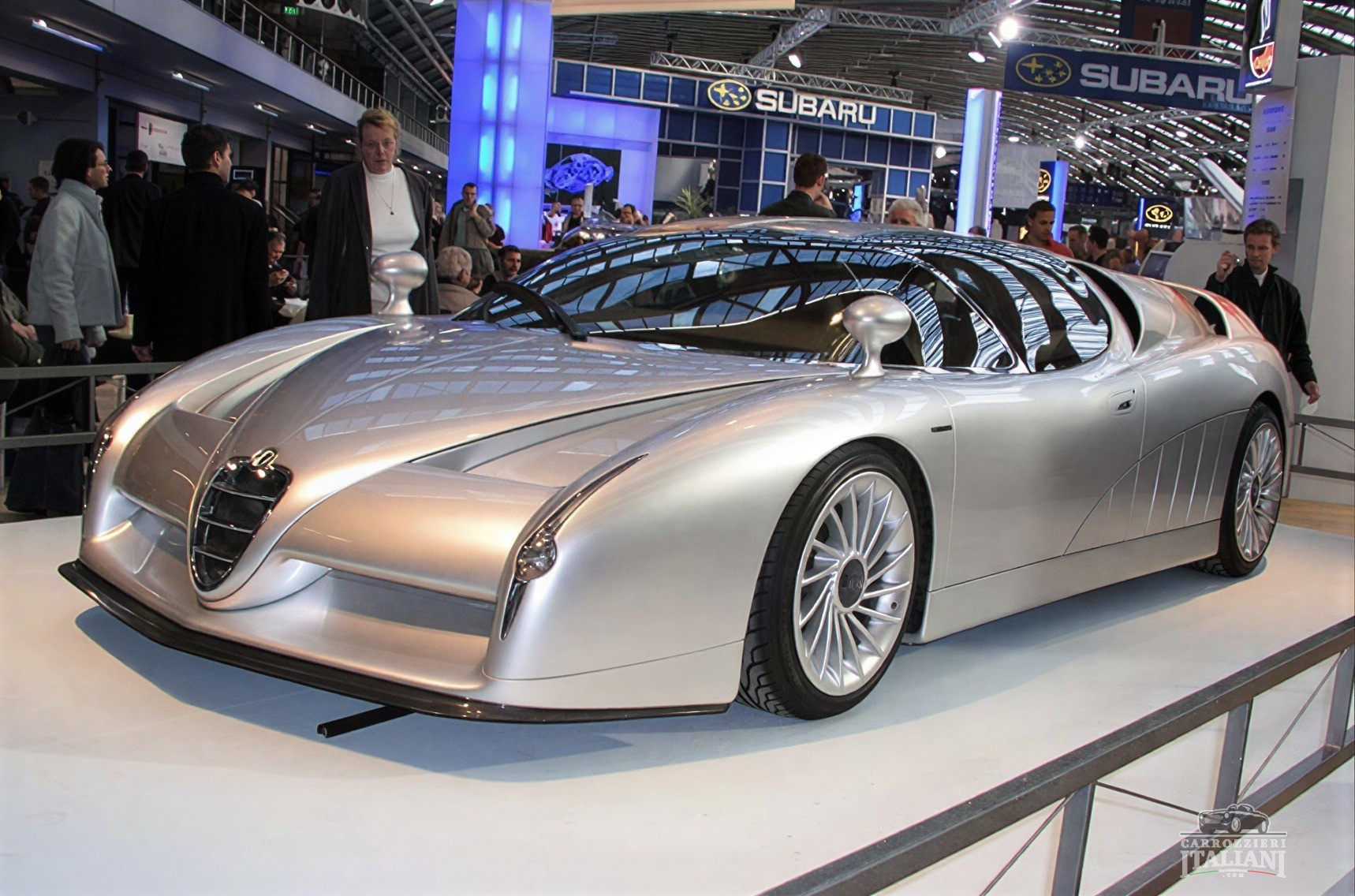
By then, Fabrizio had taken on an increasingly important creative role within Italdesign. The Scighera was more muscular and theatrical than the restrained production cars for which the company was best known, yet its proportions remained clearly dictated by the machinery beneath them.
Ferdinand Piëch saw the car in Geneva and understood that Italdesign could give physical form to another unusual powertrain. Volkswagen had a new engine under development, and his first comment to Fabrizio was apparently very simple: Volkswagen also had an interesting engine.
That engine was the W12.
Fabrizio later remembered the broader programme as having begun around 1995, when Volkswagen was not yet perceived as a premium manufacturer. In his deliberately blunt assessment, the company stood “behind Fiat” in the European brand hierarchy. Piëch wanted to change that position through engineering rather than advertising. Volkswagen had to demonstrate that it could operate at the highest technical level, first as a premium manufacturer and then as a company capable of producing a genuine supercar. With the W12, the argument moved almost into hypercar territory.
The specific brief arrived towards the end of April 1997. Piëch wanted a low, mid-engined Volkswagen with the presence of a racing car, powered by the new twelve-cylinder engine and equipped with a six-speed transmission and Volkswagen’s Syncro four-wheel-drive system. It also had to be fully functional.
🔗 Read more: Giorgetto Giugiaro: Car Designer of the Century
That final requirement mattered. The 1990s produced no shortage of motor-show cars that promised extraordinary performance while concealing unfinished structures or empty engine bays. Piëch had little interest in that kind of theatre. The W12 could be dramatic, but the drama had to rest on real engineering.
Italdesign was therefore asked to do far more than style an exterior shell. The company had to package the engine and transmission, resolve the structure, complete the interior and deliver a running prototype for the Tokyo Motor Show later that year. With the final brief arriving in late April, only a few months remained to turn the idea into a complete car.
Fabrizio later joked that the programme cost the team its summer holidays. A full-size model had to be completed, the mechanical installation engineered and the glass, doors, cooling system, suspension and cabin made to work together. The result also had to appear sufficiently finished to stand beneath the lights of an international motor show.
Piëch followed the development closely. He inspected the model, checked the installation of the engine and transmission and reviewed the cabin as the project progressed. This was not a chairman approving a design from a few presentation sketches. He wanted to see whether the complete machine was becoming what he had imagined.
Volkswagen did not need a supercar. Piëch was more interested in proving that Volkswagen could build one.
Fabrizio Giugiaro’s Volkswagen
Fabrizio Giugiaro led the design from Piëch’s initial brief to the finished prototype. The W12 belongs to his generation and to his interpretation of how a Volkswagen might be stretched far beyond the limits of the company’s normal range.
The car was lower, wider and more physical than the restrained production designs traditionally associated with Italdesign. Its surfaces swelled around the wheels, tightened over the cockpit and opened around the engine and cooling system. It was not minimal, but neither was it arbitrary. The body appeared to have grown around the mechanical package rather than having been drawn independently and forced over it afterwards.
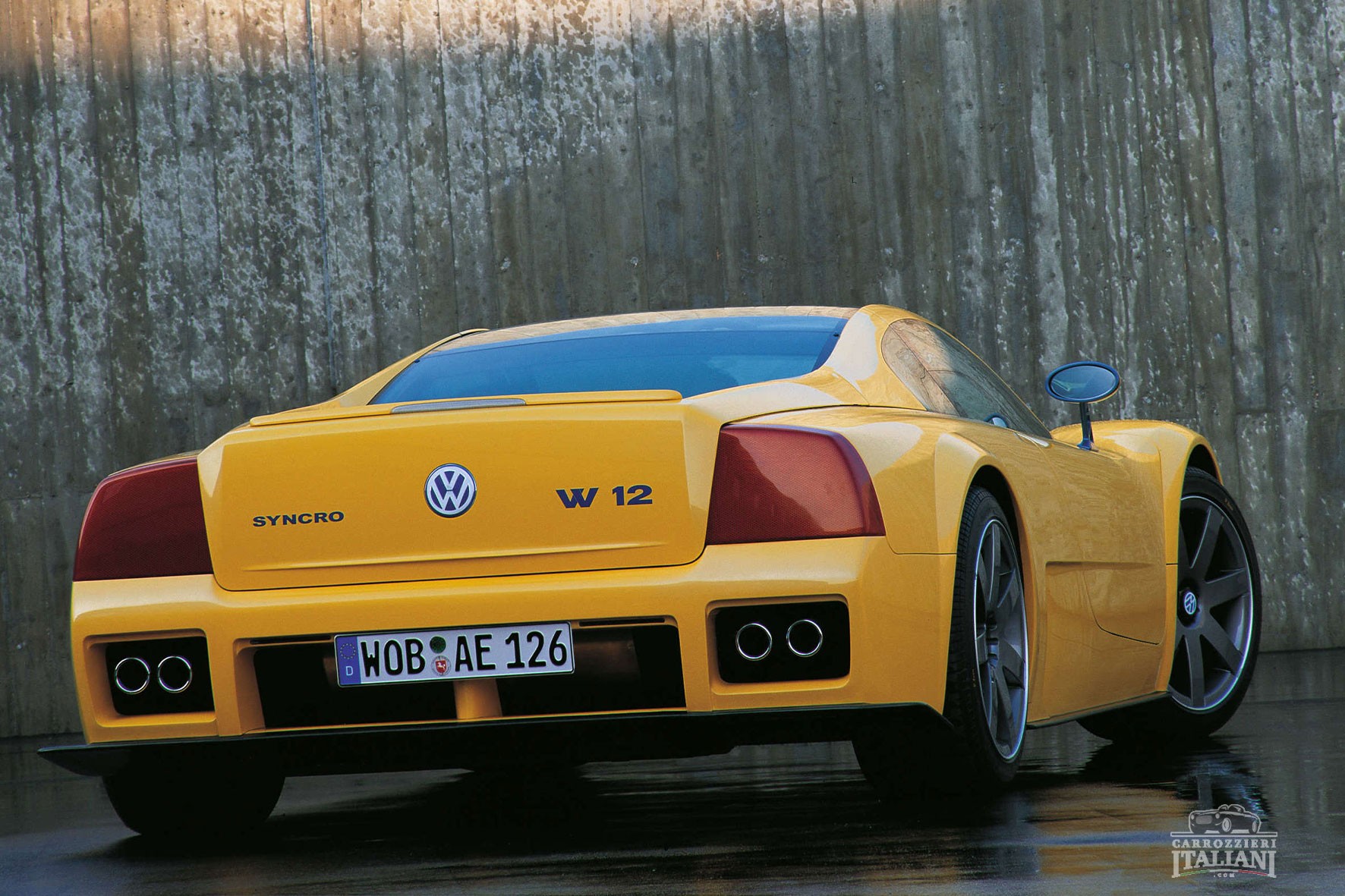
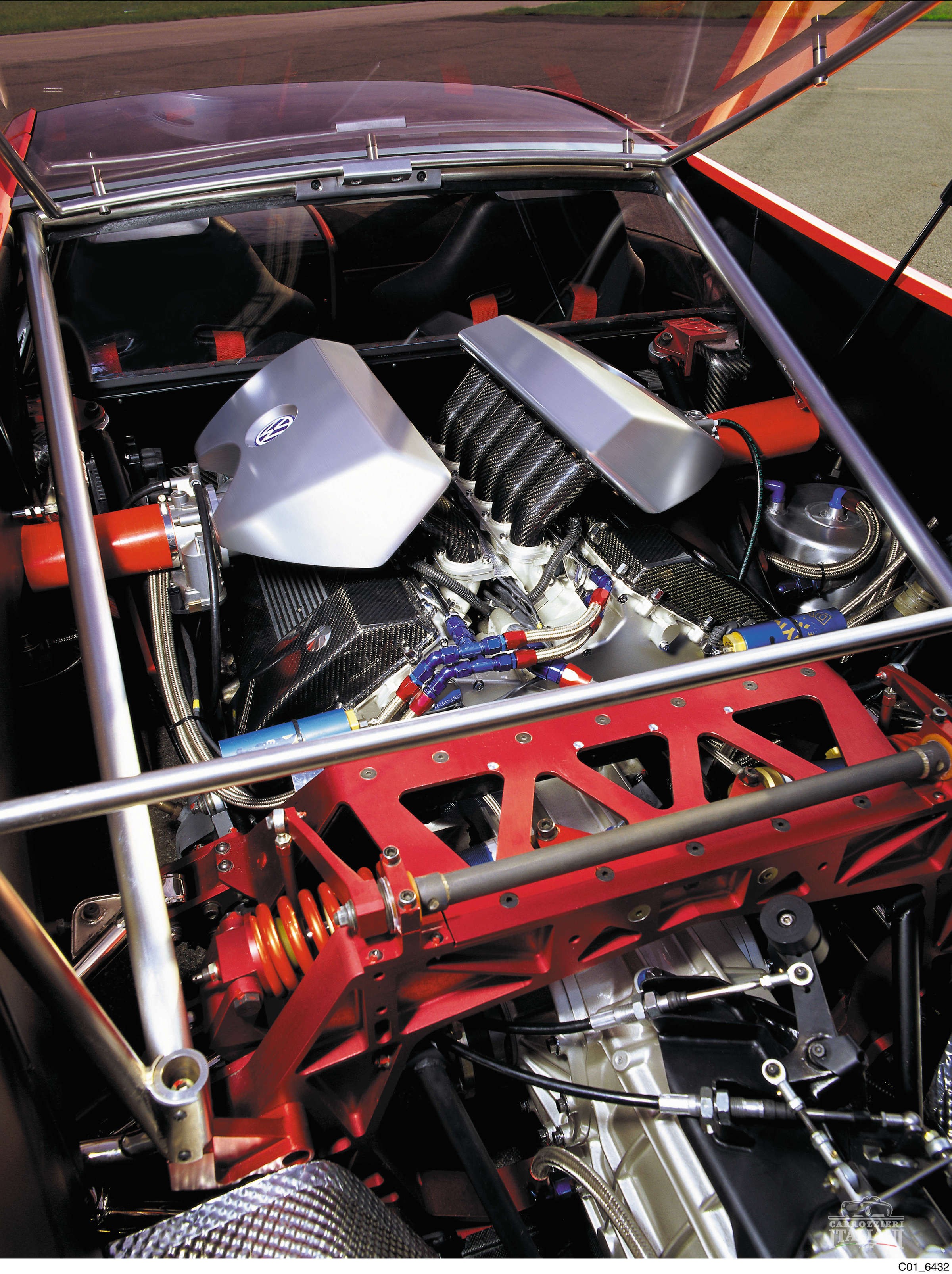
The project began with the engine. The dimensions of the W12, transmission, four-wheel-drive hardware and cooling equipment established the basic proportions before the exterior was resolved. The body then became a casing around those components, with the twelve-cylinder engine left visible beneath a large glazed cover behind the cabin.
This gave the W12 a density that many contemporary show cars lacked. The rear body looked substantial because it contained something substantial. The intakes were deep because the engine required air, and the cockpit was pushed forward because twelve cylinders and a four-wheel-drive system occupied the space behind i
It looked full because it was full.
Fabrizio remains particularly insistent on the fact that Italdesign’s prototypes were working cars rather than static styling objects. “They all work,” he said when discussing the W12. One particular prototype, he recalled, ran only at Nardò, where he drove it personally for filming. Another early car was used as the opening course vehicle at the historic Cesana–Sestriere hill climb.
These were not fragile sculptures transported beneath covers and pushed into position once the public had left the hall. They could be started, driven and used, and in the case of the W12, used very hard indeed.
Volkswagen Details in a Supercar Body
Making the W12 look exotic was never the difficult part. A mid-engined two-seater measuring more than two metres across, with a twelve-cylinder engine displayed beneath glass, already possessed enough visual drama. The real challenge was making such a car look unmistakably like a Volkswagen.
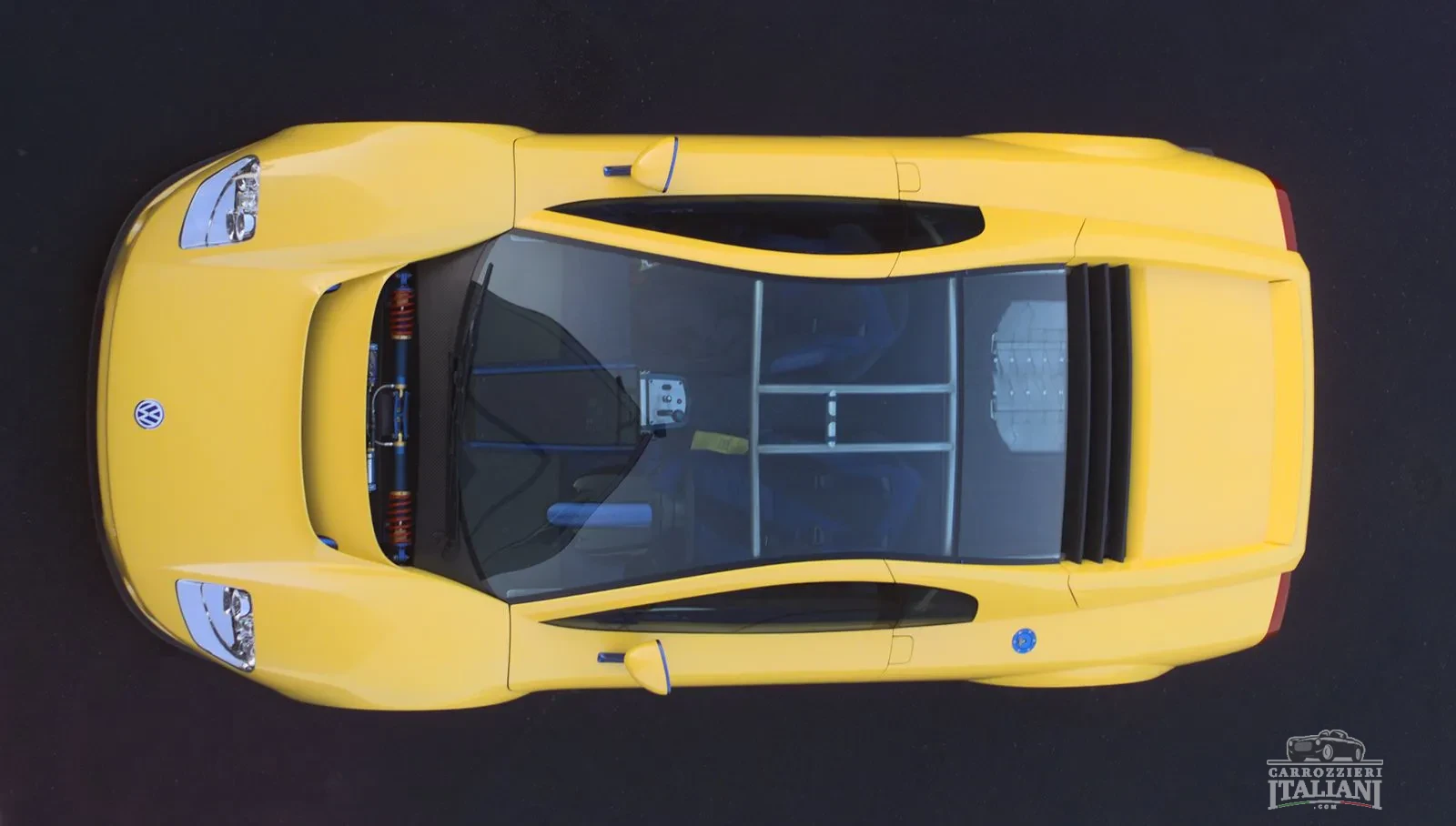
There was no historic Volkswagen supercar to quote. The company had no celebrated twelve-cylinder road racer, no mid-engined icon and no established collection of exotic design cues that could be transferred onto the new car. Fabrizio instead worked with ordinary Volkswagen elements and stretched them into unfamiliar territory.
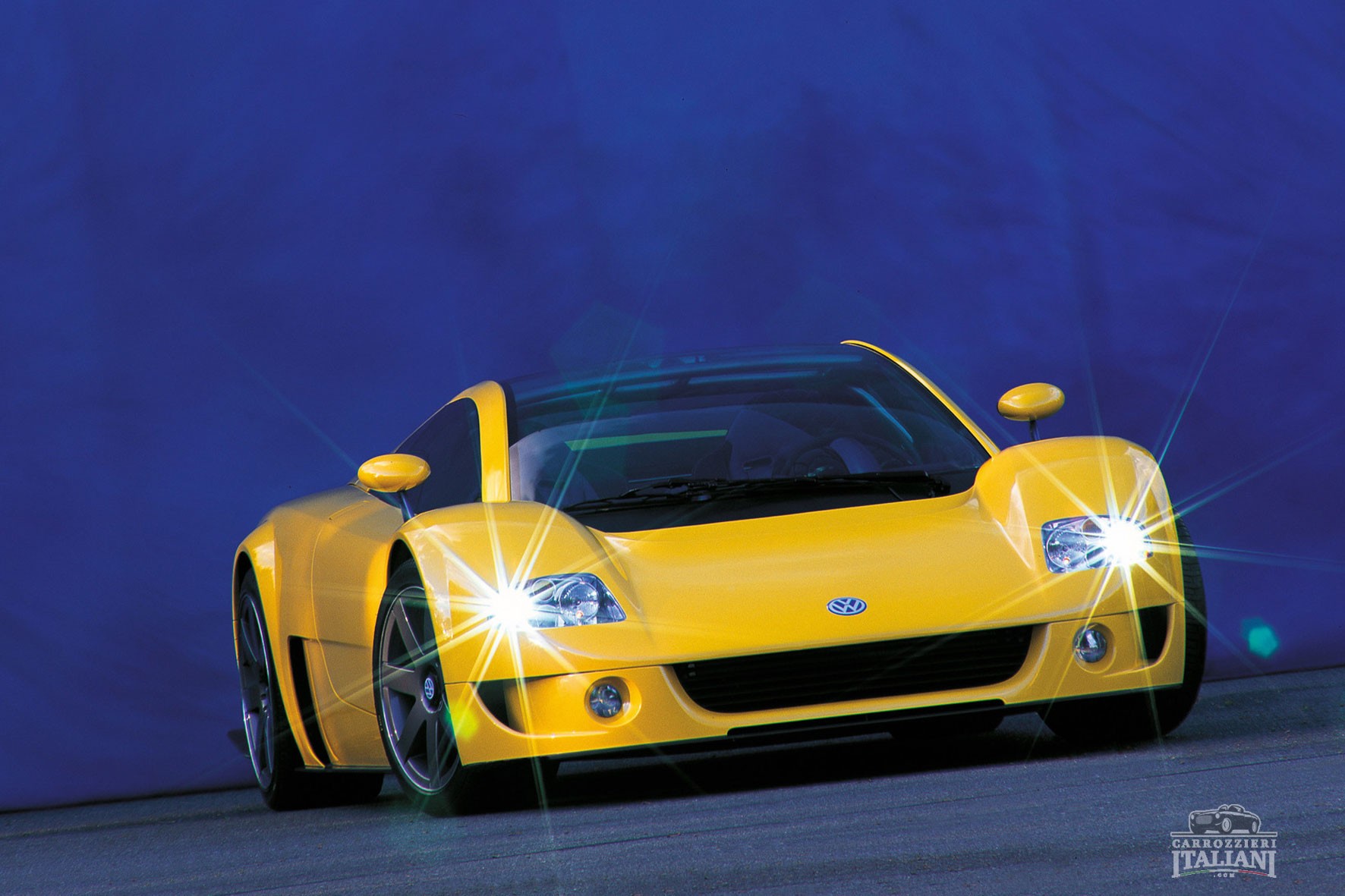
The first car used headlights derived from those of the Golf, reshaped to fit its extremely low nose. The narrow grille followed Volkswagen’s treatment of the period rather than inventing a separate identity for the supercar. The continuous arch over the cabin recalled the New Beetle, while the shape of the rear side window and the treatment of the tail referred to the contemporary Passat.
The same thinking continued inside. Even the instrument cluster came from the Volkswagen Lupo, placing one of the company’s most familiar pieces of hardware inside a cockpit wrapped around a mid-mounted twelve-cylinder engine. It was an almost comic contrast, but also a revealing one: the W12 did not try to disguise its origins or behave like a supercar from another manufacturer.
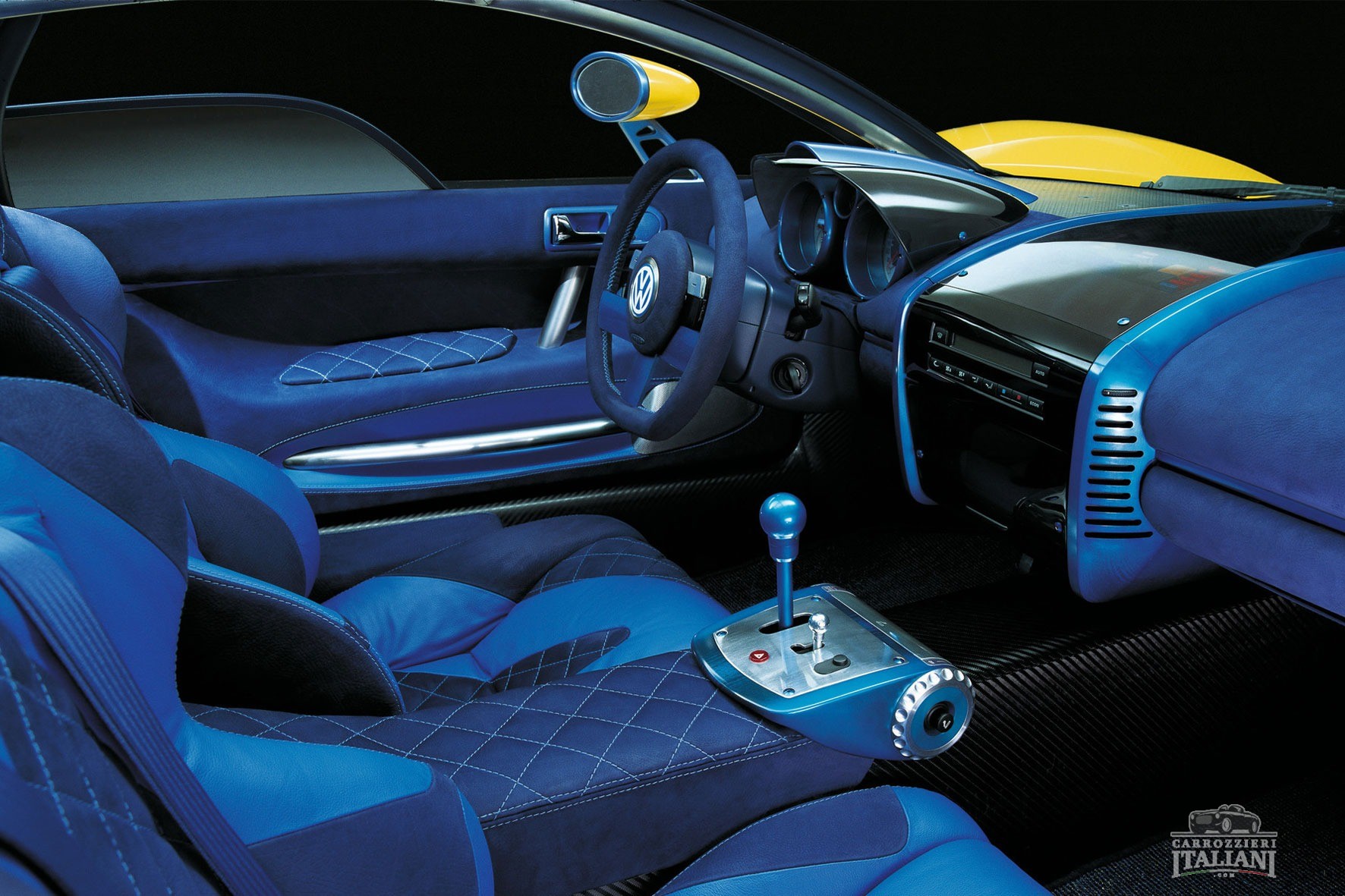
None of these references dominated the design. Together, however, they gave the car a recognisable family character. Fabrizio described the result as a Volkswagen “pushed to the limit,” which is more accurate than calling it a Volkswagen interpretation of an established supercar formula.
The W12 did not borrow the identity of a Ferrari or Lamborghini and soften it with a few corporate details. It began with Volkswagen’s own visual vocabulary and carried it across an entirely different mechanical package. A large corporate grille would have looked absurd, while turning the car into a flattened Golf would have been worse. Italdesign avoided both mistakes.
The badge consequently appears natural rather than apologetic. The design contains enough familiar references to make the identity credible, but not so many that it becomes an exercise in branding. The proportions, width and mechanical layout are allowed to do most of the work.
The W12 Syncro and Roadster
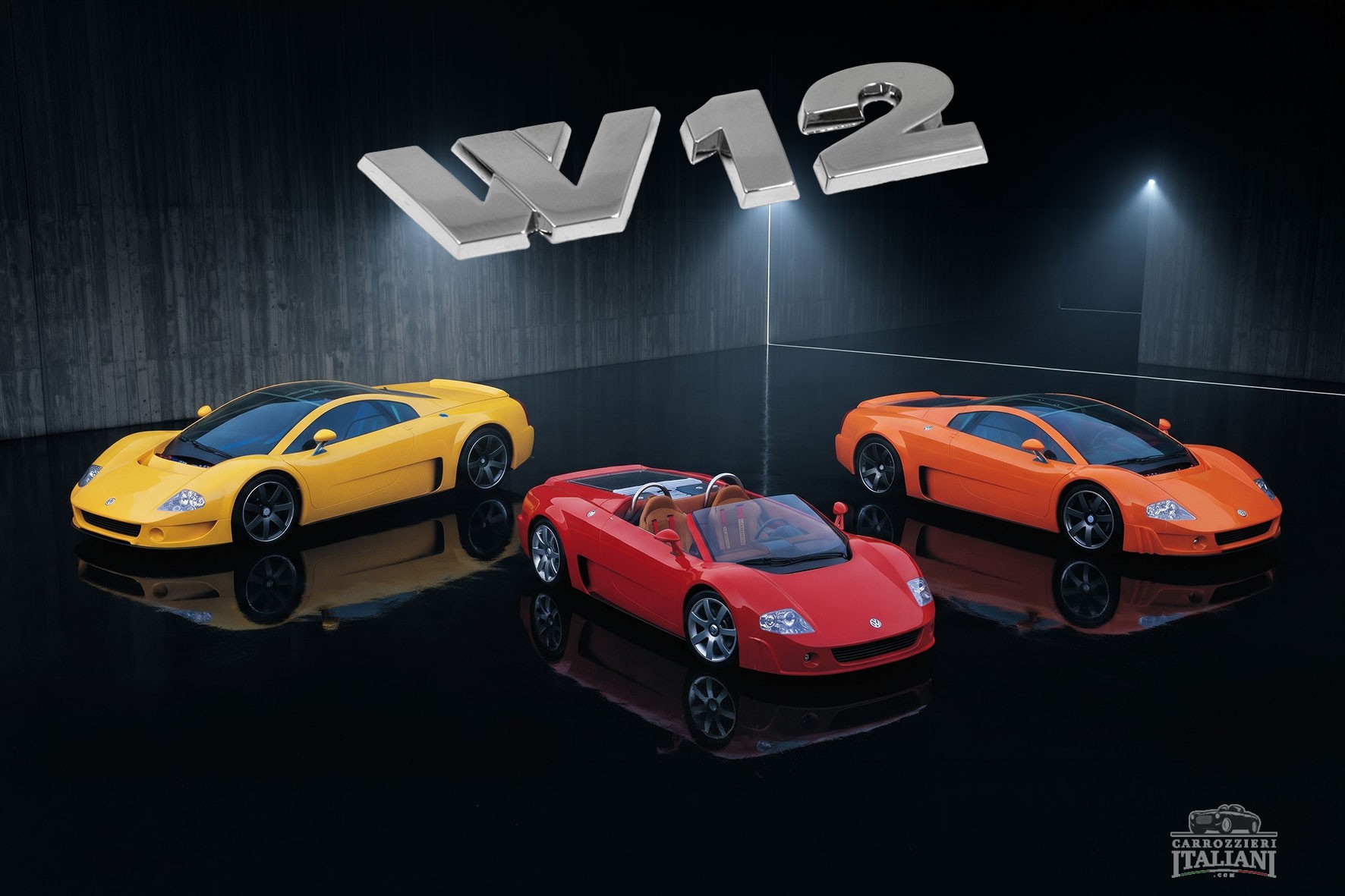
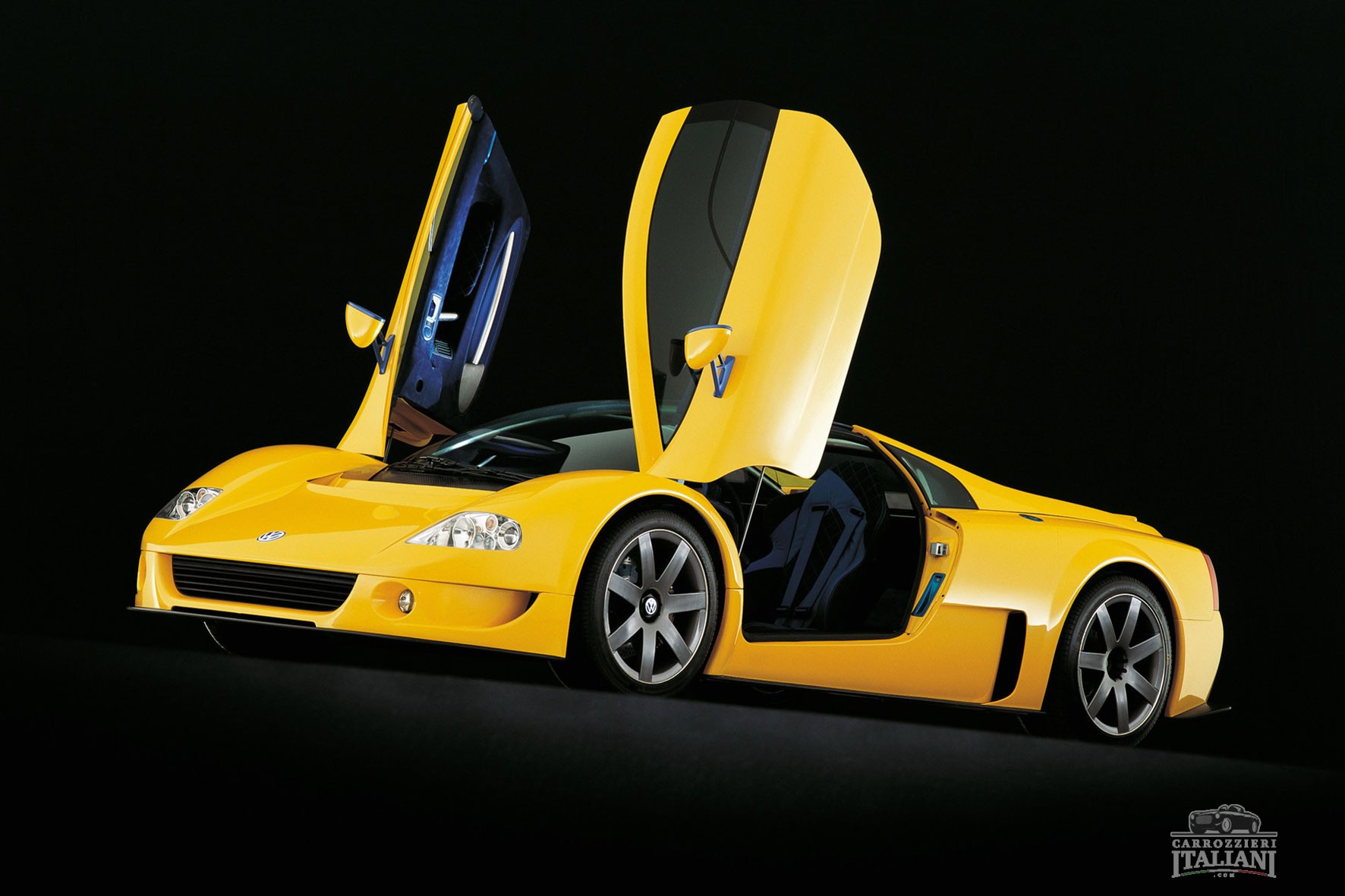
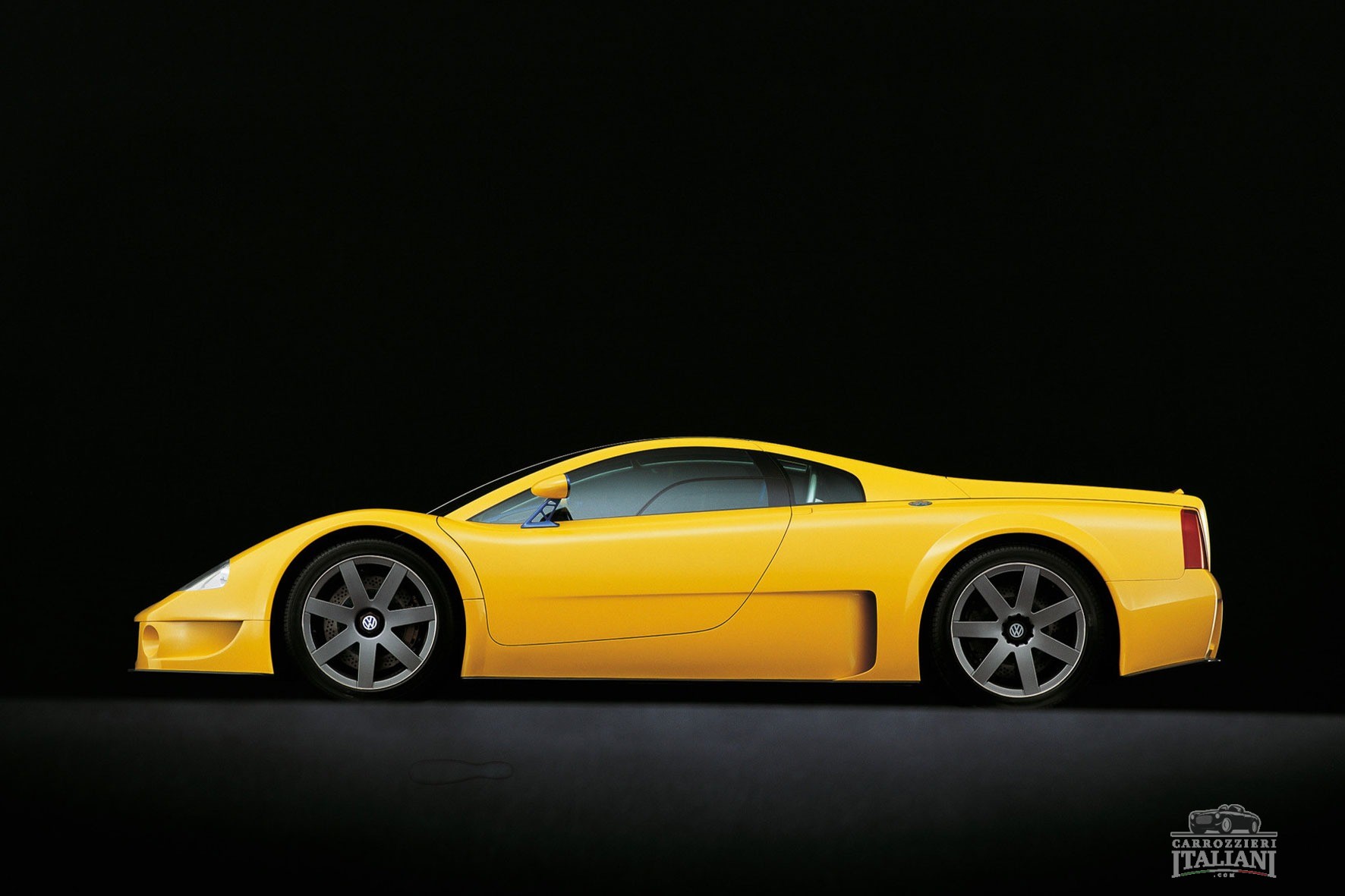
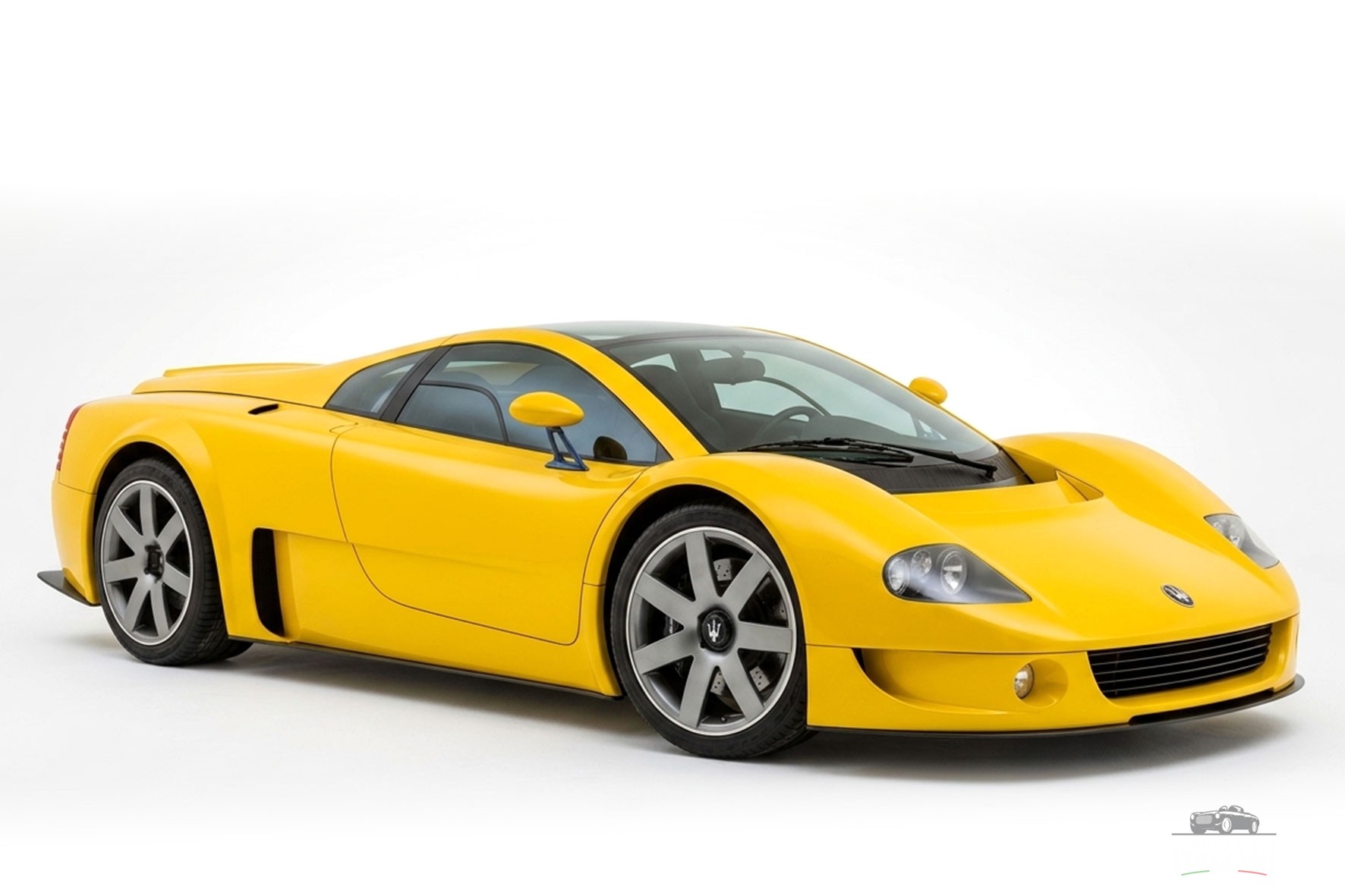
The first Volkswagen W12 appeared at the Tokyo Motor Show in October 1997, painted yellow and carrying the name W12 Syncro. Its nose was low and rounded, with the bonnet dropping between two slightly raised front wings. Compact headlights sat high in the body, leaving the central section almost uninterrupted, while a narrow opening carried the Volkswagen badge above larger cooling apertures.
The lower front treatment was perhaps the least resolved area of the design. The openings served their purpose, but lacked the clarity of the principal volumes. From the side, however, the W12 was far more convincing.
The cockpit sat well forward, with the windscreen and side windows forming a continuous transparent area. The roof rose smoothly over the occupants before descending towards the glazed engine cover. Behind it, the body widened dramatically around the rear wheels, creating a shape that looked broad and powerful without disguising the practical reasons for its size.
The 5.6-litre W12 engine, six-speed gearbox, Syncro hardware, suspension and cooling system all required space. The side intakes had to feed the machinery, while the rear body had to contain it without becoming a shapeless box. The result was extremely wide through the centre and rear, and from certain angles the tail looked heavy, but the car possessed a stance that many concept cars never achieved.
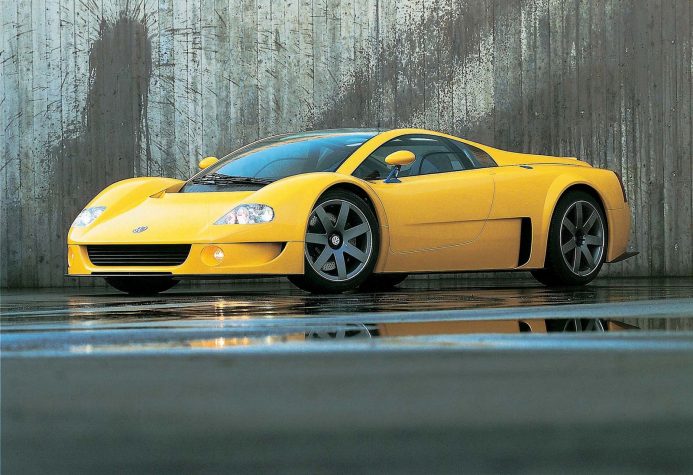
Nothing about it suggested an empty show model being moved carefully into position by technicians. It looked capable of travelling under its own power because it was.
The engine produced 420 PS and was installed longitudinally behind the passenger compartment, driving all four wheels. Packaging the complete system inside a low two-seat car was deliberately difficult. Volkswagen could have removed the front driveshafts, adopted rear-wheel drive and saved considerable trouble, but Piëch wanted the full arrangement.
A conventional V12 is long, and fitting one into a production platform usually requires a generous engine bay, an extended wheelbase or a structure designed around it from the beginning. Volkswagen wanted twelve cylinders without the usual length.
🔗 Read more: The ID90: The Bugatti according Giugiaro
The W12 architecture developed the thinking already used in the company’s narrow-angle VR engines. Instead of arranging two cylinder banks in a conventional wide V, Volkswagen combined compact banks around a single crankshaft. The resulting engine was complex, but short enough to fit into cars that could not easily accommodate a traditional V12.
Volkswagen chose to demonstrate it in the most awkward possible environment: immediately behind two occupants, inside an exceptionally low body and alongside a four-wheel-drive system. The fact that the prototype functioned as intended was already a considerable achievement.
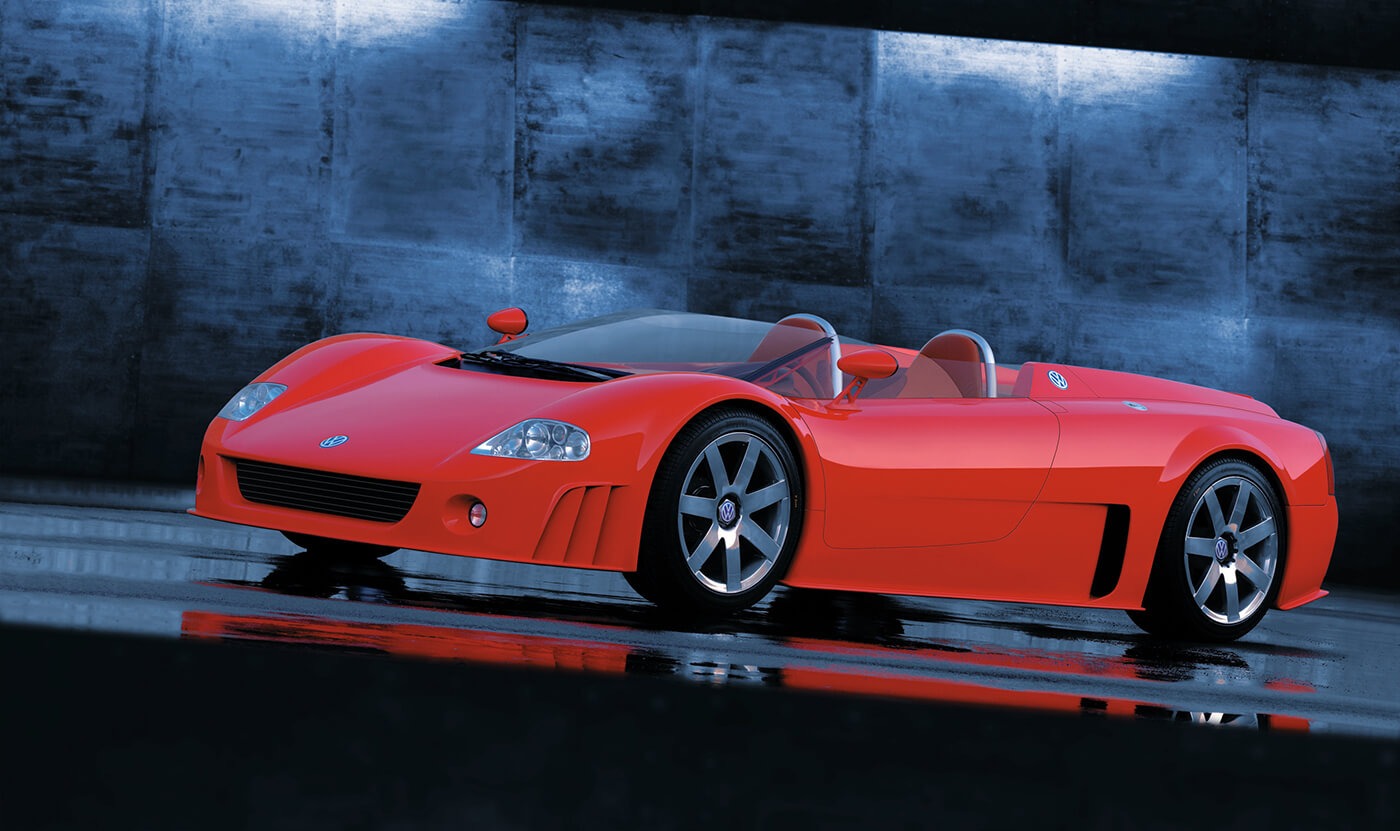
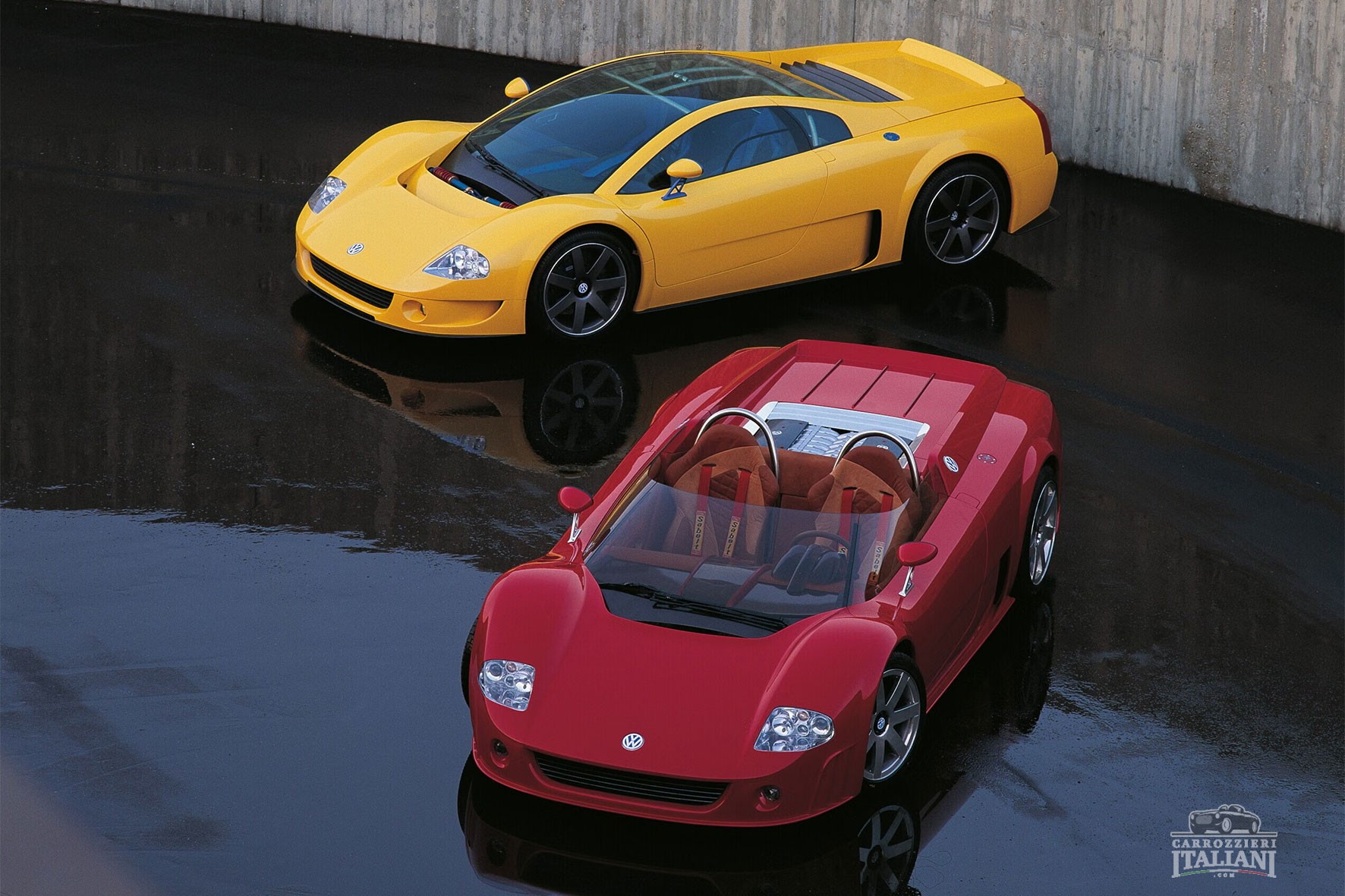
The second version appeared at the Geneva Motor Show in 1998. The W12 Roadster retained the 5.6-litre engine and its 420 PS output, but the four-wheel-drive system was removed, sending power exclusively to the rear wheels. Italdesign claimed a 0–100 km/h time of approximately four seconds.
Mechanically, the change made sense. The rear-wheel-drive layout was lighter, simpler and closer to the behaviour traditionally expected from a mid-engined supercar. Visually, however, the Roadster was less successful.
The roof had been one of the coupé’s strongest elements. Its long curve joined the windscreen, cabin and engine compartment while carrying the references to the New Beetle and Passat. Once it disappeared, the rear body became more dominant, rising behind the seats to cover the engine and cooling system.
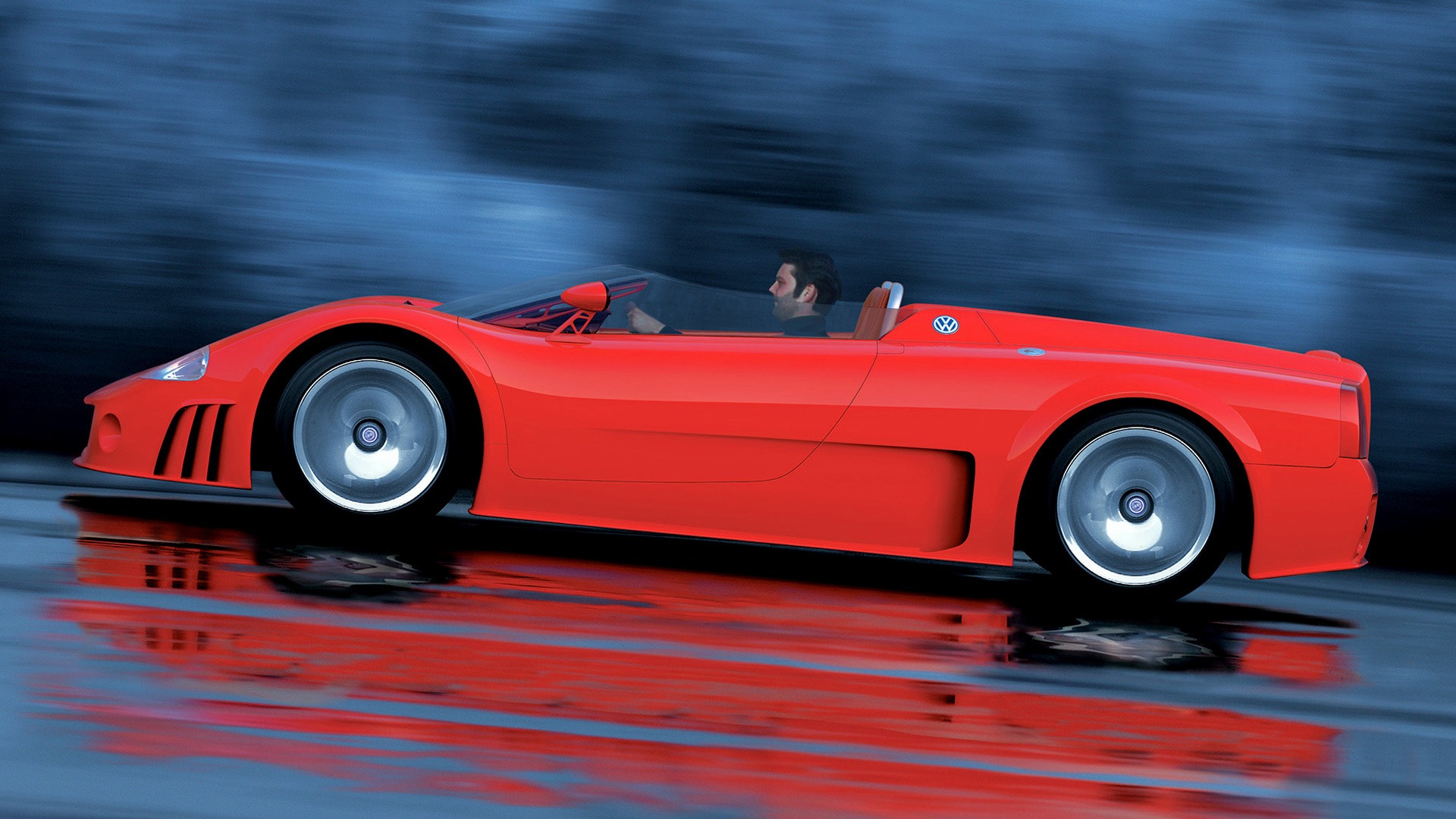
The Roadster was dramatic, but more anonymous than the yellow Syncro. It could have worn several different badges without changing much of its character, whereas the coupé made a more convincing argument for what a Volkswagen supercar should look like.
Even so, the open version demonstrated that the programme was evolving rather than simply moving the same show car between exhibitions. The Syncro had proved that the twelve-cylinder engine and four-wheel-drive system could occupy the same low package. The Roadster explored a lighter, mechanically simpler version of the architecture.
The W12 Nardò
By 2001, the W12 had changed substantially. The orange W12 Nardò unveiled at the Tokyo Motor Show was clearly related to the 1997 Syncro, but it no longer looked like the same prototype with revised lights and a fresh coat of paint.
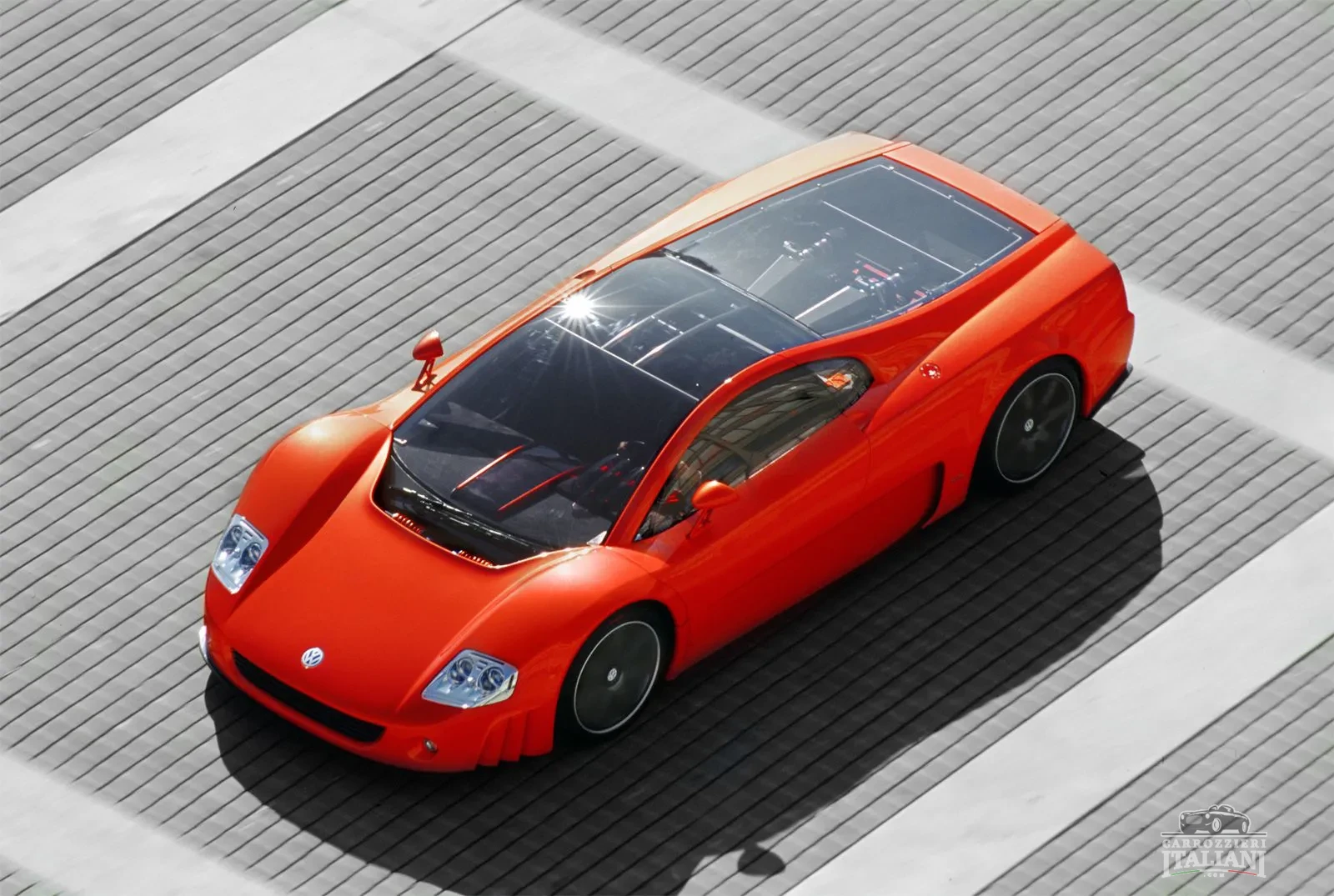
The nose became lower and more pointed, while new headlights introduced greater technical detail. The front wheelarches gained sharper definition, and three vertical outlets appeared behind each front wheel. The main side intakes became deeper, the sill was visually lowered and the doors now cut into the roof and opened upwards.
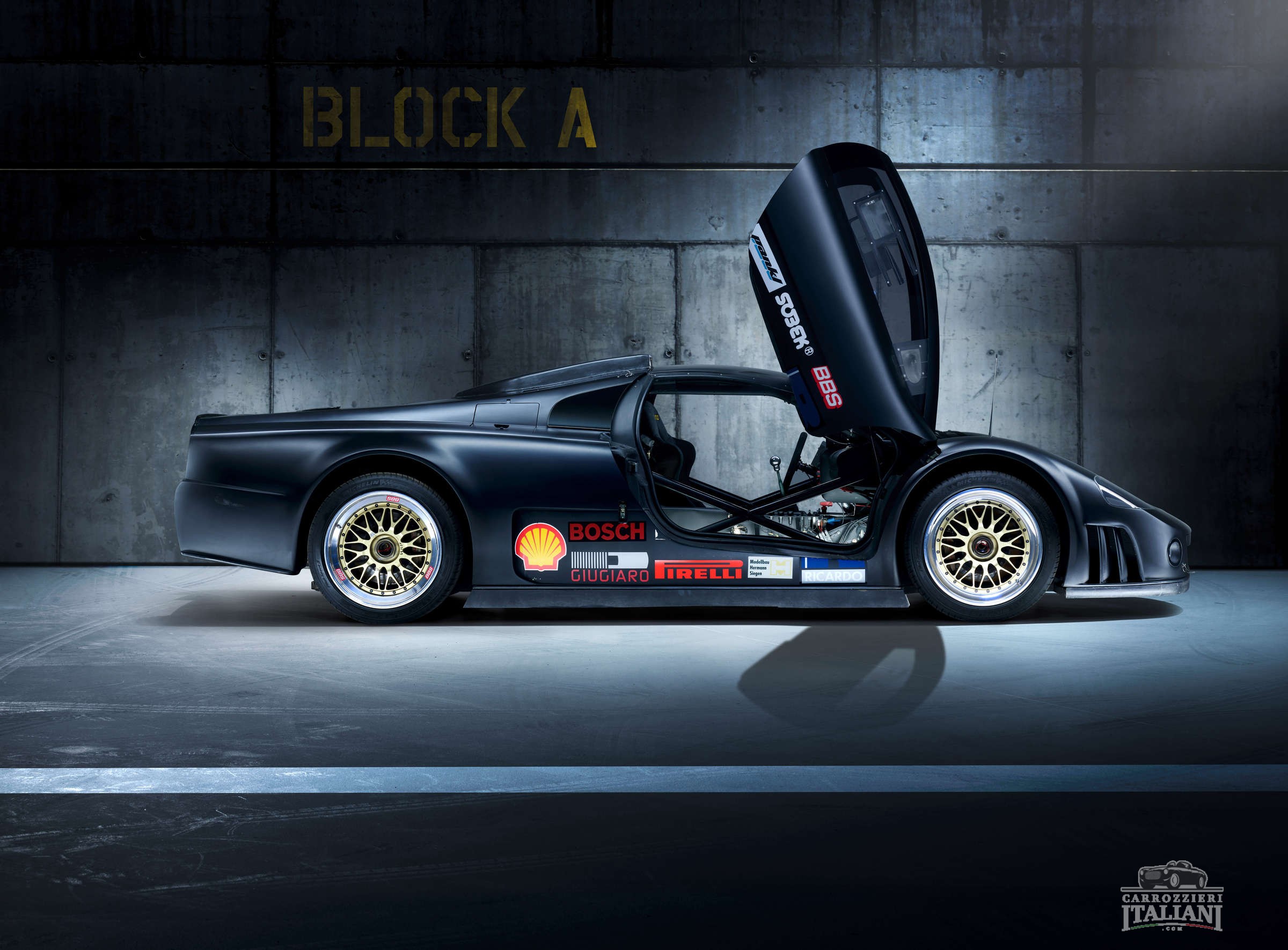
The unusual door arrangement added the expected supercar theatre, but also solved a practical problem. As Fabrizio later explained, the W12 was exceptionally low and had very wide sills. Conventional doors would have made entry awkward, forcing the occupants to crawl over the sill and drop into the cockpit. The upward movement created the space they needed.
At the rear, four exhaust pipes were grouped low in the centre, close to the diffuser, while the tail became flatter and more abrupt. The original W12 had possessed a certain softness, almost as though Italdesign was still reconciling the brutality of the package with Volkswagen’s restrained road-car identity. The Nardò no longer faced that problem.
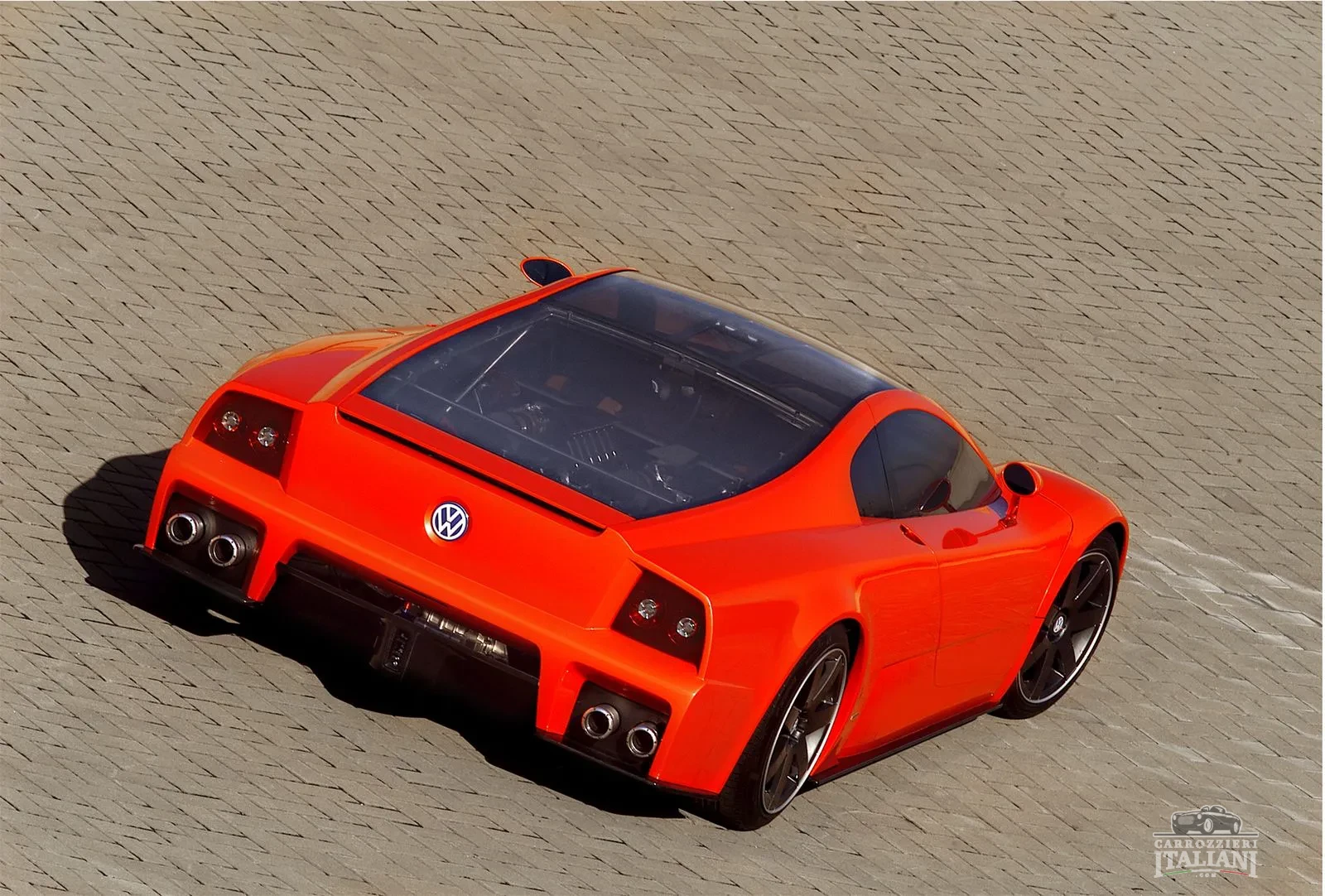
Its engine had grown from 5.6 to 6.0 litres, with output increasing from 420 to 600 PS. Volkswagen claimed a top speed above 350 km/h and acceleration from 0 to 100 km/h in less than 3.5 seconds. The engine itself weighed only 239 kilograms, a figure as significant as its power output.
Volkswagen was not demonstrating twelve cylinders through sheer size. The objective was to create an engine compact and light enough to support a broader range of luxury cars. The orange Nardò showed that the package could also become a convincing modern supercar, while the black record car removed the last motor-show compromises and went to work.
Twenty-Four Hours at Nardò
Volkswagen brought the W12 to the Nardò test track for the first time on 14 October 2001. According to project leader Rudolf-Helmut Strozyk, the car arrived only hours after its initial rollout. There had been no long development programme, no substantial archive of test data and little opportunity to discover how it would behave once high speed was sustained for more than a few minutes.
The team knew that the engine ran and that the car moved, but much of the rest would have to be learned on the circuit.
Opened in 1975 in southern Italy, Nardò’s high-speed ring measures roughly 12.6 kilometres. Its banking allows a sufficiently fast car to maintain a nearly constant steering angle and travel at extreme speed without slowing for conventional corners.
It is often described as an endless straight, although it does not feel like one from the driver’s seat. At approximately 300 km/h, the car is continually moving across the surface. Wind, heat, tyre condition and subtle changes in the banking demand constant attention, while any unfamiliar vibration or change in engine note matters because the next pit entry may still be several kilometres away.
Despite its lack of preparation, the W12 completed 7,085.7 kilometres in 24 hours at an average speed of 295.24 km/h. It also established records over 5,000 kilometres and 5,000 miles. For a car that had barely completed its first proper shakedown, the result was remarkable, and Volkswagen already possessed enough material for a successful publicity campaign.
Piëch wanted the car to return.
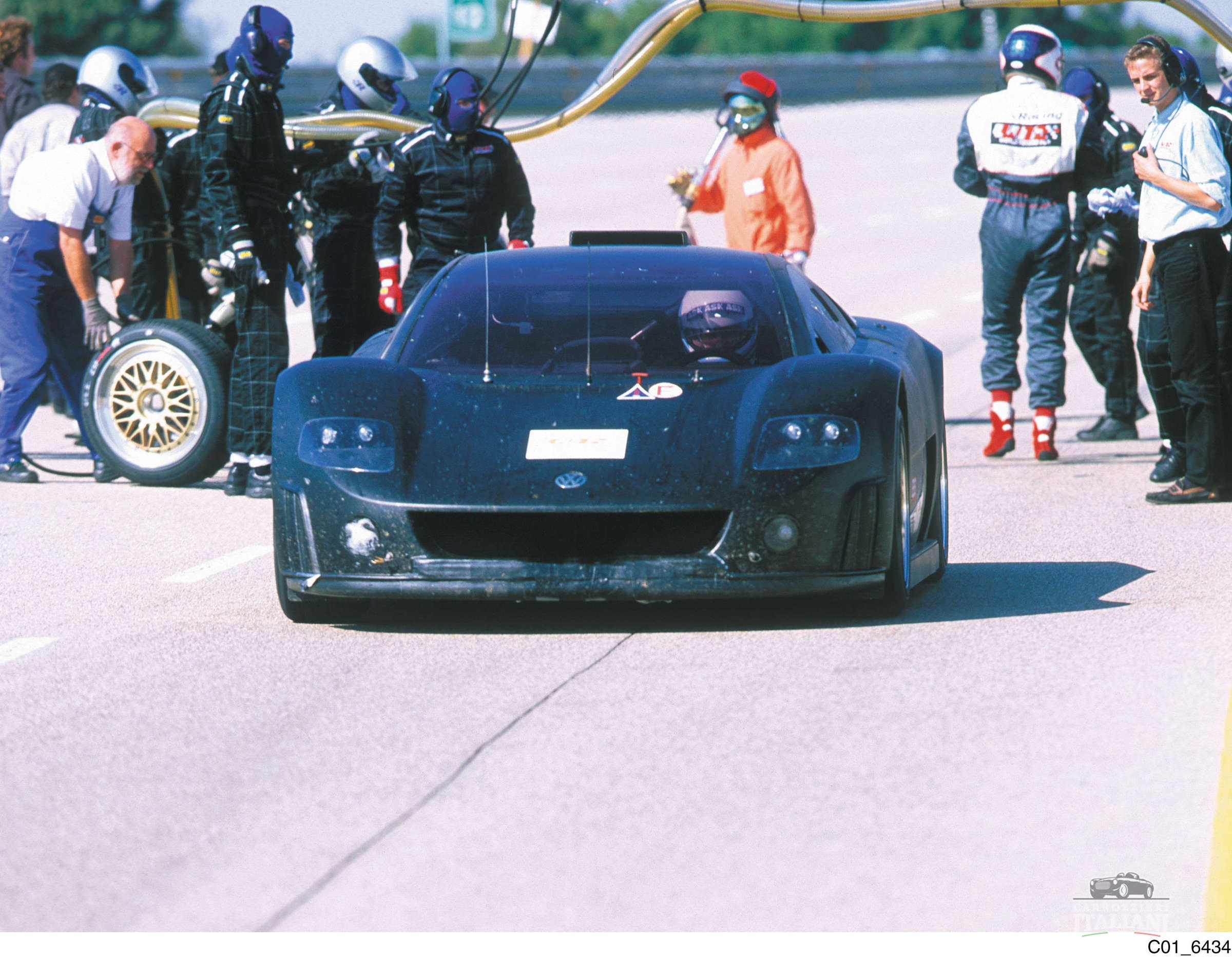
Volkswagen corrected the relatively minor problems exposed during the first attempt and brought the W12 back to Nardò in February 2002. The second run began on 23 February, with six drivers sharing the cockpit: Emanuele Naspetti, Mauro Baldi, Marc Duez, Giorgio Sanna, Jean-François Hemroulle and Volkswagen development driver Dieter Depping.
Their collective experience covered Formula One, endurance racing, rallying, touring cars and vehicle development. Volkswagen did not need drivers capable of producing one spectacular lap. It required people who could maintain extraordinary speed without losing their mechanical sensitivity. At more than 320 km/h, the driver becomes another instrument, listening for changes in engine note and feeling for vibrations through the steering wheel, seat and pedals.
🔗 Read more: Abarth’s Legacy of Speed: The Record cars
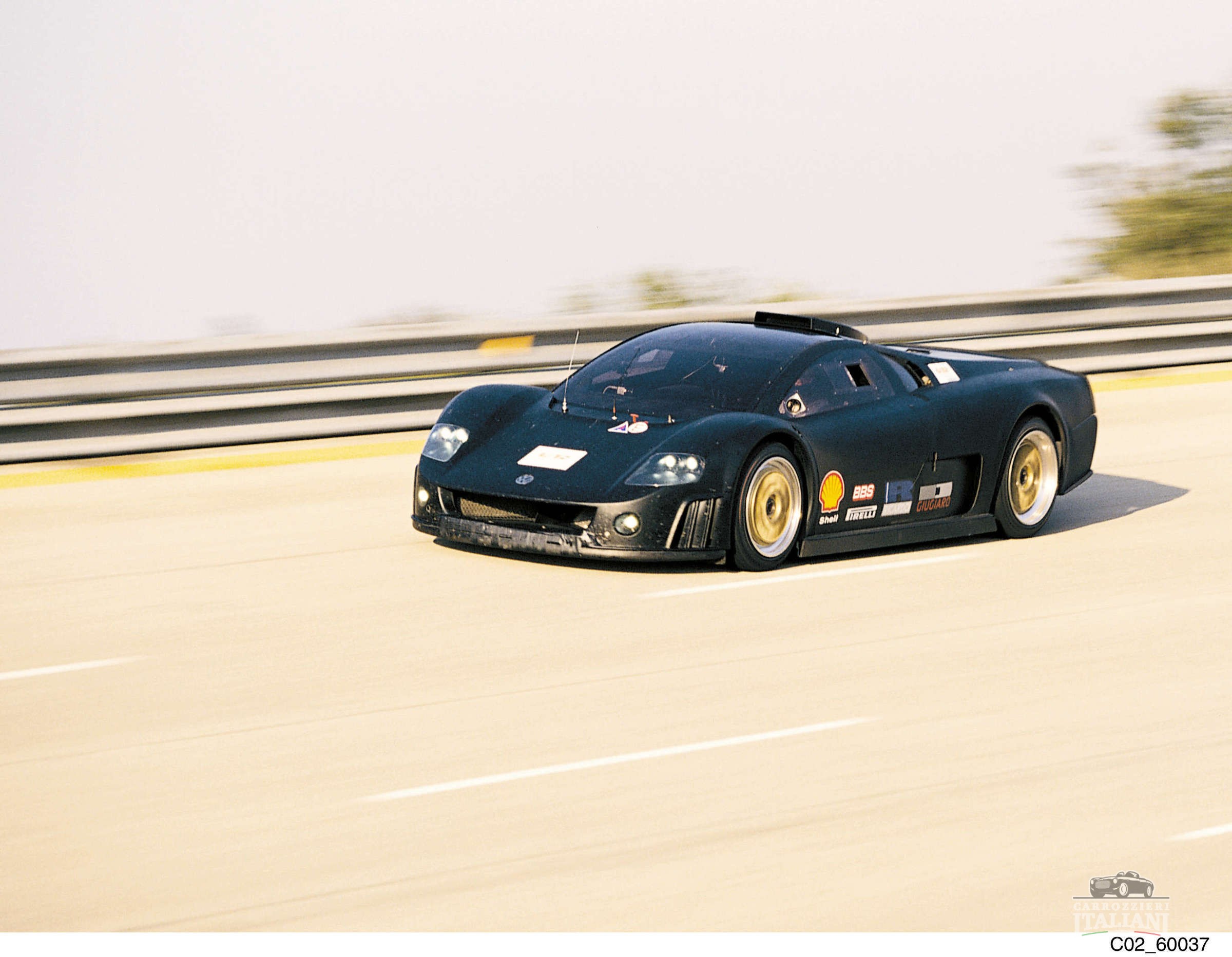
The W12 averaged 328.16 km/h over one hour, 325.584 km/h over six hours and 324.876 km/h over twelve. When the complete run ended, it had travelled 7,740.576 kilometres at an average speed of 322.891 km/h, establishing twelve international records.
Modern supercars regularly advertise maximum speeds beyond 330 or 350 km/h, which can make the achievement appear less remarkable today. There is, however, an enormous difference between touching such a speed once and remaining close to it for an entire day.
A brief top-speed run requires power, suitable gearing and aerodynamic stability. Twenty-four hours at Nardò also test the cooling, lubrication, fuel system, transmission, tyres, wheel bearings, electronics and body structure while every component remains hot and heavily loaded. A part that survives five minutes may not survive five hours.
The body therefore mattered as much as the engine. Fabrizio Giugiaro’s shape had to manage airflow around the car, feed the cooling system and remain stable at speeds well above 300 km/h. The broad rear body enclosed the engine and transmission, while the side intakes, wheelarch outlets, roof intake and rear openings controlled heat and pressure around them.
The black record car was less elegant than the orange show version. It carried additional fasteners, access panels, aerials, sponsor graphics and different wheels, while the clean surfaces had been interrupted wherever mechanics needed faster access to the components. It no longer looked like a concept trying to appear functional, but like a working machine being used for the purpose it had been built to serve.
What the W12 Proved
The W12 belonged to a period in which Volkswagen repeatedly entered territory that appeared to make little commercial sense. Under Ferdinand Piëch, the company developed the Phaeton luxury saloon, moved into the premium SUV market with the Touareg and pursued experimental vehicles that would eventually lead to the XL1. At Group level, he also brought Bentley, Bugatti and Lamborghini under the same corporate roof.
This ambition is often described simply as an attempt to move Volkswagen upmarket, but it went further. Piëch wanted the Group to possess an unusually broad range of engineering abilities, from affordable hatchbacks and luxury saloons to off-road vehicles, supercars and, eventually, a sixteen-cylinder car capable of exceeding 400 km/h. Not every project needed to generate large sales volumes. Some existed to create knowledge, prove technical competence and change what the public believed Volkswagen was capable of building.
The compact twelve-cylinder architecture later appeared in the Volkswagen Phaeton, Audi A8 and several Bentley models. Its limited length allowed twelve cylinders to fit into platforms that would have struggled to accommodate a conventional V12. The W12 supercar placed that engine in a much harsher environment, forcing it to operate close to full output for hours rather than carrying a luxury saloon quietly along the motorway.
For Italdesign, the project also began a broader period of collaboration with Piëch and the Volkswagen Group. The company contributed to the styling development of the Phaeton, while Fabrizio Giugiaro later worked on the mid-engined Bugatti EB 18/3 Chiron and the Lamborghini Gallardo. The W12 was therefore not an isolated piece of motor-show entertainment, but part of the same period in which Volkswagen became a premium manufacturer, Lamborghini was rebuilt around a modern production supercar and Bugatti returned to the centre of the hypercar world.
The car’s design reflected that ambition without trying to disguise its origins. The W12 Nardò is unmistakably a product of the turn of the millennium, with its orange paint, polished wheels, glazed engine cover and upward-opening doors, but its underlying shape has aged better than many contemporary concepts.
Fabrizio Giugiaro attributes this to a period when purity still counted and marketing departments had not yet demanded that every surface carry a crease, signature or decorative feature. In his description, the W12 appears almost to have been drawn by the airflow. The Golf-derived headlights, Volkswagen grille, Beetle-like roofline, Passat-influenced rear window and even the Lupo instrument cluster established its identity, but none of them overwhelmed the larger form.
From the side, the car depends on three principal volumes: the front wheel, the curved cockpit and the large mechanical mass behind it. The surfaces connect these elements rather than competing with them, and very little appears to have been added simply to fill an empty area.
There are obvious similarities with the Alfa Romeo Scighera, which is hardly surprising given that Fabrizio designed both cars within a few years of one another. The complete W12 nevertheless has its own identity, and more remarkably, the Volkswagen badge still looks right.
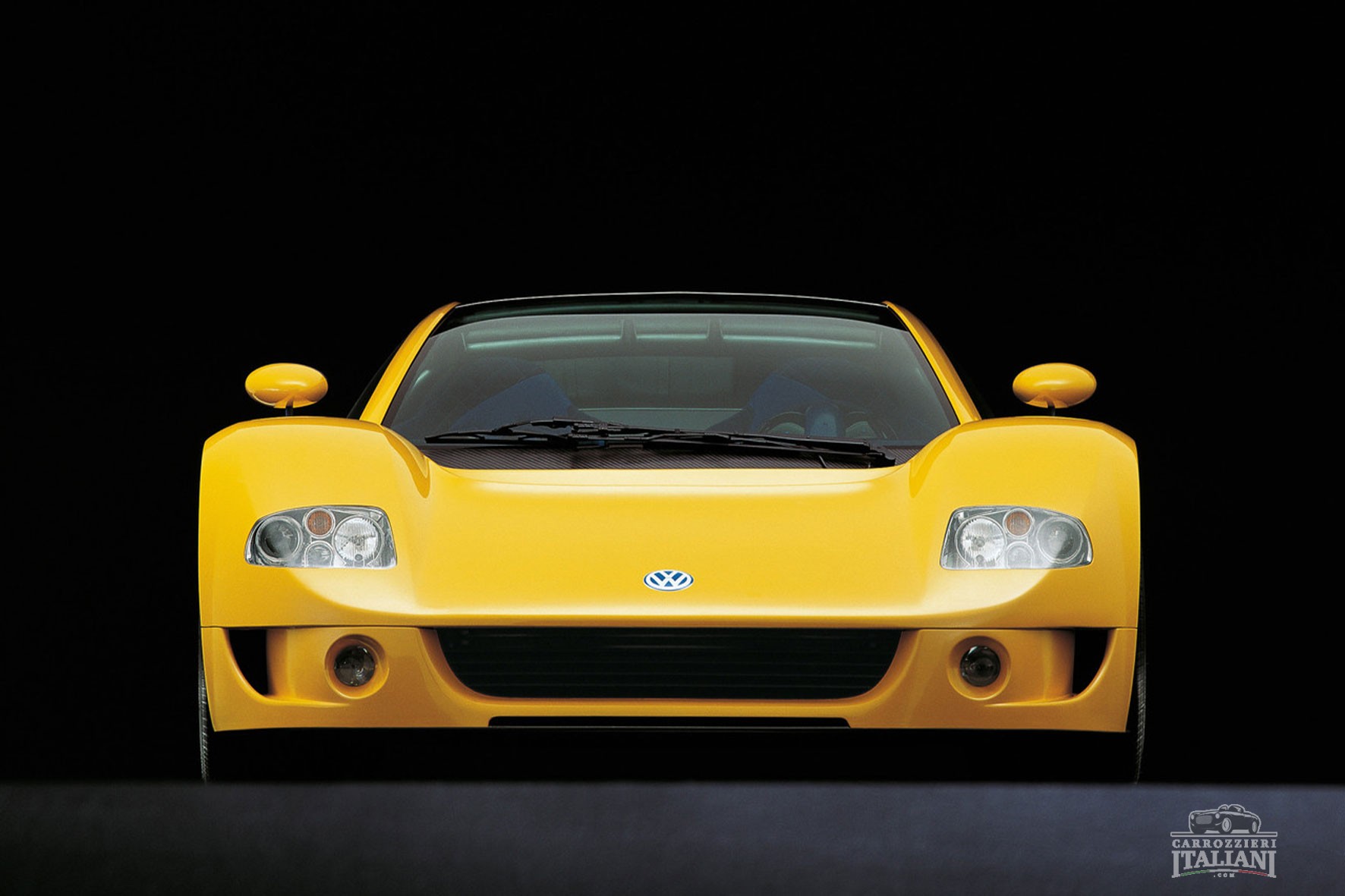
In some respects, the original yellow Syncro remains the more interesting design. The Nardò is sharper, faster and easier to understand, looking exactly like a 600 PS supercar intended to exceed 350 km/h. The 1997 car faced the more difficult problem of establishing what a Volkswagen supercar could look like when no previous Volkswagen provided an answer.
It achieved this without becoming a flattened Golf, inventing a false racing heritage or pretending the badge belonged to somebody else. It was unusual, but unmistakably Volkswagen.
There was never an obvious place for such a car in a Volkswagen showroom. A production version would have required crash protection, emissions certification, luggage capacity, improved visibility, easier access, quieter operation and a servicing network equipped to maintain a mid-engined twelve-cylinder car.
Its commercial position would have been even more difficult to explain. Volkswagen already owned Lamborghini and was developing Bugatti. A supercar wearing the same badge as the Polo and Passat might have competed with the Group’s own exotic marques while asking buyers to accept a price the Volkswagen name had never previously carried.
None of this made the W12 incomplete. By February 2002, it had already proved that Volkswagen could package a compact twelve-cylinder engine inside a low mid-engined car and that the same basic architecture could support four-wheel drive, rear-wheel drive, a fixed roof and an open cockpit.
It then ran for 24 hours at an average speed of 322.891 km/h.
After that, putting it in a showroom was almost the least interesting thing Volkswagen could have done.

ABOUT THE AUTHOR
Andreas Scheidl
Italian classic car enthusiast with German roots. Renowned as a respected figure in the classic car community, he serves as a jury member at various international concours d'elegance, including the Classic Gala Schwetzingen and Mantova. As a content creator, Andreas passionately shares his profound knowledge and appreciation for vintage automobiles. His heart beats for cars designed by Giovanni Michelotti, showcasing his discerning taste and dedication to preserving the timeless elegance of automotive history.
More stories by Andreas Scheidl ↗CONTINUE READING
Posts You Might Like

A Central Driving Position, a Rear-Mounted V8. Was This Really a Lancia?
In 1948, visitors to the Turin Motor Show could see an unusual Lancia on the stand of Carrozzeria Ghia. It was a large two-door coupé with a two-litre V8 mounted behind the…
Read story
Fioravanti F100: The Ferrari He Was Allowed to Imagine
Enzo Ferrari’s centenary, Leonardo Fioravanti’s independent studio and a supercar that explored air brakes, steel wheels and a new way of driving—without ever wearing the Cavallino.
Read story
Michelotti Shellette: When the Fiat 850 Became a Yacht
The yacht designer, the Turin stylist and the tiny coachbuilt car that crossed between the quay, the royal holiday house and the auction room. Some automobiles were conceived for the open road,…
Read story
Maserati A6 1500: A New Road for the Trident
When the doors of the Geneva Motor Show opened in March 1947, Maserati was a name that required little introduction to anyone who followed motor racing. What it did not yet possess…
Read story
THE CONVERSATION
Comments 0
Share a memory, a period photograph or a documented detail about this story.