
Alfa Romeo Navajo: The Spaceship Bertone Actually Built
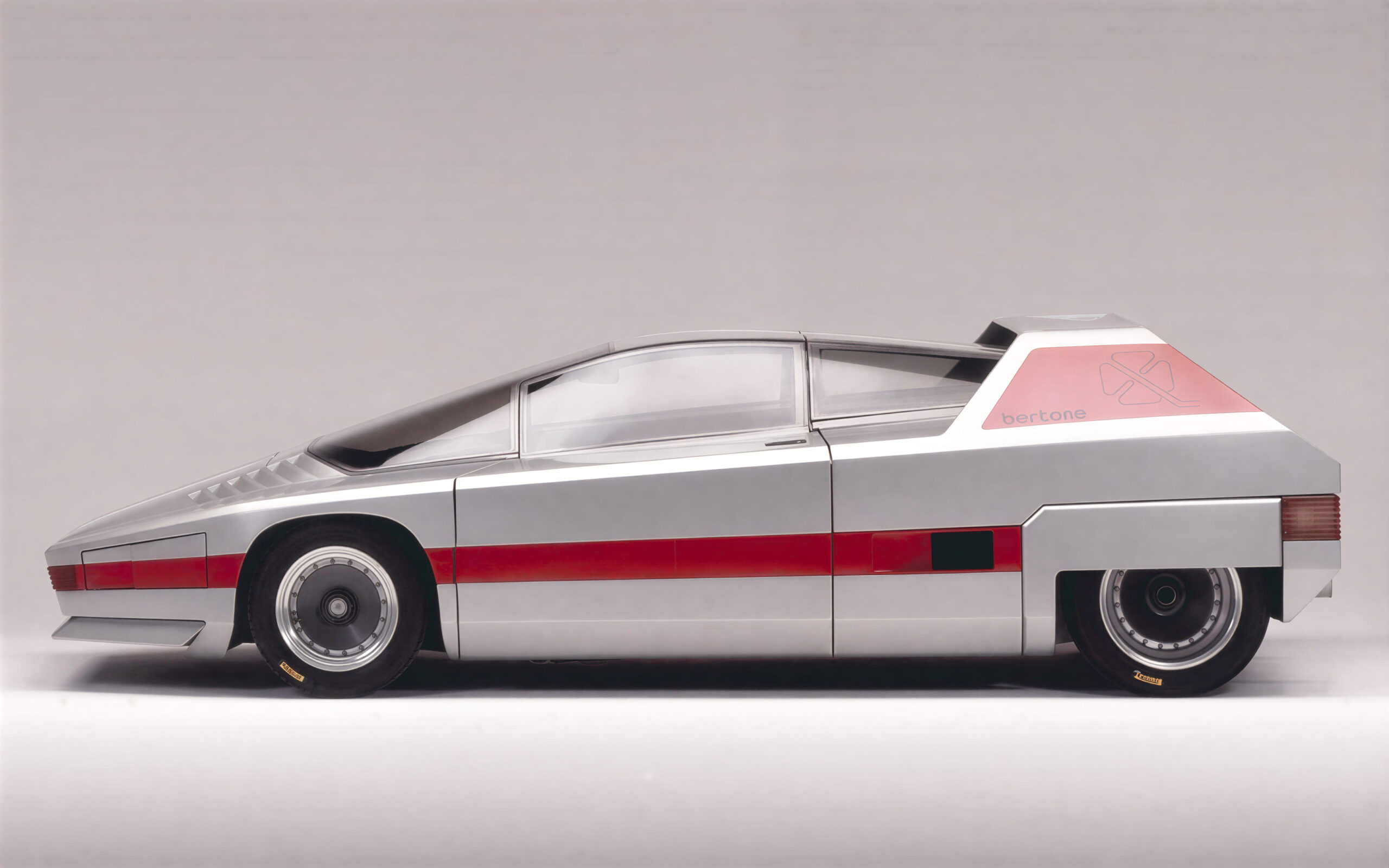
By the mid-1970s, the world was clawing its way out of an oil crisis, yet automakers and designers still seemed determined to out-weird one another in the pursuit of the future. This was the era when science fiction wasn’t just entertainment — it was a design brief. And so, in 1976, Alfa Romeo and Bertone rolled out something that looked less like a car and more like a prototype escaped from a wind-tunnel inside Neo-Tokyo.
This was the Alfa Romeo Navajo, a one-off concept that Marcello Gandini — yes, the same Gandini responsible for the Miura’s curves and the Countach’s intergalactic wedge — appeared to sketch in a moment of cosmic inspiration. The Navajo wasn’t just another show car; it was a full-throttle hallucination of what tomorrow might look like if you blended Group 5 racing hardware with the kind of angular, cyber-punk aggression that would make even Akira’s Kaneda pause mid-slide.
Imagine a machine that seems equal parts spaceship, prototype racer, and experimental art installation — a car that could have zoomed past the camera in Star Wars, or been parked outside a secret government lab trying to weaponize aerodynamics. That was the Navajo: Alfa Romeo’s bold, brilliant, and blissfully impractical attempt at out-running reality.
This is the story of how it came to be — a tale of unrestrained ambition, futuristic fantasy, and one of the last glorious gasps of an age when concept cars weren’t designed by committee, but by madmen with rulers, racing engines, and imaginations set permanently to “ludicrous.”
Historical Background: From 33 Stradale to Dream Car
To understand where the Navajo came from, you have to rewind to 1967 — a year when Alfa Romeo decided that “race car for the road” didn’t have to be a marketing slogan, it could be an engineering dare. The result was the 33 Stradale, a machine so beautiful and so improbable that even today it feels as though it shouldn’t really exist outside a museum, a cathedral, or a very understanding garage.
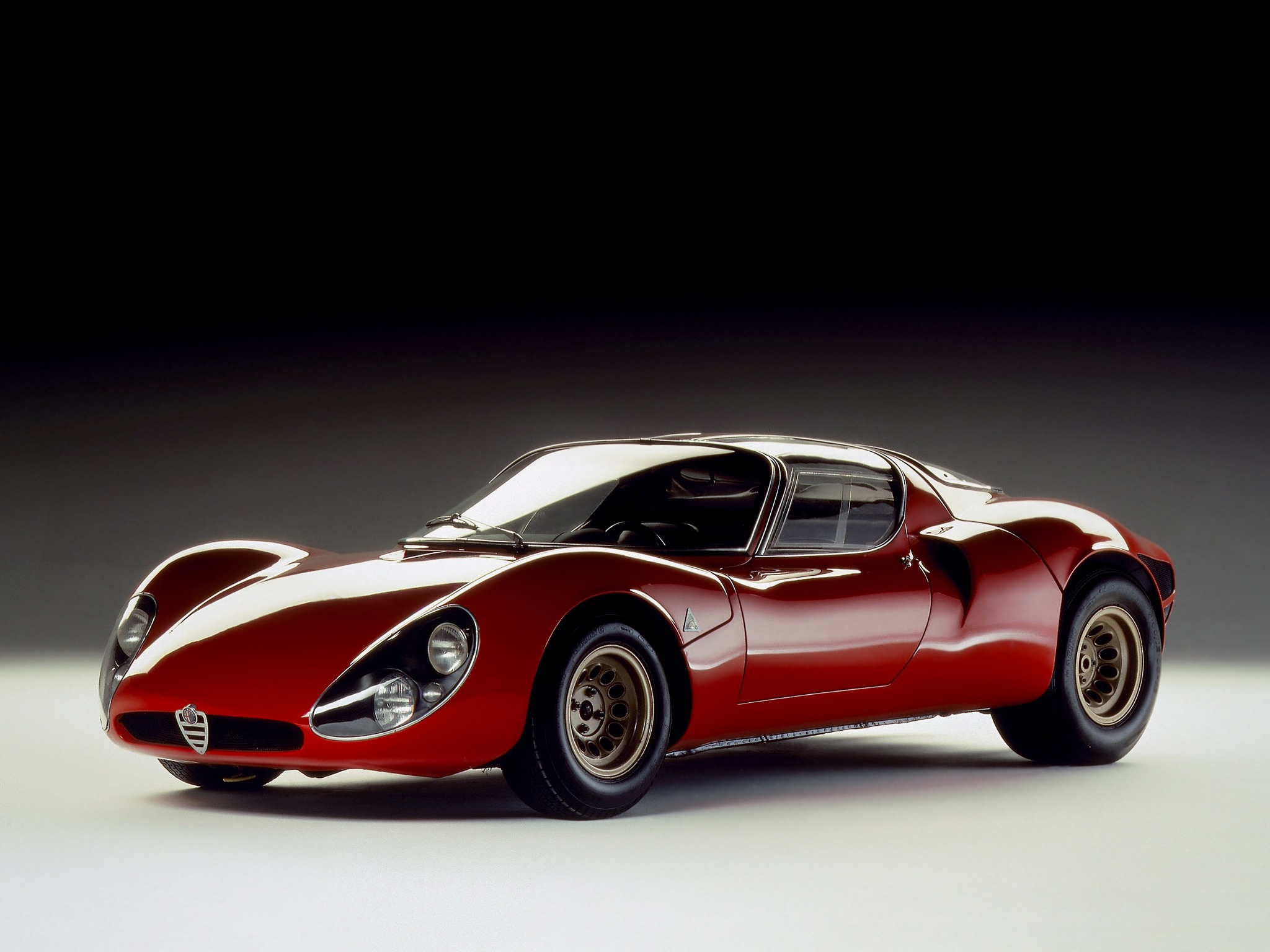
Born from the Tipo 33 race program, the Stradale was effectively a barely civilized V8 prototype with license plates. Eighteen chassis were built, which was seventeen more than Alfa absolutely needed to prove the point. Unsurprisingly, at a price that made Ferrari owners look twice, not every chassis found a buyer. And Alfa, rather than letting these orphaned jewels gather dust, did something wonderfully Italian: they handed them out to the country’s best coachbuilders as if they were golden tickets to a design free-for-all.
🔗 Read more: The Alfa Romeo 33 Stradale based dream cars
What followed was a creative explosion that still feels mythical. Between 1968 and 1971, Italy’s finest carrozzieri turned those unused Stradale skeletons into a traveling exhibition of sci-fi experimentation. Pininfarina delivered the 33 Roadster and the 33 Coupé Speciale — machines that looked genetically spliced with aerospace hardware. Paolo Martin, never one to avoid a sharp line, carved out the 1971 Cuneo, a barchetta so wedge-shaped it seemed purpose-built to split atoms. Giorgetto Giugiaro countered with the 1969 Iguana , a masterclass in industrial futurism. And then there was Bertone’s own Carabo, Gandini’s 1968 shockwave of iridescent green, scissor doors, and pure attitude — the concept that essentially dared the Countach to exist.
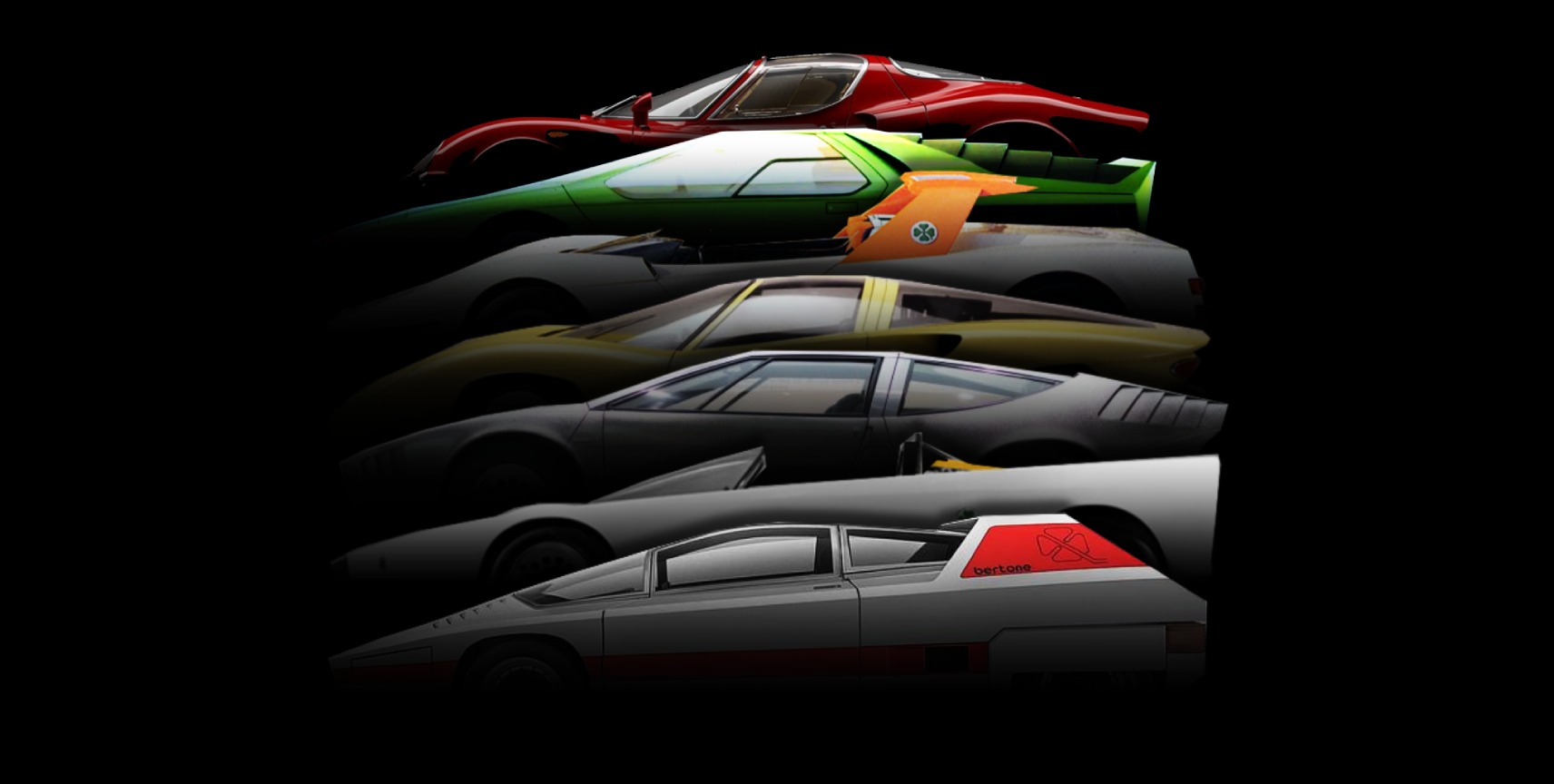
And then… silence. By the early 1970s, the dream-car fireworks fizzled. The world slid into a haze of fuel shortages, safety regulations, and beige plastic. The last of the Stradale-based concepts debuted in 1971. Many assumed the great Italian design carnival had packed up its tents.
But Nuccio Bertone wasn’t done. Not by a long shot. His Turin workshop had long served as Alfa’s secret design weapon — the Giulietta Sprint, the Giulia GT, and most recently the Montreal all bore the Bertone touch. Yet by 1975, the Montreal program had wrapped, and the partnership was idling. To Bertone, this was not a dead end; it was an invitation.
🔗 Read more: The Alfa Romeo Montreal: Born from a Dream, Built in a Hurry
If the world thought the age of outrageous Alfas was over, Bertone would simply build another one.
So, from the smoldering embers of the 33 Stradale program, and five years after the last concept hit the show stand, Bertone and Alfa conspired on a final chapter. A curtain call. A design statement sharp enough to slice through the gloom of the mid-’70s. And in 1976, they unveiled it: the Alfa Romeo Navajo — the most angular, most space-age, most unapologetically futuristic of the entire lineage.
A last dream-car born from a racing chassis and an era that refused to stop dreaming.
Designing a Futuristic Wedge
By the mid-1970s, if you asked someone to sketch “the future,” they’d give you one of two things: a flying car, or a triangle. And nobody — absolutely nobody — wielded the power of the triangle quite like Marcello Gandini. By 1976 he was no longer merely drawing wedges; he was weaponizing them. So when Bertone handed him the last Alfa Romeo 33 Stradale chassis — number 750.33.117, the final sacred relic from Alfa’s racing program — he didn’t just design a car. He staged a spectacle.
Because Gandini wasn’t drawing for the present. He was drawing for a world that hadn’t arrived yet — something halfway between Le Mans and *Akira’s Neo-Tokyo, where machines look fast even when they’re parked, and the laws of physics are more like polite guidelines.
🔗 Read more: Sharper Than a Leisure Suit: The Wedge-Shaped Revolution of Italian Concept Cars
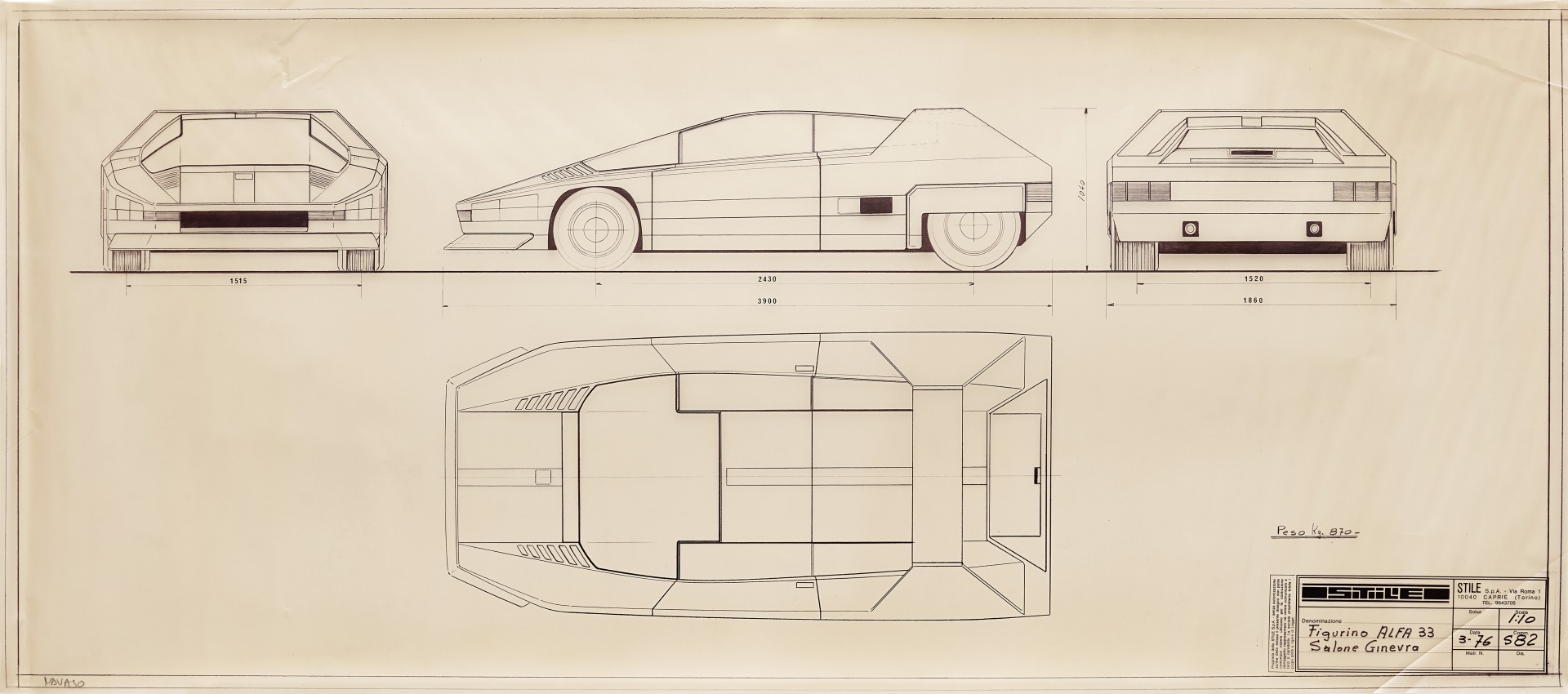
Alfa lengthened the Stradale chassis by 100 mm to give Gandini’s imagination some breathing room. Bertone then wrapped the newly stretched skeleton in an all-fiberglass body so light that the finished car weighed just 870 kg — about the mass of a medium-sized motorcycle fairing. Standing a mere 1040 mm tall, the Navajo didn’t so much sit on the ground as stalk it. Painted in silver-white and slashed with radioactive orange accents, it looked like a spacecraft making a pit stop at the Turin Motor Show.
A Wedge Even The ’70s Weren’t Ready For
Wedge-shaped cars were practically a fashion in the ’70s — but Gandini’s Navajo didn’t follow that fashion; it bullied it. The front was a dagger aimed at the horizon, the kind of taper that makes wind tunnel engineers either ecstatic or faint. In profile, the car resembled a supersonic fighter jet that had misplaced its wings. And speaking of wings…
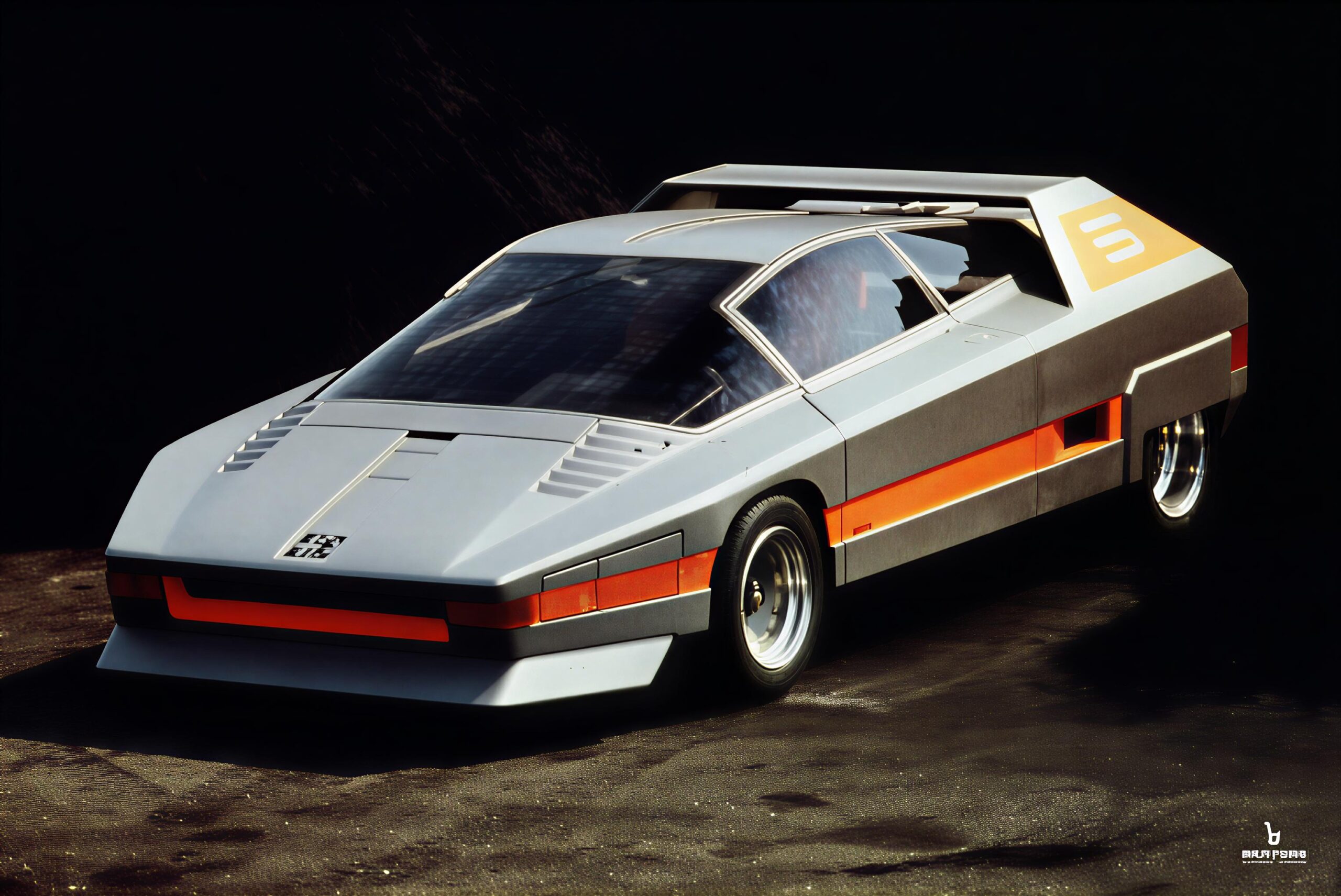
The rear wasn’t a tail so much as a launch platform. A towering, trapezoidal rear wing sat high over the car like the control surface of an escape pod. Crucially, it wasn’t just decoration — it moved. At speed it adjusted its angle automatically, as did the front chin spoiler. Yes, in 1976 Gandini and Bertone were playing with active aerodynamics, something supercar makers wouldn’t rediscover for decades. Parked, the Navajo looked ready for liftoff; in motion, one imagines the aero bits tilting like the flaps of a starfighter preparing to jump to light speed.
Sci-Fi Details Everywhere
The Navajo didn’t merely look futuristic — it doubled down on the vibe with details lifted straight out of a retro-futurist comic.
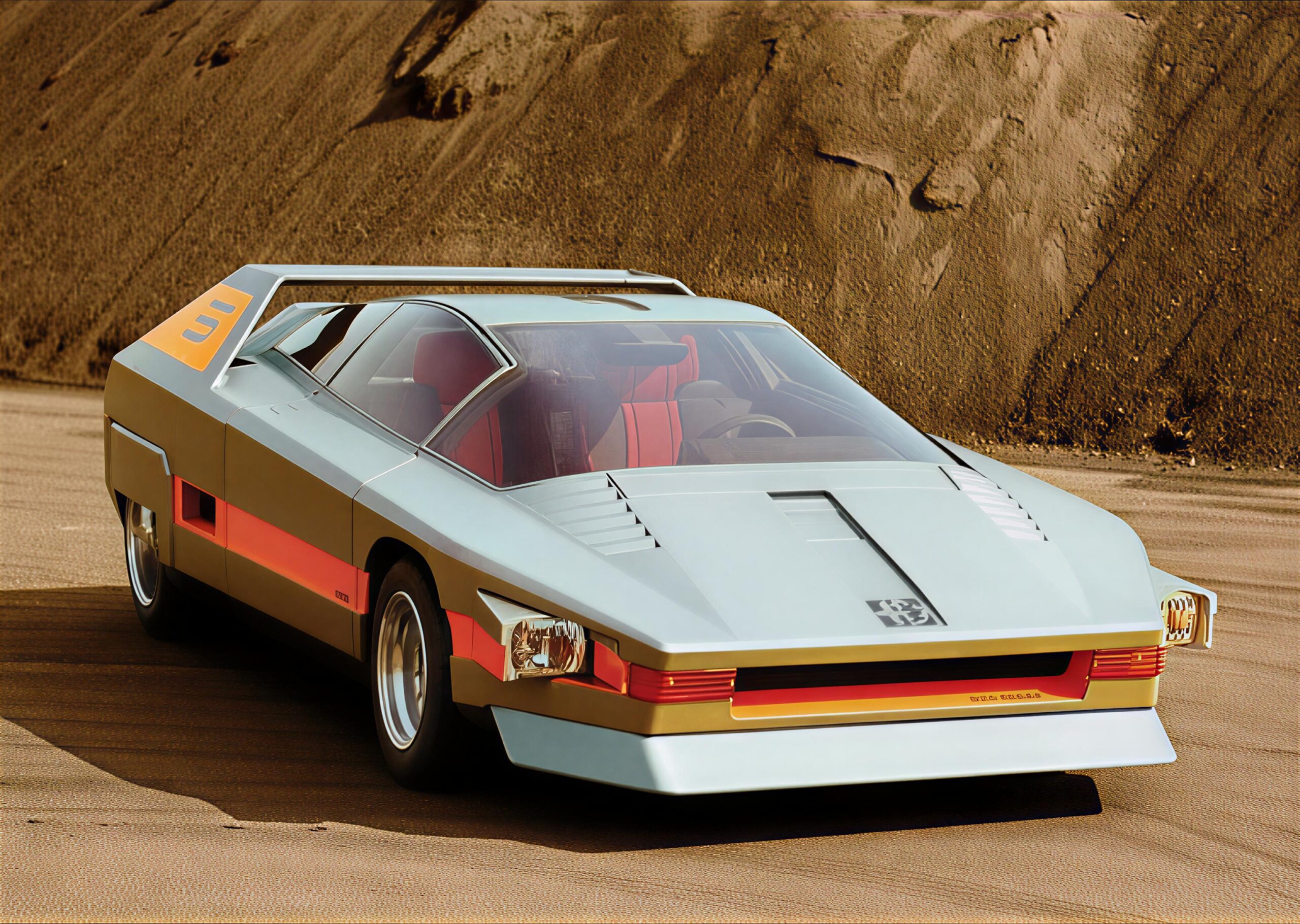
Instead of pop-up headlights, it had horizontal light pods that slid out from the top of the fenders like the glowing eyes of a mechanical creature awakening from stasis. The hood featured heat-venting NACA ducts and a stylized Alfa badge that looked more space program than Milanese heritage.
A brilliant orange stripe bisected the silver body, wrapping around the nose and terminating just ahead of the rear wheels — where, naturally, it concealed a brake cooling intake. The partially skirted rear wheels, shod in then-cutting-edge Pirelli P7s, only heightened the impression that this thing should have come with warnings about supersonic ground effect.
And in a surprising twist from the man who gave the world scissor doors, the Navajo’s doors… opened normally. No theatrics, no hinges from another dimension. Perhaps Gandini decided he’d already used up his daily quota of outrageousness.
Inside the Spaceship
If the outside was “future-forward,” the interior was flat-out time-travel.
Drop into the cockpit — or more accurately, fold yourself into it — and you’re greeted by a one-spoke steering wheel floating in front of a digital dashboard. That’s right: digital instruments, in 1976. When most production cars were proud just to have a tachometer, the Navajo displayed readouts like a piece of prototype aerospace equipment.
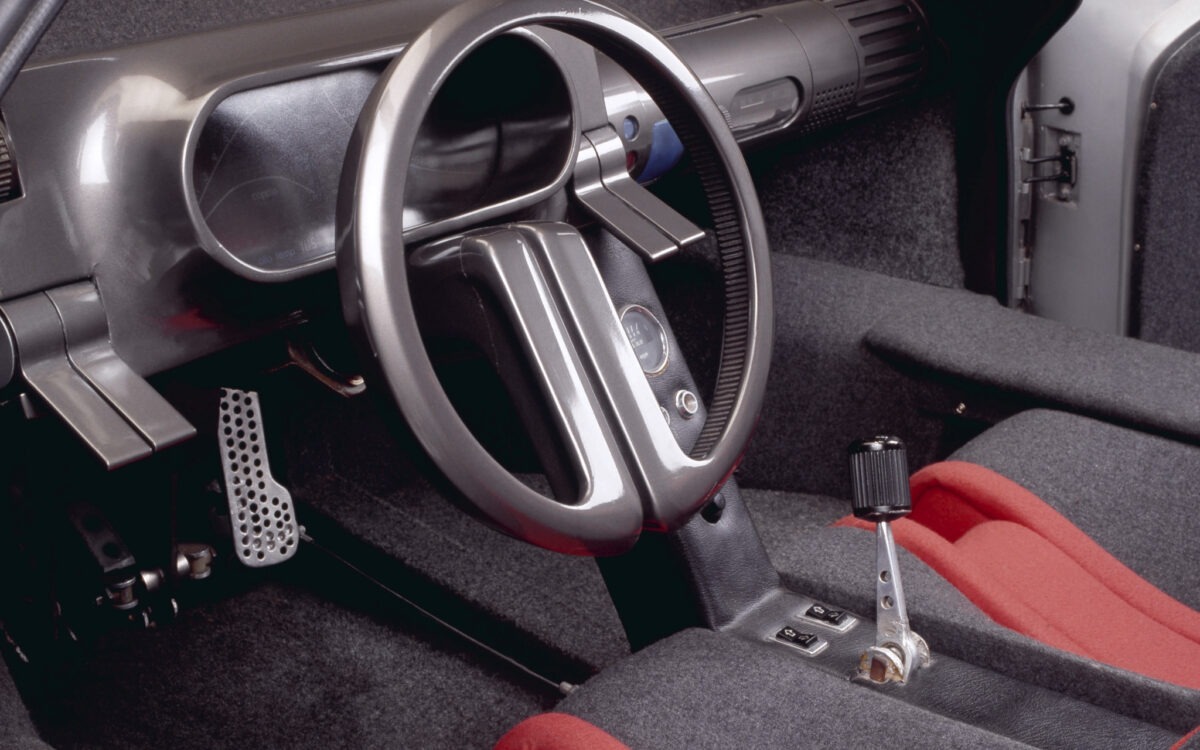
A tubular beam arced across the cabin, housing the electronic gauges and a row of metal levers instead of conventional switches. The two bucket seats were fixed fiberglass shells upholstered in grey with orange-red inserts — racing seats, permanently attached to a racing chassis. Adjustments? Bring a cushion.
The center console appeared to hover between the seats, another detail that made the cabin feel less like a car interior and more like the bridge of a small starship. It was impractical, theatrical, needlessly dramatic — and utterly mesmerizing.
A Racing Heart Beneath the Fiberglass
For all its sci-fi showmanship, the Navajo wasn’t a hollow sculpture. Underneath beat the same glorious engine that powered the Tipo 33 and the Stradale: Alfa’s jewel-like 2.0-liter all-alloy V8. Running mechanical fuel injection and revving to 8800 rpm, it delivered around 230 horsepower — more than enough to make 870 kg disappear toward the horizon.
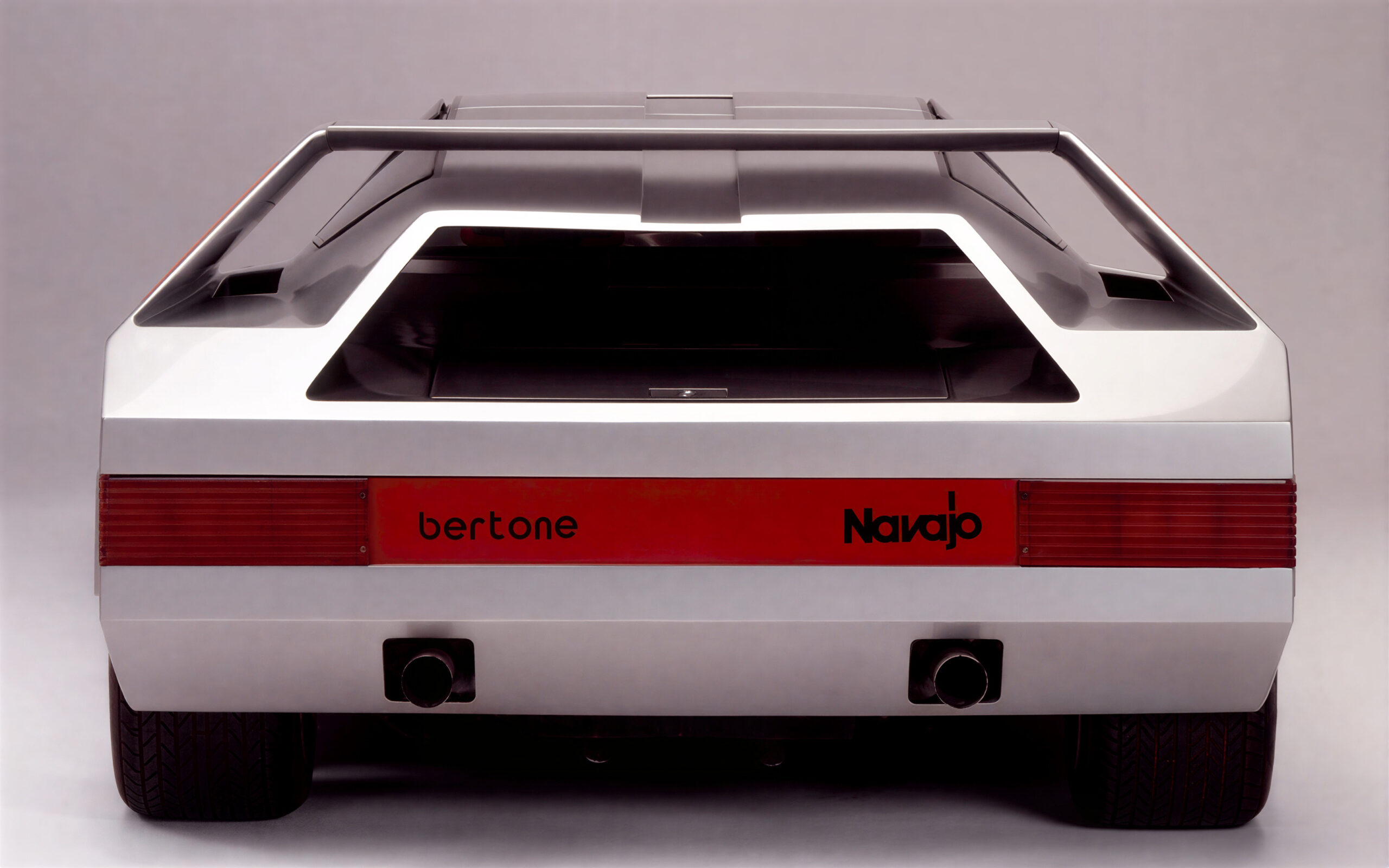
No official performance numbers were ever released, but the power-to-weight ratio alone was enough to make journalists wonder if Alfa had accidentally built a pocket hypercar. Realistically, the Navajo likely never saw real track use, but the chassis was absolutely capable. It wasn’t a mock-up; it was a functional concept with the soul of a racer.
🔗 Read more: The story of Bertone: the Most Controversial Coachbuilder Ever
Which makes imagining it at full tilt irresistible: the tiny V8 howling behind your shoulders, digital numbers flickering, the active wing trimming itself like a cyberpunk Can-Am car. A fantasy — but one grounded in very real machinery.
A Name Wrapped in Mystique
And then there’s the name: Navajo. Bertone never explained it with any clarity, and historians have avoided inventing a meaning. What’s clear is this: the name was chosen to evoke mystery and presence. A sense of an identity carved rather than stamped — the way the car itself looks sculpted more than assembled.
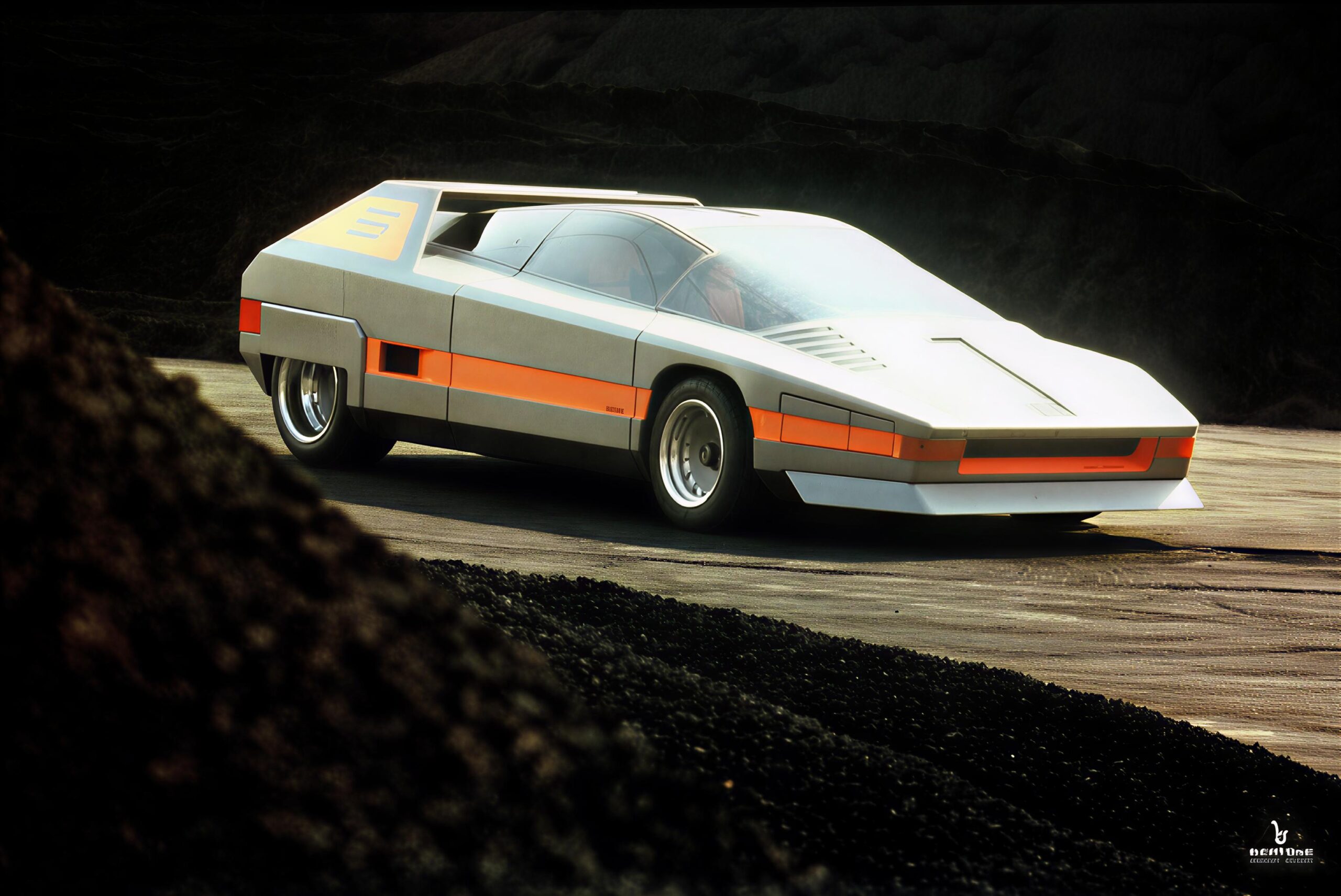
Some writers noted that the front fascia had the abstract geometry of a modern mask or totem. Others simply said the word “Navajo” sounded fitting for a machine that seemed to blur the line between artifact and organism.
Whatever the intent, the name added to the car’s aura. It felt mythical, enigmatic — perfectly suited to a concept that looked like a futuristic warrior forged from fiberglass and imagination.
Geneva 1976: A Spaceship Lands on Earth
If you were lucky enough to wander into the Geneva Motor Show in March 1976, you probably expected the usual mix of Italian curves, German precision, and the odd experimental oddball. What you didn’t expect was for a spacecraft to have parallel-parked itself on the Bertone stand.
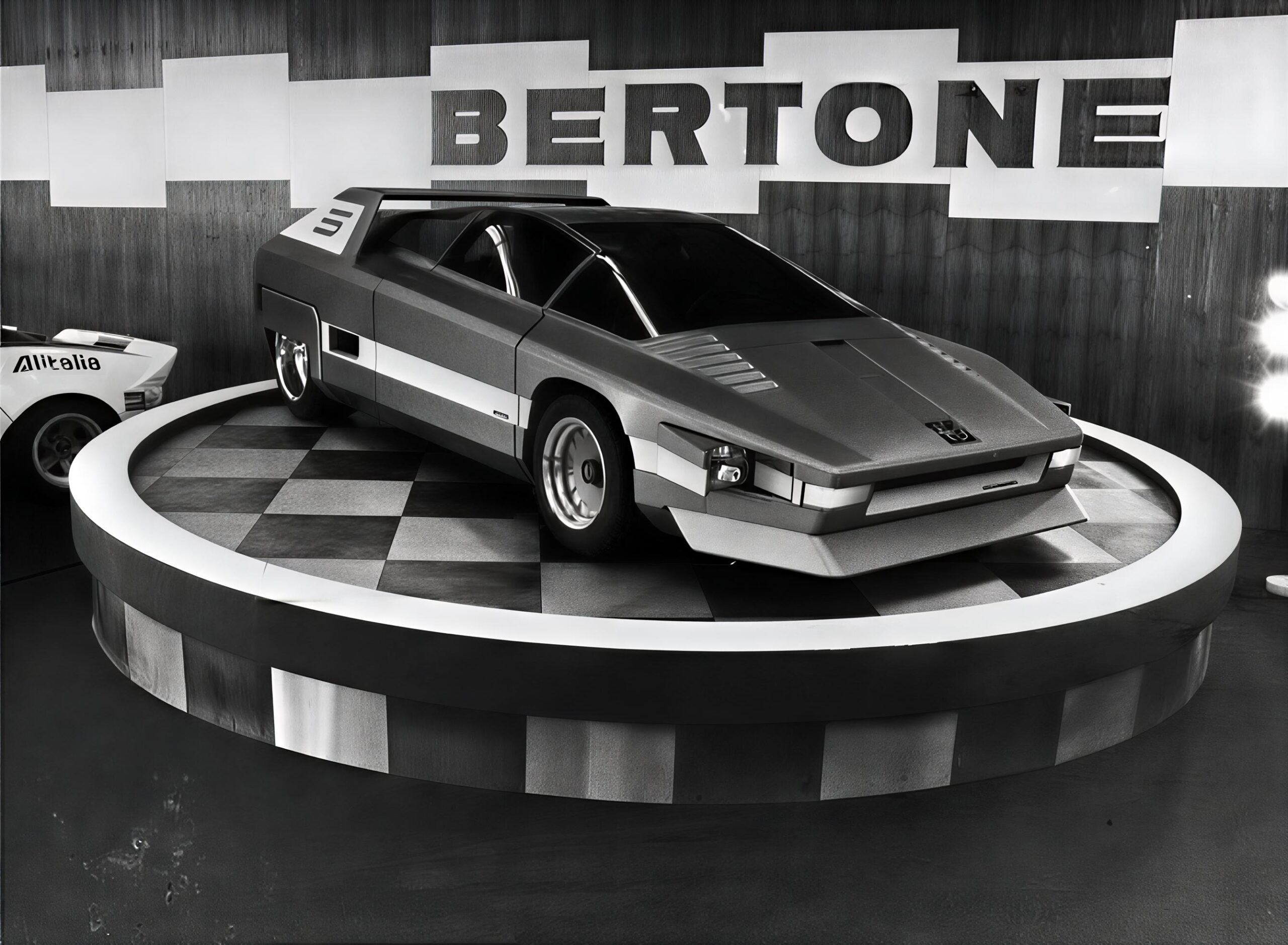
Under the bright lights of Palexpo sat the Alfa Romeo Navajo — the final, most radical offspring of the 33 Stradale bloodline — looking as if it had crash-landed halfway between Space: 1999 and whatever sci-fi universe George Lucas was quietly assembling in the Californian desert. Painted in a pearlescent white so clean it could pass a hospital inspection, slashed with a high-visibility orange stripe, and shaped like an-otherworldly tool for atmospheric re-entry, the Navajo didn’t just draw a crowd. It stopped one.
It didn’t have curves. It didn’t need them. Where Ferrari and Maserati displayed seductive metalwork, the Navajo fired back with geometry sharp enough to trim hedges. Just as the 1968 Carabo had shocked the design world with its fluorescent origami surfaces, the Navajo dragged the wedge era into a new dimension — one where cars didn’t just look futuristic; they looked like they’d been reverse-engineered from the future.
One journalist later quipped that the Navajo seemed ripped straight from Buck Rogers’ 25th century, and honestly, it might be the most accurate period review ever written.
A Mixed Reaction — Naturally
Reactions to the Navajo were as divided as its bodywork. Enthusiasts of the wedge age adored it: at last, a concept car committed to the bit. Not nibbling at the edges of futurism, but diving headfirst into it with a 10-meter dive and perfect entry. Next to it, even the boldest concept cars of earlier years — the Iguana, the Cuneo — suddenly looked like they’d been designed using soft-serve ice cream.
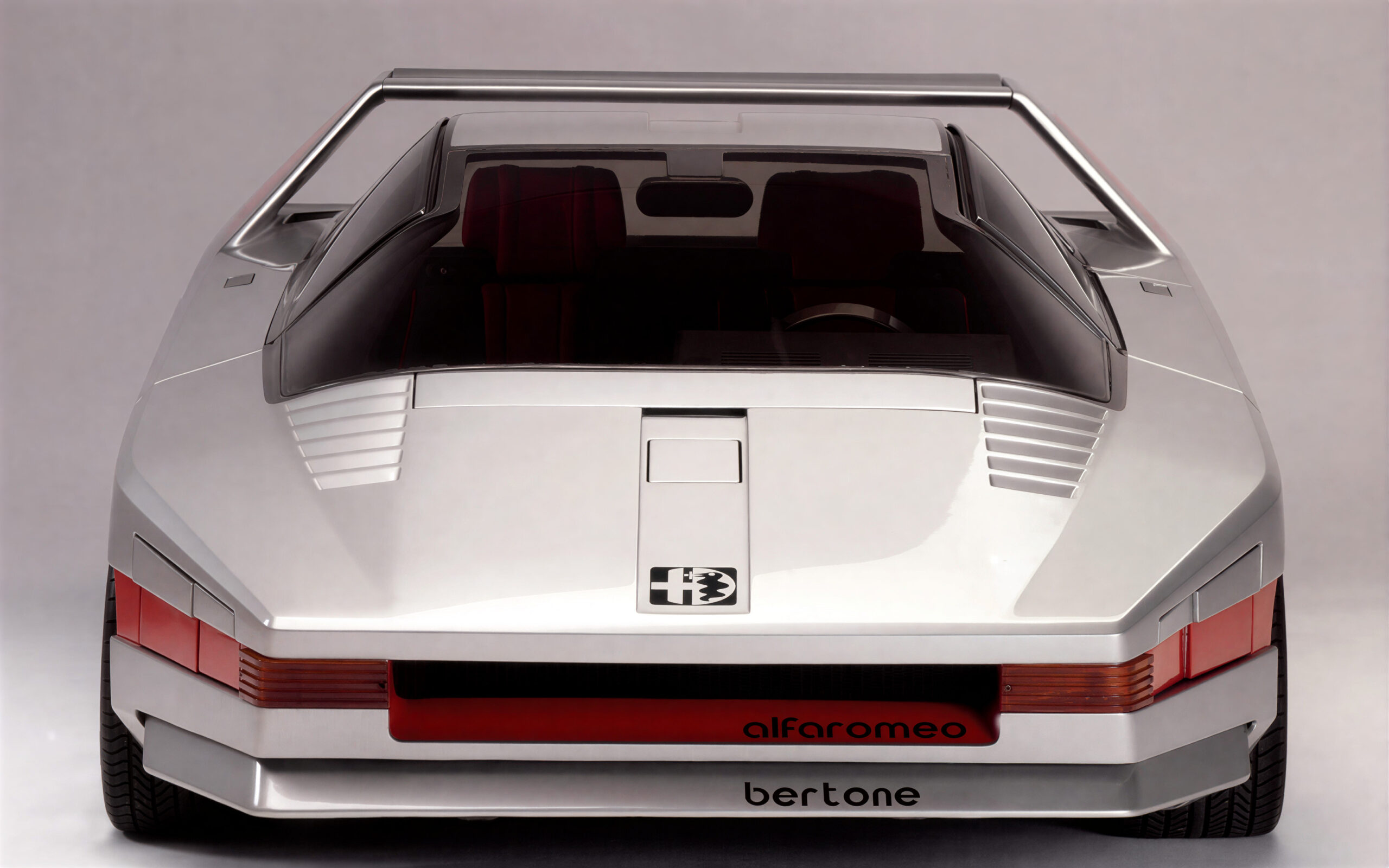
But by 1976, the wedge trend was teetering at its peak, and a few critics muttered that the Navajo was proof of excess — too sharp, too tall in the rear, too slender at the nose, too… everything. A retrospective later described it as “evidence of how the wedge era would sometimes painfully evolve into the 1980s,” which is a polite way of saying the Navajo might have gone a little overboard. And maybe it did. But that was the point.
The Navajo didn’t want to be pretty. It wanted to be provocative — a concept car exercising the full power of its license to be unreasonable. On that front, mission accomplished.
Center Stage — And Stealing It
Bertone’s stand buzzed. Crowds orbited the Navajo like curious satellites. Even Ferrari’s new 308 GT4 “Rainbow” concept — also by Bertone, and sitting just a few meters away — looked downright conservative in comparison. Park almost anything next to the Navajo and it would appear sensible, maybe even shy. The Navajo didn’t coexist with other cars; it overwhelmed them.
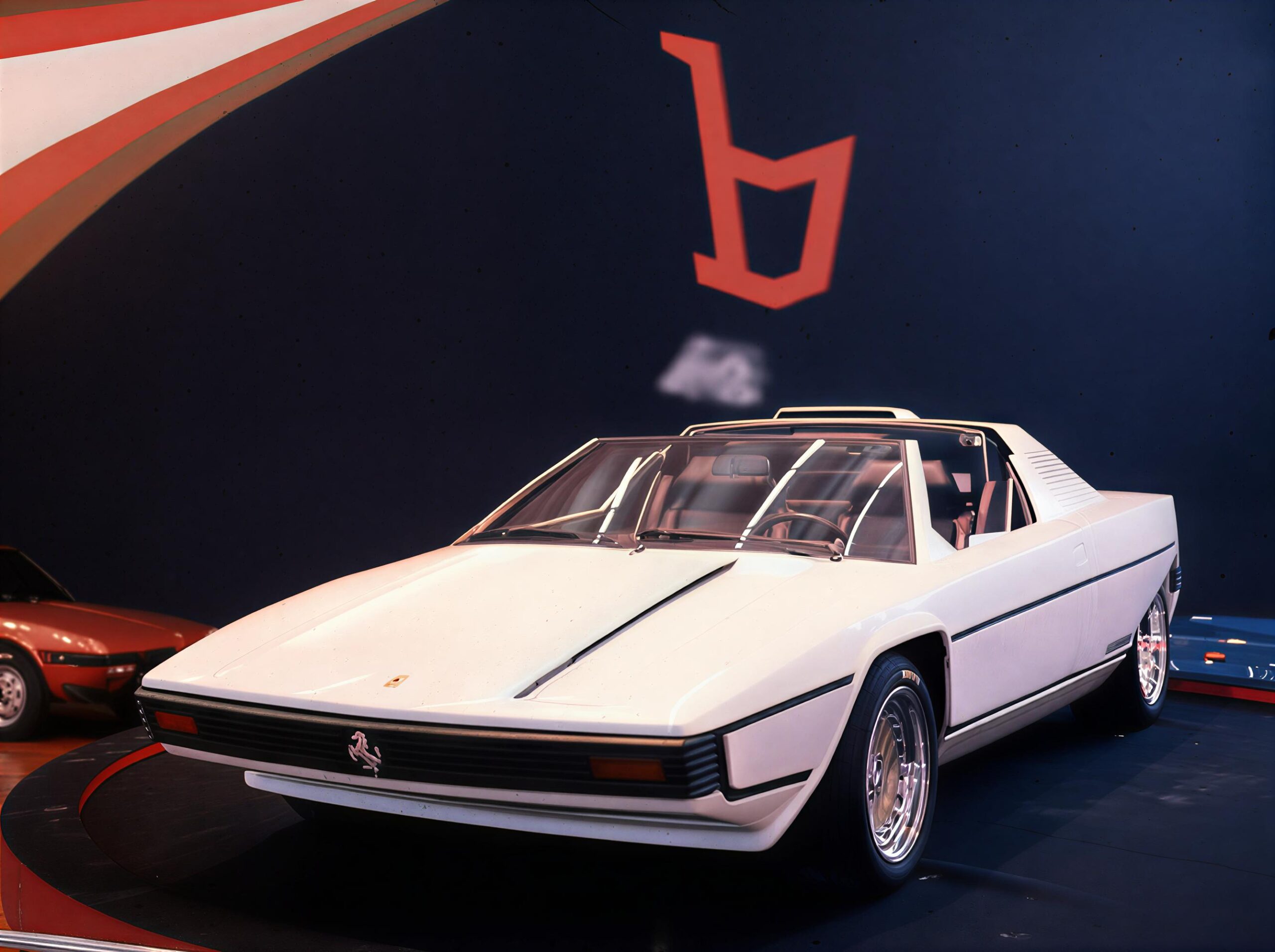
After Geneva, the concept did what ambitious show cars of the era always did: it likely embarked on a tour of the international circuit — Turin, Paris, maybe even New York — a rolling advertisement for what Alfa and Bertone could do when they stepped off the map and didn’t bother looking back.
And yes, it was purely a showpiece. But it wasn’t hollow. Inside that dramatic fiberglass body lay ideas that would become mainstream decades later — active aerodynamics, digital instrumentation, composite construction. The Navajo’s mission wasn’t to preview a production car; it was to point the flashlight toward the future.
The Last of Its Kind
At the time, hardly anyone realized it, but the Navajo also announced a curtain call. It was the last in a legendary run of Alfa Romeo dream cars built on genuine racing chassis — a tradition that began with surplus Tipo 33 chassis and ended with this outrageous gesture in white and orange.
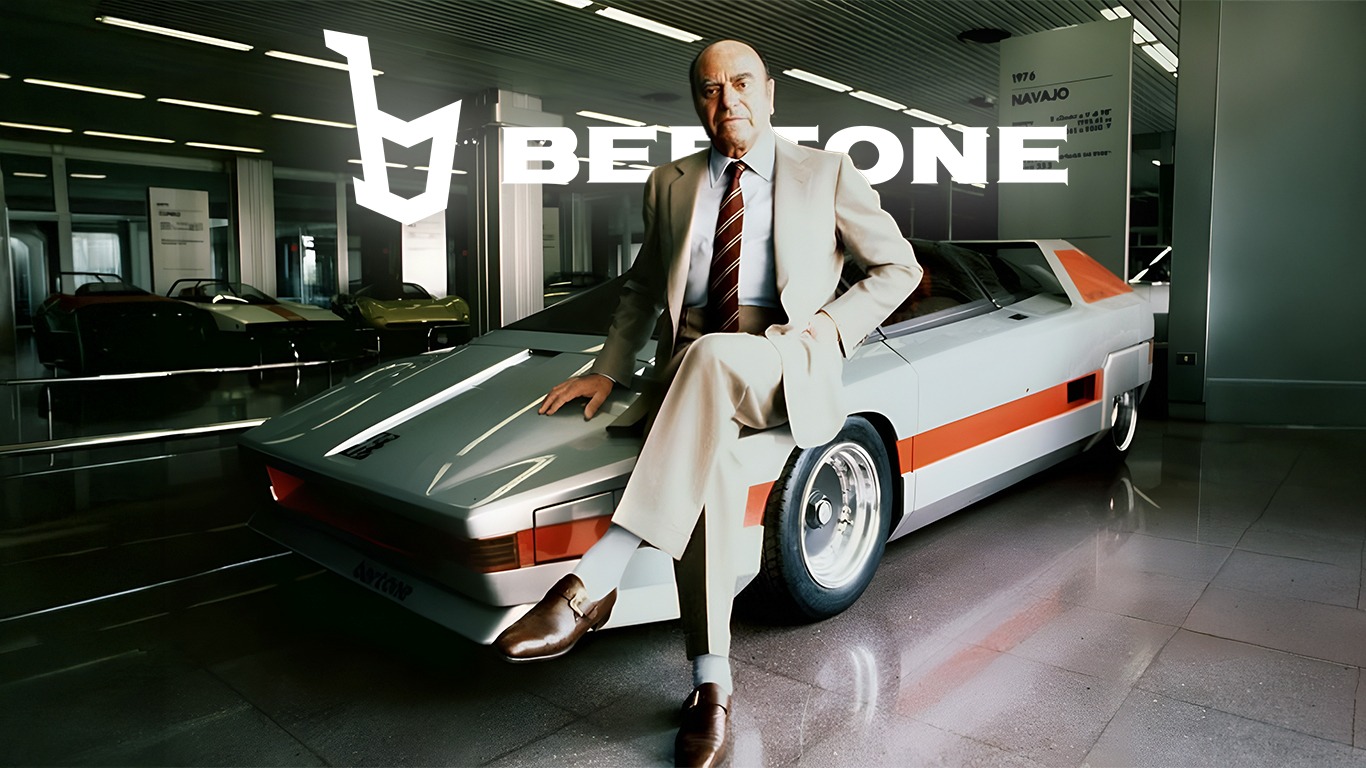
Economics were shifting. Design philosophies were calcifying. The age of wandering from racetrack to dream car, from prototype to provocation, was winding down.
If this was to be the finale, the Navajo made sure it went out with style — a firework of imagination frozen in fiberglass. A car that didn’t just appear at Geneva in 1976.
It landed there.
Legacy and Whereabouts
Like most concept cars, the Alfa Romeo Navajo shone brightly on the show circuit before retreating into the shadows. Fortunately, its final stop wasn’t a forgotten warehouse but Museo Storico Alfa Romeo in Arese, where it remains preserved alongside all the other Stradale-based dream cars — a rare stroke of luck for a 1970s prototype.
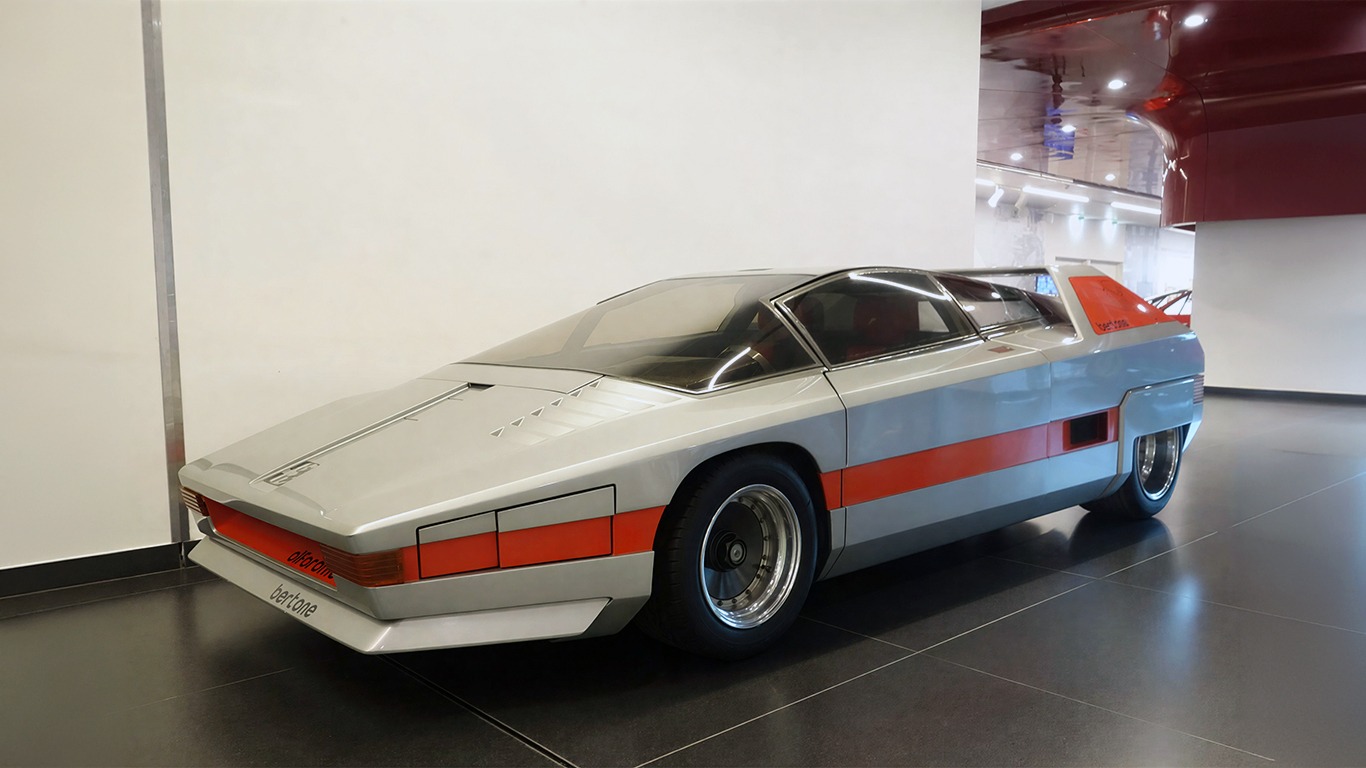
Under the museum lights, its once-futuristic lines now radiate a charming retro-futurism, a snapshot of how the 1970s imagined the 21st century. The Navajo occasionally leaves its home for concours and design exhibitions, where it tends to steal attention just as effortlessly as it did in Geneva. Unlike many concepts sold off or lost to time, the Navajo has stayed under Alfa Romeo’s care, immaculately maintained as the true one-off it is.
Its influence endures in subtler ways: early experiments in active aerodynamics, the fearless wedge aesthetic, and its role as one of Bertone’s last great flights of imagination under Nuccio Bertone. As the industry drifted toward softer, safer shapes, the Navajo became a time capsule of unrestrained optimism — a reminder of when design studios still dared to dream in straight lines and starship silhouettes.
Forget serving as the father of some future supercar — the Navajo earns its legend by being gloriously, unapologetically itself. A 1970s sci-fi fever dream on wheels, preserved to perfection and still catching people off guard like it just landed from orbit. It never tore up roads, but in the universe of design fantasy, it’s still on the move.

ABOUT THE AUTHOR
Andreas Scheidl
Italian classic car enthusiast with German roots. Renowned as a respected figure in the classic car community, he serves as a jury member at various international concours d'elegance, including the Classic Gala Schwetzingen and Mantova. As a content creator, Andreas passionately shares his profound knowledge and appreciation for vintage automobiles. His heart beats for cars designed by Giovanni Michelotti, showcasing his discerning taste and dedication to preserving the timeless elegance of automotive history.
More stories by Andreas Scheidl ↗CONTINUE READING
Posts You Might Like
A Central Driving Position, a Rear-Mounted V8. Was This Really a Lancia?
In 1948, visitors to the Turin Motor Show could see an unusual Lancia on the stand of Carrozzeria Ghia. It was a large two-door coupé with a two-litre V8 mounted behind the…
Read story
Fioravanti F100: The Ferrari He Was Allowed to Imagine
Enzo Ferrari’s centenary, Leonardo Fioravanti’s independent studio and a supercar that explored air brakes, steel wheels and a new way of driving—without ever wearing the Cavallino.
Read story
Michelotti Shellette: When the Fiat 850 Became a Yacht
The yacht designer, the Turin stylist and the tiny coachbuilt car that crossed between the quay, the royal holiday house and the auction room. Some automobiles were conceived for the open road,…
Read story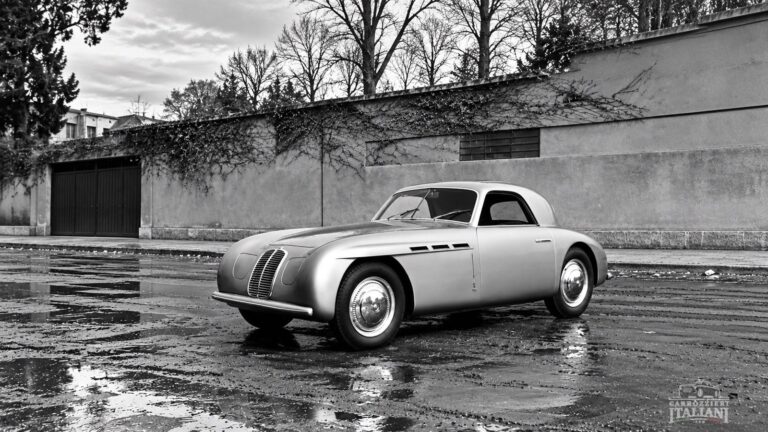
Maserati A6 1500: A New Road for the Trident
When the doors of the Geneva Motor Show opened in March 1947, Maserati was a name that required little introduction to anyone who followed motor racing. What it did not yet possess…
Read story
THE CONVERSATION
Comments 0
Share a memory, a period photograph or a documented detail about this story.