
20 vs 22 Inch Wheels for Trucks: Complete Comparison Guide
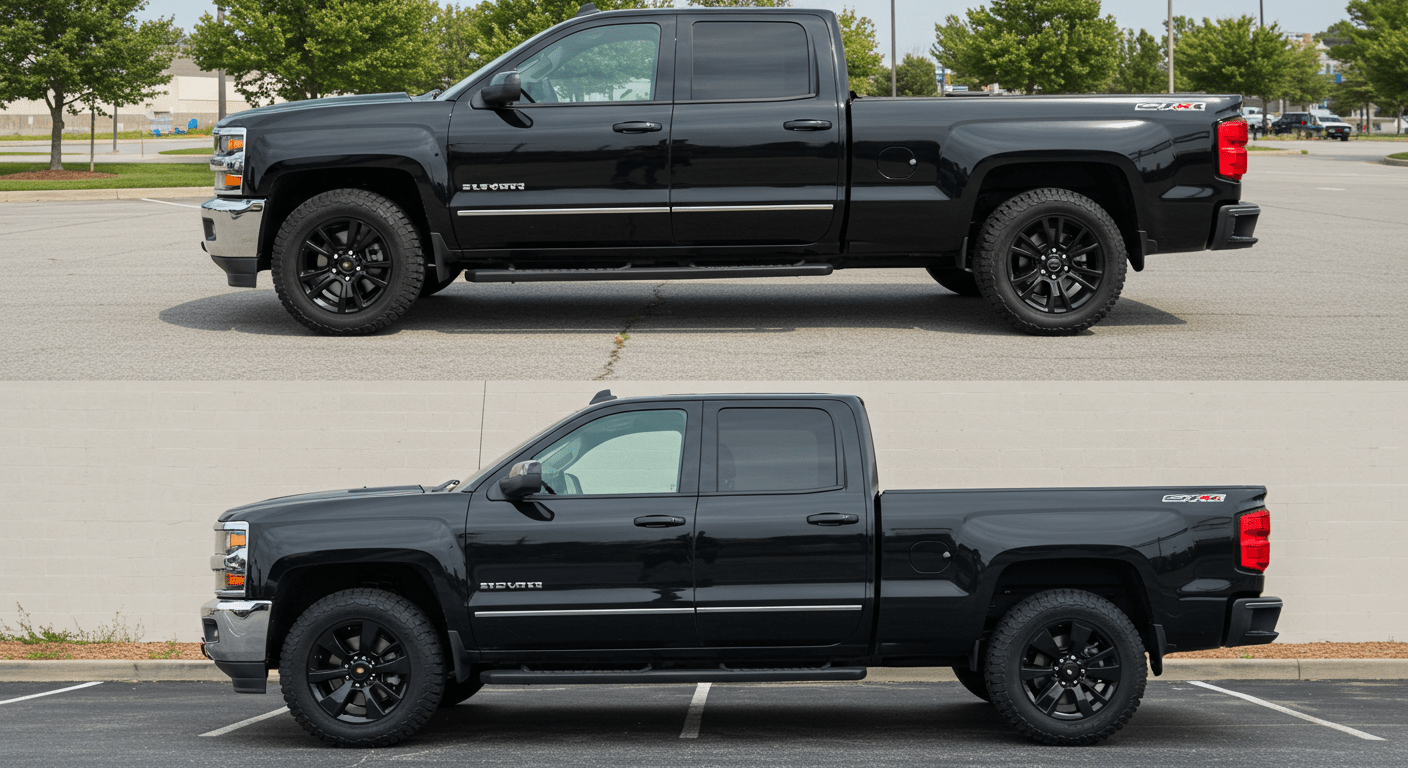
Standing next to two identical trucks, one wearing 20-inch wheels, the other sporting 22s, the visual difference is immediately obvious. The 22s look more aggressive and modern, commanding attention in ways that the 20s simply can’t match. But that dramatic appearance comes with trade-offs that many truck owners don’t fully understand until after they’ve made the switch.
The choice between 20 and 22-inch wheels isn’t just about looks. It affects how your truck rides, handles, tows, and even how much you’ll spend on replacements. Most people focus on the visual impact and miss the practical implications that matter every single day of ownership.
This comparison explains the real-world differences between these popular sizes, helping you choose based on how you actually use your truck rather than just how it looks in photos.
Understanding Wheel Sizes
The jump from 20 to 22 inches might seem modest, but those two inches create significant changes in how your truck performs and feels. The larger wheel requires a lower-profile tire to maintain the correct overall diameter, which fundamentally changes the driving experience.
According to the
Tire Industry Association
, “each 2-inch increase in wheel diameter typically reduces tire sidewall height by approximately 25mm while maintaining overall wheel-tire diameter, directly impacting ride comfort and handling characteristics”. This relationship explains why larger wheels create such different driving dynamics.
What are 20-inch rims?
Many truck owners
find 20-inch rims
to be the ideal choice for improving aesthetics without significantly compromising ride quality. The tire sidewall remains substantial enough to provide cushioning against road imperfections while still delivering a more modern appearance than smaller wheels.
The sidewall height allows for some forgiveness when encountering potholes or rough terrain, making 20s practical for trucks that see varied driving conditions. This size works well for owners who want visual impact but don’t want to sacrifice the comfort that makes daily driving pleasant.
What are 22-inch rims?
22-inch rims
create maximum visual impact with their large diameter and low-profile tire combination. The aggressive appearance turns heads and gives trucks a custom, high-end look that’s impossible to achieve with smaller wheels.
However, this dramatic appearance requires low-profile tires with minimal sidewall height. The reduced cushioning means every bump, crack, and imperfection gets transmitted more directly to the cabin, creating a noticeably firmer ride quality.
Key Differences between 20s and 22s
The fundamental difference lies in the tire sidewall height, but the implications extend far beyond just ride comfort:
| Comparison Factor | 20-Inch Wheels | 22-Inch Wheels |
|---|---|---|
| Sidewall Height | Taller (more cushioning) | Shorter (less cushioning) |
| Ride Comfort | Smoother, absorbs bumps well | Firmer, more road feel |
| Visual Impact | Sporty but understated | Bold, aggressive appearance |
| Tire Cost | Generally lower | 20-30% higher |
| Pothole Resistance | Much better | More vulnerable to damage |
| Towing Performance | Better load handling | Can be harsh when loaded |
| Off-Road Capability | More forgiving | Limited by low sidewalls |
Impact on Ride Quality
Ride Quality with 20-Inch Wheels
20-inch wheels provide a noticeable improvement in ride quality compared to larger sizes because the taller tire sidewall acts as an additional suspension component. When you hit a bump or pothole, that extra sidewall height flexes and absorbs impact energy before it reaches your truck’s suspension system.
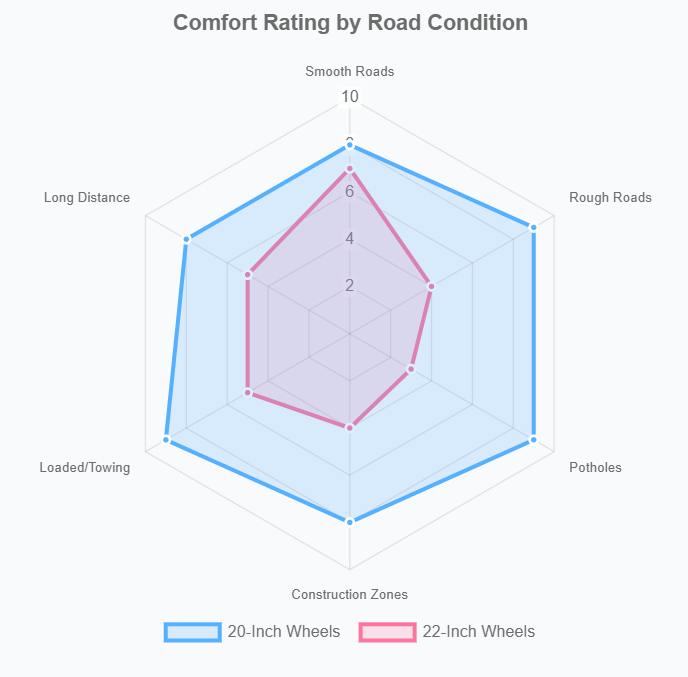
This cushioning effect becomes most apparent on rough roads, in construction zones, and when the truck is loaded with cargo or towing. The additional sidewall also helps maintain ride comfort when tire pressures are adjusted for different load conditions.
For truck owners who prioritize comfort during daily commuting or long highway drives, the ride quality advantage of 20-inch wheels is significant and noticeable in back-to-back comparisons.
Ride Quality with 22-Inch Wheels
22-inch wheels create a much firmer ride because the low-profile tires provide minimal cushioning between the wheel and road surface. Every imperfection, from expansion joints to small potholes, gets transmitted more directly through the truck’s structure to the cabin.
This firm ride quality can become fatiguing on longer drives or when traveling on less-than-perfect roads. The reduced sidewall also means less ability to absorb impacts, which can make loaded or towing situations feel harsh and uncomfortable.
While some drivers appreciate the more connected feel that comes with reduced sidewall flex, most truck owners find the comfort trade-off significant enough to affect their daily driving satisfaction.
How Wheel Size Affects Comfort
Tire sidewall height directly correlates with impact absorption capability. Think of the sidewall as a secondary spring system; more sidewall means more cushioning, while less sidewall means impacts get transmitted more directly to the vehicle structure.
The comfort difference becomes more pronounced as road conditions deteriorate or when the truck is carrying heavy loads. Empty trucks on smooth highways might not show dramatic differences, but real-world driving conditions quickly reveal the comfort advantages of taller sidewalls.
Performance and Towing Capacity
1. Performance of 20-inch Rims
20-inch wheels often provide better overall performance for truck applications because they balance handling improvements with ride quality maintenance. The moderate sidewall height reduces flex during cornering compared to smaller wheels while maintaining enough cushioning for comfort.
Acceleration and braking performance typically favor 20-inch setups because they’re lighter than 22-inch alternatives and maintain better tire-to-road contact over varied surfaces. The additional sidewall also helps maintain traction on loose or uneven surfaces where larger wheels might struggle.
2. Performance of 22-inch Rims
22-inch wheels can improve handling on smooth pavement by reducing sidewall flex during aggressive maneuvering. The larger contact patch and reduced tire deformation can provide more precise steering response and better cornering stability on good roads.
However, this handling advantage disappears on rough surfaces where the reduced sidewall height hurts traction and control. The low-profile tires also make the truck more susceptible to damage from road hazards and provide less grip on loose surfaces.
3. Towing with 20 vs 22 Inch Wheels
Towing performance strongly favors 20-inch wheels because the additional sidewall height provides better load-carrying characteristics and impact absorption when the truck is under stress. The taller sidewall helps distribute trailer tongue weight more evenly and provides cushioning against road imperfections that become more jarring when towing.
22-inch wheels with low-profile tires can create harsh conditions when towing, especially on less-than-perfect roads. The reduced sidewall provides less flexibility for load distribution and makes every bump feel more severe when pulling a heavy trailer.
Choosing the Right Size for Your RAM Truck
Stock 20s vs Upgrading to 22s
Many RAM trucks come with 20-inch wheels from the factory, representing the manufacturer’s determination of the best balance between appearance, performance, and comfort for the vehicle’s intended use. These stock wheels are engineered to work optimally with the truck’s suspension and braking systems.
Upgrading to 22-inch wheels changes this engineered balance, typically improving appearance while compromising ride quality and potentially affecting other performance characteristics. The decision should be based on whether the visual improvement justifies the functional trade-offs.
Consider how the change will affect your daily driving experience, not just how the truck looks in your driveway or at car shows.
Factors to Consider for RAM Owners
RAM truck owners should evaluate their typical driving conditions before choosing wheel sizes. If you regularly encounter rough roads, construction zones, or off-road conditions, the comfort and durability advantages of 20-inch wheels become significant.
For owners who primarily drive on well-maintained highways and prioritize appearance, 22-inch wheels might provide acceptable performance with maximum visual impact. However, consider the long-term costs of tire replacement and potential wheel damage.
Think about resale value as well; while some buyers prefer the aggressive look of large wheels, others prioritize the practicality and lower operating costs of more moderate sizes.
Personal Preferences in Wheel Size
The choice ultimately comes down to prioritizing appearance versus functionality. Some truck owners are willing to accept ride quality compromises for the visual impact of 22-inch wheels, while others prefer the balanced approach of 20-inch sizes.
For guidance on wheel selection that matches your specific needs and driving patterns, Discounted Wheel Warehouse offers expert advice and quality options in both sizes, helping ensure you choose wheels that enhance rather than compromise your truck’s performance.
Frequently Asked Questions
Do 22-inch wheels really hurt ride quality that much?
Yes, the difference is noticeable in daily driving. The reduced sidewall height means less cushioning against road imperfections, creating a firmer ride that can become uncomfortable on rough roads.
Are 22-inch wheels bad for towing?
They’re not ideal for towing. The low-profile tires provide less load cushioning and can make towing feel harsh, especially on imperfect roads. Most serious towers prefer smaller wheels with taller sidewalls.
Will 22-inch wheels hurt my truck’s resale value?
It depends on the buyer. Some prefer the aggressive look, while others value the practicality of smaller wheels. Condition and quality matter more than size alone for most buyers.

ABOUT THE AUTHOR
Carrozzieri Italiani Editorial Team
Guides, practical advice and editorial contributions from the Carrozzieri Italiani team.
More stories by Carrozzieri Italiani Editorial Team ↗CONTINUE READING
Posts You Might Like

How Vehicle Design and Defective Components Can Contribute to Serious Car Accidents
A driver can do everything right and still end up in a hospital bed because a tire tread separated at highway speed. Federal crash investigators have spent decades tracing a measurable share…
Read story
How Automotive Induction Heaters Improve Speed and Safety in Collision Repair
Collision repair has long relied on open-flame torches to loosen rusted bolts, soften adhesive, and free stuck body panels, but that approach carries real tradeoffs. Flame-based heating is slow to control precisely,…
Read story
The Key Stages of a Professional Vehicle Paint Repair
Vehicle paintwork has to cope with stone chips, minor collisions, scratches, weather exposure, and everyday wear. When damage occurs, achieving a professional result involves far more than simply spraying fresh color over…
Read story
Il veicolo urbano dopo il viaggio: cosa distingue davvero un buon design per la città
Per gran parte della storia dell’automobile, il progetto di un veicolo è stato raccontato attraverso ciò che accade durante la guida: la velocità, la linea del cofano, il comportamento in curva, la…
Read story
THE CONVERSATION
Comments 0
Share a memory, a period photograph or a documented detail about this story.