
THE VEHICLE AT A GLANCE
Model dossier
- Production period
- 2008
- Body style
- Citycar
- Engine
- Inline-2
- Type
- Mass
- Displacement
- 624 cc
- Power
- 35 CV
- Top speed
- 105 km/h
THE PEOPLE BEHIND THE CAR
Coachbuilding, design & conversions
No documented people or organizations are currently linked to this vehicle.
PRICE & SALES RECORD
Vehicle value
- Original price
- Not documented
- Latest recorded sale
- Not documented
01 / THE STORY
History & context
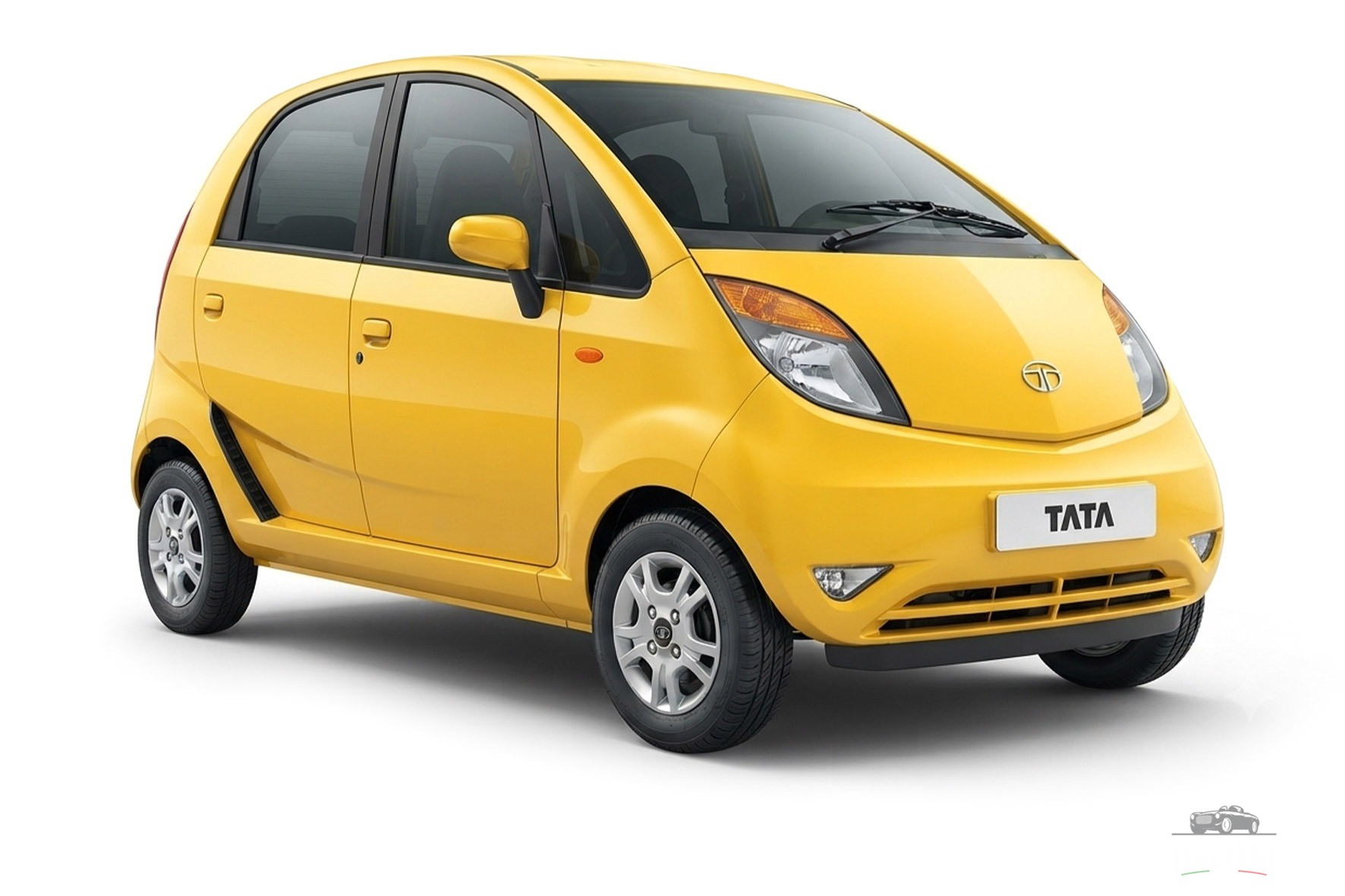
The Tata Nano, launched in 2008, represented an audacious attempt by Tata Motors to redefine personal mobility in India by creating the world’s most affordable car. Conceptualized as a safer and more practical substitute for two-wheelers, the Nano aimed to make car ownership accessible to millions of Indian families. It was designed by the renowned I.DE.A Institute of Italy, giving it a compact and efficient form with clever use of space within its small footprint. With an overall length of just over three meters and a width under 1.5 meters, the Nano was ideal for urban driving and parking in crowded cityscapes. The vehicle featured a rear-mounted, 624 cc two-cylinder petrol engine that produced 38 horsepower, paired with a four-speed manual transmission. Despite its minimal displacement, the engine offered decent performance for city use, reaching a top speed of 105 km/h while delivering impressive fuel efficiency of approximately 25 km/l. Its layout, with the engine and drive wheels both at the rear, was unconventional for its segment but helped maximize interior space. To achieve its ultra-low price point, Tata adopted a minimalist approach. The base model lacked amenities such as power steering, airbags, and even a rear hatch—the luggage area could only be accessed by folding down the rear seats. However, the design still offered a surprising amount of room for four passengers and decent ride comfort. Initially greeted with global media attention and large pre-orders, the Nano eventually struggled to maintain momentum. Factors such as its positioning as the “cheapest car,” quality perception, and safety controversies hampered its appeal. Over time, sales declined, and production ended in 2018. Still, the Tata Nano remains a symbol of engineering ingenuity and ambition, remembered for its bold vision of democratizing automobile ownership in a cost-conscious and populous market.

02 / TECHNICAL IDENTITY
Specifications & construction
Production & construction
- Production type
- Mass
- Production notes
- Do not present the Tata Nano as designed or coachbuilt solely by I.DE.A Institute. The canonical record preserves only a qualified development-support contribution within a Tata-led programme.
Engine & performance
- Engine configuration
- Inline-2
- Displacement
- 624 cc
- Power (CV)
- 35 CV
- Engine speed
- 5,250 rpm
- Torque
- 48 Nm
- Transmission
- 4-speed manual
- Drive
- Rear-wheel drive
- Top speed
- 105 km/h
- Specification notes
- Confidence detail moved from confidence: medium-high. 2008 programme / 2009 production-launch Nano baseline: inline-two 624 cc, 35 PS at 5250 rpm, 48 Nm, 4-speed manual, RWD, wheelbase 2230 mm, dimensions 3099 × 1495 × 1652 mm, base kerb weight 600 kg, top speed 105 km/h. Higher trims weigh 615–635 kg.
Dimensions & accommodation
- Wheelbase
- 2,230 mm
- Length
- 3,099 mm
- Width
- 1,495 mm
- Height
- 1,652 mm
- Weight
- 600 kg
Design & manufacture
- Engineering · Documented
- I.DE.A Institute
- Manufacturer · Documented
- Tata Motors
06 / EVENTS & AWARDS
Events & awards
No events or documented awards are currently recorded for this vehicle.
07 / THE VEHICLE IN DETAIL
Photo gallery 1 photographs
08 / FROM THE ARCHIVE
Archive
References held in the vehicle dossier. Their inclusion does not establish that every historical claim has been independently verified.
| Reference | Source type |
|---|---|
| Tata Motors — The Tata Nano Arrives www.tatamotors.com | Manufacturer official press release |
| Tata Nano Owner's Manual — technical specification manualzz.com | Manufacturer owner manual |
THE CONVERSATION
Comments 0
Share a memory, a period photograph or a documented detail about this car.