
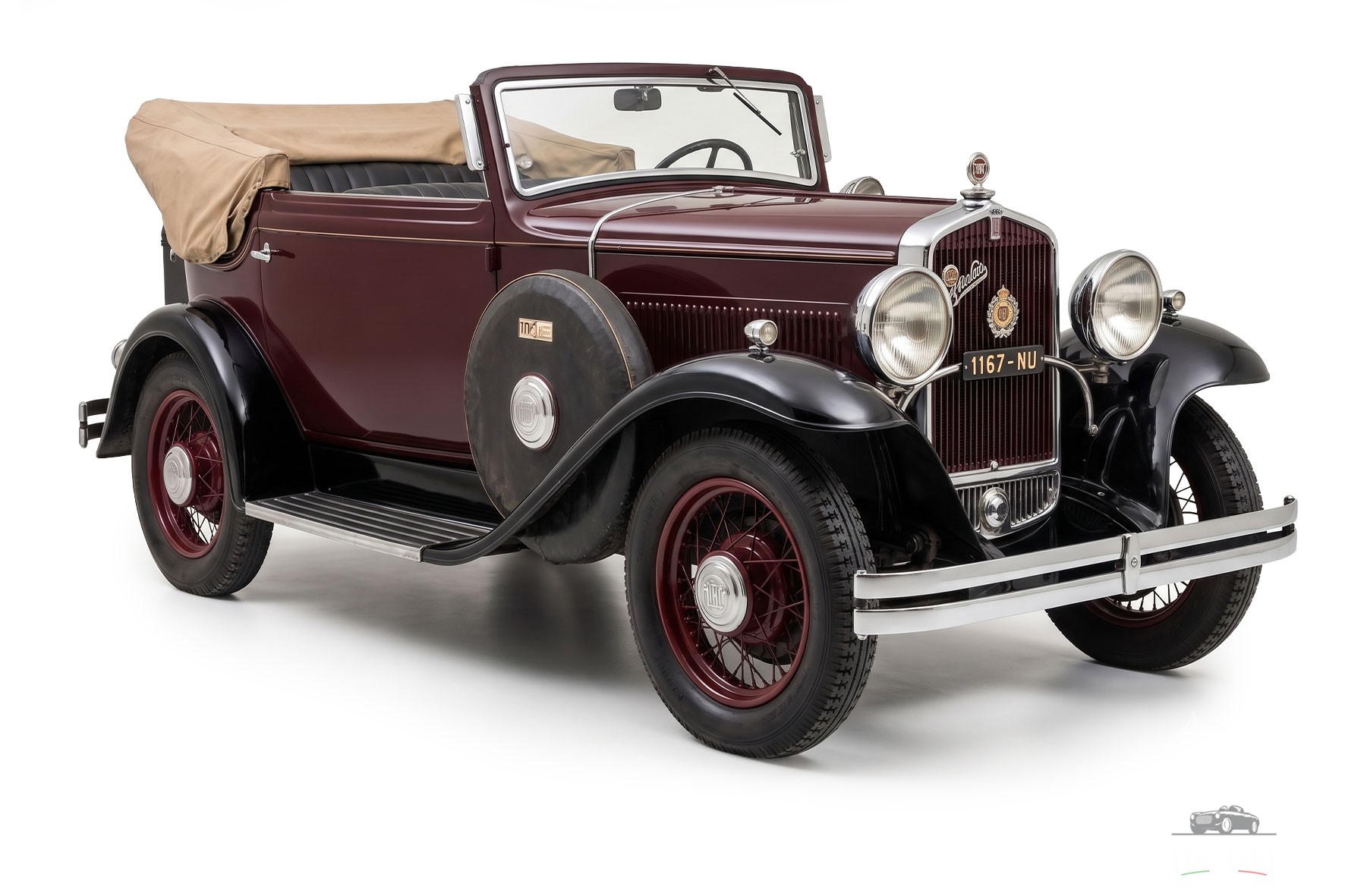
THE VEHICLE AT A GLANCE
Model dossier
- Production period
- 1931
- Body style
- Cabriolet
- Engine
- Inline-6
- Type
- Limited
THE PEOPLE BEHIND THE CAR
Coachbuilding, design & conversions

PRICE & SALES RECORD
Vehicle value
- Original price
- Not documented
- Latest recorded sale
- Not documented
01 / THE STORY
History & context
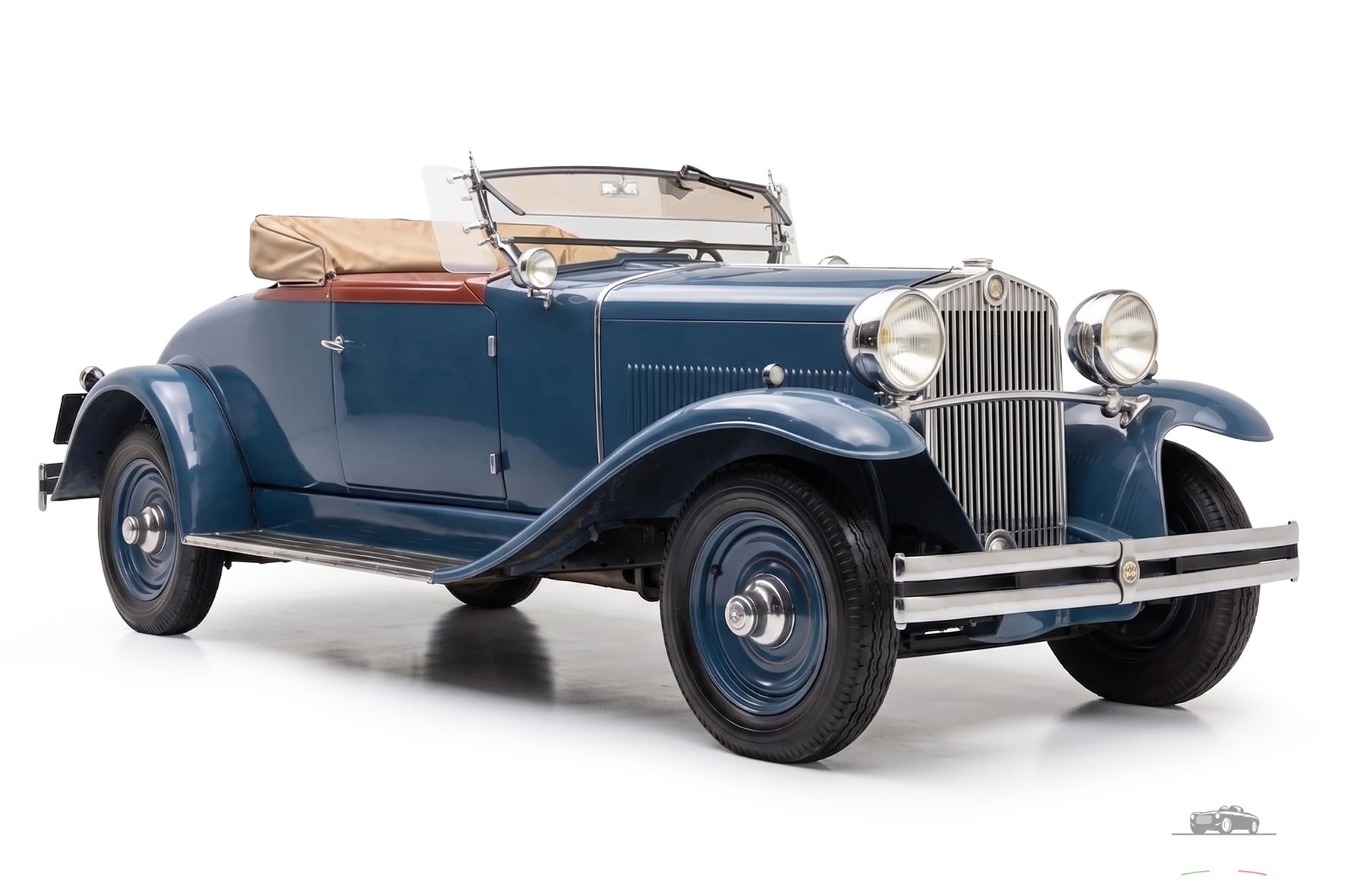
The Fiat 522 Cabriolet Royale by Carrozzerie Speciali was an exclusive open version of the Fiat 522, produced between 1931 and 1933. The bodywork was built by Carrozzerie Speciali, Fiat’s in-house coachbuilding department in Turin, which operated under the direction of Rodolfo Schaeffer. The Fiat 522 was a medium-high range model and derived from the earlier Fiat 520, the first Fiat equipped with a six-cylinder engine. It was presented in 1931 at the 4th Milan Motor Show and was offered in three main chassis versions: 522 C with short wheelbase, 522 L with long wheelbase, and 522 S Sport, introduced at the 1932 Geneva Motor Show with an intermediate wheelbase and a more powerful engine. The 522 used a 2,516 cc inline six-cylinder side-valve engine. Standard versions produced around 52 hp, while the 522 S developed approximately 65 hp. Drive was to the rear wheels through a four-speed manual gearbox, with synchromesh on third and fourth gears. The model was also the first Italian car equipped with dual-circuit hydraulic brakes. Top speed varied according to version: about 95 km/h for the 522 L, 105 km/h for the 522 C, and 115 km/h for the 522 S. The Cabriolet Royale was one of the most elegant bodies available on the 522 chassis. It was a top-of-the-range convertible, built in limited numbers with refined trim and formal proportions. Around 400 examples of this body type are believed to have been produced. Today, only four surviving examples are known. One Fiat 522 Cabriolet Royale by Carrozzerie Speciali was shown at the 1932 Concorso d’Eleganza in Stresa. The same car was later displayed at the 2025 event in Mantova, confirming its survival and historical relevance. The Fiat 522 was available with several body styles, including two- and four-door saloons, torpedo, cabriolet and coupé versions. Total production reached 7,360 units, including 4,706 examples of the 522 C, 1,922 of the 522 L, and 722 of the 522 S. The 522 also saw limited competition use. At the 1933 Mille Miglia, a Fiat 522 driven by Pietro Ferrero and Renzo Monaco finished 41st overall. Carrozzerie Speciali played an important role in Fiat’s prewar coachbuilding activity. The department originated from Fiat’s internal bodywork operations and was based in via Madama Cristina in Turin. In 1925, it became known as Carrozzerie Speciali and gradually became an integrated part of Fiat. It remained active for decades and later worked on important models such as the Fiat 8V and Fiat 1100 S.
IN THE ARCHIVE
Coachbuilders & design studios
02 / TECHNICAL IDENTITY
Specifications & construction
Production & construction
- Production type
- Limited
Engine & performance
- Engine configuration
- Inline-6
Design & manufacture
- Manufacturer · Documented
- Fiat
- Coachbuilder / Body Builder · Documented
- Fiat Carrozzerie Speciali
04 / INDIVIDUAL HISTORY
Chassis & provenance
Chassis 522C03845
- Chassis number
- 522C03845
- Year
- 1931
06 / EVENTS & AWARDS
Events & awards
No events or documented awards are currently recorded for this vehicle.
07 / THE VEHICLE IN DETAIL
Photo gallery 10 photographs
Show 4 more photographs Show fewer photographs
08 / FROM THE ARCHIVE
Archive
No publishable archival references are currently catalogued for this vehicle.
THE CONVERSATION
Comments 0
Share a memory, a period photograph or a documented detail about this car.